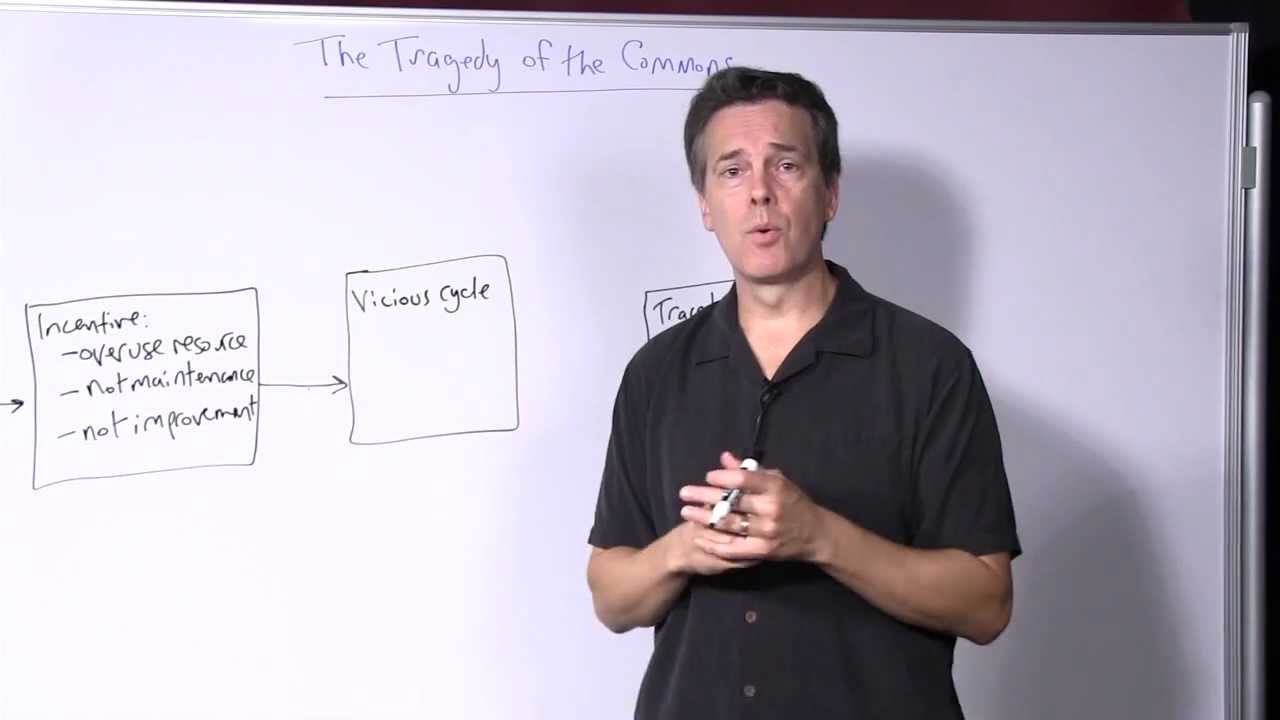
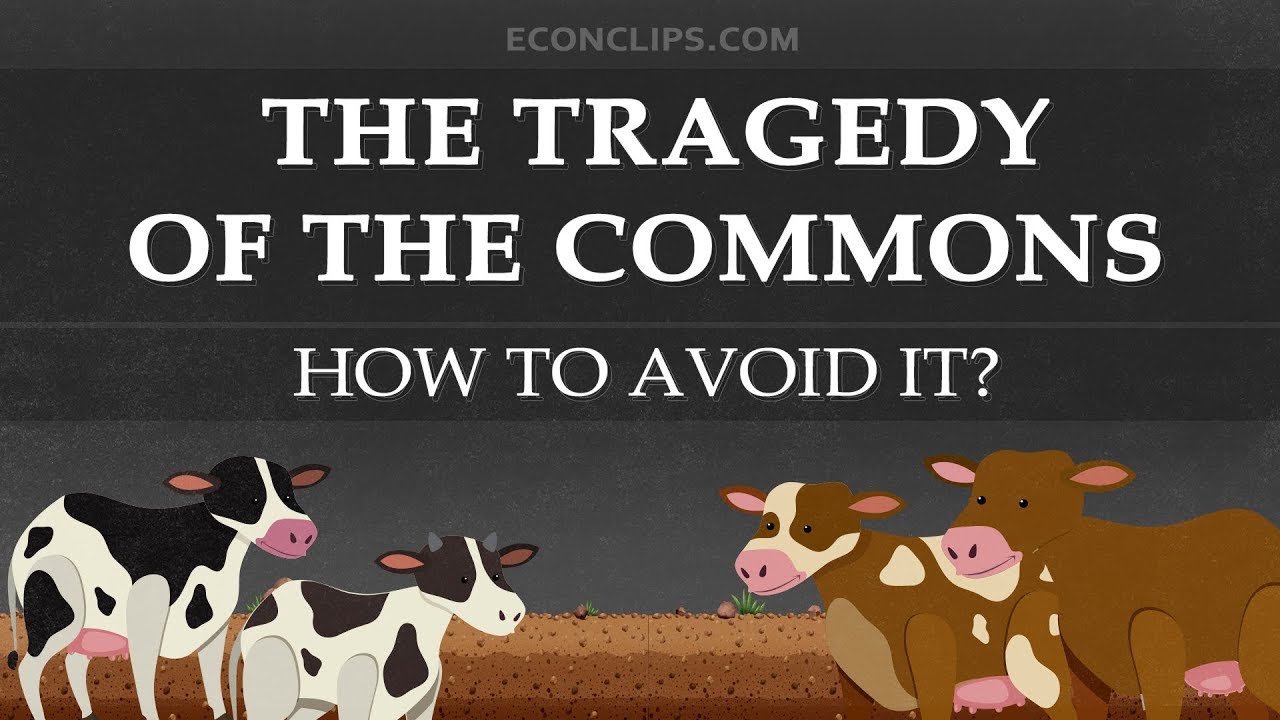
♪ [music] ♪ - [Prof. Alex Tabarrok] In the final video in this section we turn to common resources. We'll cover the "tragedy of the commons" and talk about some possible solutions.
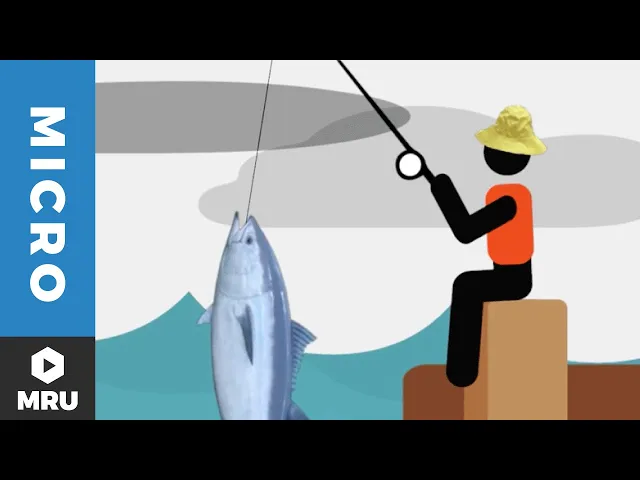
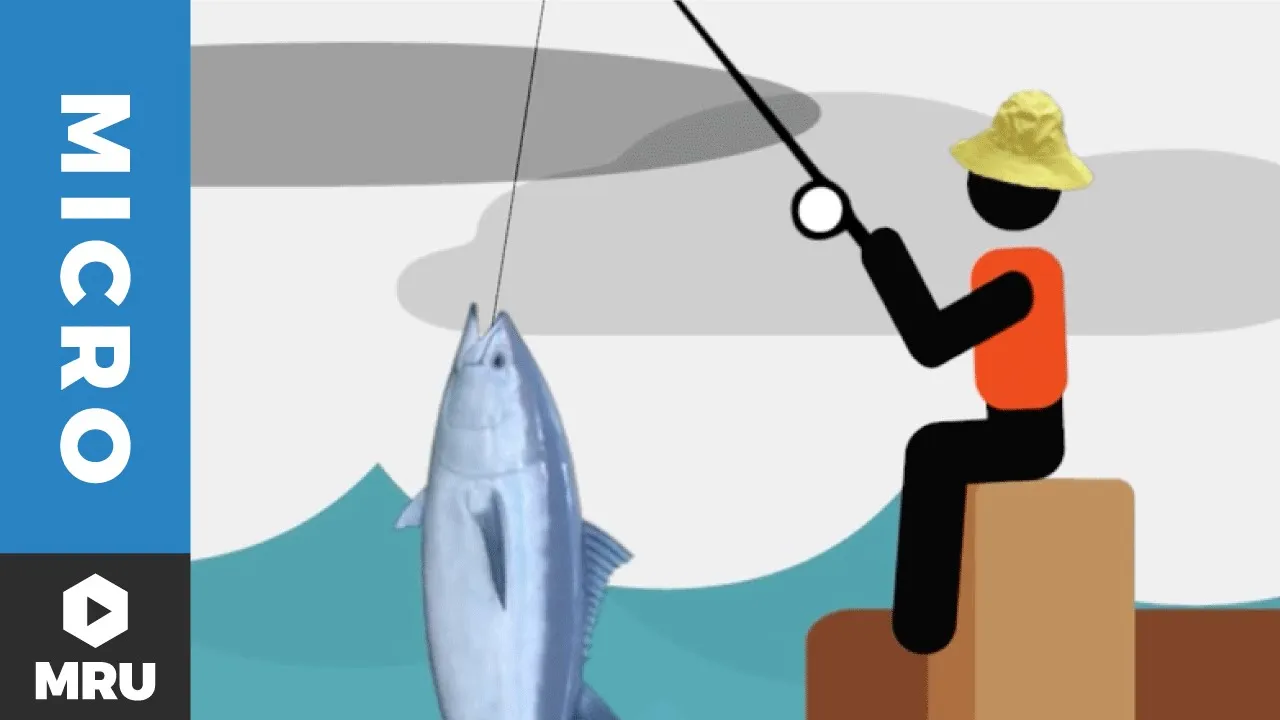
Common resources are those that are nonexcludable, but rival. Unlike public goods, common resources get depleted as more people use them. Tuna in the ocean are an example of a common resource.
The tuna are nonexcludable because there are no property rights to fish in the ocean. No one can legally be prevented or excluded from fishing for tuna, at least outside of a nation's territorial waters. Tuna, however, are rival.
One more tuna caught leaves one less tuna for everyone else. Nonexcludable but rival resources often lead to a tragedy of the commons, a destruction of the common resource. In the case of tuna that means the collapse of the fishing stock.
More generally, the tragedy of the commons is the tendency of any resource that is unowned, and hence nonexcludable, to be overused and undermaintained. In the case of tuna, it's the stock of fish that's the common resource and the stock is being rapidly depleted. Since 1960, the tuna catch has decreased by 75%.
Atlantic bluefin tuna, especially, are becoming endangered. Now, nobody wants this. Tuna consumers don't want it and neither do the tuna fishermen, whose way of life is under threat.
So why is it happening? You might think the answer is obvious. Tuna is delicious!
The demand for sushi is up. But that can't be the whole story. Chicken is also delicious, but chickens are in no danger of going extinct.
So why the difference? Well, let's compare the incentives of Frank Perdue, the famous chicken entrepreneur, with the incentives of a tuna fisherman. If Frank Perdue harvests too many chickens today, he won't have any left to sell tomorrow, so he'll be out of business.
Perdue has an incentive to preserve the chicken stock, to maintain it, so that he can continue in business into the far future. When Perdue sells less today, that's costly. But he gets the benefit of selling more tomorrow.
On the other hand, consider a tuna fisherman. He knows that the stock of tuna is going extinct but does he have an incentive to conserve? No.
If he conserves and fishes less today, that doesn't leave more tuna for him tomorrow. It leaves more tuna for another fisherman to catch today. The tuna fisherman has no incentive to conserve because he doesn't own the stock of fish the way Frank Perdue owns the stock of chickens.
So the tuna fisherman doesn't have an incentive to maintain the stock and as a result, we get the tragedy of the commons. The tuna stock collapses. There's no more sushi and no more jobs for fishermen.
That's a tragedy. Here's another more prosaic example. Do you have roommates?
Take a look at your kitchen. That's the tragedy of the commons. There are many other examples, often from the field of the environment -- the 19th century slaughter of open range buffalo, deforestation today in the Sahel region of Africa, the hunting of elephants and rhinos to near extinction.
In each of these cases, no one owned or owns the resource in question. No one can be excluded from hunting the buffalo, cutting down the tree or killing the elephant. Thus, we get the overuse and undermaintenance of the common resource.
Are there any solutions to the tragedy of the commons? Let's look at three approaches -- command and control, cultural norms and creating property rights where before there were none. Command and control are rules and regulations that are often used to try to limit or avoid the tragedy.
But these methods are also often inefficient and ineffective. Just to give a few examples. When fishing stocks begin to collapse, the number of fishing boats is often limited, or the number of fishing days is limited.
To try to save the Alaskan king crab, for example, the government imposed shorter and shorter seasons, until at one point, it was legal to fish for these crabs on only four days in an entire year. The problem is that when the number of boats or the season is limited, the fishermen simply build bigger and better boats, boats stuffed with all kinds of fancy equipment so that they can quickly find and harvest the fish. As a result, these regulations get more and more complex over time, with limits on fishing boat size, horsepower, equipment and so forth.
Sometimes these limits slow the tragedy but they usually don't prevent the tragedy. What about cultural norms? Can they prevent the tragedy of the commons?
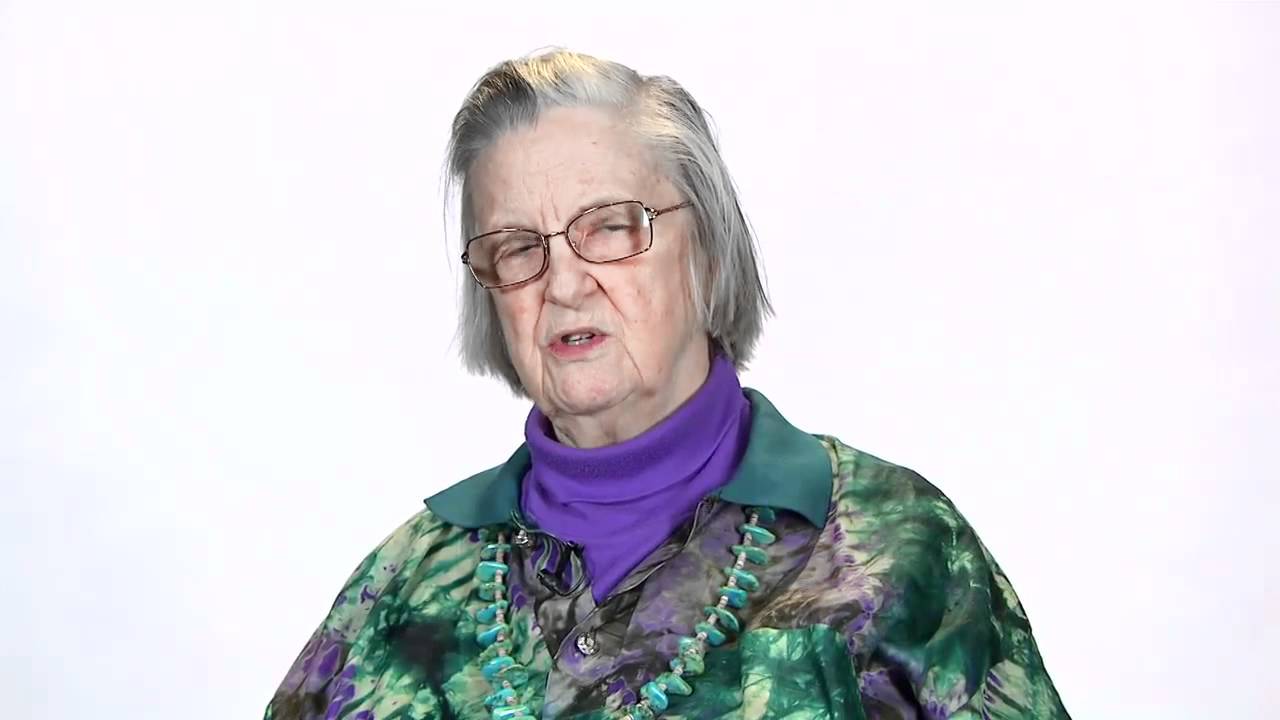
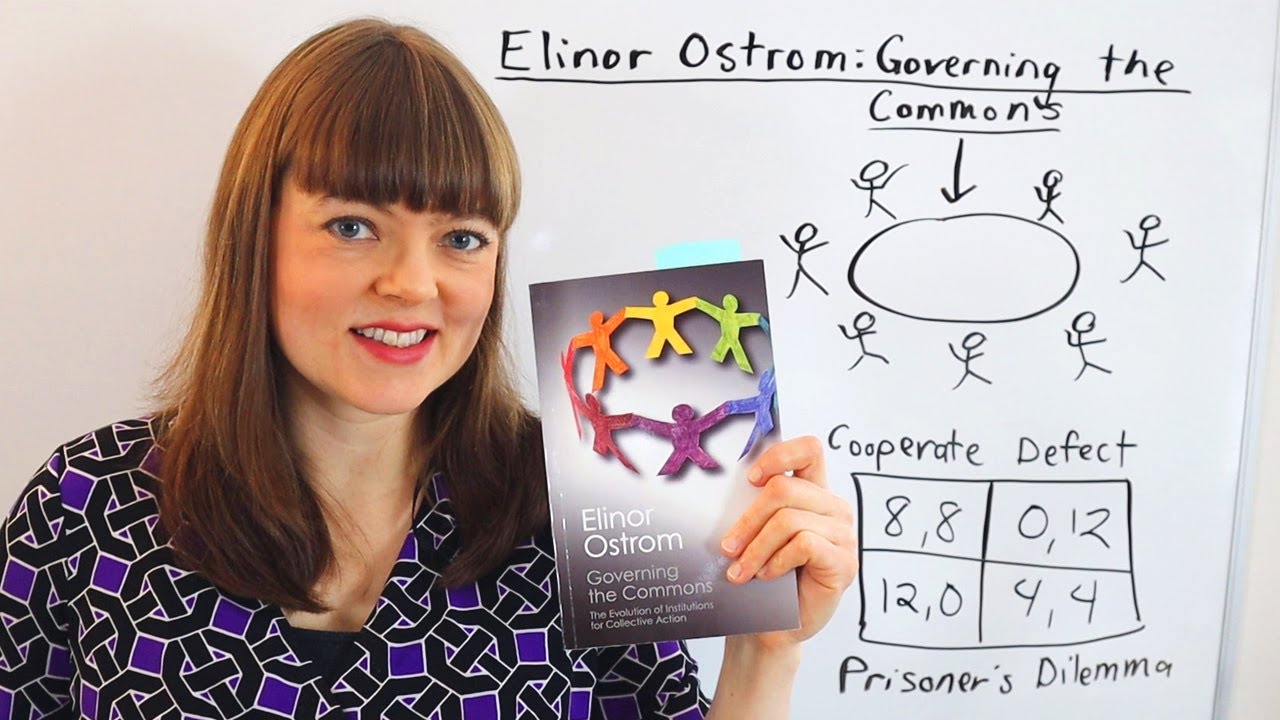
Elinor Ostrom, the 2009 winner of the Nobel Prize in Economics, studied common resources throughout the world, and she discovered that the tragedy of the commons is not inevitable. What Ostrom found is that under certain conditions, norms can evolve so that people who overfish or overgraze -- they're socially disapproved. And those who contribute to the common resource -- they're honored.
Quite sophisticated procedures for managing common resources can develop, especially when groups are relatively stable and small. These procedures do take time to develop. It's possible, therefore, to avoid the tragedy but it isn't easy.
Try to see if you can come to an agreement with your roommates to keep the kitchen clean. Let's see how long that lasts. What about making a common resource excludable?
By creating property rights over common resources, it's possible to have a common resource behave more like a private good. New Zealand, for example, pioneered an innovative solution to the tragedy of the commons. They created tradable allowances in fish, much as we discussed in earlier videos about tradable allowances in pollution.
Just like in that example, property rights were created where before, there were none. New Zealand used what are called individual, transferable quotas, or ITQs. An ITQ gives a property right to a certain tonnage of fish.
The sum of the ITQs is the total allowable catch per year. The ITQs can be bought and sold. Now the nice thing about these ITQs is that there's no restriction on boats or on equipment, so there's no wasted resources on capital stuffing, on making the equipment really more "efficient" than it really has to be.
The ITQ systems have really been very successful. Let's take a look. Here's a graph showing the total fishable catch in New Zealand.
Once the ITQ system began in 1986, the total catch increased dramatically. Now, that may seem paradoxical. After all, the quotas reduce the amount of fish that each fisherman is allowed to catch.
So how can the total increase? This is actually just the tragedy of the commons in reverse. In the tragedy of the commons, every fisherman tries to catch as much as possible, but the end result is that none of them do.
The fishing stock is driven to extinction. With the ITQ system, a fisherman owns a right to a certain amount of fish, year after year. Much like Frank Perdue, the fisherman now wants to make sure that he preserves the value of his property over the long run.
He doesn't want to overfish and destroy the fishery. He also has an incentive to make sure that other fishermen are obeying the ITQs. Over time, this allows the fishing stock to increase, to recover, and that allows the quotas to increase as well.
So under the right system, we can turn the tragedy of the commons around and we can create a happy solution. Unfortunately, it's not always possible to create property rights. Southern bluefin tuna, for example -- they don't stick around the territorial waters of a particular nation.
They often migrate thousands of miles throughout the Pacific. Creating property rights in the tuna would require a multi-country agreement and that's difficult to enforce. As we know from the Coase theorem, the more parties required to make an agreement, the greater the transactions cost and the less likely an agreement is to actually happen.
To see how far we have to go, let's just remember, most governments subsidize fishing. We've got a long a way, therefore, to solve these problems. In short, many of the world's problems -- they arise when property rights are not possible, are not protected, or are not really implemented.
Thanks. - [Narrator] If you want to test yourself, click "Practice Questions. " Or if you're ready to move on, just click "Next Video.