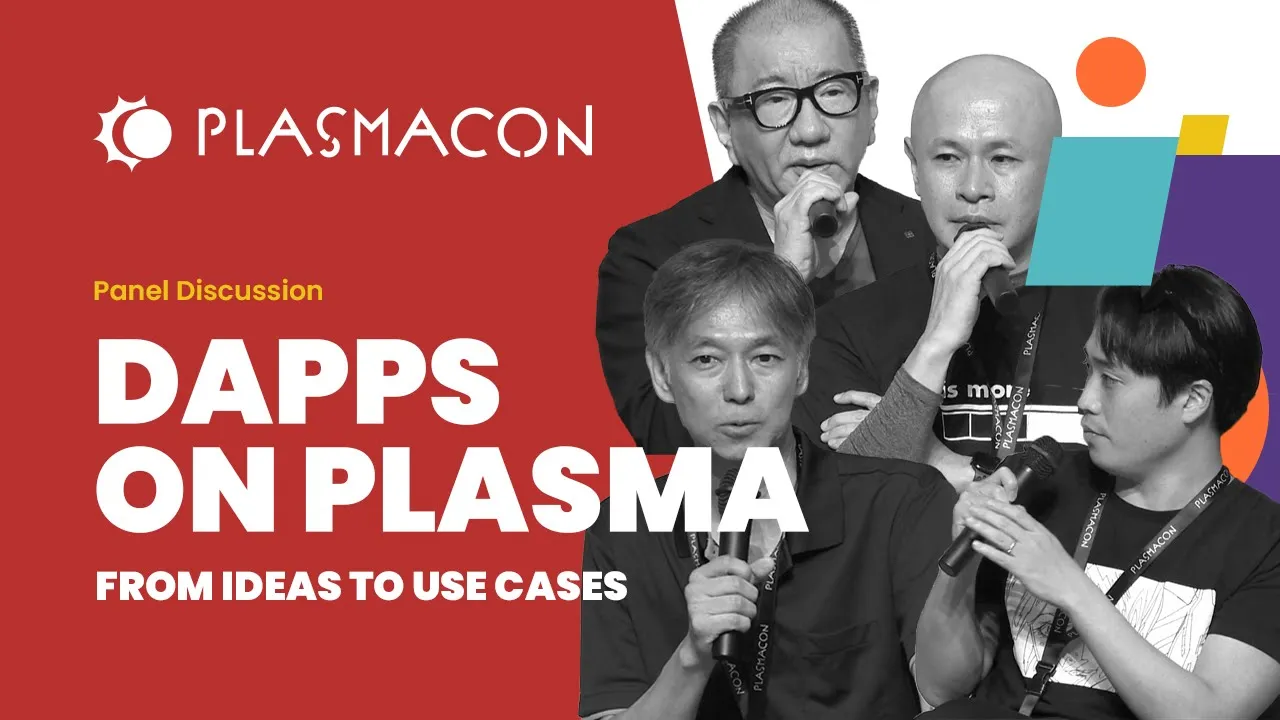
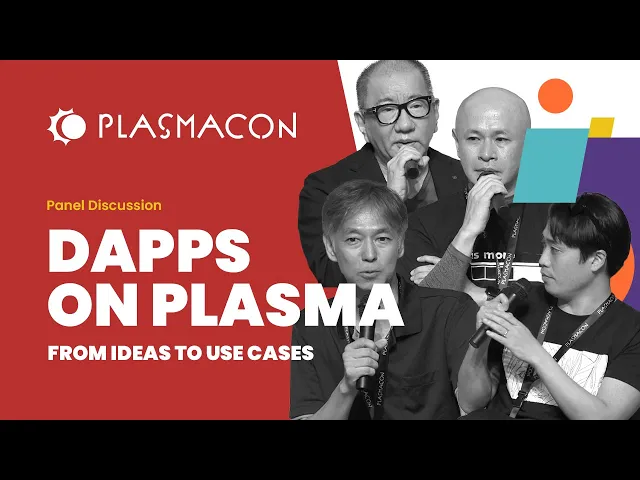
Well then , let's start the question period in Japanese. First, I'd like you to start by introducing yourself. Well, first of all, Mr Mabuchi.
Hello everyone. My name is Mabuchi. I'll keep my intro short, so I'll tell you now.
My previous job was as a partner at a consulting firm, but before that, I was an executive at a company called Meta. In terms of web3, I started working in 2016 or 2017 . In 2017 , I've written a book called "The Impact of Blockchain" and since two years ago I've written a book called "New Web Century", so I've been involved in the blockchain community for a while.
What I've been working recently is, My specialty is emerging technologies, so I'm not only interested in blockchain, but also things like the metaverse in the sense that I'm chasing new things. I'm also researching AI and how to implement them in society. That's what I'm doing as a business.
Thank you very much. Mr Mabuchi is a very famous person in the Japanese AI industry, or even in the web2 industry before that and has a variety of achievements and business results. I also know that he's well connected to the community of committed innovators both in Japan and around the world.
So Mr Suzuki, please introduce yourself and tell us about what you have done so far and what you are currently doing. Hello . Nice to meet you.
My name is Tomoyasu Suzuki and I'm the president of Plat'Home. Nice to meet you. Plat'Home is a company that started with open source software, especially LINUX, and was founded in 1993.
This company has probably been around since you were really a small child, or maybe even before you were even born. Then, as the Internet became more widespread, the domain name of the country you are using '. ', '.
jp' in Japan, is the ROOT domain of the country. There is a server that manages this , and I created it, which led me to a server business using open source for Internet communications. I have been doing this for a long time.
The product is IoT, Internet of Things, area of connecting things and connecting sensors is currently our main battleground, and we only entered this area in 2014. It's the 50th anniversary of the birth of the computer. Actually, APPLE's Macintosh was released in 1984, so the 50th anniversary of the birth of the computer and the 30th anniversary of the creation of Macintosh is actually the year when the Internet was connected to things.
This year is said to be the first year of IoT, but that's when we started to struggle, because of the huge number of things besides computers and smartphones. Our mission is to connect those trillions of things. So, I went through a lot of trouble and thought about it, but at that time, it occurred to me for the first time that blockchain technology could be used, or rather, that was the reason why we started blockchain.
And right after that, I met Mr Hiroki, it's about 8 years ago, and at that time, we talked about the plasma which is the main topic today, and it was the first budding of this, and I was really excited about it. We started with this in mind. Now we are in the field of blockchain, which is called real world assets, and it is mainly used in the financial field in Japan, but to bring this to non-financial field, including objects and sensors, we need to use Intmax' Plasma Free technology.
Yesterday, we announced a press release with Mr Hioki. Thank you very much for giving me this very valuable opportunity today. Thank you very much.
Thank you very much. Lastly, Mr Nishikubo. Mr Nishikubo will be developing Plasma Free and Intmax.
Mr Nishikubo, Would you introduce yourself? Please tell us what you have been doing in web3, what you are currently focusing on, and what you are thinking about at the current situation. Hello everyone, my name is Nishikubo.
I am a so-called serial entrepreneur, and I started my first business in 2004. In January of that year, I launched Japan's first paid search advertising company, and the following July of that year, I sold it to LIVEDOOR, and even after that, I continued to serve as executive officer at the time of the incident. After that, I started investing in Israel with Mitsui & Co.
's Venture Capital, but I've been involved with crypto since around 2017, although it's not that early. Moreover, since the early days, I have been good friends with the Intmax team, and we have been doing research on various technical aspects. Since last year, I've been helping one of Japan's largest point services, with over 100 million users to migrate to the web3, and in the early versions of it, we were developing it based on the evm based blockchain, but at the early stage, we've realized the service that is used by 10 million people every day is not possible with the stateful blockchain to operate sustainably.
So we discussed developing the service with INTMAX, which led to the recent press release. Thank you very much for giving me this opportunity today. Thank you very much.
Well, all three of you have a very wide and solid track record and successful businesses. We are honored that these people have been paying attention to plasma, and they are building businesses on Plasma , and they have made promises or expressed their intentions in various ways. Well, I think you have had a variety of backgrounds up until now, but Mr Mabuchi has worked in the AI industry and the web2 industry .
Mr Nishikubo has also achieved great results in the web2 industry. So, Mr Suzuki, I think you have been passionate about IoT and OS, LINUX for about 20 or 30 years, so why do you think that someone with such great experience would be interested in Plasma? What makes you so passionate about Plasma, I would like to ask the reasons.
Let's start from the middle, Mr Suzuki whose IoT company is already listed on the stock market. I think it's already listed on the first or second section of Japan, and Mr Suzuki, who owns and is currently running a large IoT company, has a very strong interest in Plasma. What is the reason for this?
Well, to put it simply, when it comes to handling things, infrastructure that is not scalable is useless at that point. Unfortunately, blockchain, or rather the old-fashioned For example, if we only think about L1, there is a limit to its scalability. We had to break through this.
In 2019, I asked Mr Hioki the question of whether or not it can be really done. The limit of the scalability was the reason we asked him in 2019. .
After all, the smartphones and computers that you use have IP addresses, right? So, if you have to manage things or sensors, something like 100 or something like 1000 things have to be connected. that kind of scale is naturally required, and in the case of the Internet, you have to manage domain names like DNS.
There is a system running behind the scenes to do this, but it's impossible to do without something like that. so it's not like someone should own it or operate in a centralized manner. Blockchain was a great match, but the technology at the time simply couldn't achieve the scalability, so I've always thought it would be nice to be able to do it.
So , I recently met with Mr Hiroki for the first time in a while to get a lot of information. When I exchanged it, I heard a very happy story that they were able to break through in that area. I was expecting Mr Hioki might do it after all, but this is the biggest reason of my decision to choose INTMAX.
Also regarding the privacy, we are handling things, such as sensors, if you think about things like , 'I want to control my vital data myself,' privacy is a big thing. INTMAX can handle both the scalability and privacy, and Plasma Free can do that, so I decided that this was the only option. That's it.
Thank you very much. Since around 2018, I have started talking about Plasma. In fact, we were talking about it so many times, and I remember it like it was yesterday, but now, in Japan, the people who are working on Plasma were given a name Plasman.
I'm really, really happy that that old Plasmen have come together like this. Now, Mr Nishikubo, As you talked about it earlier, you mentioned that statelessness and scalability without using a basic blockchain like Plasma are necessary for your use cases. As you have compared various blockchain technologies and found out that the stateless technology is effective for businesses with a large number of users like you are working on.
Can you elaborate on that point? Can you elaborate on that point? Yes, as I mentioned earlier, when you are providing service to 100 million users or accounts, even if the daily active rate is 10%, simply calculated on 100 million users, we would need to serve 10 million transactions.
Some people might think that can be done easily by the latest blockchain in terms of throughput, but let's take this as an example, when operating a private chain, the capacity of archive nodes can quickly grow to a size that cannot be managed by a normal public cloud. so I understand that it will not be possible to operate it properly even in a year or two. Therefore I asked myself whether it was okay to release something that we knew would only last for another year or two as a service.
We discussed that point. There was one more point. In the previous design, I think companies were aware that there was an issue with cross-border transfer of personal information using private chains.
We needed to solve this problem a little bit, so it's not just a matter of simply operating the nodes in a region within Japan. For example, third-party systems such as analytics are all located in the Japan region. Furthermore, EXPLORER and RPC is also operated in a closed manner, but when you take it to that point, is it a blockchain?
This question came up, and if one would go so far, all the information that could lead to privacy should be contained in the local proof set, and on the blockchain, the blockchain. only a minimum hash should be stored. This is the stateless method.
This will essentially solves the problem of storage size and where to manage the data. This became very clear. This will be a disruptive solution that is completely different from the existing blockchain.
That's the answer to your question. Thank you very much. In this blockchain space, There are so many short-term solutions, but in the end, the true scalability of the blockchain will only be understood when it becomes crowded.
System will go down when it's crowded, or the number of nodes won't increase any more. This is something that I learned for the first time when it's crowded. but basically it doesn't get crowded until it becomes popular, it doesn't get crowded until it becomes famous, any blockchain can be said to be scalable in the beginning like this.
In this respect, I think that there are very few architectures that can guarantee long-term scalability from the beginning. And I think this is a summary . Mr Mabuchi, you have been successful in a wide range of businesses but this time you move forward with Plasma or Plasma Free by involving your own business or your company.
What was it that attracted you? Thank you very much. The other day, we actually issued a press release and the response was very good.
This time we'll be working together in the generative AI project. We made the announcement of this partnership. Talking from our generative AI side, generative AI itself does pre-learning to a certain extent to acquire data.
After calculating that, it creates a foundation model. That's the OpenAI, Google the foundation models. We'll be enhancing it to be able to use at a enterprise level.
For that, it's necessary to add various data and train it. Here, the data privacy issue is very important. Or it is becoming a bigger issue, especially in Japan, which is a very sensitive country when it comes to data privacy.
And there are many people who would like to use generative AI, want to combine their own information. However, due to data security issues, there are many companies that are reluctant to take a step forward. This time, through this partnership, we will focus on how to ensure data security in local databases, particularly in reducing latency that's what we are aiming for.
By applying this Plasma technology, it will become extremely easy to use for companies. So, we're going to start with research and development, and then implement it in society. Thank you.
First of all, you mentioned the lag technology, but basically. . .
After the training of the generative AI, there are many privacy issues arising in the mechanism of how to call external APIs. The combination of AI and encryption technology will be a very important one. As Mr Mabuchi said, Japanese companies generally have a culture that is very sensitive to personal information.
So this is why we think the combination of crypto and AI is going to get more attention in the future in Japan. And as David Chaum said in the session earlier, The only tool that is capable of controlling AI, this very powerful tool is basically cryptography. On might even say the only technology.
But basically cryptography will the main focus. With this circumstance, AI and cryptography which offers the most scalable blockchain, I think it would be very good when the two were combined. This is why as Mr Mabuchi mentioned, AIforU and our recently issued a press release about the collaboration, is a great deal.
Going forward, What would you expect or request from Plasma Free in the future? You can say anything you want here, but Plasma Free which is scalable, which I can guarantee. Plasma Free will be the most scalable and the first successful Plasma .
I think it would be great if we could hear from the three of our ecosystem partners, as experienced entrepreneurs and as people who will be operating a business together, what you hope for what you request from the INTMAX team. I would be happy if you could tell me what you thought of in the order in which you came up with it. I was talking amongst 3 of us in the waiting room earlier, and I was wondering what would be the key to implement Plasma in society.
We talked about various things and had heated discussions. It was really interesting, but as it turns out, new technology comes out, and it's really important to decide what kind of use cases to create. We were talking a little bit about what would be needed as an extra step on the other side for that to happen.
I was wondering if you could summerise what we were talking, Mr Suzuki? I have been dealing with computers for 35 years, almost 40 years. It has been actually 40 years.
Same goes for Linux, and maybe the cloud as well, there's always a bright future ahead. Everyone is running towards that, but as Mr Mabuchi just said, when it comes to use cases, it's inevitable that the real world, how should I say it, is extremely complex. There, for the first time , we discover missing parts.
Things like, "oh, this doesn't exist! " But each time, it's not just us, but the various colleagues who are working on it together. I think it's okay to call it Ecosystem such collaboration, working together to solve problem.
I have seen many times, for example, when the memory is too high, they create a technology to virtualize it, after the network is created, the technology for firewalls is developed, etc. , all overcome it together. I believe that a fundamental breakthrough was made in Plasma.
This time, it may have taken Mr Hiroki seven or eight years to get to this point, but that 's why he's been doing it. I've finally gotten to the point where I can already get an advantage with scalability, lower costs, and better privacy, but I think that after that, still all kinds of problems will probably come up. At such time, what you need is your friends and colleagues.
You can't do anything without them, and once you've achieved that, you'll have products, services, and many other things, but that's what I'm looking forward to the most. Yes, I think so. Talking about what we should do when we implement it in society, but rather than product-out, we have a worldview that says that in order to do this, we absolutely need Plasma.
Mr Nishikubo, I think you do have that vision and executing that vision. As Mr Suzuki said, when it's combined with the ecosystem, it will create a business scalability. I think that is the point.
How do you think Mr Nishikubo? Yes, as you said there are use cases but I personally have some concerns about the issue of privacy in how current blockchain is used. Almost like a sub-theme today, but I think it's something that's particularly an issue at my company right now is using a single wallet in the blockchain.
I was concerned about the possibility of cross-sectional tracking and the solution to that problem is account management, or rather, a wallet service. There is a EOA and contract versions of this. We will also release an EOA version that will also deal with threats to quantum computers.
What I'm trying to say, is that there really aren't many people discussing issues like privacy and the threat of quantum computers. I'm glad you've set up this forum. I think that in the future, INTMAX team, including Vitalik, such core people will continue to have discussions.
But I would like to see more people like this and more people involved. It's a philosophy-like story, but it's also an important story, and if we can create something that will be engraved in people's minds, I think it will become a richer use case in the future. That's what I'm thinking about.
So when I was listening to you just now, I thought it was really important to do something that cross- technologically. Now, when we talk about quantum computing in the west coast, because the generative AI has spread tremendously, they talk more about how to use GP rather than about quantum computing. there is some discussion like "we can perhaps obtain higher output if we simulate using annealing with generative AI".
So probably we'd get more examples of social implementation models or use cases if we discuss those combinations. Thank you very much. I think the session had already started in the dressing room before I arrived.
So, I'm very jealous, and I'm glad that I'm able to participate now. This conference was quite unusual, especially with topics like privacy. This is the last session, so I can put it in the past tense.
That's all there is to it, and almost all of the speakers are concerned about privacy, so when it comes to Crypto's, well, fancy conferences, the topic of privacy never comes up. So, even in the crypto industry , it has become quite common for no one to encrypt transactions , and I have always felt that the fact that no one is talking about this topic is a huge problem, as Mr Nishikubo said. How can I put it?
It's a problem in a philosophical sense, it's a problem in an ethical sense , but it's also a problem in a market sense. In terms of user needs, and actually privacy, would everyone be okay if HTTPS went away tomorrow? I think everyone would hate it, so there is actually a huge demand for privacy, and this is also a problem in the market.
Actually, it's not just a philosophical issue, or just a topic. it's a market issue. In that context, I don't know if the Plasma community is focused just on privacy, but it's proceeding definitely with great care is that this is creating an appeal that is completely different from other crypto ecosystems, and I think it has a completely new type of appeal.
I think so, as you said, with Plasma, if you actually proceed with it, various problems will arise and the idea of dealing with it as a community, helping each other, and moving forward is what blockchains are all about. It is a system of collaboration, so I think it's very typical of the blockchain industry that people in the industry align their interests and cooperate in this way . If a strong community where there is mutual aid, or in other words, a place where people help each other, in the Plasma I think it would be very, very, how to say, a very strong community that is rare even in the current world of Crypto.
So, today, thank you everyone for listening. The Plasma Free community, the whole plasma, and the INTMAX ecosystem. Here we have innovators from Japan.
However, we have very strong support both in Japan and around the world, and we are moving forward with the support of various innovators, so we ask for your continued support. Please stay in this plasma community and the INTMAX community. Thank you very much.

![I Replaced ALL my ADOBE APPS with these [free or cheaper] Alternatives!](https://img.youtube.com/vi/5EfqHg49kMk/maxresdefault.jpg)




![React Tutorial For Beginners [ReactJS] | ReactJS Course | ReactJS For Beginners | Intellipaat](https://img.youtube.com/vi/9vZ8ELqerPo/maxresdefault.jpg)