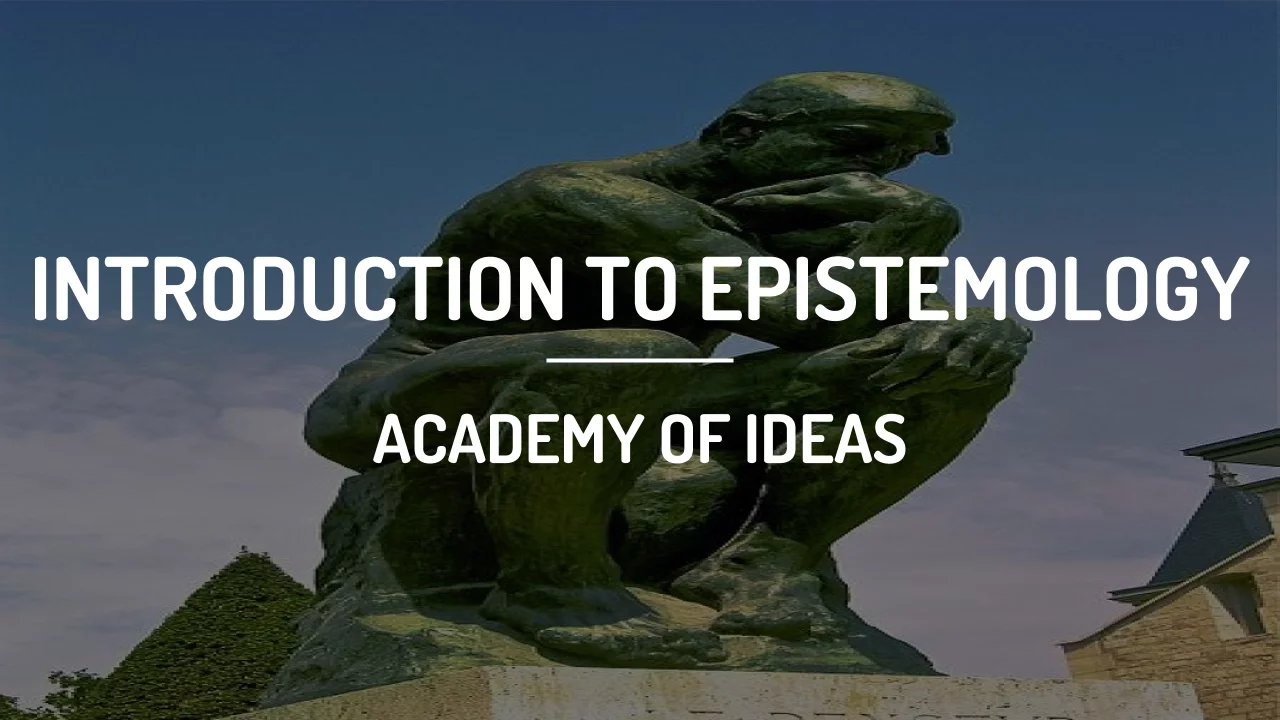
introduction to epistemology at the beginning of Aristotle's work metaphysics he States all men by Nature desire to know but what does it mean to know this is one of the questions that is addressed by the field of epistemology and in this lecture we will introduce epistemology specifically we will examine the meanings of the terms epistemology and knowledge look at what it means to know examine some of the questions which epistemology addresses and discuss why such a field arose in the first place the term epistemology is derived from the Greek word epistem which means knowledge and
the suffix ology which signifies the doctrine or study of so by combining these two terms it is apparent that the word epistemology means the doctrine or study of knowledge but more commonly it is referred to as the theory of knowledge what would a theory of knowledge consist of epistemology attempts to answer a number of fundamental questions some examples of these questions include what is the nature of knowledge what are the obstacles to the attainment of knowledge what can be known and how does knowledge differ from opinion or belief thus when one is said to have
an epistemology it means that they have a theory which addresses such questions how is knowledge obtained traditionally philosophers have distinguished two main methods of knowledge acquisition one way is through the senses or via one's experience I can for example examine a plant and through the experience produced by my senses come to know certain characteristics of it such as its shape size smell texture and whether it produces fruits or flowers those who believe that this is the main way people obtain knowledge are called empiricists however as people have known for thousands of years sometimes the information
given to us via our senses is deceiving for example our senses seem to tell us the Earth is flat but we now know such a belief to be false so can our senses always be trusted furthermore some contemporary philosophers have stressed that our bodies and sensory apparatus influence how we interpret the entirety of reality outside of us for example the way the world looks to a bat is likely quite different from the way it appears to us humans such speculation has led some to emphasize the important influencing effect that our bodies and the sensory equipment
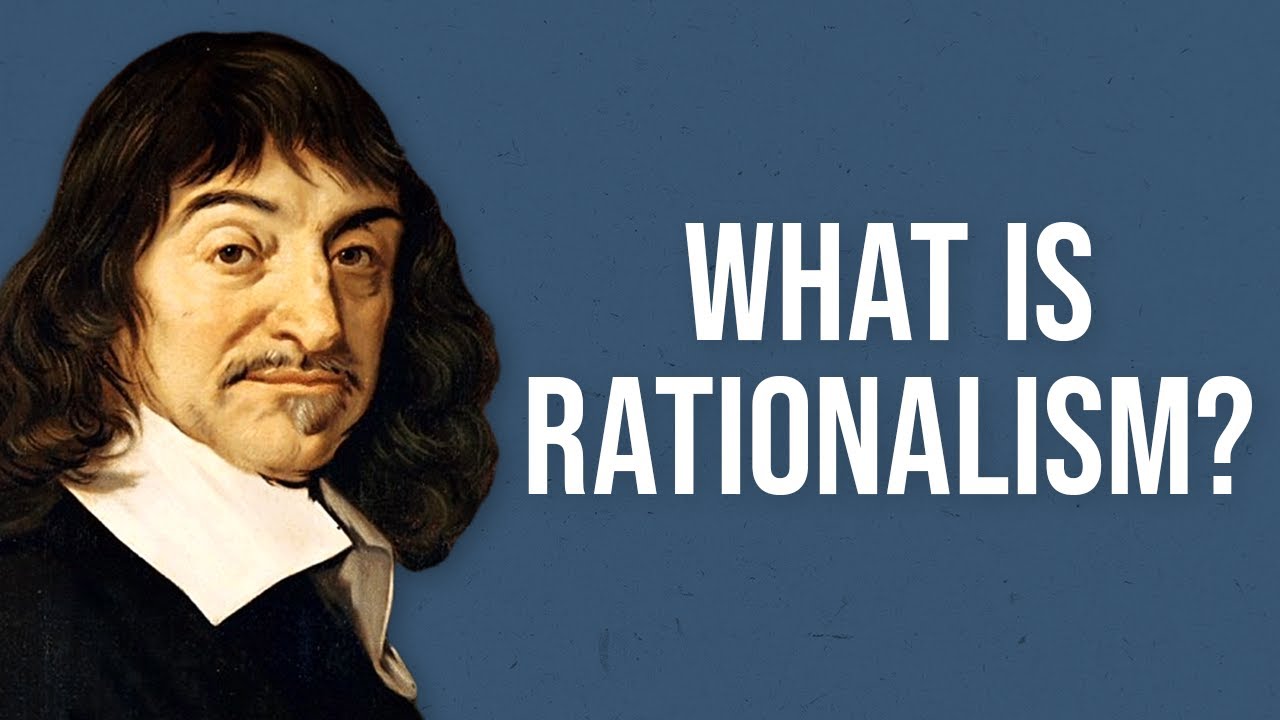
we have evolved have on our pursuit of knowledge about the world such speculations and skepticisms on the workings of our sensory apparatus have led some to suggest that there must be a way to obtain knowledge which can overcome or correct the sometimes illus nature of our sense experience knowledge it is positive Ed can also be obtained via the process of reasoning and those who stress this route of knowledge acquisition are called rationalists often when people introduce epistemology they do not take the time to examine what type of knowledge the field of epistemology is concerned with
but it is important to take the time to do this given that there is more than one type of knowledge generally epistemology has focused on what is called propositional knowledge or knowledge of facts examples of this type of knowledge include statements such as I know that a giraffe has four legs or I know that 3 * 30 equals 90 knowledge of facts or propositional knowledge can be contrasted to practical knowledge which includes knowledge of how to drive a car or knowledge of how to play baseball practical knowledge is often called knowhow because it is the
ability to know how to do something this type of knowledge is implicit or unconscious and in fact is knowledge that we utilize every waking second of Our Lives for example we don't have to analyze and gain knowledge of how to walk down a flight of steps each time we encounter a new Step Instead at an early age we develop the Practical knowledge of how to walk downstairs and unconsciously retain this knowledge for the remainder of Our Lives practical knowledge has typically not been the main concern of epistemology however some philosophers most notably Martin heiger have
spent considerable time contemplating this type of knowledge as he viewed it as a much more fundamental and important type of knowledge than propositional knowledge an individual could be a genius in quantum physics however this knowledge would be virtually useless if the individual didn't have the Practical knowledge of how to get out of bed in the morning however as we just said traditionally the focus of epistemology has been on propositional knowledge even when haiger philosophized about practical knowledge he was in fact trying to arrive at propositional knowledge about practical knowledge or in other words facts about
our practical knowledge when one declares that they have propositional knowledge or knowledge of a fact what exactly does this knowing entail or more specifically what does it mean to know Nicholas rer provides an answer to this question in his book epistemology an introduction to the theory of knowledge he writes but what is propositional knowledge it is emphatically not an activity or performance you cannot answer the question what are you doing with the response I am knowing that Paris is the capital of France anymore than you could say I am owning this watch or I am
liking roses knowing a fact is not something that one does it is a condition that one has come to occupy in relation to information when one comes to occupy such a relation to information thus attaining knowledge of a fact epistemologists have often defined this propositional knowledge as Justified true belief this definition emphasizes that mere belief is not enough to constitute knowledge rather one must have good reasons for believing something to be true so when one says I believe this to be the case it should not be assumed to have the same meaning as if one
had said I know this to be the case and in everyday language a difference between these two statements is indeed usually recognized rather in order to know or have knowledge of something in the sense of Justified true belief there must be solid grounds for holding the belief and the individual must be aware of such grounds guesses conjectures and mere opinions that may or may not lead an individual to a correct belief of a fact are typically not classified as knowledge because such an individual would not be aware of the reasons for the proposition being true
now that we have introduced epistemology and looked at what it means to have knowledge we will conclude the lecture by addressing the interesting question of why humans need a theory of knowledge in the first place as Aristotle seems to have alluded to in the quote at the beginning of this lecture humans seem to be inquisitive by nature in a related manner Nicholas rester suggests that knowledge brings great benefits the release of ignorance is foremost among them we have evolved within nature into the ecological niche of an intelligent being in Consequence the need for understanding for
knowing one's way about is one of the most fundamental demands of The Human Condition but while this may explain why we as humans need knowledge it does not quite address why we need a theory of knowledge if one accepts what is presented to their senses or determined through the rational workings of their mind as true and is not skeptical as to its validity then the need for epistemology is limited for in such a case one does not question what knowledge is or how humans can obtain it this sort of view seems to be the case
for some of the ancient presocratic philosophers who seem to take for granted that we could know the nature of the universe as the great historian of philosophy Frederick ceston said the presocratic philosophers in the main were dogmatists in the sense that they assumed that man can know reality objectively however when one begins to question if we can be sure that the ideas or representations in our mind actually correspond to the world outside of ourselves or if we can ever hope to bridge the gulf between our our ideas about the world and the world itself then
the problem of knowledge arises and along with it the need for an epistemology or a theory of knowledge interestingly some have suggested that it is fear that has led to the development of epistemology a fear that we as human beings are lost in the cosmos with tools that are too inadequate to give us the knowledge we desire such as explanations for why things happen or truths about the meaning or purpose of our life in the scheme of this vast Cosmos Lorraine daston and Peter Gallison illuminate this point in their fascinating work objectivity they write all
epistemology begins in fear fear that the senses are too feeble in the intellect too frail fear that memory Fades even between adjacent steps of a mathematical demonstration fear that Authority and Convention blinds fear that God may keep secrets or demons deceive the 17th century polymath blae Pascal seems to have suggested such a fear when he wrote swallowed up in the infinite immensity of spaces of which I know nothing and which know nothing of me I take fright so to summarize the main points of the lecture epistemology is the theory of knowledge and knowledge in the
sense of propositional knowledge has been defined as Justified true belief further more as we speculated It Was Fear which led to the need for a theory of knowledge and as daston and gison suggest in their book epistemologists have attempted to quell this fear by trying to clear a pathway towards the possibility of knowledge by removing the sources of error and Imperfections which have plagued humans in their Quest To Know






![PHILOSOPHY - Epistemology: Introduction to Theory of Knowledge [HD]](https://img.youtube.com/vi/r_Y3utIeTPg/maxresdefault.jpg)