the tous analysis model adds actions to a traditional SWOT analysis making it a powerful summary of the future rather than a limited assessment of the present let's compare the models SWOT analysis has been with us for decades it's been helping companies identify their internal strengths and weaknesses and the external opportunities and threats they face it's a simple model to understand but despite that most of us inwardly cringe every time somebody suggests using it here's why SWOT analysis doesn't say anything about future actions wouldn't it be better if we just expanded the model a little to
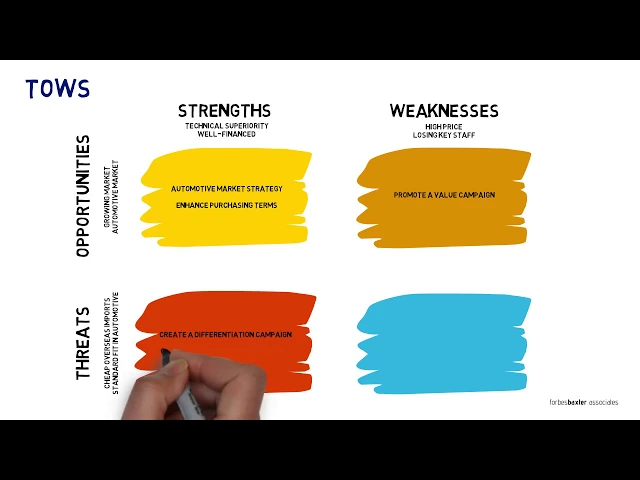
say how we're going to capitalize on our strengths compensate for our weaknesses exploit our opportunities and challenge our threats that's exactly what Toes analysis does it keeps the simplicity of SWOT but adds actions it becomes infinitely more useful by doing so every SWOT analysis ever produced evokes the same question what next toes incorporates the answer imagine you're a company producing engine analysis parts a traditional SWOT assessment would adopt the usual four box structure you can see illustrated our strengths could be cited as technical superiority and the fact that the company's well financed our weaknesses could
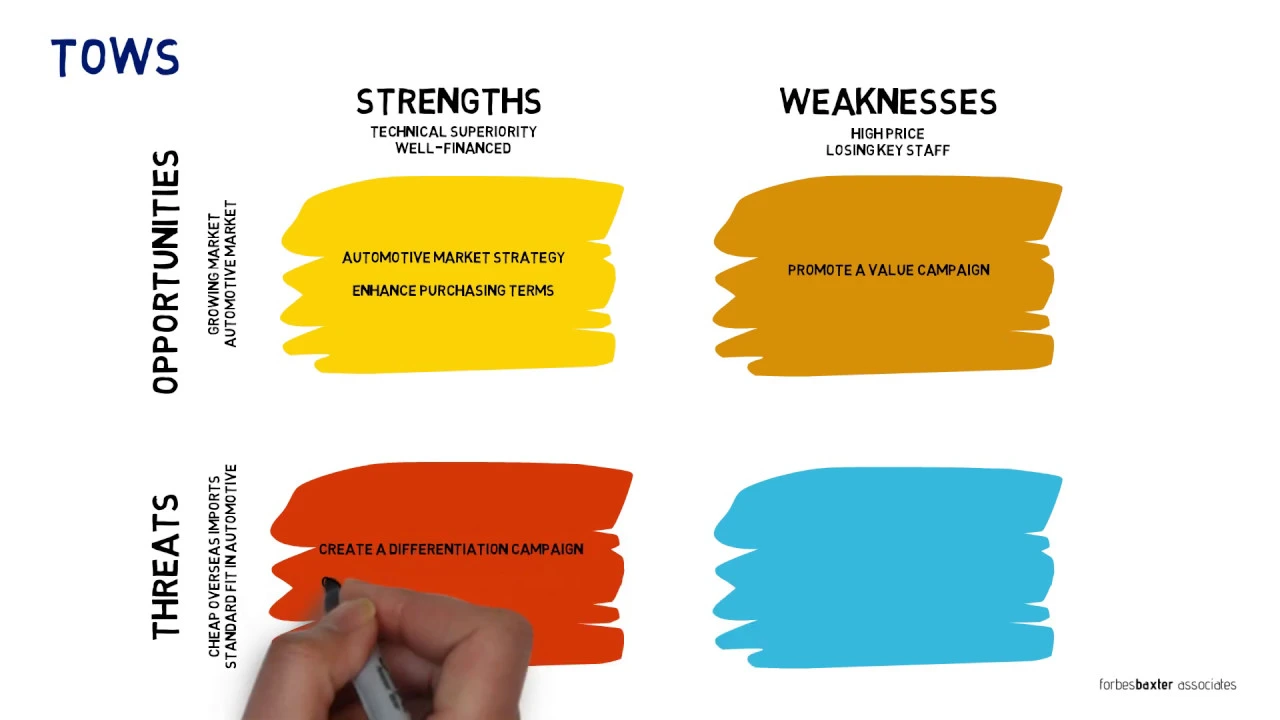
be that we're more expensive than our competitors and we're losing key staff to startups our opportunities could be that our existing markets are growing and we have the potential to move into a new market for automotive engines our threats might be cheap imports from overseas and the possibility that automotive manufacturers will fit our kind of components as standard killing the chance of aftermarket upgrades by SWAT standards that's quite a useful analysis by commercial standards is totally useless any managing director receiving that from one of their managers would have no idea what they intended to do
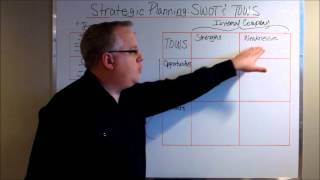
about it they'd probably have to read a supplementary report when what they really wanted was something as neat and succinct as a SWOT report just more informative that's where toes comes in toes takes the four parts of a SWOT analysis and makes them the axis headings for a new chart this creates four boxes into which you can put actions at the intersection of strengths and opportunities you describe how you'll use your strengths to exploit the available opportunities at the intersection of weaknesses and opportunities you describe how you're challenged or overcome your weaknesses in areas of
opportunity at the intersection of strengths and threats you describe how you use your strengths to overcome any threats you face at the intersection of weaknesses and threats you'll describe any actions you can take that might address a weakness and a threat at the same time it's harder to promote actions in this quadrant than the others because you have so little ammunition the temptation is to draw on some of your strengths or opportunities but that defeats the purpose of the model let's look at how that might work in action using the results of our SWOT analysis
our component manufacturer would want to develop a strategy to target the automotive market that strategy would have to revolve around a company's strengths such as technical superiority the fact that the company is also well financed could be used to offer purchasing terms that start up competitors couldn't match this could be longer credit terms smaller deposits at the time of order or a higher path church purchase program that spreads the cost over several years these financial inducements cost money that a cash-strapped startup probably couldn't afford a high price might be seen as a weakness however in
our company's existing growing market and its potential new automotive market this could be addressed by promoting a value campaign it's not a new idea and it's always hard to persuade people to buy anything with the cheapest product but such such campaigns do work the value campaign could also stop key staff leaving it might make them feel proud to be with the market leader to be part of the winning team strengths are an obvious tool to be used against threats in our company's example a differentiation campaign that promotes our technical superiority is a great way to
challenge the flood of cheap imports from overseas if the company is worried about automotive manufacturers making this type of technology a standard part of future vehicles it's probably a perfect time to develop a channel strategy so those manufacturers become our customers instead of somebody else's defining actions that address a weakness and a threat is much harder how would our company address the weakness of a high price with the related threat of cheap imports if we want to avoid drawing on strengths that belong in other quadrants of the model we could suggest new manufacturing techniques or
materials that reduce costs or a loyalty program that rewards customers for the historical purchases they've already made be attractive to alternatively if our company felt the need to go negative we could start a campaign about the disruption customers would suffer when switching from one supplier to another the purpose of this video isn't to propose actual solutions to a hypothetical situation like this is to explain the tous model if you compare the completed SWOT analysis with the completed tous analysis it should be clear how much more informative tous is in one simple chart it summarizes a
business's current situation outlines its future plans and illustrates the connection between the two thanks for watching