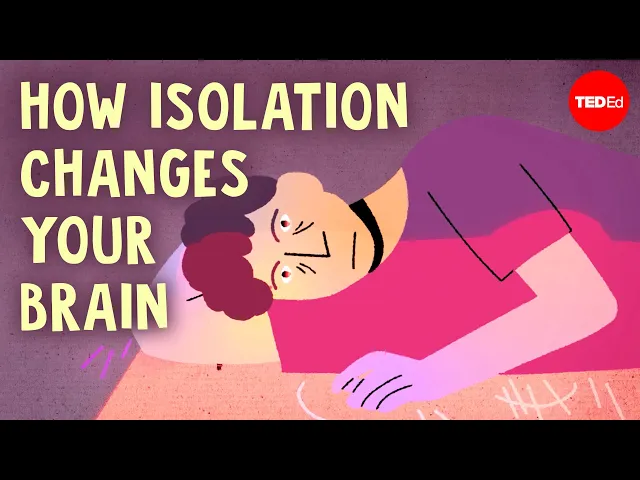
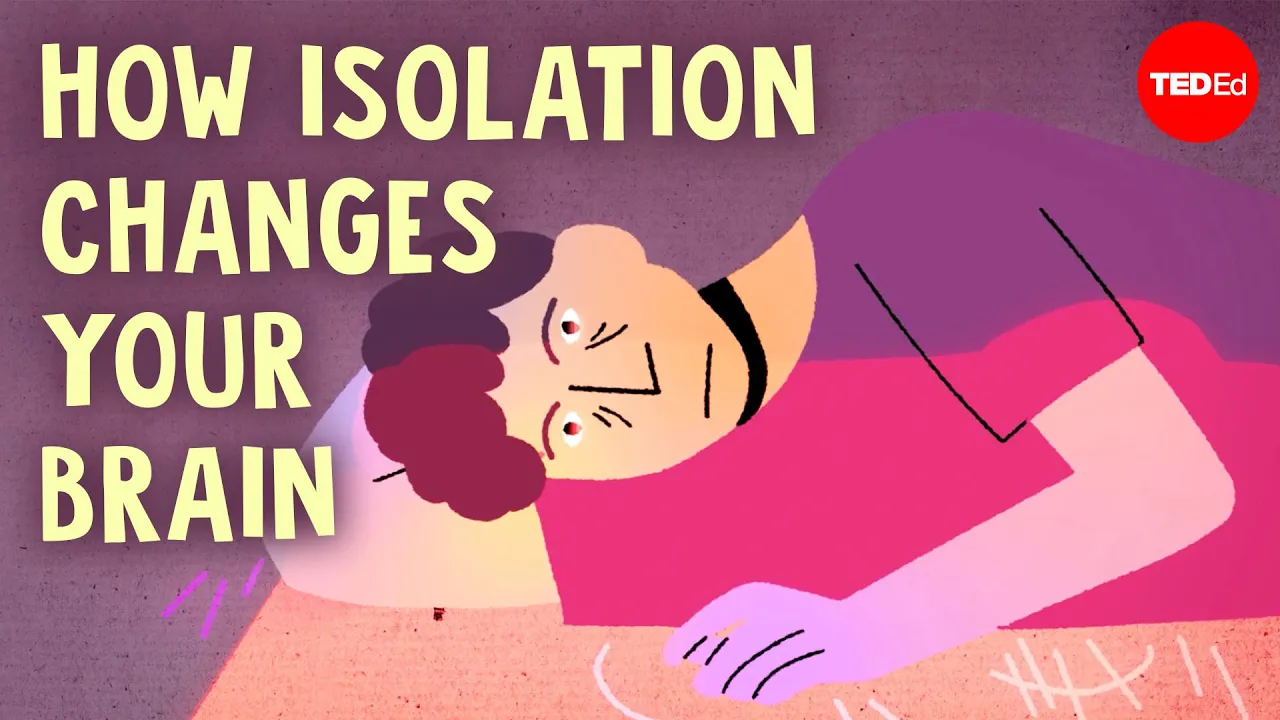
Everyone needs time to themselves, and peaceful solitude has stress-relieving benefits. But being alone takes on an entirely different dimension when it creeps up or is forced upon you. When that's the case, the effects can be surprisingly extensive.
And though different people experience distinct effects at different times, symptoms tend to become more severe and persistent the longer one's isolated. When someone is involuntarily confined to one space indefinitely— for days, weeks, months, or even years— alone and without productive tasks, their body will likely undergo numerous changes. Let's take a look at what may happen and why.
Early on, stress hormones may spike, and as time passes, that stress can become chronic. Social interactions and meaningful activities are essential for emotional stability. This may be because they provide us with what researchers call “social reality testing”— a sort of sounding board where we can gauge how rational our perceptions are.
So, when someone’s deprived of those kinds of communication and tasks, their sense of identity and reality becomes threatened. Their thoughts spiral and their impulses take the reins, setting the stage for depression, obsessions, suicidal ideation, and, for some, delusions and hallucinations. Over time, this prolonged agitation can cause the brain's limbic system, which regulates fear and stress, to become especially responsive and hyperactive.
Meanwhile, the prefrontal cortex, the brain’s hub for reasoning and moral judgment, may shrink, impairing one's focus, memory, and cognition. Overall, the balance shifts from rational thinking towards emotionality. And as someone remains in this state, the imbalance becomes ingrained, making them more prone to bouts of anxiety, rage, and irrational actions.
Isolation will also affect other parts of the person's health. They may lose sense of time and have difficulties sleeping. They're more likely to experience heart palpitations, headaches, dizziness, and hypersensitivity.
And they may also lose weight because of stress-induced digestive issues and poor appetite. One can attempt to cope by establishing the healthiest routine possible under the extreme circumstances, including robust exercise, reading, and writing. But that can only do so much.
The United Nations, many human rights organizations, and experts classify this kind of forced, prolonged isolation as torture. And yet, it’s something imprisoned people in many countries endure. Also called “solitary confinement” or “restrictive housing,” the practice is most common in the United States.
In 2019, more than 120,000 US prisoners lived in solitary confinement, spending 22 to 24 hours a day in mostly windowless cells spanning roughly six by nine feet. Quaker groups introduced solitary confinement to US prisons in the late 1700s, as an alternative to corporal punishment, believing it could bring about reflection and penitence— hence “penitentiary. ” But the practice quickly faced criticism, from public figures all the way to the Supreme Court.
Charles Dickens, for one, condemned solitary confinement as “worse than any torture of the body. ” Its use dwindled, but then, in the 1980s, alongside more punitive, tough-on-crime laws, US prison populations skyrocketed. As prisons grew crowded, incidences of protests, rebellions, and violence grew, and prison authorities increasingly used solitary confinement to maintain control.
Many people have been placed in solitary confinement for minor, nonviolent infractions, like talking back to prison guards. And solitary confinement is harmful to everyone, but many who’ve experienced it have pre-existing mental health disorders, which it only exacerbates. Solitary confinement also seems to have lasting effects that make readjusting to life outside of a cell difficult.
People who have gone through solitary confinement are three times more likely to show signs of post-traumatic stress disorder. And they commonly report experiencing shifts in their personalities, increased anxiety and paranoia in otherwise ordinary situations, and difficulty concentrating and connecting with others. Some states have restricted the use of solitary confinement in cases involving serious mental illness, children, or pregnancy, and some have adopted 15 or 20 day limits for everyone.
But laws that regulate solitary confinement aren’t always enforced— and prison authorities have created loopholes. Yet solitary confinement does immense damage that is contrary to rehabilitation, while failing to reduce prison violence. Meanwhile, other countries have centered more humane approaches.
Norway, for example, imprisons far fewer people per capita than the US while spending five times more per prisoner on accommodations, classes, and work-release programs. Norway also sees far fewer people return to prison after release, with one of the world’s lowest rates of recidivism, indicating we tend to get better together.