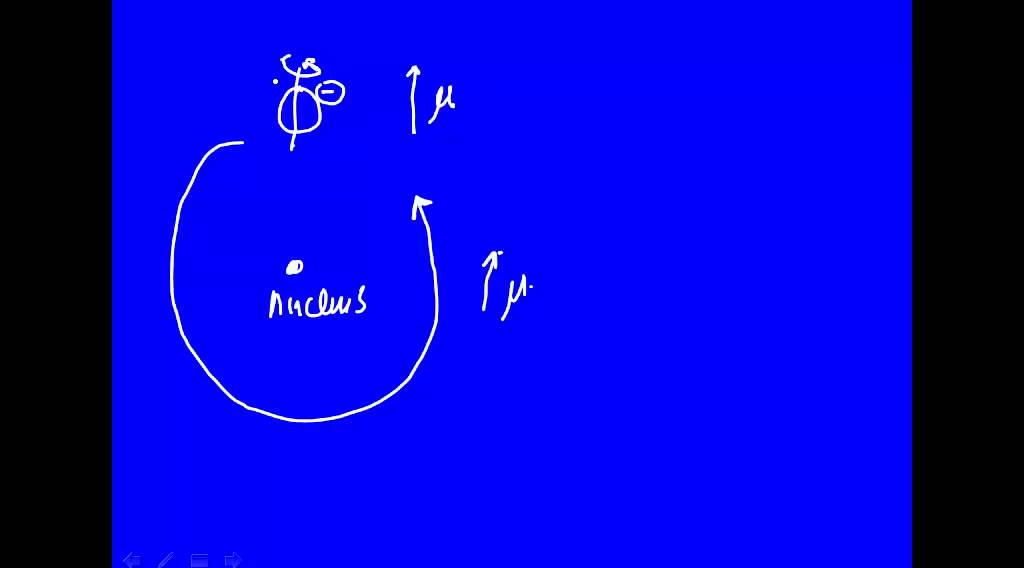
so typically in our discussion of the atom we usually take the reference frame of our nucleus so we imagine that the nucleus is stationary and the electron is moving somewhere around that nucleus but now let's suppose we take the simplest atom the hydrogen atom and now we take the reference frame of the lectron so the electron is assumed to be stationary while the nucleus is the thing that orbit that electron in a circular fashion as sh in the following diagram so we take the reference frame of the stationary electron and the nucleus that contains our
proton and neutron is found orbiting around the following electron in a circular fashion now as the positively charged nucleus which contains the protons orbit the electron in a circular fashion elc current that inat a magnetic field b remember any we have an electric current moving in a circular fashion as in this case that induces a magnetic field b and the magnetic field b the magnitude of it is given by this equation where mu not is a constant i is the quantity of electric current and r is the radi of the circ orbit the direction of
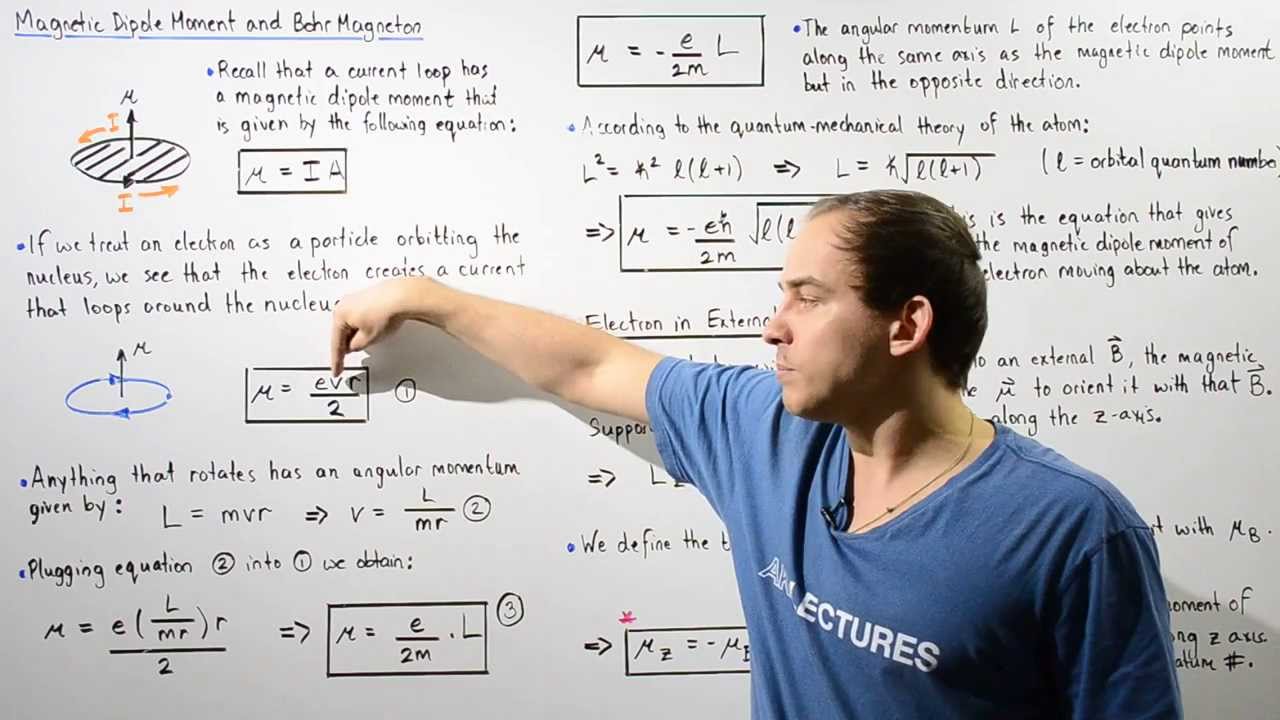
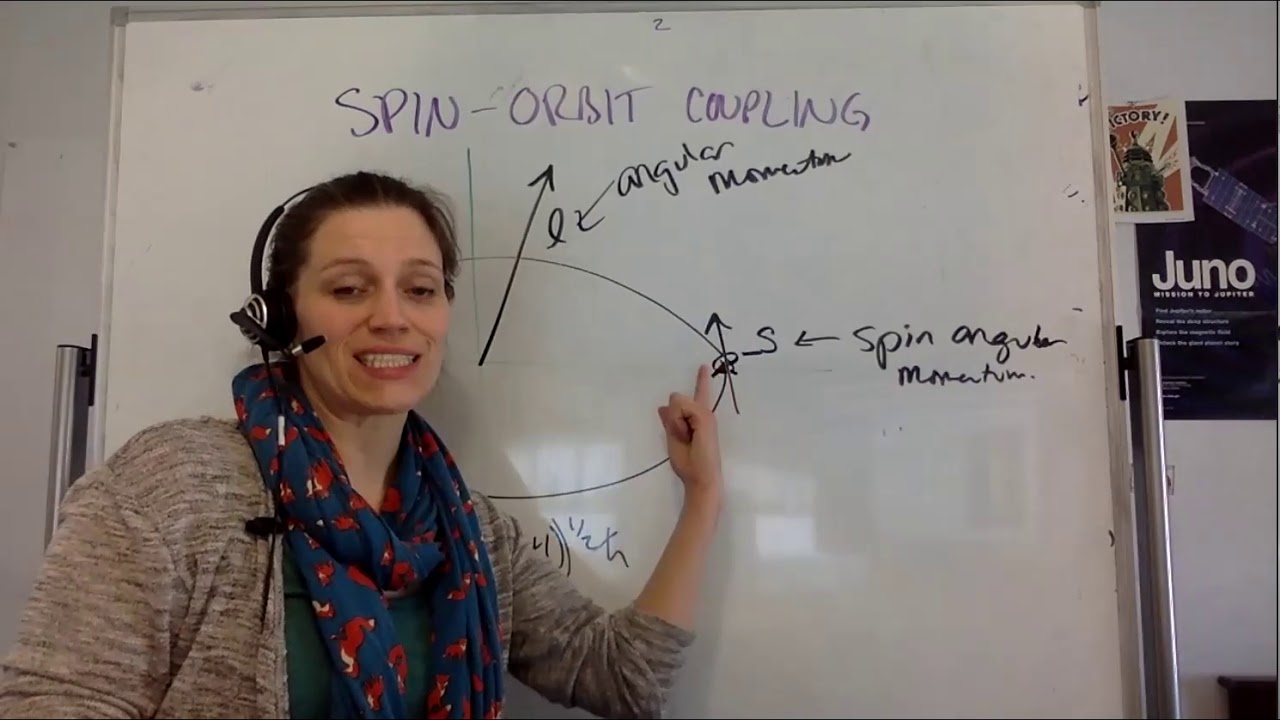
the magnetic field b is given by the right hand rule and in this case let's suppose the magnetic field b points upward as shown in the following diagram now recall that any electron has an intrinsic property known as the electron spin and the electron spin creates the spin angular mum of that electron so the electron has an angular momentum that is created by the electron spin now the electron spin also induces or creates a spin magnetic dipole moment given by mu and basically whenever we place a magnetic dipole moment into a magnetic field what will
happen is the magnetic field b will create a torque that will act on the magnetic dipole moment mu to orient along the same direction field lines created the magnetic field b basically this me that the spin magnetic dipole moments of the electron will feel a torque as a result of the magnetic field be created by the orbit of the nucleus created by the relative motion between the electron and the proton in the nucleus now this tor will basically tend to ori rotate that spin magnetic dipole moment along the same direction along the same axis as
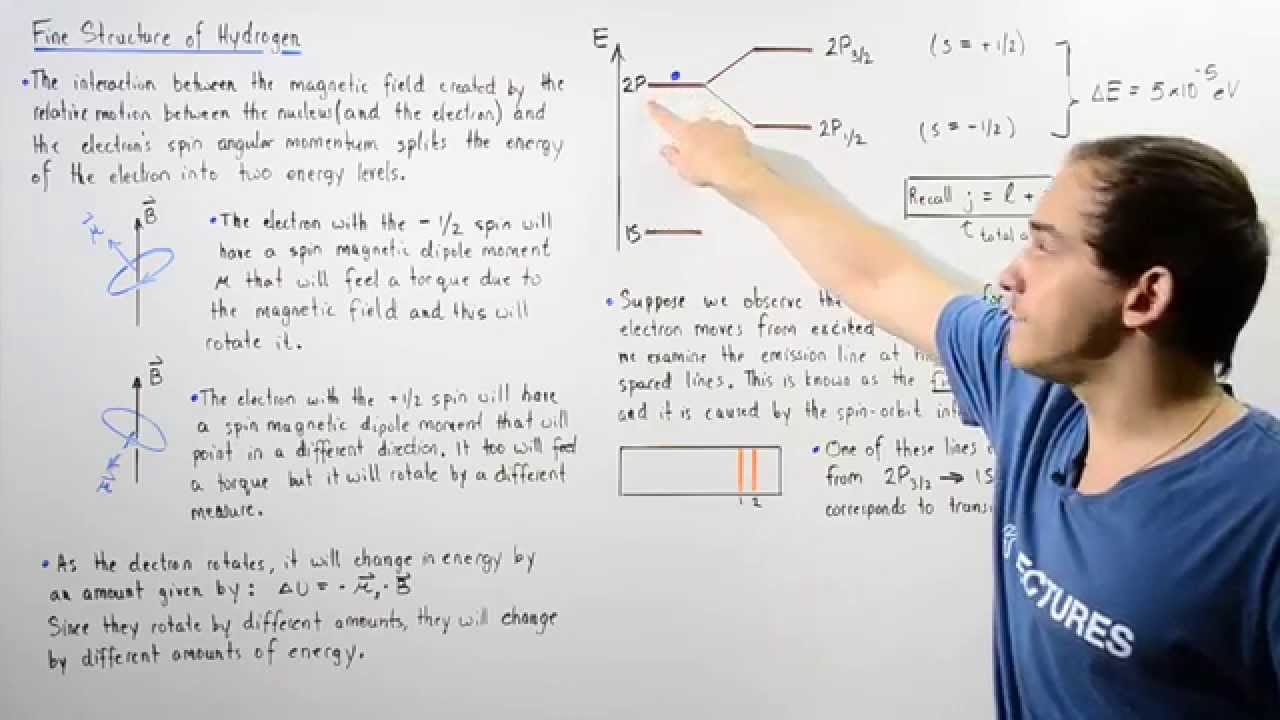
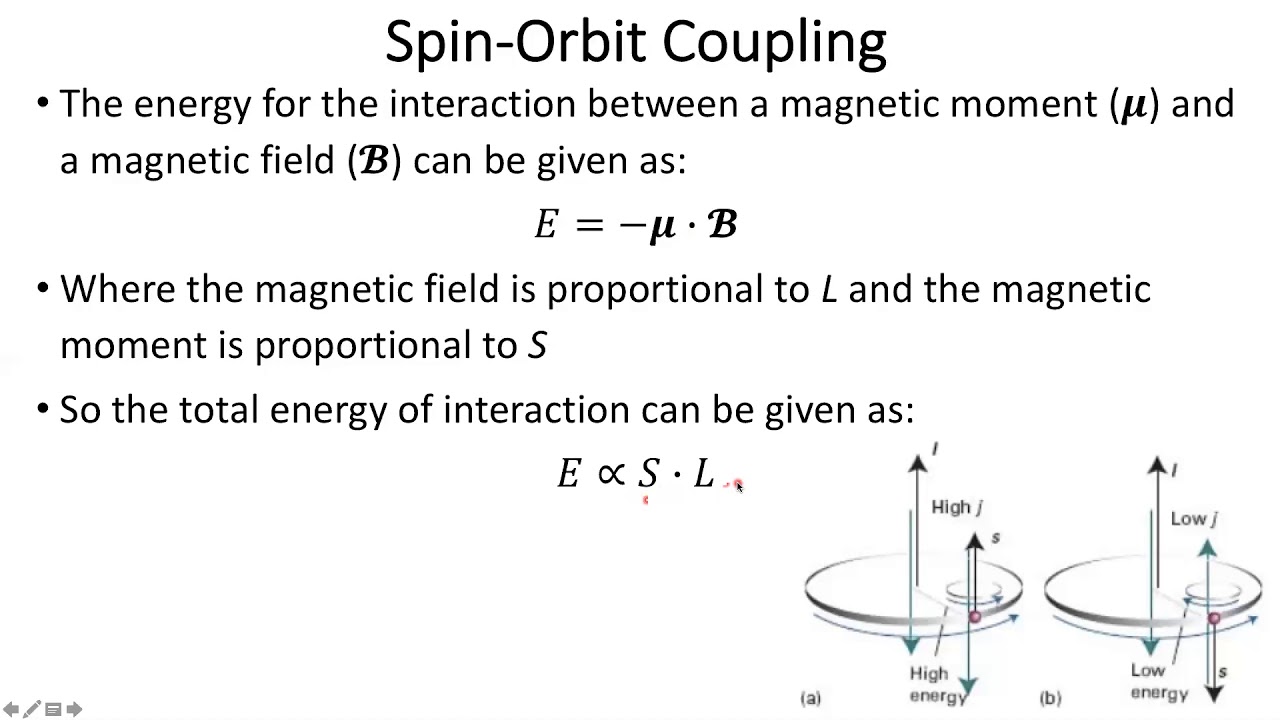
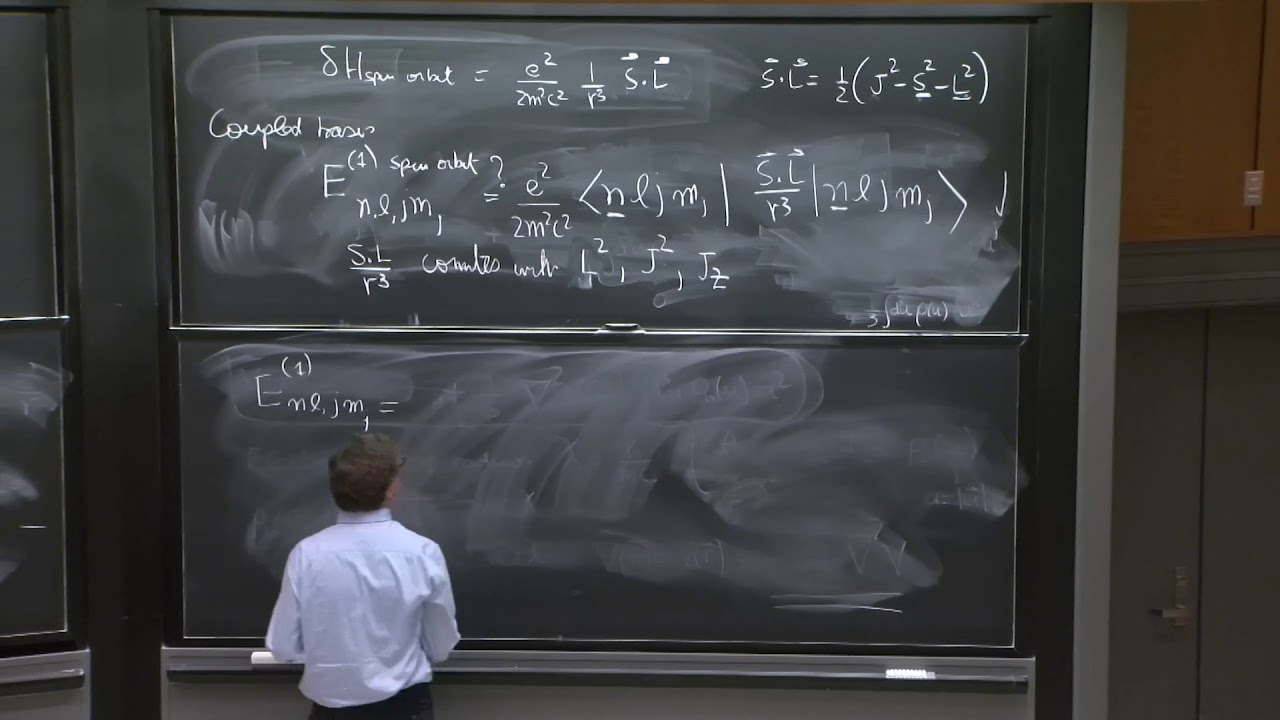
the magnetic field line of that magnetic field b and that means that as the torque acts on the electrons magnetic dipole moment it will change the energy of that electron by the following amount so delta e the change in energy is equal to nega of the dot product of the magnetic field vector created by the relative motion between the electron and our nucleus as well as the mu s where mu s is the spin magnetic dipole moment now the question is what exactly is the spin orbit interaction well to describe what the spin orbit interaction
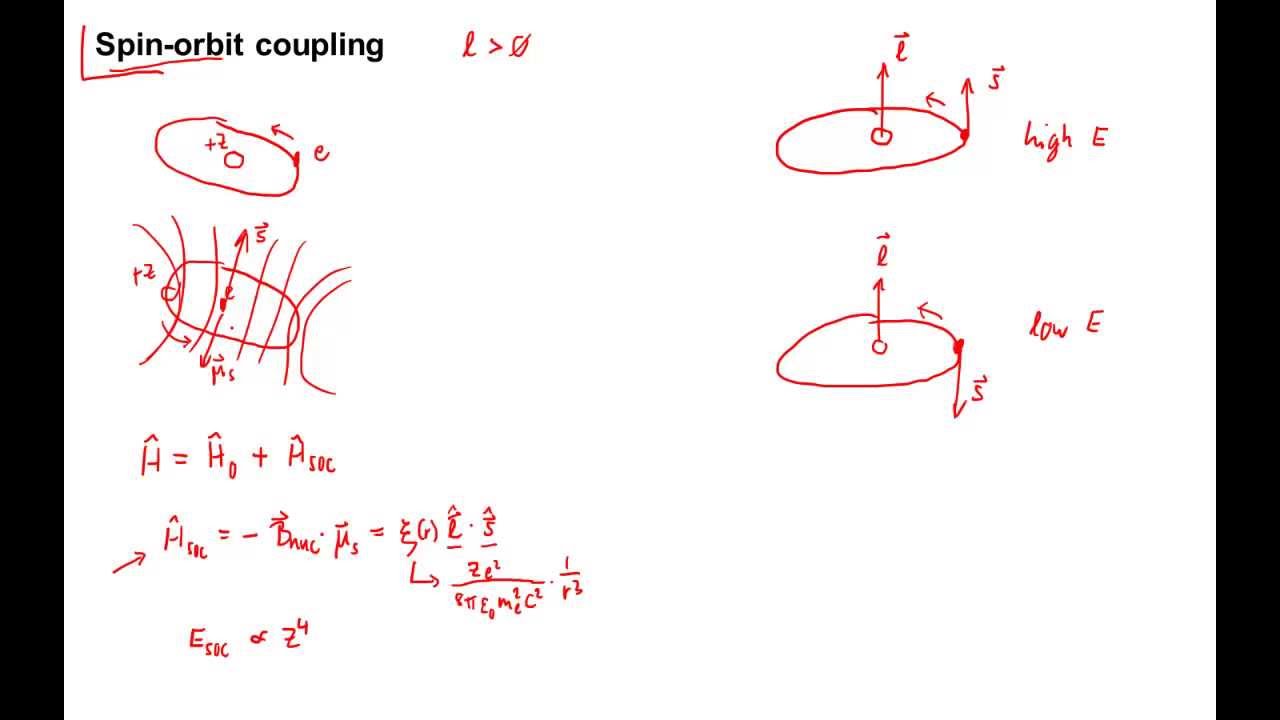
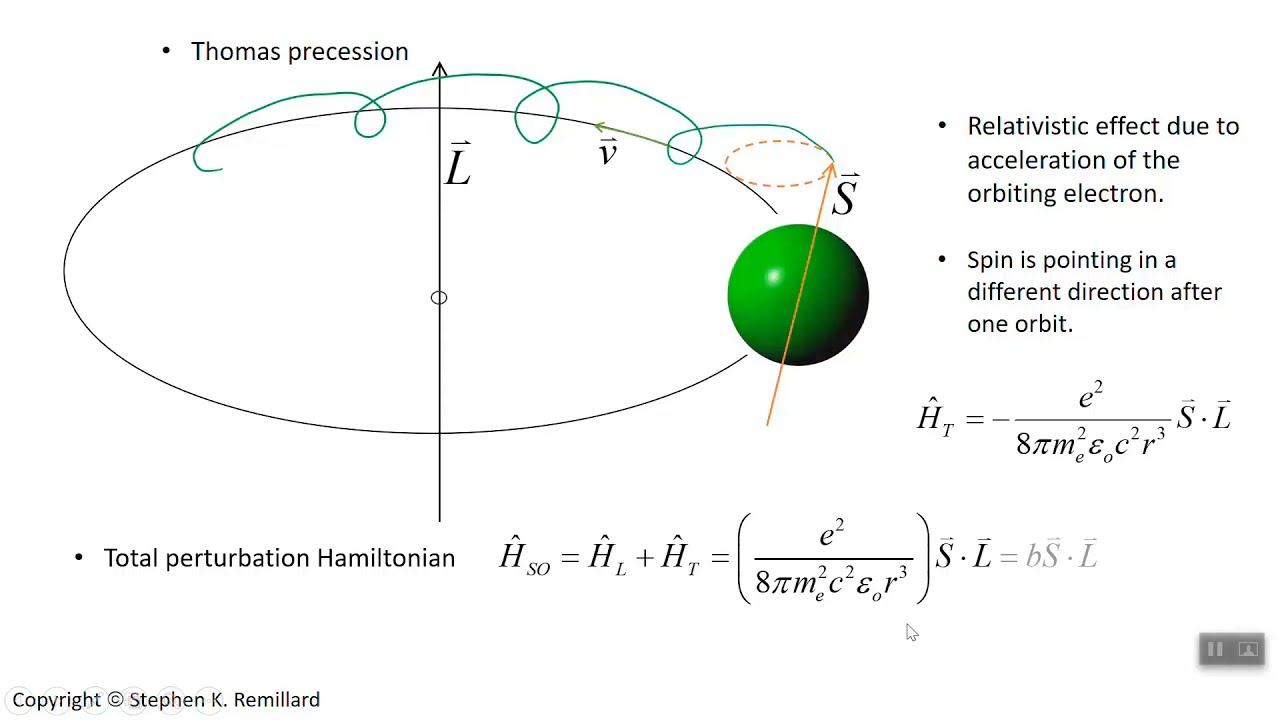
is let's recall the relationship between the magnetic field b and the orbital angular momentum rel mo of the nucleus of the at elect creates a magnetic field b as we discussed just a moment ag and this magnetic field b is related to the orbital angular momentum given by capital l and the relationship is given by this equation so basically we can think or another way we can think of this magnetic field b is in terms of the orbital angular momentum created by that nucleus motion around our electron and it's given by this equation now another
important relationship that we must remember is the relationship between the magnetic dipole moment or the spin magnetic dipole moment mu s and our spin angular momentum so basically the spin magnetic dipole given cap s and that means another proportion that we can write is as following so another way we can rewrite this equation is in the following format because b is related to l and because mu is related to sct vect ang momentum s isal to the change in energy that our elects as result of this magnetic field now the interaction between the orbital angular
momentum l of the nucleus and thein angular momentum given orbit interaction and from this discussion we see that as a result of this interaction there is a change in energy of the energy levels of the electrons within the atom because when that magnetic field b creates a tor that acts on the spin magnetic dipole moment mu it will basically rotate and as it rotates that elect that energy as per this equation this equation basically let's imagine that the magnetic field b is given by this arrow so the magnetic field b points upward and the electron
basically spins around that nucleus and it creates the spin magnetic dipole moment mu this is the spin magnetic dipole moment is created as a result of the intrinsic electron spin of that electron and as we turn on this magnetic field b the magnetic field b will create a torque that will tend to rotate this mu along the same axis as the direction of the magnetic field lines b and when this rotation takes place the electron will change in its energy by this amount so delta u is equal to ne mu where mu is simply the
magnetic dipole moment of that electron as a result of the electron spin and our b where b is the magnetic field b that is created as a result of the relative motion between our electron and the nucleus of the atom so basically the spin orbit interaction is the interaction between the magnetic field b that is created by the relative motion elect and nucleus and the spin of that electron the spin magnetic dipole moment that is created by the electron spin of our electron