welcome to the first part of our lecture on Canada's peacekeeping tradition War Fighters or peacekeepers question mark what we're talking about here is U. N peacekeeping first the tradition of U. N peacekeeping and definitions of peacekeeping then we go on to talk about multi-dimensional operations including the concept of peacekeeping training we focus on Canada's peace support operations another word for peacekeeping and then we begin to discuss Afghanistan which we will consider in in much more detail in the other lectures I talk a little bit about Latvia but mainly that's in the NATO lecture and Mali Canada has withdrawn from Mali and we also try to do a in class exercise on Mali that I talk about so Canada's peacekeeping tradition stretches back all the way to Lester B Pearson who's pictured there receiving the Nobel Peace Prize in 1957.
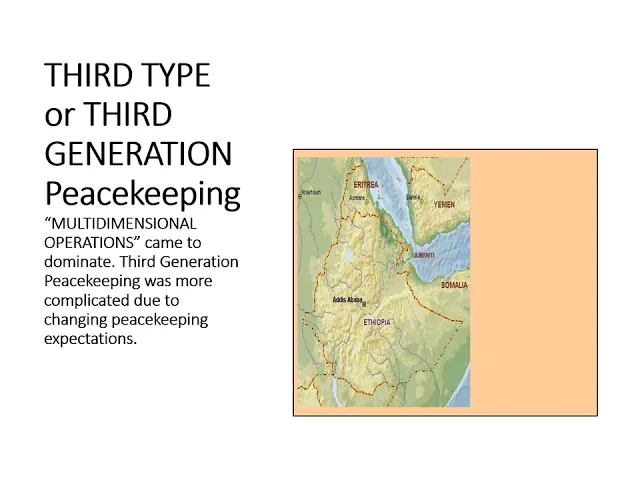
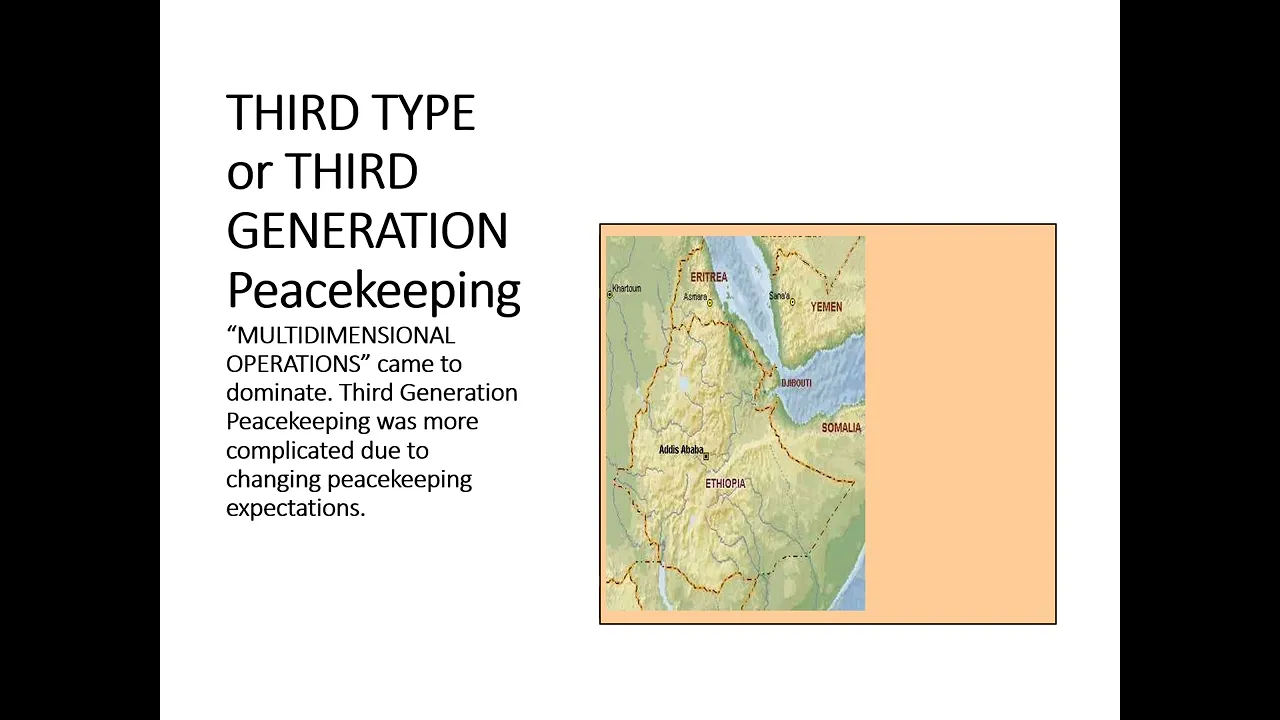
we also shared the Nobel Peace Prize in 1988 because of our contributions to peacekeeping in 1992 that's the statue at the close to the National Gallery in Ottawa and I was involved in deciding on the selection of the peacekeepers there and some of the debates in 94 I was involved with the Canadian Institute for strategic studies efforts to establish a peacekeeping training center in Sydney I wasn't involved in that part but I was involved in the Cornwallis one and then it goes on there you can see that the back of the Canadian dollar has the same statues and then when you meet people in the Canadian Forces they may be carrying ribbons that denote various operations the back of the Canadian dollar also had as peacekeepers I've been on radio and debated with the major general Lewis McKenzie I've met many times Romeo delaire and had dinner with him and talked about the Rwanda genocide and of course there's a movie you can watch it counts with the devil as well so Canada has a rich peacekeeping tradition and many many symbols of our involvement what is peacekeeping uh here's the UN definition which is a bit outmoded because we used to think that you had to have the consent of all the parties to the conflict so that was difficult in Somalia that would be very difficult in Ukraine to have all of the consent of all of the parties but that's one of the arguments that's been made about Ukraine that we can't have a peacekeeping force because it will be impossible to get the parties Ukraine and Russia to agree I don't think that's true and we'll talk more about how peacekeeping can be used but that's just a general definition there that I'd like you to read over what we're going to talk about first is the evolutionary model of peacekeeping how peacekeeping has evolved from traditional first generation peacekeeping to the multi-dimensional operations that we see now in Afghanistan and Kosovo so formally we called uh peacekeep we used to use the word peacekeeping now we say p f k s o or peacekeeping support operations uh some people will say peace enforcement essentially we're describing the movement from the first generation where peacekeepers were observers and were unarmed all the way to multi-dimensional operations and the insistence on working on Administration government voting and so on so expanding and of course becoming much much more expensive for the United Nations so the first type of peacekeeping was demonstrated here in between North and South Korea I actually saw this area from the demilitarized zone in South Korea and that is where the South the North Koreans killed some peacekeepers with knives and hatchets before everyone shocked eyes and so this is a picture of the peacekeepers reacting to that Slaughter so at that time peacekeepers didn't carry weapons their functions were as observers to Monitor and to verify with the agreement of all the parties so they were unarmed soldiers and they were also expected to somehow diplomatically intervene so was it dangerous most of the operations were not really that Canada was involved in initially so Canada was in Cyprus for over 30 years and often when you meet older folks that were in the reserves or that were in the Canadian Forces they were deployed in Cyprus and they have good memories of that except for a brief war in 1974 between the Greek cypriots and the Turks my friend General Clayton B was the Canadian commander in charge of all the U. N forces during the war and I worked very extensively with him in the 1980s I have 1990s and I have very fond memories of him he would often recount to me the war and and his decision making so second generation peacekeeping began to talk about interposing inter-positioning forces between the warring parties and the goal was to keep them separate using peacekeeping forces the peacekeepers would still be serving in battalions but armed for self-defense only and they would not use particularly heavy Army armor but just light weapons so the classic example of that was the UNIF to the United Nations emergency force in the Middle East in 1956 which is where Pearson proposed a UNF emergency force and later got the Nobel Prize for his efforts okay you have to here you can see the forces continue to stay on in Suez City and I want you to look at the blue helmets the UN traditionally officials or soldiers no matter what country they come from all where blue helmets so interpositional peacekeeping also entailed separating warring forces so the UN would use all types of light armored vehicles you can see that they're white here and they're marked by a blue flag and the United Nations words so they would interpose themselves United Nations force and Cyprus is called unfossip and it's the principal example of interpositional peacekeeping as it evolved so it was created initially in 1964 and they drew these green lines to separate the cypriots and from the Turks then the Turks invaded in 1974 and although um unfa sip is still in operation it's really seen to be a kind of a static example of interpositional peacekeeping that's gotten really nowhere to figure out what to do with this island is still in operation yes and Joe Clark was a un Envoy who was supposed to try to figure out a solution who was Joe Clark he was Canada's prime minister he was a conservative and once he retired as prime minister he tried to help the United Nations in many ways third type of third generation of peacekeeping is is often called multi-dimensional and it came to dominate it meant that peacekeeping became much much more complicated member a student in my classes years ago was actually deployed on this mission in Ethiopia and Eritrea and he recounted how as a military Observer he his duties it were much more complicated in terms of separating the uh the combatants so that's a new type of peacekeeping force and what I want to highlight here but it's not on the exam is the difference between Cold War peacekeeping and post Cold War peacekeeping so cold war was more interstate between Eritrea and Ethiopia between states and then it gradually moved more to Interstate conflict like Somalia Warlords fighting in Somalia or different um groups fighting within the former Yugoslavia but Kosovo versus the serbians so that's one of the main evolutions and then of course it moved from ceasefires focusing on observing to more multi-dimensional peace agreements so you don't have to memorize this but it's just a useful table the new types of peacekeeping involve Naval operations they involve Air Force operations including drones and they involve more U. N negotiations and State Building these are all parts of multi-dimensional operations now see the on their shoulders how they have the U.
N peacekeeping badges the multi-oper dimensional operations involve everything from helping the police to set up lawyers reconstructions building schools and so on peacekeeping has come to include the protection of strategic sites even nucrocytes uh bases and so on these are important too multi-dimensional peacekeeping also can involve pre-deployment for example in Macedonia so as to prevent a conflict we also now expect Aid to the Civil Authorities so the problem became that the military and civilian peacekeepers maybe they were involved in elections or in monitoring they went from being professional combat capable soldiers to being soldiers trained as Engineers to get rid of landmines or as bureaucrats to set up elections and so on it became much more complicated and multi-dimensional for example Europe U. N peacekeepers building roads in Cambodia where there were landmines they were you can see here that the money that's involved in obtaining all this kind of Hardware is difficult too so many of these specialized tasks require specialized skills and a lot more money so demobilization reintegration police and so on are much more complicated I want to sum up by showing that you can become involved as a peacekeeper by volunteering at National and Municipal elections for example if you volunteer as an observer at the Municipal elections coming up then you will have increasing responsibilities and I've known quite a few students who've ended up going to East Timor or going to Africa to Uganda to be part of electoral organization this is one way that you can become involved the UN is involved with nation building for example they helped with the inauguration of the first namibian president let me now talk about enforcement and peacekeeping so this is a word for robust peacekeeping which involves much more active and violent aerial and Naval enforcement it can involve protection against snipers intelligence gathering monitoring from the skies rapid reaction forces drones to conduct surveillance and so on generation peacekeeping involved due to many difficult situations in the 1990s I spoke about Romeo delaire pictured there with the Beret and his terrible terrible experience in Rwanda with the genocide uh I I A friend of mine right there pictured uh he was uh captured hostage Patrick in Serbia and he was held there for a few days the whole world watched him as he was chained to uh or he was tied to a a telephone pool as a hostage so this there were many many difficult situations in the 1990s and robust peacekeeping continued to evolve so it began to use more more sophisticated helicopters and drones Griffins combat uh helicopters on all sides the fourth generation peacekeeping used transitional Administration so for example it tried to administrate countries that means that Syria which is a country on its own we will probably not have a peacekeeping operation there because to administrate Syria apart from the difficulties of of even getting in there would mean trying to run an entire government so there's a picture there in British pounds of where U. N peacekeepers have been deployed and you can see that most of it is most of the deployments have been in the global South a big step therefore would be to move peacekeeping to actually governing territories during a transitional period and this is very very difficult and expensive the goal might be to turn Afghanistan over to become a stable government that's governed by a local election a democratically elected leadership but as we will learn in the Afghanistan case study this proved this comprehensive approach proved to be a complete failure so a newer concept that entails less multi-dimensional operations and more modest goals is called security sector reform Drsakin and poor was one of my PhD students for five years and he wrote an excellent uh thesis on SSR his argument was that in Afghanistan NATO needs to spend much more on training the police and also the army and also trying to work with the CIA on judicial and legal operations and intelligence collection and trying to use NATO to disarm the general population so that was SSR there's other cases of SSR not just Afghanistan so I put a few examples there where we had the United Nations we started working toward SSR so we're still in Kosovo but the other operations have ended Kosovo is still ongoing hard to believe 24 years U.
N interim Administration in Kosovo operates under NATO auspices for the U. N so NATO is in charge of the security there it is a very complicated operation where they are trying for fairly small area to administrate many many things everything from banking to Law and Order other multilateral organizations are also full Partners but it's NATO military forces that are keeping the peace or the security there I want to mention that the East Timor operation I mentioned before some students and in fact my colleague DrWalter Dorn went there and himself observed people being shoved into a church and burned alive uh because they were um executed that way is very powerfully affected by that um so East Timor that operation of SSR essentially failed Canada's peacekeeping operation in Mali um has also ended you can see where Molly is there on the map and Canadian Forces joined with the French they have a very strong anti-surgent operation in Africa and there was some um questions about whether we should join with France because the extremists that are in Mali had so far not targeted or threatened Canadian interests but it was part of a un contribution and Canada pulled out of Mali after six months the Trudeau government was criticized internally for example within the UN for pulling out and that affected our quest to obtain a U. N security Council seat the UN diplomats expected that the defense minister at that time hard decision would commit to Malia instead they wanted to delay the decision and they argued that they needed to work with the United States and and consult the Trump Administration in the end Canada did commit forces for six months but no and no and no Canadian lives were lost the decision to exit Molly is already forgotten as a peacekeeping support operation or the discussion question I'd like you to think about on your own is whether Canada should have contributed 200 Canadian Forces to the U.
N operation in Mali why should we go in why should we go out maybe we should contribute elsewhere like other countries in Africa or in the Middle East or in Central Asia in Afghanistan and is this a form of colonialism that Canada is involved let me turn to the fact that Canada became one of the lowest troop contributors to U. N operations under prime minister Harper so you can see there in 2011 we joined the ranks of other countries like Rwanda Bangladesh we had been a huge contributor for many years but we moved down to position number 53 with only 197 U. N troops troops committed solely to U.
N operations that doesn't include Afghanistan I'll get into that in a minute why why is Afghanistan different so critics often cite the United Nations failure to prevent disasters they want to talk about why did the United Nations not help with the Arab Spring why did all this wave of revolutions all across the Arab world which was met with crackdowns in Bahrain Syrian Yemen why why with all these protested the United Nations fail to help and this is something that you can think about and talk to others about can the United Nations can it help with violent resistance in the Middle East today now no peacekeeping can fail so that sets a precedent amongst oppressive regimes all around the world that might say oh well we can oppress people without consequences the UN is never going to come in here and do anything the un's powerless so what can be done so these are some of the critics criticisms and criticisms critics and criticisms another criticism is that peacekeepers become part of the problem because of uh rape and because of sexual sexual exploitation of local populations so there's been a lot of research on trafficking and the spread of HIV AIDS due to peacekeepers for example there was a big U. N inquiry in 2005 that found U. N peacekeepers in the Democratic Republic of Congo were sexually abusing girls as young as 13 and there's also been allegations that the U.