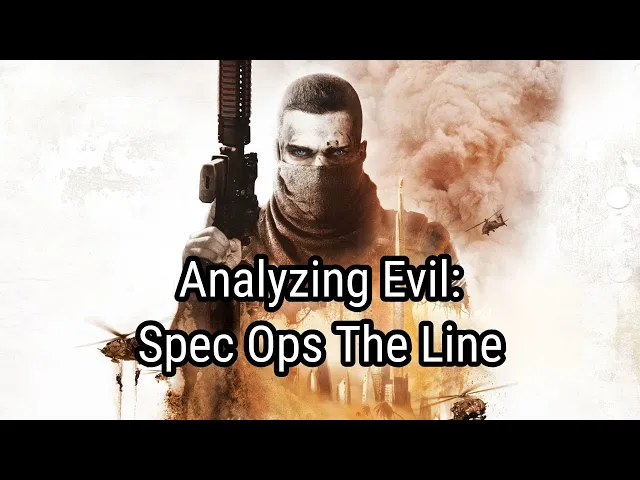
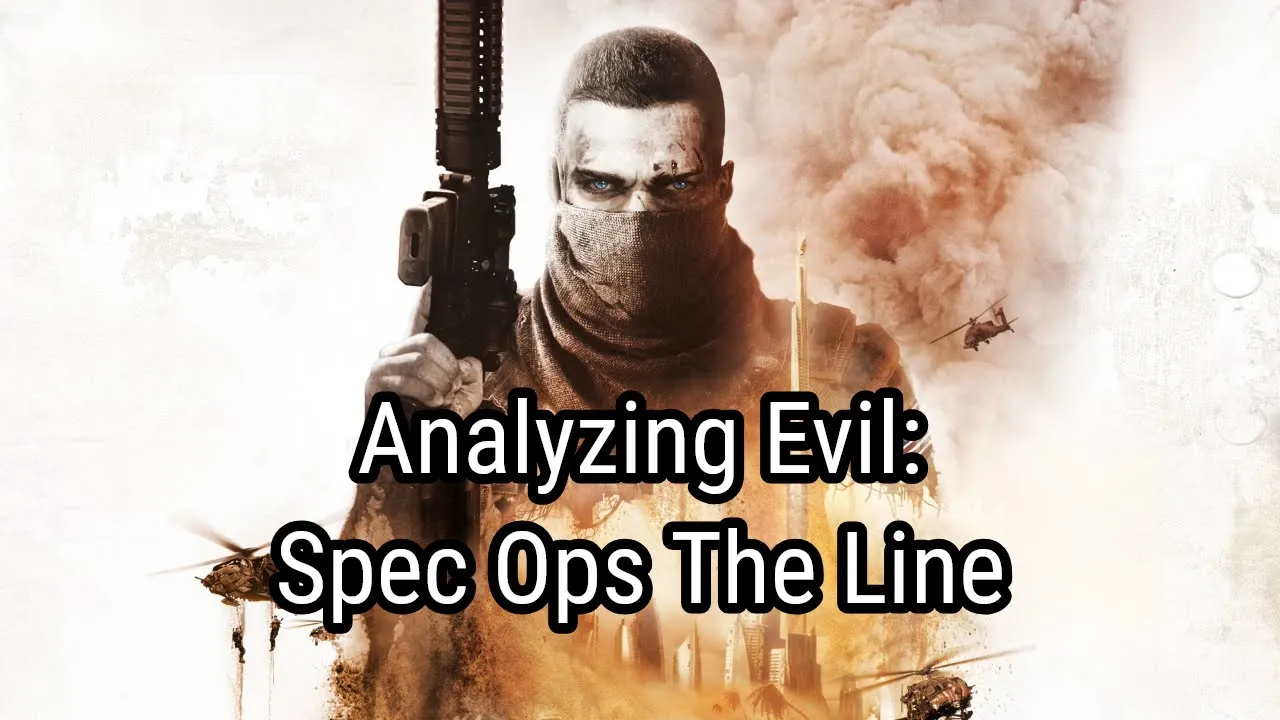
You aren't supposed to like this game. War and conflict have been focal points for art for thousands of years. And they have been so because war and conflict have been at the center of our existence since it began. Conflict surrounds all life on this planet. Animals and humans alike fight with one another for resources, mates, and territory. And so conflict can be seen as an inescapable and crucial aspect of The natural order. And in some ways, so is war. As warlike actions can be observed in the animal kingdom in various ways. However, the types of
war that we wage are perhaps some of the most unnatural and evil aspects of our existence. Every war ever waged, whether offensive or defensive in nature, is indicative of only one thing. Failure. Failure to communicate with each other. Failure to respect the rights and lives of our fellow humans. Failure of our Governments to properly care for our people. Failure to keep those with radical ideas of false heroism, domination, and conquest from influencing our thoughts and actions. War is the end result of our collective failures, and those failures are on full display for us in Spec
Ops: The Line. Hello everyone, and welcome to the 229th episode of Analyzing Evil. For a long time now, many of my regular viewers, as well as my patrons and members, have Frequently suggested I cover Captain Martin Walker from this story, one that I had never even heard of or played until very recently. And that's a crying shame. So, I'm glad that this month the patrons and members went ahead and chose him as a topic for one of my videos. I've always appreciated stories that depict war in a way that's true to reality. For a long
time, perhaps since the beginning of civilization, those who have not been exposed to the horrors of War, often have this idealized image of it in their minds. This can be seen in the way young men enthusiastically sign up to fight for their countries during wartime, seeking adventure and glory as they fight for their loved ones and their homes, knowing not what terrors await them until they've experienced them for themselves. One of the more prominent ways this is true can be found in the way war is portrayed in art, with tales of heroic men and women
taking up Sword and firearm to smite deadly foes or hold back legions of dark forces, planting the notion in our minds that war is something exciting and marvelous to partake in. and perhaps more egregiously in stories where war is often used as a backdrop for the antics of colorful characters that only allude to just how horrifying it truly is. Something that is particularly true for the video game medium. Spec Ops: The Line does none of that. It throws all The harrowing aspects of war at you and forces you to confront them as you progress through
its story. And as I said at the beginning of this video, you are not supposed to enjoy this game. The developers wanted you to get emotional when confronted with everything you see here. They wanted you angry, sad, and heartbroken after going through this experience, just like someone directly affected by war, whether civilian or combatant, would be in the real world. And they without a doubt succeeded. And in this video, we're going to discuss not just Captain Martin Walker and his actions, but every ounce of evil that allowed this story to succeed in the way its
creators envisioned. Now, as some of you will be aware, this story is an adaptation of The Heart of Darkness by Joseph Conrad, as well as another story that was also inspired by the same novel, Francis Ford Copala's Apocalypse Now, which was the subject of the very First video I made on this channel. However, just like with that episode, I won't be discussing Heart of Darkness here, just so you're aware. Now, without further ado, let's begin. Dubai is one of, if not the crowning achievement of human decadence. It's a city in the middle of the desert
that's renowned the world over for its luxury and all-inspiring feats. And in the alternate world of spec ops, it is a mighty testament to the hubris of man. In our world, this is still the case in a few ways. And one of the more glaring ones can be found in Dubai's water supply. Dubai is a city that has very limited access to fresh water, and so nearly 90% of their water supply comes from sea water taken from the Gulf of Arabia that is then desalinated in the proper facilities. As of the making of this video,
over 6 million people live in the metropolitan area of Dubai. And while quenching the thirst of all these People with treated water is an easy enough feat for a land so wealthy in an emergency situation that becomes much more problematic. Fortunately for the denisonens of our Dubai, a widespread natural catastrophe is unlikely to make this an issue. But for the Amiradis living in the city in this story, that isn't true. In this world, at some point in the 2010s, Dubai suddenly began to be bombarded with massive, never-ending sandstorms that created a nearly Impenetrable barrier of
windswept sand around the perimeter of the city. A phenomena that buried homes, buildings, and the people living within them and stripped the flesh from those unfortunate enough to be exposed to these gales of sand. All of which rendered Dubai a veritable prison that had become essentially uninhabitable. This hellscape is the setting for this story. But as frightening as a violent and all-consuming storm of sand is, wind And sand are not the cause of the evil woven throughout this narrative. That honor of course belongs to the humans involved in it. Starting with the people at the
pinnacle of Dubai society. As we progress through this story, we quickly learn that the rich and powerful of Dubai are guilty of a sin that seems to be quite common in expansive disaster scenarios like this. They withheld the truth from the populace until the very last minute to ensure that they could Save themselves before the chaos to come settled in. something that we discovered through a copious amount of graffiti decrying the guilty as well as through the following intel files. Okay, people places ready. Huh, Tony? What the hell is this? What's what? The promptter says
we're telling people to stay home and wait for the evacuation force. Where do we get that? I haven't seen anything about an evacuation force come down from The wire. Just read it and smile. That's what we pay you for, Tony. This isn't ethical. I'm a journalist. Viewers trust me to a pair of tents that can read a teleprompter. You do the story or I get someone else who will. Now we're on in five. Four. You are a [ __ ] [ __ ] Tony. One. Hey, if you have any idea who I am, it is
going to be right. Hands off the guns. You have 30 seconds. Tell me what you want. What I Want, what I want is you, man, on record telling me about the genocide you and your friends are trying to keep hidden from the rest of the world. Yeah, Magnus, you have no idea what you're saying. Get him out of here. Oh, yeah. Well, I'll tell you what I know. I know the truth, man. And the truth is where it's at. I know every expat fat catarati hight tailed it out of Dubai on permanent vacation two days
before your office [ __ ] canned a news piece about The storms. Yeah, and I know your wife and kids left this morning and I know your mistress is leaving town tonight. Sara, you know nothing of Dubai, my friend. If you did, you would know the truth is whatever we wish it to be. Any evidence you find to the contrary will never change that. Get out of my office. You can't hide the truth, man. On a tip, we went to check the foreign relief stations in the middle of the City. Found bodies. Nothing new. Some
of these had been shot, burned. Along with the bodies, passports. Only one was readable. Zoe Strawber, age 29, German aid worker. They say a paranoid is just someone with all the facts. Well, I don't have all the facts, but I'm officially [ __ ] scared. I don't want to believe city officials are executing foreign aid workers or what that might mean for the evacuation. But the facts, man, you Can't ignore the facts. I need to find the colonel fast without raising suspicion. If I can get a message on the wire, maybe something's going to be
done here. But if not, God help Dubai. As Radio Man said, "I'm sure most of Dubai's wealthy and elite managed to make it out of the city before the storms hit." And though the advent of chaos in a situation like this is essentially guaranteed to occur at some Point, there is always time for proper planning to allow a good majority of people to leave well before disaster strikes. And their decision to withhold the truth from their people likely condemned thousands upon thousands of people to death in the chaotic frenzy to escape the city that begun
far sooner than it should have. Not to mention the fact that they were executing foreign aid workers to make it even more difficult for people to leave. And of Course, in the hellish storms that would soon buffet the city from all angles. Something that not even those wealthy in Dubai who weren't warned in advance could even manage to escape. And are up. Thank god this is the last one. Who went here? No problem. I don't know. And tasks weren't great. Think we should have waited? No chance. These people are paying four times norm to get
out quick. If they ask for a refund, it'll be our asses. Holy [ __ ] Is that sand? [ __ ] [ __ ] [ __ ] Storm on our six. I've never seen one that big. Expedite climb. Pull up, Eric. Pull up. [ __ ] Engines are choked. Got to pull out. Engine's gone. [ __ ] Check. Check. [Music] This is the first chronological sin of this story. One committed by those at the top who used and abused their stations and wealth to protect Themselves because they could and because they misguidedly believe their lives
somehow have more value than the people they condemned. And the selfish greed of these people along with the hubristic nature of the city and its water supply would sentence countless innocents to die in ways that could have been prevented. And for those that survived, they would be forced into a living hell of desperation, uncertainty, and impending doom. In old horror Movies, they always use silver to kill the monster. Stakes, crosses, bullets, didn't matter. So long as it was silver. In Dubai, these hostiles are using silver bullets to kill soldiers. Guess that makes us monsters. Seems
they're melting down everything they can get their hands on. cufflings, jewelry, flatear reeks of desperation, but it's smart. In Dubai, a bullet's worth more than a Necklace. It's kind of funny when you think about it. At least a soldier's life doesn't come cheap. Found a doll in the Oz. No way it's left over from the old days. Diamond earrings for eyes, silk for a dress. This was made after the Storm Wall fell. That means children, families. I'm starting to wonder about our enemy. We're not that far from Conrad's failed Evac. Could these be the survivors?
Are we killing the people we came here to [Music] save? I'm not going to tell Adams or Lugo. Shit's hot enough as it is. They don't need this way on them, too. Anyone shooting at us is an enemy, whether they got families or not. Now, despite the fact that this storm and the actions of Dubai's elite set the stage for the events of this story, what happens here Would have probably still occurred without the meddling of the powerful. For as thorough as evacuations in the face of natural disasters can be, there are always people who
get left behind. Something that a man who believes himself to be a heroic genius could not witness idly. Colonel John Conrad was one such man. The man who took the evil wrought upon the people of Dubai by the powerful and amplified it 10fold. And like many an evildoer, much of what he's Done in this story came as a result of his traumatic past. Knowledge of which comes to us mostly from conversations that Captain Walker has with his comrades about his time in Afghanistan serving alongside the colonel. And the following intel file titled Conrad psych profile.
Psychoanalysis indicates that John Conrad may be suffering from early stage post-traumatic stress disorder resulting from failed operations in the African Conflict. In an individual as accomplished as Conrad, PTSD could manifest as a pronounced tendency towards egoomania and calcification of moral certitude. More concerning is the way in which Conrad has been louded as the greatest military leader since Patton. Conrad has internalized these sentiments and they may now constitute a crucial component of his psyche. It is believed that as Conrad comes under fire for failures in Afghanistan, he will Likely go to extreme lengths to internally fortify
belief in his reputation. Conrad will begin looking outward to explain his failures while nursing a growing paranoia toward his superiors. It is unknown how Conrad's declining mental faculties will hold up in the face of another public failure. That's quite the profile. However, knowing that a man served in the war in Afghanistan and developed PTSD because of it, isn't exactly an Expansive backstory. But this file, as well as the knowledge that Conrad saved Captain Walker's life in Kbble by dragging him half a mile to an evacuation chopper, is more than enough. It's no secret that the
US-led war in Afghanistan was a disaster. One that culminated in the reassertation of the Taliban's power in 2021, 20 years after they were ousted when the war began. And that result wouldn't have been possible without years of failures on the part of The US and its allies. Failures that John Conrad participated in and bore witness to. Failing in any endeavor is not an easy thing to bear. But in Conrad's case, the failures he endured in Afghanistan were earthshattering. Not only was he considered a brilliant military mind whose genius meant nothing in Afghanistan, but he had
to sit by and watch a number of horrendous things unfold before his very eyes. Not only did he witness and experience his own Failures, but he had to contend with the fact that he was responsible for the lives that were lost as a result of those failures on both sides. Good men who undoubtedly perished as they carried out his commands and innocents who suffered as a result of his inability to protect them. Additionally, he watched as the country and institution he dedicated his life to, both of which have the reputation of being the most powerful
in the world, failed to Accomplish their goals here. a great and powerful man serving a great and powerful country who gained nothing but resentment, sorrow, and disillusionment from all he experienced during this war. It's no wonder then that a man who had been told by so many and thus believed himself to be a great hero would jump at any opportunity to prove that to be true. And unfortunately for Conrad, the men who served under him, and the refugees of Dubai, he found such an Opportunity. When Conrad heard the news about the sandstorms tearing apart Dubai,
he volunteered his 33rd Battalion to help with the relief effort. Likely seeing an opportunity to not just prove himself to be a hero, but to help people in ways that he couldn't in Afghanistan. All of that would have been fine were it not for a terrible decision he made to serve his own ego. His decision to remain in Dubai following the Red Cross and US Government's abandonment of the city. If his appearance is any indication, Conrad was likely in his 50s when he landed in Dubai. And he knew that if he didn't fortify his reputation
and legacy here and now, he'd never have the opportunity to do so again. Not just because of his age, but because another failure coming off a string of previous failures would have rendered him a man without purpose or prestige. For in all likelihood, a position at the Pentagon wasn't awaiting Conrad when he returned home, just retirement and all the pain that comes from it for a man like him. Something interesting to note here is the fact that Conrad's battalion decided to stay in Dubai with their leader, which is something you could possibly chalk up to
a soldier's adherence to duty and the command structure. But just like his parallels in Curts and Colonel Curts, there's more than just duty that kept these men in Dubai. A man who is sure of Himself makes others feel sure of him, no matter what kind of person that may be. Charisma, fortitude, tenacity, will. All these things alone can make a person into a figure that you just can't help but swear your allegiance to. And when all these traits are present in an individual, that becomes even more true. No matter who Colonel John Conrad was and
what legacy he would leave behind, nothing could rob him of his character. A character so inspiring that one can't Help but to place their faith in them and believe them to be right, even if they may be wrong, especially if they present themselves as being committed to saving lives and the greater good. And unfortunately, the faith a person develops in someone like that can remain long after a person's demise. Go ahead and just say your name into the recorder. Uh Pete Gobby, private first class. Thanks, Pete. So, the question everyone back home wants to ask
is why The Red Cross, the Pentagon, even the president have all turned tail and run. Why stay here? See, I joined up out of high school. Well, I didn't want to go to war or anything, but then I got tossed in with a 33rd and ended up doing two tours in Afghanistan. Disaster by anyone's standards. Yeah, no [ __ ] I can't tell you how many times we rolled past kids fighting over garbage on our way to some [ __ ] op. So, when the colonel saw a chance to actually do some Good here, hell
yeah, he took it. What about the people back home calling you deserters? Traitors. Man, [ __ ] them. I'd love to go home. You know, I got a daughter I ain't seen since last Christmas. But my baby girl, she's safe from her bed right now. These people here, they ain't so lucky. What? I'm supposed to abandon them just cuz I get homesick? Nah, we're better than that. So, you trust the Colonel's decision? 110%. Colonel's a great man. Standing by His side makes me a traitor, then so be it. This is why men like Conrad, men
who are able to command every room they're in and every crowd they're put in front of, can spur people to marching straight into the depths of hell. For surely hell can't be such a bad place to be if our chosen savior is leading the parade. So Conrad and his battalion stayed and for just a moment that seemed to be a blessing for the remaining Refugees. For Conrad was a powerful man with powerful resources at his disposal who was now their only and best hope for salvation. after attempting to march the refugees through the storm wall.
Though that would turn out to be false, because as it turns out, the US military and the Red Cross abandoned the city for a reason. For the storm wall had become so thick that no one within its boundaries was capable of leaving. This is Colonel John Conrad, United States Army has evacuation of Dubai is an complete failure. Death toll too many. 1300 people perished during this attempt and forced now to reside in a prison he placed himself in with even more failures under his belt. Conrad went insane and he made each and every one of
his men extensions of his insanity. Declaring martial law, Conrad began Implementing strict rules for both his men and civilians. As an occupying force, it is important to set a good example. As such, please keep in mind the following protocols. Grooming standards are to be kept at all times. No fraternization with civilians of any kind. When off duty, please keep music, etc. at a reasonable volume so as not to disturb the local population. Absolutely no drugs or stimulants except as provided by medical personnel. Alcohol restricted to one beer per soldier per day with a meal as
available. Share time on the putting green or access will be revoked. Each offense will warrant five demerits. Five demerits receives an official warning. 10. Two weeks hard labor. 15. Public flogging, looting, and excessive force are not tolerated and will be met with the strictest punitive measures. It's wrong to call it a storm. I've never seen a storm that could blast Paint off a car. This is sand flying through the air at 80 mph. It will shatter glass, tear your flesh, and fill your lungs. Even those of us still alive have been stripped down to our
bones. We got nothing but the clothes on our back, man. What waters left, the 33rd has under lock and key. Couple civilians tried to stage a raid on the cantina last night. The colonel had him round up and Shot. I tried to make myself watch, but I couldn't. They were desperate to live, man. But if they'd succeeded, others would have died. I don't know what it feels like to execute people you swore to protect. But Conrad sure does and he's not talking to anyone at the moment. Strict rations, strict rules, and strict consequences. Things that
were likely necessary given the circumstances. And considering that a large portion of the 33rd and the surviving civilians were still alive by the time Captain Walker and his squad entered the scene, Conrad's actions here may have saved quite a lot of lives. But that salvation came at a terrible cost. This cost can be seen strewn throughout the city with scores upon scores of desperate civilians and weward soldiers slaughtered in order to keep the peace with memorials of that slaughter serving as grim reminders of the death all Around them. Slaughter that only intensified once Conrad's inner
circle declared him unfit to lead and organized disillusioned members of the battalion into a company known as the exiles who then began a civil war between the two factions that only rendered the situation more barbarous than it already was. with that barbarity culminating in Conrad's execution of these traitorous men by burning them alive with white phosphorus and a complete Disillusionment with the country and institution that he had dedicated his life to. You know that one girl, the girl whose face you cut out of old photographs? Well, to Conrad, America was that girl. 50 stars, 50
states, the whole union blacked out. Don't know why he did it. Maybe it was out of anger or a misguided attempt to create a symbol. Whatever the sentiment, his command team clearly Disagreed. Jeff BS, Kent Tbby, David Long, they stood up to their commander, their friend, and in return, he tied them hand and foot and burnt them alive. Makes you wonder what he'd do to someone he hated. All of this only served to drive Conrad further and further over the edge, with daily atrocities being committed at his command, and a tense situation only becoming more
tense as time goes on. And it would not be long after his war with His own men that Conrad would choose to take his own life, unable to bear what he'd done and what he's become, leaving behind instructions for his men to continue on with their duties as if he were still around to ensure the hell he created would live on well past his expiration date. something that was aided greatly by a madman using psychological warfare through music known as the radio man. Okay, Colonel. Call me John. Oh. Uh, Yes, sir. John, shall we start?
You're not recording this, are you? What? No. No. Of course not. Good. I I don't want People need to hear my words, not my voice. I totally understand. Yes, I think you do. You've been a friend these past months. It has been helpful having someone who just listens. That's That's very nice of you to say, sir. What are you doing? Oh, I'm I'm sorry. This this pen doesn't work. I'm I got to get Another one. To my [Music] men, I don't need to remind you of the events which have led us here. We are each
branded by our actions for good or ill. Yes, there is darkness to come. But take heart for the storm will soon break. There will be chaos in the coming days. As your commander, I know you will Persevere. You are the Dan 33rd. It's been the greatest honor of my life to serve alongside you. That is why I can trust you with this final [Music] order. No matter what, endure. Be ever vigilant. Hold the line. Despite the tragic nature of his actions, though, to Conrad's credit, he at least acknowledged before he passed That he was responsible
for what unfolded during his tenure as overseer of Dubai. My name is John Conrad, commander of the 33rd Battalion, husband of Elizabeth, and father of Jeremy. If you are raiding this, the desertion of the 33rd is undoubtedly no longer a secret. I have failed my mission. Worse, I have failed my men. If any of them be found alive, let It be known that they are innocent. As their commander, I forced them under extreme duress. to stay in Dubai to disregard their orders. I alone am to blame. These are the various ways in which John Conrad
destroyed countless lives as well as his own. A man who tried to write wrongs for the wrong reasons and caused those under his care as well as those he tried to Help to perish or endure extreme pain in increasingly horrendous ways. You might be asking yourself though, wasn't Conrad's decision to stay in Dubai the Emirates's only saving grace in this situation? Had he not been there, would they have been able to make an escape with the resources they had, successful or not? No, probably not. But they didn't really need to, and they didn't really need
Conrad either. In fact, his presence only ensured that there were Now more things that could go wrong than there were previously. Conrad's decision to come to Dubai in the first place wasn't wrong. It was his decision to stay. And because he chose to do so, he only put a larger strain on Dubai's dwindling resources and caused the situation to develop in ways that it shouldn't have. People will inevitably fight, steal, and kill to try and ensure their survival as well as their loved ones. But adding in more people, Especially people with a massive ego and
powerful resources like Conrad, only amplifies that 10fold and grants survivors the illusion of choice. A choice between hunkering down and waiting out the storm or attempting to escape. For in a situation this dire, there is no chance of escape. And the best thing to do is to attempt to organize the remaining survivors and your resources and see if you can wait out the storm. Now, it is probable that The refugees would have attempted to escape at some point without Conrad's help. But Conrad organizing that escape caused two things to happen. The first is that he
seems to have gathered up all the remaining survivors and convinced them to escape all at once without testing to see whether or not it was possible first, which caused the loss of 1300 people. Had he not been there to push them all into doing that, the escape attempts that these people may Have made otherwise might have only been conducted by a few people attempting to test whether or not it was possible or not been done at all, considering their lack of vehicles and other resources that Conrad had at his disposal. So, this gargantuan mistake really
only became a possibility because Conrad was there to make that mistake. But even if there was a chance that the same thing could have happened without Conrad's influence, what happened after this Failed escape wouldn't have occurred. Because, well, Conrad wouldn't have been there to declare martial law, stir up a civil war, and cause all the trouble he caused. And therein lies the second problem. Rather than those attempts possibly causing the loss of only a few lives and forcing people to come to terms with the idea that they just had to make do with what they
had, the refugees had no choice but to follow Conrad's orders, as how could they Possibly resist him. Conrad and the 33rd undoubtedly helped the refugees in many different ways. But what help they may have offered them is ultimately a moot point, especially in the face of all the harm he caused. Because again, the best thing these people could have done in this situation was hunker down and try and wait out the storms, which would have been just as possible without Conrad in the 33rd. So, if I haven't made it clear enough already, Colonel John Conrad
was responsible for and enabled great amounts of evil in this situation that would not have occurred had he not been involved. And while he's certainly not the most detestable evildoer to ever live, and could perhaps more so be seen as misguided and foolish than anything, what he did was still evil. the evil of halfbaked good intentions that are really only a cover for one man's ambitions that caused the deaths of possibly close to 2,000 people When you factor in the punishments he doled out and the civil war and doomed the lives of everyone else left
alive in that city which brings us to our third set of evildoers in this story the CIA's gray fox squad and agent Riggs if you were to sum up Conrad's actions here in a broad way you could say that he was a disgruntled army officer who attempted to do good by coming to a ravaged city and save its But he ultimately failed and did far More harm than he did good. But if you were to sum up Conrad's actions here in a broad way through the lens of foreign relations, Conrad was a rogue army officer
who defied his orders became a traitor to his government and set himself up as the warlord of a foreign city who then unleashed numerous atrocities upon them without orders to do so from his own government or the government of the country whose land he's currently occupying. When you look At it like that, Conrad's occupation of Dubai doesn't seem like a failed rescue mission gone way wrong, but a bonafide international crisis that's just begging to evolve into something much worse than it already is. After being sent to Dubai to search for survivors in much the same
way Captain Walker would, the top agent in charge of this mission, Agent Riggs, quickly concluded that Conrad and his 33rd were insane and needed to be taken out. At some point though, Rigs adopted That foreign relations outlook that convinced him he needed to not just take care of Conrad, but completely eradicate everyone still living in that city so the CIA could erase any verifiable evidence of the crimes that were committed there for the sake of regional stability, preserving the international reputation of the US government and preventing a war from starting that rigs believed the US
would lose. And the first step to accomplishing this was Through starting a war with the 33rd by recruiting and arming refugees and inciting them to go to war with the 33rd, which only took the already gross amount of atrocities committed here to the next level. CIA op squad code named Gray Fox. Known members include Thomas Daniels, Brian Castivan, Jeff Riggs, and Rick Gould. Interrogation of Daniels has revealed CIA to be responsible for attacks on our outpost throughout the city. CIA attacks have been aided by members of local populace hereto for referred to as insurgents. Insurgents
believed to be operating directly outside our territory. Daniel's questioning has revealed possible location of stronghold. Raid has been scheduled with intent to neutralize CIA threat and establish order in the area. If all else fails, recommend use of Daniels to lure other CIA members into the open. Thought I'd make it the whole way without screaming. Hacked my way through the sandboarding. Even bit my tongue when they brought out the knives. But the fire. Damn it. I screamed like you wouldn't believe. I'm disappointed. But at least now I understand the breaking. Once my flesh started melting and
had thrown my own mother under a bus just to make it stop. Every insurgent brought before me will Know the same pain. And when they break, we will be like brothers, having stared down death and flinched. More terror, death, and destruction is what Rigs and his men brought to Dubai. But another war on these streets wasn't Rig's end goal. No, his strategy to eradicate the populace wasn't going to be accomplished with bullets, but through the deprivation of water by completely destroying every ounce of drinkable water left in Dubai. And considering the quick death a bullet
can bring you, a slow death by thirst surrounded by decaying corpses and the terror of deathly sandstorms seems like a far worse fate. Now, the thing is, Rigs wasn't exactly wrong for thinking that this situation was a catastrophe that could soon spiral out of control on the international stage. But just like Conrad in his foolish attempt to save Dubai by staying there with his men, Rigs was incredibly misguided, Delusional, out for glory, and dare I say evil when he decided this genocidal operation was his squad's best course of action. As this is nothing more than
a horrific example of going to an extreme to prevent something that might not even happen or that could have been dealt with in a much less extreme manner if it did end up happening. It's more than likely that once the international community learned of Conrad's actions in Dubai that some kind of backlash would Have occurred. Whether that be some kind of heated and lengthy debate in the United Nations, a souring of relations between Allied and enemy countries that causes years of economic and political harm, a full-blown war, or anything else in between. But regardless of
how the world reacted to this knowledge, you'd think it would be relatively easy to ease any sort of tensions through simple dialogue. It would be ludicrous to claim that there was no foolproof evidence the US government could have presented to disgruntled nations to prove this wasn't their fault. Transcripts, call logs, dossas, written communications, any of which they could have used to say, "Yeah, he and his men did all this, but they did all this without our consent and specifically defied our orders when they were told not to." There had to have been something. I can't
imagine a world where there wouldn't be. So, that begs the question, why? Why resort to Murdering thousands to solve a problem that could have been solved without bloodshed? Well, because Rigs, like Conrad, deluded himself into believing that the writing was on the wall and that he needed to take drastic action in order to save the country he had dedicated his life to. And because it would have earned him far more personal glory than anything else he could have done here would have. Not to mention that this was a CIA agent we're talking About here. People
who are no strangers to using assassination sabotage to solve their problems. Hiding behind civilians not the manliest of tactics. It's normal for the CIA. Yeah, but killing US soldiers isn't. Conversation leaves room for error. Bullets wrap things up cleanly. And of course, what you don't know won't hurt you, right? So, in lie of logical and rational thinking, Rigs chose to cling to conspiracy based thought processes and an ego-driven Desire to save people from a future only he envisioned. And maybe by taking this path, Rig saved more lives than he ended. But that's a pretty big
maybe because knowing that there should have been plenty of ways for the government to make this go away with just a bit of recorded evidence showing that they weren't involved causes me to believe that isn't the case and that such a decision was unnecessary, abhorrent, and ultimately evil. But at the end of the Day, as much as the blame for the decision to eliminate all the still beating hearts in Dubai falls upon Rigs and his men, men who thought their commander was going off the deep end, but stuck with him anyway, we also have to
blame Conrad for this even being a possibility. Did Conrad plan on the CIA coming to Dubai and Rigs trying to annihilate everyone in it for the sake of regional stability, peace, and the reputation of the US government? No, he Didn't. But the fact still stands that the only reason Rigs was in Dubai to do just that is because of Conrad's actions. And if Conrad hadn't defied his orders and stayed in Dubai, this along with everything that he and his men did there would have never happened. Unfortunately though, we're just getting started. For Rigs had a
bit of trouble carrying out this operation. But fortunately for him, another man sent to search for survivors with the hero Complex would soon enter the city to aid him. Which brings us to Delta Force and one Captain Martin Walker. [Music] is John Conrad the greatest man I ever served with? Well, I don't know. There was this one time in Kbble when he dragged my bleeding carcass half a mile to an evac chopper. So maybe I'm biased. But the facts don't lie. The man's a [ __ ] [Music] hero. Remember when the first storms hit Dubai?
You're probably all safe and sound at home watching TV. Well, Conrad was leading the damn 33rd out of Afghanistan. Instead of coming home, he volunteered his entire battalion to help with the evac. But all you did was send a check. Rumor is Conrad was ordered to abandon the city. He defied that order and the 33rd stood with him. Now, the official story is still hazy, but what happened next? All we know for sure is that the storms got worse. Much worse. Last thing we heard out of Dubai was that Conrad was leading a caravan of
survivors out of the city. That was 6 months ago. Then two weeks ago, we picked up this transmission. Like Colonel Conrad, our knowledge of Who Martin Walker was before this mission is slim, as this is essentially all the background information we're given for him. He served in Afghanistan and he was rescued by Conrad from near death at some point during his service. Though we don't have a psych profile for Walker like we do for Conrad, you don't get dragged bloodied and bruised from a war zone without suffering some sort of traumatic damage to your psyche.
And we quickly learn that to be true when we Discover that Walker and Conrad have another thing in common, PTSD, and the insanity that would result from it during their time in Dubai. When we first arrive in Dubai, Captain Walker states that Delta Force's mission is to search the city and locate survivors, leave the city immediately, radio command from outside the Stormwall, and go home, which seems simple enough. When he brings this up, one of his men, Sergeant Lugo, comments on how it's Strange that three trained killers like them have been sent here to simply
search for survivors. and he was right to think so. But with some possible intel from the CIA showing them that the situation with the 33rd and Conrad had reached the point of no return, the military probably realized they couldn't send any ordinary soldiers walting into Dubai. But they couldn't have picked a more broken man to lead this mission. Every story, that is to say, life itself Has its beginning and its end. But a story isn't just about those two points. It's about the progression of that story from one end to the other. Everything we've talked
about so far has been about progression. the progression of what should have been an evacuation to a horror show. The progression of one man's PTSD fueled maddening ego into a monstrosity that only made that horror show worse. And the fallout from his actions in the form of Rig's nefarious Mission. And now we're faced with another story and its dark progression. And the progression of Captain Walker's descent into madness is a terrifyingly tragic sight to behold. Walker begins this mission as what appears to be at least your average soldier fulfilling his mandate. But when it becomes
clear that that mandate isn't just to save people from a disastrous situation, but maneuver his way through an active war zone, that quickly begins to change. Not 10 minutes after setting foot in Dubai, Walker and his squad encounter insurgent refugees and are forced to fight for their lives. And while a barrage of bullets might seem like the greatest source of trouble for these men here, the true trouble is found in what those bullets trigger in Captain Walker's mind, an intense exacerbation of his pre-existing PTSD. The three men part of this squad are professional trained killers,
and they can thus be counted as Some of the very few people on this planet who have a higher than average tolerance when faced with overwhelming death and destruction. Tolerance doesn't mean immunity, though, as there are very few people who have ever lived that could consider themselves to be totally immune to the suffering of others. And in reality, even if you've been exposed to it for years, being fired upon and firing upon others is a grim situation to find yourself in. one that causes Your heart to pound as adrenaline courses through your body, your mind
to reel as fear, anger, excitement, and despair run through it at lightning speeds. And in the aftermath, the shaking hands, the stone in your gut, and the reality of what just happened and what you've done. And this game doesn't pull any punches when it comes to portraying how agonizing situations like these are. Unlike other games where a headshot might just down a foe or an Execution might be conducted with a quick and undetailed knife to the back or throat, Spec Ops: The Line shows us in gruesome detail why killing someone, aside from the knowledge that
you're ending a fellow human's life who had hopes, dreams, and feelings just like you is a horrific thing to have to do, no matter who you are. Here we see men buried alive in sand, exploding heads whenever we deliver a headshot, and the sickening crunch of a cracking skull When we jam the butt of our rifle into another man's head to execute him. And with these effects in place, we're made to confront the horrible truth that murdering another person isn't just a clean little shot to the head or a spectacular explosion, but a bloody, grimy,
tears soaked affair that shows us exactly why witnessing and experiencing these horrendous things destroys the minds of so many people. But unfortunately for Captain Walker, his Squad, and the many people he would encounter on his journey through Dubai, the horror had only just begun. Now, something we don't learn until the end of this story is that Captain Walker begins to suffer PTSD induced hallucinations at some point. If this were any other story, it might have been tough to pin down exactly when these hallucinations started. But luckily for us, the developers of this game included a
genius little tail that indicates for Us when Walker is hallucinating. There are many cutscenes strewn throughout this game, and when a lot of them occur, we're shown a small black or white fading transition between scenes, which ordinarily wouldn't be anything too noteworthy. However, an article over on oneup.com titled Dissecting the Horror: The Mysteries of Spec Ops: The Line features an interview with the game's writer, Wall Williams, who stated the following. Every time Walker Hallucinates in the game, the screen fades to white. It doesn't fade to black. So, each time a scene fades to white, Walker
is hallucinating or fooling himself by altering what actually happened in his mind. Now, that's some very helpful information. And the first time we see this white transition is immediately after the firefight with the first group of enemies. and Lugo makes contact with the Alpha patrol hold up in the plane, Showing us that right from the beginning of this story, Captain Walker was already not in his right mind. However, as it turns out, every single thing that happens in this story is technically a hallucination. I've used the phrase the beginning of this story a few times
now, and when I've said that, I've been referring to the moment you first take control of Captain Walker. But the real beginning of this story is this scene where Delta Squad are engaged in an Intense aerial battle with members of the 33rd. And as many of you will be aware, this scene ends with one of those enemy choppers crashing into ours. And here's what Williams had to say about it in that article I quoted a moment ago. When you start the game and it goes straight into the helicopter chase, that is the only point in
the game where you are playing a character who was alive. When the chopper crashes, you die. You don't survive. From this point on, you Can safely assume that the things that are happening in the mission are the same things that happened to Walker in the mission when he was alive. but he is caught in the cycle of his own guilt, reliving his actions. So, in reality, what we're experiencing in this game is actually Captain Walker's personal purgatory, a hellish place where he's doomed to repeat his dire mistakes for who knows how long. But, as William
said, that doesn't mean everything in This story didn't happen. Because most of it certainly did, with the only embellishments resulting from Walker's hallucinations, of course. And as we'll soon discover, for Captain Walker to be sentenced to such a fate is only all too fitting. Now, a question we need to answer before we continue, though, is whether or not Walker was hallucinating or deliluding himself when he was alive, or if they're a product of this purgatory that he was placed in. I think It's a mixture of both, but it would make much more sense narratively if
he experienced the majority of them when he was alive. So, I'm going to assume he did. And to understand why, let's circle back to the first delusion I mentioned earlier. As I said, then when Walker squad encounters the stranded alpha patrol in that plane, Lugo radios them and reassures them that they're on their way to help. Considering this interaction comes right off the back of A conversation where these men are discussing why they've been sent there, I'd wager that the delusion here is the fact that Lugo sent this communication at all. And perhaps instead Lugo
actually said that they shouldn't move forward and should head back to radio command like they were supposed to. I'd say that makes a lot of sense as Walker is the only one amongst these men who actively pushes them to abandon their established mission in favor of one of His own creation. And it would make sense that in this moment Walker deluted himself into believing that Luga wanted to do much the same when he actually didn't. When the squad makes it into this plane and they attempt to rescue this soldier, we get another delusional scene. You're
going to have to talk fast, boss. He's fading. We're here to help. Just stay with me. All right. Forget me. They took McFerson. You got to find him. We Will. But I need you to tell me where they took him. They took him to the nest. Nest. Nest. All right. Good. And what about Conrad? Is he still alive? God damn it. Lugo, mark the bodies on tag. Adams, check outside for tracks. Want to know what the hell is going on in this city? Got multiple tracks headed north. Then we follow [Music] [Applause] them. Now, if
we follow that same logic here, I would think that in reality, when Walker gave his men these orders, they probably said much the same thing. Sir, we have a location to give to command now, as well as evidence that something is very wrong here. We should get out of here and radio command. But in Walker's head, we get silence and subservience. What this establishes for us is that Walker, from the get-go, has Believed what he wants to believe and done what he thinks is best, no matter what his men might have believed to the contrary.
But what drove Walker to so quickly abandon his mission? Disillusionment, gratitude, and a desire to be better. Captain Martin Walker claimed that Colonel John Conrad was the finest soldier he ever knew and that he was a good man. Possibly the only good man in Walker's rotten life, and he was in trouble. And just as he saved him When he needed him most, he was going to do the same and save even more people in the process, making himself into a man who would be lucky to count himself as half the hero he believed Conrad to
be. and a man who was more than just a train killer with a truckload of trauma and a life that he despised. Now, you might be saying that we're given nothing to indicate that Martin Walker wasn't pleased with his life, but that's exactly my point. Earlier, when we were Talking about Conrad, I intentionally left out some information that you may have caught when I played his confession letter, but that I wanted to save for this moment. That information being that John Conrad had a family. I've been forgetting when I am. You should know you're always
there. I keep repeating. The next time time, next time you won't. I hate this lie the Most. Mostly I just hate the want. Someday people will tell you about your father. For that, I'm sorry. I love you. John Conrad was a broken man, but he was a man who had something more to return to when his time in the service had concluded. Yet, when he was given the opportunity to return home to his family, he was incapable of doing so. A man destroyed by everything he'd witnessed, experienced, and failed to Do, who couldn't bear to
face his own reflection, let alone his family. And so, he chose to head to Dubai to try and write all the perceived wrongs in his life. a conscious choice to keep treading the same path he always had in the hopes that this time at the end of it would be the salvation he'd always hoped to find. But Martin Walker, he didn't have that choice. Ever since he joined the service, Martin Walker had a purpose. But that purpose was linear, Limited, and horrifying. A man who was sent on mission after mission to use the skills he
had learned to kill whoever his masters commanded him to. And I believe the reason we aren't given any ounce of backstory for Walker, aside from that which involves his service, is because there was nothing more to Martin Walker. He was a trained killer and nothing else. A soldier with a gun who's only ever been good at one thing and has nothing else in the world aside from his Killer instinct and the tool he uses to express it. No family to return to, no friends to speak of, and no purpose other than the one he's been
given. But he wanted something more. And though Martin Walker wasn't offered the same choice as John Conrad was, he was still offered a choice. The choice to follow his mission as ordered, as he's always done, or go his own way and try to make himself into what he believed to be a better man, a man like Colonel John Conrad, genius military officer, hero of countless battles, and savior of Martin's life, and so many others. That's why Martin Walker chose to create his own mission so early on in Dubai. And because he is who he is,
that's why everything he did from that point on went horribly wrong. The first couple firefights undoubtedly triggered and exacerbated Martin's PTSD, as we've already discussed. But these men soon come across bizarre displays of graffiti And murals with their eyes blackened or altered in other ways, which I'm sure only worsened what they were feeling. Add in Radio Man's blaring of various songs to add an even more bizarre feel to the circumstances, and you're given a lot to stir your mind up in the worst ways imaginable. Still, even with increasing horror and weirdness marking their journey through
the city, Walker is determined to make himself into a man like the one he had put up on a Pedestal. Not to argue, but this ain't exactly within our mission parameters. Yeah, well, our mission went from recon to rescue the minute we found US soldiers butchered. [ __ ] orders. Like it orders ain't worth following if it means leaving people to die. Go. Adams comments here that they need to radio command ASAP, but Walker says not yet because Conrad and the 33rd need their help, and once they know the 33rd is safe, they'll Radio for
evac. Now, as utterly foolish as Walker's new mission will turn out to be, on the surface, his desire to help these people isn't exactly a bad thing. And the main problem here isn't the mission itself. It's the way it's approached. through assumptions. Walker, based on a few interactions he had with Conrad, believes that this man is a cut above who can do no wrong. And this leads him to assuming that the insurgents are the villains here, and The 33rd and Conrad are the victims. While it turns out that there are many victims here, Walker shoot
first and ask questions later method of doing things is what ultimately leads to much of the evil he commits unfolding in this story. In situations like these, intelligence is the key to planning and carrying out a successful operation. And Delta Squad is gathering intel as they move through the city. But whatever intel they do gather is immediately muddled by Walker's assumptions. And because he's under the impression that Conrad is a good man, he allows his biases to influence his squad's actions and forces them into ill-advised situations that only make things worse for them and everyone
they encounter. After leaving the news station, the squad gets trapped in a hotel. And after they once again fight their way out, they encounter soldiers below a mural of children with their eyes cut out. With Walker Commenting that this is just like the copple death squads. Yet, he still doesn't see that the best thing he can do at this point is to turn around, find a way out of this city, and allow for reinforcements to take full stock of the situation before doing anything drastic. Immediately after this, the squad comes across the soldier they've been
told to find being interrogated by a CIA agent. And after this agent is killed, you get to choose whether or not to spare this Man or execute him. Executing him earns the eye of your squadmates. But no matter what you choose to do here, the result is the same. Either this soldier goes to warn his comrades that you're on the way and likely working for the CIA, or you repel down after killing him and have to fight your way through them anyway. And now we've arrived at something crucial to Captain Walker's story. We discussed earlier
that Walker had a choice. A choice between Completing his mission or creating one of his own. And at the core of everything wrong with what Captain Walker did in this story is his choice to ignore his orders. Because no matter what you choose to do in this game, the result is the same. The only choice Walker ever truly had in this story was the first one he made with all the rest only offering him the illusion of choice. And that's true not just in this moment, but every time we're offered a Choice going forward, as
we'll soon find out. Despite this, Walker still believed himself to be in control of this situation, believing that each artificial choice that he made only occurred because he had no other choice. A man operating on nothing more than instinct and assumption, who takes no responsibility for his actions and dams himself with every step he takes. After we deal with another squad of the 33rd, Walker says the following. If we're Going to sort this out, we need to find John Conrad. How's that help? You just said the 33rd wrote Conrad wouldn't abandon his duty. The 33rd
may be hostile, but I guarantee the colonel isn't part of it. How can you be sure? Because I know the man. Get that open. Not a problem. When they open the door into the next section of the hotel here, Walker's suspicions are seemingly confirmed when they find members of the 33rd rounding up civilians with Walker Assuming they're going to kill them all, which only provides Walker with a false sense of justification that he uses to keep his men and himself going forward. After hearing a broadcast of one of the CIA agents named Daniels being tortured,
we make our way to another building and engage in another firefight. But after this, something happens that undoubtedly caused Walker's mental state to take a dive off a [Music] Cliff. [ __ ] [Music] Son of a [Music] [ __ ] [ __ ] No human being alive can take a blow to the head like that and not suffer a concussion. And with a new ailment plaguing his mind, as well as the increasingly worsening circumstances causing resentment and anger to build within him, it's no wonder that Walker's Judgment is causing him to heir more and more
towards violent action and a desperate desire to save anyone he can. Especially considering that not long after he hits his head, the squad encounters a pit filled with rotting corpses set to the lovely backdrop of a happy family mural. With the screaming of Daniels playing over the speakers here, to make matters worse, they soon find the man they'd heard being tortured over the radio has actually been dead This entire time. A trap designed to ensnare another agent by the name of Gould, a man who ends up providing them the first bit of outside assistance since
they arrived in Dubai. Still, Walker believes that the 33rd have gone rogue, and they're ultimately to blame for what happened here, not Conrad. And seeing a way to confirm this through aiding the CIA, he sets a course to find and help Agent Gould. After fighting their way out of another situation, Walker and his squad are fired on by a helicopter to the tune of DSE and forced to run for their lives. And after just making it, they're buried under a pile of rubble and earn yet more degradation of their psyches. At this point, it's plain
to see how much recent events are affecting these men. With battered and bloody bodies wrapped in blood soaked in torn clothes and grime caked on their faces, the physical indicators of the damage done to not just their bodies, But their minds. That only grows worse with each bullet they fire. Only option now is to reconnect with Golden. You sure you want to cast our lot with the CIA? We have no choice. You've seen what's become of the 33rd. Captain's right. The damned are out of control. Someone's got to stop him. I know, but can we
trust him? Gulus is life to save ours. He's earned my trust. More excuses, more assumptions, and more rationalizing that Walker and his squad need to do what's right. But right according to who? Walker. He's far and away from being right about anything so far. And that would continue to be the case. The next thing they encounter is a bunch of bodies hanging from street lights. And Adams asks who would do this? But Walker says he doesn't want to think about it right now. But if not right now, when then Walker, you really don't want to
think about who may have strung up a Bunch of bodies on street lights. This is another part of Martin Walker's problem. He doesn't think too much beyond what's in front of him. And even when it's very obvious that he should be, for if he did more than just make assumptions and follow his intuition, everything that's happened so far and everything that's to come could have been avoided. Another pit of dead bodies soon greets the squad with someone still alive and writhing in it. And Immediately after we encounter a group of insurgents who get blasted with
white phosphorus, adding a dazzling display of terror to accentuate all that these men had done and seen so far. Following this, we're made to choose between the lives of a group of civilians or the life of Agent Gould. But this is another one of those elucory choices. For either way, the civilians, soldiers, and Gould all die. Winners and losers are few and far between in a combat zone with small Wins always coming with great losses and men who might never have harmed a fly resorting to brutal tactics aimed at serving their chosen good. This is
where tensions reach a new level in Delta Squad with Lugo and Adam starting a stress-induced fight that serves as a great prelude to what comes immediately after this. Delta Squad encounters the group of soldiers they saw back at the hotel and seeing a nearby mortar and plenty of white phosphorus nearby. Walker amidst protestations from Adams and Lugo decides to unleash hell on these soldiers. Afterwards, we get to waltz through the horrific aftermath of such an attack with men screaming and burning as they beg to die. But once they reach the end of this area, we
find something a cut above every other horrific thing we've been forced to experience so far. In war, it's a given that soldiers will die, and every soldier knows that there is a chance That they're eventually going to perish on the battlefield. Civilians, however, are a different story. Sometimes they die from collateral damage. Sometimes they die from planned attacks. And sometimes they die when someone who has their finger on the trigger makes an ill-informed and preventable mistake. Captain Martin Walker, the man who had based all the intel he gathered on his own assumptions, made such a
mistake. Not only has he and his squad massacred Countless soldiers at this point based on a hunch, but now he's made both him and them responsible for the horrifying slaying of 47 innocent civilians, as well as the soldiers that were only trying to protect them. If this were all that Captain Walker were responsible for in this story, this would be more than enough to solidify him as a misguided evildoer who has done everything to the contrary to help the situation he's trying to fix. And he'd rightfully Deserve to be condemned for it. And though this
is close to being the worst thing he does in this story, as I've said many times already, unfortunately, it only gets worse from here. After this event, Walker has officially transferred his blame over to Conrad for his actions, still stating that he and his men have had no choice in doing what they've done up to this point. something that he only reinforces when they encounter the incinerated remains of Conrad's rebellious inner circle and his obtainment of the walkie-talkie that he uses to talk to Conrad, a man who's long been dead, and that Walker is conjured
up in his diluted and concussed mind as the villainous excuse he needs to keep moving forward. Soon after, Walker is offered another meaningless choice, one that becomes ever more meaningless when we learn later on that it was a hallucination. In this hallucination, Walker hears Conrad telling him that he Needs to make a choice. a choice between passing judgment on a civilian who stole water or on the soldier that was sent to apprehend him but end up killing his family in the process. Conrad states that five people are dead because these two animals couldn't help themselves.
And he urges Walker to judge these men or feel the price of insubordination. Walker claims that he gets it, that they're meant to choose between three options, passing judgment on a man who Took matters into his own hands when carrying out his duty or refusing to do either and buck the chain of command. And the reason none of these choices would have mattered, even if they weren't hallucinations, is because Walker has already made all three of these choices. He's damned the men and women who are just trying to survive in Dubai. He's pushed men, both
innocent and guilty, to take drastic action that harms the lives of others to stop him. And he's already bucked the chain of command so expertly that he's made this situation infinitely worse than it already was. Damned if you do, damned if you don't, because you're already damned. After this, we eventually find ourselves linking up with Agent Riggs and assisting him in carrying out his craz plan to save the region and the United States from war. And as much as Walker's choice to use the white phosphorus earlier serves as the most Visually visceral moment of this
story, this is the moment where Walker causes the most damage with all the potable water left in Dubai destroyed and the people of Dubai now given a 4-day expiration date. I've said it enough already. But had Walker not only followed his initial instructions, but taken a moment to think beyond his own ego about what he was doing here, these people wouldn't have had to suffer a slow and painful death after enduring The frightening ordeal they've been through. After making the choice to let Rigs burn or to put him out of his misery, we see at
this point that Walker is bloodied, blackened, and utterly disillusioned with everything that's going on here. and his only plan of action now is to march blindly forward to find Conrad and complete a mission he was never ordered to complete. And finishing off his reign of terror is more death and destruction as Walker and His squad take out Radio Man and attempt to escape his tower in a helicopter. With Walker ordering Adams to hang around the tower so he can murder each and every soldier still living in it to send a message to Conrad. the final
straw of rage and humiliation that turns Walker from a man who up to this point had only taken actions that he thought would help into a vengeful son of a [ __ ] who only massacres these people because he's so frustrated with his own Shortcomings and failures. As I've already mentioned though, this would be the end of Walker and Delta Squad, but not this story. After arriving in Purgatory, Walker is made to face a vision of a Dubai soaked in hellfire and the men that had fallen undeservedly by his hand or orders. a vision of
the death and destruction he's already wrought and the desolation to come. But the punishments don't end there. As we progress through this area to save a Distressed Lugo, were made to endure more reminders of what we've done and what we deserve. Not sure he's going to pull through this. It's a [ __ ] broken arm. We both live through worse. You know damn well it's not what I'm talking about. There's something on your mind. Why don't you say it already so we can get back to work? This whole mission is [ __ ] We just
took out a tower full of American Troops. They didn't leave us any choice. You didn't leave us any choice. What the [ __ ] happened to us, man? Nothing. We're [ __ ] soldiers. Oh, I see. My mistake. When we reach Lugo, we find him being murdered by civilians. And I believe this is meant to be a heart-wrenching punishment for Walker for massacring the civilians he already had and for granting everyone else a death sentence that until he helped to Destroy Dubai's water supply was only a possibility. Later on, after being plunged into a new
layer of hell, Adams is slain by the men whom Walker labeled as villains. Another punishment doled out onto someone else for the actions that Walker forced his men to take. Half of Conrad's men are swinging from lamp posts. Black eyes, swollen tongues. The rest are emptying clips into civilians, calling it resource management. All on Colonel Conrad say. And yet these people worship him. And why shouldn't they, right? I mean, they're clothed, fed, sheltered. And until we showed up relatively safe from harm, these people killed Lugo to protect Conrad. And I killed them to protect myself.
At least that's what I'm telling myself today. But what about Walker himself? Well, he's made to face the command he's so often ignored throughout This mission and his final judgment. [Music] [Music] Squadron hit. Captain Walker, we're all that's left at the damn 33rd. [Music] We surrender, sir. Dubai is yours. Where is Conrad? Where he's always been. Upstairs, waiting for [Music] you. Please come in. [Music] Now that you're here, I want to ask you a question. What did you think when you arrived in Dubai? When you'd seen what I had done, did you think it the
work of a madman? Yeah, I thought you'd lost your goddamn mind. Or I hope that's what happened. Oh, yes. That would have made things easier, but I wasn't that lucky. You sure about that? I assure you. I'm as sane as you are, [Music] [Music] [Music] Captain. No matter how hard I tried, I never could escape the reality of what happened here. That was my [Music] downfall. There. Finished. I hope you like it. What the hell is going on? Your eyes are opening for the first Time. It hurts, doesn't it? Go on. What do you think?
You did this. No, you did. Your orders killed 47 innocent people. Someone has to pay for your crimes. Walker. Who's it going to be? John, is that you? You tell me. I'm done playing games. John, I assure you this is no game. [Music] [Music] It seems that reports of my survival have been greatly exaggerated. This isn't possible. Oh, I assure you it is. How? Not how. Why? You were never meant to come here. We have our orders. Leave the city. Radio command from outside the storm wall. They send in the cavalry. We go home. What
happened here was out of my control. Was it? None of this would have Happened if you just stopped. But on you marched. And for what? We tried to save you. You are no savior. Your talents lie elsewhere. [Music] This is your fault. Goddamn. Stop right there, Lugo. He wouldn't listen. We didn't have a choice. He turned us into [ __ ] killers. This isn't my fault. Takes a strong man to deny what's right in front of him. And if the truth is undeniable, you create your own. What The hell happened? I don't know. He just
stopped moving. Walker, snap out of it. I get it. We have to choose. The truth, Walker, is that you're here because you wanted to feel like something you are not a hero. Lug, you left me to die. I'm here because you can't accept what you've done. It broke you. Colonel. Colonel, please. What's going on, Walker? It's Conrad. He did it. All of it. You needed someone to blame, so you cast it on me. You're dead, man. I know the truth is hard to hear, Walker, but it's time. You're all that's left, and we can't live
this lie forever. Pressure, a concussion, rage, and a desperate need for things to make sense caused Walker to manifest Conrad. Walker's mind conjured up Conrad for a dual purpose. to give him someone to blame so he could keep moving forward. And to provide him with an everpresent reminder that this isn't the only choice That he has to make, that what he's doing is foolish and will only end the same way things ended for Conrad. And it did. And though the journey and end for Walker was essentially the same as Conrad's, there are four specific ways
that ending can play out. If you choose to shoot your reflection or let Conrad shoot you, then the story ends with your death and the image of your body next to Conrad's as his initial message plays over a shot of the wreckage of Dubai. If You instead choose to shoot Conrad, we're shown a scene where Walker is wearing Conrad's jacket out in the open desert, waiting for the inevitable. The inevitable comes in the form of a rescue squad. And one of three things will happen here. If you choose to pick up the gun you're holding
and fire on these soldiers, you can either fall to their bullets and earn yourself a quicker death than you gave to most, or you massacre them all so you can return to Your post and continue to ruminate over all that you've done, losing your mind more and more with each second until you presumably die of thirst. The other option is to lay down your arms and head back to the world with the squad of soldiers, off into the unknown to either meet justice or evade it. But whichever was going to occur matters little, for if
you notice during this sequence, each time a scene changes, we're shown that it's nothing more than another Hallucination. Each of these endings offers us a few different perspectives and conclusions we can look to for more clarity on this story's themes. If Walker perishes by his own hand, or Conrads, we find that this is a grizzly reminder that these men were birds of a feather, who both caused great harm for the sake of their own egos and ambitions. men who in the end are both responsible for much of the horror that occurred here who share an
identical Fate. The ending where Walker massacres the contingent of soldiers who comes to rescue him is indicative of a man who is so far gone that not even a chance at salvation can turn his mind away from the hellscape it had become with his felling at their hands granting us much the same. But also the notion that the only peace Captain Walker could ever truly find after all he's done would be through death, even if he'd need to wait through hell once again to achieve it. Though this ending does offer us something else that we'll
discuss a bit later on. The final ending, the one where he saved, is meant to show us that no matter how much he might want to be, there was nothing that could have saved Captain Walker from his fate save for death. The hope of a mind filled with delusion and terror that wished to find peace once more before it slipped into oblivion, but to no avail. Now, at this point, we've gone through quite a lot of Information. And in doing so, we've discussed a whole host of evil actions taken by men who meant well and
some who didn't. But now, after rifling through all this information, let's take the time to discuss what everything we're exposed to in this story is meant to drive home for us. First and foremost is how horrifying war is and what harm it does to every single person that it touches. And as much as I've discussed this particular theme quite a lot Already, it's something that can't be talked about enough. As I stated in the introduction to this video, war is a reflection of our collective failures. And aside from cataclysmic natural events, it is without a
doubt the single most destructive thing to human life on this planet. And it's the source of most of the greatest evils that this world has ever known. Billions of people throughout our history have suffered harm or death due to the effects of war. And it creates horrors that none of us should ever have to experience. People's brains splatter on the walls. Mothers and their children burn. destruction, murder, sexual crimes, and torture become the norm. This is what war truly is. A man-made hell on earth that has caused more evil to occur in this world than
anything else. And this story is a perfect example of just how bad it can be. But war would be nothing without the men who wage it and the men they create From waging those wars that then go on to commit even more atrocities down the line. The three primary offenders in this story, Walker, Conrad, and Rigs, are all men who were molded and shaped by war, who then went on to make terrible decisions in the name of preventing or ending war and suffering, who only made the situations they were trying to make better infinitely worse.
Evil always creates more evil. And had these men not been exposed to and dealt Out the horrors of war, none of what happened in this story would have happened. For in the end, nothing here was guaranteed or necessary. But there's few things more dangerous in this world than a broken man doing what he believes is the right thing. Remember back in Kbble John before things got bad, we were talking about nothing really. I said something about going home and you you Said home. We can't go home. There is a line men like us have to
cross. If we're lucky, we do what's necessary and then we die. No. No. All I really want, Captain, is [Music] peace. What Walker and Walker's Conrad persona say here is true. There is a line that one can cross that makes it Difficult for men like them to do anything other than live out the rest of their lives in the realm of terror, hardship, and misery they've crossed over to. However, as true as that may be, there's always a point where someone who's crossed the line can make the choice to walk back over that line and
chart a different course. Conrad's line was Dubai. He was more than capable of going home after Afghanistan, but he chose not to. Walkers was the mission he Created. He could have easily followed his orders and been more of a hero than he ever could have hoped to be in Dubai. What's important to keep in mind though is that crossing a line doesn't erase a very simple fact that we often forget when we lose ourselves in the various labels that society gives us or that we take on. That beneath everything, we are all human. Last piece.
I don't want to take your last piece, dude. Take it. Stole it off of Benson anyway. Ah, well, [ __ ] that guy. No kidding. You know, with all the [ __ ] going on, I forget how beautiful this place can be. I feel you. You know, sometimes at night, I'll just come out here and sit. Just listen to the wind. Yeah. Reminds me of how the wind used to howl through the trees where I grew up. Kind of peaceful, actually. Hard to believe there's any peace in a place like this, huh? You got to
look for peace no matter where you are, man. Helps remind you What you're fighting for. And true that. Anyway, thanks for the gum. I'm going to go check upstairs. anytime. Soldiers are average people like anyone else. And as much as war often changes a person for the worse and forces them to cross lines they never could have imagined, often ones they can never cross over again, it still stands that the people who do, are humans, people like you and I who were made to do the terrible things they do by everything That went into making
them who they are. And when it comes down to it, no human being deserves to be put in a position where crossing the line is even an option. Colonel Conrad, Agent Riggs, Captain Walker, as heinous as the actions of these men were, in the end, they are not villains, but evildoers. Misguided people who thought they were doing what was right when they couldn't have been more wrong. There were moments of intentional malice acted out by these Men. But on the whole, they were only trying to do what they thought was right, and that broke them.
And though we can find much sympathy for men who have become so weward, in the end, evil is evil and they all deserve the fates they were granted in this story. Now, as much as this game has all these themes woven throughout it, in truth, none of them were meant to be the focus of this story, in fact, it was something I touched on briefly in the introduction, Something outside the video game world, the use of violence as a tool for entertainment. Listen to how Wall Williams answered a question he was asked from that interview
I mentioned a while ago. I'm always interested in ways that you could tell a narrative that are intrinsically only possible in video games. What was it in Spec Op specifically that could only be done via the medium? Well, it's the only medium where you pick up a controller and say, "Now I'll be killing thousands of people for entertainment. That's it. The entire narrative, the message is that it's really about playing video games." Yes, there's a pretty strong obviously it's a war game. You're a soldier. You're in conflict. But really, the emotions of the game, the
experience that you're going through, the feelings that we want you to feel are directly about you as the gamer choosing to sit down and play this game. What does playing this game Say about us, about the games that we choose to play? It's very much about speaking to the gamer as a game, not about war. Because we have nothing to say about war that's anything different from what anyone else might say. I haven't served in combat. I don't think anyone on the team has served in combat. Our opinions on war would be nothing but opinions.
But as people who play games and make games, we have things to say about the medium and about the games That we choose to play. I always thought of it as an allegorical tale, kind of like The Crucible. It's a story about the Salem Witch Trials, but it's also really about the McCarthy era. That was always an angle that we were looking to tell this narrative from. A lot of people have picked up on that, but at the same time, you want the surface story to be as compelling and as interesting as possible. If it's
all subtext, then half your audience may not Pick up on it if you haven't done it properly. And then they don't get an enjoyable experience. It's a tricky balance, and you have to ask yourself again and again, are people going to get to the end and realize what you're saying about games and be particularly upset with you about where you're taking them. That's a question that came up a lot. Do people want to play a shooter that makes them feel bad for shooting people? We hedged our bets on yes. I Think we have a tendency
to feel that people talk about designing a game towards your audience and I think sometimes we underestimate our audience. I think people want games that make them think. I think people are attracted to an intellectual experience. Every other medium of art shows that they are. There are very intellectual and emotional games already out there that have been very successful and shown that gamers want an experience like that. I'm no Soldier either. I've never served in combat. And by highlighting everything horrible about what happens in this game, I haven't really said anything that you couldn't find
elsewhere. But that doesn't mean that it isn't important to still talk about. But this is what I meant when I said in the first few seconds of this video that you weren't supposed to like this game. In a world where entertainment is all around us, violence is also all around us in Great and small ways. We laugh at the bunny being shot in the face with a shotgun, and we gaze in awe as thousands of lives are blown to smitherines in the spectacular blink of an eye. But is it right that more often than not,
violence is handled in a way that isn't true to reality and as a vehicle for entertainment? Yes, in some ways I think it is. As I also mentioned in the introduction, conflict has been present in art since we started making it. Sometimes it reflects the horrors of it. Sometimes it doesn't. That doesn't mean that it's necessarily programming us to accept violence as something mundane and acceptable, but that it's being presented in a way that takes something horrific about our existence and allows us to forget how horrible it can be. for a while also having a
bit of fun in the process. That being said, if all violence and art were presented with sleek packaging that was meant to fill You with endorphins, then that would definitely be wrong. People get the wrong impression about things through reality. And if that's true, it's only all too easy to accomplish much the same thing, through art. If we stick with the examples I gave you in the introduction, we can look to instances of young men in the real world signing up to fight in wars based on the idea that they're about to embark on a
grand adventure. a false idea that's implanted in their Heads through propaganda and word of mouth that sees their starry eyes quickly becoming laced with dread. As far as art goes, specifically in this case video games, you can see how every game being a slaughterfest where you come out the star-studded hero every time could be problematic. For if we give people the impression that war is just a playground for big boys with guns, how will any impressionable mind who plays them understand that this Isn't true to reality? So, yes, it's fine that games show us a
side of war that isn't all misery and dread because after all, they're games and they're meant to be enjoyed, but I think it's more than appropriate to state that there needs to be a balance. And for every few games released that do dumb war down, there needs to be one or many that don't. Games that show us that as much fun as horrid things can be, they're far more horrid than we Typically want to imagine. A necessary evil to keep us grounded in reality. And for doing just that, we can thank the developers of this
fantastic game for creating something so true to life that it's more than earned all the praise that it's been given over the years. And I for one know that I and anyone who experiences this game for what it is comes out the other side a person who understands the woes of this world just a bit better and the evil that can visit All of us when we least expect it. Thank you all for tuning in to this episode of Analyzing Evil. And I hope you've enjoyed. What are your thoughts on Spec Ops: The Line? Did
I miss anything? Let me know down below and leave a suggestion for a villain you'd like to see featured while you're at it. If you like this video, hit that thumbs up button. And make sure to subscribe if you haven't already. A big thank you to all of my subscribers, my patrons, my Members, anyone who's decided to honor me with a superthank, and especially Elijah Kai, our Dark Lord channel member. And a most vile thank you to those whose names you're seeing on screen now. [Music] Join the channel's Discord server and subreddit to interact with
myself and the community, and follow me on the social media platforms listed below to keep up with the channel. As always, Thanks for watching, and I'll be seeing you soon.