Um what it is you think that most breath work instructors are probably missing when it comes to good breath work on understanding of respiratory physiology and breath mechanics understanding how we actually breathe why we breathe like we do and what's going on so I think it and and also understanding trauma and Stress Management as a as a biped we we we breathe in a very unique and particular Way amongst other mammals so there's there's aspects of breathing which are which are interesting for us and very different to other mammals and if you don't understand those
pieces around why we breathe like we breathe um what the impacts of of of any breath work technique art um on respiratory physiology um if you don't understand my fashion connections through the web of fasion and the muscles of breathing you know you're going to be doing stuff that May may be briefly helpful for somebody or may not be it maybe maybe just make what they're doing worse because there are so many there are about 13 or so breathing pattern disorders and if somebody's running with a breathing pattern disorder from their personal history and how
they've managed breath and emotion and and you know and stress then they're going to and you do something that can just make it worse and that's not helpful so there's it's Understanding those kind of things and I think a lot of bre I think breath work in the west is in its immaturity um it's not mature yet and I think it's it's beginning to be and I see more and more stuff online which is good which is around you know uh breath physiology breath mechanics all these kind you know functional breathing this kind of thing
so I think I think a lot of stuff that's going on is still in development as it were as a as a as a um What you know a way of being anology breathy as it were you know it's not it's not really the coin of term of course that's s singson's term but you know that aside yeah it's it's you know a whole lot of work to do to develop it yeah yeah ironically I was with Stig yesterday we he was just in my community uh doing the presentation so I just spent some time
with him um I didn't realize you guys had done work together till I was doing some some research for This which is pretty cool like good yeah he's he's a he's a Tor of force I would say he's got a lot of energy that guy yeah yeah um so so can we break that down a little bit then so um what do you mean by breath mechanics and what are the what are some of these things what what are these breathing patterns don't expect you to list all 13 but give me an example of what
you mean by different breathing patterns sure um the the first I think the place to begin with it to Make sense of it you know is actually understanding why humans breathe like we do all right and it's simply because we've come up on two feet that's the main reason and there's a whole lot of there's a whole kind of Suite of changes that happens to make to enable that which is Achilles tendons nucle ligaments on the back of the throat you know if you think about a cat or a dog it's kind of horizontal the
spine's horizontal its diaphragms vertical like That so if you shift that all the other way up and there's a whole lot of things that have to change including the relationship of the breathing di the respiratory diaphragm and a pelvic diaphragm which work in harmony so all of that has shifted and changed and that puts the belly facing forwards and um as I say any sensible mammal would have its belly down to the floor because it's extremely vulnerable and what what's happened to Us in terms of our Evolution if we' is we've lost claws we don't
have big claws we don't have big teeth the face has shrunk because this this this bit The Head and Shoulders have to come through a birth canal there's only so much real estate you can have to to be born as a mammal and that has to be used up for something and if you're using it for big teeth and SC you know big jaw and scary teeth and and bite muscles then you can't have a big brain so given we're Vulnerable and we have to manage situations because we're um we're a social mammal then what
evolution or Nature has done for us is give us communication what I'm doing right now is extending a long exhale squeezing into little bits with respiratory muscles and hopefully making some kind of stuff happening with my tongue and my jaw anything else to make some kind of sense that you're translating in how through the nose Hopefully in between yeah so there's that you know that that instantly uncouples breath from metabolism and links breath to communication and that's powerful but the complexity comes because then you know we know from electromyographs and um that when somebody thinks
something the muscles in the face and the draw are active just with thinking they're microactive but they're active so if if if you know when we Think something it impacts the muscles in the face and the jaw cranial nerves it impacts uh the upper trapezius muscle which is connected to that it impacts the vagus nerve it impacts respiratory structures so instantly when we think something and especially if it's complicated then we start impacting our breathing which then changes our breathing physiology it changes the way the blood gas is moving body and it changes oxygenation of
the brain amongst Other things so it's a whole Suite of changes that happen simply from thinking really difficult things yeah yeah because that because of that uncoupling so that that creates massive problems and that's why basically why humans be breathe badly is because we've lost you know we're out of our evolutionary context as hun I'd say hunter gatherers but actually as gatherer Hunters we got it the wrong way around because it's mostly Gathering a Little bit of Hunter not but anyway that aside um yeah my one of my backgrounds is evolutionary biology I'm biologist so
so that that kind of Suite of changes is is impactful on breath and and breath work we have to understand some of that stuff to understand then what's happening with any breathing pattern disorder because the breathing pattern disorder is a way we then we can cover that Terrain in a minute if you want to but it is then a Way we then use breathing to manage State and usually it's it's complex because of it happens when we're young hey just pausing the podcast for 2 seconds do us a quick favor leave us a comment down
below let us know something that you've learned or enjoyed from this show so far um in doing so it appeals to the YouTube gods and it means more people are likely to find this podcast also it's going to help you remember whatever it is that you've enjoyed so Far and anybody scrolling the comments also going to get some benefits as well so help us out and uh let's get back on with the show Cheers um so there's so many ways I could go with this now because I'm I'm obsessed with uh gather Hunter gather Hunters
I've heard that way around that's really interesting that for a minute it's just because the people who did the research for Bloks basically right and the whole this is a side maybe but the whole kind Of you know paleo movement was based on a false premise because the people that looked at it weren't anthropologists and they looked at the research that had been done on men who are hunting and ignored all the work the women did which was gathering Roots tubers berries and everything else so it's all based on you know hunting gathers ate lots
of meat well lots of Honey actually but anyway you know it's yeah really I often think like we've moved so far away you know we We I sit all day I'm in artificial light I'm chewing soft foods um how much damage do you think modernity's done to us in terms of our breathing our mental health you know all these Creature Comforts we've got all what dor and orene calls fatal conveniences you know how how much damage has that done and how much of it can be reversed through the kind of work that you do this
is exactly the topic of the book that I'm writing all right so to look at look at There's a principle called the mismatch I don't if you heard of it but it's um work of people like Professor Viber kri and Reed Dan leberman as well is big on this you know from exercise Born to Run he's wrote lots of stuff evolution of the human head he's wrot lot written a lot of really good books so Professor Dan liman Professor viar Craig and Reed there's a whole lot of people involved in this kind of mismatch thing
and it's basically looking at what a Revolutionary biology is and and understanding the impact of that because of modern culture and like you said it's to do with movement it's to do the way we think it's to do with business it's to do with everything we do soft foods so many different variables that come into play in terms of that and breath is definitely one of them and we can in my view we can use breath work as a key tool to start to understand and regulate that if we link it with other things I
Mean it's in my view it's it's it's an extremely useful tool but if you don't use it with understanding how your brain works and what you're doing up here in terms of thinking it's only got a limited value so I I link it with what I call two other metod so three meta disciplines meta simply means you know useful and one is mind training you have to understand this thing how it works and be able to optimize this function otherwise you're going to keep repeating The patterns which isn't going to get you very far so
you can do a bit of breath work as a bandaid but if you're not working with the brain effectively in mind training then it's not going to go very far and the other thing I I think is really important important is what I call embodied awareness which is actually function because intelligence in the body and again there's some great stuff out there um who's the guy who's written a book intelligence In the Flesh That's by um guy K Claxton really really good book but we're now we're now in a place where we understand that this
isn't a brain taxi to get the to get the brain to the office you know the the mind as the field of sentience includes all the information coming up from the body to the brain as well and that's a lot you know most of it from that so this you know intelligence in the flashh is in feeling not in thinking and you can't think your way into the body it's Impossible you've got to feel your way in so embodied awareness is about increasing capacity for interception in the tissues in the flesh in the organs and
what that gives you is a key tool for catching patterns stress-based patterns for example as they're arising in the glands in the muscles in tensioning of muscles in patterning of the body and emotions arise out of Sensations again if we look at something like um don't if you know what's her Name again um how emotions are made Lisa Felman Barrett the constructionist theory of emotions which is a recent evolutionary look at what what emotions are because reptiles don't do them they don't have an emotional brain but we do so what are they and there are
ways our brain translates resource levels and Sensations in the body to translate it into how to relate in this particular social what do I do in this social interaction and it's like you know Shortcuts short short hand systems to be able to automatically do something which in an evolutionary sense makes lots of it makes lots of sense but in terms of modern culture it's a bit like um we need to really understand this stuff otherwise we're just being pushed and pulled around by biological algorithms but that awareness in the body begins to give us an
angle in if you can link it with the Mind training and Link it with the conscious breath work and bring the Three together what we get is this kind of unified approach to approach this human livingness and really help to optimize it and I think breath work is one of the when we understand it well is one of the key tools to do that really really well and and those three Mets are they of equal importance or do they have a ranking priority uh I would say they're pretty much of equal importance I think um
I Think if there is a ranking then it's contextual and it depends on the immediacy of the situation that somebody's in because you can you know it may be that somebody needs an emergency tool or a tool to deal with a particular context in which case then you know your conscious breath work might be the one to call on in that moment and another time you know so I think it varies I think it's contextual yeah that makes sense and um talk talk To us a little bit more than if you can about the breathing
patterns because this is quite quite fascinating so um do they have names how how are you and how are you um assessing somebody so so if I come into you today what what what sort of things are you doing what sort of things are you asking what sort of things are you looking for are you measuring breath holds just give us a little flavor of like what those assessments might look like I mean the There are several different ways of me measuring first of all how how somebody's actually breathing what muscles they're using and how
those muscles work together so for example if we look at um a couple there's a couple stars of breathing one called reverse breathing one called paradoxical breathing they're both very related very similar um and they are using accessory muscles of breathing so the main muscle of breathing is the diaphragm which is Uniquely mamalian by the way there's no other creature has it and what that does is it it pressure es the abdomen on an inhalation yeah and reduces the pressure in the in the chest in the thoracic cavity which sucks air in that's what an
inhale is for us but those pressurized Chambers have to work well and if somebody's there's a whole range of reasons why they don't again but if those if the if somebody's learned for example let me ask you a question let's Jump sideways and we'll come back in if that's all right okay sure how do you do stress how do you when you when you do really really difficult tough stress you don't have to answer this by way just feel it when you do really difficult tough stressy things right what do you do with your breath
I mean for me there's definitely some some some holds there's there's some long exhales there's a lot of size going on yeah and if there's a hold what What hold might it be generally for me it's like a you know big big old inhale hold inhale right great that's one really common pattern right so inhale hold and some people do inhale hold and then build it up into something called hyperinflation where they go and it becomes an attitude in life walking on the front of the feet slightly it's a hyper infla position other people do
it on the end of an exhale so you so I've seen people you Know they they flex the spine slightly so you squeeze back a little bit tip your pelvis back and squeeze slightly and squeeze out and that's that's their stress management position right and just smile it's all good yeah or you can do it with the freeze around the ribs and you can do it left and right side there's a lot of different variations we can do those management patterns but we learn them in the first 8 to 10 years of life Because at
that time you know a child is going through its emotional self- creation you know it's exploring emotions and it has emotional responses to bananas or to the fact that banana isn't purple or anything anything at all and often time when parents are busy or or have a lot to do they will tell the child listen you've got to stop being angry like that don't do that thing because it's really upsetting me or whatever it is or it's not contextually Appropriate whatever so the child has to learn to manage it prefrontal cortex this bit that does
executive control doesn't come on to a 27 so we really get neurologically adult when we we about 27 24 to 27 yeah and that's interesting because that means we just don't have the cortical capacity to understand regulate integrate those emotions in a meaningful way so we have to learn to manage them and because of the link I was talking About in US bipeds of breathing and communication we do that with breathing muscles we don't have a choice so if if you know in any childhood adverse situation it gets harder the more adverse the situation is
the patterns become more complicated if you like along with other patterns in the brain but what happens then is there's there's a there's a there's a something that happens to manage that complexity because that child the the scariest Thing for any human being is being abandoned we we're social animals we're social mammals and being out of the pack is death so so when somebody threatens to abandon us by or not love us by you know maybe being abusive or ignoring us or whatever as little ones what we have to do then is manage it in
some way so we can carry on being lovable so we internalize all that stuff squeeze our breathing muscles and get on with life and the patterns we do are various then And we'll also copy our parents so if one of our parents has a pattern of hyperinflation you say then we're likely to copy that because we see that because children when they grow in the first eight years of life are in What's called the Thea state which is basically the dream state so it's an intense learning state where they are copying everything and that's why
it doesn't matter what you say to a child matters what you do children learn from example right so That's that's a critical time when all these patterns start to come into place and of course if you then take it Zoom forward 20 years and somebody's an office trying to manage the boss whatever ever they're doing in the world and trying to manage money and you know two kids at home and all sorts of other things like that those patterns then get exacerbated because of the because of the complexity of the situation we're in so people
end up with these Dysfunctional breathing patterns and you add in covid on top of that where everybody was had to wear a mask and nobody's being nasy trained so everybody breathes through their mouth and that then becomes a pattern because for us human beings because breathing is linked to communication breathing is a learned pattern it's not just it's not just innate like it it's a dog you know a dog or a cat they run they breathe faster they stop running breathing slows down End of story simple that's it's complicated and of course those those learned
patterns then you know we then make meanings on top of what's happening so it gets even more complicated but there's layers of meaning then placed on top of what's Happening about who we are and who we are in relationship the world and what everything means and that gets even more complicated which is why those metad disciplines are needed to to unpick all Those patterns it's not as simple as just having a little you know let's breathe in for four and hold for three and breathe out for eight that's not going to do the job it
might calm you down for for a little while it might but it's not guaranteed and and say for example if you extend the exhale but your trauma Trigger or your stress trigger is at the end of the exhale lengthening that exhale is going to take you into that place so just because Somebody else says lengthening the exhale is going to calm you down well it might not might just you know trigger you so so there's this individual ual variation everything we then also have to pay attention it gets more and more interesting and nuanced right
so you ask the question how would I check this how would I do this well I what I do is I have um client assessment protocols which I work with now I there's great kits great stuff you can get out there Great pieces of Kit there's um Peter Lichfield better physiology he's produced a great piece of Kit called the Capo trainer I haven't got one I'd quite like one anybody wants to give me one they're most welcome just saying I could use it well but that's a nice piece of Kit because it measures Real Time
end uh pet CO2 which is end tidal CO2 so what you're measuring there is carbon dioxide in the blood actually at the amount it is in the alveol pretty darn Close so it's end of the exhalation and that that that tells you the amount of carbon dioxide that's in the blood in the lungs in the in in the arteries there so that's really useful information because that measurement of carbon dioxide tells you because again I don't know if any of you listeners have heard of the Bor effect but the bore effect is not boring at
all it's actually amazing because it talks about the way proteins fold and unfold and the Hemoglobin which carries oxygen from the lungs through to the tissues your brain for example which uses 20% of your oxygen that that is carried in the hemoglobin but it's carried because the hemoglobin is a protein which can fold and unfold like like a flour it's incredible all right and what it does it unfolds to release the oxygen if there's enough hydrogen ions there but if there isn't enough hydrogen ions there it can't let go of the oxygen it just keeps
Going around with its oxygen held tight and of course the way we get Haron carbon hydrogen ions in the blood is because there's the right amount of carbon dioxide which then splits into hydrogen ions and bicarbonates so that's called the bore effect the amount of carbon dioxide influences the amount of oxygen in the tissues so if we're breathing badly and we're breathing out and we haven't got enough carbon dioxide in the BL blood and you can measure that With the ential CO2 then that's a really good measure because then you can see actually somebody's this
isn't working very well you've got really low carbon dioxide levels and the first thing we need to do is work out exactly how to raise those carbon dioxide levels because otherwise it's going to be difficult for you you know so that's a really good measure so Captain trainer and stuff like that is really nice there's one called the caliber which is Just released in states which is much cheaper now caliber is sha cley's piece of Kit he's fabulous guy he used to work with bology but he but his piece of Kit gives it doesn't give
you the same level of real time measurement but it gives you percentage measurement and you know bang for buck as it were Calibur is pretty damn decent as as well so I'm advertising those two pieces because I think they're brilliant you know to try and get kit that does that otherwise You're talking tens of thousands of dollars so that's the captain trainer but if you haven't got that then there's other things you can do and there's there's things I know you know from oxygen Advantage there's the um you know bolt score and things like that
which gives you a a Rough and Ready kind of measurement as long as you haven't eaten recently but it's very Rough and Ready um it also depends on how much you can feel into your tissues which is a Measure of you know it's not it's not accurate by any manner of means but then there's a Stanford University test which is how long you can exhale for and you can join those together with something like an HRV measurement and also the another key piece is how exactly is somebody breathing when they breathe in are they breathing
through their nose are they breathing through their mouth and if you just breathing through your mouth Now yeah you you'll find it tends to take you into an upper chest breath and of course that means that you're breathing into the tubes not down all the alvioli which absorb oxygen oxygen gets diffused used into the lungs from there they're mostly down the bottom again because we're bipedal and gravity takes the blood down so they're down here so you want your breath to come down here into an abdominal breath ideally not up here so if it's coming
up Here yeah you're not breathing very well yeah so we can see where somebody's moving and that breath where the primary engine of the movement of the breath is up here that's using accessory muscles of breathing it's not mainly diaphragmatic so it's it's not even energy efficient because you're using muscles you know in the throat you know scaling and stuff and it's so that's so looking at how somebody's actually breathing is another Measure but then you can ask people questions as well like how stressed do you get when you get stressed you know there's a
in my on my client assessment products I got about 28 questions I don't ask them all at once but I've got them you know and things like how do you sleep do you wake up with a dry mouth all sorts of things you know because those all those are indicators if somebody's breathes snoring at nighttime they're going to have less carbon most Likely less carbon dioxide in the blood they're going to have something impact from that so that's a lot of pieces you can use and I think the more these become known publicly the more
people will demand it of their breath worker which which is because my one of my can interests Is We I want this world to be you know top not I want it Excellence here yeah I want it to be really good and that means you know we that all this stuff has to be shared and Known yeah yeah no I I I definitely share that sentiment and um the whole reason I do this this podcast is to get that information out there as much as we can cuz I think from what I've seen a lot
of people get very focused on one or two particular modalities of breath be it you know CO2 training or stretching or whatever it is um and I really am trying to get out there this helicopter approach to the breath which is why I so excited to talk to you because you know There's this whole all these gifts all these different things and the mind as well and um we've done some fascia podcasts recently and they've been they've gone down really well so um yeah there's so much here this is yeah I'm loving this by the
way Christopher this is I mean I've trained in structural integration with Tom Myers and stuff so I've got the background of that and you know psychological training and about 45 years of yogic prani arm so my Background my background is you know Chinese traditional practices I have these I have this traditional yogic name because I used to hang around you know I was initiated into practices and from Tibet and China and India so I've got all that background that background then later on because until you got functional breathing in place there there's no point in
doing anything else I think that's one of the things is you know all the other stuff people do you Know we could talk about conscious connected breathing for example maybe you should go there um you know I could be very controversial about that I think it's um I think it's really fascinating I think it's really fascinating practice first of all um I I I hear there's um I'm being misquoted on various on West websites somebody told me about a misquote about something I said but I don't mind uh you know doesn't matter conscious connected breathing
is Extremely problematic if anybody doesn't know conscious connected breathing it's where you breathe in um often it's taught orally so you breathe through your mouth so if you think about that if you're breathing orally and that is a dysfunctional breathing practice for you that's going to aggravate that it's not necessarily a good thing to do but you breathe into your mouth usually not always and then just relax on the exhale but if you watch that movement again It's going to bring you into the upper chest so again if you've got a breathing pattern disorder which
is reverse or par par oxal breathing where your primary engine of V is up in the chest and there other complications in the abdomen then again that could aggravate that quite substantially but the main issue is that because you're doing breathing what's called more than metabolic demand that is breathing more than your mitochondria need because actually all of this comes Down to mitochondria and mitochondria if you don't know what they are they're the people call them the powerhouses of the cells they're kind of that but they're much much more than that and much more interesting
than that there's a whole you know we could do a whole podcast on my mondria they are they are fishing amazing and they are you know they why we have it's not true but what people call dimorphic sexuality why we have two two-ish Sexes and the whole interex Zone In the middle um dimorphic is the wrong term but the but the reason we have that and the reason we age and the reason we die and the reason we get ill is because a mitochondria because they're not functioning properly in the cells that's one of the
key reasons so and breathing is directly connected to those because what breathing does is deliver the right amount of oxygen at the right time in the right place to each of those mitochondria and if we're messing with That we're messing with our biology big time and if we look at the roots of any of the any of the main diseases that people die of in the model age which are cardiovascular disease cancer um uh dementia and diabetes those are the four main ones big ones four biggies all of those are connected to metabolic dysfunction so
that means the cells aren't work properly and when it comes down to the cells not working properly we're talking about the Mitochondria not working properly so dementia is directly linked to mitochondrial dysfunction in some way or another as is cardiovascular Disorder so all these things are linked to how we breathe so if we're breathing badly and making a regular habit of it we can be complicating our health condition so if somebody goes into a breathe where they're doing breathing more than metabolic demand more than the mitochondria need what they're doing When they're doing that is
pumping carbon dioxide out their blood and as if you're doing that for an hour you're pumping carbon dioxide at your B for an hour then what you're doing is you're deoxygenating your brain of course that's why people do conscious connective breathing because it takes you into a near-death experience however the problem is if you're already compromised metabolically so if you're not diagnosed as diabetic But you're pre-diabetic so that means your insulin is uh you got a level of insulin insensitivity and you can't move glucose easily from The Brood so you've got high glucose levels things
like that if you already got some compromise in your heart muscle you know taking yourself into a position where you're reducing the oxygen into those places is not necessarily a very smart move so I I think really we should be Filtering and checking clients before we do things like that to make sure people are metabolically well otherwise we should just do functional breathing and I've seen I've seen this stuff in festivals I don't I don't do it in festivals I wouldn't do it and I see it online as well where people are doing stuff online
they're doing big kind of big breathes online but you're not checking people when they're coming in you don't know what people you know I Came across one person who told me that she'd been in a catonic state after an online breathe for about 40 minutes and her boyfriend found her on the floor in the kitchen afterwards you know this this kind of thing this is giving breath work a bad name and it's also it's not helping people be well we're assuming that what we're doing is a good thing because it helps some people and some
sometimes and it it does have benefit you know hypoxia Reducing oxygen to the brain or the cells has some benefit for for some individuals it's called hesis so it can be a good thing to do but it has to be the right individuals otherwise we're harming people that's a problem yeah breathing can be a massive problem it has to be done well yeah I I I see this time and time again people talking about trauma release breathing yeah what does that mean how do you release trauma are you Releasing trauma um because I've been through
these techniques and um I've done re Earth in hot water and all these beautiful beautiful things yeah but nothing integrated really for me in the sessions that I did nothing really changed when I zoomed out and looked at the last couple of years post doing that nothing really shifted um and so I'm just con yeah I'd love to get your thoughts on what's going on with this this trauma release movement we're Seeing at the moment I'm just aware we could talk for hours on this as well just to say this so we we're just skirting
we're just skating on the top of the surface in a way aware of that I think the magic word you said is ation and without without Str with with with any event that happens where people go into any kind of altered state in any situation at all and there are many ways that people do that in the modern world right if there isn't integration Strategies then it's almost a waste of time it was just a little experience right good or bad it was an experience and because there has to be ways of integrating that into
meaningful into daily life so without that it's not helpful so if you've got patterns in the body which maybe um you know those held patterns that we're talking about in the fascia uh in the way we breathe and in the way we think the perceptual mechanisms the way we interpret and make Meaning out of the universe around us because you know complex childhood adverse situations or adversity and complexity later in life we have to make meanings out of that because that's what we human beings do we we our brain makes meanings and tells stories it's
a storytelling device and a meaning making device to to anticipate what could happen next and how that might impact the future so it depends what we're doing up here hence the Mind training Stuff and how that impacts breathing and how impacts the body so if we don't have meaningful strategies on those three levels of body and the breath and the mind then you know integrated into daily life after that point nothing much is going to change because the patterns are often really strong and they will recapitulate to that place know we breathe in those particular
constrained difficult patterns because it was a survival need At a particular point in time they're deep you think you can undo them in one big breathe then that's probably not real so but what happens in those contexts of course is and again it gets complicated because it because trauma is very different for different individuals to interpret different in different ways it's not one thing and if that if those traumatized patterns and Trauma is simply let's name trauma a little bit trauma is simply something that happens To to an individual which they can't emotionally process or
make make substantive meaning out of and can't integrate into their life so it remains as some kind of stuck pattern uh cognitively emotionally physically so it's a range of different approaches and people talk about trauma being stuck in the body it doesn't there isn't a place you'll find trauma in the body you it's not like in your big toe or somewhere like that it's Not going to live in your left butter but but the patterns of of my fasal tensioning which can occur are an element of that traumatic holding pattern the way somebody's managed things
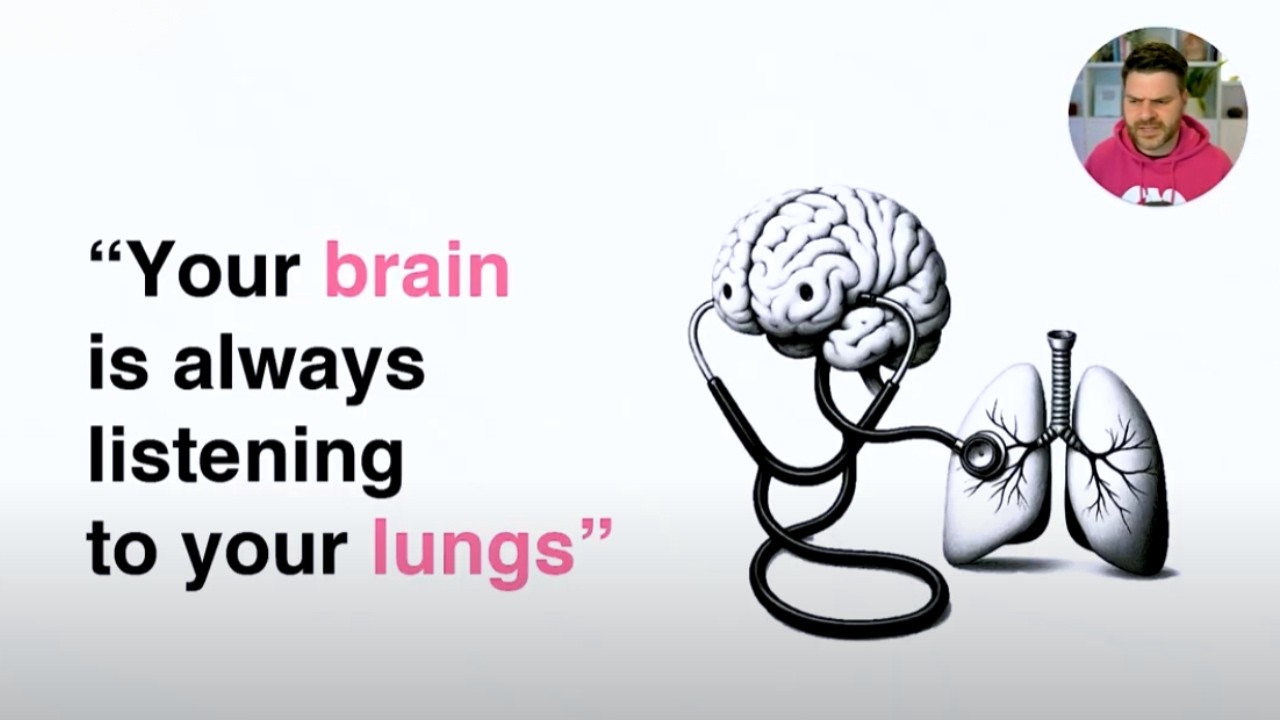
so if we go into a breathing pattern start changing all that stuff there's a possibility that that new information can flood up through the Vagas nerve to the brain so one of the things that can happen in to say something like a big conscious Connective breathe if you if you stay with the practice in that way is you can get a flood of information up to the brain because one thing that happens in in trauma is people shut down information from the body right now I don't think that just going into a big conscious connection
breather is the smartest way to do that I think doing it more incrementally through a whole range of approaches over time is probably more sustainable and more Integratable into life big term over time but if somebody is doing that you're going to have a new flood of information coming into the brain now as you go into that hypoxic state because you're reducing auction into the brain your lyic system is going to get disinhibited so whatever's going on there you know there stuff going to happen in your brain yeah the meanings you make you know and
some bits of the brain get shut down because the more Hypoxic you get the more you breathe like that there are bits of the brain that going to close down because your brain's in survival mode so it's going to shut down the bits that aren't that necessary if for staying alive right now so you're going to get something happening now one of the things that can happen it may be an authentic trauma release and sometimes I'm sure it is whatever release means a release I would suggest is more of a transparent moment A moment of
recog of the complexity of previous trauma which would then one has to work on and undo over time and that might be signaled by a cathartic emotional experience somebody might start crying or wailing or something like that because when we get stuck emotions in the body they're sometimes called secondary emotions where they they become a kind of Life perspective you know one of the key things is to unfreeze those and move Those to begin with so we can start to reveal primary emotions which primary emotions are emotions that responding to the context and they last
90 seconds to 9 minutes so if something's there as a kind of mode or a mood of operation and slightly depressed or in Happy State that's more likely a secondary emotion especially if it comes out in somebody's approach to life and their storytelling know life's really hard that's a story to Life's really Difficult that's a story it's not you it's not the truth it's just a story but that those kind of approaches come through in various ways so that unsticking and unfreezing can be profoundly valuable but um I wouldn't say it's you know the other
complexity comes though because one of the things that happens when you when you reduce oxygen to brain is you get what's called a glutamate storm and glutamate is the excitability Neurotransmitter in the brain and because of the impacts of reduction of oxygen on the cell membranes they dump glutamate into the brain and that gives you that excitability so sometimes what happens to people is a glutamate storm how do you know the difference is it real trauma release or is it just a glutamate storm because you've got somebody into a hypoxic state and and is it
beneficial to go into a glutamate store probably not so it's a Complex terrain again and one of the limitations is we just don't actually have enough research so people invent stories people come up with a story you know we we human beings love bias I think called bias confirmation bias confirmation is where we prove ourselves right with all the evidence available right we're really good at it really really good so we're constantly trying to do that whether we like it or not and you know And if we think not doing bias confirmation we most certainly
are it's it's it's a weird game we do yeah so so when we get into that kind of bias confirmation that which is proving ourselves right we do that with our favorite methodology yeah I know it's right because yeah even so it's complex it's a complex terrain and we've got we've got a lot of a lot of work to do in terms of delving deeper into it but it's um it's An interesting one for sure but I think that sort of more sustainable bit by bit approach is probably more better when when it can be
integrated into life that's where it really makes the changes yeah I suspect you know so I I qualify with an I suspect on the end yeah I'm trying to avoid my own bias confirmation there what are your what's your take on TR sometimes known as trauma release exercises sometimes known as tension Release exercises which is not really a breath practice it's more of a a Tremor practice um yeah give us your thoughts on that I think it's it's interesting um I've got my own version of it that I that I work with you know I've
got a which is which is linked with breathing as well so bringing breath into it um I think it's a profoundly useful strategy to encourage people to loosen up patterns in the body and potentially learn how to release Stuff not grip onto stuff the basic principle is that other mammals let go of complexity by shaking and we particularly our cultures we know we very culturally entrained creatures and um you know I'm I'm British and I keep a very stiff upper lip you know take it on the chin for the Empire and all that you know
um actually I'm I'm bilingual actually uh my mother's from new Yorkshire so when I go up north of Manchester I talk Different and it's very different up there because people are slightly different right but you know we have particular cultural entrainments around emotion and how we express and gender-based entrainment you know male and female you know guys don't cry you know you're it's okay to be angry you women it's not those are the classical condition patterns you know those kind of things who says it's all kind of you know made up by culture none of
it's Accurate or real but it's like you know we have those patterns and we buy into those patterns When We're Young so if we have patterns like that again it's going to get complicated and all of those patterns are connected to breathing so if you're doing stuff with shaking and releasing it's not a bad thing to do you know if it's helpful do it if you feel better afterwards and you feel that your capacity to be present in the world in a Kinder more engaged more meaningful ways Improved then something's working for you yeah like
I've had some nice experiences with some tension release I don't really use the trauma version of it or the trauma word at the start but definitely tension is released yeah my background you one of my backgrounds is is pretty strong yog arner you know I used to I used to travel the world teaching a long time ago and in that practice what you're doing is you know the way we used to do it one number one Is the breath practice because the breath has to be regulated properly with that it was like a 4 to
sixc inhale 4 to sixc Exhale so you're regulating the breath so that's approaching any tensional patterns from the end of the mind because tensional patterns aren't just the body they're the mind if you put somebody under general anesthetic there's no tensional pattern left they're floppy you take them out of General aesthetic And all of a sudden the patterns come back on again yeah so the pattern the patterns are a mental construct as well they're not they're not the body itself so so you know if so approaching it with the breath is really useful as well
and then coming into the movement P approaching it both from the end of you know vibrating moving fasal webs and you know whatever you do with that or you know working one muscle group and then the Other muscle group in opposing Dynamics you know however you play with that and then linking breath into it I think it's probably a pretty useful strategy in terms of approaching that and it's going to be of benefit I imagine for just about anybody because most people will have some kind of pattern like that yeah that's interesting about the J
anthetic I haven't heard that before yeah it's interesting on that yeah i' got a CO2 question for you just going Back to a couple of conversations ago um so there's a there's a a term I think it's called CO2 therapy I think James Nester wrote about it in the breath book he took a 30% CO2 breath might be familiar with Andre's awesome work I know Peter lichfield's big into CO2 I've got him coming on the show in a couple of weeks actually um but I'd love to just get your take on this when when we
absorb Co when we taking a CO2 breath be it what Anders has got where he's uh Synced up a soda stream to a mask it's far more complicated than that but that's the that's the general version you can adjust the amount of CO2 I'm just struggling to get clarity on this really so I'd love to get your thoughts if we take in a CO2 breath be a 30% breath breath in the lab or an 8% breath or or got my little CO2 monitor we're at 1295 at the moment in here um what is going on
can you talk me through what is going on when I take in More CO2 because I'm struggling to get my head around do we reabsorb it does it jump back onto the hemoglobin does it go back into the body so what what what is that process of us breathing in a higher CO2 breath because we're getting oxygen still but why is it why are we feeling panicky when there's more CO2 in a room or um uh if we take a big CO2 breath yes I'm just trying to figure out from a biological point of view
what happens when we breathe in CO2 yeah well carbon carbon dioxide is critical for function yeah it's you know we need if you look at the amount of oxygen that gets into mitochondria it's around about 1% so it's 21% in the air it's about 1% in mitochondria so we don't need locks of oxygen um you know oxygen is highly reactive and and destructive actually so I saw a funny post recently where somebody gu was going on about he didn't like the idea that um oxygen is toxic well it is You know it's extremely it's one
of the most reactive substances on planet Earth because it it it gives and it receives electrons freely relatively freely so it binds really well to things and think about what it does to metal you know most metal it doesn't do it to gold which is why we like gold but most metal will Rust or change it'll become an oxide um so oxygen oxygen is managed really well in the system but carbon dioxide is Critical both in terms of enabling oxygen movement and we make it all the time we making carbon dioxide 24/7 so the mitochondria
pumping out carbon dioxide 24/7 from the you know the burning of fuel linked with the oxygen input so an amount of oxygen up to about 45 millimeters of mercury which millimeters of mercury is the way we measure partial pressure of gases in anything so in the it's measured in a certain way so you know when there's That carbon dioxide level is reached of about 45 mm of mercury or so maybe a little bit more than that then your brain starts to kick in and let you know that you've reached a place where you need to
get rid of some more carbon dioxide right so if we go too low below 35 millim Mercury carbon dioxide and above 45 mm carbon dioxide your brain stem which is measuring carbon dioxide levels and it's specifically carbon dioxide levels because it's got a really Neat way of looking at how to measure that because the blood brain barrier filters what it what it's doing is specifically measuring that so it go goes above or below that it's going to increase breathing rate or decrease breathing rate it's going to change your breathing rate quite dramatically and quite quite
quickly because of those impacts now to degree that depends on what your trained breath patterns so entrained breath patterns impact that as Well there's therapies available where people are looking at very high level oxygen and very high level carbon dioxide for basically healing complexities in the body so um hyperbaric oxygen for example is used for cancer treatment to a degree sometimes one of the treatments available there may be other avenus and I'm not I'm not a medical doctor in this way so I'm going to give you very limited information on this but you know In
both both increased and decreased amounts of carbon dioxide to a degree both have their hormetic value depending again depending on the individual so it's very individually focused you know it's dose dependent in other words so how much carbon dioxide too much is it Beyond 45 or how much carbon dioxide below 35 is hormetic and is is dose dependent individual dose dependent but what it's going to do is is increase the acidity or the alkalinity of the blood How it gets across the lung lining is simply through diffusion all gases move through the system by diffusion
which means they move they move from high concentration to lower concentration so if you've got more coming into your lungs then what you're going to do is you're going to get more absorbed into the arteries simply through diffusion right this that's the only way it can get in so what you're doing is increasing the amount of carbon dioxide In the blood which is increasing the acidity of the blood and so you're going to change things in the system because of that homeostatic shift of the acidity of the blood so they're not necessarily jumping in on
the co they're not necessarily jumping in on the hemoglobin getting into the plasma or or both well it can do both because because I mean hemoglobin carbon dioxide is carried in the blood mostly in the Hemoglobin or or carbon dioxide doesn't dissolve in water very quickly it's quite slow and so in terms of biological systems it's way too slow to be of much use in the blood so you there's this amazing uh enzyme called Carbonic anhydr which is super fast and what it does is it grabs hold of CO2 and splits it into a hydrogen
ion and a bicarbon ion but it does that in the hemoglobin and then those ions can then be released into the blood so so the carbon dioxide If you think of it being carried in some way it's carried or moved through the hemoglobin to be then be split by Carbonic and hydrates so the hemoglobin play a role in that or the red blood cells play a role in that in terms of you know that's the place where Carbonic and hydras acts I think there as I remember the four kinds of Carbonic an hydrates so two
of them in breathing one of them is is the red blood cells the other is to Get carbon dioxide from the blood out into the lungs it operates the other way it's a different version of Carbonic an hydros but that's one of the key things is the enzyme in there so it's going to it's going to work through the hemoglobin it's going to work through into that to get into blood but it's through diffusion that's the only way any only way any gas moves through our body through the wetness of the body is through diffusion
because it moves from Higher concentration into lower concentration so we're enabling that so the respiratory mechanisms of the membrane allow that to happen well okay so so when I uh hold my breath and my CO2 goes up and uh that's detected and my urge to breathe increases that's like an internal process but if I was to take a big old CO2 breath I'm probably going to feel an urgency quite quickly the same thing's pretty much happening that CO2 has been diffused into my body it's Gone around it's been detected by the chemo receptors yeah andal
or internal L yeah and there's there's receptors in different parts of the brain as well so you can amdc ion receptors the brain near mdala for example there's receptors in the brain as well which will pick up on that increased acidity which is what they're picking up on really as hydrogen ions because that's what you so it's not not per se measuring carbon dioxide it's measuring hydron particularly and that Change in acidity that brings but that's but so then that's what's being measured I mean you know having said that the brain does move carbon dioxide
across the blood brain barrier and then split it as well so it gets more complicated but that's being measured in the brain and of course you know there was was wasn't it in James was it in James nestor's book where he talked about somebody getting a somebody who had some amdal damage somebody who never felt Fear as a woman wasn't it never felt fear and then um they gave her a big puff of carbon dioxide and she felt fear for the first time because it was hitting at the amdal level a sub amdal level brain
Stone level so that's really probably amdal as well in terms of iron receptors but you get that you know that that's powerful stuff yeah yeah and of course if if we can keep it below that fear-based level but you know into an interesting Zone it then has other Effects less harm you know less scary effects if you like so we're looking where is the medical or hormetic benefit what point is it for that individual above 45 millimeters and if you're doing something like a breath hold if you good do a good breath hold you can
get your carbon dioxide levels up to 50 Ms easily you know if you do a good breath hold and stay there for a while you can build it up and that that's kind of nice to do that um I do it every day I have a Breath practice like I I've been doing breath practice there's a little boast here put my boast in whatever it does for me I've got no idea I don't know what it proves right because it depends on the quality of course but I've been doing breath practice every day for the
last 50 years which is fun that's and it's interesting because it keeps changing as well right but a breath holds a part of that for me and I I think of breath holds then as a way of Approaching that fear-based system in yoga practice which is you know deep yoga is one of my traditions there's a thing called abiva in yoga and abiva means fear of dying and the fear of dying is also the fear of living yeah it's the fear of taking risks it's holding back which is also by the way connected to shame
as well and other things emotions in the body but there's that fear of dying there and they're saying every living Thing has the fear of dying of inovation in it and so one of the things we're doing by doing breath holds and I do them in the morning before I've eaten is then it takes us into that edge of that kind of you know physiological fear and if we do it there then everything else in the day is small stuff it's just okay you can deal with it not no problem I've been I've been close
to death this morning it's all right let's just do something else it's Fine it's all good whatever so it's kind of kind of cool at that level you know in terms of um working with Stress Management through prevention if you like you know not picking up the pieces at the end but by by creating a state in your system whereby the things that happen seem less less important in terms of their intensity yeah from your The evolutionary point of view I'd love to get your take on this um I've seen People talk online about the
fact that and I'm sure there's this isn't 100% accurate but generally um animals don't hold their breaths and so we shouldn't hold our breaths either I you got the whole fishing and Diving thing and Aquatic stuff but like um and I know we're unique I know what you spoke about ear it was very interesting but where where's your thought on the site the The evolutionary benefits of breath holding and and is it something gatherer Hunters Used to do do you think or is it something we've had to find now to help us as a solution
to the modern problems that have been created well I would say some of the practices I do go back 4,500 years that's you know we're talking hun hunt gatherers or gather Hunters we're talking going back 10 to 20K years you know there are still a few few groups of people living like that on planet Earth but they're rapidly being changed by cigarettes and Tools and all the other things that you know contemporary C civilization brings with it civilization um but that the 4,500 years of of of clinical expertise from the yogi tradition or from the
Chinese tradition 3,500 years from there they've got some comments to say I think because they've been working and again if you look at those traditions if you look at Chinese Medical Systems they were really interesting because what they did was if A doctor if I beg of Pardon let's do this right if a client got sick the doctor stopped being paid because they' failed at their job so the job was to keep somebody well so it's it's completely different in its origin in terms of perspective so Asian Medical Systems they're what I call Flow medicines
I've studied Chinese medicine and iader and stuff like this is part of my my work to to explore these things all right but these these tradition s Were there to keep people well and if you couldn't manage it yourself with the practice you did you got somebody come and help you so an iic practitioner or somebody who helps you create what they call a Dinara a daily program to keep you well because you're overeating or because you're not moving enough or not doing whatever it is that you need to do to change to to stay
well um but those kind of discipline based systems the martial arts and yogic Practice and stuff like that were part of the overall kind of cultural training of staying well so the the whole emphasis of medicine there is how do you stay well so breath holding is a key part of that and it's been around for at least 4,500 years so that's in the you know the written traditions we have as well going back through the vadas and stuff like that so there's quite a lot of evidence that it's been used a lot um and
just because an animal doesn't do it I mean I don't think an animal reads or play the I've never seen my cat played the piano and it certainly doesn't play the guitar but I do so does that mean I should stop playing the guitar as as well yeah people think that natural is something that isn't human this is nature now this this is nature look at it it looks like it even play with my shirt there but you you know I think of cities as like you know I was in Saigon once hoi Min City
I beg you pardon Hoochi Min City and I was went out with some friends there on a bike ride and we came back in bike and there's all these all these motorcycles streaming into the city like ants you know down this long rad and I thought this is like a termite Mound you know what what evolution of nature done is just like it piles up termite Ms it piles up cities it's just that we we mold the mold the Earth in slightly different ways we call it concrete and stuff like but it's still Nature you
know there's only nature there's nothing that isn't nature so everything's natural it's just that it's different it's different human natural is different to dog natural or cat natural you know so I think I think these you know people love these kind of EC romantic distinctions um you know and also we're still in evolution we're changing we're changing really rapidly so whilst our system May well struggle You know if you look at hunter gatherers or gatherer Hunters you know they would have moved an awful lot more than most of us do but they certainly never did
a triathlon you know if you if you look at those people they had to work hard for their calories you had to get up in the morning go out digging or go out looking for something to eat and it was hard work to get what you needed to stay alive and most of them were hungry a lot of the time right so you don't just go Out for some immense great big run because it's a fun thing to do you only run when you need to I so in in Professor D liman's book it's exercise
it's brilliant book and he was talking about he used to working with some Mexican people he said so when do you you know these the famous Barefoot Runners and he said so when do you run he said well to catch the goat yeah because in in those contexts to go out doing some Iron Man Triathlon Just doesn't make any sense doesn't make any calorific sense so you know but that's what we're doing that's what we're doing now so you know we everything's changing and everything is always going to change because that's because change is the
nature of things so when we come back to breath and start thinking about breath how do we use the breath to optimize and be with the changes that we're working with now and that's a really interesting question Then yeah what's uh what research or or evidence do you know about respiratory rates Through the Ages you know I've heard that since the 1960s when Beto was measuring and some of this we've seen an increase um do you have any thoughts or evidence on what it was like as we go further back what a typical res rate
might vary compared to today I haven't I haven't looked at any research yet on that um I mean there is a rate that Works with what's called um compliance and resistance so compliance and resistance are resistance is the air coming in and compliance is the movement the tissues to work with that so compliance of the of the muscles muscle bone tissues respiratory tissues lungs and so forth and resistance and the balance of that compliance resistance there's a sweet spot which comes out around about 12 to 15 breaths a Minute so that won't have substantially changed
in the last 10,000 years you know know the whole point about that you know 10 to 20,000 years isn't enough to create although we are changing it's not enough to create massive change so that would be fairly consistent over that period of time that 12 to 15 rate if we look at um you know practice like en encouraging optimal HRV or something like that then you're down to about five to six breaths A minute so that kind of respiratory rate has a different function but you don't want to be breathing like that all the time
you know certainly not if you go for a run but it but it has but has usage and it has usage within movement practice like the yasa practice I used to do there's a rate there of you know um six to eight breaths a minute or so that function has a functional use within that and by functional I mean it works within that particular context Functional doesn't mean something that works within every context functional by definition means it's working within a context so that 12 to 15 rates is kind of average relaxed breathing rate if
we look at the yogic tradition U Med meditative depth Traditions by yogic I don't just mean bending and moving in a yoga studio in the modern world because that's very different to traditional yoga um then we're talking about getting Breath rate down to below three breaths a minute because when we when we drop the breath below three breaths a minute get down to one breaths a minute then we're talking about changing brain wave patterns we're talking about doing different things in the brain and using the breath as an access route into a whole different way
of working inside the brain because that's what the aim of those are to change you know change function at that level then so there's a Range of different approaches then again you know for everything 12- 15 but I think the average breath these days postco is somewhere around about 20 which probably isn't that beneficial low and slow I think is the yeah nasal low and slow isn't it it's the it's what most people need to do yeah yeah yeah slow it down yeah um we almost done an hour almost to the second actually I can't
believe that time's gone so fast um I've Loved loved Listening to you talk about all these things um I could go on for a lot longer I just want to ask a couple last quick questions if that's okay um thank you by the way as well I really appreciate talking with you as well it's been it's been wonderful um what uh if somebody so somebody watching or listening to this right now um maybe just give us a little bit of a flavor like what are a couple of things they could should consider doing Or stopping
so starting or stopping when it comes to you know good breathing patterns reducing stress anxiety tends to be whenever I poll this community you know what are you looking for athletic performance Stress and Anxiety normally comes out about 70 to 80% of the results pretty much every single poll we've ever done so so maybe you could give us bit of your wisdom on some things people could consider looking at for for helping reduce some of that I Think I'm just there some really simple things you can do and I think those are probably the most
useful one of the most simple things and I think of it as a core practice is awareness of breathing now of course you know awareness of breathing is simply paying attention to what your breath is actually doing and if if you're not doing that and then you're altering it without paying attention to what's Happening you don't know what you're altering it from or you don't know what happens afterwards so it's kind of useful to have that metric that way of understanding actually this is what my body's doing this is what's happening right now and if
you know if you want to do it to a level where it's going to and again if you if you you can you can use awareness of breathing to restructure your dopamine systems and to build new neural bridges in the prefrontal cortex It's really profound practice if you take it far enough I mean really profound um because it Alters the kind of bi biological algorithmic function in the front of the brain but that aside you know if you're not going to do it for you know half an hour you know then then doing it for
5 minutes is really good and I I recommend people to build a habit of breathing for you know first of all it's nasal breathing if you don't and I've got a um a post my YouTube Channel right pinned right at the top of it is a nasal retraining video because simply because people Tau to nasally breathe but the reality is if somebody's being mouth breathing if somebody's been breathing through their mouth at night time the pressure changes through those two passages you know the positive pressure through a mouth prath and you may be able to
feel it if you breathe in if you feel that the soft pallet at the back lifts slightly and the nasal pastes Clos slightly yeah because of the negative pressure in the nasal fings nasal pastures there so if you do that over and over and over again say during nighttime or if you're going running and you're nasal breathing what you're training your nose to do is to shut down so you can't just suddenly nasally breathe you you know if you if you gaffer tape your hand up like that with gaffer tape for a week or two
and take the Gaff tape off you won't be able to Use your fingers you won't be able to pull them apart because your brain's translated that as if it's one thing your sensory map has changed so you can't access a motor map you can't move the muscles so it's the same in there so you got to retrain that first of all and there are strategies to do that so the nasal training video is a good one to do and if you link that if you do snor at night time link that with nasal tape that's
a really good strategy and also Get a practice in place as sitting and watching your breath for a few minutes but to do that you've got to get a habit in place because the thing about bre bre work is it relies on regularity relies on regularity and sensible repetition not just doing one thing so getting it as a daily practice and I talk about 35 365 which is where you get and people rarely do 35 so let's call it two five right but you get a get a you do five minutes after you cleaned your
teeth Because you're piggybacking that habit on the habit of cleaning your teeth you learned to clean your teeth you didn't do as a baby right so it's a learned habit so if you put five minutes of just paying attention to your breathing on the back of that you've got a breath practice in place they do it before you eat in midday most people eat it midday sometime around they will pay attention to breath for five minutes and do it an hour before You go to bed you don't want to do any Focus practices before you
go to bed directly it'll keep you awake a bit so if you do it an hour before but if you can do those three times a day just paying attention first of all that's a really good start because you've got a breath habit and if you don't have that in place it's very difficult then to do anything meaningful with breath work after that you've got to build in that repetition on a regular basis so habit Creation is really important I think what you can then add add to that is something real simple like doing coherence
breath 66 breathing 55 5.56 seconds something like that just for a few minutes again yeah and then I would add in Triangle breathing on top of that because triangle breathing gives you the opportunity to feel which breath hole feels right so you get to check out your trauma triggers is it the inhale breath hole that feels really comfortable or The exhale breath hold start with the one that's comfortable and then gradually build in the other one as well get so so you're checking the breathhold and I would say doing anything where you're pushing a breath
hold for a maximum hold or something like that is not a good thing to begin with just just listen to your body what does your body say I've got this big thing I call the in edge of listening which is actually listening to your physiology listening To your body what does your body say about it because the more you listen hence the embodied awareness comes in the more you have the capacity to listen to this the more you can work effectively with it rather than just dominating and pushing and pulling it around which is a
lot of what goes on and that's half the problem we face in the world is kind of you know Domin of nature so we're not going to do the same thing in the breath work so you know so You got a simple practice there a humans awareness of breathing you know could extend the Exel the end leave that out for a minute keep it real simple coherence breath and then to a simple practice of just triangle breathing workout which breath hold to work with and do that and start creating a little practice for yourself to
begin with and see how it feels because again like I said its regularity and its repetition over time Because if you've got some dysfunctional Brea another thing is if you've got dysfunction breathing pattern talk to somebody talk to a professional who can help you turn it around because there are strategies if you got a breathing pattern that's oral up here you can radically transform your life simply by turning that around so if you don't know a professional breath worker get in touch with me I'm sure Mike can help you I'm sure many People can help
you but that is critical to turn that around because your whole system is running on a sympathetic nervous system stress-based function then which is not going to give you the best quality of life it's going to lead you to trouble so get that turnament so A few pieces there to take away I would say that's really helpful thank you so much for that um anything we've not covered Christopher that you wanted to cover Should mention my book let's go for it yes please tell us about it it's in it's in editing process at the moment
we've got we've got a two volume contract with a publishing house which is amazing uh I say we because I'm right it was um a co-author we've got a colleague who two of us doing it together which is really nice it's good fun we're make having fun with teamwork so at the moment we're clarifying the illustrations and we're getting it Editing we're hoping to get it out end of this year beginning of next year for the first volume and the manuscript for the second book has to be in to the publisher in May 2025 so
we're going to number two out so the first one's s of setting the frame it's about breath it's about breath and evolution and the mismatch and why we breathe badly and how to breathe better and all that kind of stuff so the science of breath work if you like so Very science-based everything in there is kind of referenced and validated like it should be for a science Spacebook so it's it's been fun to do and we're looking forward to getting that out um we're hopefully it's going to be well received we'll see what the world
thinks about it we've got we're working on volume two at the moment as well so that's kind of fun fun project I can't wait to read them yeah thank you yeah fantastic we'll have to have you back if You want when you've got them out and we can we can talk about them and pick them up that'd be good fun great you have to read it first okay of course yeah absolutely yeah and I look forward to that um cool well that that's it for this one then so thank thank you so much for your
time um anybody watching um all Christopher's links are down below in the show notes so encourage you to check out his YouTube channel his website all this good stuff um and Christopher uh Thank you again for your time and hope to have you back at some point in the near future appreciate it thanks again Mike thank you you're very welcome thank you cheers thanks everyone hey thank you so much for sticking all the way through to the end of that podcast I hope you enjoyed it as much as I did and I just have a
quick question for you would you do us a favor and leave us a comment down below with one thing that you learned from the podcast or one thing That you want to take away and Implement into your own life and if you haven't done so already please subscribe to our breath work in the blink it's our 5 minute easy read newsletter it comes out every single Friday and in that I'm sharing things like my favorite breathing exercise of the week a study that I've been reading on breathing we've got a wild card section we've got
all these different bits and it's been designed so you can read it and scan Through it in less than 5 minutes and pick out something you'd like to go deeper on it's completely free you could unsubscribe anytime and join the nearly 10,000 other people that have subscribed to this wonderful email newsletter link is down below and I look forward to serving you each and every Friday