This episode of SciShow is supported by Spintronics. Spintronics is a new game where players build mechanical circuits to solve puzzles. You can head to upperstory.
com/spintronics to see the game in action! I don’t know about you, but I love trees. There’s nothing quite like going for a walk down a forest path, sitting on a tree-shaded patio, or making memories in a backyard treehouse.
And trees have tons of benefits! They get rid of excess carbon dioxide and make tasty, fresh oxygen for us to breathe. But some of the places where it’s hardest to plant and maintain those trees are the same places that need them the most, like big, busy cities.
That’s why some researchers are trying to improve on nature’s design by making trees liquid. [INTRO] To be clear, we are extremely pro-tree on SciShow. Trees help combat climate change by storing excess carbon dioxide from the atmosphere, produce the oxygen we need to breathe, and capture particulates to help purify the air.
But as great as trees are, they just don’t make sense to grow everywhere. For starters, trees… are big. We literally compare things to trees to explain that things are big.
They also need to be planted in nutrient-rich soil. Space and soil are two things cities don’t have a lot of. Plus, trees’ root systems can cause damage to infrastructure like sidewalks and sewers.
And as good as trees are at removing pollutants from the air, they tend to just hold onto them afterwards. So trees in areas that have high levels of air pollution, like cities, tend to have shorter lifespans and not thrive as well. A tree can absorb up to 150 kilograms of carbon per year, which sounds great until you realize that that’s not even as much carbon that’s produced by a single car burning through one tank of gas.
So that means that one of the biggest benefits of trees requires way more trees than just one or two. We’re talking forests that spread into the suburbs levels of tree-cover. Plus, growing and maintaining urban trees requires that cities, counties, governments, and neighborhoods are all invested in keeping the trees happy long-term, which is easier said than done.
And that’s not even taking into account some of the downsides of trees, like how miserable seasonal pollen allergies can make people feel! Since one-quarter of adults in the US have seasonal allergies, that misery is nothing to sneeze at. So some researchers are looking into whether we can use not-trees to give us some of the same benefits that trees do.
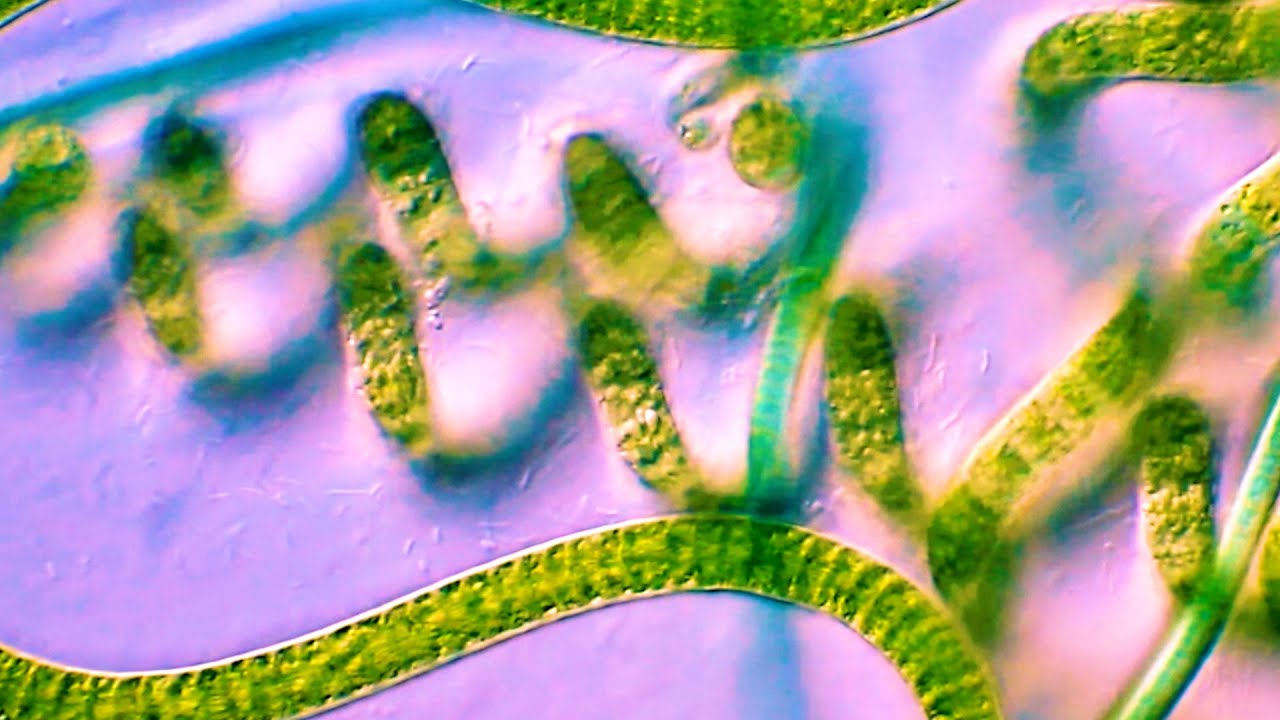
And that’s led them to photobioreactors. Photobioreactors are closed, lit containers that contain lots and lots of tiny, photosynthesizing organisms, all in a carefully calibrated system to allow people to control their growth. Picture a giant, green, glowing water tank full of algae or bacteria.
Thanks to photosynthesis, the organisms in the tanks remove carbon dioxide from the environment and release oxygen back into the air. Besides their potential future as tree juice, photobioreactors have a ton of uses. Like wastewater treatment.
When water passes through a reactor, the algae filter out pollutants like nitrogen and phosphorus. They can even grab contaminants like estradiol, which is a hormone found in birth control pills, and larger organic matter, like, you know, the kind you would find in waste water. We’re also discovering that some microalgae produce biological compounds that can be important for things like medications.
And when you grow those algae in a photobioreactor, the production of those compounds is controlled and efficient, so it’d be way better than just collecting the compounds from wild algae. If you want to get all sci-fi about it, photobioreactors could someday be used to remove carbon dioxide and release oxygen in spacecraft, plus grow greens for space salads that are 100% edible. Because algae wouldn’t have roots, stems, or leaves to throw away, there’s no waste!
And back here on Earth, photobioreactors are being used to grow spirulina, the superfood everyone is chugging, baking, and smoothie-ing into gorgeous blue foods that add a protein punch. So just in general, photobioreactors have a lot of awesome things they could help us do. But why are we interested in them as the future of trees?
Well, photobioreactors’ ability to remove carbon dioxide and release oxygen sounds a heck of a lot like what trees do. Specifically, what we really need trees to do in places that have a lot of carbon dioxide and a lot of people who need oxygen, but where they struggle to thrive. Places like cities.
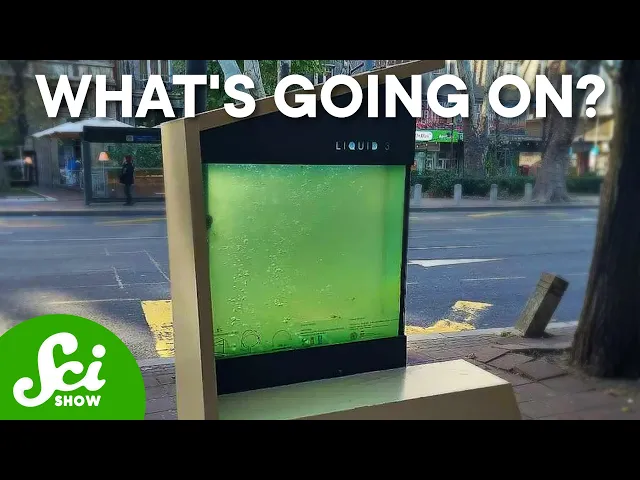
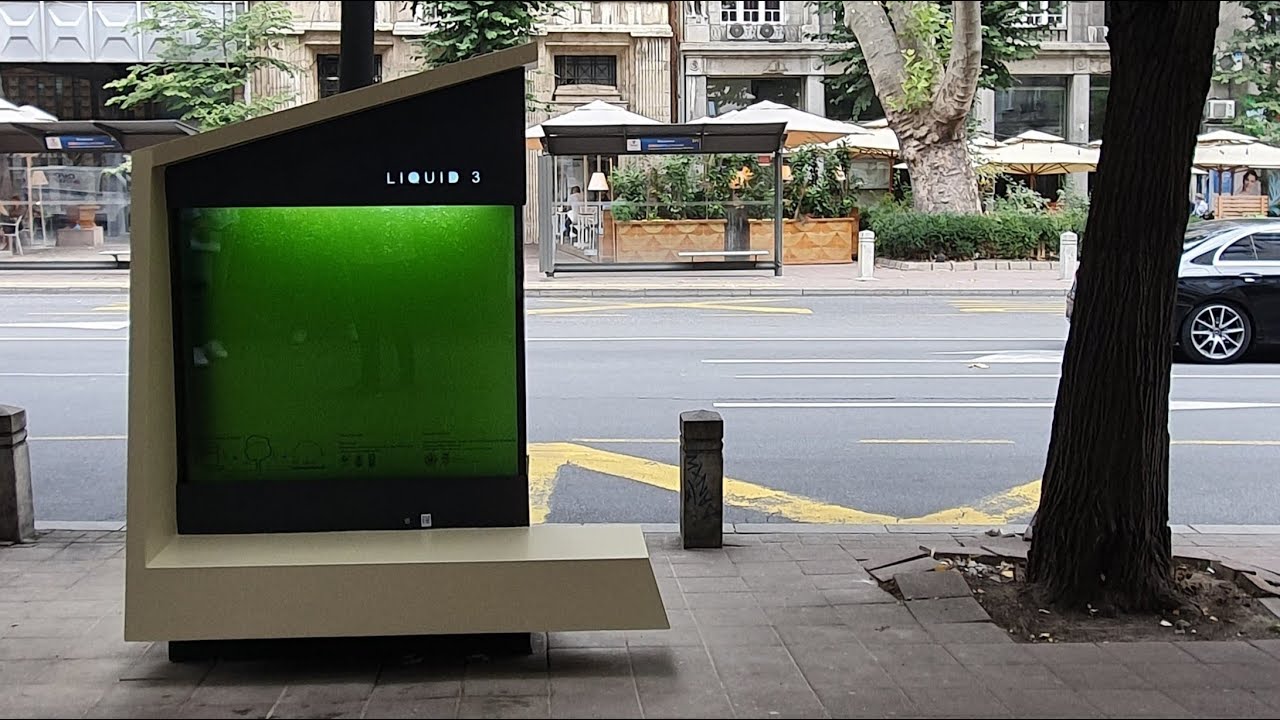
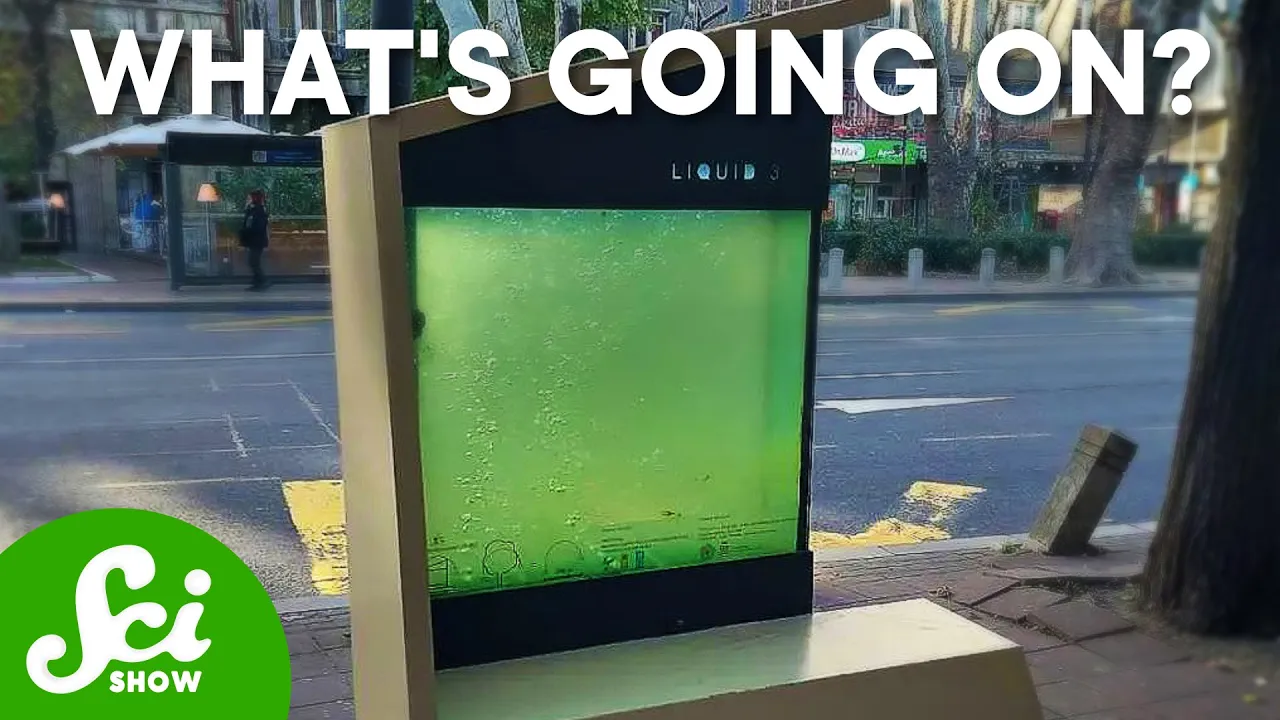
Which is why researchers in Serbia created the LIQUID3 photobioreactor that now resides in Belgrade. The LIQUID3 uses a species of single-celled algae that grows in Serbia. The algae is resistant to high and low temperatures, which means that the “trees” can photosynthesize and pump out fresh O2 year-round, instead of taking the winter off, like deciduous trees do.
According to one of the researchers, a 600-liter tank does the same work as two ten-year-old trees, or 200 square meters of grass, all in roughly the area of a park bench. This prototype has a solar panel that generates the electricity needed to light it at night, which means it doubles as a street lamp, a bench, and built-in phone charging stations. So in addition to air purification, liquid trees have the added benefit of being able to provide other needed services.
Maybe solar-powered heaters in cold cities, or bus stops with electrified timetables. Plus, a giant, glowing green tank in the middle of a city sidewalk just looks cool. They can also work as a more immediate, short-term solution to urgent pollution and air-quality concerns.
The LIQUID3 is ready to start cleaning the air as soon as it’s installed, instead of having to wait as long as 30 years to get the oxygen-producing capacity of an adult tree. And photobioreactors are lower maintenance than trees. As the algae grows, some of it needs to be removed every six weeks or so, but that’s about it as far as regular upkeep.
And that surplus algae can be used as a fertilizer, so nothing really gets wasted! Plus, you’re not limited by location because photobioreactors can be made into any shape. You can put them in the most polluted areas of a city, where they’d have the most benefit, without worrying about whether there’s soil to support an actual tree.
So liquid trees can potentially give us some of the environmental benefits of tree trees without the complicating factors. But as cool as they look, liquid trees aren’t going to replace the aesthetic and mental health benefits of having green spaces around, especially in cities. Which means they’re never going to be able to replace trees.
Both tanks and trunks will have a part to play as we try to build cleaner, greener cities. And I’m not giving up my treehouse anytime soon! Thanks for watching this SciShow video and thanks to Spintronics for supporting it!
Spintronics is a puzzle and a graphic novel and a time traveling educational game to play by yourself or with family and friends. It takes you back to a time when you get to discover electricity. As the game goes on, you’ll make more and more sophisticated circuits to serve your growing needs.
By building mechanical equivalents to today’s electronics, this game makes circuits tangible, irresistibly touchable, and deeply intuitive. Just like SciShow, this company is all about endless curiosity. So Spintronics is great for kids and adults, because you’re never too old to learn something.
And you can learn more about the science of the game at upperstory. com/spintronics today. Thanks for staying curious with us!