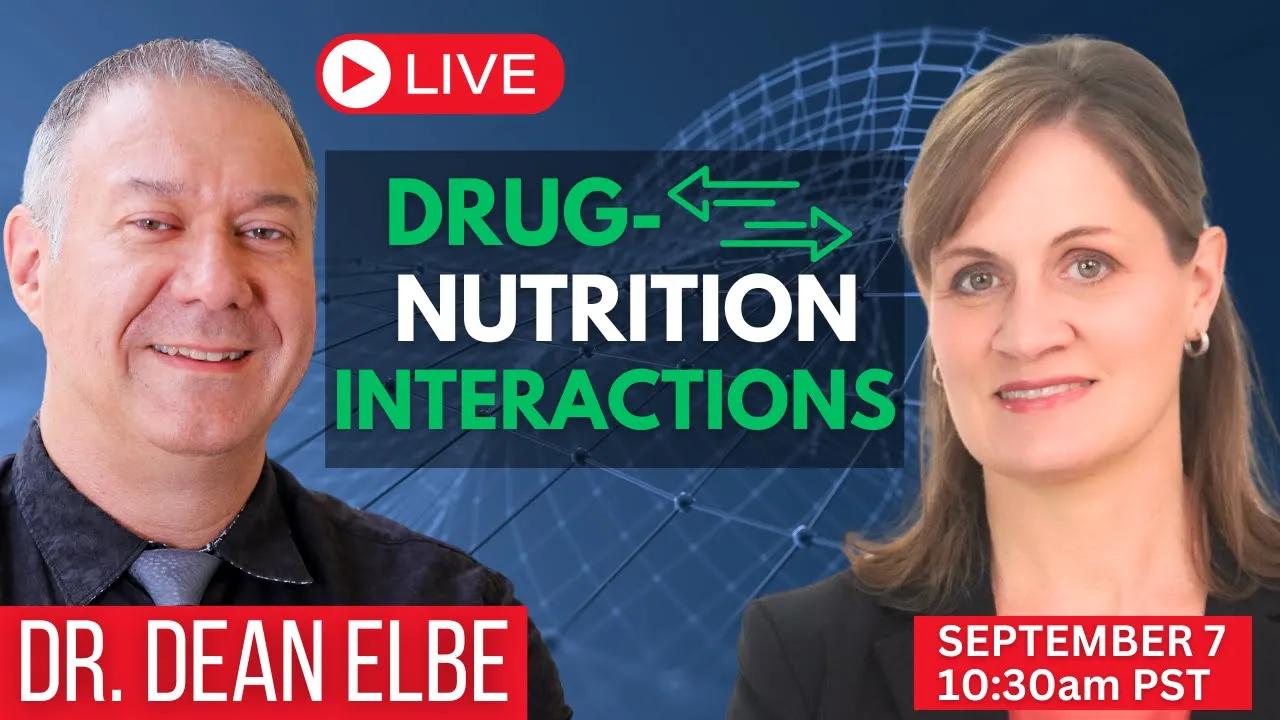
E [Music] n n [Music] [Music] [Music] this is going to be a very uh interactive session so we look forward to your questions and your comments um in the comment section you can leave Those there will be a Q&A at um the end of this conversation uh so before we get started I wanted to let you know that this session is being sponsored by The Friendly Pharmacy 5 Audio and Video podcast which you can access on various platforms including Spotify Apple also Amazon music and overcast so thank you very much for supporting the channel and
supporting the podcast by subscribing and this uh session will also be up on The podcast in the coming days um so as I said we'll be talking about uh drug and nutrition interactions and this is a topic that is um often very overlooked and there's not a lot of knowledge about this when we when we talk about this with different healthc Care Professionals so pharmacists are fairly well versed in this um but really as we talk with Dr Elby you'll see that we really need an interdisciplinary approach to drug nutrition interactions And they are quite
significant um they can lead to um more necessity for lab work longer patient stays in hospital um that kind of thing and so when we talk about drug nutrition interactions if we want to make put it really simply we're basically talking about how nutrition or food can interact with medication and also how medication can affect a patient's nutritional status that is a very simplified definition I'm sure Dr lby will go a lot deeper into that for Us um so again let us know uh in the comments we'd love to hear where you're joining us from
um again if you have any questions please don't hesitate to ask those during the discussion or after in the Q&A we really uh look forward to hearing from you and uh and hearing where you're joining us from uh so I'd like to just just welcome you all and I hope that you all feel comfortable to uh to participate in this discussion with us today uh before I bring Dr Elby up I'd like to talk I'd like to tell you a little bit about Dr Elby and his uh impressive qualifications uh so Dr Elby is has
a doctor of Pharmacy he is also a board-certified psychiatric pharmacist with over 30 years of experience in clinical practice since 2007 Dr Elby has been practicing at the Healthy Mind Center at BC Children's Hospital in Vancouver British Columbia he also serves as clinical instructor at the Victoria or at the University of British Columbia's faculty of pharmaceutical sciences and he is an honorary associate member of the Department of psychiatry in the faculty of medicine Dr Elby is recognized as an expert in drug nutrition interactions he's authored several editions of the food medication interactions handbook and contributed
to the nutrition care of the older adult textbook he's an accomplished International speaker on topics Including Child and Adolescent psychopharmacology and has presented at numerous National and International conferences we're excited to have him on the show today to share his expertise Dr Elby thank you so much for joining us today it's a pleasure to have you here thank you Lindsay thank you very much for having me join and be part of the Friendly Pharmacy 5 podcast I'm excited yeah I'm excited too and what you might not know is Dr Elby actually started his Own YouTube
channel back in 2008 and we're going to give you the link to one of his videos um but you should just check out the whole Channel cuz got um some really interesting content there and also with a nice dose of humor which I think is often lacking so uh you'll you'll learn a lot um if you go over to that channel I know he hasn't done too much you haven't done too much on there recently certainly we were really active around 08 208 to 2010 and uh haven't Pursued it since so it's it's a time
capsule if you will yes but I would say you were ahead of the curve right so some of us just kind of caught on in the last couple years right um but it's it's awesome that you have done that that work uh Dr Elie just to get to know you a little bit can you tell us about uh what you're doing at at BC Children's um and what your day-to-day looks like currently sure I'm a clinical pharmacy specialist In Child and Adolescent mental health at BC Children's Hospital in the Healthy Mind Center um so day-to-day
I do a lot of consultation work both for our inpatients and outpatient multiple outpatient clinics at the hospital but I'm also a provincial resource for Child and Adolescent mental health so um I fed questions from around the province uh from family doctors pediatricians nurse practitioners and other healthc Care Professionals working with children with Mental health issues so a lot of consultation and uh authoring work with textbooks and um you know research Publications Etc um and that's that's my day job and then also working on food medication interactions has been my my major sideline work uh
now we've got the drug nutrition interaction site launched and that's been very exciting yeah we're going to speak more about that uh in a few minutes I often get the comment on the channel That what What do pharmacists know about nutrition or what do Physicians know about nutrition and there seems to be a bit of frustration sometimes um from the public and even you know from pharmacists we'd like to know a bit more about this how did you as a pharmacist get in get interested um in the area of of nutrition and how this this
impacts uh patient care yeah kind of stumbled upon it uh when I was an undergrad uh in my last uh summer before graduating I took A summer job working on a diet manual uh with the BC dietitians Association and the BC pharmacists Association uh they produced a manual of drug nutrition interactions as a component of their larger diet manual and so really it was my summer job um and I found it quite fascinating the pharmacist I was working with had showed me this article that had just been published about grapefruit drug interactions I so fascinating
and so interesting and it was like the very First publication so I got in on the ground floor of that if you will and decided to stay with it and continue to follow that story and follow the research that came out around it and that led to a lot of other opportunities down the road um with various dieticians including the dietitian that authored the food medication interactions handbook initially and it really just spiraled from there so um a long long time ago uh it's sparked my interest and I stayed with it yeah I'm glad you
did because it's a really important topic that requires a lot of um commitment right and uh and there is a lot of Education that uh that we need on this um quickly I just noticed that we have viewers joining us here from Washington State welcome Peggy Harris uh we have we we also have Dr yonas teski sorry if I did not pronounce your name right um from Chicago we have someone from Ontario welcome Shea Thomas Um from Orangeville Ontario so thank you all for for joining us it's really exciting to hear where you guys are
from um and let us know in the comments if you're just joining where you're coming from or what your questions might be for Dr Elby about drug nutrition interactions oh Dr Tyler black is here as well welcome Dr Tyler black great to see you a big fan of Dr Elie he said oh that's great thank you so much for the for the Comment yeah that's great um so Dr Elby can you just tell us the story I know you made a video about this and we're going to put the link to this video in the
description later but this drug interaction with grapefruit so I remember hear learn learning about this in University and it just blew my mind you know in like first or second year or something um that grapefruit could have such an impact but the actual way that they discovered this interaction is is Quite interesting um so could you could you share that story with us you do a great job of sharing this uh in your video um but just for those who are here today could you tell us how that happened I love telling this story so
this is actually a Canadian Discovery David Bailey a pharmacologist Ontario and his team that discovered it quite by accident or or Serendipity as the the phrase goes and what happened is they were doing research on a a blood Pressure lowering drug called Philipine this is a calcium channel blocker family drug and they were doing research around the impacts of alcohol intake on blood levels of phine whether it would you know increase blood levels or cause more more side effects if you took it together with alcohol but they wanted to find a vehicle to mask the
taste of the alcohol so the subjects in their study wouldn't know whether they had received alcohol or you know just the the vehicle Alone the placebo if will and so they tried different mixers and what they settled on was uh grapefruit juice made from concentrate but they made it extra strong they used half the amount of water so instead of putting four cans of water into the mix with the concentrate they put two cans only so that was double strength grapefruit juice and they found that was the most effective um flavor that would mask the
taste of the alcohol and then they had uh Subjects take a drink of the alcohol or grapefruit juice alone and then take a dose of Philipine and they measured their blood levels over the next 24 hours or so and the results were shocking because what happened is the blood levels in both groups Rose uh compared to subjects who had received water and that's unexpected uh they were expecting the alcohol to show higher blood levels but they weren't expecting the grapefruit juice alone to show Higher blood levels and you can see from this uh concentration time
curve the the levels of the grapefruit alone and the grapefruit plus alcohol basically overlap compared to the lower curve which is uh the water and so instead of dismissing this result they they sort of said okay something's happening here um and they wrote their publication on it and the last said I think the first date was 1989 uh with a quick report and then 1991 was their full uh full report and this was published just shortly before I was invited to participate in development of this diet manual and so completely by accident um they discovered
that grapefruit interacts with phine and then they started researching other medications trying to determine like what is it about grapefruit what is it about certain drugs that are affected and it was a trickle at first and then it became a Fire hose of um research Publications uh several years later of different drugs interacting uh or not with great fruit and working out what the mechanism is of how how grapefruit causes these interactions that's a very interesting story thank you for for sharing that and that's dating back to 1991 right and here first big publication was
1991 yeah yeah yeah so um i' just like to kind of Define you know since you are the expert here and I did I I gave my own Definition at the beginning which was a very simp simplistic version uh so when we talk about drug nutrition interactions how would you define this or how do you explain this to people for those who may not really uh understand this this concept yeah no you you you nailed it in yourh introduction really it doesn't have to be more complicated really than that um it's that drugs can affect
nutrition nutrition and food can affect Drugs they can interact in both directions so there can be interactions going both ways at the same time and they can affect the action of drugs they could make them less effective or more effective to the point of causing side effects or toxicity so right like too little effect is sometimes just as bad as too much effect um and then they could Al alter your nutrition status requiring uh changes to diet or sometimes even Supplementation uh may be required to correct nutritional um alterations or deficiencies um and those Interac
can happen and then what matters is also what is your patient's nutritional status what's their overall health status is that interaction going to be clinically significant for that person based on all the other factors that impact their health or maybe that interaction yes it happens but it doesn't cause any Clinical effects people don't notice it or don't have a change in their health because of the interaction so that's the thing that's the extra wild card is what about the patient and they factors that impact the interaction okay so thanks for explaining that so I you
work in a hospital and I assume that in the hospital this is easier to kind of keep track of but with people in the community who are taking um sometimes multiple medications there are certain Patient groups that are more vulnerable to these interactions right um so what patient groups are those is it mostly people who are elderly or or what do you see or is it certain chronic illnesses um that seem to to have more of a an issue with this right so uh yes so patients over 65 um patients taking multiple medications so especially
those taking five or more drugs on a daily basis uh there's approximately 50% chance of a drug interaction occurring If you take five or more drugs daily and that goes up uh the figure quoted is about 12% for each extra medication that's added to that list so if you're you have 10 drugs like you're almost near certainly having a drug Interac does it m you know does it clinically matter that's the different story but the likelihood of an interaction occurring is there uh if somebody has a nutritional deficiency uh to start with um that can
lead to a greater risk so um Some nutritional deficiencies lead to for example reduced um protein or albumin and that can affect drug distribution significantly um certainly chronic alcohol use would be a factor that could lead to that um and then you know just your overall nutritional intake if you have a deficiency already of a nutrient that is affected by a drug well the chances that's going to become clinically significant are greater so those those are those patient factors Again that determine is this interaction of clinical significance for this person and what are some examples
could you give us some just kind of tangible examples of how food can in influence medication I know that there's some that are more more common than others um but for the people listening uh could you give us some maybe more common examples of how this happens sure um so I mean the class the old old classic was back in the era of The monoamine oxidase Inhibitors or the N Inhibitors um and these were the first sort of anti-depressant agents we had so the classic drug nutrition interaction was know you know colloquially known as the
cheese effect and so certain aged cheeses um foods like sourkraut um anything yeast extracts like um Marmite and vomite and anything sort of spoiled or chance of fermentation happening um could lead to Uh increased levels of tyzine content um sorry tyramine pardon me and tyramine uh by itself is not active but what it does is it caus causes release of neurotransmitters like neopine and serotonin and could lead to um elevation in blood pressure that normally would be broken down by monoamino oxidase this enzyme but when you inhibit them with these medications suddenly that that mechanism
that compensation is gone and it could lead to we call hypertensive Crisis or people you know even having a stroke um due to this massive Hy increase in blood pressure that would occur um so there controversy around this like how you know articles have been published about how real is this how clinically significant is this um but certainly that was the old classic that's just one example of things in food of course the grapefruit interactions um different nutrients that are high or three different foods that Are high in certain nutrients so even as mundane as
diuretics and people eating bananas and orange juice um that uh can replace pottassium if you're low but if you have an excess amount of potassium sometimes you don't want a lot of those foods with certain medications that increase potassium and so all those things you have to balance out if it becomes a clinically significant issue just a few of the examples I mean there's over over a thousand drugs in Our database probably over 2,000 drugs on the market um there's so many potential examples but it's not just food right it's overall nutritional status that can
impact it as well um it's drugs impacting nutrition so there's a lot of biod directional changes that you have to be aware of yeah and supplements as well I mean this is this is kind of like opening Pandora's box right but supplements I think they're just so readily available And people often don't think that this can also play into you know absorption of the medication or also you know an interaction with medication I think of like St John's wart for example right um so uh yeah so I would you agree that supplements also play into
this definitely we include supplements uh in in our website for that reason and it is a large topic um and it can seem like there's so many different uh products on the market they can have more than one More than one uh natural product in that product you buy it can be a whole mix of different uh supplements included in that so it can be real challenge to uh figure out I've had Physicians where I work bring me a bag with like 10 supplements in it and say figure out which one of these is causing
an adverse reaction for my patient and so it's a real challenge but yeah definitely they can they can lead to it St John's word is probably the most common example Cited um I see a lot of uh youth in my practice on 5htp or five hydroxy tryptamine as a supplement as well which is serotonergic and can interact with drugs that affect serotonin that's another common example we see and you you mentioned briefly about um nutritional deficiencies and it really matters you know the nutritional status of the patient is um is something that definitely needs to
uh be looked at Although I don't know if it always is um but micronutrient deficiencies sometimes can can play a role and I also know that drugs sometimes can cause a micronutrient deficiency um do could you just share maybe a couple of examples those for for the audience for sure we're doing a whole talk at this upcoming Conference in October uh on micronutrient uh we call it alterations or imbalances because it we think of deficiency but it can also be excess Sometimes so sure deficiency example um probably the most common thing people might recognize would
be um the old thide diuretics like hydrochloride Etc they can lead to um deficiencies or reduction in potassium but also magnesium and zinc uh increase in calcium sometimes due to all the complex regulatory mechanisms our kidneys do to regulate these micronutrients um on the flip side some other diuretics like spironolactone is a Different form of diuretic or the ace inhibitor or Angiotensin receptor blocker family of drugs they can lead to an excess of potassium and so um regulating those is very important especially if you have a pre-existing either disposition to high or low pottassium depending
on the medication you're taking and so we we do monitor electrolytes potassium is one of the electrolytes be monitoring that when When using those medications but it's complex and um again it depends on the individual some these medications they're potassium is fine right it's the other factors involved if they're not eating well um if they have other reasons dehydration can change your electrolyte levels it's really complicated yeah it is complicated and that's why you've created a whole a whole website for this um and I know that website the content is just growing And growing right
um as more of these are are discovered um I also wanted to ask you about um how drug nutrient interactions can help identify medications um that effective patients nutritional status and I know that this is on your website as well right yeah so how how the website can help identify yeah yeah yeah so it's like I said there's over a thousand drugs in our database and a lot of different ways um these drugs can affect Nutrition and vice versa so they can affect you know absorption distribution metabolism elimination of drugs and vice versa the drugs
canect effect absorption distribution metabolism or elimination of the nutrients and they can also so that's the pharmacokinetic aspect or how the drug or the nutrient moves through your body there's also like pharmacodynamic effects right where the drug acts right where the nutrient acts those can alter the effects of each Other as well and so we've got a thousand drugs a incredible amount of different nutritional factors and you can't memorize it all um so being able to to systematically look up okay what are the significant considerations my patients on these five medications what are the significant
things I should be monitoring to check and see if they're experiencing a a drug nutrient interaction and uh it can really cue you into what um you know as a dietitian or As a pharmacist or a physician or a nurse who's monitoring that patient it can really help cue you into the things you need to be considering when um prescribing or monitoring a patient taking those medications and the other thing I wanted to ask you about was uh you know we sometimes we'll call these fillers right or excipients in medications right how do these really
have a clinical impact or what what have you seen in the in the Research as to how much these can impact um even adverse reactions to to medications and I think even you know is there a difference with the brand versus generic sometimes we do see this sometimes in the in community that this this can be an issue let me start with the second issue first so um difference between brand and generic so drugs that are considered bioe equivalent are based on the active pharmaceutical ingredient yeah the excipients or the extra filler Non-medical ingredients between
brands are not regulated and so you can have wildly different list of excipients or non-medicinal ingredients in a generic formulation compared to the original brand name product um that can lead to uh allergic reactions hypers sensitivity it can if you have um certain biochemical illnesses that you can't metabolize certain things like I'm starting to see warnings about lactose and galactose now In product labeling more frequently so maybe one formulation has lactose in it another doesn't and if you're lactose intolerant or really can't metabolize lactose you should move away from that formula that contains lactose um
that is not regulated and so the wildly wildly different excipient lists in the generic products um other things that can be in there that some people react to include different colorants or eyes um so the classic I guess would be tartrazine Which is FDC yellow number five that some people do have allergic reactions to quite commonly some of the red food dies people individuals have been documented to react to um there are uh sweeteners so some people for example can't metabolize aspartame and have to avoid formulations that contain aspartame um other formulations have um sugar
alcohols like Xylitol in them that People don't react well to um yeah just it's probably like 200 or 300 different excipients we have in our in our list of things to add that have potential nutritional impact yeah the list goes on there there's many more but there are some good examples yeah and so in your in your practice how have you seen that these interactions can sometimes even lengthen hospital stays or interfere with treatment are You called upon often to to kind of investigate these things uh yeah in child psychiatry it doesn't come up as
much I'd say probably as adults on multiple medications with nutritional deficiencies but it can impact you know can impact uh if you have Electro abnormalities and you have altered heart rate perhaps due to eating disorder like anorexia uh that can impact your heart rate heart rhythm and lead to different Rhythm disturbances certain medications also impact that Rhythm so you have to be careful about choosing a medication that um is less likely in some cases to impact that Rhythm disturbance especially if there's electrolyte abnormalities already at place um trying to sort out with long-term therapy if
somebody's suffering from a nutritional deficiency so that sometimes requires extra blood testing and monitoring of you know micronutrient levels uh and Supplementation in some cases um and it can really be hidden until somebody experiences a clinical problem right and you may not realize it may not realize it and then all of a sudden it's a problem and you do the investigation and find oh well there's an iron deficiency they've been on Metformin for five years maybe um this is impacting iron absorption and we need to supplement if we're going to continue metform over the long
term for example um just just some Examples M no that's really good and that's why you've you've developed this this website and um obviously I guess you did you develop this just because you started to see more and more and you thought how can anyone possibly ever remember all of this well certainly the uh the old food medication interactions handbook that I worked on this is this is it here oh yes yeah that's the one I worked on for a number of years with the Dietician unfortunately she passed away in 2011 and um they discontinued
producing the the handbook in 2018 I did a couple of additions before the publisher decided to no longer produce it and so there was a a void and dieticians were contacting me constantly like how do I get the next Edition and when's it coming out and I wanted to um continue that content being available and decided to develop my own resource and a Webbased resource um something that we can update as ofd dates come out instead of waiting to four years between each print edition yeah so I wanted to stick with it and provide a
resource that people could still use to find out this information and it is a great resource and you have a Blog on there as well for people that you know want to read a little bit more about um you know the different interactions that are out There but it's a searchable resource um Dean do you want to share it with everyone and and show uh show your your website sure let's take a look at just pull it up here okay so I got an example pulled up here hopefully you can all see uh drug nutrition
interactions website so we've got satin this is a type of satin cholesterol lowering drug um it's one of the biggest interactors with grapefruit juice actually that's Why I pull it up and uh look at this grapefruit related fruits increases absorption between two to 16 fold so 16 fold increase in a drug L level you're probably going to notice it and this probably would um increase your risk for example some of the muscle adverse effects that are known with some of the stattin um but there's a lot of other aspects too right so looking at you
know how how do I take it properly like not all drug nutrient interactions Happen in the stomach where um where a drug can affect absortion but some do some drugs increase solubility uh of other nutrients um some foods can totally destroy the absorption there can be Reactions where they bind together and don't get absorbed at all so looking at how do I take it properly in relation to food to make sure it does what it's supposed to do um do I take it with food on an empty stomach uh here in this case Studies have
shown a high fat meal Decreases simusa and absorption 20% I don't really comment it to say here's what happened it's up to you as a clinician to decide does that matter for my patient is a 20% reduction a big deal or not so much right um an expert dietician PhD dietitian Dr Mary lit from Carolina working on the project and uh she has curated uh dietary recommendations for each medication and identified relevant literature and guidelines that are up to date so if You're monitoring a patient and and they're taking this medication and you want to
follow some clinical practice guidelines on managing blood cholesterol you we've linked to it we've saved you the leg work like this is a phda dietitian has said this is the best resource to follow for a guideline for man managing this medication um we've got monitoring parameters so if you if you are taking simat and what should we be monitoring Well obviously it's for cholesterol lowering you're going to look at your lipid panel but also at liver function tests possibly the creatine kise which is an enzyme that rises when there's muscle damage um if you take
warrin uh you probably need to be checking your INR which is the international normalized ratio of blood clotting uh if you take toxin you probably should be doing a d doxin level and and so forth and then we've got adverse effects Broken down um there's we break the adverse effects down by four different body system so um drugs interactions that affect the oral cavity is very important the gastrointestinal tract overall nutrition and then all the other potential adverse reactions and those are listed here and and if you can see it with the lab values so
all potentially all these lab values are potentially affected by uh Simus stattin the ones that are in bold and in red happen more commonly kind of like a nutrition label where they list the most common ingredients first and then go down the line we do the same thing um so we say yes these factors here are more um more likely to be affected if it's in italics that means we we like that that's a good effect we want that to happen um so these are all beneficial effects on your lipids and inflammation then you get
to increased CK that is probably the most um most frequent uh lab abnormality and that's why it's in the monitoring section to be checking CK over time when you're taking this medication and lots of other information we've got information on um pregnancy and breastfeeding uh based on manufacturer information if you have renal failure or hepatic failure there are suggestions For how to manage the dosing with that we've got all the official warnings here trying to make it as simple as possible so this is all on one page right about Simba Staten gives you a good
idea quickly as opposed to reading the uh let's see 61 Page Long Canadian product monograph to get that information no that's that's excellent yeah definitely definitely needed it you made it very palatable there and I think you know as Healthcare Professionals have a bigger scope of practice even pharmacists you know Ma with um ordering labs and stuff like that resources like this become all the more um valuable semaglutide semaglutide yes you may know as OIC on the minds of a lot of people right now um so just showing the search there that there's over a
thousand drugs in our database but again if you are a dietitian and you're encountering some of glutide or some of the other weight Loss drugs for the first time well At a Glance you can really get a sense of what's going on with this drug how it impacts nutrition and you know there are there are approved guidelines um for medical nutritional therapy um right position of the academ nutrition and dietetics for medical nutritional therapy for these drugs like how how good is that to have that instead of casting about looking for a relevant guideline we've
already said Hey our dietitian thinks this is the most important guideline you should take a look at this if you want to know more yeah that's super valuable huge time saving and I assume you're updating this quite regularly I go through it every week looking for updates from the FDA and health cidate in drug labeling and I apply them so uh within within a week or so of the labeling coming out it's if it's relevant it's going to be on the Dni site excellent um what about met foran can we look at met foran yeah
met forment for sure so that one uh is starting to be used more certainly in our program and Healthy Mind Center to uh try and reduce the impact of uh the atypical antic psychotics on weight gain resistance yeah yeah but um it's sort of becoming more recognized that it can impact B12 and absorption yes that's what I was Looking for yeah excellent and it's right in there yeah it's right in there and so to monitor you know B12 every two to three years with long-term treatment um I think that's one that's of often gets missed
because people are on it for many many years and as we get older we don't absorb right uh as much B12 yeah and b12 is Insidious in its clinical effects too so the one of the clinical effects it can cause for deficiency is Peripheral neuropathy so yeah people lose sort of sensation um the dietition I used to work with would speak about people walking such that they're trying to find where the floor is because they they lose the oh in their in their feet um and that can be Complicated by the nutritional status if they
have diabetes to begin with which also causes sensory neuropathy and so the B12 deficiency can be kind of Insidious and not easily recognized when it becomes a clinical Problem um and the awareness is growing but obviously to think about metformin um the proton pump inhibitors impacting vitamin B12 yep and proton pump inhibitors are another group that we've talked about a lot on the channel and they're just so widely prescribed and often chronically prescribed right so that's a big one what's the big one uh somol somol or pentol or yeah the other thing is um it's
laid out In the same way every time so as you get familiar with the resource you know where to go looking for everything so there's a standardized layout um and it's also importantly all the recommendations were written by myself and then checked by editors so it's kind of one voice like it reads the same way it's not a hodgepodge of different editors with different phrasing I tried to really standardize the language so things appear the same way uh in each in Each entry it's excellent it's very easy to use uh you also have a special
offer for those who are watching this session because this is a this is a subscription based um resource that you have created and so for those who are interested you can go to um where are we here drug drug nutrition interactions. comom is that right Dean that's correct y yeah and uh for those who are viewing this session you can get a $10 off uh there's a code Here um and we will put that in the description of the session as well um and that's valid until uh December 20 December yeah December 31st so that's
great there there is some information there that's also available uh I think your blog is Is Not subscription or is there some information up there that is just available for those yeah yeah the news blog um that I update go back and share again for a second just to show That if you're just joining us we're talking about drug nutrition interactions with Dr Dean lb we'll be opening up the Q&A soon for uh any questions about how nutrition impacts medications how medication impacts nutrition uh so feel free to put those comments in now or uh
in a few minutes it's up to you um we do have a question coming in is there a Canadian payment option so yes yes there sure is so the site will automatically determine based On where you register from with your postal code um what currency uh you'll be charged in so the $10 discount applies to Canadian um and American or other subscribers around the world wonderful yeah and it's also Canadian content that's an important thought so one of the things um I'll come back to the news in a sec just since you mentioned with the
question one of the things I built in um being a Canadian pharmacist myself knowing that The labeling can be quite different between Canada and the US you can choose where you see your War warnings from so if you're practicing in the US you can switch and show uh the warnings that are relevant to the us and that will subtly change the display um of of a drug um so trapti is a new um glp1 uh in Canada it's mojarro but they also have zap bound which is the weight loss label as opposed to mjara which
is the diabetes lab we don't have Zep bound Yet so you can see now that we're viewing this from the US Zep bound is going to appear here along with any warnings relevant to zap bound whereas in Canada um if there's extra warnings Canada Health Canada is a bit more conservative most of the time I find extra warning labeling over and above the FDA sometimes U they also have a lot of adverse effects that don't appear in the FDA labeling and so I thought it wasn't fair or ethical to not List those adverse effects because
they are known they just may not be in the FDA labeling but really important that you can customize it and change your view um to the US or Canada yeah that's excellent that's very useful and then you had the blog Canada it won't show drugs that aren't available so it'll filter those out and then once they we go back and add them in um you mentioned the news blog so I just try to post articles that are I Think relevant to to the field of drug nutrition interactions I found this one quite fascinating uh to
say that it's important you know after if your patient has rapid weight loss with some of the new glp1 medications you might have to look at dosing and um levels of other medications because you know if you lose 20% of your body weight you could have increases in blood levels of those drugs and if they're one of the more sensitive neurotherapeutic index drugs you you may Have to alter them they they cited one case um of an individual who lost uh 30% of his body weight he was taking thyroid supplementation and after the weight loss
his T4 level was four times the upper limit of normal where it had been stable previously oh my so that's fascinating you know um uh yeah and just other um you know other news stories that I think are relevant you know so there's some genetic testing That that may predict how glp 1es work better for some people versus others and so on and so the news blog is available even without the subscription um also have different calculators um this one is always fun so uh if you've had an amputation this one always comes up like
if you you know let's say you weigh 102 kilograms but you've had unfortunately your arm off well uh your measured weight might be 102 but if you're if you had your arm you would Your body size is such that it's like you weigh 108 kilograms right so as far as your internal organs it compensates for the loss of that limb to tell you like how should I be dosing uh or providing nutrition for somebody even if they've had an amputation oh quite a few resources here that's excellent we do have some questions coming in Dean
are you open to a few questions absolutely um we had a question from an Audience member I think it was a newsletter subscriber they wanted to know about uh how uh anti-depressants specifically ssris can impact nutrition um so uh what can you share with us uh about that is fluoxitine on there or what yeah for sure let's take a look at it um there like I said is a thousand or more drugs so I don't have all memorized I certainly do work with a lot of um ssris but let's take a look at What the
dni site says absolutely so flu oxye still the number one uh anti-depressant used in our Healthy Mind Center Program um so here we are so if we look um quite a few potential impacts on different uh lab values um this is an interesting one I would say that comes up depending on the age of the patient and other medications so uh ssris can be Associated with what we call hyponatremia or low sodium levels y can be caused due to a inappropriate secretion of anti-diuretic hormone uh this is more prominent in older age groups we don't
see this for the most part in children and Adolescence I work with most frequently but as patients get older if they're on other medications that may have a similar effect on antidiuretic hormone you can end up with very low sodium Levels and that can cause you know confusion uh non-specific symptoms uh increased um pressure in in in the brain and can be quite serious um so that's one particular nutritional effect um we mentioned supplements so if we look under Natural Health Products we're going to definitely find St John's wart um but also Copan and 5htp
which is serotonergic other supplements um this is less well known and I guess you could call it a form of nutrition that soris Affect the function of our platelets they don't right low platelet levels but they affect how well they function due to altering uptake of Serotonin into the platelets and so the can affect coagulation and if you're on other supplements uh such as I list here it's like the 4G are the well-known ones garlic ginger gko and ginsing and some others vitamin E would probably fit in there as well um that can affect clotting
and so if you have SSRI Treatment and you're taking one of these supplements maybe you're on aspirin daily or maybe you're on an anti-coagulant um all those risks can add up and lead to increased risk of bleeding um and then there's another issue it's not super well documented but if you have poor nutritional status such that you're well well below your your you know suggested Target body weight there's a lot of question about whether the Ssris uh can act properly like do you have enough nutrition to have enough neurotransmitter created that there's enough serotonin to
inhibit the reuptake of um so all these questions come up around the nutritional impact of um the yes family which is still the most popularly used um class of anti-depressants so interesting there's so many questions that uh are coming to to my mind I'm thinking about um you know older patients who their Nutritional status is you know can be can be compromised they can be quite um I think protein intake in older patients generally is quite low um what other issues do you see in people say over the age of of 65 obviously we've talked
about poly Pharmacy so multiple medications and those interactions but diet and um you know the uh the elderly um yeah so um for sure one that's going to come up is As you mentioned the protein intake so intake And poor nutrition can lead to albumin deficiency yeah happens um I pull up warer in here because it's one of the most impacted that this is an older um older but still used anti-coagulant the newer direct Factor 10 Inhibitors are becoming more popular now because you don't have to do blood testing all the time to monitor them
but there's still a lot of people on warin and it's highly protein bound over 99% of the warin in your body is floating around in your Bloodstream bound to albumin and if you have an albumin deficiency in albumin to begin with you run out of binding sites for warin to attach to right and so then it actually becomes Unbound and it's free and only drugs that are Unbound can actually go to the site and cause you know their their intended action so it's down to Albin it's just floating around you can't eliminate it can't actually
affect your blood Clotting it's just floating around so most of the time most of the warin if you take it is bound to albumin only a little bits free and that causes the action but now if you're albumin deficient let's say that factor goes from 99% even to 98% protein bound doesn't sound like much but the Unbound part just went from one to 2% right also sound like much but it's a 100% relative increase wow um if you have low albumin And if you have other drugs that compete for those binding sites on albumin as
well uh they can lead to displacement of warrin and lead to a large increase in warrin effect which ultimately is going to cause an increase in your INR and that will likely lead to an increased risk of bleeding that's why it's so important to you know consult with your pharmacist in this case or even your dietitian whenever you are you know making any Changes or on any new medications or anything like that I even think about in January a lot of people are going to want to try a new diet and totally change their diet
and continue taking the same medications and then also maybe lose some weight right every year yes yeah this can this can just cause so many so many issues when it comes to to medications um one good example of that we see is um with the Lithium and you'll see people that suddenly they may get the advice from a cardiologist to follow a low sodium diet or just decide that they want to cut down sodium maybe they're having some blood pressure issues but lithium is actually very sensitive to um sodium intake and if you lithium gets
handled in the kidney the same way sodium does and so if you gra drastically reduce your sodium intake your body will tend to hold on to sodium but unfortunately It will also then tend to hold on to lithium and suddenly your lithium level can rise and lithium is um what we call a narrow therapeutic index drug I see it right here and means there's not a lot of wiggle room between a level that doesn't work to as a mood stabilizer and the upper level where you start to get toxicity occurring you don't have a lot
of wiggle room that's why we test lithium blood levels but you can have That lithium blood level rise quite significantly into the range where you're getting some fairly serious side effects uh just by altering your diet in terms of sodium intake is one particular example um of changing diet that impacts drug action yeah along the same lines we have a question that came in saying you know I just lost 20% of my body weight what kinds of drugs are sensitive to that so I know Dean has like this this resource Has thousands of medications on
it but what classes may be I don't know if you we could this news story in particular right this person um lost 30% of their body weight taking uh one of the new glp1 anti-obesity medications and it's the the Naro therapeutic index drugs though like lithium where there's not a lot of wiggle room some of the anti-convulsant anti-seizure drugs like fenin we talked about warrin a little Bit de Jo and theopen used uh for treatment of respiratory asthma respiratory illness um some of the transplant medications like tusin um and then other anticonvulsants like Valic acid
or carbom mopine um all of these have you know very sensitive and you have to get the level just right to in order for it to do what it needs to do um I say the one example was uh their thyroid supplementation they had their levels go from normal to four Times the upper limit of normal without changing their thyroid dose when they had all this weight loss with um tepati so those are the kind of uh medications that are very sensitive to um changes in level due to nutrition changes yeah I think people don't
always think about um how these things do impact medication and I mean it's all it's all part of you know a big picture right that we're that we're trying to to take care of here and I think another Issue is that a lot of people don't have access to to healthc Care Professionals uh in Canada and sometimes even the US they don't really know where to go right um so you know dietitians I think are an excellent resource and you know they can access something like what you've developed here to really do an assessment of
of what's going on and maybe what to look out for in the future right if you're if you're making changes or Yeah you mentioned an important Trend There that um more and more medications are going to over the counter status because people don't have access to Providers all the time so uh in particular the proton pump inhibitors in the US are now well we have one here too but especially in the US are over the counter and so people are on proton pump inhibitors for long periods of time self- selected that no medical professional is
monitoring yeah and can run into some of the deficiencies in Iron and b12 um with chronic use they really weren't intended for ongoing long-term chronic use right they're intended for episodic treatment a lot of the time and and that's just one example of the trend towards more medications being available over the counter that um can lead to deficiencies that may not be ideally monitored yeah and and this is something that it doesn't directly you know talk about you know your website But I always try to emphasize this that medication reviews in BC and in many
provinces in Canada are free for people and they're so they're so important and you don't have to take a lot of time to go in and talk to your pharmacist and literally what you said earlier about a doctor bringing in a bag of supplements this actually happens right this actually happens this is not uncommon and you know when you tell people bring in all your medications and supplements Sometimes they even question well why my supplements well because that's part of this whole picture right and then the conversation about what is your diet like right did
you want to say something there well yeah like the supplements we have to ask several different ways sometimes to get that information because yeah when when a professional says please tell me which medications you take a lot of the times the supplements don't register like it Doesn't trigger people to say oh yeah and I take these three vitamins and supplements so we have to ask sometimes in different ways to get that information so um sometimes we'll say do you take any supplements do you take anything you bought at a health food store is an important
question to get that information out because it just doesn't register that this is a medication it's it's in a lot of patients Minds that is a different Category than prescribed medications or even over-the-counter medications so really have to sometimes dig to get the full true list of everything they're taking yeah and it's so it's so important because sometimes you will will identify you know supplements that could be reducing the effect of the prescription that you're taking right or reducing absorption or something like that and so go ahead yes Dean I had a a family um
several years ago in addition To their prescribed medications they were giving their child activated charcoal oh yeah this is actually I think I wouldn't say common but it's happening yeah activated charcoal is what is used in the emergency room when somebody has an overdose to prevent that drug from being absorbed yeah so essentially by doing that they were making their medications taken around that time not be absorbed right so we had to have a conversation about that But yeah shocking what you know unless and then we if we didn't ask about supplements we would never
have known and I think there is a there is a place for for supplements like we're not trying to to knock this sometimes it is necessary um but there's a way to do this there's a way to to go about this and there are certain people who are deficient and do require supplementation at at some point right but um I know there's also a lot of social media Trends out there and things that honestly people are trying to take control of their health and be proactive I think it comes from a good a good place
um but then there's just a little bit of a there's a gap there where you really do need um you know would benefit from a healthcare professional stepping into to kind of give some guidance right exactly yeah we do have some questions um aaz actually on LinkedIn Says helpful stuff great going so thanks aaz for joining us on on LinkedIn thanks for the comment um would a pharmacist be able to answer these questions uh yeah a pharmacist would be able to answer these these questions for you and would probably even be able to sit down
with you and and assess um you know your your particular circumstance because on a session like this we can't go deep into anyone's Personal medical history or make any recommendations right but it would be good to talk to a a pharmacist or dietitian um you know about your your individual uh situation yeah and the information I present on drug nutrition interactions it's all out there yeah but it's across a multitude of different sources product monograph different resources other databases so I've drawn it together right for efficiency and so that you don't miss important things um
That again searching through a 60-page monograph you might or might not find you might find it probably but maybe not and um just to bring it all together with a focus on this is what adds the value to to the drug nutrition interactions resource yes Pharmacists and dietitians you know and the medical team share a responsibility for um making sure these are used safely and effectively I think it's a great Resource that that you've created if anyone has any more questions for Dr Alby we're just finishing up here but we do have a little bit
of time to uh to take any more questions that you might have either about drug nutrition interactions or about um the resource that he's he's created um Dr Ali is there anything that I didn't ask you that you would like to to uh discuss or anything you think would be important to to Mention um I think we've covered a good range let's see I'll just go back to the website for a second here um some of the tables we include in the site um look at you know different um food composition and nutrient sources so
if you've had advice to increase uh you know increase your pottassium intake um some of the resources we provide uh of different foods that provide different levels of potassium Likewise for uh magnesium and Vitamin K Vitamin K sources really impact warin yeah you want that consistent intake vitamin K got different food composition um uh levels so in particular for patients that are tube fed osmo ity is an important consideration for the um absorption of medications so we've got a table on that included there got a couple of um tables with the insulin products all their
different um profiles Uh interestingly Canada has just launched once weekly insulin this codc a weekly and it's the first we're the first country in the world to have that product oh wow I didn't know that getting used to using that interactive tables on alcohol and grapefruit and you can sort of Select by okay which medication should I avoid alcohol with and um a list of medications that have particular warnings with alcohol are listed here And then if you want to see like well what's the problem well gide plus alcohol increases your risk of hypoglycemia so
not just that it's a problem but we try to say like here's why yeah that's excellent yeah there's a lot of interactions with alcohol and I think that that's often often overlooked and there's a similar table for grapefruit um and here's the the ones that have big warnings like Manufacturers actually say you know what don't take that with grapefruit um so here's one this is a drug a combo drug that's used for Cystic Fibrosis y it's theoretical hasn't been studied but the manufacturer recommends avoidance with it and you know what when uh the price of
this drug is at $300,000 a year I think I believe is correct so maybe let's not take grapefruit and chance that that drug Doesn't work as designed with that price tag I know I've whenever I've often when I share with patients to avoid graef fruit you know get the comment why would I ever eat grapefruit or drink grap terrible um I enjoy it actually from time to time but big problem in the southern states especially right where like like Florida like they grow on the trees they're in people's yards and like every um late summer
like they just they fall off the trees they're on the ground Like I gotta eat them up right so and uh people run into trouble sometimes with their medications oh that's very that's very interesting maybe the grapefruit tastes better down there too when it's you know fully ripe and not being imported I don't know um well that's an interesting point about grapefruit so there's related fruits yeah I was going to ask you about that it's not just grapefruit yeah sorry back to the website again for a sec yeah no That's good and we do have
a question come that's come in as well so we'll get to that Sheena thank you so much for uh your for being here and for these questions it's just excellent we are going to get to your question yeah so it's a related fruits so um through the research that Dr and others did after that initial Discovery in 1991 they went and looked at a lot of different other Citrus uh fruits and so certain fruits like you know the lumpy Oranges the sevil oranges that are used to make marmalade also have tend to be high in
the component that interacts with grapefruit um poms which were the the giant grapefruit with the huge rind if you will grapefruit as it turns out is a hybrid of a pomelo and a standard orange okay and so pomelos are the component that has the the the interacting piece in it that causes drug interactions whereas most standard oranges that we eat on on the Table they don't interact thankfully um tangelos that's a hybrid between a tangerine and a pamelo um and certain mandarins have this component uh uh in it and it comes in the juice but
also in eating pieces of the fruit or any extract of the fruit um so that's some of the work they did after that initial Discovery to clarify like what exactly about grapefruit is it that causes these interactions yeah and for those people Who are not familiar with this I don't think we explained this earlier the me actual mechanism of how grapefruit um and I guess grapefruit like citrus fruits or the ones that you just mentioned interact um by inhibiting a group of enzymes in the liver um that help to metabolize some of these these medications
um yeah we we always used to think of these enzymes the cytochrome p450 family as you're showing here uh of drug metabolizing enzymes as being only In the liver but really grapefruit interaction work uh found out that these enzymes actually exist in the intestine and they metabolize drugs before they're absorbed into the circulation and um sometimes they're quite efficient at it so if they're so efficient that they metabolize a lot of drug and you block that metabolism with grapefruit by the way they bind and the the component of grapefruit binds to these and doesn't let
go so your body Has to produce new enzymes uh to compensate for that they can greatly increase the amount of drug absorbed by inhibiting this enzyme for drugs that go through the system the three system yeah oh it's I just wanted that to explain that quickly because I don't know if uh we went over that earlier uh we do have some questions here let see here Sheena thank you for the session waiting for similar ones Dean can you Talk about vitamin K2 and vitamin D hot this is a Hot Topic this is qu there's been
a lot of interest in K2 recently I just did a talk about this actually oh she's asking specifically about a drug interaction between K2 and anti-coagulants certainly with Warr are you yeah have the um the factory 10A drugs as well I think possibly um definitely Warren definitely have to be careful with that one I think yeah cigil is Another one can check CL sure you have that on your site yeah certainly so this is this is the Warr entry um you know routine use of supplements like K and K2 which is a related uh supplement
can alter the action of warin more clotting factors and sort of overcome um the action of warin I'll see if it's mentioned in cigr no we don't mention vitamin K and cical that's interesting more research To do no that's a great question thank you Sheena for that um so again uh there is a discount code for those who are watching this session uh Dr ALB is giving you a discount code for subscription to drug nutrition interactions. there's the code to use there and we will be adding it to the description of this uh session uh
so uh thank you for for joining us Dr Alby thank you for sharing your knowledge and uh just showing us uh this resource Resource that you've created um I think it's it's uh something that's very useful for a lot of different uh Health Care Professionals um and I know you've seen some good uptake with it it's nice to know that you're updating it weekly although I don't know how you manage to do that and your full-time job but really just an essential essential resource is there anything that you'd like to to add before we close
the Session yeah uh just to thank you for having me on been great pleasure working with you and talking with you today about this and yeah this is a valuable resource we really targeted dietitians as the um group that would be most likely to use this site but I think it's a valuable resource for for pharmacists for Physicians nurses working in the area of nutrition any other um you know if you're interested in nutrition as a consumer um it is professional the Website's written and targeted for professionals but if you're comfortable processing at that level
of information and some of the technical speak that goes with it you'll find it a very valuable Resource as well yeah and that just reminds me one final question I had for you was for people you know for members of the public that are watching this that are all of a sudden you know maybe concerned or wondering whether well maybe my Medications are interacting with you know my nutrition we talked about speaking with your pharmacist but what kind of advice would you would you give people when it comes to now that you have all of
this you know knowledge about drug nut nutrition interactions about um what kind of advice would you give maybe for the for the public in this regard yeah I think to to go if you are concerned to go get a medication review uh is a good uh First Step um Keep in mind the interactions are documented again the extra piece is if you take this supplement and this or this eat this food and this medication an interaction may occur the extra piece in that is you you are the the most important piece right so if you
have other illnesses take other medications your nutrition is compromised for some reason that could be more of a risk but you can take these medications with this food or the supplement and be just fine Too right so the difference is you and um you working with a healthcare professional they can help determine whether that interaction is clinically significant for you yeah and so don't go and Google this right because it there's a lot of different different factors right we need to look at that whole whole picture with you with you at the center with you
at the center exactly to determine does does this clinically matter for your Health yeah well that's excellent well thank you so much for for joining us thank you to everyone who did join us today or if you're catching us on the replay um all the links that we mentioned during this session will be in the description um and uh Dr Elby has just he's he's done a lot of excellent work this is just a small small portion small component of what he's done do check out his YouTube channel because even though he says that It's
old and outdated uh the information is still valid and excellent so we will link that as as well thank you Dr Alby it's been it's been a pleasure uh to uh to discuss this with you today likewise thank you Lindsay it's been great take care stay healthy every bye [Music]