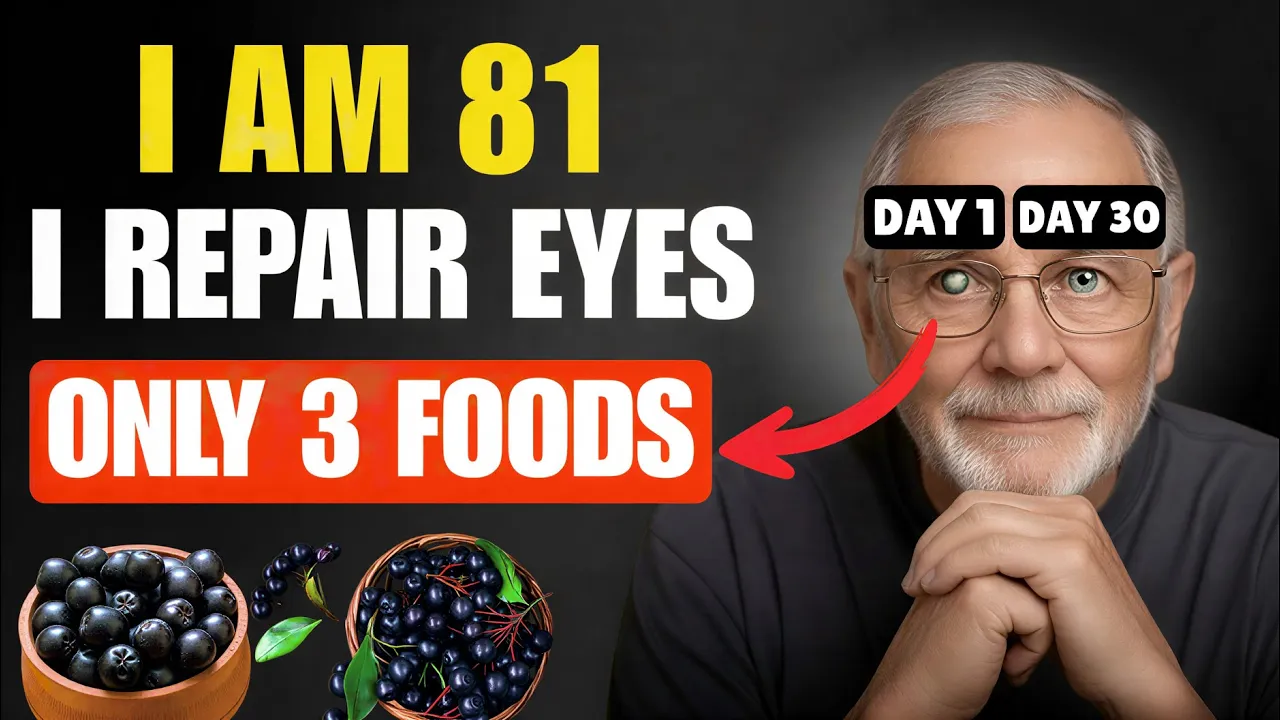
I'm 81 and doctors told me my vision would only get worse with age. But that was not true. What I ate before bed quietly changed how my eyes felt while I slept.
If you're over 60 and your vision feels weaker at night, this video is for you. Watch till the very end because the last food surprises most seniors. Like the video, subscribe to the channel, and comment below where you're watching from.
As we grow older, changes in eyesight often happen so slowly that many seniors do not notice them at first. Reading feels a little harder. Lights seem brighter at night, and the eyes feel tired more often than before.
Over time, these small changes add up. Many people over 50 believe this decline is sudden or permanent. But in reality, vision usually weakens step by step.
Doctors explain that aging affects blood flow to the eyes, increases oxidative stress, and reduces the nutrients reaching sensitive eye tissues. This does not mean the eyes stop responding to care. It means they need more support than before.
One important thing seniors should understand is that food can support and improve eye health. But it does not work instantly. These improvements do not happen overnight.
The body needs time to absorb nutrients, repair stress tissues, and restore balance during sleep. With consistency and patience, many seniors notice gradual changes such as clearer vision in low light, less eye strain, and better comfort in the morning. The key is choosing the right foods and using them regularly, especially before bed when the body naturally enters repair mode.
Nighttime is a powerful window for eye support. When you sleep, the eyes finally rest from screens, light, and daily strain. Blood flow shifts, and the body focuses on repair rather than activity.
This is why what you eat before bed matters more than most people realize. Heavy or poor food choices can disturb sleep and slow recovery. While supportive foods can quietly help the eyes while you rest, instead of forcing quick results, these foods work gently, building benefits over time.
That is why seniors should focus on steady habits, not fast promises. Today we are starting with a food that many people find unusual but highly effective when used correctly and consistently. Number four, natto is a traditional fermented food that plays a unique role in eye support, especially during sleep.
Natto helps improve microirculation, which means it supports blood flow in the tiny vessels of the body, including those in the retina. The retina is extremely sensitive and depends on steady circulation to receive oxygen and nutrients. As we age, these tiny blood vessels can become less efficient, which may affect night vision and overall eye clarity.
Natto helps keep these small vessels open and flexible, supporting better delivery of nutrients to the eyes during rest. Another important benefit is its role in reducing oxidative stress. Oxidative stress slowly damages eye tissues over time.
contributing to fatigue and vision decline. Natto contains compounds that help the body manage the stress, allowing the eyes to recover more effectively while you sleep. When eaten in the evening, natto does not stimulate the body.
Instead, it works quietly in the background, supporting retinal repair and night vision over time. Seniors who include Natto regularly often describe subtle but meaningful changes such as less strain in low light or a calmer feeling in the eyes upon waking. These changes do not happen immediately and that is important to remember.
Natto supports the eyes gradually through consistent use. This slow approach is safer and more realistic for seniors by helping circulation, reducing oxidative stress, and supporting nighttime repair. Natto lays the foundation for stronger eye support.
As the body continues to age, the eyes often struggle not just with clarity, but with fatigue. Many seniors notice that by the evening, their vision feels dull, colors look less sharp, and focusing becomes harder. This happens because the eye cells work all day and need proper nutrients to recover.
During sleep, the body repairs damaged cells and restores balance. But this process only works well when the right building blocks are available. That is why certain foods eaten in the evening can quietly support eye recovery over time.
These foods do not act fast and they are not instant fixes. Instead, they work slowly and steadily, helping the eyes rebuild strength while you rest. Number three, wild caught salmon plays an important role in this process.
Salmon is rich in DHA, a type of omega-3 fat that is a major part of the structure of the eyes photo receptor cells. These cells are responsible for capturing light and helping you see clearly, especially in low light conditions. As people grow older, DHA levels in the eyes can decline, which may lead to blurry vision, reduced sharpness, and eye fatigue.
Wild caught salmon helps supply this important nutrient in a natural way. When eaten in the evening, it supports the repair of stressed eye cells during sleep. Over time, this can help improve clarity, color contrast, and comfort.
Many seniors who include salmon regularly notice less eye strain and a more stable feeling in their vision. These changes build slowly, not suddenly, which makes them more reliable and safer for long-term eye health. Number two, goji berries support the eyes in a different but equally important way.
Goji berries are rich in zeazanthin, a nutrient that naturally concentrates in the macula, the central part of the retina responsible for detailed vision. Zeazanthin helps filter blue light, which is especially important after a lifetime of light exposure from the sun and screens. For seniors, blue light stress can contribute to eye dryness, reduced contrast, and visual discomfort.
Eating goji berries in the evening helps provide steady support without overstimulating the body. Zeazanthin works gradually, helping protect the macula and improve visual contrast over time. Seniors often report that their eyes feel less dry and more comfortable when goji berries are used consistently.
Another benefit of goji berries is their gentle nature. They are easy to digest and do not interfere with sleep when eaten in small amounts. This makes them suitable for nighttime use when the goal is recovery, not energy.
Together, wild caught salmon and goji berries support both the structure and protection of the eyes. Salmon helps rebuild and strengthen eye cells, while goji berries help shield and stabilize vision. When used regularly before bed, these foods quietly assist the eyes during the body's natural repair phase.
The results are gradual but meaningful, setting the stage for the most powerful food on this list, which directly supports night vision and visual pathway strength. Now we come to the most powerful food on this list, the one that has been studied and discussed for its unique connection to night vision and visual strength. Many seniors notice that their biggest struggle is seeing clearly in low light.
Drving at night feels harder, lights appear too bright, and details seem to fade in darker environments. This change often happens gradually, so people adapt without realizing how much their vision has shifted. Doctors explain that one reason for this is a decline in a visual pigment called rodopsin.
Rodopsin is essential for night vision and for how the eyes send signals to the brain. As we age, the regeneration of this pigment slows down. The good news is that certain foods can support this process over time, especially when eaten consistently before bed.
Number one, bilberries are especially valuable for seniors because they contain natural compounds called anthocyanins. These compounds help support the regeneration of rodopsin in the retina. This does not mean vision suddenly becomes perfect.
It means the eyes slowly regain better function in low light conditions. Bilberries also help strengthen the visual pathway which is the connection between the eyes and the brain. When this pathway is supported, visual signals become clearer and more stable.
Seniors who include billilberries regularly often describe improved contrast, better adjustment to darkness, and less strain when moving between light and dark environments. These changes happen gradually and require patience, but they are meaningful over time. Another important benefit of bilberries is their role in supporting overall retinal health.
The retina is delicate and highly active and over many years it experiences stress from light exposure and reduced circulation. Anthocyanins help protect retinal cells from ongoing stress and support their recovery during sleep. This is especially important for seniors concerned about early signs of macular changes.
While bilberries are not a cure, they can support the body's natural ability to maintain retinal function when used as part of a consistent routine. Doctors often emphasize that long-term eye health depends on protection and repair working together, not on quick fixes. Eating bilberries in the evening fits naturally into the body's repair cycle.
At night, the eyes rest, blood flow shifts, and repair processes become more active. Providing supportive nutrients at this time allows the body to use them more effectively. Bilberries do not stimulate the body or interfere with sleep.
Instead, they work quietly while you rest. Seniors who take them consistently before bed often report waking up with eyes that feel less stressed and more comfortable. Over weeks and months, some notice clearer night vision and more confidence in low light settings.
These improvements are not instant, and that is important to understand. Vision improvement takes time because the body needs time to rebuild and rebalance. Bilberries are also easy to include in a bedtime routine.
They do not require complicated preparation and small amounts are enough. This simplicity makes them easier to maintain long-term which is critical for seniors. Consistency matters more than quantity.
When bilberries are combined with the other supportive foods discussed earlier, they help complete a system that supports circulation, protection, and visual regeneration. This steady approach gives the eyes the best chance to maintain strength and clarity as the years go on, preparing the foundation for lasting eye comfort and improved night vision over time. When these four foods are used together, they form a gentle but powerful system that supports the eyes during the most important time of the day sleep.
The key point seniors must remember is this. Eye health improves slowly, not instantly. The eyes are delicate organs and after many years of daily use, they need time, rest, and steady nutrition to recover.
These foods do not force change. Instead, they support the body's natural repair process night after night. This slow approach is safer, more realistic, and more effective for long-term vision support.
Each food plays a different role. Natto helps improve tiny blood flow in the retina and reduces stress on eye tissues. Wild caught salmon provides DHA which supports the structure of eye cells and reduces fatigue.
Goji berries help protect the macula, filter harmful light, and support moisture and comfort. Bilberries support night vision by helping regenerate visual pigments and strengthening the connection between the eyes and the brain. Together, they cover circulation, protection, repair, and visual clarity.
None of them work alone. Their strength comes from consistency and balance. Another important benefit is that these foods support sleep rather than disturb it.
Good sleep is essential for eye health. Poor sleep can make vision feel worse, increase dryness, and reduce focus the next day. These foods are suitable for the evening because they do not overstimulate the body.
When sleep improves, the eyes often feel calmer and more comfortable in the morning. Many seniors notice small but meaningful changes over time such as less strain, better contrast, and more confidence in low light situations. Taking care of your eyes after 50 or 70 does not require extreme steps.
It requires patience and smart habits. Eating supportive foods before bed, keeping meals light, staying hydrated, and protecting sleep can all make a difference. If something works gently and consistently, it is often better than something that promises fast results.
The goal is not perfection. The goal is steady support. If you found this video helpful, please like the video and subscribe to the channel for more senior eye health tips.