We put MI on stage the first time. We put nice on stage the first time. Build the future was like how is my entire legacy now? Bhari Jud grew up as the only child of his parents in Sud. What would you do when you grow up? I don't want you to punish a poor girl with your laziness. I say my mother was the first feminist I ever met. Consumed by books. My father's library was immense. >> So much so that as a teenager he Published his first book. That book introduced him to Dr. the Levi
Ajon, the charismatic television personality who offered him a segment on his show. >> Guys, I think this guy is brilliant. I think he should have a segment on his show. What do you think? Yes, literally how I get my first. >> He would go on to sharpen his instincts on the two of Nigerian television's most formidable figures, Fumi and Agatha. From there, he passed through Virgin Nigeria and their next newspapers. And then with Adibala Williams and the late Amelia as in it, he co-founded Red Media. Out of red media came a new language for Nigerian
youth culture. Why Niger and the future awards a platform that would grow into one of the most influential youth movements in the country. As the future awards rose, the powers that be took notice from working on President Good Luck Jonathan's 2011 campaign and then on the campaign that Would defeat him 4 years later. But the aftermath of the 2015 election would take a personal toll. >> Suddenly there was this irrational hate and so that affected me personally. Disillusioned with President Buhari's inertia, the ensuing public backlash pushed Trudy into a period of depression. >> Frustrating for
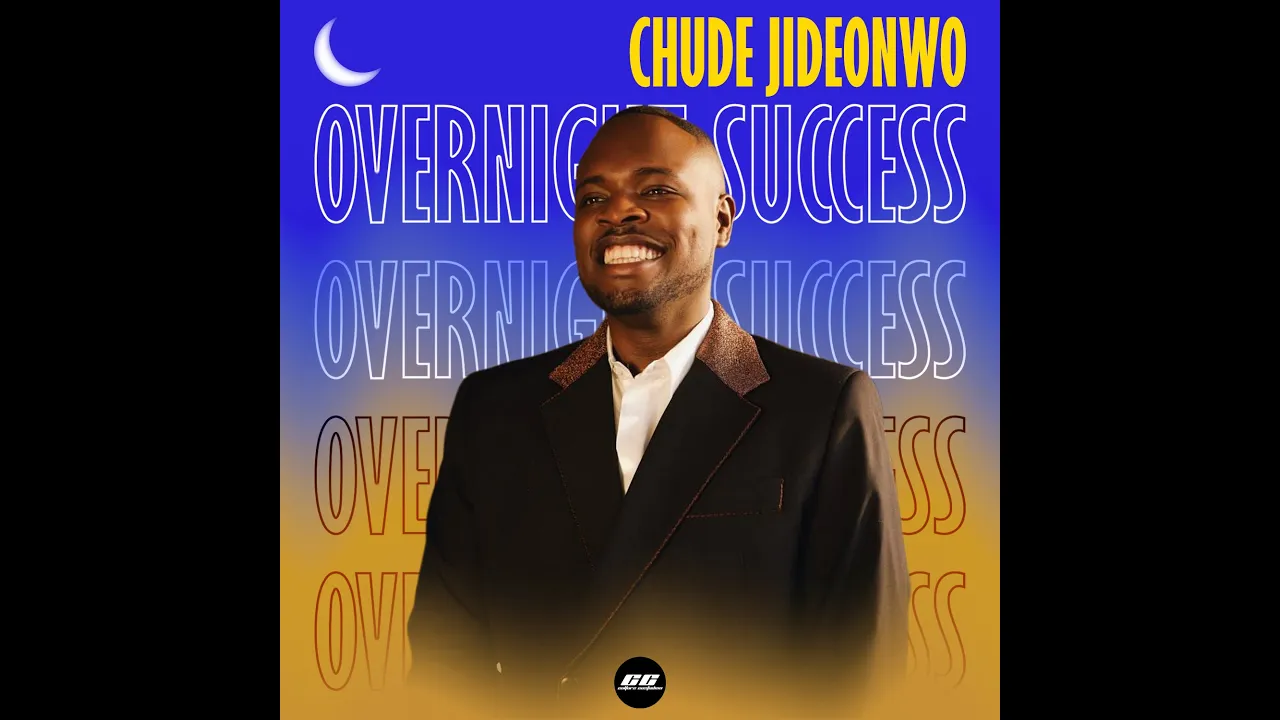
three days on Twitter, which is never a good thing. >> Out of that darkness came Clarity and Eventually a book, How Depression Saved My Life. After exiting Red Media, Chudy began again. This time on his own terms, he founded Joy Inc. and with Trudy, building a new kind of journalism with emotion and vulnerability at its core. This is a story about ambition, influence, collapse, and reinvention. About turning personal pain into purpose. This is the story of how Chud Jona became an overnight success. Hi, welcome to another episode of overnight Success. My name is Mayu and
today I am joined by Chud Jon, journalist, interviewer, par excalons, media entrepreneur and what else? What else? An enjoyer of life. >> Okay. And an enjoyer of life. Thank you for joining us today. >> Thank you. I'm a fan of this show and a fan of CeCe as you know. So it's great to do this. >> This one is for my mom. >> Yes. Yes. Yes. I was so chocked, you know, when you when you told me about your mom. I loved it. I was so happy. Yes. >> Yes. Okay. When we do these interviews,
we usually start by asking a small question. Um, pick one. Right. A year in prison. >> A what? >> A year in prison. >> Okay. >> Or a year at war. >> Or you at war? >> Yes. >> I think I'll choose war. >> Why? >> Because war is I'm alive in war. I'm I'm part of life in a meaningful way. Prison and not. >> Okay. >> You know, I'd rather be shot at the war front. >> Fair enough. Fair enough. Fair enough. Fair enough. Yeah. Like that that Carries something. >> Yeah. >> Yeah. >>
Okay. So I think the f one of the first things I want to look at with you is the fact that you attended Mayflower >> and I think so I think one thing I want to understand is for those who don't know Mayflower is a school in a kenna that was founded by the great Tao >> yes >> and when you went to that school were you aware of the lore of Taisharin >> and what did that do for you >> no I was not aware if I was away I wouldn't have gone because um
I was not I didn't know who taring was. I didn't it wasn't part of my like this wasn't part of my life and I wouldn't because Mayflower is so it's it's when you ask the question it cut to me that I've undersold the impact that Mayflower has on my life. It's one of The most important things that ever happened to me. And I wonder I think nobody has asked me nobody actually you know Mayflower Mayflower's motto is atawalara self-reliance. Yeah. And before I went to Mayflower I had no self-reliance. And the only reason my mother
took me to Mayflower was to learn self-reliance which is and so but because of that I wouldn't have gone because I would have been so afraid of being left to fend for Myself you know that I would have said that's not a school for me. Um so yes I didn't know anything about it. >> Okay. And you just mentioned someone who looms very large in your story >> and that's your mother. >> Yeah. >> And she comes up a lot in conversations. She's in your interviews. I remember coming to the show you did last year.
>> Yes. >> And seeing her there. >> Yes. >> And >> I didn't know you were there. >> I was there. >> Amazing. >> I was there. I paid. I didn't >> I love Look, I love my people that did that. Love it. Thank you. >> I was there to the end. >> Right. Fantastic. >> Um and >> I want you to talk about your mother, >> what values she instilled in you, what you learned from her, and why she means so much to you. M. >> So my mother, the principle thing I learned from
my mother was to take action no matter how difficult life gets. And it's interesting because like me, my mother is shy and introverted. Yeah. No, no. My mother is shy and extroverted. I'm the introvert. My mother is shy fundamentally. And so each step she Takes, she takes in spite of shyness. Yeah. And it she takes she takes in spite of the risk of getting overwhelmed by life. So I will break that down. One of the most important values to me is courage because as a young person growing up in Jesu in Sulu in Lagos I
always joke and say the confidence that a child whose parents are wealthy and lives in a koi doesn't takes confidence for granted. You think you Can walk into any restaurant, you can walk into any hotel with confidence. No, it takes people like me steps lived over time to get there. And so when you have a mother who had a husband who had lost his job, who was a civil servant and lowest rungs, you know, who had no money, was living in a two bed in a sometimes difficult marriage. and to see her still find the
capacity to face the world eye to eye from time to time. So you would see her shrink, But you see her move like I can't stay shrunk, I have to move. And each of those times that she did that inspired me. So two things stand up to me stand out to me and I talk about them quite often. One is when my father lost his job was working in AP at the time lost his job my mother began to do three jobs working a restaurant she was a civil servant she was also selling clothes imported
from a bar and I watched her do these three things without complain now I don't think I would have minded if she complained >> but she did it without complaining and she just stabilized the home in a way that I didn't even realize something was wrong until I became an adult. Yeah. And she did it with she did it without a loss of prestige for my father which can be very important for African men of a particular age. And so all of that was very inspiring to me. But the second thing was when I came
out of Mayflower I Was 15. I wasn't qualified to get into unilag. You had to be 16. And so and so people said to my mother that she should we should sw a feed of it to increase my age which everybody was doing. And my mother said, "No, because she's a born again Christian." She said she didn't want to s with the lie that would take me to hellfire. Yeah. >> A one-off lie you can be forgiven, but this is a lie you have to take forever. And so my mother said, she didn't know anybody
anywhere. And my mother said, "You know what? We're going to do we're going to go to UNILC and we're going to go from professor's office to professor's office and find somebody who would help you." And that image is indelible in my mind. And so those two things I just realized from my mother that you have to stare life in the face. You have to stare life in the face. >> Okay. >> And now I want to talk about your father. >> Right. >> So I think the the lore again is that your father's library was
what essentially brought out the fire in you as a reader and a writer. So talk to me about what those books, what they meant to you. What did they do for you? >> Again, it's obviously it's after that You look back and you think about it. I mean, my father's library was immense. So, one of the one of the trag one of the soft tragedies of my life is the fact that my father, you could say my father didn't selfactualize because unlike my mother, my father was like me. He was sensitive. He was etc. And
then you have a child to take care Of. So you kind of hold yourself down because now you have to be a family man. >> And because I think what an intellectual force nationally my father could have been if he was at full wattage. >> Mhm. >> And so his books his library was the foundation of my intellectual life. So I said to people I read was difficult book and I know because I read it again is the interpreters >> and I read it before I was 10. I didn't understand much of it but I
understood when I read it again I realized oh I understood the themes of this book and the beautiful ones are not Yet Born and Radiance of the King and Ujuku's biography because I am involved and all of these books I had read before I was 10 you know so my father's library and my conversations with my father who would talk about Africa's historical figures who I really wasn't interested In enabled me realize that there was a big world out there and people were doing things in this world, you know. So, I think that was very
important for me that I just had a sense from my father that people were doing. I remember my father describing the Alimos Go protest cuz he was he went to University of Ibadon and he was in the protest and he was describing it with what I now know to be pride like we Did this. And so, yes, the books in my father's library were the found intellectual foundation of my life even before I knew it. >> And another thing is you're an only child. >> Yes. And I mean there all the like stereotypes of what
an only child is like and what an only child becomes but in your own case like >> what was that experience like for you? >> Um that's why my mother took me to Mayflower because she didn't want me to be a cliche. So I said even till now I'm a very spoiled person in terms of physical life like cooking washing clothes and my mother said to me I didn't know she had said this. I said this, my mother said to me that when I was uh 9 years old and she asked me to sweep the
house, I refused to sweep the house and I didn't well I refused but of course she made me with the assistance of a few canesh To sweep the house and I said to her she said what would you do when you grow up I don't want you to punish a poor girl with your laziness so I said my mother was the first feminist I ever met and I said to her mommy look don't worry when I I will I have money I employ somebody to do this and I didn't know I was that arrogant as
a child but she reminded me and that was so in terms of doing things I was extremely lazy like I didn't want to do Things so my mother knew that that if is how you if this child if this child stays how do they say that he's going to get spoiled >> and so that's why she insisted that I had to do Mayflower and not only insisted I had to do Mayflower like I write in my book She refused. She didn't visit me. This was an incident because I wrote her a letter >> from school
and called her an extremely wicked mother who was A >> my mother should write a book. >> I I wrote so she my mother was so as a letter I realized was hurt. She was so stunned by that letter that she showed it to all her she was a teacher in Baja boys high school. show to all her colleagues like see what my son wrote me. When I came back for holidays, all the teachers told me, "How could you write such a letter to your mother?" But later I realized that it was hurting her as
much as it was hurting me because she Just thought I need to show him how to. So the first time I went to make flour. So my mother gave me provisions in the cupboard and she gave me two tins of milk. When the first tin of milk finished, I didn't open it until my mother came to visit again. And then she permitted me >> to open it. Now she she asked me, "Why didn't you open it?" Mom, you didn't permit me to open it. >> She's giving you >> She said that's why you have to
come to me flour. So before me flour, I was the I wasn't spoiled because my mother kept forcing me to do things, but I had no self nothing. I was not I was not able to do things for myself. Neither did I know that I could do things for myself or that I should. And she tried but I didn't understand until she left me in the desert. >> Okay. Um And another So I think over the course of your life, >> yeah, >> there are a bunch of what philosophically and in faith terms in Nigeria
we'll call helpers. >> Yes. So people who put you on >> and the first person to put you on was Dr. Levia >> who is DJI's father >> and was I remember watching him on TV just This booming figure who was on TV. Yeah it was a booming figure was on TV >> but then he had a job doing corporate coms at NPC and things like that >> and I want you to talk to me about that. >> Dr. Ley, first of all I'm deeply um grateful to Dr. Levy. Um I'm so grateful to Dr.
Levy that there was a you know when you enter into public life >> Yeah. >> you become complicated. >> And there was an important story I had to tell >> but I thought I owed him the duty of not exploring his complexity in national life. And I believe in that. I believe that there's something I think there's enable saying they say yes there are some truths that need to be said but are you the one that's supposed to say it and that's because of how important Dr. Ley that I felt it would be ungrateful and
the universe would punish Me if I was the one that explored this complexity that's how important he is to me because Dr. Ley know there are people that are kind but not not nice >> Dr. Le is one of those and he would not flinch from it. He was a kind person but he didn't feel the need to perform it. He didn't need your approval or want it unless was unless unless you were paying you know in that sense. So unless it was a job and he he but he genuinely liked me genuinely. And for
a a child that Struggled with self with affirmation and all of that to see this very important man like me, you know, and validates me was so important. The memories I have of Dr. Ley, so what people would see was that, you know, he gave me a youth segment on his show live on >> how did that happen? >> So literally, so this Okay, let me tell the story. So I I was my mother is a pastor at MFM. Yeah. >> Okay. and mountain of fire and Dr. Levy was a was a strong member I
think was on on the council of MFM and so one day were doing something called deliverance in MFM which is one week of prayers three days of dry fasting no food no drinks and anybody who knows MFM the prayers are you shake your head you stamp your feet and so I was praying I looked back and I saw Dr. Divia Jona also doing the deliverance I told my mother and I had Just written my my first novel and I was trying or you 13 >> 13 no 14 >> okay >> and I and I had
done a media list so I realized later I was already a PR professional of the platforms I wanted to go on and Dr. Levy was obviously on the list but how would I meet him I didn't know and so I look back at this is Dr. Ley I tell my mother Dr. Ley Dr. Ley this is Dr. leave. I said what am I Going to do? So I'm expecting her to help me. I said no go and talk to him and telling you he want to be on the show. So I go to him do
my spill. My name is Judy. I wrote this book. So he takes a copy of the book and um I think he asked me to come. So I forgotten how sh but anyway he reaches out to me. I think he my mother's phone number. I think GSM are just coming or whatever. I says Chido. So he continued calling me Cheeto till he passed. Cheid I've read This book. It's so good. I'm going to have you on the show. So that's it. So I go on the show, the Sunday show, NT10 show, and he's where he's
interviewing me. So we're talking live and he has this interesting thing he did. He was such a genius. So there's no live audience, but he's talking to the camera. People need to know that Dr. Levy his doctorate was not honorary. Dr. Levy was it was a end doctorate before he was 25, I think. And it was in Media. So he was a theoretical media person and so everything was a technique. So his every manness was almost a camouflage that was hiding a deep intellect. Yeah. And so I'd meet people on the in the market. So
he say, "Oh ah you you and Libby I so they felt like they had a relationship with him and that was all strategic." And so he say so he talks to the camera even though he doesn't have an audience. And he says, "Guys, I think This guy is brilliant. You know, I think he should have a segment on this show. What do you think?" Yes, Chido, you're not the host of the youth segment. Literally how I get my first job. And I'm on TV stunned. I'm like, I didn't even know that it was legal for
a person under 18 to have a job. And so that's that's the Dr. Levy story. And I was saying that one of the things I remember was that after church he would say what he would do is that he would tell me and He used to he loved cars. So he had sports cars. He was and so after church he would say I should wait for him that he would drive me you know in the front and he would talk to me as if I was a pair and those memories remain in my mind including
the support that he gave me. >> Okay. Um and then there two other people who >> in this story of um child labor today >> who are who are putting you to work >> and one of them is >> Fumi yonder >> who again is someone you have been very effusive in expressing >> yes >> just what they mean to you >> and I think I mean personally I think she's one of the greatest ever. And I think one of the things I loved about her was that you know how you have an idea of
someone from TV >> and then you meet them. And the thing is I remember the first time I ever met her. I had never met her before, but just a conversation that made me feel like we knew each other. We were friends, but like it's just I'm just your random guy you saw at the cinema who says, "Oh, I like you." And then she's just a just a a legend in every sense of the word. But again, talk to me about how she put you on and again what she what what she learned from her.
>> Yeah. So this other type of show, but you know, talking about Fumi, I could sense myself getting teeyed. Fumi is luminous. So you know, we use that word larger than we used two words. So my editor at next used to say to me if you say you this is what you used to say I don't agree with him if you say Genev is a superstar then what do we call Maro so he used to use that to show us how to manage words in copy editing yeah put it In scale and so we tend
to do that a lot and so we use legend we use icon a lot but for me was larger than life for me is larger than life when I was working with her I thought it was puppy love cuz she was the smartest person I ever met. But I've met a lot of people and Fion is still the smartest person I ever met in my life and F is smart in that way that people who are not smart can't recognize. >> Yeah. >> Which is Fumi has original thoughts. Her thoughts are not a response to
the west. They are not sub they are not they are not they are not tainted by other people's knowledge. Her thoughts are original. That means Fumi is an alchemist. She looks at the world and then observes it, interrogates it and then produces the thoughts in a way that I'll be like my god. I remember sitting there in the house and listening to her. Maybe she's watching Sex in the City, Which was her favorite series with her friends and she'll be talking about Sex in the City. She'll be writing essays as they're talking and I think
what a human being. And so the way that Fi so I I wrote on my birthday last year that I had I I posted something about my two mothers. Sophomi sent me a picture of the surprise birthday she did for me on TV when I was I don't know of 16 18 or something and she my mother and her and I said this is such a powerful photo Because this is my actual mother and this is my TV mother and I think and I say this and it's a fact that working with Fumi for 3
years because it was a daily show and I was also house manager P everything >> was more important to me than the seven years I studied I spent studying I learned I learned I learned about life, gender, business, television, celebrity, entertainment, humans. And I did. She wasn't a conscious Teacher. You just learn by listening. And she was a genius. She is a genius. like like many of the influences we see in television I I indirectly link to a generation that grew up watching for me >> because what for me did was that there was this
stiffling conformity on Nigerian television and there's a generation of people like me and yourselves who was who were who were and that before it people who had come in From abroad yeah but the internet was opening up so all of us were now exposed to international influences and we knew that the world was more dynamic than the local environment was showing in and Fumi was the only person that was breaking the rules on television and so and I had a front seat to that. So many of us were doing these things and and and many
many older people didn't like for me because she talked too much on television. She was all of Those things. But those of us who were younger got it. We just thought this woman is breaking the rules and her fashion was a part of her show, you know, and so just learning from her and doing the work cuz there's no better school than running a daily live TV show for 3 hours. So those two things are the foundation of my career, you know, and that is why I mean I still spoke to her 5 days ago.
That's why F me is part of my law, part of my mythology. And I Think that it's a tragedy because she's also a stubborn person. She lives on her own terms. But it's a strategy that Nigeria didn't change so much that Nigeria accepts has accepted and there's still time her genius on its own terms because there's a loss in the culture that she's not constantly present. >> I agree. But the thing is now I'm just thinking it's like someone like that, what does it take to bring them back? Like what does it take for them
to Re-engage? But again, it's >> that's a personal choice, I guess, because I don't think there's any amount of money or any amount of this and that that you will sell them that will make them do it. Okay. And then another person is Agatha Mata. >> Yes. >> So again, talk to me about >> that experience. What's >> What were you producing in her show? >> Was it production manager? >> Okay. Yeah. >> Unpaid. >> But it was fun. And so I got her what happened. She was one of those who I wanted to I
gave my show my book to and so she used to record her live shows on yag at the institute of advanced legal studies and so one day I just went on the show I was part of the audience after the show I took my book to her I said my show is not like that I don't do interviews but she said you know what You do one day we'll find a topic and then we would have you join the panel for that that's why I met Deba by the way because we're in the audience together
about I guess knowing the depth of research you've on for this. I guess I'm going to come to that. >> Yeah. >> And so after so I think as we were waiting and I because I was I was very ambitious. I was very ambitious. So I forget the exact circumstances but then At some point she realized ah this guy can do more and so she began to invite me onto projects in the sole office and so I became a part of an afforded matter. Her husband at the time liked me and I became a part
of the crow was so grateful. So I became a part of the crew would plan the shows. I'd get the guest c of the guests. I was majorly responsible for the audience management and you know I had the time of my life you know so three of them together Just validated me you know um in a way that yeah I think that everything that I've done in television obviously comes from the trifecta or triate or trio of agata fumi and the and they were different. Sagata was very every woman even till now like Agata was
very so Livia Jona I would call him Dr. Livy Fumi I call her Auntie Fumi Agata would call her Agata. >> So that was the quality of the relationship I had. >> Okay. And then so one thing that kind of stood out to me and I think even it still kind of stands out to me is how um you have made a conscious effort to >> mark things with your age. >> So >> I'm thinking of obviously you doing your first job or starting work at like 14. I'm thinking of you writing your first book
at what 13? >> Yes. And um even to the point like last year you turned 40. >> Yeah. >> And I remember seeing you know it's like I turned 40 is this number of years of working in a partnership is this number of years working in journalism. And I think so to me that says something that's like the way I think about it is that's a young man in a hurry. Like so someone who is >> trying to do all these things but is trying to prove to the world that I did it. I was
the youngest person to do it. And so >> I guess what I'm trying to understand is where what's the driver of that? Where does that come from? >> I don't know. But you're right. Now that you say it, you know, I spent last year I've always said that I don't care about legacy. But last year I realized that and I think you're following yourself today. I think you do, but just not in the way that people think of it. You know, I do. And you know, you've been on that list like four times. I think
I was very grateful last year when you were not on the list. I'm like, before people would think that both me and you are friends, that's why you are in my list every year. So, um, but you know, I people don't know this, but I think calling you interesting, calling anybody interesting is the highest honor that I personally >> Should I tell you something funny? >> Tell me. my brother's my name on my brother's phone is most interesting. It's because it's because of the first time I was on that list. It's like oh they say
you're interesting. So like that. So till this day like on my on my brother's phone my name is my name is most interesting. >> I love it. But I think the greatest compliment I can pay anybody even if they don't know it is say you are interested because I Think that my my number one desire is to be interested and I say that when I when I pass there are two things I want people to say about me and if I don't say that's fine I would have left anyway is one that I'm interest that
I that that I lived an interesting life that I but no that I'm that I lived a badass life actually have the bad as life. >> Okay. >> Mean I I lived life on my terms no matter what happened. >> But secondly, that I was that I made people's lives better. >> But you know the first one the second one is easy. It that other one is the one that I'm working hard at. Um and as far as I've done that's why I said I was very ambitious as a young person. So there are people.
So I have a list, a personal list I've never shared with the Public of the most interesting Nigerians. And one of my challenges with Nigeria's big men, there are very few interesting Nigerian big men. Even our villains are boring. >> So you compare Abacha with Moubu. never rose to the level of true villain that in Hollywood scripts writer. Do you understand? >> Sugar daddy. >> Exactly. We keep getting money every Couple years. >> That's exactly what our own big even the villains just want to make money. But the others like Gaddafi had like world domination
motivations. Do you understand? Then even the wealthy ones I say that's what if Elos does a crazy thing. And I said that's that's if you cannot be eccentric. If you are the first trillionaire, when are you going to be eccentric? We don't have interesting billionaires. We have people That just want to conform. They want to they want to be sugar daddy. They want to show off their money. And so I have a list. So there's something about the Nigerian society that stifles nonconformity. And so when I see people who stand out like Fella, like Tyon,
like Kenuiwa, like MKA, like Kiraabola, You know, when I find those people, I hold on to them like not stars and they are the compass people like that, especially fella. They're the compass for which I determine, am I living life on my own terms? Am I living life on my own terms? And so for me, I think that that's what that measurement is. It's not I was saying to myself that if I, you know, I was telling someone I said if I, you know, I'm a I'm a strategist. I have a PR company. >> Mhm.
>> And I'm like, you know, if I was thinking on a strategic level, how to move fast in Nigeria. The two books I've probably writt >> or a governance book. >> A faith book. >> Or a faith book. Exactly. But that would not be living life on my terms. That would be living life because I want to be like every other Nigerian. And I'm like, so sometime when I see people say How depression saved my life, they will say, oh, sorry about the DEPRESSION and like but as a strategist, I knew the strategic tradeoff in
that title, but that was the title I wanted. And I'm like for me it will make sense when I'm 80 when I'm 70 when I'm 90. It's the same thing with my show. So for inance when I started with you day I stopped doing interviews. I stop when people invite me I'm not ready to do interview. I said when the show is 5 Years old don't worry I will reach out and say I want to do an interview. And so for me there was a 5ear marker because I'm like I'm building something. I think this
how long it will take for it to get to where I need it to be. and then I would do the next thing and so I think it's that driver of so those age time those ages >> are the measurements of the life I have chosen to live >> okay >> you know so that's what's happening there >> okay another chapter that again it was something we're talking about off air was when you worked on next >> yes >> and >> for those who don't know again you know this is media history here 234 next
was a paper that came as in was it 08 or 090? >> Yeah. And um it was founded by De Logiday and his wife Amma Organ. >> And it was you know just this amazing thing that for me was one of like my dream at the time was to finish uni and come and work for next but next make it uni. But um it was one of the more interesting um media experiments that we have seen in this market and you alongside like I think one thing that's very underrated is the next alumni. So you're
thinking, you're thinking >> Chattan Victor. >> Um Rookie who now da >> um who else? >> Interesting. Let me tell you how widespread. >> Yes. >> Adela had a column the the orange column. >> So wide. So and then Idris Akim Mujid who are now premium times you know just across. >> So what was that? What was it like for you to fresh out of you know studying law to decide that >> this media thing that I have been chasing this is what I want to do >> and >> yeah what did that what did
that do for you? >> It's even a more complex story than that. So so I was watch I came out of school I think two years before and I Like boosting with this. I got five job offers from three banks and two one med one one one telecoms company and one and Virgin Nigeria. I chose Virgin Nigeria because it felt more alive as a company. >> Yeah. >> And a few months No, no. Yes. I chose Virgin Nigeria, I think. And a few a few months into starting work at Virgin Nigeria, Mut Bakari, who founded
Farfina calls me and says, "So, there's this new Newspaper coming around." M have been a fan of mine since I was since I was 16. when I interviewed Ching Amanda the first time and I just want to let you guys know my mother the first time at 16 >> just join it >> and so he had been a champion of mine just a huge supporter and so he said there's newspaper coming to town I told DJ day I didn't know who DJ was at the time that you have to work in a Newspaper and so
I'm going to tell you I'm going to give you it's not a biggest Nobody cares but I'm going to tell you an exclusive for those who care about media history and calls me to his uh so I had a meeting with Muta and Deji and I asked because then I was something of I like to think of myself as toast of the media at the time for true love made Africa guardian life all of those so kind of had kind of was bubbling as a young man I asked questions about and I Could see that
I always joke that I'm badass is my my woman I think This formed the foundation of the relationship we eventually had. So I said to him in the meeting I said so he finished talking about the newspaper and I knew it was going to fail. >> I knew so I said it >> then I didn't have sense. So I said sir I don't see this newspaper succeeding. How are you going to make it succeed? And I love and and is very interesting Because he's badass as well. So he said to me, "Young man, young man,
I didn't call you here to ask me a question." And I didn't even think of it as it wasn't a rude. It wasn't it didn't feel like power over me. It just felt like he's like, you know, it's like when you meet you meet like the Queen of England or something and he's like putting in your place, not an arrogant, let's let's establish. And he said, "I didn't go yet. We we've sorted all of That out. Do you want to join the job?" >> And so I said, "No." Okay? >> Because for me, if he
didn't acknowledge my concerns, then I wasn't going to leave a stable job to and it hadn't started at the time. Now, I'm sharing the story not because of what happens next. It makes it even more important. So, I went back to Virgin Nigeria and then next started and next was badass. So, there I am and I had a good job. I had a good title. I was assistant media manager, first job after university at Virgin. And all these guys to go all these people were doing badass work. Moa wood Tony Khan had left his job
at I think visa phone to go and I'm like is this how I'm going to be at Virgin Nigeria and people are living my life in next. So I reached out back to dology and he said NO WORRY. >> I love it and he said no. So I left it and this how I got the job eventually but I wanted to work for next. I think I began to contribute. I don't know I forget. So I so one day I saw a there was I saw I saw plagiarism in the paper. Yeah. It wasn't plagiarism
intentionally. It was you know those of us that entered into media in Nigeria before people like next we didn't really know what the rules are. Used to have like you used to have Entire magazines that would just copy things and put they didn't know it was wrong. They were just put under it called from >> Yes. Yes. >> And so I think that's what this person did. The person turned out to be a great friend of mine and I told day I said I just saw this in next newspapers. Now the first job they had
offered me was the editor of the entertainment magazine called X2. >> Yeah, I remember that. >> Also the also the second reason I didn't even want it was that he wanted to give me the job of assistant editor and I was arrogant and I thought I should be editor. So also I'm like this paper not even do well in the first place. You want to give me editor. So that was my arrogance at the time and so I just sent it to de as a I wasn't making any expectation just like I saw this and
next is too important to The culture for these errors. He was so impressed. So he called me for a meeting and they called me and called Kaderia I met who was the managing editor at the time into a meeting. Fast forward within two weeks I got a job offer. You had to be a a copy editor. Now, at the time, Next was already in crisis. >> Next was already owing salaries. Do you understand? And so, and then when I let I was I was also ready to leave Virgin, but I had already gotten a job
From MT, a job offer from MTN, which was going to pay me 50% more than Virgin was paying me. And next was already owing salaries. I am still. >> But when DJ gave me this offer, nobody could have stopped me from saying yes because there was no desire I had that was greater than being part of the next newsroom. And it's one of the best decisions I ever made in my life. >> Okay. And there was something you hinted At earlier on which was the first time you met >> Dala. Mhm. >> And so I
want you to take me through that journey of meeting him and then deciding that yo I like this guy. Let's do business together. >> But two things I know the point at which I said we're going to do a business. I need so so me and met on the audience of Agata Matters show. So we're part of the Audience and so we started talking and I think the the topic was sex before marriage and the was against sex before marriage and I was aggressively pro sex before marriage. Funny because people would think it was the
opposite. >> Yeah. I'd been a real girl and so and so we're arguing it, you know, and I just thought this was very interesting and I think he decided I was going to be his friend, you know, because I was Introverted, he was extroverted and he I think we switched with we with my we exchange numbers and we just kept in touch and then he was already doing interesting things with his with his partner at the time, Amelia. I was doing sons and daughters. >> She's the one that's passed away now. >> Yes, she's one
that best memory. >> Yeah. and one of the bravest people I ever met in knew in my life. And so Devil and Emilia had a show on NT Already called You Talk. They had a business called B and Eia. I was doing a column for this day called Sons and Daughters and another one called um >> Sons and Daughters. You're profing rich kids. >> Rich kids. >> What they call Nepo babies. >> Yes. That's why I interviewed for the first time. Yes. someone finds us a big >> um and so we kept in touch and
they so they Did a business so we start exploring whether we're going to work together and we're not yet decided by the time the time I decided I was going to do that debola was an important business partner we went for a stage play at Glover Hall in Los Island >> and we didn't have of course we didn't have money and so I think I had a ticket and a we had only two tickets I gave it to myself and Amelia and said he was want to join. I'm like, "How are you Going to come?"
He says, "Don't worry." I said, "How you going to get it with that money?" He says, "Don't worry. You guys, no, he said two of us should go in since we had tickets, he would join us later." >> And so we're sitting down in the hall and suddenly somebody saddles up to me. Is Deborah, how did you get in? Well, I talked to the girl at the gate. I don't understand. You talked to the girl at the gate. He's like, "That's That's I told you I was going to get in. No problem." It wasn't a
big deal for him. Yeah, that made you knew. That also tells you he had done it 20 million times before. >> I'm telling you, I'm thinking now that is a gift. Now that the gift because I'm a shy person. The gift of talking to anybody anywhere without any fear. I thought that's the missing that's the missing piece in my Life. And so we're going to start a business together. So literally that's why I made that decision that I mean we already thinking about it. But then I decided that anybody who can do this I need
in my life. >> Maybe he was also doing that to impress you. >> It's also possible. It's also possible. It's also possible. But that was it. And then we ended up saying we then turned 33 and she had done all these surprise Birthdays for all of us. And I wanted to surprise her and we surprised her. It was amazing because we had a back story in the morning before that. She So that day she I don't I don't know if I'm putting on blast. I don't think so. I think she will like it cuz it
just shows her humanity. That day we she has finished on live TV. No cake, no nothing. No, none of us are sent a happy birthday. So she came and said, "What have I done in this life? You cannot wish me a happy birthday." I said, "I'm sorry, Auntie. I forgot. I forgot. It's a lie. Star Plus was performing. Ty below was performing. But already gotten something at like a panchopana you know in in Dini Jones we're surprised but and the people who helped me plan that birthday were deba and the million. So that was our
first project. So after we finished we were like ah we think we can do this we think we can do this because we we had to cont People had to contribute money you know to do that. So I think after we tested that we knew that we could do business together. >> Okay. And the business you guys would build would be Red Media which has or had I mean you can correct me had under it why Niger Statecraft and >> Future Awards. >> Future awards. Yes. >> And I would say I think obviously all those
other things all those things were Important for different reasons but say future awards was the thing that brought you guys into like the Live >> Labs. And so I want you to talk about the idea behind it, why you guys felt it was important to do that. And then also the brutality of the beginning >> because I've heard that you guys saw Shigi. >> We saw Shi. Oh my goodness. We saw Shigi until four years of that award. Um, >> so the future was was our version of my Most interesting list. >> Okay. >> And
this what was happening. So young people now I like being old. I'm one of those people that talk about Gen Z genz Gen Z in a fun way just like needling because I like the I like this the ages that I have gotten, you know, >> and and I'm like people don't people can't understand what Nigeria was in 1999. And I get into trouble when I say this. They said none of our none of our democratic regimes have been as bad as the military regimes. And I say that economically and that is debatable, but I
also say that culturally, which I don't think is debatable. >> Yeah. >> And so by 2000, there was suddenly an explosion of young people doing things that didn't exist before. Between 2000 and 2000 and 2004 was when Olui won face of Africa was when Abani was Miss World Was when came back and founded Leap Africa was when Tara Drotoy between 1999 formed the house of Tara was when Chimamanda won the was listed for the first orange prize. I can list all the things that was when >> I think Dan and Jazzazi just around that time.
>> Yes, exactly. was when so if you're doing all those boost like I interviewed the band for the first time at the age of 18 so it's all those years I let you Know because people people forget if we don't say it >> and all these things happened to face won his first mobile awards I think so many things happened in those years that had never happened before I became I became a radio god dar was on cool FM >> and then became a recording artist >> yes and all of that and so me and
Amelia excited by young people like us. Excited. And we thought to ourselves and this is what we used to say then that we Don't want a time to come in Nigeria's history where we talk about this as something that used to happen. We used to say the way that we used to say cook is 10 was 10 kobo >> and we thought there has to be a deliberate system that perpetuates this behavior and we thought what's the best way to do that. We said let's make it cool for young people to do big things. Yeah.
What's the best way? Should we do an interview Series? Should we do a TV show celebrating that? We said no, let's do something big, an award because an award would pull TV, pull prints, pull online because Bella Niger 2 was formed in the time and was formed in the time and that's how we came up. We just wanted to we just wanted to celebrate the most exciting young people around and we ended at 31 cuz at that time we thought after 31 is no longer exciting. At 31 you should already have figured out your Life
but at 31 I disagree with that now but then that was the idea and so let's do let's so where to celebrate them and that's how we found the future was that was the principle thing I wanted to be as big so that everybody across the Nigeria would celebrate these people along with us so that's how the future was that was the first idea that big idea that we came to of course to do it now was now war it you know I remember one time who is now National council of art >> sat in
his office with us because I worked with storm for a while >> and said why are you not getting he couldn't understand he said you know and I like v talks like the IP is big yeah >> it's funny because he he he went viral like a couple like recently maybe the last week or two and it was something like that where he was talking about like you know the size of the Nigerian music industry and how you're grow and I Mean he's been consistent about it >> consistent Yes, obvious consistent and I love listening
to I just sit down and listen. he can talk for hours and so he was he was just so he said he would storm would help us market the future award and we still didn't get sponsorship because what was happening was that it's like when I talk about culture I still talk about culture now I'm stubborn people don't understand what I mean first of all most people Think it's a good dance and so and so we talk to brands they will tell us what is this we say is it a music award we say no
is it a music movie award we say What is this? It's a youth awarded and at the time >> there was no youth segments in marketing companies. >> So we say we're one of those that first brands companies to create youth segment. And so they okay make it a Music award. But we're like that's not the idea. They tell us brand manager said we will give you money if you make it a music award. And we're like but that's not the idea. We already had the headings. We already had the armors. This was special. So
we didn't get we would have brand managers. they would give us personal money because they couldn't convince their organizations to sponsor the future awards. So, and so we had passionate people. That's why all These people are very important to me. I remember um OBS gave us $1,000 from our personal money, you know. So we had all to the can you know gave us money just one gave us money be doing good that the lady be doing supported and because nobody no corporate organization could sp agree to sponsor and no government was interested obviously we didn't
know anybody in government and no we didn't know how to get donor funding all of that but we're committed to it we Thought this was important for the culture and so that's what made us even start going to PR because what we would do is that would go to the brand managers and Celt was the first client I think settle and and a Nigerian be brand at the time would go to the company and he say you are bright young people we can't sponsor this but can you do this for us can you do that
for us can you talk to the youth segment for us so we now so we now started as a youth Marketing company so that's how media started just because of how difficult it was >> to get funding for the future awards we didn't get funding for the future awards we got 500,000 n from two Telos for like two years constantly. Shout out. >> It's so funny cuz when you say that like it doesn't I know for the time it was a lot of money but when you say that I'm like you can't do that one.
>> You couldn't do anything with it. It was So most of the things were batter arrangements. So we leveraged our media relationship. So actually everything so we had the best host for years. So people thought we had money. So two things we did we professor Pati graciously agreed to be the chairman of the board of trustes. Dr. Ruben Abati agreed to be the chairman of the independent committee and it was del we had so many committees. >> We didn't none of us was announced as a CEO of the company >> cuz we wanted people to
think that it was one big man that owned the event. So we sign letters with professor ptomies. So they thought professor ptomy owned the future was and professor Tommy was the biggest deal in corporate Nigeria one of the biggest at the time and so so for but for years just no sponsorship. So but we would use that to get batter arrangements. for and then for for years we would have the biggest host so Dary Hosted IK all of that but they did it for free they did it because they just believed in what we were
doing and we didn't get sponsorship real sponsorship until 2010 and it was 15 minutes a metai who is now president who's um chief of staff I think or no something >> something yeah >> and he just sat on her head I said you guys have never gotten sponsorship Yeah, I know. But it's such a good idea. Amelia was telling us we're not there. See, I'll give you 10 million. Jesus Christ. When Amelia came back, >> was this while high TV was going on? >> Yes. So, it was High TV that sponsored it. >> Okay. Okay.
>> So, you know, when the media came 10 million is a big deal now, but then 10 million was equivalent to >> probably like 50 million. Yeah. We had never the best possible we had Gotten was 500,000 N. And so I I we one of us I think shared tears. It just meant that this thing we had been building that nobody understood nobody understood it in terms of corporate sponsorship. And so that's what we used to set up our first office. That we used to hire our first couple of staff you know. So that is
when we now thought, okay, I think this is a real thing now. >> Okay. Um, there's something you said that I think makes sense to kind of just build upon. So you're talking about people coming looking at you guys and saying, you know what, how can we communicate this to the youth? >> Yes. >> And I think statecraftraft was born out of this. So this is the point where you guys start flirting with politicians. >> Yeah. And I know you were you've said because I've heard you say it was that like you know one of
the things you liked was that you guys play both sides like so >> yes >> they drag you to pot today >> and he's at his APC you're there >> and then Jonathan says we want you in Abuja no while we're there >> and >> um >> ultimately like we know how that Conversation goes because it's like it starts with GJ. >> Yes. >> It started with GJ like the election when Yarda >> Yes. passed on. >> Yes. Cuz he needed legitimacy with young people. And you've also spoken about Oronto Douglas >> who was >>
a key aid to GJ and was someone that essentially he I guess the way I think Of it like just a lawyer is like a chief of staff like someone who just had this unique ability but was a very if you know you know. Yes. >> Like to get things done. Yeah. >> And so that goes and then Amiti takes an interest in you guys and he wants you guys to >> um when he wants to take Jonathan out >> he enlists you guys services >> and you guys end up supporting not supporting working for
Bhari I think is A very important distinction >> and >> so I think the first I want to ask knowing what you know now would you have done it? >> Oh yes. >> Okay. Now the second thing is talk to me about like the mindsets like so when these things happen because I think >> and again you can correct me I definitely from what I have picked up I Think maybe >> you I don't know that when you started you thought it would end up wind up the way it did >> because >> there are
obvious reasons why and so I think yeah I just want to understand it your own POV like when >> these decisions were happening what was the mindset what was what were the outcomes you were trying to >> so a number of things happened you know it's not a job that life is lived forward but understood backwards or some person said it >> and so none of it was planned when we said the future was we used to say we don't want to get involved in government so when you see people now politics you know you
say I'm just like it's okay I understand we've been there politics too dirty what we're doing is pain and we don't want to get Politicians involved. Um and we were doing a we had a central working committee and my friend Chris Chrissy Hero was there and he said you know nothing you do if you really want to change Nigeria you cannot change Nigeria without touching politics and I'm like I struggled I argued and I thought of it later and I went and I thought of it later I think that's also everything I do when I
want to understand life better I go read books Okay I suspect I ordered some books and I read um the trouble with Nigeria and some other books about Nigeria. Oh, every young person awakening that because it's like you read it and then it's like oh shoot all the problems that he was talking about then are still here still here >> and all the things we think we are doing now have been done before it was a rude awakening for me and so I realized that Chris was right so we stopped that so we Start so
we now start thinking so it's you know only plants a seed in your mind >> and so we now we now introduce something called the future awards the pre-awwards conference yeah which I think was this was 20 20 2008 2009 and it's just a way for young people so we're using the influence of the future awards to >> talk about engage in politics >> activism >> but no politicians were involved just us Talking >> and so nothing there was no so the plan was now like what we thought was that we're going to create platforms
that help young people think through how to get involved from culture to politics so that was that that was going on then in 20 then um 10 happened or when my Yarda disappeared you know for years and I remember thinking and I I miss my youth because I remember my anger was so pure At Yaroda and I loved Yaraja my blog my university blog is still available in public I can't find the password and I was a fan of Yadua and I hated Abasa funny how that has flipped and I thought was about the rule
of law he was a decent president he was not fighting governors and so I was a fan and then he disappears from the presidency for months and nobody knows where our president is and I think no you can't you don't get to do that and so I sent That famous mail to my friends like we and then professor Shinka was on the streets protesting professor part Tommy was protesting and we young people of course were on I think Twitter at the time lofin luxin and I sent a message to my friends I'm like no this
is we should get shamed we should all come together and do xyz so go on the street and do the not enough Nigeria protest which was The first real protest I was a part of this was 2010. Yeah. >> 2010 2011. >> 2010 2011. And this was inspired because Okandrea was the keynote speaker of the future was that year and she said and she had just said something that was actually available on the CIA website that young people below 30 were 70% of the population. So that became a buzzword in the culture because then the
culture wasn't dus. So if something happened in the future awards every young person would be talking about it. So when said it, everybody was talking about it's like new knowledge. So I put it in that email and said all of that. Anyway, so we host the we host the protest enough Nigerian protest Lagos in Abuja. Then after that one day after that then you know we're everywhere CNN Aleria I'm doing interviews all of that unintended consequence. Then one day Roto Douglas calls me and says I remember I remember where I was because you remember the
point at which your Life changed. I remember Maryland Mall I was driving and he was the special assistant to President Jonathan on and like you know we all knew he was the power behind the throne. >> Yeah. >> And so so hello today this is Toronto Douglas. So I was passing front of Maryland mall J holding so I pack. I'm like we're not going to do this call. No. He sends me a text and says I've been trying to reach you. I can't reach you. So I call him back. He says the presidency has seen
the work you're doing is very good. we think that you are the kind of friends that can help us understand young people better. What are the aspirations? What are the ITC? So he brings me over to Abuja. So we have these conversations and he was an intellectual. So we had very great conversations tried to get me into government. I'm like no that's not then I still thought government is dirty. We are the revolutionaries coming to change things. And so then he tell so we so I said no I can't join government. What I can do
is I can create. So we created a platform. We we created a a think tank then developed a a road map a 20- year road map for government engagement of young people and bringing young people into politics. So we delivered that they were happy with that said we're going to Start promotionalizing it. Anyway I think they also had their own plans and he just thought this immature young person will get there slowly. >> Yeah. >> And so when they calls call and say do you do political communication? Said we do all all kinds of communication.
So he said, "Okay, great. We want you to do the youth communication for this campaign." And I said, "Well, that is not the file To do something with the future award." I said, "No, that's not future. >> Future awards is a nonpartisan platform. >> That's not tainted. >> That's not tainted. But the red media works for all clients." >> And so that's fine. So come and do that. So we did the youth communication. I personally liked Jonathan, but he wasn't my choice for the presidency. Um, so it was a professional job. It was a But
I I s don't think that he was a I didn't think he was bad for the republic. I just thought not my number one choice, not the person I'm going to vote for, but this is a job. This is a professional job. We did it. So we did that. We didn't talk about it because there was no no political candidate we've ever worked for has ever said talk about this, you know, speak about it. So, and we did something. Usually, you don't sign contract. We say we're a Professional organization. We're not political jobers. It's an
engagement. It has terms, all of that. So, that's how we did the Jonathan campaign. Um, and then all that. Anyway, fast forward. So, we did that. So, people people in power knew that we did this work. >> Yeah. >> And it was exciting work. Political campaigns are one of the most exciting jobs you can do as a communication person. Um, and then I guess I guess you Want to talk about Bhari as well. how it or we can stop there. >> I don't want to I don't want to make I don't want to do anything
you're not. >> No, it's fine because I'm saying that's so that's how state craft was born. So we now thought okay because of the nature of political communication I think should we decide we should spin this away from red media into its own dedicated company with it own dedicated staff. Also the way politics works in Most part of the world is unlike corporate job where you are paid a monthly retainer politics there's a lot of financial free free cash flow. >> So we thought if this is a dedicated company then we can go and pitch
for jobs dedicatedly without tying the revenues of red media the PR company to it. >> Yeah. >> And so that's how that company formed. So but what had happened what we didn't Know which is how life is you learn as you grow is that there's no in politics anywhere in the world especially in Nigeria the lines are not as clean as signing a contract. >> Yeah. >> So once somebody knows that you work for this kind they don't care you did it as a private job and also because no also because we were also personally
we had personal brands. >> Most peer agencies founders don't have Personal brands. >> I think that was in your case I think that was the >> that was the challenge. Yes. The thing is because you were known or you were as popular as your brand. >> Yes. >> Individually. >> Yes. >> Like when you do not um conform to what that personal brand is, then yeah, that's a proper thing. >> Exactly. So we're struggling to separate personal brand from service brand. But that wasn't realistic. We learned that on the job. >> Yeah. >> So So
that's what happened. So once that began to happen, then people began to you're in this camp, you're in this camp, like anybody's camp. the future was nonpartisan and so by the time this thing happened so we're close to Amichi because he had come we had something Called Nigeria symposium for young and emerging leaders incredible platform so we had had a mi and others there and >> I remember coming to an event he did I don't remember what it was now >> center >> it wasn't center it was you guys were honoring people in media >>
oh yes that was summit 2015 >> I think that was my dad's plus one that's and I remember him talking like you know >> this has got bi to wear suits. >> Yes. Yes. Yes. >> Okay. It was really was like our crowning glory because you know I always sum it at our peak of our power. you know, we just finished the Bir campaign. There was all these governors, all these MDs, all of that. Uh because social power and so and so, so that happened, but we were insistent that we were not politically affiliated because
we weren't. And this was pre205 and so when That whole thing happened so we didn't know was close was in PDP was close to Jonathan. Yeah. >> So as far as we're concerned, they were bodies. So we had grown very close to Governor Mi because he loved young people. He wanted to host the future awards. He came for the summit in Lagos. So I come and do this conversation let people wake up and then then kost state and then he then then Okona was minister of finance and she was also a Fan is my auntie
>> okay >> but she didn't know that we met through work because I interviewed her son for sons and daughters >> okay >> and then she now realized reach out to me said she wanted to praise me she told her p wanted to talk to my assist special assistant so she became a friend but came back as minister. We invited her for the future awards. She was a Fan. She said, "Look, she came to the Kitty event. We need to do this on a federal level." That's how and it wasn't it wasn't she was excited.
So, they were all excited. Do you understand? So, she fixes this. The the presidency want to host the future awards. River State government wants to host the future awards and both people are fight. Yeah. >> So usually what smart people if you want a career in politics is you pick a side but we thought this was our perfect Opportunity to show that we were not picking a side political tight rope I'm telling you it's one of the most interesting parts of my life I can't give details of it that book we're still going to write
it >> okay >> and so what happened was eventually we designed two versions of the future awards so we held the normal the future awards in reverse state cuz they were title Sponsor essentially >> okay >> and we already had a a it's like when it got a status the host city, >> but we're not going to say no to As Rock hosting the Future Awards. So, we created a special a a super brand >> called the Future Awards Best of 100 because Nigeria had just turned 100. >> Okay. >> Yeah. So, we thought, okay,
so we're going to do the we're going to look Through our nominees list and select the top hundred over the past few years, over the past 10 years or so, and then honor those people. So, that's what we did and hosted events in two. So I think people need to imagine how it was. It's like seeing Wiki >> and Fubara want to host an event >> and I liked it because as a strategic as a strategic company and as a brand company we thought navigating this is like the best kind of crisis. I mean we
Are doing crisis communication for companies and so that was very it was very exciting work to do at the time. >> Okay. And the point where it kind of unwinds is that you guys end up working for the Bhari campaign. And I mean, I've seen your account again where >> as far as you're concerned, you're a hired hand. >> You guys do what you're supposed to do, which is provide communications and Strategic support >> and the man comes into power. M >> and you know you guys have high hopes because again you are sold dreams
>> and then there's a point where the high hopes are not being met and I think in an interview you said someone called you and said this man is not listening to anybody >> we've made we've created a monster >> yeah we sold we sold the people a melon >> and and Um I think naturally A lot of weight has been placed on you in the sense of this guy's president because of you guys. >> Yeah. >> And then now he's not performing and there's still >> the weight of >> you guys sold this guy
and he's not performing. >> And Um in your case, I think just that >> song and dance like that whole process. >> Yeah. It triggers something. >> Yes. >> So, talk to me about how we got there. >> Actually, you're you're I have you're wrong on one level. Okay. >> And that's how I enter into trouble because I refuse to allow people like you make my life easier. >> Okay. >> But you see, >> you see, I don't mind I and I answer this. I don't mind a complex life. I don't mind a life where
people look back and said, "He made a few mistakes." Do you understand? That's a beautiful life. That's what life is. >> Yeah. And so so even though it puts me in trouble, I want to own the complexity. Now this is what happened. We didn't think of it as a job. If we had, there would have been no problem For the Bhari campaign. If you just thought of it as we've been hired as an agency, we should do our work and go, which was what we were asked to do. Nobody in the Bhari campaign asked us
to speak about the campaign. Debah's famous pictures were with Bhari was because they liked Bhari. I thought this is a brand. Take pictures with him to see. >> Nobody in the campaign, in fact, that's how campaigns work. >> They're very dus. There's no real person demanding as long as you're admitting your whatever it is they gave you money to do. But what happened was that we also believed in the man. >> Okay. >> So that is what made the comp. So what people confused because they don't know the history is that we had been doing
political campaigns before. We didn't need to talk about it to get the work. We we get we got steady campaign work as A media agency without talking about it. So usually when I talk about people say because I was paid that's what I'm talking I'm like no I'm paid because I have a company that's still existing by the way and now I'm no longer the CEO is still working for people across the continent that's separate but I also believed in this candidacy that's where I entered into trouble if I went back I would not do
that >> okay >> I would have separated even though I believed in the man I would have kept quiet and done my job more because I didn't understand the messiness. There were too many wires were being crossed in people's mind. You were asking people to do too much work on a public perception level to separate business from person to motivation from intention is too much complexity. So that's the only thing I would do differently. But that's what created the complexity. So It looked like you'd been paid for your voice rather than you've been paid for
your skill. Yeah. And so that's what happened. Now, I struggled with this with the unfair weights that people put on my participation and I wrestleed with it in the book because I hate I I hate the messiness of politics now and has gotten more heated. So, I try not to talk about it a lot. I just try to move on from it. And even even this one, it's just let's Do it. But my editor insisted >> Mhm. >> that you have to explain it. And my my editor now did my other editor now did the
he he became the devil's advocate and said this is what we think and so I I struggled I wrestled with it finally and this is where I arrived at in the book and Hill Clinton wrote something in one of her autobiographies I thought and Hill Clinton was my role model for a Long time >> and I thought ah this is what it is we don't see ourselves way people see us people saw me as more important and more influential than I saw myself. >> Yeah. >> As far as And I realize now the disappointment. People
thought that we were building a political movement. >> Yeah. And they didn't read what I was writing because I was writing Constantly. I'm one of those people rare in our country who you can go and take my tweets from 2008 and there's no contradiction. I have not praised somebody I abused before and that's because if I write I I'm creating a public record of my thoughts. >> I'm very careful >> and so people I kept writing I'm not a nation builder entered into this thing accidentally. No, I said I'm an entrepreneur first and foremost. What
I'm trying to build is a culture business. Yeah. I now realize that there are intersections between culture and politics, but the business is the primary thing. But of course, people didn't read that. That's fine. >> Yeah. >> So, what happened was I realized that some people were disappointed because they thought I had a distinct political view and I was building a distinct political movement. So, it was a Category error. Yeah. enabled by me because I didn't understand the larger the meta context of how people sell me. And so when I came out of Ber campaign,
I began to promote because we are a business the professional success that we just had. >> Mhm. >> So I think that that led to a disproportionate setting. So two things were happening. First, as a public leader, People saw me as influential in this campaign. and as a business we were doing case studies across the world about it. So I think that created a disproportionate um brand. Yeah. And I don't mind it because I can't take the good side and not take and not take the bad side. >> So that made our company like your
dad said the stuff of legend and the company brand is still benefiting it till date even though I stepped off as CEO 10 Years ago. I can't regret we did great work. We're celebrated for it. It built the foundation of the company. >> Now, >> but now the thing for me is the impact it has on your life because >> so again when I come to the show you did last year >> Yeah. >> and you read an extract >> from the book. >> Yeah. >> And you talk about how um I think it wasn't
immediate. There was something else. I think maybe you wrote an article for I think >> quotes >> that ended up >> just igniting this backlash. So like all the frustration that people feel or they had felt >> and that had been whispered but it hadn't like they hadn't come and flogged you. >> Yes. >> And essentially they come and they're like yes we're going to use this to flog you. And you talk about like >> essentially that triggering you entering like a depressive state >> and so I want you to talk about how that depression
and what you >> was the so what I don't understand but generally I don't understand the nature of human hate >> I used to tweet them and I don't Understand what I don't have haters like I don't know what I used to say that >> and I don't understand the so this how it is I hate hate Yeah. >> So when hate comes I insulate myself from it. I can't hate is irrational and I'm a very I think of myself as a rational person because there's a lot of research about those of us that think
that we're irrational are mostly the ones most most addicts. >> So because of that hate is something so Irrational. So I insulate myself is why I don't read comments. I can't deal with it. Yeah. I can't deal with I can deal with criticism. Maybe tell me that was bad. I can't deal with hate, you know. So I don't read comments for that. So what I can't deal with is irrational hatred or hatred and the Bhari campaign unleashed that. I would see people who knew me, people who had praised me the day before because it was
a trending Topic begin to attack me. I'd see so the B campaign and I write this in my book. This was one of my this is why when I say depression saved my life. I was suddenly uncool. So young people because young people don't have context. They see everything as as as tainted by association. They just come on Twitter, this man work for Boohhai, therefore he's one of them. And I hated that because I'm a culture person. And then cool was important to Me. I wanted young people to see me as you know we build
the future. I was like how is my entire legacy >> now? Bhari I did like we put we put Emi on stage the first time. We put nice on stage the first time like and like that is my legacy. this just happened for 2 years. So that was what I couldn't deal with that suddenly there was this irrational hate and so that affected me personally. So with day which is my show was inspired by the fact of that thing That happened that day. So people I was training for 3 days on Twitter which is never
a good thing and I went and Googled on YouTube what to do when people hate you. Mhm. This is how I felt and the first interview that the first thing that came up, one of the first things that came up was Oprah's interview with Bernie Brown and just healed me that morning and I said one day I'm going to do a show like this. I didn't even know that it was called Super Soul Sunday, but I said one day I'm going to do a show like this. So blessings came out of that. But that was
what affected me and because I was CEO, I didn't want I was worried also about the company's reputation. I shouldn't have worried. What I learned later is that as people are attacking you, they begin to spread the word about your company, the people that are looking for your company's services. >> Yeah. >> When I So what used to happen is that every time we had an incident on Twitter, we get a new client. I remember once I remember I'll tell you I remember once a big finance man in this country it was the funniest thing
to me was on Twitter with one of the influencers attacking me then that evening he sent me a DM introducing me to a client in Gambia >> and so I wasn't worried for the business Later I thought that I should have when I began to track it I was worried that I was being seen wrongly or incompletely and that was bad for me and my perception mattered to me a lot at the time and so I was panicked about my brand and I said to myself what was making even sadder was that I was saying
no I had said no to two offers to join the Bhari government and so in my mind I'm like I'm like okay I didn't even join the government to even get the Benefit at least my other people that they abusing are in government traveling about if was it foolish I'm not to join government because in the public consciousness in the total public >> there's no difference between you and them. >> There's no difference. So that was part of the things going through my mind. So that and then more importantly I'm like I want to be
seen as a business person. That's what I came to this world to do And this is messing with that. So that was what I struggled with a lot. And so in my book I explained I realized what was happening on a meta level. Even now I've made my peace with it but also I've been lucky that my brand has completely taken a different direction but there's always that 5% of Twitter that is just something happens that's unrelated and now now I've made my P but the I just struggle with I'm like I did this campaign
10 years ago and since Then I've never been involved with that government nor with the government outside. So this is the funny part that happens. So for instance you do I do I do a documentary about Jani. >> Mhm. >> People say oh it is because you the government was attacking her. Okay good. Then I do a a documentary about the genocide in play too. They say those 5%. Say but you were does that. But so which one do you want me to do? You want me to Do pro? But now I smile at it.
I now have forced myself to observe it as if I were coming I was from Mars. and I'm looking down and thinking how does life play out and it's very but I do I do like that that is part of my story >> okay >> I do like that >> and so again because you have commemorated this whole episode and the impact it has on your life in a book >> I just want you to say on the record why was the book necessary >> this book it wasn't necessary >> yeah but you >> so
let me tell you what happened no this is this is where this is one of those things where I insist on being a a rebel even though what I know what is good for my brand. This book came from spirit. It was an what I I say is an you can call it an intuition. Some people call It God. Some people call it an intuition. God would not be offended if it were indeed God. Yeah. I woke up one morning and I heard this is the book you will write. How depression saved your life. How
depression saved my life. That's the only reason this book was written. The book I wanted to write was a book a branding book. The plan I had was I had I spent a semester at Yale. I spent a year in America and I realized that the fund in what I had come up with A thesis of the fundamental difference between the west, the north and the south. >> Okay. >> Why depression was meticizing. >> Okay. And I'm a progressive so I'm not bringing progressive ideology but progressive ideology atomizes individuals and sees them as a sum
of their economic parts. Yeah. And can can see people as a sum of the economic part. And even in the east People were praising China and all of that prizing economic growth over sometimes social cohesion. All of this was creating a situation where western countries are wealthy and people should be happy but they're having a depression and suicide crisis. And when I spent time in America I was going around I was talking to people. I was creating material for this book and I said and I said so it hit me one I was giving a
speech somewhere I think in a University but not Yale. I said the west is safe. You have safe spaces but you don't have warm spaces. >> Mhm. So if you're if you are abused, you can see a therapist, but when you go home, there's nobody at home to hold you in the messy complexity. And I remember talking about restorative justice and said there something, you know, in Nigeria when somebody's abused, they say, "Let's keep it within the family." >> Yeah. >> Which is not safe because it means that there's no accountability >> and it could
happen to someone else. >> However, it's not useless. That cocoon of safety was developed for a reason that emotions heal emotions. Yeah. And so I said what we needed was for the west to take our warmth, our social bonds, our community, our tendency to forgive and merge it with its coldness. And what we needed to do was to take the accountability and merge It with our warmth. So this was a thesis I was very excited about and I wanted to explore how it affected markets you know late state capitalism how it affected faith how it
affected all of these things and that was the book I wanted to write to establish my bonafide as a global intellectual >> I started writing it in 20 I left Twitter 2020 I stopped posting I stopped signing in so 2021 I said because of this book I started writing book 2021 By March, I got an intuition that this is not a book you should write. You are Russian. You don't have a revelation yet. So, I stopped. I'd written a few two chapters. So, that's what happened. So, I said I didn't know what book I was
going to write. I just said I just knew that I went to do an event. I went to do a media tour for my for I to do with Chudday live in 20 five years after with Chud. I didn't want to do anything. I went to build with Chile. So, so, so that's not this was not the book I went to write. I hate I hate it and I'm sure I still hate people below 40 writing their memoirs, >> which is what I did. I think it's part of this culture of my truth, my which
I understand, which I'm a part of, but which disadvantages I also understand. >> Yeah. >> So, I used to say why is every 40 person 40 writing their memoirs? Who cares? I also didn't want to be seen as a Self-help person. All of which I have become because of this book. So it wasn't a I didn't decide to write the book. I was as we charismatic Christians say it I was led to write this book. And when I left when I left red in 20 I left red because I was led to live red. 2016
January I was working in the morning. I heard it's time to leave red. All kinds of things. Since 2016, I've been living my life based on being led by my inner voice. Yeah. Which is What I as a charismatic Christian called the Holy Spirit. That's what I've been doing. So this book came because I thought the Holy Spirit was saying now later I now developed a strategic framework to say okay we are owning the emotional storytelling category of the media. But that is me trying to justify this unjustifiable decision that you made. That's why the
book has come out. Now having written it, >> I think it's very important >> because I I realize that I do not know anybody and I could be wrong but I try to have a correct I don't like false humility. Anybody I always this is one of my points of pride. Nobody in the media industry has the breadth of experience that I have with the depths. So it's not that I just flittered with radio. I owned a radio show. I owned a TV show. I owned a magazine. All of those things. But more than that,
very few people have the kind Of life experience that I have credibility in public policy spaces, government spaces, celebrity spaces, intellectual spaces. And so because of that in a country where we don't reckon with our emotions where we are all invulnerable I have the credibility to talk about emotions in any space and it is time for us to talk about emotions. So when I finished writing when I started doing the the the writing I finished some at some point I thought okay I'm uniquely positioned to talk about this and I know that I would do
it because I've been led to do it. I think that is why the universe God wanted me to do this now. >> Okay. >> Yeah. >> You we've kept on referencing this platform you built which is with Judy. >> Yeah. >> Which essentially to quote you is like emotional storytelling. >> Yeah. >> Where you are interviewing >> anybody and everybody who will speak with you >> and you are humanizing them. They are always coming. They love to cry. They love to you call your shakare when they when they give you um they speak. Yes. >>
And so And I mean it's a platform I'm fascinated by. But I think one of the reasons I'm fascinated by it is um as someone who works in media >> m >> and I've heard the data before I don't remember it now in terms of you know your subscriptions like the fact that you had the confidence to say I'm going to pay all this thing if you don't pay for it >> nothing for you'll get the free videos I put online and it's funny because those ones still go viral like But >> I want you
to talk about making that decision to leave >> and to build out >> and what it has taken for you to build a business >> out of emotions. >> Yeah, that's so powerful. I love that. I love you know you get it. This why you Can build culture custodia because you said that I can interview that I want to interview anyone and anybody who will speak with me. That's it. People say you have premium guests. I always tell them it's not the guests that are premium. It's a conversation that is premium. I want to talk
to everybody. I've spoken to sex workers on the same we say how can this person be sitting on the same seat that Pet and Obasan just spoke to. I'm like that's precisely the point >> that with conversation we can elevate anybody's experience. And there's a promo that we released. There's a promo I think we've posted this month. I said the show is holy ground a secret space. And I say it's a slice of the best versions of ourselves. So a good example and this is not what but I want to share one of the parts
of show to DK the actor had this whole viral moment where she's talking about God >> and Tony DK came on my show four years Ago and talked about she was so the testimony the first time she has spoken about what led to the testimony and said she had given up on God that she had chosen a life. She was going to do whatever she she was going to do whatever she wanted because she realized that God didn't keep God's promises when to came on my show like many celebrities do they present the best version
of themselves and people think that is wrong they think that they are lying They are pretending and I said they are not it's just not complete so >> so when they go out maybe they go and do a Twitter fight doesn't mean that that part was a fake version means that that part is not the version you see every day. What my show tries to do is there are enough shows to show you the worst version of people. My show tries to get the best version of people. It's deliberate. It exists in all of us.
You can't with a wicked Person. He saw his father when I did des documentary for I started it for my history and she saw her father being thrown out from the shell compound as a young child and some of the talking heads in documentary trace that >> to where she allegedly has gotten to. People always have the best versions of themselves and I am unique. I am talented in finding that best version of peopleelves. So that's what the shoe and the best version say is often emotional. It maybe sometimes it is extra but the place
where we are human. So I didn't know it would become a it would become the thing that would help me build as the last guest said an empire. So I didn't that was there was no business plan. Look I write it in the last chapter 10 of the book. I say last chapter of the book is the most important chapter. It's my life. When I had a 25- year plan when I was 15, I had it written down. I still have it. I was living it consistently until the age until 2016. From 2016, when I
resigned as a CEO of Red, I stopped having a long-term plan. The plan was I was going to retire from red at the age of 40 after I had built it into the largest PR conglomerate in the region in Africa. That was the plan. But then I resigned at the age of 31. There was no it was not in the plan. Dea was not ready to become there was no plan. I don't come and say Deola God Said and he already knew that I was mad at that time. So he's just like so we we
now stay. So luckily for me because I knew that I was going to do a succession plan, we start spending time with um the MD of GT Bank, the MD of Insight, Great Chro, learning about succession planning. So I was ready even though I thought I was building a long-term succession plan. The whole book was thrown out in 2016. Nothing I am doing now was planned. The people who believe That because my wounds will gain the most benefit from the learnings of my life. So what happened was that I I wanted to go into academia.
I had went to go and do my PhD in America in the divinity school that three divinity schools blah blah blah blah. That was my plan. I was tired of Nigeria. I was tired of celebrity life. I was tired of the media. I went to become a teacher and I went to Yale had a trans an incrementally transformative Experience. I decided no what my life's mission is is to come back and teach people how to be joyful. This was the plan. >> Yeah. >> And I'm like okay great. Now how do we do this was
the business model and I didn't want and I knew I didn't want to do anything with government so and that would be I think the easiest way to get money from government mental Health training mental health curriculum I am a strategist now so I know but I didn't want to do that the mission was pure for the first time in my life I felt integrated I felt like I was waking up every morning tell that since since 2016 I've Okay, once last time I'm very unhappy with him for making my record impure. >> I've not
sent a proposal to a government institution. >> You know, I've not done it personally Business. >> I just like the purity because nothing about my new mission, everything I do now is on my terms. >> So I liked that. I didn't want to even affect it by looking for a business model. I'm like I heard that I should go and teach people how to be joyful in Africa and that's my job. So we should came because in 2017 20 when I came back from Yale I was thinking about I wrote a lot of things. I
w a lot of things and It is provable because I mistakenly sent the document to some of my friends. I was supposed to attach a document for somebody whose CV. I went to ask my friends let me hire one of my family members and I mistakenly >> broadcast my entire brain dump from Yale and it was raw. I didn't know what to do. Do I do this? Do I try this? Do I do this? So 2018 in the face of the confession I remember That I made a commitment in 2017 to do a show like
Oprah's show. So again stories in the book is long but so I recorded the season interviewed um Tony Abraham Betty Rabidos just people who could have full conversation no case didn't make it I forget his name some guy on he was an editor in >> I don't remember him >> and he was dealing he was he has spoken about bipolar disorder >> he was the one that used to he had threats >> yes I think so yes he was in he had he was doing I remember my dad he was >> he and jalap Papa
used to go do like this is when I first moved back to Nigeria, they were the guys who made indani pop. >> Yes. Yes. They were the cool kids and I and so I had him I had those interesting people to talk about life. You know, you know the podcast culture we have now. I I went not the Nigerian podcast. >> Yeah. >> The podcast culture of just having deep conversations about life >> and it was beautiful. When I finished it, I told that was to Bucknner's last interview. We talked about death. >> Oh wow.
you know, Betty Rab talked for the first time on TV about suicide. So, it was it was it was beautiful. When I finished it, I'm like, this these MFS in Nigeria, they're not Going to watch this interview. Nobody cares about depression and courage. And so, they're looking for skits. They're looking for action films. So, for 2 years, I didn't release it because I thought the show was going to fail. it was going to fail. I was so convinced and I'm also a competitive person. The fact that I follow spirits doesn't mean that my competitiveness was
abandoned. So I'm like I don't want to put this on YouTube and now be 177 views. >> I'm just like my brand like it's better for me to just leave the culture and go >> for the culture to leave you. >> I'm telling you. And so I was so certain I was going to fail. And so for two years everybody kept trying to convince me to do it. I'm like I'm not going to believe my mom Pedro my staff. So in but then in 2020 I was praying and I said okay what am I supposed
to do? What's the So I feel Like I was struggling. I was doing so many things. So I prayed and I said what's the one thing I should do that if I focus on it will blow up and I will cancel everything else. And I heard the show but I didn't believe. I thought it was the devil talking. So I called a meeting of my staff and I said let's do a strategy meeting. We did strategy meeting. Everybody was there and I said and then I even invited some guests. I invited no dash the filmmaker
Le and I said look what should I do? What's the one thing? I didn't tell them that I had gotten an what's one thing >> and I thought it was going to be the joy master class because we're already doing it. People were already paying top dollar for it. So I thought that's what everybody would choose. So I I called them cuz I was convinced that as business people who one of them like I'm not really your spirit rubbish that you're doing. I'm like, so they would bring me back to earth and everybody said do
the show. I was still not convinced. I went back to prayer and I said and I said and I thought to myself and I asked what is the most popular station in the country today and they said it was TVC. Then I'd be so out of the culture I wasn't even doing media monitoring. They said okay I'll reach out to TVC and I said to God if I reach out to TVC and TVC accepts the show then I will know that you want Me to do the show. And so I reached out to TV and
discovered that the head of program was my friend. So TV. So then there was no other every excuse was extinguished. So that's how this show started and I was still certain it was going to fail. That's why this show was not on YouTube for one whole year. >> But as I started doing the show that I realized, Lord, what we're doing is so important And nobody else is doing that's I like what nobody else is doing. that nobody else is doing this kind of emotional storytelling and this can become major. Now how did the money
part come? So I thought as as the co-founder of red we're working for a lot of multinational >> that I'll be drowning in sponsorship >> and then when the show begin viral I thought we're going to blow we're going to blow. So my friend my producer Shu who's produced with life too said sir Please. So I was going to do this big set. Said sir, please let the money come first before we do the set. Now I disagreed with him. I thought he was going to be proven wrong, but I respect his opinion. So we
did a small set. I used my auntie's house. We do conjure the finer office, the finer, which is now a major event. Then I recorded the episodes there. Just kept it really cheap, you Know. Thank god. real real real >> because the whole of 2020 the total sponsorship I got for the show was 3 million and by 2021 total money I got sponsorship was 1.5 million so we're going back that shouldn't have surprised me because nobody had I don't think anybody has the amount of talk show experience that I have seen the same challenge with
new done I seen the same challenge with you Know some other talk shows I produced we're struggling with the same thing with Robin M which was getting seasonal sponsorship ship even though we had the hottest TV personality Ibuka hosting the show. So I should have known but I thought this is different. So so it turned out that sponsorship was not going to save us. The only thing that was saving us is it was a low cost thing. At the same time I was back at the red briefly to help with the Transition but I I
told him I wasn't going to stay here for a long time. I was only going to do it for like one year. So I ended up doing 18 months. So, I knew that I something was I was God was telling me that this is what you should focus on. >> Yeah. >> But I'm like and I knew I was going to do it, but I was panicked. Panicked. How am I going to make money? I didn't know. I didn't know. So, this is how this Platform we have came. Two things came up. One, accident, no
strategy. I had Pamela Adi on my show. She's a queer rights activist and she had released a film called Ephair I think and she came on my show to talk about it and I told her so she was talking she said people were asking for to watch the show but she wanted to place value on her show she didn't want to put it on YouTube >> and so what she did was she put it on a website and ask people to pay for it now By that time I was not on YouTube cuz I was
afraid I was going to fail on YouTube >> and um I just thought the show was just doing respectably well and so I thought to but were always asking where will we watch the show and it was also on TV but I didn't want to make noise about that. >> Yeah. >> So I said so I thought okay this is a good way to shut up these people who I Thought were fake cuz there's nothing like Nigeria they tell you we will buy we'll buy once you do the weight list no people don't sign up
they said but this is a good way to silence them I just put it on a website and then nobody will pay for it but anytime people tell me they want to see the the show >> send it to them. I I had it was I I was certain nobody was going to subscribe. So I put $5. So I said and I didn't want to build a website because I thought nobody's going to subscribe. Who has the energy to build a website? >> So I asked my head of tech, you hear me? Find a platform
that can host us for free and we just pay as people subscribe. So she found video. >> So I put it on. I forgot about it. And she comes back to me in one week and say we have $1,000. I say from where? M >> search for Vimeo. I'm like what? I said Please open that Vimeo thing for I can be married. I said I went to the back end. I like until the money was moved into our account. I didn't believe that it was real money. I remember the first time we got 300,000 views
on YouTube. I was convinced that one of my team members had done sponsored posts. I'm just like there's no way people are paying to watch me interview people. So that is how the Entire strategy for paid content came and got then it was increased $1,000 that's on that end. Now the second end so because I formed this company called Joy Inc. Now wid is highly profitable if we limited it to wudi but you know me I always have big visions so I want to do big documentaries I want to do all of these things but
then I was even just happy to be humble and I went to visit my former boss caderia I met just randomly just check up on I I like doing That and she said why you not getting any funding on your show I'm like the have you tried funders I'm like I don't I've never seen a fun a donor fund TV shows which was wrong but I didn't know at the time >> and she said But I can find okay let me just introduce a few of them and then you see what happened. So I was
introduced to one of them. I don't want to call her name. And he wasn't he didn't he wasn't helpful. He wasn't Helpful. So she but she told me like four people. I'm very grateful to her for this. And then one of them thought out to be an active lead. But he wasn't helping. He assigned me to a staff. And even though I kept following up with him, he just >> Yeah. >> He's not a bad guy. He's just a guy. That's life. He didn't owe me anything. But it turned out that the person he assigned
me to was a fan of the show. >> So she began to figure out a way. So eventually the funding that came to me was not my funding. It was a secondary funding cuz she was so dedicated to the mission of the show that she said I'm going to do this. So because of that I became emboldened to begin to talk to funders for the big projects I wanted to do. >> Yeah. >> So that is how two funding streams opened. I tell the police spirit I said But the hav business review calls it emergent
strategy which is that's exactly what happened. I write it in the book that I began to move in the direction of my mission and then the way began to open up for me. >> Okay. Now, this conversation, we've we've put our backs into it and it's been fun because again, as someone who knows and has known you for a long time, um it's been fun just even learning >> because I think people like you because You you tend to do more of the interviewing as opposed to >> being the interviewee. So, it's like your story
is there but it's there in parts. >> But, um we usually end these interviews with two questions, >> right? So the first one I ask is again with all the experience you have it's something you'll do easily and you'll do very well which is >> setting me up. >> Five guests for me to talk to overnight success. >> Oh five guests for you to talk to. Okay. I like that. I like that. >> Um I want to do the let me do the nonovous version. One of them you've already talked to him while I think
he's a he's a he's a media genius and I think and I don't want to over talk. I think he has made my list. I said enough about that. Another person I'd like I think you Should talk to would be fun. >> Okay. I I mean yeah I would definitely want it's so funny but yes I definitely want to talk to her >> because I think that you know part why I do the joy 150 because people mis mis represent people's stories so people talk about phone care movies talk about fact that she's a marketing
genius or she does this in her thing I'm like no as anybody who was in pay stack will tell you Funk learned Nigerian consumer behavior by doing Jennifer's diary consistently for two decades. So they would tell you then that that's what the seller origin story I think he shared but he kept seeing what Nigerian people were saying Nigerians will not pay for content but it was at the back end see Nigerians pay for content. >> So Funk has 20 years experience in consumer behavior. It's not an accident now. So, she's somebody I'd want you to
Talk. I'm going to talk about business people because Yes. Um, a third person that I think you should totally speak with is um Shabbaji. I'm giving you big jobs. I think Shabbaji is is the whole business is a miracle, you know, of of continuity of making a a financial services company into a culture company. Now, but the past few years may have been tough for that, but essentially doing that at the same time, you know, Evolving. So, that's a very interesting person. Um um you know, the guys that the guys that are building Afropolitan are
very interesting to me. >> Okay. at this point in time. >> Okay. >> So, I want to just pull them in because they've managed to bring in a subsegment of Nigerian cultural life that typically Doesn't do television to have those kinds of conversations. Now, >> there's a bigger story about the company, but I'm interested in this substructure of it. >> I'm interested to see how it goes eventually because the market is a very resistance market. >> Yeah. >> And finally, Rook, >> she's on my list. Yes, Rick. Ricky Laduja Um is one of the best
human beings I have. I've never I don't think I've ever met her, but I think I've we've spoken on the phone. >> Okay. and the ability to build that amount of stickiness >> something >> while remaining self affacing you know in retail so what she has is a culture brand you understand I think that and she has to Talk about it I know that her partner has talked about some elements of it Yeah, >> but someone like you need to sit down with a rookie. >> No, she's on my list. The thing is because for
me I think again it's because I knew her from next. >> Yes. And I keep I always say this that my dad I remember my dad saying who's that crazy girl that he have writing this next >> and essentially watching that someone I have never interacted with is just watching it as a >> person as a fan and just being like oh wow >> this person has built something phenomenal. >> You get it? Okay. >> And I can see why I can see your dad is a culture. I see you as well. You can see
I mean >> all the underneath thread. >> Makes sense. Makes sense. And then the final question. So you've sat down with me today. You've allowed me ask you some of >> some very interesting questions, some uncomfortable questions. And I'm a fem. So I'll allow you ask me anything you is there anything you like to ask me? >> Yes. Yes. Yes. There is. There is. There is. There is. There is. >> So you know the thing that excited me about so I'm going to do sure I don't Ask long questions. I'm going to ask you a
long question. >> Okay. The thing that excites me about culture custodian is that it felt like if somebody had entered into my head and pulled out one of the things that I would have liked to create that's what it felt like. So I'm reading it. I'm thinking I'm thinking even so we we did a bit of that with Y Nigeria but there's a perspective you brought to Culture journalism and even just calling it culture custodian in itself in a space where we didn't really understand we didn't culture we not talk about culture >> but when
you say culture custodian it wasn't really buzz buzz word. >> Yeah. >> So what what is and you were not here you went to school out of the country. >> Yeah. So what was the thing that made you think and what I like about you is That you don't do this my query with most Gen Z journalists they have a very western perspective they see the world outside in they see it basic stranger things I said no >> see from a perspective of mount Zion so you can properly understand how this an improvement so you
had that advantage you saw it inside out outside in at the same time what was the thing that made you think this was the thing to do and the thing to dedicate your life to Doing. >> Oh, that's a great question. >> Um, in terms of as a thing to do, I think it's one of those things where it starts as a hobby. So, it starts as something you've done for fun. So, like the way you kind of in your youth were writing like I wasn't writing books, but I had a blog, >> right? >>
And so, I mean, I was a kid who was good At English and government. And naturally that that expresses itself in a certain way. It means you know you're very opinionated and things like that. And I remember I'd say this thing sometimes I don't know like it's a piece of like lore that I don't know that people know. >> Um one of like my first like instances so I love Dr. >> Right. >> Um >> right >> so to teenage me Dr. is next to God and I would read the Guardian on Fridays and Sundays
because >> Dr. Abati is there >> and again if you're a certain age you would remember this. So like it's 08 >> when Dr. Abati publishes that column about >> the quality of music that people were putting out >> and you know it sparked this debate because Dr. Wrote his bank wrote his response >> and I happened to meet Dr. at a book launch, >> right? >> And I said to him, I went up to him. I'm like, "Oh, I agree with you." He said, "Send me an email and I wrote this, you know, essay,
>> right?" >> Which he published, >> right? >> Right below his >> Oh, that was prime real estate. >> Exactly. So, like this is me at what maybe 16, >> right? >> Having this type of experience and I'm like, "Oh, again, it's the audacity." So when you were talking earlier on about that thing of like you know walk up to people and be like I'm this I like this and realizing that oh shoot you can actually get it. >> So I think for me it's just That um intention with capturing the things I found fun.
>> And like you said when people think of culture they think of traditional dance or they think of it in a certain way and I'm like no. um as someone who loves like popular culture at the time I just wanted something that for me kind of um understood what I was listening to. So like the music that I was listening to like is that something that is kind Of speaking to it like >> the movies that we're watching those types of things and >> I mean maybe it's like a thing that you know you're a
young person who thinks this thing needs to exist because the things you've consumed the global cont global references so I would buy complex because Kanye West was on the cover. I would like you know I collect magazines I buy magazines and it's things like that that it's like but why don't we Have such in this part of the world that >> centers the people who are here and I remember last year something one of my friends said to me when we were doing working on the magazine and he said there was I'm not going to
mention the person's name but there was a picture a not flat picture that a film star had out and he said, "You know, this is your fault." And I said, "What does that mean? How is this my fault? Like, is This person is embarrassing themselves? That's their business now." And he said, "No, the reason why is because you've not put this type of person on a magazine cover or you've not >> made people see the science of what this person does. So, because of that, this person has to resort to styling gimmicks to kind of
get attention." And I'm like, "Ah, fair enough. It's not my fault, but you get >> but but I get. And so for us, it's like This long obsession with how can we make contemporary culture, how can we make it feel serious? How can we make it >> how can we give it like the weight that it deserves? And I think for us it's like >> in terms of obviously that's the thing that kind of powers it. And in terms of what keeps it going, it's the constant like desire and just like how can we find
new ways to tell the stories or is we have to create this new podcast? Do We have to create this new product? Um and honestly again the same way you said earlier like nothing beats a fulfillment of creating work that resonates with people. So sometimes it's something maybe you plan on killing out one season and you meet someone at Moonshot and the person is telling you I really love that thing like and I'm like ah these people really love it so we have we can't we can't kill it >> and um >> and so for
us it's just finding all the ways through which we can platform >> the people the things that make our culture tick and ensure that you know history is as kind to them as possible >> possible. Yeah. Yeah. I get it. It's important because you know something to note for this belag >> made the joy 150 list because I saw what culture custodian did with her. >> Okay. >> And at least 15 people in the last two years list have come because I either saw something on your site or saw something on the YouTube. >> Okay.
And so one of the reason I wanted to come on this show was I'm like this show deserves to exist. >> Yes. Thank you. >> There's a show that is trying to do it. We're not going to say it on TV. And I'm like they're doing it poorly. And like my wife is the one doing it because he has the context. He has the global view. And so I'm one of those people that So there's a time where there was so I was waiting for the next episode. I didn't come for a few weeks and
I'm like somebody needs to tell my wife we're waiting for this show. We're back. We're back. We're back. We're back. We're back. We're back. So, and that's how I am because when I'm doing things, I don't go to whatever. I'm going to the ones that I know are doing the kind of things that are truly meaningful. And so, I'm one of those that puts you under that pressure where you're like something interesting is happening here and I love it. I think overnight success is an incredible show. >> Thank you. I mean, the thing for me
is like a lot of these are all things that are built off the back of like the things other people have done. So like One of a a live conversation and it's funny because again >> I called Fouad yesterday called me yesterday >> right >> and he said I said oh you won't believe what I'm doing he said oh what I said oh I'm about to I'm interviewing two of your bosses tomorrow and he said oh who and who and I said and Tommy and he said ah mad and the thing is again because I
haven't Had the experience of working with you but through people like you know just the small that Edwin inputs out >> or learning talking to Fouad a lot because it's something we talk about. So it's even just like okay yes like today has this world view this plan these are the references he's going after and so I just like there are things I have seen and learned from where it's like you know it's >> maybe just Like that part I don't want people come here cry but I understand like I understand like I understand what
he can do and so um I mean also thank you because >> everything that we're doing would not exist without like the foundation and like the platform that you laid. >> Thank you. >> And guys, I hope you have enjoyed this conversation. I hope you have found it as enriching as I have. And thank you to Chud and to the viewers at home. Thank you for watching and catch you next week.