malnutrition matters a call-to-action for providers caring for adult patients this presentation was prepared by the Aspen malnutrition committee please read the copyright notice for how you may use this presentation it is important to identify malnutrition in adult patients but before we can talk about malnutrition it needs to be defined so what is malnutrition malnutrition is an acute subacute or chronic state of nutrition in which a combination of varying degrees of over nutrition or under nutrition with or without inflammatory activity have led to a change in body composition and diminished function the prevalence of malnutrition has
a wide range and anywhere between 20 and 50 percent of hospitalized patients in the United States are malnourished the criteria to classify malnutrition in the literature are not uniform which is why we see this wide range of prevalence malnutrition can have a significant impact on clinical outcomes it is associated with many adverse outcomes including longer length of stay increased risk of infectious complications higher resource utilization cost of care and greater likelihood of readmissions and higher rates of mortality a major change in the way malnutrition is evaluated is looking at the etiology or cause of malnutrition
there are three different ideologies recognized starvation related malnutrition is a chronic state of malnutrition generally a pure anorexia or the starvation seen when a person has limited access to food because of their environment or social situation this type of malnutrition typically involves minimal inflammation chronic disease related malnutrition is typically seen in chronic organ failure such as chronic obstructive pulmonary disease or NSAIDs renal disease or in pancreatic cancer rheumatoid arthritis or obesity inflammation in this type of malnutrition is chronic and generally of mild to moderate degree acute illness are interrelated malnutrition is typically seen in critically
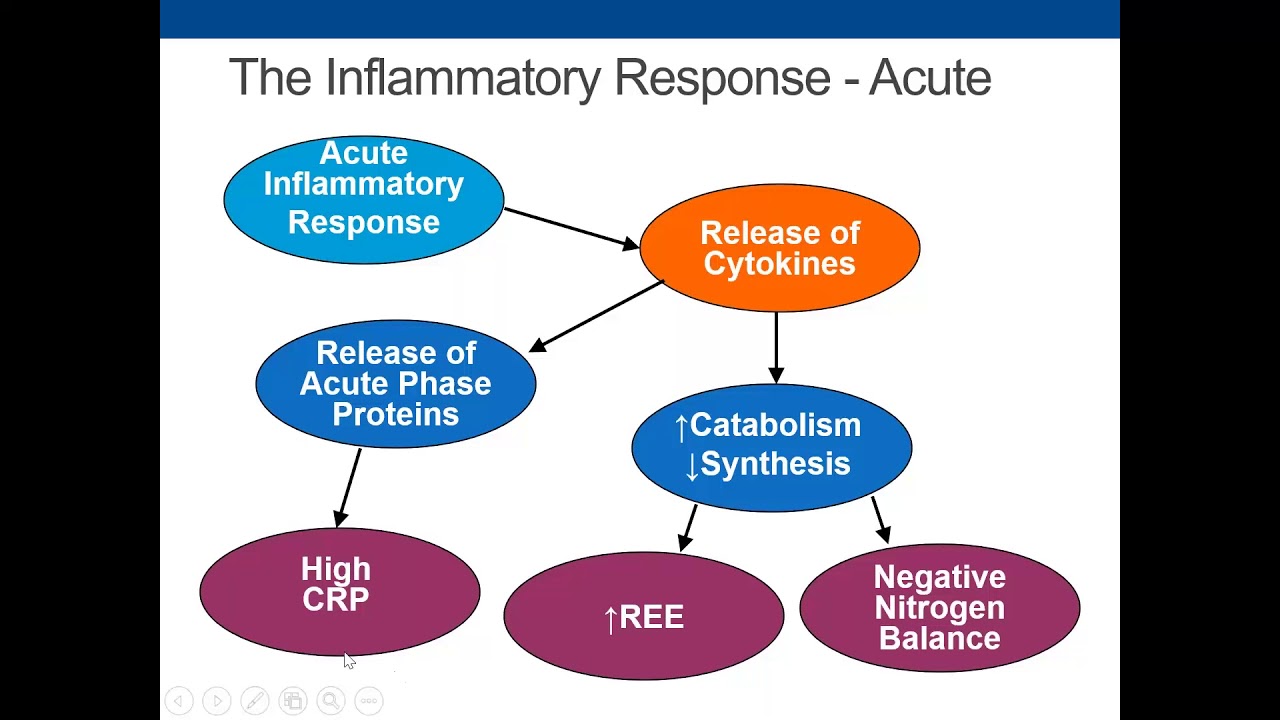
ill patients these are your patients with major infections severe sepsis burn trauma or closed head injury these patients have inflammation that is acute and severe the pathophysiology of malnutrition is different depending on the degree of inflammation one patient suffer from significant inflammation it is associated with medivac alterations including cytokine mediated responses with a rise in interleukin 6 interleukin 2 tughluq and 18 and tumor necrosis factor inflammation is also associated with loss of lean body mass and diminished functional status anorexia elevated energy expenditure acute phase protein changes where some increase or decrease in response to inflammation
and fluid shifts to the extracellular compartment of the body malnutrition with inflammation has a significant impact on circulating proteins hypoalbuminemia in isolation is not a reliable indicator of nutrition status because of this in the acute phase response to inflammation there is an increase in production of the positive acute phase proteins and a decrease in the production of negative acute phase proteins this process is called hepatic reprioritization the negative acute phase proteins are albumin prealbumin transferrin and retinol binding protein decrease synthesis of albumin and other visceral proteins alter oncotic pressure and promote fluid accumulation leading to
edema seen in these cases there are six characteristics that should be evaluated for the identification of adult malnutrition clinicians should suspect malnutrition if two or more of the following characteristics are present these characteristics are insufficient energy intake unintentional weight loss decreased muscle mass decrease subcutaneous fat fluid accumulation and decrease functional status generally evaluated by hand grip strength malnutrition is then assessed using the six clinical characteristics in the following contexts acute illness or injury chronic illness or social or environmental circumstances these are the characteristics for non severe or moderate malnutrition the evaluation of six clinical characteristics
are different for each context of malnutrition as you can see with acute illness or injury related malnutrition the weight change evaluation only goes back as far as three months whereas with chronic disease or social or environmental related bile nutrition the weight change evaluation can go back as far as a year because malnutrition in these cases takes longer to develop in all contexts energy intake is typically less than 75 percent of estimated needs but for varying timeframes so as you can see an acute illness or injury related malnutrition energy intake would be less than 75 percent
of estimated needs for greater than seven days in chronic disease related malnutrition energy intake would be less than 75 percent of estimated needs for one month or greater and for social or environmental related malnutrition energy intake would be less than 75 percent of estimated needs for three months or greater in all contexts the patients with non severe moderate malnutrition may have mild loss of body fat and muscle mass and mild edema there is no change in hand grip strength the patient needs to demonstrate at least two clinical characteristics to be Cal classified with moderate malnutrition
these are the clinical characteristics for severe malnutrition in general the patient would experience more rapid weight loss over the specified timeframes compared to non severe moderate malnutrition energy intake is reduced at varying degrees based on the context for example in acute illness or injury related malnutrition he's severely malnourished patient would have intake meeting 50 percent or less of their estimated energy needs for five days or more for chronic disease energy intake would be reduced to 75 percent of estimated leads or less for one month or greater and for social environmental circumstances intake would be 50
percent or less for one month or greater for body fat and muscle there are slight variations in the acute illness or injury context severely malnourished patients could have moderate depletion of body fat muscle mass and furyk fluid accumulation could be moderate or severe for chronic disease malnutrition and social or environmental circumstances the depletion of body fat and muscle mass is severe has is fluid accumulation finally hand grip strength an acute illness can be difficult to measure in critically ill patients but should be able to be measured in other circumstances reduced hand grip strength may be
seen in both chronic illness and social or environmental circumstances as with moderate malnutrition the patient needs to demonstrate at least two clinical characteristics to be classified with severe malnutrition a multidisciplinary approach is key to identifying adult malnutrition and providing optimal nutrition care to malnourished patients in general the nurse would complete the admission nutrition screening to identify at-risk patients and refer the patient to a nutrition clinician for a full evaluation the registered dietitian would conduct a full nutrition assessment for those at-risk patients including a nutrition focus physical exam to evaluate for fat loss muscle loss edema
and grip circle an appropriate the dietitian would then identify and document the degree of malnutrition and context as well as an intervention plan the provider would document the specific malnutrition diagnosis in the progress notes including supporting evidence and interventions throughout the hospitalization finally the coders would code for malnutrition these are the typical icd-10 codes associated with malnutrition diagnoses that can be categorized by type of complication or coma comorbidity the only malnutrition code that is a major complication or comorbidity is unspecified severe protein calorie malnutrition complications or comorbidities include moderate protein calorie malnutrition mild protein mount
calorie malnutrition unspecified protein calorie malnutrition sequela protein calorie malnutrition cachexia or BMI less than 19 in an adult non complication or comorbidity is adult failure to thrive and underweight so why is it important to code for malnutrition malnutrition diagnosis codes can be used as either reportable primary or secondary diagnosis the secondary diagnosis includes all conditions that coexists at the time of admission or subsequently develop or affect treatment during an admission malnutrition is a reportable code for additional reimbursement a DRG with a comorbidity or major comorbid condition may be reimbursed at a higher rate related to
the relative weight assigned to that DRG since malnourished patients have higher resource utilization cost of care this could help offset that finally malnutrition impacts patient acuity and hospital performance malnutrition affects many metrics including length of stay severity of illness risk of mortality mortality index which is the actual divided by the expected mortality and value-based purchasing by identifying how many malnourished patients the institution has it may help in the evaluation of these metrics and develop tailored interventions of for malnourished patients so what is the optimal way to document malnutrition in the medical record providers must document
the diagnosis as appropriate in the admission though progress notes or discharge note using the problem list alone would be insufficient for appropriate coding of malnutrition our D documentation meaning the dietitians progress note cannot be used to code for malnutrition malnutrition should be documented in the providers notes with supporting evidence throughout the hospitalization and documentation should include interventions to assess them to address malnutrition optimal patient care dictates that an appropriate care plan is developed to address the patient's malnutrition Aspen's adult nutrition the care pathway can help with the process of developing a care plan key points
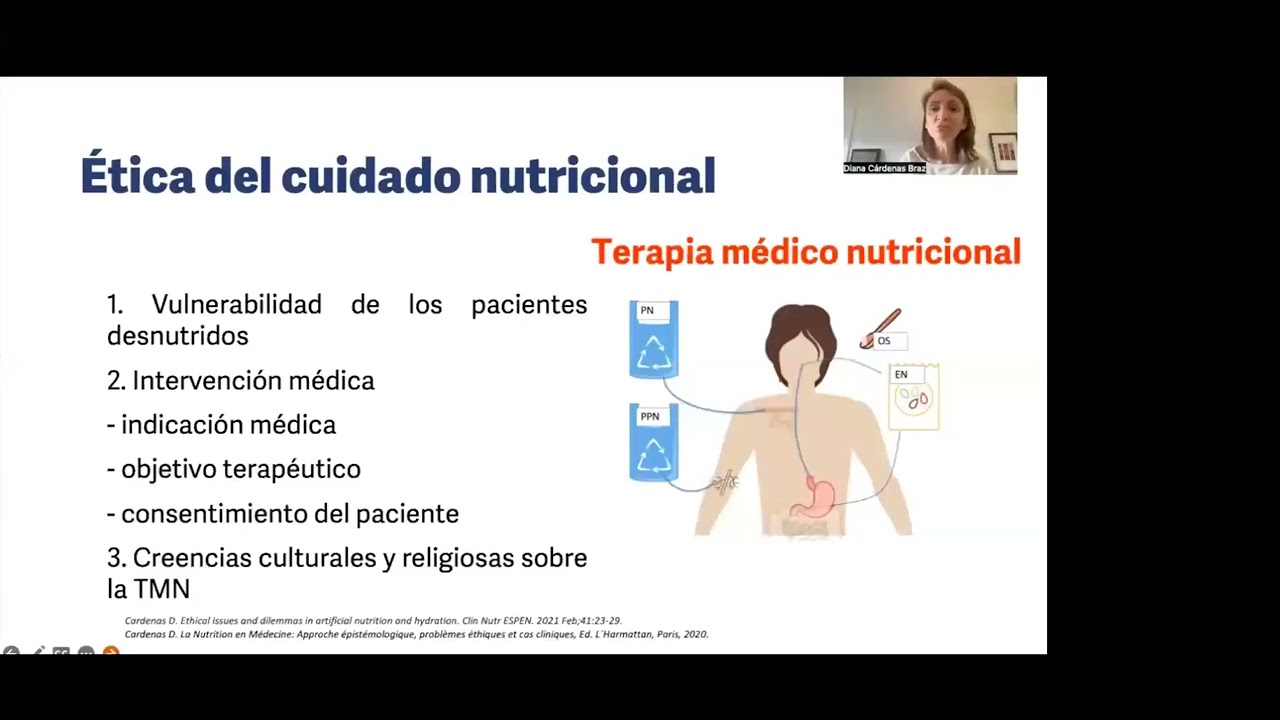
are to be sure care plan is created and documented with appropriate goals identified for initiating an order identify identifying a type of nutrition support require clinicians should consider providing the least restrictive medically appropriate diet for patients able to take oral nutrition for those patients who cannot eat enough my mouth cleansers should determine the need for nutritional supplementation whether it's oral nutrition supplements or nutrition support therapy this stage may include treatment of medical issues impacting nutrition intake and utilization for example identifying and treating a zinc deficiency in a patient with chronic diarrhea may improve taste acuity
and improve oral intake for patients with impaired swallowing enteral nutrition may be appropriate for patients with gastrointestinal dysfunction parenteral nutrition may be appropriate communication of the nutrition care plan with team members on multidisciplinary care grounds allows all team members to be aware of the nutrition plan and play a role in the implementation process finally education of the patient aunt or caregiver about the plan of care is an essential part of any Clinical Nutrition intervention so let's walk through a case study we have a 65 year old male with chronic obstructive pulmonary disease and he's admitted
with an exacerbation he complains of difficulty eating shortness of breath and fever on the nutrition assessment the patient is 5 feet 10 inches tall his usual body weight 4 months prior to the submission with 160 pounds his current weight is 140 pounds so his weight loss of 20 pounds over the past 4 months was a 12 and a half percent weight loss on nutrition focused physical examination he was found to have muscle wasting noted at the temporal club clavicle and quadriceps fat wasting was noted the orbital triceps and biceps trunk ribs and lower back for
the a fluid accumulation the patient was found to have two to three plus edema the patient comments that he's complaining of a boney back and feeling weaker so the malnutrition assessment findings this patient has severe protein calorie malnutrition in the context of chronic disease because he has chronic obstructive pulminary to these the characteristics he's had weight loss of greater than ten percent over six months his fat loss is severe his muscle loss is severe his fluid accumulation is severe so for coding he would be coded for a forty three unspecified severe protein calorie malnutrition malnutrition
matters your call to action after hearing this presentation we hope you have learned that malnutrition matters early recognition and treatment of malnutrition are keys for improved patient outcomes and quality metrics working as a multidisciplinary team can help identify at-risk patients providing appropriate intervention strategies to malnourished patients may decrease complications and length of stay proper nutrition throughout hospitalization may improve readmission rates and prevent risk of penalties for poor performance and documentation of that malnutrition diagnosis is key on this slide we have references listed that we used for the development of this presentation and more references on
this slide and finally Aspen has many resources available to address malnutrition so you may go to the aspen website WWAN care org to access Aspen's online tutorials courses training programs self assessment programs publication certification prep materials and many more so we hope that you found this presentation helpful and interesting and we thank you for your time