For thousands of years the meaning of life came from god. Then modernity invented humanism which promised a society ruled by reason. But as centuries rolled in, the promised freedom and equality never materialised for the majority of people.
The invisible hands of god were replaced by the invisible hands of the state and its institutions became the arbiter of justice, equality and freedom. But modernity does not provide us with meaning in life, only duty and responsibility to pay tax and obey rules. If not, we’re punished.
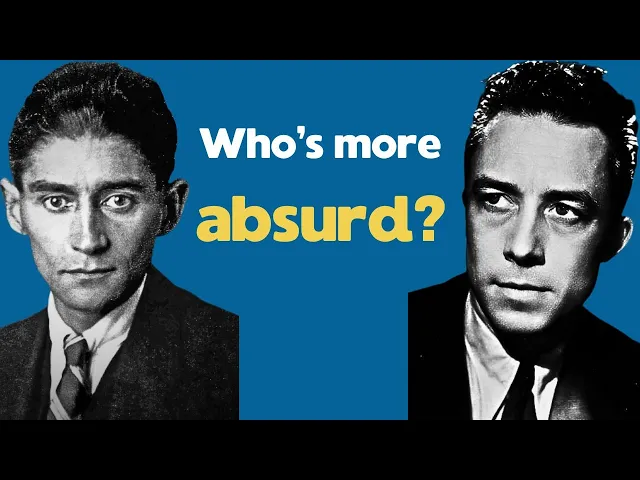
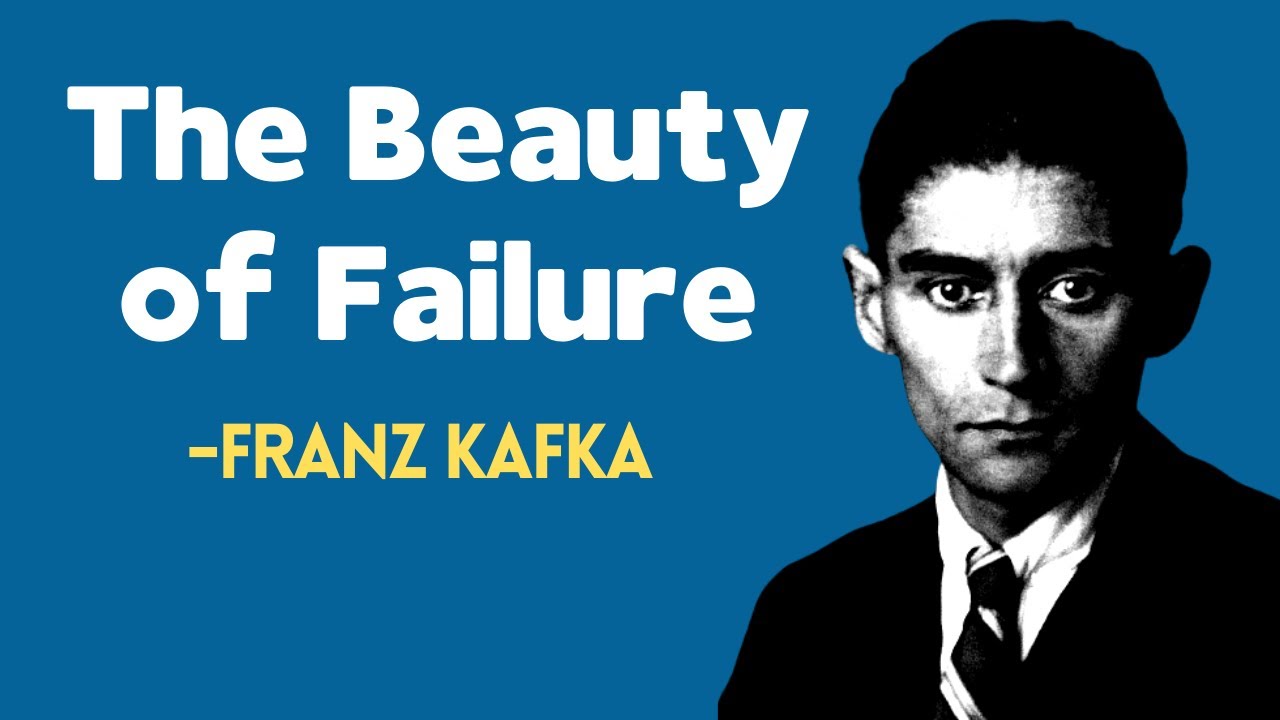
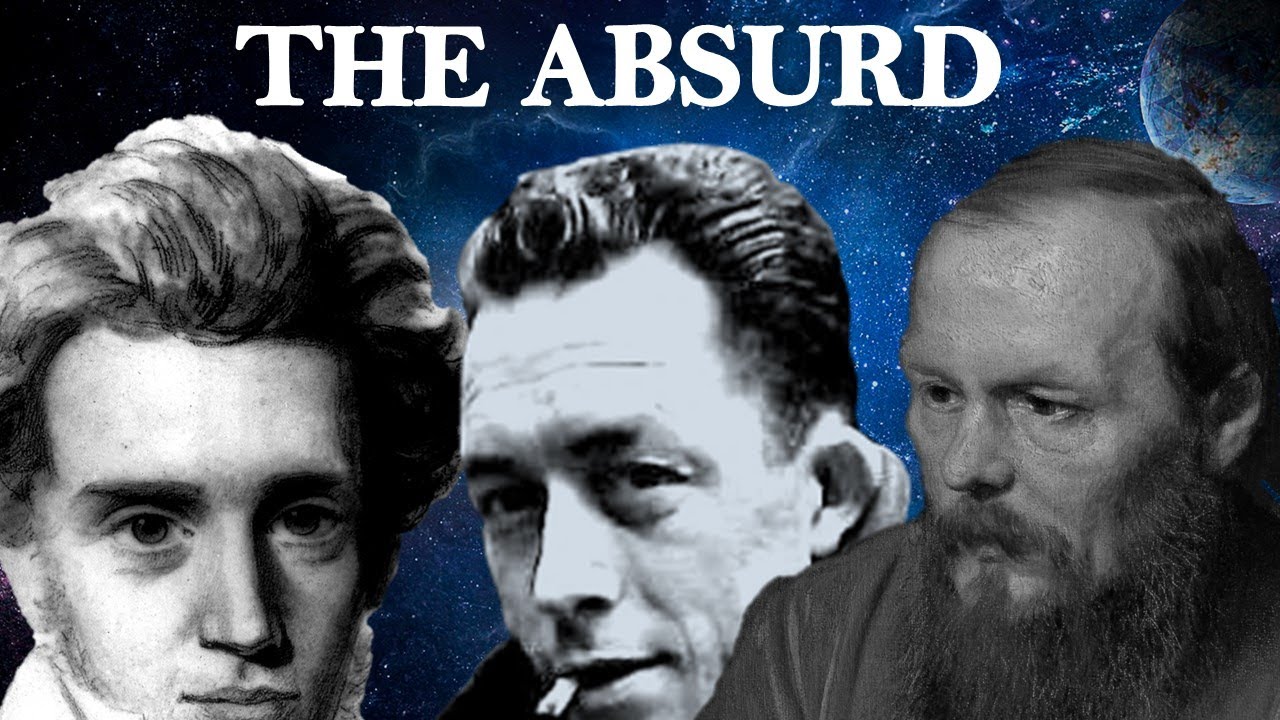
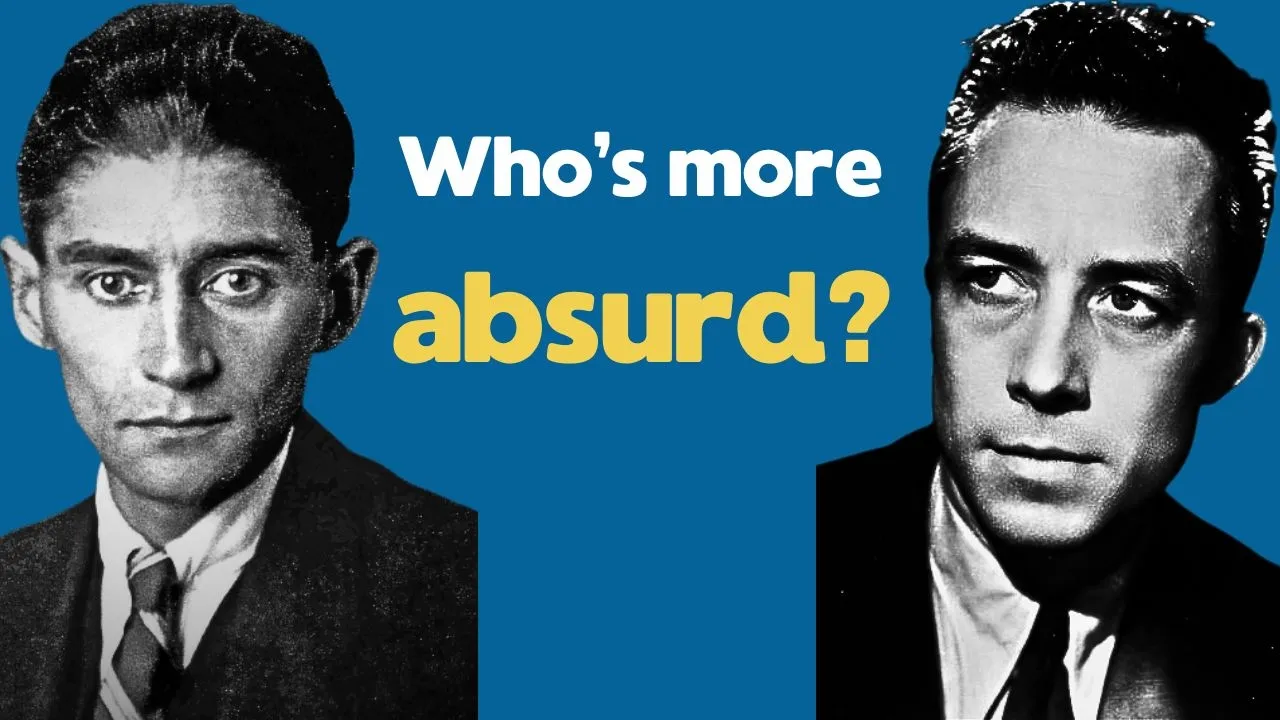
Franz Kafka and Albert Camus capture the absurdity of modern existence. On the one hand, we desire meaning for our lives, yet no meaning can be found. All we have is endless duties and responsibilities.
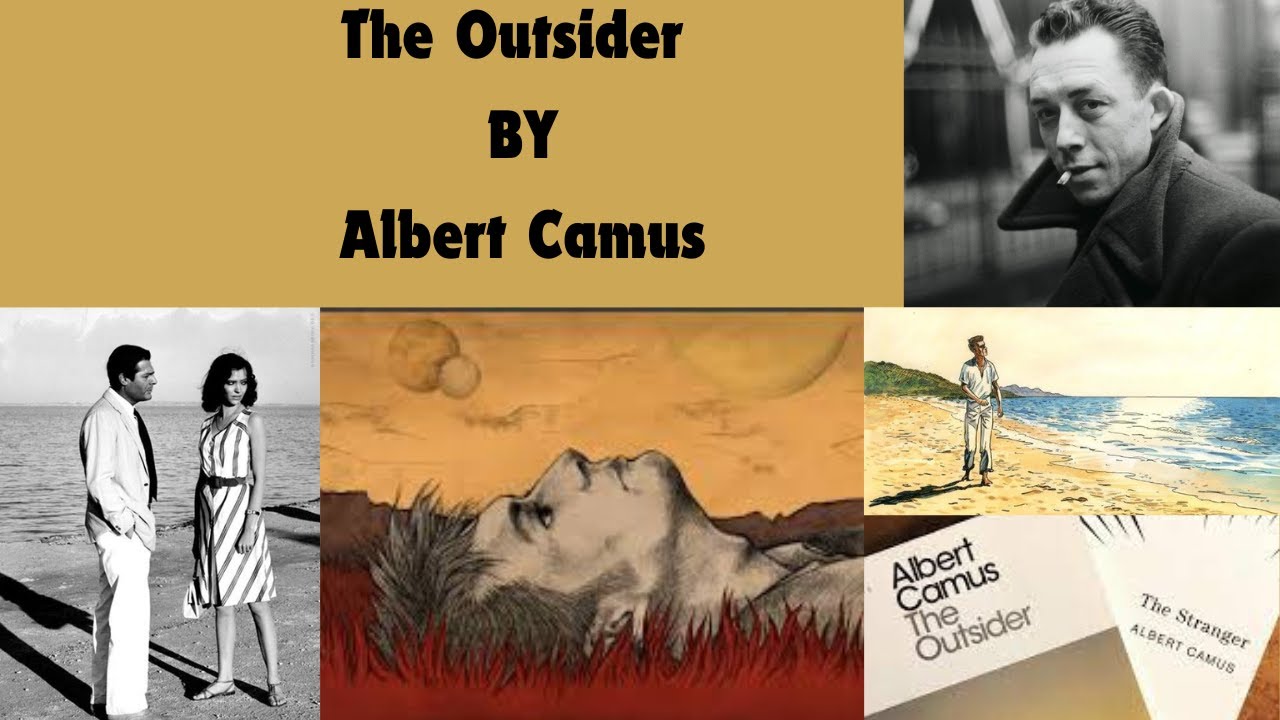
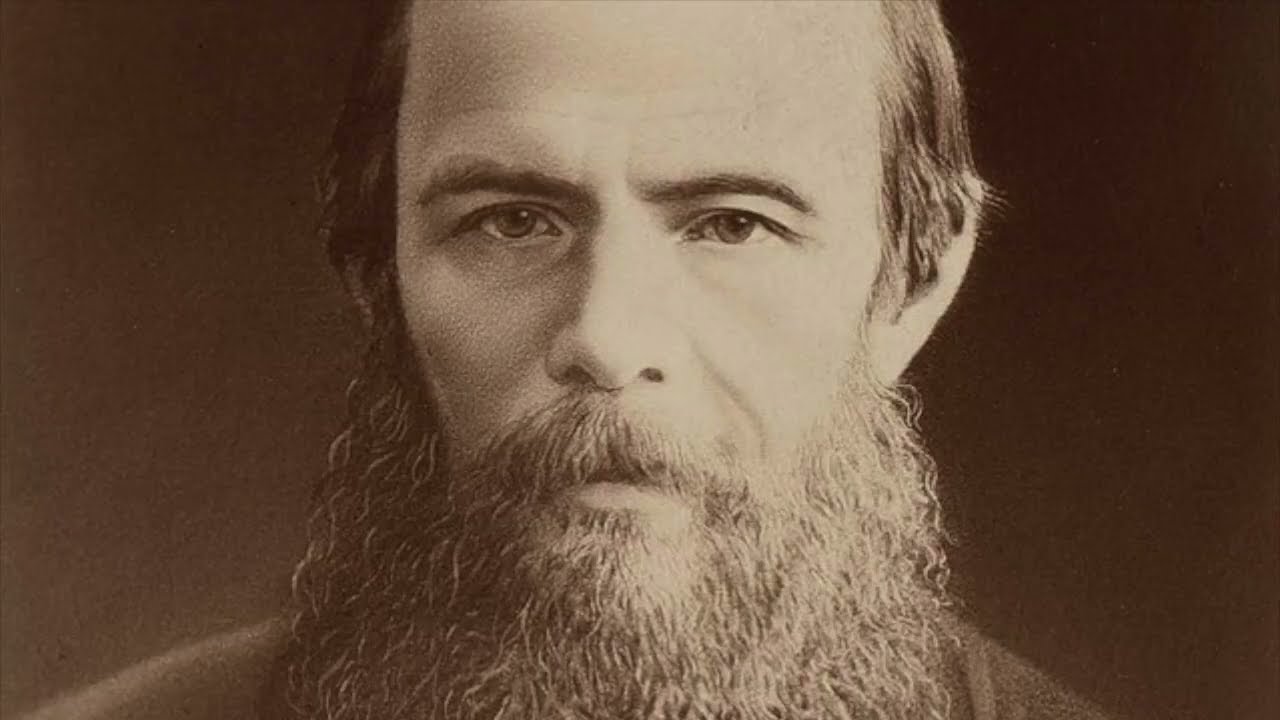
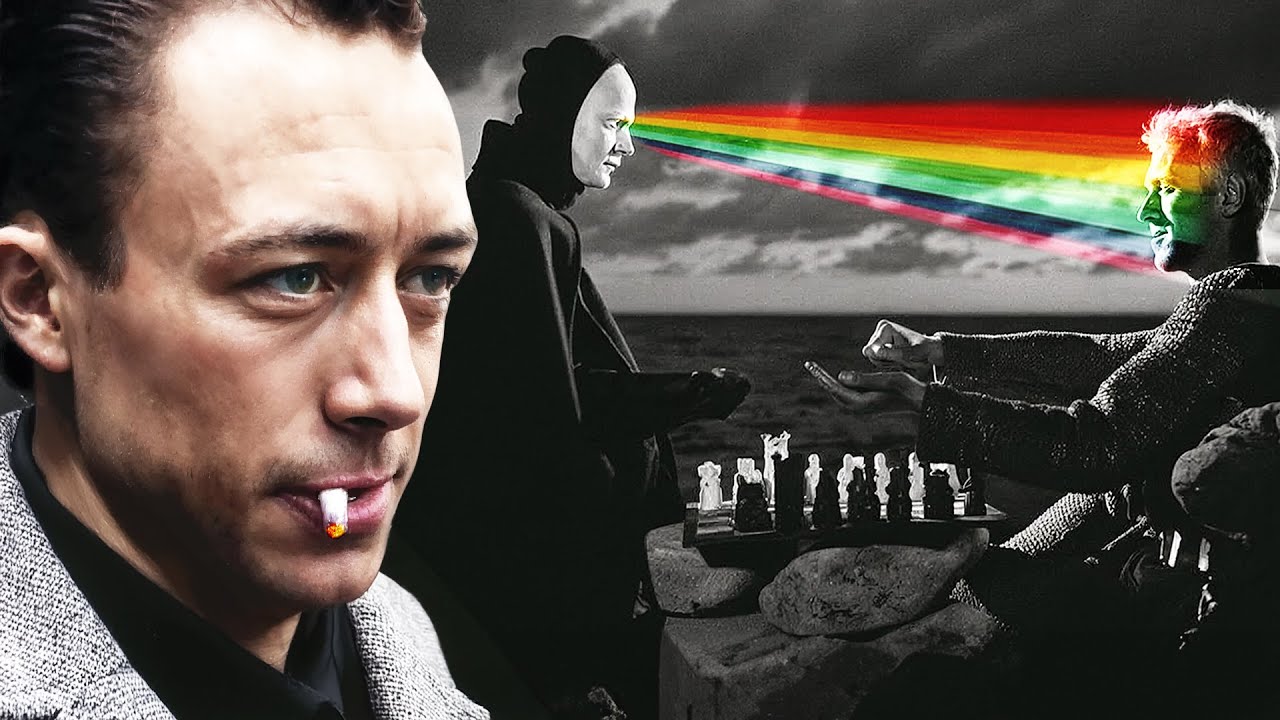
Kafka diagnoses this modern absurdity and Camus attempts to provide a solution. So in this video, I will compare the two, look at the common themes as well differences and will also try to answer a simple question, whose life is more absurd? Both Franz Kafka and Albert Camus were outsiders.
Born in 1883, Kafka was a Jew in Prague. Born in 1913, Camus was French in Algeria. Being outsiders also allowed them certain privileges.
Kafka was educated in German in a predominantly Czech-speaking Prague while Camus was educated in French in a predominantly Arabic-speaking Algeria. In Austro-Hungarian empire, German was the language of the ruling elite and in Colonial Algeria, French was the language of the powerful. Kafka wrote his novels in German while Camus wrote in French.
Both writers grew up atheist. While Camus was stronger in his rejection of religion, Kafka was a little more restraint. Perhaps because Camus grew up fatherless as his father died in World War 1 before he was born while Kafka’s father was a strong, menacing figure throughout his life.
This is also depicted in their fiction. Camus’s fiction doesn’t have an overbearing or tyrannical authority while Kafka’s fiction cannot shake off the presence of an overbearing, tyrannical figure over his characters. Kafka studied law while Camus studied philosophy.
Kafka worked at an insurance company, mostly stuck behind a desk pushing paper while Camus worked as a journalist who had a bit more freedom to be out and about. Kafka was engaged twice but never married nor had any kids. Camus was married twice and had two kids.
Both Camus and Kafka suffered from TB. Kafka died in 1924 from TB aged 40. Camus died in a car accident in 1960, aged 46.
We’re all guilty Both Kafka’s the Trial and Camus’s the Stranger are about two men condemned to death by the authorities. Kafka’s most famous novel, The Trial tells the story of Josef K, a banker, who is arrested for a crime he doesn't know he has committed and by people who never identify themselves. Justice is twisted here because he is guilty before he commits a crime.
Quote: “Somebody must have made a false accusation against Josef K. , for he was arrested one morning without having done anything wrong. ” —The Trial by Franz Kafka.
His attempt to understand his crime fails. His lawyers also treat him badly. He is a fly trapped in a spider web so there is only one outcome.
Aged 35, Josef is executed outside the city without him ever finding out what his crime was. In Camus’s most famous novel, the Stranger, Meursault knows his crime because he has murdered an Arab man on a beach in Algeria. The prosecution and the judge, however, press him on a whole different crime, his indifference to the death of his mother.
When his mother died, Meursault acted as if nothing had happened. Camus says: "In our society any man who does not weep at his mother's funeral runs the risk of being sentenced to death. " In other words, Meursault is not only guilty for killing someone, but is more guilty for not crying at his mother’s funeral.
While in prison, waiting for his execution, Meursault spends days soul-searching to find meaning. Finally he settles on one incredible conclusion that nobody can escape death. Just like Josef K, Meursault accepts his fate.
So in both novels, guilt is the main theme. But what is different between the two is that Kafka says we are guilty no matter what we do. Walking down the street, you are judged or observed by others and today by closed-circuit cameras.
Camus on the other hand says we are not just guilty for breaking the law but we are also guilty if we don’t fit the norm or do not act as expected. The stereotype that men don’t cry may have some evolutionary or historical explanation but in modernity, it can be explained as toxic masculinity, therefore dangerous. Modernity’s main priority is safety therefore stoicism can be interpreted as mysterious and you must explain your lack of care, or your indifference, otherwise you are guilty.
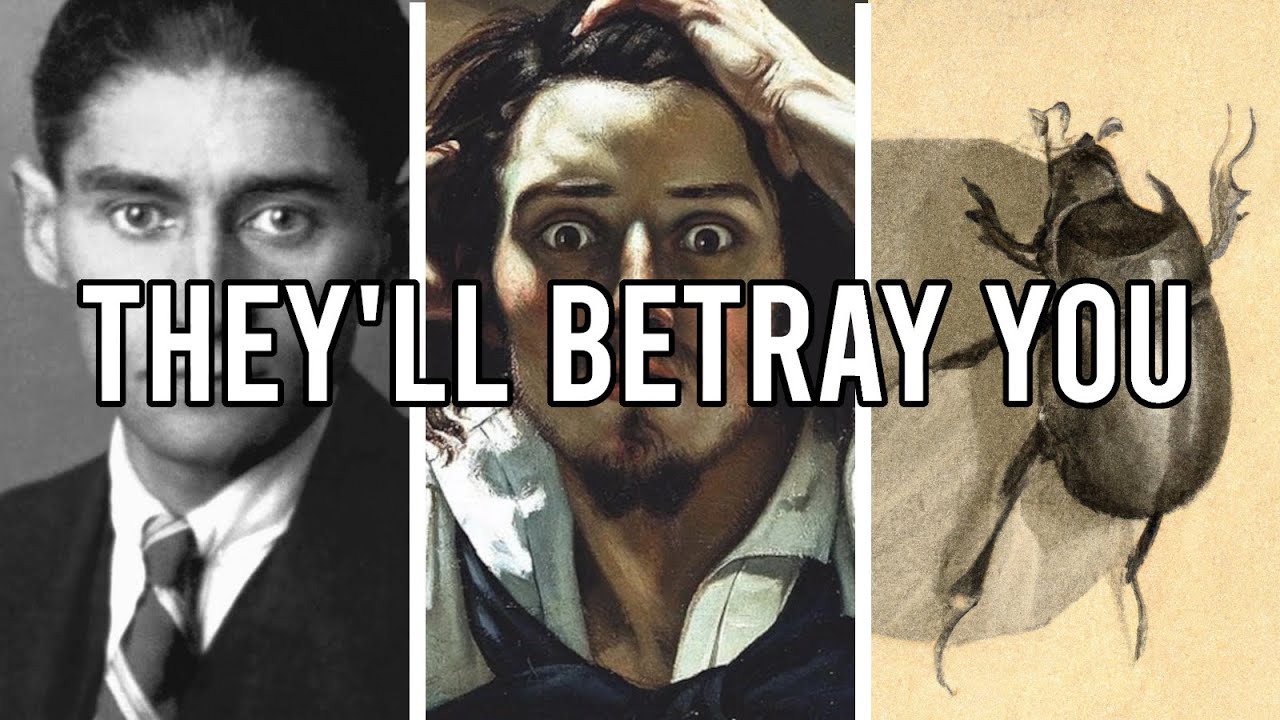
To be a dutiful citizen, one must behave as expected, otherwise you must be guilty of something. Duty above meaning The Metamorphosis, Kafka’s most terrifying work is about Gregor Samsa, a travelling salesman who wakes up one morning to find himself turned into an insect. At first he thinks it is just a nightmare that might pass, but soon realises that this is all real.
He is trapped inside the house and unable to go to work. Realising that he’s no longer wanted by his family because he is unable to fulfil his provisioning duties, Gregor starves himself to death. The Myth of Sisyphus is a philosophical essay by Albert Camus.
Sisyphus is a Greek titan condemned to push a boulder up a mountain for eternity. Every time he pushes the rock up the mountain, it tumbles down and he has to go back down and push it back up the mountain. This process goes on for eternity without any hope of change or stop, showing the futility and absurdity of life.
In other words, Just as in Kafka’s Metamorphosis we are condemned to fulfil our duties and responsibilities in life. In Kafka’s story, for society and your family you’re only valuable as long as you’re a provider, useful and productive member. In other words, you’re capable of fulfilling your duties.
While Camus also says we are condemned to fulfil our duties, he is more hopeful. Quote: ”The struggle itself . .
. is enough to fill a man's heart. One must imagine Sisyphus happy”.
Every time Sisyphus pushes the rock to the top, there is a brief moment of happiness. The same goes for us, after completing every task or duty, we do feel joy, however short it may last. But in both Kafka and Camus, one thing we cannot do is escape our duty.
Even evolution has wired us with the duty of procreation. After food, the second strongest urge we have might be sex, which is nothing more than a duty to continue the next generation. If Sisyphus is condemned to push a rock for eternity, we are condemned to push on with the human species for as long as we can.
Whose Life is more absurd? Both Kafka and Camus believed that life is for the most part absurd and meaningless. In Kafka’s world, you are arrested without any crime, turned into insects without knowing why, executed by their own machine, or die of hunger while being a hunger artist.
Kafka can be read in two different ways. One way is through the lens of comedy. His plots are so bizarre that nothing makes sense so it must be some kind of comedy of error.
But at the same time, it’s serious as we can see hints of those things in our own lives. The nightmares of existence experienced by his characters are experienced by a lot of people, and most acutely by those entangled in the legal system. Camus formulated his ideas more clearly in his philosophy of absurdism which I have explained in more detail in my video on Camus’s philosophy.
To put it simply, we seek meaning but the universe has no meaning for us, so this creates an absurd situation. If the universe has no meaning for us, why do we have the desire to seek meaning? It makes no sense.
Camus’s fiction, however, is not as dark as Kafka’s fiction. His stories are perhaps more grounded in reality than the far-fetched stories of Kafka. You could say that Camus enjoyed life a little more than Kafka as he was a respected journalist, author, married, had kids and even won a Nobel Prize.
While Kafka never got the recognition in his life, for years suffered from ill health, hated his job and had to deal with an overbearing father. Kafka even told his friend Max Brod to burn his books, but his friend betrayed him by publishing them. Camus died at the height of fame while Kafka was only discovered after his death.
If absurdity is we want something we can’t have, Kafka’s life is more absurd. Kafka died without knowing he was a literary success. Kafka even tried to get married but the woman he was engaged to rejected him.
He even wanted his writing to be burned. He failed in almost everything while alive. His success only came after his death, which makes his life more absurd.
But on the flip side, if life has no meaning, then why bother about legacy. It’s more absurd if you manage to create great legacy because not only it is far harder to part ways with them, it has no meaning so why bother at all? Camus left a biological legacy through his children and a literary legacy through his books.
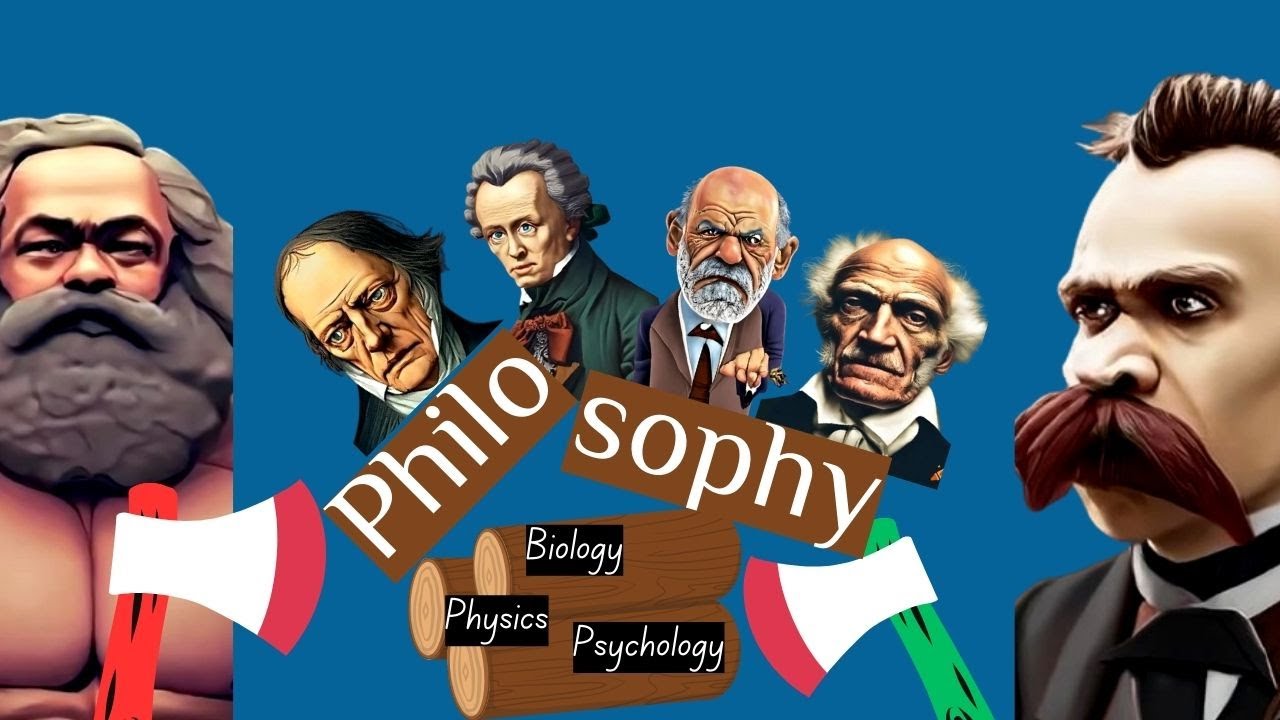
But life has no meaning, so why did he even bother? There’s hope In his first novel, A Happy Death written in late 1930s but published posthumously in 1971, Camus responds to Schopenhauer’s will to life and Nietzsche’s will to power. Schopenhauer argued that all living beings, including humans, are driven by a blind will to life.
We can’t help but continue living despite how miserable we might be. Not only that, we also continue making babies so we continue the misery of human existence. Sexual pleasure is a reward like flowers reward insects with nectar to help them pollinate.
Falling in love is another trick to make an otherwise a simple task of procreation sound more beautiful. Nietzsche, who came a few decades later, thought this will to life or survival was too passive so introduced his idea as ‘will to power’. All living beings are here to conquer and humans are here to achieve greatness.
In this novel, Albert Camus, however, shows that life is not about surviving or conquering but it is about our deep desire to be happy, and joyful. So the will to joy is Camus’s solution to the absurdity of life. Life is absurd and has no meaning, but we can all experience moments of joy.
Life is meaningless, and has no purpose, therefore you are free. Now we don’t have to seek meaning. The only thing left is duty and joy.
That is it. Do your work and feel a short moment of satisfaction. Just like Sisyphus every time I finish one of these videos, I feel happy, but the next day I have to start working on a new video.
So Kafka saw no escape from the absurdities of life while Camus was able to find joy in life. Camus settled on the idea that life is meaningless but it’s what it is. Nothing can be done about it.
By accepting that life is absurd, you rebel and say I don’t care if there is no meaning. I’m gonna live my life despite it not having any meaning. For thousands of years, we relied on gods to offer us meaning but now we are mature, rational enough to say, we love life because it has no meaning.
We continue on living because it is absurd. For Camus, we do not need to live or die for god, but live because life makes no sense. That’s our rebellion.
In fact all living beings live because it has no meaning. So let’s not complain but get on with life.