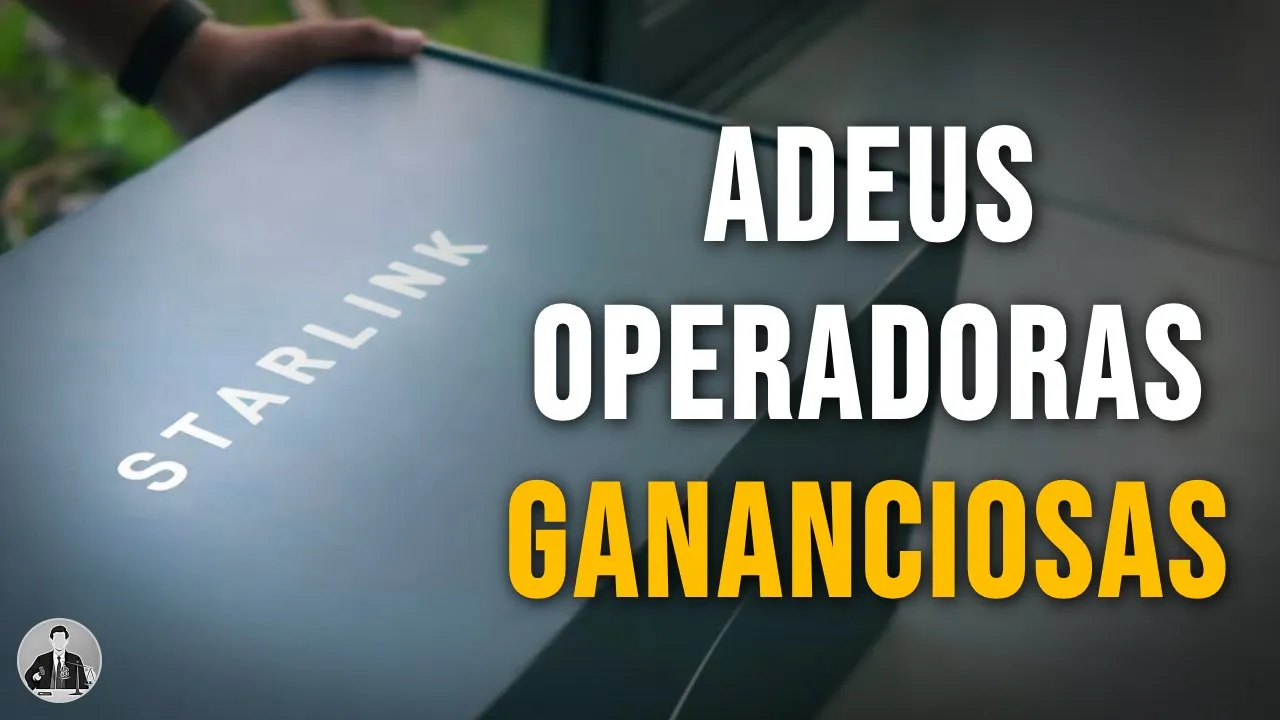
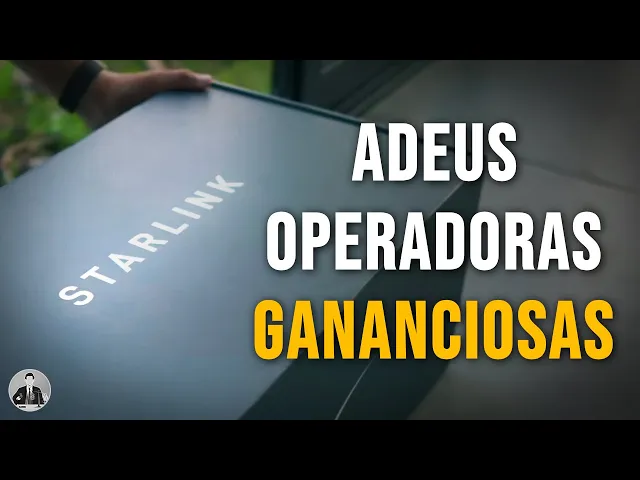
Breaking news: Starlink has lowered its price and is now much more affordable. Could this be the end of greedy internet providers? Because if you've ever lived far from big cities or needed decent internet in areas where providers don't reach, you know the struggle.
Even coming from a humble background and living in the countryside, I've experienced mediocre internet, weak signal, high latency, and sometimes not even that. And Starlink's proposition is to solve exactly these problems. So, as a technology channel, I need to test this equipment.
Hi, my name is Jorge, and welcome to the R2 Tech channel. In today's video, we're going to talk about internet, but more specifically about Starlink internet. So, stay with me until the end of this video because I'm going to explain what Starlink is, what has changed in price, and why this promotion might change the course of residential internet in Brazil.
Starlink is a satellite internet service offered by SpaceX. Instead of relying on fiber optics, towers, or local infrastructure, the connection comes directly from orbiting satellites, opening up the possibility of fast internet in remote, rural areas, or where traditional infrastructure doesn't reach. Starlink has two main antenna versions in Brazil: a portable model called the mini kit, designed for mobility, travel, farms, rural areas—wherever you are—and the traditional fixed installation model, ideal for homes and residences, called the standard kit.
Among the advantages of Starlink are speeds generally much higher than conventional mobile options, depending on the coverage area, lower latency than older satellites, and the possibility of plug-and-play installation—that is, connect and use, without the need for fiber optics or local infrastructure. But then comes the question: "If it's so advantageous, why have so few people switched to it? " The answer lies in the simple fact that not long ago its price was quite high, but this has changed drastically.
Recently, Starlink started a promotion in Brazil. The Mini kit, which used to cost around R$ 1,800, is now being sold for only R$ 799, a price drop of approximately 55%. A positive point is that you can already find it for less than R$ 700 on Amazon, and it's also receiving very good reviews.
I'll leave the link in the pinned comment. The standard kit, which was previously around R$ 2,400, has had its price reduced to R$ 1,680, which is still a bit steep for the Brazilian budget. However, the official Starlink website shows that the promotion is for a limited time only, valid only until January 5, 2026.
Now, regarding the monthly fee, the Starlink residential plan in Brazil costs around R$ 236 per month with the promise of limited internet, which is a traditional internet price for many people. In other words, with these prices, Starlink can become very competitive, especially for those who live in rural areas, farms, or places without good internet infrastructure. Mini or standard kit, what's the difference?
The Mini kit is lighter, more portable, ideal for those who need mobility, car trips, rural areas, remote locations, pickup trucks, and more. With simple installation and a residential plan subscription, you can move up to 25 km from your registered address. The standard kit has a more robust antenna, better reception, and more stable performance for fixed use, ideal for residences, fixed homes, streaming, home offices, and more.
Starlink doesn't depend on cable or tower infrastructure, allowing it to bring internet to places where traditional operators would never invest, potentially breaking regional monopolies or improving competition. With reduced prices, humble families, residents of rural areas, farms, or farms now have a viable option for decent internet, something that might not have been feasible before due to high costs. This could force traditional operators to review prices, improve services, or simply lose market share in remote regions.
But there's an important detail for this channel. Even with the promotion and reduced price, my family and I cannot afford to buy a Starlink on our own. I already mentioned in this video that I come from a humble family, I live in the countryside, and the channel is still growing.
So, unfortunately, right now I don't have the budget to buy the Mini kit. Alone. But since this channel is about analyzing parts, hardware, and technologies in general, I would really like to test Starlink to show you the installation, performance, speed, and a real-world experience with it.
That's why I decided to start a crowdfunding campaign. And anyone who can and wants to help can contribute by donating from R$ 1 through LivePix using the QR Code on the screen. If you prefer, the direct link will also be in the pinned comment, along with a brief explanation of why I preferred LivePix instead of vaquinha.
com. So, with this help, I could at least buy the mini kit, activate it, test it, and bring a complete review video here on the channel so you can see if it's really worth investing in one. Starlink, with its satellite internet, is currently much more accessible, as its kits have drastically reduced in price, making it viable even for more modest budgets.
With this, decent internet can reach places where fiber optics or cell phone towers don't, potentially changing the lives of many people in rural areas, farms, and remote locations. And as a technology channel, I want to bring this experience to you in a transparent way, as has always been and always will be the goal of the R2 Tech channel. Now, if you enjoyed the video, which is a big test of Starlink here on the channel, leave a like, help out on LivePix, and share this video with that friend who lives in the countryside.
And who knows, maybe we can deliver interactions that have always been forgotten by the operators. But that's it, thanks for watching until the end. Until next time, thanks!
![[05/01/26] O canarinho COMEÇOU a cantar](https://img.youtube.com/vi/7fwI5ait7Dw/mqdefault.jpg)








![🚨 Amazon Leo has arrived in Brazil - The end of Starlink? [WAITING LIST OPEN]](https://img.youtube.com/vi/unR7ptBIrVk/mqdefault.jpg)