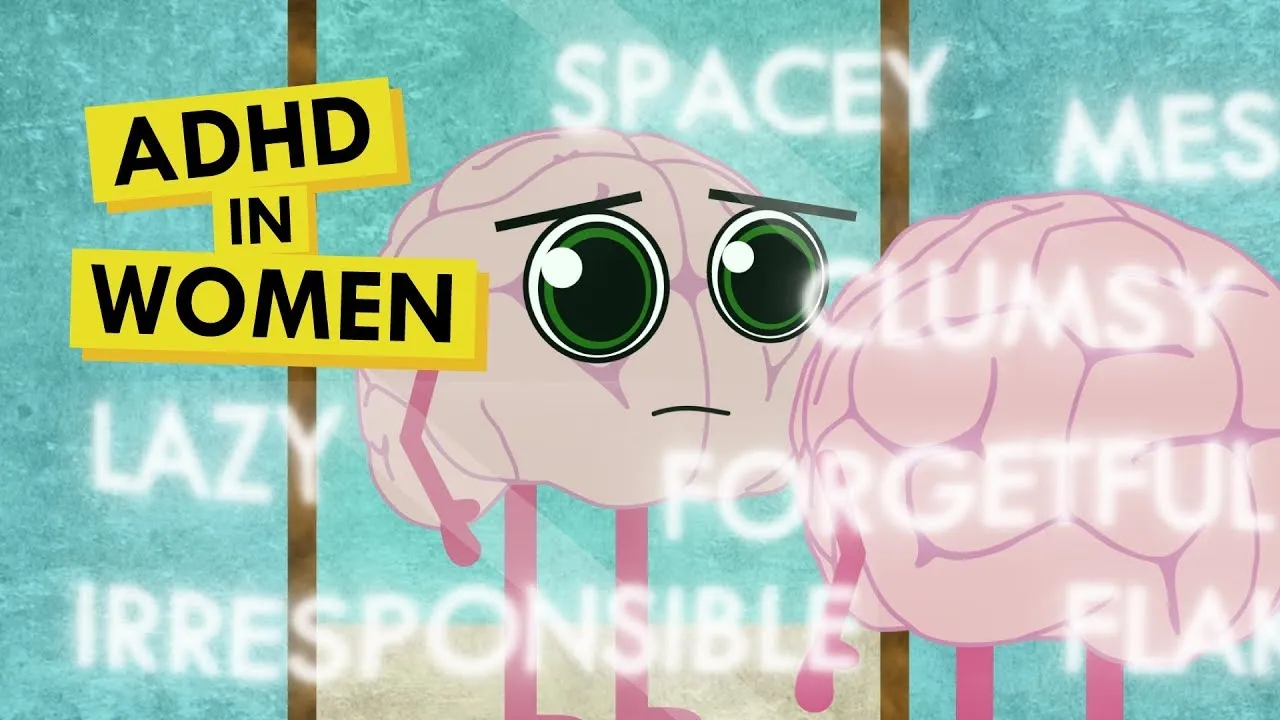
Hello Brains. In case you hadn't noticed I am a woman with ADHD. Which means I have the same mental health condition as a man with ADHD -- But it does affect me differently.
[Intro music] Before I jump into this I want to point out That in my episode on ADHD in girls, I had a lot of guys in the comments going "Wait. . I have the GIRL presentation?
" There is no "girl presentation" of ADHD, It's just that we know from research that women -- At least Cisgendered women, we don't have enough research yet on those who are both neurodiverse and genderdiverse -- tend to present differently to cismen due to a combination of biological and social factors, and that that difference can mean our ADHD doesn't get recognized or treated effectively. Also some of this may apply regardless of gender Because everyone is different. Anyone can have the more internalized presentation of neurodiversity that sometimes gets missed.
So if any of this sounds familiar, the conclusion is the same go get checked out, get the support you need. OK. So let’s jump into the research.
ADHD is the same disorder no matter what gender you are the same brain regions and neurotransmitter systems are affected and the same core deficits are present But the resulting symptoms — what people actually see can show up differently due to the biological difference between males and females as well as the social differences in the experiences of men and women. As a result of gender and sex differences ADHD leads to different presentations and outcomes: For example women are often expected to be good at organizing planning, and other executive functions and society is generally less forgiving to women when they mess up. We tend to work harder to “fit in” and “be good” due to social pressures.
Females with ADHD tend to show more inattentiveness than hyperactivity or impulsiveness, and are more likely than males to develop anxiety, self esteem issues and other internalizing problems, while males with ADHD tend to develop more externalizing problems like rule breaking and aggression, than females do. That's not to say that girls and women with ADHD don't also experience hyperactivity and impulsivity symptoms. We do.
The symptoms are just a little less obvious. They might take the form of racing thoughts, speaking before thinking, talking really quickly risky sexual behavior and relationship problems. Also for those of us who menstruate, our ADHD symptoms may change or worsen during certain parts of our menstrual cycle and during certain stages of life like puberty pregnancy, post-pregnancy and menopause when we have these big, hormonal changes.
So our ADHD presentation and treatment needs may change as well. Cool. Okay.
But my doctor knows all that…right? Probably not. Most research on ADHD has been done in males and the DSM criteria for ADHD doesn’t fit the way females tend to present as well as it does for males.
As a result, a lot of women with ADHD get misdiagnosed with depression or bipolar disorder and end up getting the wrong medication or a less effective one. Those of us who internalize our symptoms are far less likely to be referred for diagnosis, less likely to receive a diagnosis if we are referred, and less likely to be treated with stimulant medication even if we do get a correct diagnosis. despite the fact that stimulant medication is the first-line medication used to treat ADHD, and works just as well or females as it does for males.
Even if we are diagnosed and treated with stimulant medication, it’s really unlikely that our hormones will be taken into consideration. Personally, no one suspected I had ADHD as a kid because I was a “good kid. ” And because I was “smart.
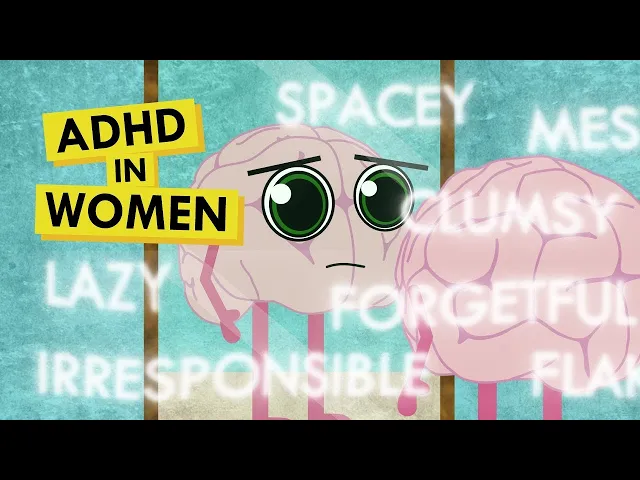
” But the truth is, I went to some pretty extreme lengths to hide the fact that I was struggling And I hated myself every time I couldn't. Every time I came home without my jacket Or lost the really pretty earring someone bought me for my birthday Or didn't get invited to parties or couldn’t remember the question the teacher <i>just asked. </i> Despite my best efforts, I still picked up a lot of not fun labels spacy, messy, clumsy, weird, forgetful, flaky, lazy, irresponsible.
But I didn’t talk to anyone about it. I was ashamed of it. I tried my best to hide it.
It wasn’t until my symptoms became more obviously problematic to others — more externalized — when I was going through puberty hormonal changes, and started rage quitting conversations, when my coping mechanisms weren’t working anymore Because the demands on my executive function had changed and I started doing badly in school — that my family even noticed there was a problem. -- Even then, the first doctor my mom took me to told her I couldn’t have ADHD. Because I’d done well in elementary school.
Thankfully, my mom told that doctor: "thanks for your opinion, I’d like to see a specialist. " And I was diagnosed with ADHD. And thankfully, she was willing to try stimulant medication to see if it helped -- — which it did.
A lot. But even after that — it felt like no one really took my ADHD seriously, so I didn’t take it seriously. I didn’t ask for accommodations, I didn’t get coaching or therapy for it, I even went off my meds completely for a while because someone I trusted told me I didn’t need them.
Even after I dropped out of community college, got into a bunch of car accidents went through a divorce, got fired from— several jobs, ruined my credit developed generalized anxiety disorder and had my first panic attack, I was actually embarrassed to start this channel because I was so sure that my struggles weren’t all that bad. Because I was comparing them to what I saw in my brother, and my cousin. The symptoms that were more obvious to others.
So even once I was diagnosed, didn’t get adequate treatment for my ADHD — I didn’t feel like it was <i>okay</i> to need extra support for my ADHD — until my frustration with my struggles got so bad I literally started a YouTube channel about them. . .
And I hear from a LOT of women that say their struggles were either missed completely, misdiagnosed, or that they were treated for other mental health conditions or years or even decades before anyone recognized the underlying ADHD. So, what can we do? Educate ourselves and others on how ADHD effects women differently and make sure we’re getting the support we need.
Here’s what we know. ADHD in women is typically more severe than it looks. Symptoms are external manifestations of internal struggles.
So if we have a primarily inattentive presentation <i>and</i> we’re taught to mask our struggles, we’re not going to look “as ADHD” as we actually are. And this isn't just true for women, anyone who’s faced strong social and cultural pressures to 'be good' is likely to mask and internalize their ADHD symptoms. And this is true for autism as well.
We may minimize how much we’re struggling. According to research, women tend to underreport their symptoms, while men tend to overreport. And if we’ve developed comorbid anxiety or depression or other mental health conditions, those are likely to be more obvious than our ADHD.
Because of this, we're more likely to self diagnose AKA be the first to recognize we might have ADHD. And we might be more afraid to go to the doctor to get checked out, especially if we’ve been dismissed or misdiagnosed before. This is why I recommend going to doctors who specialize in ADHD or who are really familiar with it.
And remember that whether it’s ADHD or it does turn out to be something else— if you’re struggling, there’s a reason you’re struggling. Our struggles being invisible to others doesn’t mean they’re imaginary. Also—It’s just as important to get the support we need.
While our struggles might not be as obviously problematic in the short term — maybe we’re doing well in school, maybe we’re not getting in trouble a lot — The long-term issues women with ADHD face are <i>significant. </i> Like self medicating, which can lead to addiction. Or eating disorders.
STIs and unplanned pregnancies. Chronic pain is common in women with ADHD. Self harm .
. . even attempts at suicide.
The longer we go without getting the support we need, the longer we have to figure out how to cope on our own, and those coping mechanisms aren’t always gonna be healthy. And the longer we go without understanding why we’re struggling the more dysfunctional beliefs we develop about ourselves and our abilities. Often, by the time our struggles are obviously problematic to others, our core beliefs about ourselves have already formed.
This was true for me, and I’m still undoing the damage. My terrible self esteem set me up for abusive relationships. My difficulties fitting in created social anxiety -- I’m still learning how to make friends.
My symptoms might not have seemed like a big deal at the time, but the impact they have had on my life long term absolutely was. And again — hormones impact our symptoms. Anyone who menstruates has regular hormone fluctuations that affect our ADHD — in addition to needing extra support during big transitions — it’s good to be mindful of how our symptoms are affecting us at different points in our cycle and talk to our doctor about options.
Some people might benefit from different doses of medication at different times of the month. We’ll talk more about hormones in another episode, because there's a lot to go into, and also -- we need more research on that. Speaking of which -- —we need more research, on all genders.
There’s not as much research on ADHD in women, and there’s barely any on those who are gender diverse. The research we do have suggests neurodiversity rates are a lot higher in the trans community, and since both biological factors and societal pressures impact ADHD… it’s important we do that research so we can better recognize and support every brain, not just the ones we understand so far. Because honestly.
. . no one should have to go through life blaming themselves for how their brain works.
Period. Thank you to my brain advocates and all my Patreon brains for supporting the work that we do -- because of you, we can keep creating content that createss awareness about ADHD so a lot more brains can get the support they need : ) I'm going to get some ice-cream now. Like, subscribe, click all the things and I will see you next video!
Bye brains!