[screech of an eagle] (woman) Funding for "Indian Pride" is provided by. . .
and. . .
[woman sings in her native language] [screech of an eagle] (JuniKae Randall) On this episode of "Indian Pride," we hope to dispel many Indian myths with real truth, receive a lesson on how to protect the child with a circle, and tap our toes with some contemporary dancers and jiggers. [steady drumbeat; people sing in their native language] ♪ ♪ (woman) ♪ Indian pride ♪ ♪ is alive. ♪ Hi, I'm JuniKae Randall, and welcome to "Indian Pride.
" Within our global society, myths can divide countries and their people from others. This is even true in our own backyards. "Indian Pride" meets the challenges of dispelling some of these myths as they relate to diversity of American Indians.
[flute plays softly] (Mary Campbell) The biggest myth in Indian country that I probably get asked a lot is if my grandma was a princess. Of course, we're not all Pocahontas. Who's to say Pocahontas was even a princess.
She was just another girl in the tribe just like anyone of us would have been. So that's one of the biggest myths I'd like to dispel. And the fact that not all Indians live in tepees.
I know John Wayne really highlighted that a lot, which is completely untrue. I mean, half the Indians they had in their tribe weren't even plains Indians that didn't live in tepees. They were just pretending they were.
Well, his movies are a little wrong as far as history goes. That's like one of the biggest myths, I'd have to say. The biggest truth is is that yeah, we're all very sacred.
If there is one truth about all Indian people, they are spiritual people. They're sacred people. They pray for everything they do.
They pray before they go on a trip. They pray for their food. They pray for everything.
That is a big truth to us is that we are sacred people; we're spiritual. ♪ ♪ (Joel Frank) Somebody mentioned that we were these poor Indians, and it was primarily the social workers. And they meant well.
And they did a lot for us. But they used to say, "Oh you poor Indians! " We kind of looked around at each other and said, "Well, what do you mean by that?
" I got a chikee that I live in. I got a fire going with food on the fire. I've got fruit that I can pick off from a tree that's either grown in the wild or go kill a deer or something to that effect.
I'm living good! I've got clothing on my back. If I need other things, I can go down to the store and maybe barter a little bit, sell some of the things I've got or wrestle an alligator, entertain the tourists a little.
What more do I need? " It was later on in life that we began to understand what they were talking about when they said "you poor Indians. " We never felt that we were poor.
You know, we were always rich. Maybe we were cash poor, but we were rich in our life. (Cheryl Seidner) One of the biggest myths I believe is that there's not very many Indians in California or they didn't know that there was any California Indians because there's such an influx of the Great Plains-- the Sioux, the Arapaho and Navajo from the Southwest, and they are so surprised when they're here that there's over 126 recognized tribes in the State of California.
The Governor of California only cited 69 tribes, but there is well over 100 federally-recognized tribes in the State of California. They are not large land based. I think the Hoopa tribe is 12 square miles, and that's the only real huge land base we have.
Most of the other reservations are smaller. Some federally-recognized tribes have zero land. They're federally-recognized without land; no land base.
I think a lot of the myth that I have to fight is that the Native American is given something for free or that their socioeconomic problems is all there, and if they just leave the reservation, everything would be great. Those are the myths that we have to fight. It's an uphill climb.
And up until we turn around and level it out in an equal playing field, we will always be our worst enemy. ♪ ♪ [screech of an eagle] Whether it's a noble red warrior or the mysterious medicine man, Americans have long had a curious love affair with American Indians. What are the myths, and what are the truths?
Today's program will help you clarify some of these mysteries. President Fawn Sharp, an enrolled member of the Quinault Tribe of Washington State, will provide her insights into this always interesting topic. Welcome to "Indian Pride!
" Thank you! Well, why don't we start out by talking a little bit about some of the myths that we hear about in Indian country. So I'm gonna give you a myth, and you tell me the truth.
Can you do that? Absolutely! Upon European contact, native peoples were viewed as very primitive.
That is a myth. The truth is that native people were highly involved societies over centuries, and Indian people had a strong connection spiritually, intellectually, emotionally with all living things. So when we talk about the psychology of that myth, we often hear the name Stephen Covey, the author of "The 7 Habits of Highly Effective People" where he describes 3 stages of development.
Why don't you share his philosophy and how that applies to this myth. Okay. Stephen Covey espoused a paradigm of human maturity, and it's similar to Abraham Maslow, the psychologist of the 1950's, and they talk about mature individuals being those who could see beyond self.
Abraham Maslow referred to that as a self-actualized individual. Stephen Covey describes those 3 levels of maturity, and he talks about interdependence being that. Indian people, when we view interdependence, we see it beyond the Stephen Covey philosophy of interdependence in relation to other humans.
We see a strong interdependence and connection to all living things, whether that be the earth, the rivers, the water, trees, and animals, and so our sense of interdependence had not only something that went beyond human beings to all living things, but it also had a very spiritual humility in approaching other things. And so when you look at Indian people and their sense of a mature individual and a mature society, it went levels beyond modern-day thinking. And so how did that apply then in modern-day thinking?
In modern day thinking, both Stephen Covey and Abraham Maslow talk about when individuals can see beyond themselves. They can be productive members of society. While Indian people view it not only as being productive members of society in relation to other people, but the sense of wholeness, the sense of connectedness to the universe.
I think Chief Seattle had an excellent quote. and his quote was that "Whatever befalls upon the earth, befalls upon the son of the earth. Man did not weave the web of life.
He's merely a strand of it. Whatever he does to the web, he does to himself. All things are bound together.
All things connect. " And I think the wisdom that is in Chief Seattle's quote is one that if we understood, 400, 500 years ago and that philosophy was carried forward, we would not see things like global warming today. Those things that we do to the Earth when we put oneself beyond the wholeness, the wholeness being the animals and the environment and the air, that when we are selfish as a society, it's the destruction.
It's beginning of leading to the destruction of society. But when we have a strong sense of connection-- emotional, cognitive, and spiritual, then we can live in a society where there is an abundance. And it's no wonder that upon European contact, this continent was filled with an abundance of land and abundance of resources-- salmon, the buffalo.
Waters were clean and pristine, and we had it right 500 years ago, and we were very mature and a highly evolved society. So we were not primitive! We were not primitive!
Okay. Well, myth number 2. Indians were given land and fishing and hunting rights.
That is another myth. Indian people were not given those things. Indian people reserved those privileges and rights in treaties.
Explain how that applies today. Sure. We have reserved rights for fishing, reserved rights for hunting, and those are things that were exercised by our ancestors for centuries.
My grandparents fished for a living. I grew up on the waters of the Quinault River fishing with my grandparents. In your Constitution, there's specific articles that reflect this, how the Quinaults were affected by this, correct?
Correct! And those are articles 2 and articles 3 of our treaty with the United States. So myth number 3: Indians do not pay taxes.
That is a myth. We certainly do pay taxes. I file a personal income tax return every year when I go to shop at the local mall.
I pay retail sales tax, and I pay property taxes on my home. Do Indian casinos pay taxes? No.
No, they do not. And what about, do they pay taxes on state lotteries? No, they do not.
And that is the myth about Indian tribes. Governments collect taxes. Governments do not pay taxes.
And if it's okay for the State to operate a lottery and not pay a tax, it should be just as fine for a tribe to not have that tax obligation. On the Quinault reservation, do you collect taxes beyond the Federal Government for income tax purposes? No, we do not.
So there's no tax base on the reservation? We do not collect income taxes. We do have a hotel occupancy tax.
I firmly believe that tribes need to look to generating sources of revenue like state government does, like the Federal government does. Right now we're put in a position where we have to try to generate profits with commercial enterprises, but to me, governments and nations should be able to establish a source of revenue through a system of taxation. So we're looking at Quinault of expanding our governmental taxing authority, and that would require that we pay taxes.
So would that be part of your constitution or would you have to ratify your constitution or how would that work? That would work by adopting tax codes which we have done in public hearing with our general membership. What about retail tax?
We do pay retail sales tax off the reservation. We do not on the reservation. And those are the sort of taxes that when it comes to applying taxes within a reservation boundaries, tribes in large part do not collect taxes.
But the states, however, do collect a large portion of taxes on the economic activities within reservation boundaries. So it seems counterintuitive that the state would have the powers and authorities to collect taxes, but the tribes effectively are preempted out of that taxing authority. So when the states collect taxes, does any of that money come back to your tribe?
No, it does not. And that is something at Quinault this year we are looking at a piece of legislation that would allow us to take a timber severance tax. Right now the State of Washington collects 9%.
All the timber that's harvested on fee lands, the State collects that portion. At Quinault we get zero, so it seems to me that if we want to try to generate revenues to support other services to reduce federal dependency and be truly independent, that we need to go in that direction. Well, that's great.
Myth number 4. Most Indians have substandard education and, therefore, are not prepared for college. That again, is a myth.
We have college graduates in record numbers. I recall, when I entered law school, I was told that in the 1970's, there were only 50 lawyers countrywide, nationwide. And now last I was told, we had over 2000 Indian attorneys.
That was when I graduated from law school. I would imagine in the last 11 years that number has grown. So what plans do you have at the Quinault tribe to continue moving the kids forward in the area of education?
We're going to utilize what's called "an individual development account, IDA's. Those are intended to teach young people how to save money and how to put money aside for higher education, and I'm working with a number of universities. I've asked each department director and manager to identify internship opportunities within the nation in all areas whether it be law enforcement, natural resources.
So that as we create those internship opportunities, we could utilize federal dollars to leverage those with an IDA account. Kids could earn money, they could be prepared for college, and they could break down those barriers. Well Fawn, our time has run out.
I just hate to end this great topic. But you've done such a great job for us in Indian country for such a young person. Thank you for all your help.
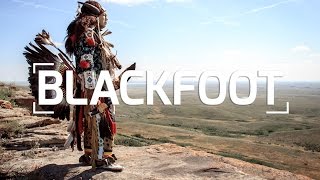
Thank you. ♪ ♪ [screech of an eagle] Back in the history of the Blackfeet nation, everything was in circular. It was Mother Earth, the Sun, the tepee, the ceremonies, all in a circle.
And if you think of in the center of that circle when a child is born into a family, that that's the essence, the middle of the circle. And then the mother is the next circle, and then the grandmother and the aunties, the uncles, the grandfathers, and then on the outer circle is the father. And if anybody or anything wants to get to that Indian child, they have to go through this whole regiment of people because our role, the Blackfeet women's role, was of nurturing the child, and they were the commanding force of what happened to the child.
And then the grandmother, you'd have to go through the grandmother, then the aunties, uncles, grandparents. And the father's role, and again we're talking about husband and wife and child and extended family, the male role was of protecting the family. And today I still see that.
But the importance is that our children were really protected and raised that way like they grew up. Like they're 7 years old, they began to wander out in this outer circle and learning from all of the extended family. But when they became adolescent, it was really the grandfather and the father's turn to begin to show them their role, especially the boys.
And they understood this whole circle, circle of life really, that they had an important role. And they seen how the women were so strong and that, and how the men were their role. And if it's a boy growing up, he would know.
If it's a girl growing up, she would know. In recent years, I worked at the Heart Butte School, and I also worked in the Browning school district here on the reservation, and we have our adolescents who everybody clucks their tongue at in that they're so rowdy. You know, they have foul language and all this.
And if the child got out of control or was really making a monkey out of himself or herself, I would tell them, "I am going to the phone, and I am going to call your grandmother and have her come up here! " Because I knew that circle, that their grandmother would set 'em straight, and they'd say, "Oh no, no, no, no, no! Don't you call my grandma!
Oh don't you call my grandma! " [laughs] I knew that that was a family, a Blackfeet value that I could use in correcting these children, but showing them the way-- and I am their grandmother, I am their auntie, I am their mother, I am their sister if it's a boy. I'm represented, and I can tell them those things, you know, because that's how the order of the Blackfeet child is, you know, raising the child, and those are the values that you can use.
♪ ♪ [screech of an eagle] When we want to make our tribe proud, we introduce our children. I'm very pleased and honored to welcome to "Indian Pride" 2 young groups of dancers, the extraordinary Turtle Mountain Matis Dancers and Lefty's Little Steppers, all enrolled members of the Turtle Mountain Band, the Chippewa Indians in North Dakota. Break a leg kids!
[fiddle, bass, & guitar play in fast tempo] ♪ ♪ ♪ ♪ ♪ ♪ ♪ ♪ ♪ ♪ ♪ ♪ ♪ ♪ ♪ ♪ ♪ ♪ ♪ ♪ ♪ ♪ ♪ ♪ ♪ ♪ ♪ ♪ ♪ ♪ ♪ ♪ ♪ ♪ ♪ ♪ ♪ ♪ ♪ ♪ ♪ ♪ ♪ ♪ ♪ ♪ ♪ ♪ [screech of an eagle] I'd like to thank all of my special guests for sharing their gifts and talents with us today. And we invite you to join us next time as we present another great showcase of "Indian Pride. " Whenever you get a chance, do something special for a child.
Bye-bye for now! ♪ ♪ ♪ ♪ ♪ ♪ ♪ ♪ [screech of an eagle] (woman) Funding for "Indian Pride" is provided by. .
.