The United States Treasury plays a crucial role in global finance, with U. S. Treasury Securities serving as a preferred investment for many nations due to their stability and liquidity.
Historically, these investments have supported the U. S. Dollar's dominance as the world's primary reserve currency.
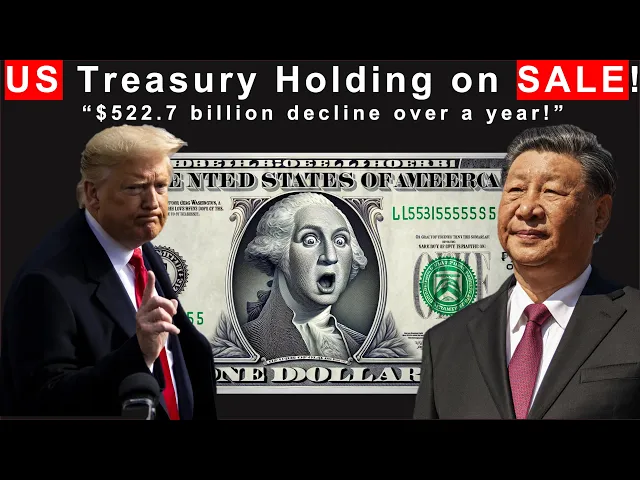
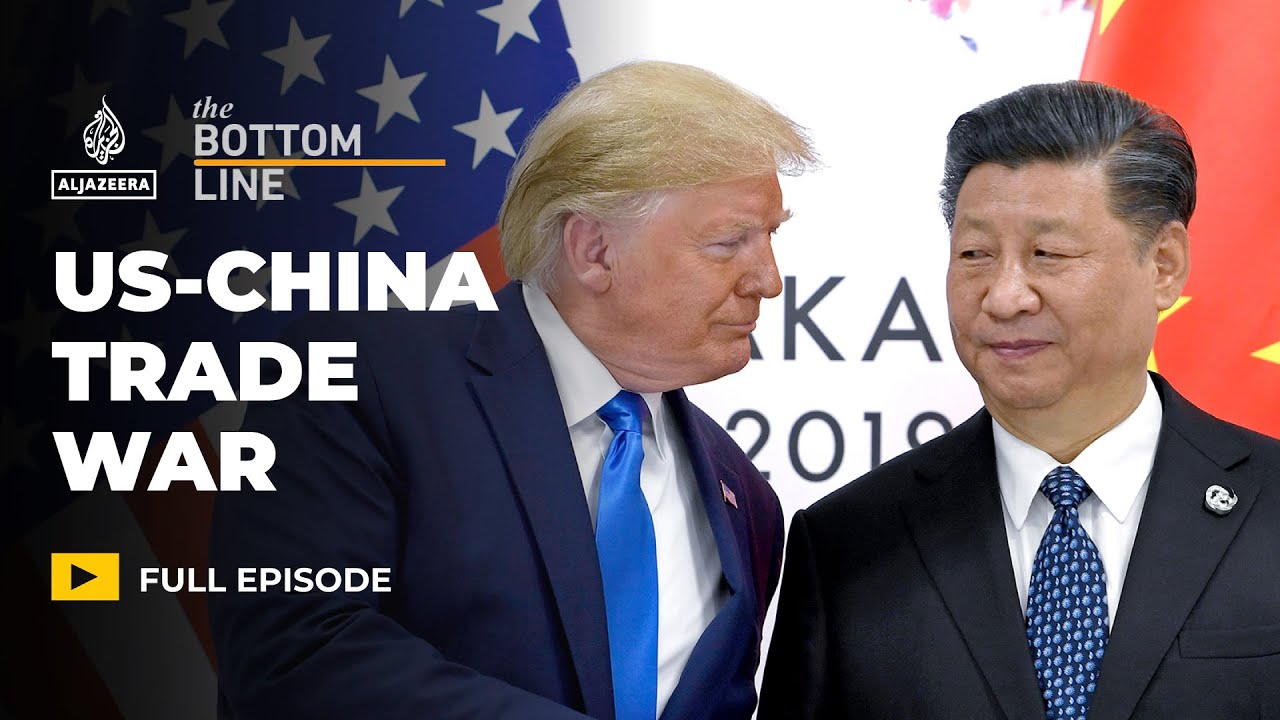
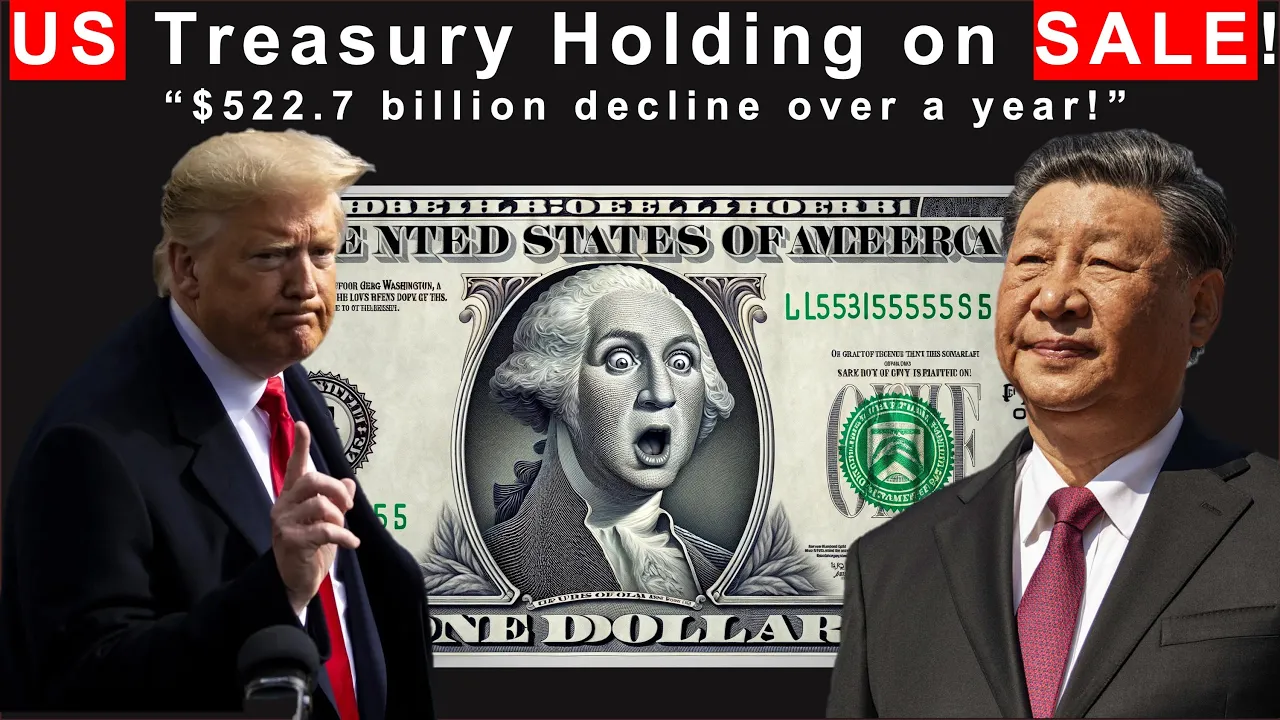
However, recent policy decisions under President Donald Trump's administration have introduced significant uncertainty into international markets, prompting some countries to reassess their reliance on U. S. financial instruments.
In early February 2025, President Trump's escalation of previous trade policies included steel and aluminum imports. These tariffs include a 15% duty on imported steel and a 10% duty on aluminum, a move intended to boost American production but one that has sparked concerns over rising costs and potential retaliation from trading partners. Furthermore, the administration has signaled plans to impose blanket tariffs on all imported goods from every country—a dramatic escalation of Trump's previous trade policies.
This proposed measure, aimed at reducing the U. S. trade deficit, could further strain global trade relations and disrupt supply chains.
Such aggressive tariff policies may deter international investment in the U. S. as countries seek alternative markets and diversify their foreign currency reserves.
The latest data from the U. S. Treasury reveals a notable decline in U.
S. Treasury holdings by several countries over the past decade. China's holdings of U.
S. renminbi (RMB) were intended to maintain export competitiveness. It is important to note that while China's ABS (Asset-Backed Securities) had increased, by March 2024, this figure had decreased to around $767.
4 billion. Several factors contribute to this reduction. Historically, China's significant trade surplus with the United States resulted in an accumulation of U.
S. dollars to manage the exchange rate of the renminbi and maintain export competitiveness. China invested these dollars in U.
S. Treasuries. However, since 2018, as the trade imbalance has declined, the need to buy U.
S. Treasuries to manage the RMB exchange rate has naturally diminished. Chinese policymakers are facing increasing calls to reduce the Chinese financial system's exposure to dollar assets.
This strategy aims to mitigate risks associated with overreliance on a single asset class and enhance returns by exploring alternative investments. The evolving geopolitical landscape, particularly tensions between the U. S.
and China, has prompted Beijing to reassess its holdings. Reducing exposure to U. S.
debt is viewed as a measure to minimize potential vulnerabilities arising from political frictions. A sizable sell-off of Treasury securities by China would almost certainly lead to an appreciation of China's currency and a depreciation of the dollar. This is more likely to help the United States than to hurt it, contrary to the claims of many observers.
It's important to note that while China's absolute holdings of U. S. Treasuries have decreased, the overall market for U.
S. debt has expanded as a result. China's share of total outstanding U.
S. Treasuries has diminished over time; in 2011, China owned about 14% of all outstanding Treasuries, but by 2024, this share had fallen to less than 3%, the smallest in 22 years. Japan's holdings have decreased from $1.
1 trillion. Furthermore, Japan's own fiscal policies have influenced its reserve management strategies, including yield curve control, with the Japanese yen experiencing significant depreciation against the U. S.
dollar. The Bank of Japan has periodically sold U. S.
Treasuries to prop up its currency. Japan remains the largest foreign holder of U. S.
Treasuries, a position it has held for several years. The slight reduction in holdings is primarily attributed to Japan's ongoing interventions. India's holdings of U.
S. Treasuries fell from $200 billion to $34 billion, reflecting a 3. 07% decrease.
India's reduction in U. S. Treasury holdings aligns with the Reserve Bank of India's (RBI) foreign exchange management strategies.
The RBI has actively intervened in currency markets to stabilize the Indian rupee, which has faced depreciation pressures due to global economic volatility, rising U. S. interest rates, and capital outflows.
Additionally, India has been diversifying its foreign exchange reserves by increasing its gold holdings and exploring alternative asset allocations. This move is also part of India's broader strategy to reduce dependence on U. S.
dollar-denominated assets while strengthening trade partnerships with emerging economies. Saudi Arabia's holdings of U. S.
Treasuries declined as it focuses on economic diversification through its Vision 2030 initiative, which aims to reduce reliance on oil revenues and invest in domestic infrastructure, technology, and green energy projects. Additionally, Saudi Arabia has strengthened its financial ties with China and other trading partners, which may influence its allocation of reserves away from U. S.
Treasuries. Germany's holdings of U. S.
Treasuries have reduced. Germany has been increasingly investing in green bonds, amounting to a 2. 4% drop.
As the largest economy in the Eurozone, Germany holds U. S. Treasuries as part of its foreign exchange reserves primarily managed by the Bundesbank.
The slight reduction in holdings could be attributed to shifts in Germany's reserve management strategy amid inflationary concerns and changing monetary policies within the European Central Bank. The reduction may also reflect ongoing efforts to strengthen the euro's role as an alternative reserve currency in global markets. Norway's holdings of U.
S. Treasuries have decreased, with a slight reduction translating to a $159 billion decline, or 1. 73%.
Norway's U. S. Treasury holdings are largely managed through its Sovereign Wealth Fund, the Government Pension Fund Global, one of the world's largest sovereign wealth funds.
The GPF follows a diversified investment strategy, allocating significant capital accordingly. Into equities, fixed income securities, and alternative assets, the slight reduction in US Treasury holdings reflects reallocation efforts towards higher yielding investments in response to changing global interest rate environments. Additionally, Norway's economic policies focus on balancing risk while maintaining long-term financial stability, which may contribute to periodic adjustments in its Treasury holdings.
The decline in US Treasury holdings by these major foreign green investments in response to changing economic dynamics underscores the evolving landscape of international finance. While Treasury bill holdings of US dollar assets are part of a broader strategy to diversify reserves and mitigate geopolitical risks, shifting investment preferences are also notable. Sovereign wealth funds, central banks, and institutional investors are exploring alternative assets, including gold, digital currencies, and green investments in response to changing economic conditions.
Currency and economic policy adjustments are being made by nations with volatile currencies, actively managing their foreign exchange reserves to stabilize their economies while mitigating risks associated with global inflation and interest rate fluctuations. Despite these reductions, US Treasuries continue to play a critical role in global finance, offering liquidity, security, and a store of value. However, the shifting dynamics underscore the evolving landscape of international economic policies and reserve management strategies.
Additionally, foreign official institutions, including central banks and sovereign wealth funds, reduced their US Treasury holdings from $385. 11 billion in October to $385. 63 billion in November.
Treasury bond and note holdings declined slightly from $353. 50 billion to $355. 19 billion, while Treasury bill holdings by foreign official entities fell from $31.
8 billion to $34. 4 billion. Shifting to alternative financial assets for US Treasury bonds could lead to higher borrowing costs in many nations to reassess their reliance on the US dollar.
Countries that traditionally held large reserves of US Treasury bonds are now diversifying into alternative assets, particularly gold. In the past year, global central banks have increased their gold purchases as a hedge against dollar volatility and trade instability. This shift poses a potential threat to the US financial system, as decreased demand for US Treasury bonds could lead to higher borrowing costs for the US government and a weakening of the dollar's global standing.
The Triffin dilemma remains relevant, as America's need to run trade deficits to supply the world with dollars conflicts with long-term confidence in the currency. If foreign investors reduce their holdings of US debt in favor of gold or other stable assets, it could undermine the dollar's reserve currency status. Let's take a quick pause.
If you've enjoyed the video so far, could we ask a small favor? Hitting the like button helps us reach a broader audience, and sharing your thoughts or feedback in the comments makes an even bigger impact. Thank you for watching; now let's dive back in.
The pre-Bretton Woods era, before 1940, preserved currency for much of the world, leading to further instability in global monetary affairs. The Bretton Woods conference in 1944 established the US dollar's prominence, which was deeply intertwined with the vast expanse of the British Empire, whose extensive trade networks and financial infrastructure facilitated the pound's widespread acceptance in international commerce. By the late 19th and early 20th centuries, the British pound was the primary reserve currency for much of the world.
However, the financial strains of World War I significantly weakened Britain's economic standing. The war effort led to substantial national debt and depletion of gold reserves, undermining confidence in the pound. Attempts to restore the pre-war gold standard in 1925 were short-lived, as the Great Depression further destabilized the global economy.
By 1931, speculative attacks on the pound forced Britain to abandon the gold standard entirely, leading to further instability in global monetary arrangements. Concurrently, the United States was emerging as a formidable economic power. The establishment of the Federal Reserve System in 1913 provided the US with a centralized banking authority, bolstering financial stability.
The interwar period saw New York rise as a significant financial center rivaling London, and the US dollar began to gain traction as an international currency. The aftermath of World War II further shifted the balance. The Bretton Woods conference in 1944 established the US dollar as the world's primary reserve currency, backed by the world's largest gold reserves.
This agreement solidified the dollar's central role in global finance as countries pegged their currencies to the dollar, which was convertible to gold. The Bretton Woods system (1944 to 1971) was an exchange rate system under which the US dollar was pegged to gold at a fixed rate of $35 per ounce, and other major world currencies were pegged to the dollar, making it the anchor of the global financial system. To support and oversee this new economic order, the conference led to the creation of two key institutions: the International Monetary Fund (IMF), which was charged with maintaining a system of fixed exchange rates centered on the US dollar and gold, and the International Bank for Reconstruction and Development (now part of the World Bank Group), established to provide financial and technical assistance for the reconstruction of war-torn Europe and the development of other economies.
This arrangement solidified the dollar's status as the leading global reserve currency, given that the US economy emerged from World War II as the strongest and least damaged among the major powers. Global confidence in the dollar grew, and by the 1950s and 1960s, central banks worldwide held large reserves of US dollars, reinforcing its dominance. By the late 1960s, rising US deficits… (text cuts off).
The U. S. economy, the stability of U.
S. financial markets, strained the Bretton Woods system. In 1971, President Richard Nixon took the unprecedented step of suspending the dollar's convertibility into gold.
This event, known as the Nixon Shock, effectively ended the gold standard and led to a system of floating exchange rates. Although the U. S.
dollar was no longer backed by gold, it remained the dominant reserve currency due to the relative strength of the U. S. economy, the stability of U.
S. financial markets, and the widespread use of the dollar in global trade and oil transactions, often referred to as the Petro-dollar system. Despite some volatility in the 1970s, the U.
S. dollar remained central to international trade and finance. Following the collapse of the Soviet Union, the U.
S. faced minor but contained challenges. The 1990s saw globalization accelerate, with the U.
S. leading in technological advancements, financial innovation, and capital markets. Key developments during this period included the dominance of U.
S. Treasury bonds as the safest asset for global investors, the expansion of the U. S.
dollar's role in global trade—particularly in energy markets—and the emergence of the euro in 1999, which posed a minor but contained challenge to dollar hegemony. By the early 2000s, the dollar accounted for nearly 70% of global foreign exchange reserves, cementing its role as the world's primary currency. The 2008 global financial crisis marked the beginning of a shift away from unchallenged U.
S. dollar dominance. Key factors contributing to this decline included the financial crisis originating in the U.
S. , increasing holdings in other currencies and assets, and vulnerabilities within the U. S.
financial system. While the crisis initially led to a flight to safety, with investors seeking refuge in U. S.
dollars and Treasury securities, it also exposed vulnerabilities within the U. S. financial system.
This duality prompted central banks worldwide to reconsider their reserves' concentration in U. S. dollars.
In the aftermath, there was noticeable diversification of reserves, with central banks increasing their holdings in other currencies and assets, such as gold. For instance, gold holdings by central banks around the globe have increased following the global financial crisis in 2008. China has been proactive in promoting the international use of the renminbi (RMB) across multiple continents.
Many of these projects are financed through the Asian Infrastructure Investment Bank (AIIB), which was launched to provide development funding across Asia, offering an alternative to Western-dominated institutions like the World Bank. This move not only enhances China's influence but also encourages the use of the RMB in international projects. Through the Belt and Road Initiative (BRI), China has invested in infrastructure projects across multiple continents, many of which are financed in RMB, further promoting its use globally.
China has entered into numerous bilateral currency swap agreements to facilitate trade and investment without relying on the U. S. dollar.
These agreements allow partner countries to directly exchange their currencies with the RMB, reducing dependence on the dollar. The U. S.
has increasingly utilized financial sanctions and has accelerated efforts to internationalize the RMB in global finance. In response to sanctions, Russia has reduced its holdings of U. S.
dollars and increased its reserves in other currencies and gold. Additionally, Russia developed the System for Transfer of Financial Messages (SPFS) as an alternative to the SWIFT network, aiming to mitigate the impact of potential exclusions from global financial systems. Facing its own set of sanctions and trade tensions, China has accelerated efforts to internationalize the RMB and develop alternative payment systems, such as the Cross-Border Interbank Payment System (CIPS), to reduce reliance on the U.
S. -dominated SWIFT system. These moves are part of a broader dollarization trend where countries aim to diminish their dependence on the U.
S. dollar to enhance economic sovereignty. The advent of blockchain technology and the rise of digital currencies also play a role in this dynamic, potentially entrenching the dollar's supremacy.
Countries are exploring or have initiated Central Bank Digital Currencies (CBDCs) to modernize payment systems and counter the rise of private cryptocurrencies. As of January 2024, 130 countries—including the United States—are considering introducing their own CBDCs. China is at the forefront with its digital yuan (e-CNY), aiming to enhance payment efficiency and bolster the RMB's international standing.
The digital yuan could facilitate cross-border transactions, offering an alternative to the dollar-centric financial system. These cryptocurrencies, often pegged to traditional assets—primarily the U. S.
dollar—while reinforcing the dollar's dominance in the digital realm, also introduce new dynamics into the global monetary system. For instance, dollar-backed stablecoins are gaining traction in international transactions, potentially entrenching the dollar's supremacy in the digital age. By 2022, the dollar's share of global reserves had declined to around 58%, while other currencies, including the euro, Chinese yuan, and gold reserves, gained traction.
That's all for this video. Thank you for watching. We sincerely appreciate you joining us today.
If our content resonated with you or sparked inspiration, please consider expressing your support by liking it and subscribing to stay connected with our community. Your support holds immense value for us. You can watch another video from our channel, which is now on the screen.