There's a moment many people notice after 60 and it's easy to dismiss because it doesn't look dramatic. You stand up from a chair and realize you're using your hands more than you used to. You step off a curb and feel your body doublech checkck the landing.
You carry something a little heavy and your balance feels less certain, not because you're clumsy, but because your legs aren't giving you the same steady feedback. What makes this tricky is that it often happens quietly. You don't wake up one day weak.
You simply start choosing the safer option without realizing it. Higher chairs, fewer stairs, smaller trips, less bending, less reaching. And over time, that's how independence shrinks.
Most people respond by walking more, which is a good instinct. Walking supports your heart and mood. But here's the part that catches people off guard.
Walking alone usually doesn't provide enough resistance to maintain the leg strength, hip stability, and quick balance reactions that protect you from stumbles and falls. Those protective reactions come from muscles that need a stronger signal than movement. They need resistance.
The medical term for age related muscle loss is sarcopenia and it's more common than most people realize. A review on PubMed Central explains that after about age 50, muscle mass can decrease around 1 to 2% per year. Even more importantly, muscle strength can decline faster, about 1.
5% per year between ages 50 and 60, and about 3% per year after that. That's why you can look the same but feel less steady. Now for the hopeful part.
Your body can still adapt even now when you give it the right message. The National Institute on Aging explains that strength training can help older adults build or maintain muscle and support healthier aging. So today, I'll guide you through three simple athome strength movements for people over 60.
Designed for everyone, they're chosen to protect three real life abilities. Standing up power, side to side stability, and calm one leg balance. And stay with me because the small technique detail that makes these feel safer and work better is the most important insight and it comes near the end.
Before we begin, comment your age and where you're watching from. If this helps you, please like, share, and subscribe so more people can stay steady, strong, and independent. Exercise number one, chair power stand.
Chair power stand is the simplest way to train one of the most important independent skills you use every day. Standing up safely. You do it getting off the couch, rising from the toilet, stepping out of a car, and standing up at the dinner table.
When this movement gets harder, people often start using momentum, pushing with the hands or avoiding low chairs altogether. This exercise brings that control back without needing a gym. Here's what it is in plain words.
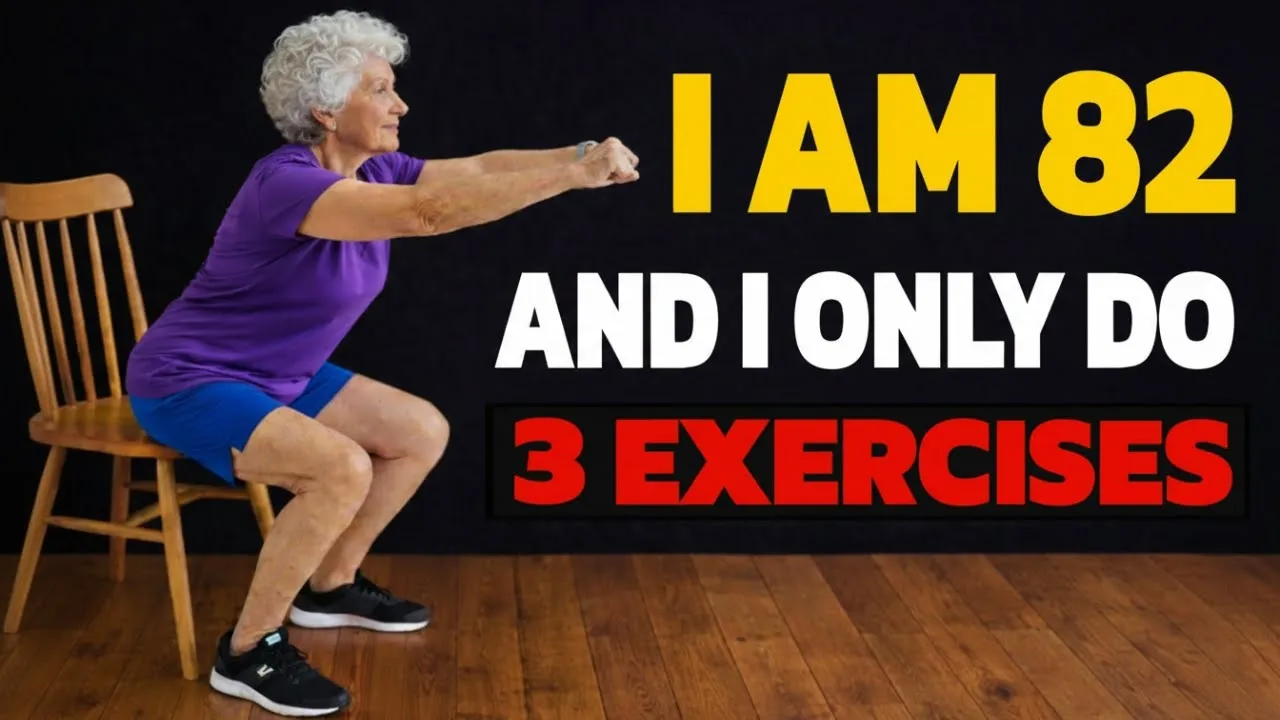
You sit on a sturdy chair, then stand up using your legs and hips and sit back down slowly with control. That slow, quiet lowering is not just the way back down. It teaches your muscles how to absorb force safely, which matters for knees and balance.
Harvard Health has highlighted the chairstand as a practical lower body strength move because it trains the major muscles of the thighs and hips in a way that directly translates to daily life. The National Institute on Aging also emphasizes that strength training helps older adults maintain muscle and function as they age, supporting mobility and confidence. That's the science behind why this basic movement is often the fastest payoff for people over 60.
Now, let's do it safely. Start by placing the chair against a wall so it won't slide. Sit tall with feet flat about hipwidth apart and bring your feet slightly back so you feel your heels under you.
Lean forward just a little from the hips. Press your feet into the floor and stand up tall. Pause for one calm breath at the top.
Then sit down slowly as if the chair is fragile, taking about 3 to 5 seconds to lower. Aim for six to 10 repetitions. Rest, then do one more round if you feel steady.
If you need support, you can place hands lightly on the chair arms or on your thighs, but try not to pull yourself up. Let your legs do most of the work. If your knees feel cranky, raise the seat by adding a firm cushion or use a slightly higher chair to reduce the range.
Two gentle safety cues make a big difference. Keep your knees tracking over the middle toes, not collapsing inward. And don't drop into the chair.
Control is the training. If you feel sharp pain, not normal muscle effort, stop, reduce the depth, and keep a stable counter nearby. When this gets easier, daily life gets easier, too.
Standing feels lighter, stairs feel less intimidating, and you start trusting your body again because it keeps proving it can. Next, we'll build the side to side hip stability that helps you stay steady when you turn, reach, or step around obstacles. Exercise number two, side stability lift.
Side stability lift trains a strength most people don't notice until it's missing. The ability to stay level and steady when your weight shifts to one leg. That's every step you take.
It's stepping into the shower. It's turning in the kitchen. It's reaching into the trunk.
If the outer hip muscles are weak, the body often compensates by leaning, shuffling, or grabbing nearby furniture, especially when you're tired. Here's what this movement is. You stand tall, hold a sturdy chair or countertop lightly with one hand, and lift one leg out to the side a small distance.
Then you lower it slowly and place the foot down with control. The goal is not height. The goal is clean control without leaning your torso.
Harvard Health describes the standing side leg raise as a simple move that strengthens the muscles of the hip and thigh while also challenging balance. Those hip muscles, especially the ones on the outside of the hip, help keep your pelvis steady and your steps more secure. That's exactly why this exercise often makes walking feel smoother, and turning feel safer for people over 60.
Now, let's do it in a way that feels safe. Stand with feet hipwidth apart, shoulders relaxed, and eyes looking forward at one fixed point. Keep one hand on support, but use a fingertip hold, not a tight grip.
Shift your weight onto your inside leg. Keep your toes pointing forward and your hips facing forward. Lift the outside leg to the side about 6 to 12 in.
Pause for one second. Then lower it slowly like you're setting your foot down on thin ice. Do 8 to 12 repetitions per side.
Rest. Then repeat one more round if your form stays clean. If you feel your body start to lean, that's your cue to make the lift smaller and slower.
Smaller and steadier builds stronger stability than higher and shaky. Two common mistakes can irritate the hip or low back. First, turning the toes outward, which changes the muscles you're using.
Try to keep toes facing forward. Second, hiking the hip up toward the ribs. Instead, imagine your hips are a level tabletop.
If you have hip arthritis or sharp pain, reduce the range and keep your support hand closer and steadier. A simple real life picture helps. Think of walking around a coffee table or stepping sideways to let someone pass in a narrow hallway.
That sideep stability is what prevents awkward stumbles. When your outer hips get stronger, your whole body feels more centered and you move with less hesitation. Next, we'll practice the balance skill that teaches your body to catch itself calmly and confidently on one leg.
Exercise hash three, one leg steady hold. This movement isn't about showing off balance. It's about training the exact catch yourself skill that protects you in real life.
Every time you climb stairs, step over a threshold, step into pants, or shift your weight to reach a cabinet, there's a moment when your body relies on one leg. If that moment feels shaky, your brain starts choosing caution. And over time, that caution can quietly shrink your world.
One leg steady hold is simple. You practice standing on one foot with calm control while keeping your body aligned. Mayo Clinic includes single leg balance as a foundational exercise and suggests building up to longer holds when it feels safe using support as needed.
The National Institute on Aging also recommends standing on one foot as a practical balance activity older adults can practice to support stability in daily life. Here's the safest way to do it. Stand next to a kitchen counter or behind a sturdy chair so you have something reliable within reach.
Place one or two fingertips on the support. You're not hanging on. You're just giving your nervous system a little security while it learns.
Stand tall, soften your shoulders, and look at one steady point in front of you. Shift your weight slowly onto one foot, then let the other foot float just an inch or two off the floor. Start with 10 seconds.
Rest. Repeat three to five times on that side. Then switch legs.
Over days and weeks, build toward 20 seconds, then 30. But only if you can stay relaxed and controlled. If you wobble, that's not failure.
That wobble is your ankle, hip, and core making tiny corrections, which is exactly what you want them to practice. Two common mistakes can make this harder than it needs to be. The first is holding your breath and tensing your neck.
Keep breathing normally and let your face stay soft. The second is locking the knee of the standing leg. Instead, keep a tiny bend like a spring so your ankle and hip can adjust smoothly.
If you feel pain, not normal effort, stop and shorten the time. Keep more support and try again when you feel steadier. Picture this moment.
You're at the sink. You lift one foot to slide into a sock. And you don't have to grab the counter with panic.
That's the win. This builds confidence that shows up in ordinary life. Now, let's tie all three movements together so you can use them as a small routine you'll actually stick with without feeling overwhelmed.
Here's a simple way to combine the three movements so they work together, not separately. Start with the sit and stand pattern first because it wakes up the big muscles you rely on for daily life. Then move to the side hip work next because it trains steadiness when you turn, reach, and step around obstacles.
Finish with the one leg hold last because it teaches your balance system to stay calm and responsive even when you're a little tired. Keep the pace slow, rest when you need to, and focus on control, not exhaustion. If you're over 60, the goal isn't to train like you're 300.
The goal is to keep the abilities that make life feel normal. Getting up without strain, moving side to side without hesitation, and staying steady when your weight shifts unexpectedly. Over time, what changes isn't only strength.
What changes is trust. You start trusting your legs to lift you out of a chair without a second thought. You start trusting your hips to keep you centered when you pivot in the kitchen or step around clutter.
You start trusting your balance to hold you for a few calm seconds while you dress, climb stairs, or step off a curb. And that trust protects more than joints. It protects independence, confidence, and the freedom to keep saying yes to life.
Give yourself permission to start small. One steady set today is better than a perfect plan you never begin. Your body doesn't need punishment to change.
It needs a clear, kind signal repeated often. Every time you practice, you're not just exercising. You're protecting tomorrow's freedom.
The freedom to move, to travel, to play with grandkids, and to live on your own terms. Now, I want to hear from you. Which daily moment do you want to feel easier?
First, standing up, turning and reaching, or balancing for a few seconds without grabbing something. Comment your age and where you're watching from, and tell me which one you're starting with this week. If this helped you, please like, share, and subscribe so more people over 60 can stay steady, strong, and confident.