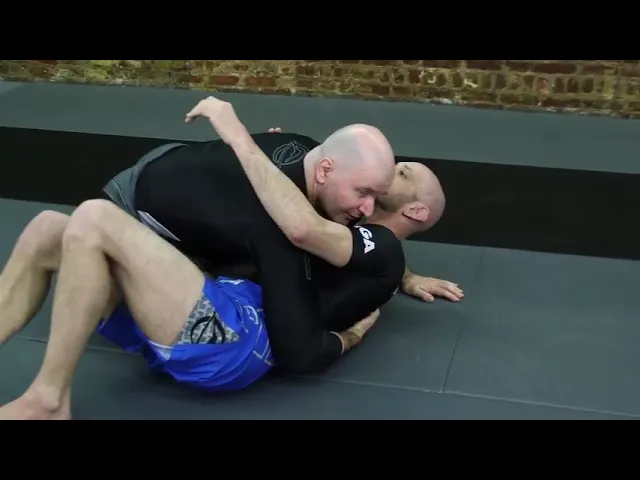
hi my name is John Denver I'm going to teach elements of my leg lock system which I taught to a group of talented students that I had in New York City and which they used with spectacular success in international level grappling I'm joined by a very good friend of mine Bernardo farrier hello Israel thank you and my assistant Carl Massaro my intention in these videos is not simply to offer a collection of techniques the world is full of instructional videos where a talented teacher or athlete shows a collection of moves my intention rather is to
show a holistic approach to late walking that takes an athlete from the very beginning of an engagement from the time of slapping hands with an opponent all the way through hopefully to a successful submission hold you're going to learn that there's a sequence of steps which encapsulate both techniques and tactics which go in predictable fashion leading from a neutral start to a decisive conclusion much of what I teach is going to be put in the backdrop of four mechanical Elements which form the basis of my entire teaching methodology the first of these is well known
to many people the idea of a liver and Fulcrum but I want to go further into the notion of liver and Fulcrum and get more precise about exactly what we mean when we use these terms in the context of jiu-jitsu let's start off with a way of thinking about lettering fulcrum most people are aware that in the use of liver and Fulcrum I want to manipulate the end of the level okay I want to maximize my leverage by positioning or applying my forces at the end of a river much less is talked about with regards
to the fulcrum a fulcrum its value can be judged according to three distinct elements first the height of the fulcrum the hardness of the fulcrum these are critical Concepts let's have a look in the case of Judy Italy and then we'll bring it back to legalogs later on by Judy guitarman is well known for any beginning it involves obviously a letter okay when I go to work I always want to work at the end of the letter okay so often I see people working down here at the short end of the level and the fact
that I should be working up high at the end of the weather the foreground most people use the middle of their thighs as the braking foreground okay so they'll take the hand back in a direction where the lever arm is taken through the middle of the thighs and they're taught to pinch their knees as a means of uh creating a full commit which to break the arm okay there's some problems associated with this you can see other stuff no matter how strongly I flex my legs the muscles are not particularly hard there's a there's a
problem with the hardness of a fulcrum okay picture a situation where I'm trying to create a pencil if I put a pencil over a very hard fulcrum it's extremely easy to break it but if I put that same pencil over a very soft fulcrum now it's difficult okay so I want to maximize the hardness of a fulcrum a simple way for me to do this is instead of using my inner thigh muscles I'll use the hard bones of the hip so we're not going to take someone's arm I want to make sure I take his
right arm over my right hip so that I use the hard bones of the of the hip there's a breaking fulcrum rather than the soft inner thigh muscles so this is a practical sense in which we use the hardness uh principle or Focus we always want to maximize the hardness of the forklore we'll soon see that the same things we've done in the case of label the other element is the height of the foreground the lower the foreground the harder it is the greater pencil over for example okay so I want to do everything I
can to raise the height of a given fulcrum in the case of Judy guitar me this is done by ensuring that my feet come back towards my opponent in a back heel fashion I can also take one leg and raise the knee so that my hip is raised relative to the floor and as a result we get very very strong braking effects I can also do it by changing the very nature of the Judy guitar I can for example put a foot underneath my balance here and this will artificially raise the height of the fulcrum
on the right hand side and as a result we get much stronger braking effects and a shorter distance why because I've raised the height of the fulcrum okay I'm maximizing the hardness of the fulcrum by taking over the hip bone rather than the soft abductor muscles and I'm raising the height as a result I get better break in leverage okay um considerations like these are extremely important when it comes time to apply the principles of litter and Fulcrum in any judicial context so that's our first major theme that we're going to be pushing as we
go through this entire DVD series that we have liver and Fulcrum and paying particular attention to the idea of maximizing the use of the fulcrum through height and hardness the other elements of course in fulcrums is placement if I place the fulcrum in an inefficient spot it's hot I have to do more mechanical apply greater forces to get the break so we're going to pay a lot of attention to the place under the fulcrum the hardness of the fulcrum and the height of the fulcrum these will be critical Concepts as we work our way through
the DVD thank you a second key element in terms of this fuel mechanics which will play a very very important role throughout the CBD is the idea of directionality of force so often I see talented students doubling or tripling the amount of work they have to do to get a task done by applying forces in the wrong directions or in less than optimal directions let's look at a common sense example that you're all familiar with a base butterflies to me for many basic sweeping situation I want to apply forces in a given Direction some of
those directions will be more efficient than others if I try to sweep homicides directly to the side and sweeping into one of the faces of support especially when he starts to extend the leg up and as a result I'm having to do tremendous work because I'm pushing into my opponent's basic support okay but just a simple change in Direction to a forward angle means that I get much better results it's not that I got major control but this is what I would enjoy the same amount of force in a more efficient Direction maximizing our use
of force through applying direction to the appropriate I'm sorry applying forces in the appropriate direction is going to be extremely important thing throughout this entire evening series a certain critical theme [Music] theoretical terms because Sushi is really just an extension of liver and Fulcrum but it's such an important subset of that study in bottom position that I actually I separated a distinct interviews so in and off itself so for example I had someone stand building a butterfly died as long as he's in good stance working against me it's difficult for me to to do anything
effective on someone who's in good stance and a good balance but the moment I start to offset my opponent's balance I get the two things that I need in order to play a strong submissions game these are the idea of extension and movement if you give me an opponent who's moving and extended I can submit it but if my opponent is contracted it's hard for me to go into my submissions game but the moment I start giving people out of balance and the still being their basic support by taking the center of gravity outside of
the invasive support getting hands to the floor etc etc instead of where I get extension now I can run the submissions I've broken a stance I've distracted my opponent and now the submission team starts to become easy from here it won't be a difficult things you need to find my legs up into winning positions okay so this will form another key element a key theme that will run throughout the CBD the idea of kazushi whenever we're in bottom position regardless upon a position where where anytime you find ourselves underneath our opponent we're always looking to
get their Center gravity over their base of support disturb their balance and create extension and motion if I have those two things I can enter into my opponent's legs repeatedly and get to uh get to a win now forth a key thing that we work with and one which I don't think has really been emphasized at all in Jitsu instruction but which I believe is absolutely one of the most important mechanical features of Jiu-Jitsu is the use of wages are really just a species of incline plane and physics they can be used for many different
tasks but in the context of Jiu Jitsu the number one task they're employed for is to immobilize people often when we think in Jiu-Jitsu we sort through immobilization in terms of Bodywork okay and when in fact wages are by far away the most important form of immobilization if I can immobilizing opponent then I can work my own body around them and ultimately control them and submit them if I can't immobilize someone if I can directly control their movement I'm not going to submit anybody the use of wedges is easily demonstrated by a simple experiment you'll
go into the cloud line [Music] here not as far as is on top of his opponent Bernardo is going to take his hands and put them behind his back before Prince your hands behind your own back now you're going to take your knees off the floor good right now Bernardo Ferry has a significant amount of his body weight directly on the chest of karma so there's a sense in which this is a good pin he's chest to chest and a large percentage of his body weight is directly working down upon his opponent and yet if
he maintained his hands behind his back and I asked Karma Sara to slide out and put them in guard let's go fast it was the easiest thing in the world why because Bernardo had no witches around his opponent now let's contrast that this time I'm just going to put a wedge underneath one side of my opponent's body in a wedge with my knee on the other side you can clearly see because my hand is on the floor I have no body weight on top of karma so there is no body weight there but we can't
just put it back in God you physically can't do it it wasn't the body weight you're holding down it was the use of wages in fact this time he applies conventional pen [Music] now and out of his wages on his opponent when he applies his body weight now goes to escape and put him back in God that's significantly more difficult for us okay why what change well earlier he had no wages around homicide now he does and in addition he's reinforced them with body weight the use of wages to immobilize an opponent is probably the
single most important thing that we're going to be approaching in this dpd series now how we use wages is extremely important ashigurami the basis of this entire they've got PVP is essentially a system of wages around your opponent's legs and hips but unlike a conventional pen it's not reinforced by body weight when I go into an Australian position [Music] I guess nobody was on top of my home the only thing holding the men is the wedges we've given a certain kind of bachelorette at one point they are not reinforced by fireworks okay the only way
I can reinforce them is mechanically by locking the legs in various positions Etc okay as much as we want wages we like even more the notion of reinforced wages the question is how are you going to reinforce them conventional and a pin is done by Bodywork as we saw with an auditory really in case of ashigurami that's not the case since both of us on the floor neither one of us has weight on the other so the system of reinforcement has to be very different typically it's done by blocking legs you know triangles some tacos
or just simply crossing our feet this idea of reinforced pictures and using braces to immobilize upon us so we can control them fire the submitting them is going to be one of the absolute most important themes that runs throughout this TV series foreign we're going to see that there are four keynote themes that run throughout this entire DVD series which we will come back to time again these are the idea of the position of balancing this is extremely important anytime you're in the bottom position off balancing will create movement and extension of weakened my opponent
starts it will create the opportunities to go into locks on strong defensive opponents opening up opportunities to go in and get to a late lock finish with senior year of liver and Fulcrum we've seen that we're going to insist in that here of maximizing the use of the lever by consistently hunting the end of the liver and the manipulation at the end of the level at the same time we're going to maximize our use of a four-point appliance system upon the height the hardness and the position of the portal to make sure that the greatest
amount of mechanical work done with the least amount available we've looked at the idea of directionality of force every time you go to apply a force in a level situation it's we're going to have to insist on the idea of the correct directions of force without that we'll always then have substandard results again and then arguably the most important of the form the idea of creation is that we're looking at your wages as a means of immobilizing an opponent gaining control of their movement so that we can hold them long enough to go into a
little off Wing we've seen the idea of reinforcing wages is extremely important the best forms of wage always involve wages on both sides of the human body if I'm holding power sour down in a size bin and I have wedges on one side of his body that will prove inadequate when he simply slides away from you and it's gone I had wedges but anything on one side was bought it when I apply a wedge on both sides of the body now when he goes to move I can easily immobilize them okay so we need wages
on both sides of the body at the same time we want to reinforce those workers to the greatest degree possible in the case of conventional fins they're usually reinforced by Bodywork but we can't do that in our Sugar Land since we're both sitting in front of each other the weight is have to be reinforcement by biomechanical means [Music] these four themes run throughout our BP series Our intention is to show the leg lock system in its entirety anyway we can start that project is by giving a brief overview of what the lead log system is
okay um most people teach a label they teach it as a simple book that he or book a figure four Toe Hold or what have you um what I want to do is to teach you an entire set of skills what I call the six essential skills of heel hooking from start to finish um it's important we have a general sense of what we're trying to to accomplish here let's make some simple distinctions right from the start the leg lock system has a definite structure there's the general system the system overall which is part of
the Jiu Jitsu system overall okay this is facility on the one hand there's a leg lock system within that and within the general leglock system there are three subsystems probably the single best way that we can start the ball rolling is to talk about what is the general leg lock system and what are the six essential skills of healing let's understand first let's bring in some kind of precision when we talk about the leg lock system okay leg locking is just a generic term this means any form of lock that is applied to my opponent's
legs um to be honest with you what I teach is not a leg Locking System per se it's an ashiga Rami system remember there are many forms of Labor that don't involve actually ground it off in fact my friend Bernardo Faria it's famous for applying a certain kind of label which doesn't involve actually running at all okay really what I teach is an ashigirani system remember there are many things to believe off you don't involve actually around me at all what I did is I focused upon what I believe are the most high percentage forms
of leg locking in when they're allowed to face that competition which is heal okay for mechanical reasons which I'll outline later I believe that hero he'll probably be the mechanically most efficient way of attacking an experiencing opponent's legs one with the highest percentage chance of success and I believe the statistics back me up on this if you look at International competition where people's committed you will see that for every time people tap to other forms of legal or up to have 100 times the yearbooks um so we've got on the one hand the general leglock
system which encapsulates six distinct skills which you will have to master and will try to teach in the course of this DVD within that General system there are three distinct subsystems all right these are I'll demonstrated calm myself three families of ashidorani [Music] the way of breaking ashigurami down which I'm going to show you is as long as I talk to all of my students there are different ways I could teach and actually around the system but it's my belief that the free subsystem method which I use with my students which I'm going to use
with you now is probably the clearest and easiest way to understand what would otherwise be a very large amount of information the first family first subsystem uh so-called straight ashiguramis okay a straight ashigram is any situation uh where two of my legs you should know by the way ashigrami is a generic term it just means entangled legs okay typically a personal situation where two of my legs control one of my opponent's legs so there's a sense of mechanical advantage that I should always have some kind of control advantage over my opponent because two of my
legs are controlling one of his so even if you were considerably larger and stronger than me in theory at least two of my legs should be stronger than one of my opponent's legs okay um there are three main forms of ashigurabi the first of the so-called straight ashigrami attacks where kawasara's left leg goes over my right hip so that his leg stays on one side of my Center Line okay so within this family there are many variations so for example I might have what many people refer to as a standard I should go around me
as I call it okay um from here I could bring my feet to the inside like so this would be still the leg is going across my right hip so we we're still within the the framework of a straight Azure ground system but I've changed my Ashley around me now to a senkaku with my feet locked inside okay I could have my feet locked on the outside still wearing a straight ashigurami situation but the nature of my ashigrami has changed so we saw three different Ashi three variations of a straight ashigrami okay this stands in
contrast to a cross ashigurami and across Ashok brownie my opponent's leg goes across my Center Line his right leg goes across my right hip okay and within this context there are many different variations okay I can have my feet close together like so inside my opponent's legs I can have my feet over my opponent's legs over the far hip I can have my feet locked in a triangle with my feet to the inside I can have my feet lock in a triangle with a foot to the outside these are all cross hashing around me but
different variations within that family okay a third form of a shigarani is the so-called reverse this is the only form of ashigram where I face the same direction as my opponent okay every other astrogramming I face towards my opponent and this one I face away from my opponent from here I have one leg caught between mine and in this framework there are many variations but they're all held together by Common Thread the idea that we both face the same direction I face away from my opponent in the same direction he's facing okay this stands in
contrast to all the other things if I should be around me or I always face my heart like so okay so we have then a general system of leg locking which encapsulates six distinct skills that are put into a sequence a slightly flexible sequence but uh overall a fairly critical sequence and within that General framework there are three distinct subsystems straight ashigrami family cross our sugar only family and reverse ashidorani family you will be expected to learn and master all three of these subsystems in the context of a general system if you're going to call
yourself a competent and leg locking we looked at the idea of a general theory of leg loss and we saw that it encapsulates six distinct skills six essential skills without which you can't really call yourself a competent uh leglock at least with your books the first of these and the element which starts off or gets the ball rolling with weight logging is always step number one attaining a grip and inside position everything in the sport of Duty 2 begins with grip in the case of ashigurami-based legalogs the other element is inside positioning of my feet
or my knees let's have a look at the idea of grip and inside position as the First Essential skill in our general leglock system we need to be highly competent in the use of ashigurami in both top and bottom position we're going to start in bottom position Let's cross the the Practical study of ashigrami and and here looking is going to begin before we can begin that we need to study the idea of getting some form of working grip upon my opponent okay until I grip my opponent and come to grit school I can't control
one of the big themes of our activities that you're gaining control over opponent's movement and then from there working our way into submission halls but everything begins with control you only way one human being can control another is to be some kind of physical contact and in the case of jujitsu that means to Thrill okay grouping is the first skill that you will get to utilize in any competition or sparring scenario until you get to groups with your opponent nothing is going to happen the question is how are we going to use grip in the
most effective fashion okay a large part of that would depend upon how my opponent is positioned as he goes to make contact with me we're going to start in a situation where my opponent is on two knees in front of me and I'm working from underneath from a seated butterfly guard situation [Music] one of the most important forms of of grouping for Advantage that we can work with is the idea of a two-on-one grip okay if I simply grip my opponent in uh in a generic fashion like so I haven't really exercised any kind of
Advantage there's nothing intrinsically advantageous about my grip one of my hands is growing one of my opponent's hands if he proves to be stronger than me he can easily pull away and move on okay moreover the very nature of gripping has to be understood here the human hand is set up in such a way that it has strong zones and weak zones the weakness of any grip when I go to grab my opponent's hands and wrists is through the area between my thumb and my fingers that represents the weak zone of my grip if I
hold my hand like so you can see a space between my thumb and my fingers that's the space of Escape for my opponent if he pulls his wrist in the direction my thumb is pointing he will easily escape from my grip if he went the opposite way he would never Escape because he's going into my hand if he goes vertically upwards he's going into my thumb if he goes vertically down once he's going into the strength of my fingers if he goes out in the direction of my thumb points he escapes easily okay he's exploiting
the very nature of the human hand and its weaknesses whenever I go to employ a two-on-one grip upon my opponent I have to cover the weak zone of my hands the only way I can do this is through the use of two-on-one gripping so when someone comes in and goes to escape from a given grip I know ahead of time that's the zone of weakness it's revealed by them the direction of my thumb my thumb points towards the weak zone of the grip what I need to do is cover that zone of weakness with the
other hand okay the easiest way for you to understand this is I always want my thumbs pointing in opposite directions so when Karma Sara goes to pull away from me and I put a second hand on here that's the weak Zone shown by my left thumb pointing out here I cover it with the right hand now when color goes to pull away from me it's shockingly difficult okay for the first time I'm using one hand to get an initial grip and I'm covering the weaknesses of that hand with my other so I have two hands
on one and a way where it's quite difficult for my opponent to pull away from me when Karma sorrow goes to put away I don't want to sit still and resist his pull come just explosively pull your elbow back to your own life okay he can eventually pull out okay I never want to stay still against my opponent's paw let's look at the result eventually your poor no matter how tightly I hold on whenever someone goes to pull I want to move with their pull so as he goes to pull I want to pull my
body in so I shorten the distance between us okay remember if I'm pulling back and he pulls him that's the inevitable result okay once I get my grip I must be sensitive to the direction of his resistance okay so I catch a grip I see him go to pull away and I move with the ball as a result my grip was retained and from here I can start to play my attacking game okay another example of this would be when cows are standing this time I use a different form of 2-1-1 gripman I start with
a down grip okay my thumb points downwards now you should know by now where is the zone of weakness it's always revealed by the direction of my thumb if kalamazara pulls his hand in that direction he easily escapes if he tries to push towards me my hand easily holds him if he tries to go vertically up I easily hold him but he goes vertically down again I can hold him but when he goes in the direction my thumb is pointing easily escapes so two on one gripping one thumb pointing against the other he goes to
pull away now and it's exceptionally difficult one of my hands is asserting a grip and the second hand is covering the weakness of the first hand when I use my hands in this two-in-one fashion you can create extraordinary gripping pressure often when students visit the gym or wear a competition and opponents come up to talk to us afterwards a common theme that they all Express is that my students have extraordinary group screens it's not that they have extraordinary groups friends they know what they're doing when they grow up every time they go to make a
grip the first thing they do is they cover the weakness of the initial grip with the second hand this is a crucial crucial theme in gripping and it's best done through the use of two on one grills we'll be spending quite a bit of time on that here in two online groups we're starting what we call 211 wrist grips here I have a two-on-one downgrip where my hand goes down towards the floor I reinforce it with the second hand making sure my thumbs point in opposite directions so that the weakness of one hand is covered
by the other when kalamazar goes to pull away it's shockingly difficult now we're going to add a second crucial concept to the idea of gripping the concept of the immovable elbow what is the immovable alpha one of the strongest structures of the human body is when I bring my own elbow to my hips Let's do an experiment called Stand Square we're going to link hands like so okay I'm going to bring my elbow to my hip just like so when kawasara walks backwards and lifts my whole body will come off the floor before my elbow
leaves my hip if you want to feel strong to another human being to grip bring your elbow close to your own head okay this utilizes all the powerful lap muscles in the back some of the strongest muscles in the human body when countless hour calls me I will lose my balance before my elbow turns off my hip so if I want to create a strong ripping structure one of the best things I can do is once I insert grips is bring my elbows to my own hips so when I work from a down position I
catch my opponent's hand I not only reinforce one hand with the other I close my elbows to my hips when karbasaur goes to pull away from me my whole body will move before the grip breaks I can create the illusion of immense gripping strings not because I'm strong but it's because I'm gripping properly I'm taking advantage of these subtle elements of gripping that prove to be so important when we enter into the level of game we saw earlier that whenever someone goes to pull away from me I never stay still and pull against them okay
if I stay still here eventually he's going to break out okay instead extended Square when my opponent goes to pull away from me [Music] I never resist a pull by pulling back a remaining stationary I move in the same direction as my opponent's pull he's down on two knees we saw from a two-on-one upgrip my opponent goes to yank away I move in with the pull he goes to stand up walks away I move with the pole walking and eventually we're going to get opportunities balance etc etc okay so some keynote themes whenever I go
to grip whatever grip I employ whatever initial profile employee will always have a weak Zone that my opponent can exploit my job is to cover that week's on with my second hand then when my opponent goes to apply ever increasing amounts of force to break the grips my job is to go into strong structures usually involving elbows to my own hips and then the third element is the idea of moving with my honest resistance I don't remain stationary turned into a pulling match of my strength against his rather I simply move with my opponent's paw
and I can dissipate the force of my opponent's rearward pull to retain a attachment to my opponent so we've seen this critical idea of two on one gripping so far with only been working with two on one wrist grips we've identified two main forms of gripping when I go to grip the wrist my two main options are two on one upgrips where my thumbs Point upwards towards the ceiling like so these are especially useful for drawing my opponent out of balance and getting hands over my shoulders when they're used in conjunction with my butterfly hopes
commissar goes to pull away I can get people helping out of balance to get hands on the floor from where we can start to go on the attack when my opponent is standing typically now we'll use two one one down groups and my thumbs and the palms of my hand Point downwards to the floor when my opponent goes to pull away I connect everything to my hips as he goes to walk walk and so I've worked our opponents walk until we can start disrupting their balance etc etc okay so the first family of of groups
that we employ is supporting our opponent's risks specifically two on One upgrades and two on one down rows now one of the most important forms of two-on-one gripping works with exactly the same principle this is the two on one elbow grip we'll look at it first in the case of the kneelian opponent if I grip my opponent like so we've already seen the idea of a zone of weakness the easily identified in a human grip by the direction that my thumb points if my opponent pulls his hand in that direction he easily escapes okay we
saw we could cover that by using two-on-one wrist grips another excellent option is the two on one elbow grip here I put my hand like so and slide it down my opponent's arm and hold at the Bony growth that occurs at the end of the upper arm where it meets the forearm if I just hold with one hand how massage can easily identify the zone of weakness that's shown by the direction of my thumb and he pulls his arm in that direction he easily escapes okay if I just hold here he identifies the zone of
weakness and pulls his hand and easily escapes but if I hold both together the weakness of one is covered by the strength of the other as kamasara goes to pull away from him it's shockingly difficult in addition it's very easy for me to use the proof of the principle of the elbows close to my hip in this position my elbows are almost immovable in addition I can bring in another concept the concept of the center line if I can take my opponent's arm across my center line so that his right hand connects to us to
my right hip greatly weakens my opponent's ability to pull away from me when he goes to yank away it's shockingly difficult and you feel like you have much greater strength than perhaps you really do when can my opponent goes to yank away I have two free feet which I can use in any number of ways to go into various forms of attacks okay so even though my hands are occupied my feet are free this represents a huge advantage in any grip and into attack situation if my opponent is standing exactly the same things are true
I grew up I grew up again when Karma sorrow goes to pull away I can eat everything close to the chips he goes walking walking and we're seeing we just start walking walking we anticipate of course they're moving with them if I stay still and push off the floor and he pulls eventually he'll break away but when I see him walking and pulling and I move with him I can easily hold on to my phone we've been looking at this idea of grouping for effect so far we're focused only upon the mechanics of gripping we've
seen one of the most important families of European is the idea of 2-1-1 gripping the notion we're working with is that any given initial grip has a weakness inherent in the very nature of the human body and our job is to cover those initial weaknesses with the second hand or the second arm in this way we can make it extraordinarily difficult for our opponent to do well in any grip find situation we've also seen a key mechanical concept the idea of the of the immovable elbow whenever my elbow is close to my hips it's extraordinarily
difficult for my opponent to break that structure and start to extend me my whole body will be dragged off the ground before my elbows leave my hips we've also seen a third key element the idea of not resisting a pole or a push but rather going with it to dissipate the force that our opponent is trying to apply on us now getting away from mechanics we're going to start looking at some conceptual elements it is absolutely crucial whenever we study the grip game that we have a clear notion of gripping for a purpose so often
I see athletes gripping just for the sake of gripping they get groups without any clear sense of what exactly they're trying to do okay it is absolutely crucial that when I get a group upon an opponent I have a clear sense of what am I trying to accomplish okay in my case the number one goal I have in any group fighting situation is to First establish a working contact upon my opponent that shuts down their ability to be dangerous to me when I would get someone in a situation like this I know what his intention
is his intention is to get past my legs into my upper body so for example Comics are pokes the hand on my shoulder and pushes and throws my legs to the side this would be a good example of him clearing the highways out to the side and getting into a dominant upper body position I know what he wants okay a big part of what I'm trying to do is to shut down his game and then assert my own game when I go to grip someone my number one priority is number one shut down his game
number two will suit my own so when I get a two-in-one grip on my opponent and lock in like so when he goes into any kind of God passing scenario you can't even begin until he clears this group okay until he plays the script he's not passing my job I don't care what he does okay so there's a sense in which by establishing a grip upon him and taking away one of his two arms he has to address that problem first before he can even begin to do what he wanted to do because to get
past my legs so in that sense I've taken the initiative upon my opponent almost every guard pass in the sporting units who involves the use of two arms there are very very few high percentage one-handed guard passes okay I know that and so if I tie up one of my opponent's arms I know he's not passing my guard until he's addressed this problem successfully okay now he's reacting to my grip and off that reaction and some of these things I can go into work with Okay by taking it decisive intimidating grip at the outset of
the action I've immediately stopped his game plan in its tracks he can't begin passing my guard until he frees my clip that means immediately he's a step behind me from there we can start to assert our own game and that game is one based around the notion of kazushi or breaking my opponent's balance my goal whenever I get grips on people is first shut down their game and second assert my own the number one way in which I do this is to get my opponent's hands to the floor if my opponent's hands are on the
floor that means they're not passing my legs they're not going after any kind of submission hold on me etc etc okay so my whole thing once I get a grip whether it be two on one album whether it be two on one wrist variations like so there's always to get his hands on the mat and that means I need to start using my feet okay so for example my phone goes in and kind of a generic start situation looking like so I'll go in I'll get that two on one grip kawaso goes to yank away
from me and from here I bring my body in the legs start lifting what have we got two hands on the floor okay Palma Sarah's standing over me from here he goes to break ribs from here hand and hips on the floor okay however we go that's always the simple sequence that starts and finishes the grip fighting game one get some form of efficient grip and we're defining efficiency in terms of using two hands where one hand covers the weakness of the others use that grip first to shut down your opponent's offense you know what
you want you let's get past your legs and then third use it in an effective proactive fashion to get your opponent's hands or hips down to the mat if you can keep that sense of purpose in mind when you're going to be in any group fighting counter You Will Be an Effective grouper you'll be a grouper who works with a sense of purpose and a sense of direction which is so important in starting a Lego game foreign we've seen that the first step the first of these six essential skills is the idea of grip and
inside position when looking at a general theory of gripping for effect so far we're looking at the bottom position we've seen that when we have an opponent whether he'd be on feet or down on two knees one of our favorite ways to grip is through the uses the so-called two-on-ones these can occur usually the first at the wrists we have seen the idea that whenever I grips my opponent's wrist there's a zone of weakness which is easily revealed by the direction of my thumb and my phone can easily exploit this we always when we go
to take grips want to cover that zone of weakness whether it be with upgrips like so my Palms facing up or whether it be with downgrips we've seen an elbows won one when my opponent goes to yank away it's shockingly difficult and it leaves us with two free feet which we can use to off balance it opponent and start the action of getting my opponent's hands down to the mat so we're covering several things at the same time the idea of first creating an intimidating grip that's not easy for your opponent to break second negating
their attempts to get past your legs which require the use of two hands by immobilizing one of them and then third getting onto the attacking game so that we're not just gripping for the sake of gripping but gripping for a purpose and that purpose is to get my opponent's hands down on the mat and my opponent out of balance now we've looked at one of the most important forms of initial contact which is to seats my opponent by the wrists that's natural because when someone comes to fight me typically the risks are the closest thing
to me again but there's always going to be times your opponent gets his grips upon you first the question is what kinds of grips the one we're going to look at now is upper body growth but bernardopharyn has grips on my column s or arms like so I want to make use of a very special grip tricep grouping okay normally most people go to grip at the elbows like so okay I generally favor a higher grip up here at the tricep whether I'd be gripping my opponent's collar time or is bicep time just like so
so rather than grip my opponent at the elbows I like to come here underneath the triceps just like so what's so valuable about this grip is that it enables me to dominate the arm from underneath so that when Bernardo tries to switch to a grip on my legs you physically can't do it because I'm underneath my opponent's arms I don't just want to lift up I want to take bernardo's hands past my shoulders so I'm always looking in these situations the drawer the two arms forward and get my head into good position again I use
the principle of the immovable elbow the further my elbows from my hips the weaker my body is so I always want my elbows in close with good hip position when banana tries to grab my legs it's exceptionally difficult I'll get it because I'm dominating the area underneath the arms so whenever someone gets upper body grips on me my thing is to go through take your triceps and draw him to me and now it's the easiest thing for me to get hands on the floor and go to work remember whenever we go to grip we have
a negative function which is to stop my opponent doing what he wants to do and a positive function which is to initiate my text by getting his hands to the mat I know what he wants he wants to pass my legs so for example people take a prototype and then start pushing on my legs a bit clearing my legs out to the side the moment he goes into any kind of grip I want to convince him from getting to my legs so I make sure I get underneath my training Partners triceps and I pull everything
in when he tries to access my legs it's so difficult and relatively easy for me to get hands in the mat once bernardo's hands go to the mat there's no question of him trying to get a hold of my legs now he can't take his hand so no I don't lose his balance but I on the other hand am extremely close now to the various forms of leg attack which we'll be looking at later in the series so this forms a second form of uh useful gripping sequence which my students often make use of we've
looked at wrist grips now we've looked at tricep grips once again my opponent's hands are in front of me this is the time to go in and secure wrists okay if my body puts hands on my upper body this is the time to go into tricep ribbon okay so he tries to exist and the legs now it's difficult It's relatively easy for us to get hands on the floor and go into the many forms of attack that'll be easier to take advantage of once the hands touch the floor now we've been looking at a theory
of gripping we've seen that we always wanted the key theme that we're pushing here Stephen is that you're gripping for a purpose so often I see challenged athletes gripping but without any real sense of what they're gripping them for they're just getting roots for the sake of getting grips we always want a very clear sense of direction okay first there has to be the first element is strength of connection I can't have grips that my opponent can just easily break okay then I won't be effective at all so we've seen simple mechanical methods of strengthening
our grips our senior year of two-on-one coverage we've seen the idea of instead of gripping elbows going higher to the tricep so that we can close elbows to help and get truly strong useful grips okay we've seen the first hour into any grip in exchange is negative which is to shut down my Point's ability to assert his game upon me okay but then we can't just play a negative game of Griffin Judas is not about stopping other than what they want to do ultimately it's about asserting yourself in Positive Directions to get to a submission
win we've seen that the third element after strength of grip negation of my opponent's uh techniques and tactics the third is to create openings for attack and the number one method to get into my opponent's legs is to get hands on the floor get my opponent out of balance and get hands on the floor okay we've seen situations where I work in my opponent's wrists the same situations where we worked at our training Partners triceps now let's go into the idea of under hooks under books play in a particularly important role in the leg lock
game because they offer the highest percentage chance of getting in underneath my opponent accessing the legs if I work with overbooks I'm not this very generic books by the way oh walks are fantastic for upper body attacks they're fantastic for sweeping but they're difficult to get the the leg game to work if I hit overalls even if I get my opponent's hands on the floor and elevator he's still underneath my arms let's have a look at what happens when we try to elevate someone up yeah I got his hands on the floor but when I
try to go Corrections it's very very difficult for me to go in successfully into my legs into my opponent's legs because his right arm is an underhook which makes my head from going forward and getting underneath my opponent's hips okay later on today we're going to show that my ability to get my head underneath my opponent's hips is absolutely critical to success for bottom leg locks now the problem is bernardo's on the hook is preventing my head from going forward the combination of a stead position and the under hook gets me extended and now a
simple Squall of his legs we're heading right past any kind of ice cream that I have in into a good position okay so working into my opponent's legs is difficult I'm not going to say it's impossible but it's it's not high percentage okay that changes dramatically when I'm underneath my bones arms okay particularly in situations where I'm underneath both of them okay now when I start to elevate people from situations like this it's very easy for me to get my opponent up into situations where his hips go directly over my head and he's completely out
of balance okay he has no ability to get underneath my arms now and save himself and stretch me out okay so there's a general rule when we work with under hooks we're going to have a much better chance of success to get into my opponent's legs than if I work with overbooks now how we work around the books is very important I have my own views on this my opponents cartoons when I worked the underhood game I try to avoid something which is very very common I see many people using which is body box here
okay our body locks can be extremely useful for certain purposes but there are some problems associated with being used in this position Bernardo can easily take a forum and put it across my neck okay why because when I walk my hands here unless I lock right behind my opponent's neck and walk below the uh the scapula there's an easy thing to create a four on the front and formula towards real problems to break my grip now he can follow the Zone under hooks because everything looks good they cause problems for me okay so generally what
I like to see people do is rather than work their hands I like to see them work those elbows pointed inwards and your hand behind the shoulder when my hands look down the body in the case of double on the hooks they tend to become less bigger because my opponent's head can move backwards and that's exactly where they can stop putting frames in front of you so I prefer to see people work like so and the elbow dominates his elbow when my elbow is closed the NADA can easily Palm the floor out in front and
cause problems so what I'm looking to do in the underhook situation is to form a false grip with my wrist is bent 90 degrees with my elbow dominates his elbow this is done on both sides so when banana goes to move away from me it's something difficult and from here it's an easy thing to get an elevated and hands on the floor okay the question is how are we going to get to those underhooked positions it's not easy on them they're talented opponent okay so whenever someone's working in situations like this we're going to start
by placing a hand on our training partner's head I'm taking my second hand pinky knuckle up looks like so and I put my forearm over the top of my training pocket score if I just try to push my hands through banana will always close his elbows and stop me from getting in okay so what I want to do in these situations is to put my hand in and I pull on the head and I shoot the first hand swing just let yourself away from me my elbow dominates his elbow in the second hand goes through
on the other side we get exactly the same grip and dominating the second elbow the banana goes to pull away from me but surprisingly difficult now I bring the hips underneath and you start elevating once the hands are on the floor we know now from here there's a thousand different ways we can go into the legs and stop the leg lock game so that's my favorite way to use underhook gripping to go into my opponent's legs and get hands down to the floor