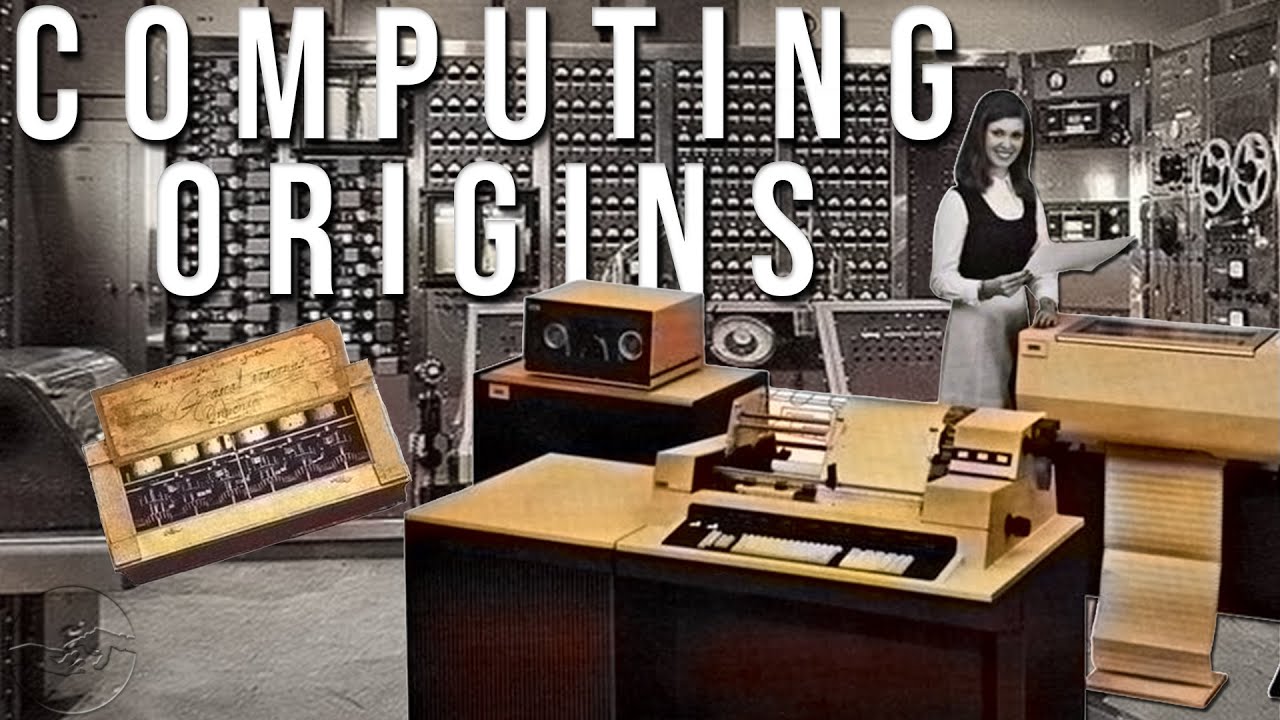
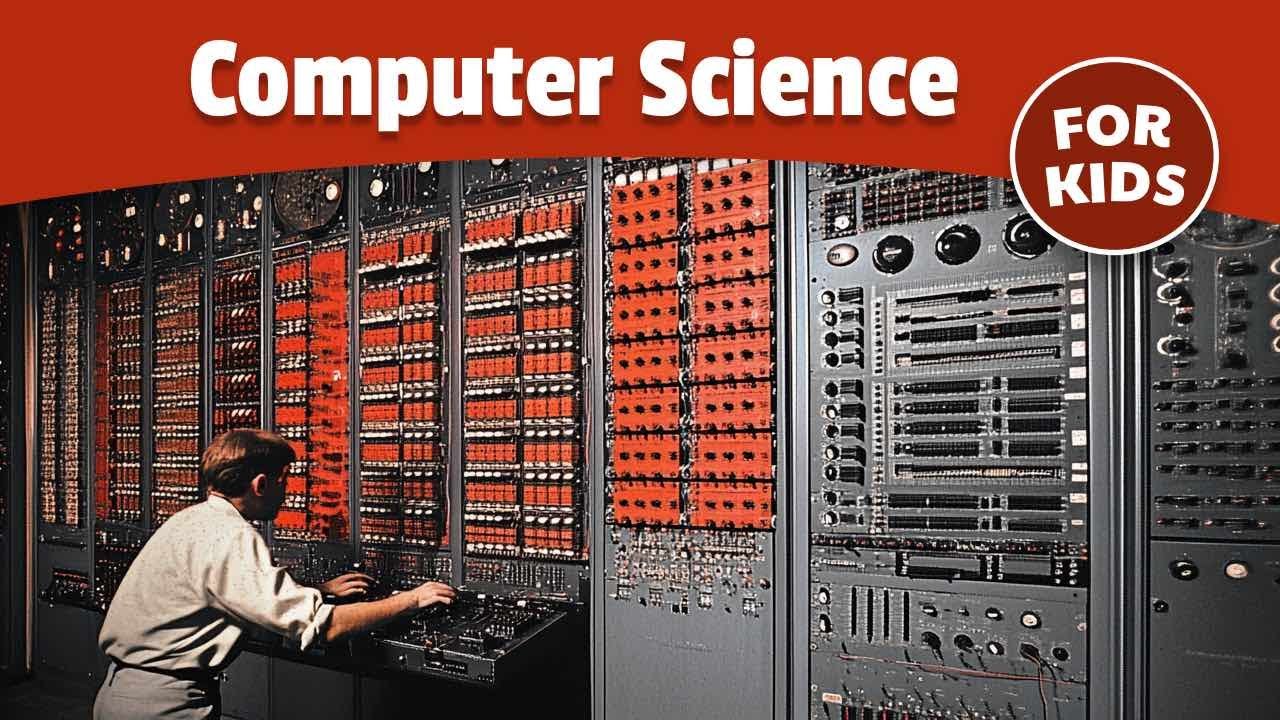
the first order of business for the two entrepreneurs was to find a customer for their product but who would want to buy such a complex and delicate scientific machine when Eckert and Mauchly proposed to make a commercial venture out of building and selling electronic computers a lot of people were very skeptical and they raised a number of very interesting objections the first one was that the machine was made out of large numbers of vacuum tubes and these tubes were prone to burning out in fact if you could keep one of these machines running for a
few hours before a vacuum tube burned out you considered that great but a worse problem was the machines complexity to make a computer do what you wanted was no easy task you almost required an understanding of very advanced mathematics or logic to even get the computer to add two numbers together and people felt that such a talent was so rare in the world that it didn't matter if you could mass-produce the computers you would never find enough people who had that skill to make them useful undaunted Eckert and Mauchly looked for a customer with a
need so desperate that they'd be willing to take a gamble on the new technology and they found it here the US Census Bureau employed hundreds of Clark's to process population data they were drowning in records with enough paper to fill a football field they had a census coming up in a few years and the time it took to process the census was getting longer and longer and as they're mandated by Congress to get the census done in a certain length of time because elections are based upon it and they were fearful that in the following
election they wouldn't get done in time without something better than they had the technology used for record-keeping and accounting had been around since the turn of the century armies of Clarke slaved away punching data onto punch cards and then processing that information on other machines which sorted the cards added numbers on the cards and printed out results but this whole tedious process and the clerks who operated it could be replaced by one single computer also Eckert and Mauchly tried to convince the Census Bureau we thought it was magic we didn't believe it was really feasible
to begin with as we talked more and more with than we came to believe that they knew what they were talking about and that they had already demonstrated some important aspects of it in any egg in September 1946 the first contract for a commercial computer was signed for the price of three hundred and fifty thousand two hundred and seventy dollars and not a penny more this footage taken with John Waters home camera gives an idea of the optimistic spirit in which this young company set out to found a new industry they named their computer UNIVAC
for universal automatic computer but within a few months acted and walk they realized they had vastly underestimated the time and money their pioneering work with the choir the company soon fell badly behind schedule and seriously into debt it was a pattern that two inventors would repeat time and time again they were terrific engineers and designers they were not terrific business people they had problems and they gave us estimates and unfortunately we unfortunately for them in a sense we made a contract with him a fixed place contract to produce univac which ties us down legally and
there wasn't enough money for them to produce UNIVAC nor was the time schedule enough these are not criticisms on you're doing developmental work like this this is what you expect to run into but they hadn't anticipated enough of this kind of a problem alone in their field Eckert and Mauchly were inventing the future and there were many unknowns they spent considerable resources developing the electronic equivalent of boxes of paper files storage devices like magnetic tape and tanks full of mercury charting this new territory took its toll on the company after a year in business the
effort multi computer company was struggling to stay alive they needed more investors or at the very least orders with money upfront to tide them over and time was not on their side three and a half thousand miles away in London Britain's computer industry was just beginning it was one of the most extraordinary episodes in computer history the Jay Lyons company was famous at the time for its string of tea shots at the celebrated Lyons Corner House it was also a large-scale food manufacturer and distributor employing more than 30,000 people and handling 40,000 orders a day
strange as it seems it was this company famous for tea and cakes which would start Britain's commercial computer industry you had in the senior management of the office announced some extremely farsighted people with a considerable mathematical background so it wasn't any surprise really that when they heard about these giant branes and the British newspapers they thought themselves this is something we must investigate after the war Lyons was desperate for a better way to streamline its growing operation and keep track of its thousands of employees and products what Lyons needed was a computer but in 1947
there was no computer to buy in London so this innovative company decided to build its own to learn how they asked for help from Cambridge University where a team led by Maurice Wilks was at work on a computer Wilkes was one of the few people who agreed with Eckert and Mauchly vision that computers had a place outside the laboratory and he gladly accepted the challenge they gave us a certain sum of money I forgotten how much it was and the services of a technician or I suppose I would now call him an engineer to work
with us he was a member of their staff he'd been in the RAF I believe he'd come back after the war and I think he told me once he was working on a most interesting project a coin-operated machine for delivering sis's sizzling hot sausages thus began the British commercial computer industry by the end of 1951 the work of 400 clark's had been taken over by lyons electronic office appropriately nicknamed leo once Leo was up and running its programmers began thinking up some novel tasks for it in those days the managers of the tea shops used
to send in their orders for the next day and sometimes it necessary to alter the order according to the weather they wrote a program that would take these orders and if the weather we're going to turn hot it will reduce the amount of State and kidney pudding and increase the amount of salads and that sort of thing they interesting program Lyons computer also took in work from other companies who soon wanted their own and asked lions to build them so in 1954 the Lyons company purveyors of tea and pastries added a new product line computers
the path of the American computer industry was not as smooth by 1948 Eckert and Mauchly had been in business two years and was still far behind schedule while presper eckert worked feverishly building the Census Bureau's univac John Mauchly searched for more customers to relieve their financial crisis the were are the contract under negotiation important Defense Department contracts but inexplicably negotiations always broke down apparently the President and I now agree and the necessity of getting rid of communists we apparently disagree in the anti-communist hysteria Eckert and Mauchly as wartime service to their country was forgotten the
company they had founded now became a victim of the witch-hunt those were the days of McCarthyism in Washington and their idea was to pull your security clearance and not even tell you why so contracts you had lined up customers you had lined up who were going to invest money in your projects just quietly pulled out and wouldn't tell you why but this is why in the early 1940s john mauchly came under FBI suspicion he'd attended a meeting of a scientific organization that unknown to him had a communist affiliation this single event prevented him from obtaining
security clearances needed to work on defense projects it would take nearly a decade for John Mauchly to clear his name and he carried the resentment with him until his death in 1980







![How IBM ended up using MS-DOS rather than CP/M (1995) [Computer Chronicles]](https://img.youtube.com/vi/bLVbSjDq0DE/maxresdefault.jpg)