hello everyone and welcome to the first of our video tutorials on adr which stands for alternative dispute resolution adr forms part of the civil process topic which is quite a large topic this is the first of our videos on adr in which we'll be focusing on the different methods of adr or the different types of adr in our next tutorial we'll look at evaluating each of those methods so if we start off then with the definition of adr adr stands for alternative dispute resolution and this just includes any method of resolving a civil dispute without
using the course and remember that adr um was put forward by lord wolf in his 1996 report access to justice where he made recommendations on reform in the civil system which led to our civil procedurals 1998 so now all parties with a civil claim are encouraged to try and use adr rather than going through the courts and if we start by considering the reasons for using adr and there are a lot of benefits or a lot of advantages to it firstly um solving any dispute outside of court is going to be a lot cheaper than
court if you are resolving it one-on-one with the person that you've got a dispute with that might cost you nothing compared to all the costs that are associated with going to court your initial court fees if you're paying for representation etc it's also likely to be a lot quicker than court and when we looked at the fast track previously in one of our tutorials we saw that they have 30 weeks usually to trial so if you can resolve your dispute outside of court it's likely it's going to be quicker and less stressful as well than
going to court a lot of people find the whole court process to be very intimidating very alien lots of language that is unfamiliar to them and it can be quite daunting um so if you can resolve it outside of court that's bound to be less stressful another major advantage is that most of the time not always we will come back to this but most of the time it's not adversarial which means that it's not um taking the form of being like two sides battling in court you are more likely to be able to preserve relationships
if you resolve your situation outside of court and if you think about that if say you're a small business and you've got a dispute say with the supplier you might wish to use that supplier again in the future as soon as you sue them and take them to court they're not going to want to trade with you again in the future so massive advantage is that if you can solve it between you and you're likely to be able to preserve relationships and you might be able to continue working with that person another advantage is that
you can get an apology um and don't underestimate the power of that a lot of the time claimants are very upset about things that have happened to them um and they really want an apology in court you're not going to get an apology you might get your damages or your compensation but you're not going to get a sorry so if you use adr you are more likely to get that lots of people as well want a change in practice so if you think about medical negligence for instance the case of nation najib where the nhs
um accidentally injected a brain with glue and really one of the things the family wanted there was assurances that there would be changes in practice following that um awful incident so that it could never happen to anyone again in the future and you might be able to get those assurances if you're negotiating outside of court you're more likely to get a flexible solution because you can negotiate and you can come up with solutions that the court wouldn't be able to provide you with and it could potentially be longer lasting as well and as i said
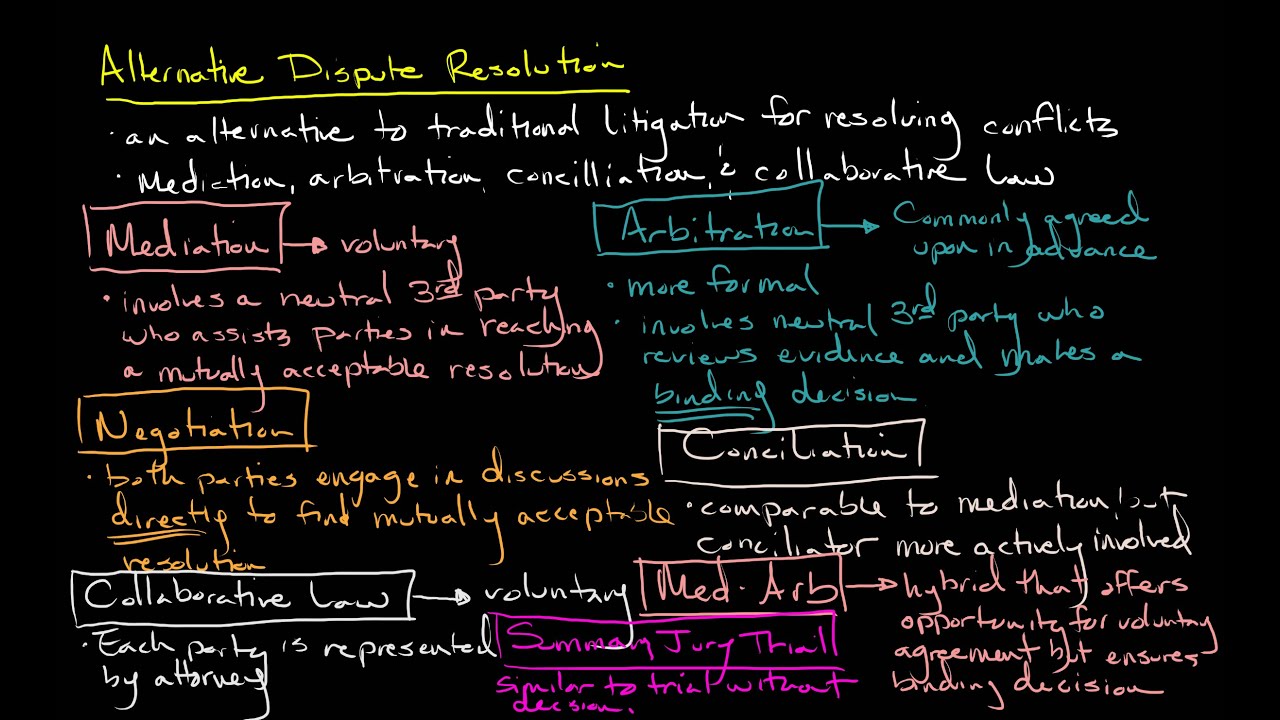
it's encouraged by the civil procedure rules so if we go on then to consider the different types of adr um there are four key types that you need to be aware of negotiation mediation conciliation and arbitration and in today's tutorial i'm just going to give you a little outline of each of these but you should add to these with your own research and your own notes from your booklet we start with negotiation then um negotiation is uh involving two parties discussing and compromising to obtain an agreed solution and it's the most obvious most straightforward way
of resolving a dispute without going to court and it involves you negotiating directly with the other person and hopefully most of the time people will automatically do this if you're upset about something you've got a dispute with someone you've fallen out with somebody the first thing you should try and do hopefully if you're you're a mature person is try and resolve it with them so going up to the person telling them what the matter is and giving them the chance to give you an apology setting things straight um a benefit of this is it's private
it's just between the two of you so you don't have to worry about having an embarrassing conversation in front of other people nobody else is involved and it's cheap you could simply meet up with this other person in a cafe or something like that and talk out your difficulties it is possible that you can have lawyers negotiating on behalf of your clients so if you've got a solicitor and you've appointed a solicitor they might contact the defendant on your behalf and try and reach a negotiation a settlement for you um and a lot of cases
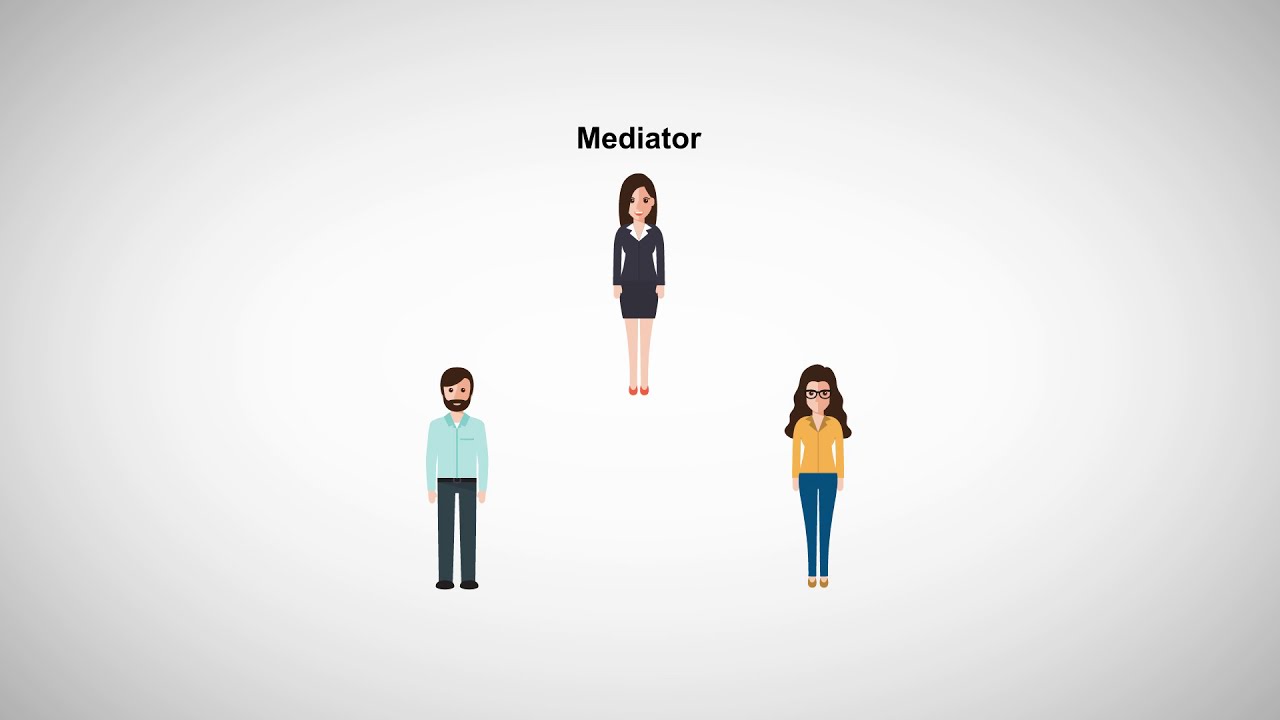
are settled out of court that way so this is perhaps the most common straightforward form of adr and it's simply trying to resolve the dispute between either the two parties themselves or maybe a solicitor acting on their behalf trying to avoid going to uh court if we have a look at our next type then we've got mediation and this is where you've got a neutral third party that helps the disputing parties to agree to a compromise solution and really the way i think of it is your third party is acting as a referee and you
might have had sort of informal experiences of mediation yourself where if you've fallen out with a friend have you ever got a mutual friend to go and pass on a message or to say something to them for you that really is a form of mediation and mediation is particularly popular in family cases under the family law act and nowadays you can actually get online mediation really quite um easily we have mediator centers where people can access a mediator if they need a neutral third party to help them if feelings are running very high between two
parties you can see how a mediator might be useful if they don't want to speak directly to the person a neutral third party can be a go-between and you can see here that mediators consult with each party they explore the common ground they can off carry offers to and fro they can suggest ways to compromise but ultimately the parties have to come to their own decision and in 2011 we introduced miams which are mediation information meetings and now these are a compulsory meeting for all divorcing couples so basically if you want a divorce you have
to have a miami first of all to see if you can resolve any of your disputes without going to court the next type of adr that we have is conciliation and this is very similar to mediation and students sometimes get the two confused so in conciliation you also have a neutral third party helping you to resolve the dispute but the difference between this and mediation is that a conciliator will play a more active role so a mediator is really just passing on messages whereas conciliators are much more active in making suggestions and coming up with
solutions for a settlement and there are actually some big bodies now who act as conciliators particularly in the workplace accass is one of them and i suggest that you do a little bit of online research have a look at the acas website for more information but they're particularly useful if you've got industrial disputes employers can employ acas to come in look at the situation the dispute and give an impartial opinion on the legal position and that can help to reach a conclusion in those cases and our final type or method of adr for today is
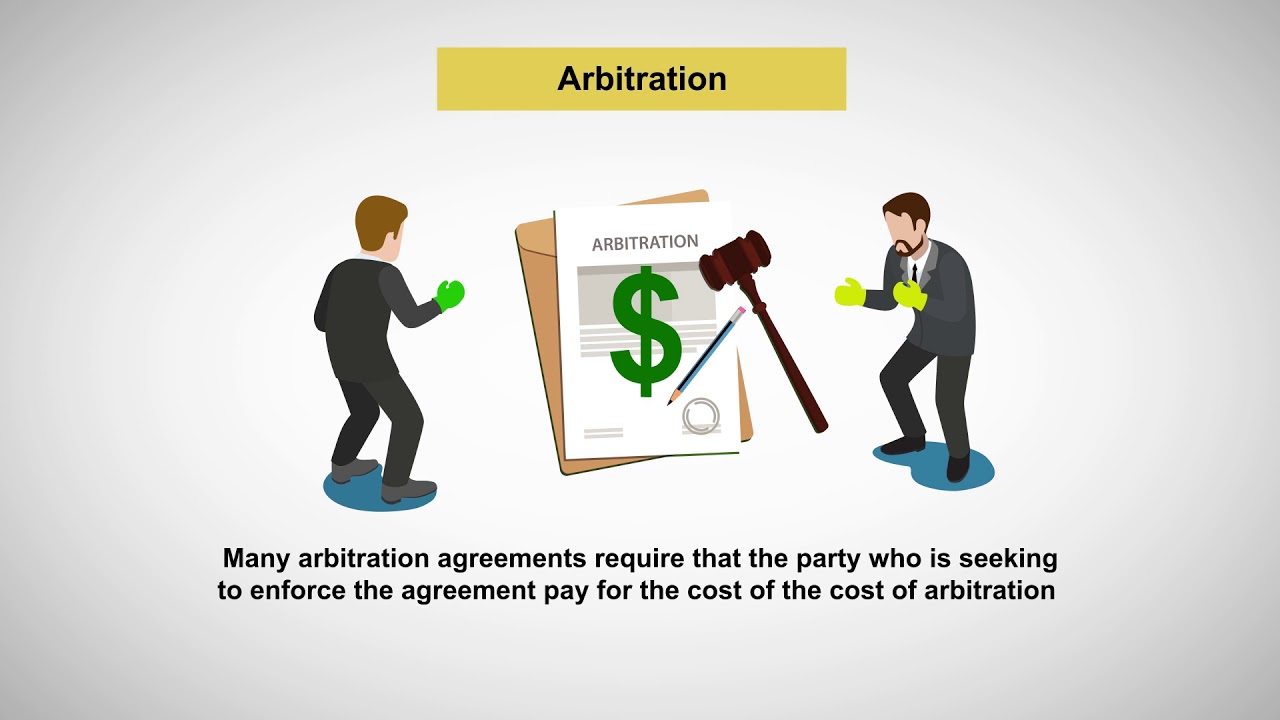
arbitration and the word arbitration is a bit ambiguous it's used to cover two different processes the first is where the courts use a more informal procedure to hear cases and the second meaning is where the parties agree to submit their claims to private arbitration and this is the one that we're interested in so i will just highlight that so with arbitration we're looking at parties agreeing to submit their claims to private arbitration to the judgment of a person other than a judge so this can be very similar as opposed to going to court because what
you're saying is um we're going to write out our grievance each of us with our witnesses our evidence whatever it is we have we're going to present it to this um party who is going to act exactly like a judge would and reach a conclusion and the arbitration act guides this area it's an act from 1996 and this act says that the object or goal of arbitration is to obtain a fair resolution by an impartial tribunal so we've looked at tribunals previously when we were looking at the civil process so remember that tribunals run alongside
of our court system they're not strictly part of it but we did see with the case of uber um a case study we looked at previously that it is possible if you appeal through the tribunal system you can then join the court of appeal to appeal the decisions of tribunals but in general um this decision is going to be binding and an agreement by the parties to submit to arbitration is going to be in writing and we have something called a scott navery clause and some commercial contracts actually include a term in their contract that
basically if you sign it you are promising to arbitrate in the event of a dispute and i have got an example on the next slide of an arbitration clause um so i've just cut this out of an employment contract and it was with fashion label american apparel and you can see here that this clause says um you so the employee and the employer american apparel agree that if there's any dispute between you and your employer um that you are agreeing to settle this by binding arbitration so that would then mean that if you did have
a dispute with them you wouldn't be able to sue them in the civil courts instead you would have to submit your claim to arbitration okay so that's a very quick outline of the different types or methods of adr in our next video tutorial we'll have a look at some of the advantages and disadvantages of the methods that we've looked at today