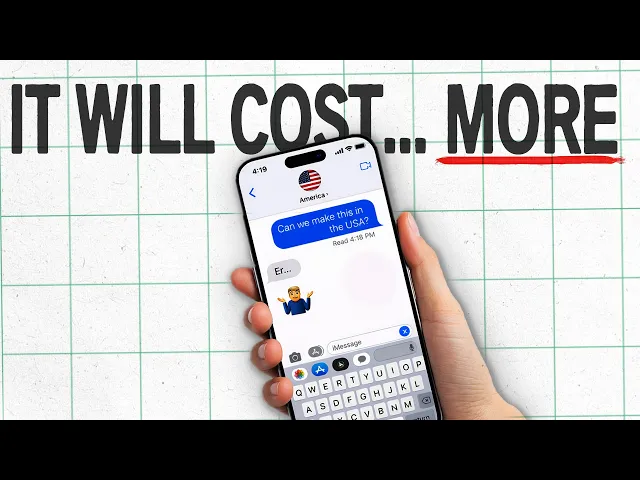
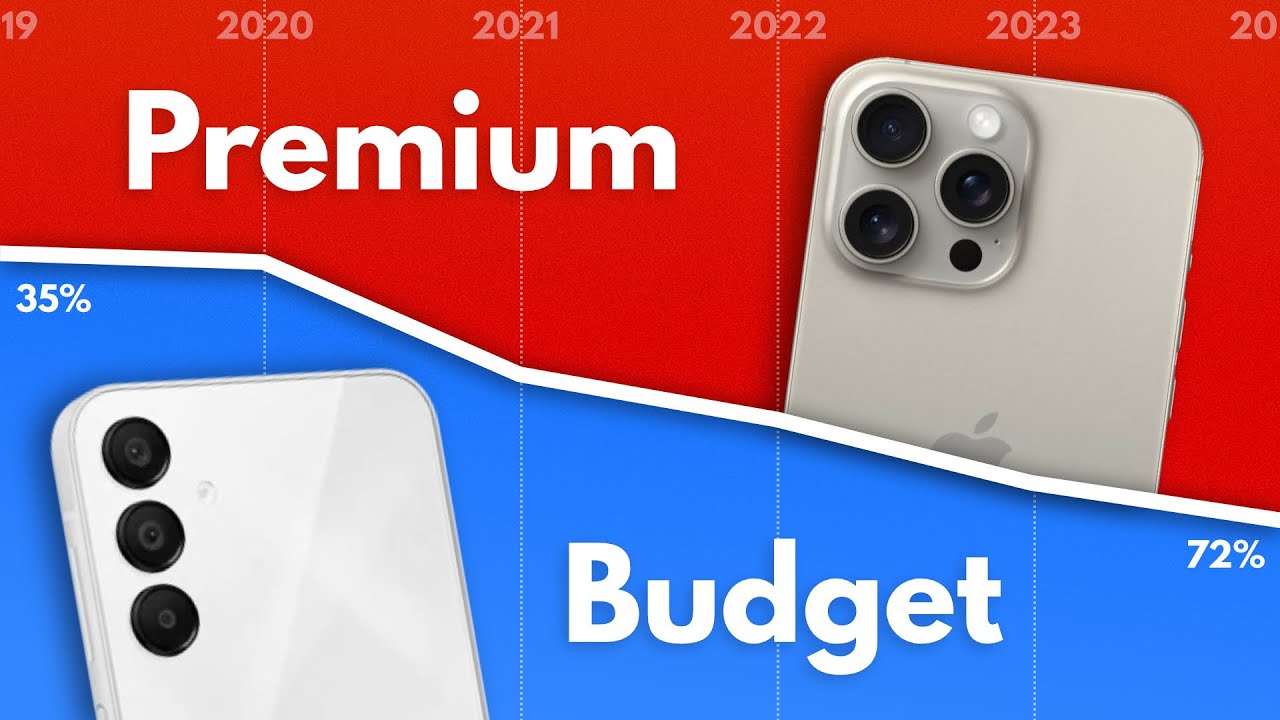
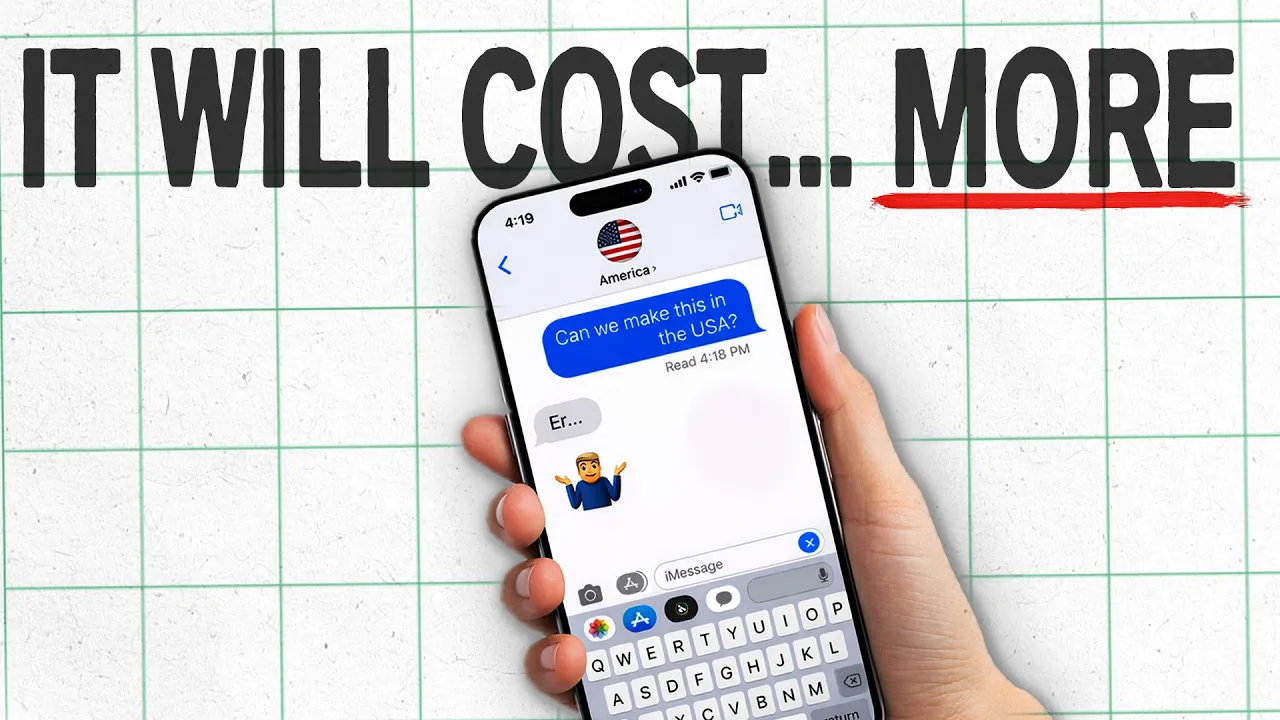
How much do you think it would cost to make a smartphone like this one here in the United States? How much do you think a manufacturer would end up selling this American made phone for? And most importantly how much extra would you be willing to pay for your next iPhone, Android or Nokia brick to have it made in America.
You don’t need to answer just yet, but these are some very important questions that have equally serious implications to consumers, companies and some of the most powerful economies in the world. If you have ever looked into this issue, or even actually tried to purchase a locally manufactured phone you have no doubt seen a dizzying array of numbers that claim anything from an American made iPhone would cost ten thousand dollars all the way down to an American made iPhone would only be a tiny bit more expensive than a Chinese made iPhone So which prediction is right? Weirdly… both… But with trade and political tensions at all-time highs we might find ourselves in a situation where we need workable answers to this problem sooner rather than later.
So it’s time to learn How Money Works…. … Consumer electronics are just one of many industries which have been lost in western developed nations over the past 40 years. Prior to the 1970’s most durable goods consumed in America or Europe were produced right there in that country because that was the easiest and cheapest way to get things done.
Import taxes and quotas meant that foreign goods were real luxuries which commanded a steep premium over their domestically produced competitors. That’s not to say that locally made goods were cheap though. An average television set could easily cost the average households entire monthly income and the same was true of stereo’s, fridges, cameras and a variety of other household items that we almost treat as disposable today.
But this started to change when countries like Japan, South Korea, and ultimately China built out industrial centers of their own which could manufacture and deliver items to western markets for cheap. howeverit is really important to understand that this would not have been possible with just cheap labor alone. It was actually the increase in trade deals that made it possible for foreign factories to compete with domestic factories.
This had a few major benefits for the world economy. The first was that it let poor countries gain a foothold in the world economy. The salaries in these electronics factories may have been low but they were still far better than what these workers would have made working on a substance farm.
The other big thing it did was make things a lot cheaper. An average TV today sells for about 400 bucks, and you would need to get a seriously impressive model for it to come anywhere close to matching the average household income even despite stagnant wage growth. Imports have become the cheaper alternative… or really the only alternative.
So why are these goods so much cheaper? It’s because we can exploit the cheaper labor in these developing countries, right? Wrong!
The cost breakdown of an iPhone looks something like this. There are the fixed costs of researching a developing a new phone model that need to be paid off before the first unit even hits the production line, that get broken down and shared amongst all the phones that are produced with that design, which goes on until a new model needs to be designed to keep up with the competition. On top of R&D there is the actual components, the camera, the battery, the processor, which are provided by other companies that just specialize in making these small parts.
Then there is the labor costs. An article by the New York Times reported that a Foxconn factory in Zhengzhou could produce 500,000 iPhone a day and employed an astronomical 350,000 workers. This means on average it takes roughly 17-man hours to manufacture a completed iPhone from raw materials and components.
This report is from 2016, so things could have changed since then with newer models and more automation on assembly lines, but the companies involved are naturally pretty tight lipped about that kind of stuff so for now let’s assume this is the industry standard. The next cost is the profit component of the manufacturer. No major phone companies actually produce their own phones, they instead outsource manufacturing to companies like Foxconn, Celestica and TDK.
These companies will mark up the phones that beyond their raw manufacturing costs in order to make a profit themselves, after all they aren’t a charity, they want to make money for their shareholders. There is also shipping, taxes, and the profit that the companies themselves will make for selling each individual phone. Once all of these are added up we are left with the price that you pay as a consumer.
If we think of all of these cost factors individually it makes it a lot easier to asses the impact of moving manufacturing on shore. If we assume that all other variables stay the same then we simply need to change this variable here. It takes the average worker 17 hour to produce a phone, so if we multiply 17 by the average wage of a production line worker at a Foxconn factory in China, we find that labor accounts for $42 of the price of an iPhone.
If we change this to reflect the average salary of an unskilled production line worker in the United States this number would grow to $263. So if both Apple and their manufacturing partners wanted to maintain their profit margins then an iPhone would cost the end consumer an extra $221. This actually doesn’t sound so bad.
The average smartphone is much more expensive today than the early models that came out a decade ago. Ironically the prestige of having an American made phone might actually be enough to attract certain buyers, which is almost the opposite of consumer behavior 40 years ago when foreign imports were the status symbol. Foxconn actually did invest heavily into manufacturing in the US, but these projects have since mostly been abandoned.
Whether that was because of the pandemic or whether it was because of economics that just didn’t make sense is quite hard to say. But let me re-raise the question I asked at the beginning of the video, how much extra would you be willing to pay to have an American made phone? I don’t think many of you would actually be willing to part with this extra money.
I am personally about as pro local industry as they come, and I honestly don’t think I would pay the extra if given the choice. But as you might have expected it only gets worse from here. So far we have only changed one variable, the labor costs.
But moving manufacturing to the States does much more than just that. Tim Cook has said that the biggest hurdle to domestic manufacturing is not labor costs, it’s the skills and infrastructure. The iPhone is made of dozens of components which are made in countries like Taiwan, Vietnam, India or China itself.
Importing individual electronic components into America is much less efficient than importing completed products, so the shipping and handling costs would increase drastically. These increased costs might be offset slightly by the reduced cost of transport for the finished product within America, but iPhones are sold all over the world. One of the biggest markets for the phone IS China, a market with consumers who are poorer and therefore more price sensitive.
Due to higher sales taxes an Iphone actually costs more in China than it does here in the states, needing to ship components from Asia, across the pacific and then back again would only expand this price imbalance against the country that can least afford it. So, what if American iPhone were made in America, and iPhones for the rest of the world were made in their own local hubs. This actually happens quiet a lot in the automobile industry.
Some of BMW’s largest plants are not actually in Germany, but rather South Carolina. This is primarily done to avoid the costs of shipping in import duties, but it costs much more to ship a 4,000-pound car overseas than it does to ship a comparatively tiny iPhone. This reduction in domestic shipping costs would be dwarfed by the increased costs of needing to retool and retrain a dozen factories rather than just one factory every time a new phone is released.
Anyway, this doesn’t really solve the main issue, an iPhone assembled in America from parts made in Asia doesn’t mean we are any less reliant on fragile global supply chains or any more immune from the actions of potentially hostile governments. So, let’s go from the feet up and asses what would happen if we moved everything onshore just like the good old days. Well, this is where the prices get out of control very quickly.
Let’s start off with the good news, shipping would cost less, but everything else would cost a lot more. Finding enough people in America to just work in the assembly plants might be a major challenge right now. When you throw in the need to manufacture all these components locally as well, then it would be almost impossible, especially considering that component manufacturing often involves skill sets that just aren’t trained in America anymore.
Of course, money can solve everything so with enough research, development and training it is possible, but it’s going to be expensive. A company would need to train an entirely new workforce AND pay them enough to tempt them to leave their current jobs. These components are going to cost a lot more because they themselves are influenced by the labor costs that go into putting them together.
In the very long term these costs may be brought down once infrastructure is established, and training in micro component manufacturing is something that people do themselves to get a job (rather than have training given to them as a requirement to gain the necessary manpower). But In the short term an iPhone would be just the same as a TV 40 years ago, ridiculously expensive. Unfortunately, most established businesses really can’t make huge, risky bets that only have the potential to break even decades into the future.
They have stakeholders to keep happy, and the status quo is great at achieving that. Now obviously wages have been a major variable throughout all of these calculations, but if the headlines are to be believed then all of that might be about to change. Go and watch my video on the real reason why 40% of people are about to quit their jobs to find out.
As always, a big thank you to my channel member and patrons on Patreon for making it possible for everybody to keep on learning How Money Works.