hi Christian everyone welcome to the principles of Temple Administration course today we're going to be covering factual approach to decision making and we hope that we're going to be able to assist you in making your decisions more effective in the pages of the srima bhagavatam is an amazing Pastime where Arjuna is confronted and has to make a serious decision he's requested by his wife droplety to not kill ashwatama and at the same time bhima is encouraging and almost demanding that he does kill ashwatama but Arjuna is so expert that he was able to make a
decision that satisfied both parties equally so we all know that a single decision has the potential to change the future of a Templar Center one correct decision and everything becomes stronger whereas an incorrect decision could cause complete disaster within a Templar Center thus there is actually a need to understand the basic principle of decision making effective decision making means that a major activity of management is making decisions it confronts us at all times we have to make decisions sometimes we need to make decisions timely and if we don't make a decision in time or quickly
then it could cause catastrophe other times decisions need to be made in such a way that we take more time gather more facts and you know make sure that we're really clear before we make the decision brief overview of this this uh this course when do decisions need to be made decision making strategies and processes fact Gathering identifying and assessing the alternatives decide and helpful hints decision making behavior and approaches a consensus decision making when to use which decision-making method data records the basis of a factual approach and the benefits the objectives of this course
is that by the end of the unit we hope that you'll be able to choose an appropriate decision-making strategy we want you to be able to utilize the decision-making process and understand decision-making behaviors you'll be able to gather data and facts and identify and access Alternatives and then decide and also you'll be able to understand the importance of data collection when do decisions need to be made well we have to make decisions when we're determining the strategy or approach to a specific project we have to resolve issues we might need to develop and create an
estimate of how things are going to work out if we're making purchases we have to make a decision interviewing we're selecting team members or volunteers or members of the community if we have to choose external suppliers managing meetings there's so many ways in which we have to make decisions but we have to choose the appropriate strategy now when making the decision it's useful to determine what type of decision it is and the appropriate strategy to follow we've included a little diagram or Matrix here that shows urgent decisions and high importance decisions versus low importance decisions
and no urgency to make a decision so you can have a look at this this little graph and see for yourself that sometimes there's no time for detailed analysis analysis so you just have to make the decision on the spot another time quick decisions can be made with minimal analysis another time we have to conduct detailed analysis and the last Matrix is that we have to defer or delegate the decision completely to someone else so there's a variety of strategies that we can use in making decisions so there are four simple steps basically to making
a decision first we have to gather the facts second we have to identify a number of alternatives three we have to assess the Alternatives and then four and finally we decide first process Gathering the facts so there's a few guidelines with Gathering the facts first you need to write down a statement of what needs to be decided is the decision statement clear and precise if not you need to refine that statement is the need for the decision a result of an underlying problem which also needs to be addressed are there some assumptions that are underlying
the decision that need to be clarified and possibly challenged and is the decision part of a bigger decision that needs to be made or can this decision be decomposed into several smaller decisions now we need to identify possible Alternatives again a few guidelines that if we identify as many Alternatives as possible that'll be best and we can use a brainstorming if appropriate when trying to identify these different Alternatives whatever possible alternative exists then we should put it into the brainstorming procedure that way nothing goes without without an attempt or looking at and who knows sometimes
a decision might be completely out of the box and might might be the real way to solve the issue don't filter out any of these Alternatives and when you have generated lots of ideas then you start to consider each one and see which one is really a viable alternative and eventually you shortlist the the possible Alternatives next you need to assess the Alternatives so for each of the shortlisted Alternatives what you need to do is write down the pros and cons of each alternative identify the risks that are associated with each alternative then you need
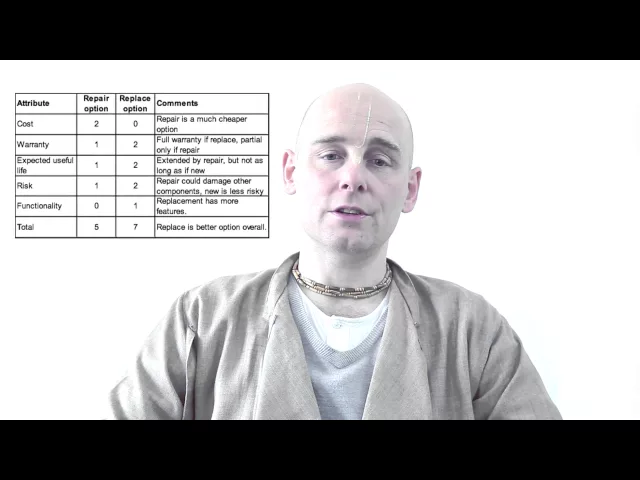
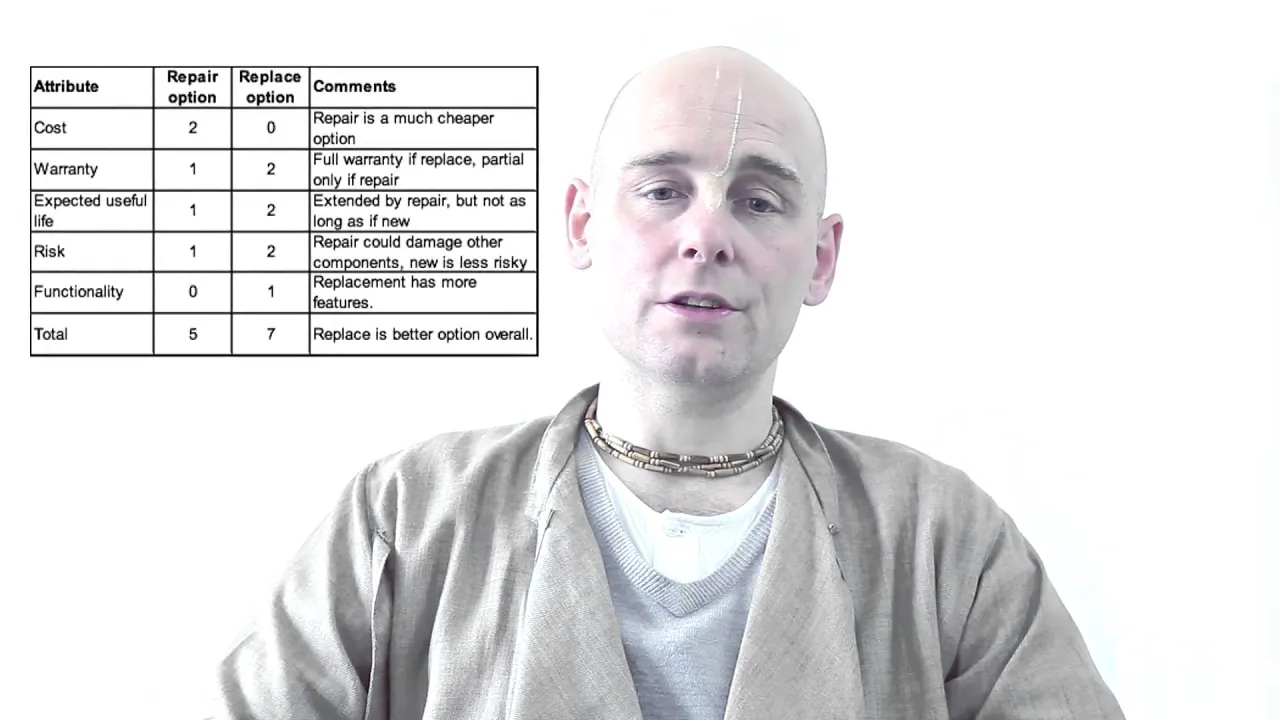
to look at the impact that the alternative can have on other areas of the organization and it's really important that you consider the big picture finally review the Alternatives and determine if there is a is clearly a preferable Choice and then after you've assessed all the Alternatives you make a decision so you just select the best alternative from those available if the best alternative is not obvious then maybe you need to draw up a table of different options list the attribute list the attributes and start to assess them you know according to points so you
can create a point system there's also a little diagram that we've included in the PowerPoint that you can look at as an example so there's some helpful hints that we've included the do's and don'ts some of the don'ts don't make assumptions don't make uninformed decisions allow only technical people to help make the decisions don't let emotions override objectivity don't let your emotions get involved in making decisions we really have to become detached things that we should do clearly identify what the decision is to be made identify all the Alternatives as we've just as we have
discussed look at the possible risks sometimes there might be a risk and we think it's too big a risk but we have a really strong gut feeling that no this is good we should go for it because sometimes we have to take risks sometimes for Krishna we really need to take risks and do the right thing so we have to really assess this in so many different ways and then ultimately make the decision and stick to it so there are different decision-making behaviors and people tend to adopt a particular decision-making approach as a result of
different factors according to their own personality according to your mood there may be different specific organizational cultures or cultures that are prevalent in your temple or Center uh the personality or person that you're dealing with is going to affect the approach and the behavior that you have in the situation and the relationships with the people um uh that you're that are in your team or committee making the decision and then of course there's always time pressures and different stress levels so you have to be aware of these different influences and how they can result in
better you know making a decision so by adopting the best decision-making approach for each situation obviously we're going to make the best decision there are a variety of decision-making approaches um withdrawing is one possible way it's an approach what does that mean it means I'm going to hold off on making this decision sometimes we may feel pressured or forced into making a decision on the spot someone comes up to you and says oh no next next week I need to do this I need to do that can you please um come on tell me now
and you feel pressured by them to make an immediate decision there's no problem you can withdraw from that and say it's okay there's no super urgency right now that I give you this decision so just allow me a little time to think about it another approach is called smoothing where we focus on areas of agreement and not differences so sometimes there may be everyone's focusing on the differences oh he said like this and we want it like that and you know back and forth back and forth but the smoothing approach means that you look at
the way that okay but there's a large area of agreement here let's see where we agree and see if we can work something out like that confronting or problem solving so that means you might have to sometimes just work through the issues so let's say you need to make a decision about something and there are lots of issues in the way maybe we need to confront each of those issues and slowly but surely work through each one and then the last one is forcing and that means that you're going to execute this decision knowing that
no agreement has really been reached so you may have different sides people are like no we want to do like this others like we want to do like that but a decision has to be made we really haven't found the middle ground everyone's not in agreement but someone has to take the executive role and make that decision so that's a forcing so no okay I've decided this is what we're going to do we're going to do it like this everyone's got to be on board we're moving forward so like that it's called forcing so another
approach is called compromising in that situation we may have to bargain to get an acceptable agreement it means we fall short of the best decision but we're like willing to say okay I'll do this for you if you do this for me and that way at least we can move on and and you know finish this grid lock off it can be useful in resolving negotiation Deadlocks so like that you know we may have to compromise otherwise we've covered all the approaches except for consensus decision making so this is a process of involving a group
of stakeholders and making a decision and it means that even though some of the participants may not agree with the final decision but everyone agrees to accept the decision no matter what so this often happens in Temple Temple councils or in different groups that you may have five six seven eight ten people who are around trying to resolve a specific issue we need to make a decision maybe six or seven agree for it to be one way and only three agree for it to be the other way ultimately the decision is made to go along
with the six or seven and those other three or four they have to agree to go along so this is a consensus consensus decision making generally it takes more time it can be more mode of goodness it also has the added benefit of building commitment to the decision that's made because all the members and parties they're present it's it's better in one sense you could say than unilateral decision making and for any any leader in iscon I would strongly recommend more consensus decision making it helps protect the leader so that because if you're making too
many unilateral decisions as they say absolute Authority corrupts absolutely so we have to make sure that we're protected and surrounded by persons who can help to give us good information to make the best decisions I can consensus decision making should basically make use of the confronting and problem-solving approach but we should avoid resulting resorting to comprising compromising or forcing so when should we use consensus decision making basically if you um you need many Alternatives suggestions for alternatives are required or the decision can have a significant impact across the whole Temple maybe it involves many different
departments or the team that is involved in the decision making they're also the ones who are going to have to ultimately action that decision that's made and if there's sufficient time because this can become a more lengthy process and you need to be able to organize the meeting and get everyone in the same room together now on the other side unilateral decision making should be used if it's just a minor decision or if it's if it's urgent like it a decision has to be made there's no time to call a meeting for everyone to get
together and if it doesn't affect many many people across a broad spectrum of the team or department heads and if there are issues of confidentiality that's the best time really unilateral you don't want so many people to know what is what is the issue so now the the basis for factual approach is the accumulation of data so we need to have good data in order to make better decisions um that means we need to keep as much relevant data as possible data is really it's just like an indicator that tells us the direction or the
speed and the momentum that our Templar Center is moving at and all the data key data it needs to be regularly recorded and analyzed in order to determine the health and of the temple or Center so what are the benefits of a factual approach well one of the most important things is you're going to have a very Solid Ground of forms facts figures and data in order to support your decisions and this can help to create a healthy and non-partial attitude in the Templar Center because it's not based on a personal opinion it's based on
facts it also will help to create trust among the devotees working at many different levels for the same reason because your base decisions on facts and not personal and individual opinions I've had experience in the past where you know people make decisions and they're like oh well that's because such and such things this way or likes this person or doesn't like that person so we want to make decisions that are based on facts it also is going to help to increase the efficiency in decision making and decisions can be made much much easier and much
more quickly again based on facts but sometimes based on precedence of decisions that have been made previously according to these facts so the factual approach and more or less it gives us an increased ability to review challenge change opinions and decisions so in summary as mentioned before we all know that a single decision can make a huge difference to a temple or Center a correct decision the center becomes stronger an incorrect decision and it could cause complete complete closure even of a Templar Center and we have seen that in the past thus there's a need
to understand the basic principles of decision making so there's there's many aspects that could be covered in decision making there's a whole wealth of information out there about different ways to make decisions many of that is outside of the scope of this conversation and this course so we encourage you to please look into those dive more deeply into this make yourself more educated but at the moment we just hope that this course has been of some assistance to you and making decisions and giving you some good food for thought we thank you very much for
your time Hare Krishna