an important category of copyrighted work consists of works of visual art which are known in US law as pictorial graphical and sculptural works sometimes abbreviated as PG s works included in this zone are of course paintings and posters statues and so forth most of the other things that fall into this category are obvious however two dimensions of the protection extended to PG s works are not obvious and merit closer attention the first is that nowadays copyright law is often used to shield the logos that manufacturers apply to consumer products here's an example the Omega watch
company has obtained a US copyright on this design which it calls the Omega globe design from lecture number one you should remember how and why a Swiss company he can get a u.s. copyright Omega and graves a version of this logo on the underside of its watches which are manufactured in Switzerland Omega then sells these watches all over the world typically it sells them for lower prices in poor countries than it does in more wealthy countries some years ago Costco using an intermediary purchased some of the watches that Omega had sold cheaply outside the United
States imported them into the United States and began selling them in its Us stores for prices lower than those used by omegas authorized US dealers Omega brought suit contending that this so-called parallel importation violated omegas copyright in the logo not its trademark or patent rights but its copyright now the legal rule underlying this lawsuit and the outcome of the suit will consider later when we discussed the rights of distribution and importation in lecture number eight for now I just want to emphasize the expansive reach of the subject matter of copyright and how companies like Omega
have tried to use that expensive coverage to engage in geographic price discrimination the second non-obvious dimension of the category of PGS works involves what is sometimes called applied art or industrial design those terms refer roughly to three-dimensional objects that are intended to be both useful and attractive objects of this sort permeate modern consumer culture just look around the room or space where you are located right now most likely you'll notice many objects that fit this general definition possibilities include an unusual lamp a container of bottled water a distinctive coffee mug the shape of a laptop
computer or tablet your eyeglasses if you wear them a doorknob or window fixture a decorative table or chair and so forth each of these things combines in some way art and function in the United States three different systems of law are potentially available to the creators of new objects of this sort copyright law design patent law and the protection that trademark law extends to so-called trade dress some innovations qualify on more than one of these systems but others may fail to qualify under any it depends on the shape and history of the particular object and
all too often on the whims of the tribunal evaluating that object if you're curious about the potential reach of design patent law or trademark law feel free to follow on your own the links in the relevant branches of the map using the interactive version of the map available through the copyright Ex website for obvious reasons I'll concentrate in this lecture on the possibility of copyright protection for objects of this sort in the late 19th century it was clear that copyright law did not extend to works of this sort three-dimensional works of fine art were shielded
but not the kind of consumer products to which I directed your attention a minute ago then gradually through a series of steps itemized on the map Congress the Copyright Office and the courts liberalized the relevant rules in the United States today the governing general principle is that copyright protection is available to so-called useful articles if and only if the aesthetic and functional features of the article at issue are separable the first step in applying this principle is to determine whether a particular object qualifies as a quote useful article in a quote within the meaning of
the copyright statute the reason why this initial determination is so important is that if an object does not constitute a useful article then the ordinary more lenient rules of copyright law apply whereas if it does constitute a useful article it has to pass more stringent tests so what does useful article mean the statute defines it as follows quote an article having an intrinsic utilitarian function that is not merely to portray the appearance of the article or to convey information and quote some applications of this definition will be straightforward for example Rodin sculpture does not constitute
a useful article because its function is to depict itself to depict a thinker by contrast a lamp no matter how beautiful is a useful article because it has a function other than looking good namely illuminating the room in which it's located in other instances however application of this definition will be trickier if a particular object is deemed to fall into this special category then its creator gets copyright protection to repeat only if its aesthetic and functional dimensions are separable how might they be separable traditionally there were two options the first of these options which arises
rarely is that the aesthetic and functional dimensions might be physically separable for example as the treatise writer Melville nimmer suggests the stylized Jaguar shape that is attached to the hood of a Jaguar automobile enjoys copyright protection because it can be physically removed from the car without impairing the car's utilitarian function likewise the utilitarian components of the car can be removed from the Jaguar without impairing its aesthetic features with respect to most useful articles physical separable 'ti of this sort is not feasible the creators of such objects may still obtain copyright protection however if they can
demonstrate that the aesthetic and utilitarian features are conceptually separable so what does that mean the conceptual separability inquiry is the most intriguing and least satisfying aspect of this doctrine until very recently the United States Supreme Court provided very little guidance concerning how this concept should be interpreted and applied as a result the lower courts were forced to develop their own interpretations by the early 21st century five distinct families of interpretations of the term conceptual separability had emerged the first of the five approaches asked whether the form of the object at issue is dictated by its
function if so conceptual conceptual separability does not exist this variant was emphasized by the majority of the judges in the influential 1985 Barnhardt case which involved these two sets of mannequins which were copied by a competitor without permission the majority in that case contended the shapes of the mannequins were required by their function namely displaying clothes in stores and consequently that their utilitarian and aesthetic features were inextricably combined and thus copyright protection was unavailable the second of the five approaches asked which aspect of the object in question is primary so for example the court and
the Casselton court case concluded that the ornamental aspect of these belt buckles was primary and their utilitarian function namely holding pants up was subsidiary and thus that they did enjoy copyright protection the third approach was made famous by judge Newman's dissenting opinion in the Barnhart case which I mentioned a minute ago it came to be known as the quote temporal displacement test the key question under this approach was whether the object quote stimulates in the mind of the beholder a concept that is separate from the concept evoked by its utilitarian function if so there is
conceptual separability if not not the phrase temporal displacement came from Newman's contention that the two concepts utilitarian and non-utilitarian must occur to the beholder not simultaneously but separated in time the fourth approach asked whether the article can stand on its own as a work of art if so it enjoys protection there were two different ways of elaborating this Paul Goldstein suggested that we inquire whether the article could constitute a work of art quote traditionally conceived which is related he argues to whether the article would be equally useful without its aesthetic feature the reference to art
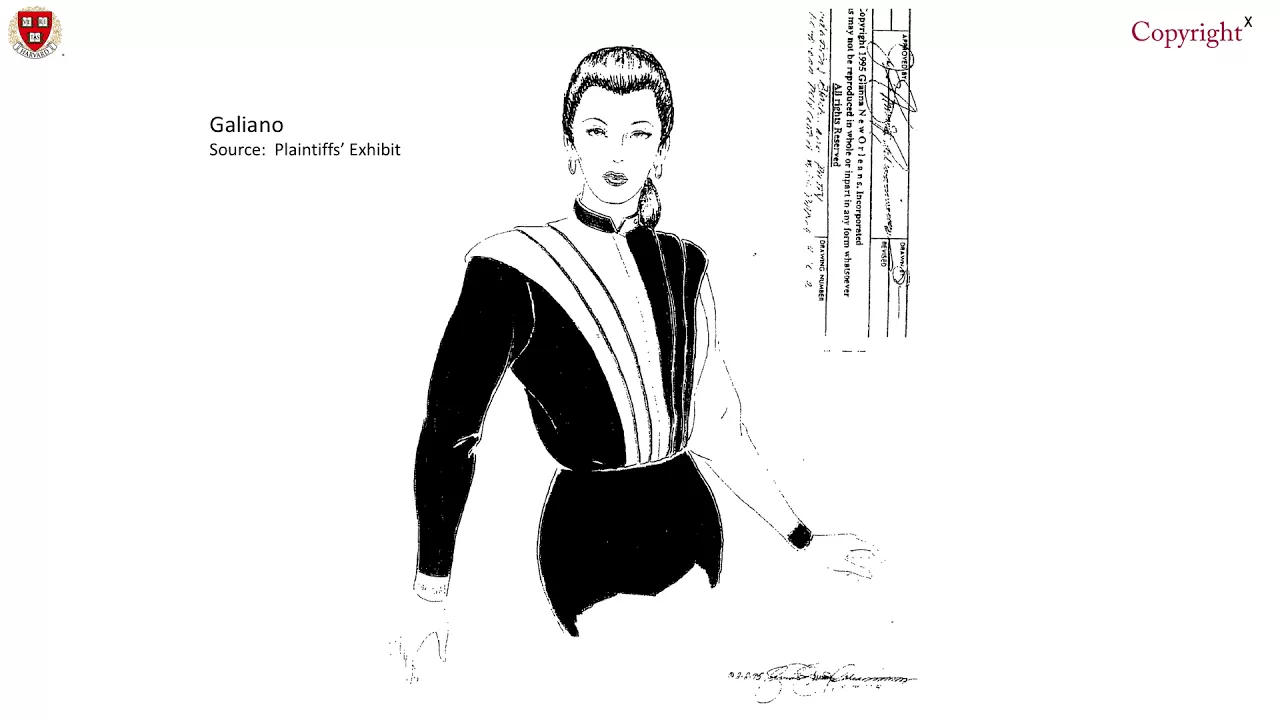
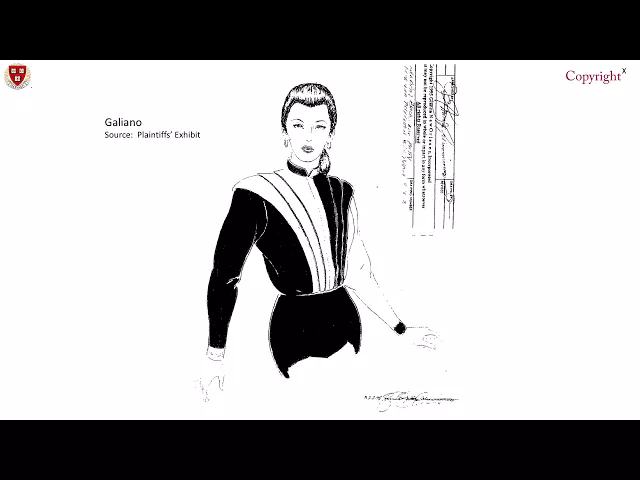
quote traditionally conceived naturally draws us back into the debate I discussed in the first lecture concerning the best way of defining art for the reasons I reviewed there resolving that question would be difficult although perhaps unavoidable by contrast Goldstein's fellow treatise writer Nimr pointed to a more empirical interpretation asking whether a significant number of copies of the article would be purchased if it had no utilitarian use this approach was adopted by the Court of Appeals for the Fifth Circuit in the galeano case which involved uniforms for employees of the Harris gambling casino applying the test
the court concluded that the plaintiff quote makes no showing that its designs are marketable independently of the of their utilitarian function as casino uniforms and quote and therefore that the uniforms are not entitled to copyright protection the fifth and last of the approaches focused on the intent of the creator of the article the individual designer who determined its final shape this approach was adopted by the Court of Appeals for the Second Circuit in the brand ear case which involved the following facts David Levine was playing around with some wires making miniature sculptures in his home
he twisted one wire into the shape of a bicycle and another into the shape of a ribbon and placed both along with other designs on his mantelpiece a friend of his pointed out that the ribbon shape could serve as he useful rack for the miniature bicycle inspired Levine worked with a friend to read to refine the design and eventually begin manufacturing and selling commercial versions under the company name for India International his product is depicted on this slide here's another photo showing how bicycles can be locked to it the rack proved popular and a competitor
cascade Pacific lumber began producing knock-offs Randhir brought a copyright infringement suit against cascade the outcome of the case hinged on whether the ribbon rack satisfied the conceptual separability test relying on a 1983 article by Robert de Nicola the court announced the following test quote if design elements reflect a merger of aesthetic and functional considerations the artistic aspects of a work cannot be said to be conceptually separable from the utilitarian elements conversely where design elements can be identified as reflecting the designers artistic judgment exercised independently a functional influences conceptus conceptual separability exists applying this approach the
court ruled against brandy emphasizing several ways in which Levine had modified the shape of the original abstract sculpture in order to make it durable and to accommodate as many bicycles and mopeds as possible because the shape of the product did not reflect quote artistic expression uninhibited by functional considerations it could be copied by a competitor with impunity as one might expect the result of this decision was that other companies began manufacturing and selling competing versions of the ribbon rack in 2016 the divergence of views among the various courts of appeals on the proper approach to
conceptual separability prompted the United States Supreme Court to attempt to settle the matter the case in which the court addressed the issue involved the following facts cheerleaders in the United States entertain the fans who attend sporting events typically they wear brightly colored uniforms performed in gymnastic maneuvers and encourage the fans to cheer on the team hosting the event although the cheerleaders at college level competitions are best known in part because those competitions are often televised quite young people often though not oh not always girls participate in this activity the varsity brands company designs manufactures and
sells cheerleading uniforms two of their products are shown in this photo varsity has applied for and been granted copyright registrations on many of their designs the drawing submitted in conjunction with five of those registrations are shown on this slide the star athletic company also manufactures and sells cheerleading uniforms allegedly star produced and sold uniforms that incorporated these five of varsity's designs varsity brought suit for copyright Frenchman the crucial issue in the case was whether varsity's Designs qualified for copyright protection at all and that issue reduced to the issue of whether the design and function of
the uniforms were separable the trial court concluded no the Court of Appeals for the Sixth Circuit concluded yes and the Supreme Court seeking to resolve the conflict among the various courts of appeals on this general question agreed to hear the case in the end the court by a vote of 6 to 2 upheld the Sixth Circuit's judgment that the uniforms did enjoy copyright protection the majority opinion written by Justice Thomas announced a new test for separate bility which will govern all future cases involving useful articles the key components of the new test are set forth
on your screen what we hold then an artistic feature of the design of a useful article is eligible for copyright protection if the feature one can be perceived as a two or three dimensional work of art separate from the useful article and two would qualify as a protectable pictorial graphic or sculptural work either on its own or in some other medium if imagined separately from the useful article this new test you should recognize is a variation on the separate concept test originally developed by Judge Newman although oddly Justice Thomas did not acknowledge as much in
his justification for this approach Thomas expressly repudiated some of the other tests Goldstein's very variant of the standalone test numers variant of the stand-alone test and the intent of the creator' test that as we saw drove the brand ear by crack case implicit in Thomas's opinion is repudiation of the other pre 2017 approaches the application of this new approach to the facts of the case just as Thomas contended was simple one can easily identify the decorations on the uniforms as features having pictorial graphic or sculptural qualities thus satisfying test one as to test two if
the arrangement of colors shapes stripes and Chevron's on the surface of the cheerleading uniforms were separated from the uniform and applied in another medium they would of course qualify as two-dimensional works of art we don't yet know how this new approach will be interpreted and applied by the lower courts but already many legal commentators have weighed in and the large majority of expressed disappointment or dismay to be sure a few aspects of the star test have been praised for example by rejecting the subjective intent of the creator test the Supreme Court has probably limited the
scope of discovery in cases of this sort thus sharply reducing litigation costs as well as curbing strategic are being wasteful strategic behavior by designers and as Jane Ginsburg points out the new approach has reduced to some degree the relevance of whether an artistic design is first developed in two dimensions and then applied to a useful article or incorporated in the useful article straight away alter the good but other aspects of Thomas's approach have been sharply criticized almost all commentators agree that it is distressingly vague and thus give gives poor guidance to litigants and lower courts
some commentators contend that it is too easily satisfied and thus will expand dramatically the set of useful articles that enjoy copyright protection others like Marc McKenna lament the absence of any discussion in the courts opinion of the policies or theories underlying the separable 'ti requirement which in turn reduces the chances that when applied the new test will be either coherent or socially Ben official whether these criticisms are well-founded remains to be seen this leaves us with one more type of three-dimensional object that now enjoys copyright protection architecture inclusion of architecture in the list was a
long time coming and its implications are still not entirely clear here's a bit of background the original 1886 version of the Berne Convention included architectural plans in the set of things that member countries were obliged to protect but not architectural works per se application of this principle would mean that if you copied the drawings that an architect had prepared to guide the construction of a building you would be liable for infringement but not if you were able to construct an identical building without use of those plans in 1890 the belgian scholar jules de Bourgh's grove
published an article criticizing the state of affairs and arguing that works of architecture deserve protection identical to that enjoyed by other works of art such as painting and music force crowds argument slowly took root in European copyright systems first in Belgium then in France for a while some European countries resisted adoption of his proposal on the ground that it could prevent replication of ordinary non innovative buildings but when reassured that the proposal would only apply to quote original artistic work and quote they acquiesced a key step in this campaign was the addition of architectural works
to article 2 L of the 1908 version of the Berne Convention as you know the United States did not join the Berne Convention until 80 years later until it did so copyright protection for architecture in this country was skimpy again architectural plans were shielded as they were in most countries so that unauthorized reproduction of such plans was unlawful however the majority view in the United States was that an architect whose plans were copied without his permission could not permit the construction of buildings using the infringing plans the building's themselves were potentially protectable as useful articles
just like the types of industrial design we have recently considered but as such they had to satisfy the conceptual separability test only if the aesthetic components of a building were separable from the utilitarian features did the building enjoy protection against non-permissive copying rarely was this true when the United States did finally joined the Berne Convention Congress considered whether formally to extend copyright protection to architectural works it initially decided not to do so persuaded that the protections available for useful articles were adequate but a commissioned a report from the Copyright Office on the subject and that
report urged that the law be modified Congress and response adopted the architectural works copyright Protection Act which became effective in 1990 the key provisions of the new statute are set forth on your screen notice that it's limited to quote architectural works which are defined as quote the design of a building courts in the United States have construed building to be limited to freestanding structures the most important implication of this new statute is that in the United States architectural works no longer have to run the gauntlet of the conceptual separability test in order to be protected
to be sure like all types of copyrighted work a piece of architecture must be original to be protectable but as we've seen the standard for originality is very lenient here's an example of a building design that would clearly pass muster in 1989 the polish-born architect Daniel liebe schemed won a competition to design the Jewish Berlin here's a photograph of the building taken from directly above it and a second aerial photograph taken from a slight angle as you can see the shape of the building is unusual a complex exact here's how Lee biscayne himself explained the
structure his architectural partner and wife Nina Lee biscayne emphasized the theme mentioned at the end of the second paragraph likening the shape of the building to a broken star of david' in the late 1990s the Australian architect Howard Roget was commissioned to design the new National Museum of Australia to be located on this Peninsula in the centre of Canberra rockets much celebrated design is shown in these aerial photos until the Australian Museum had been finished no one apparently noticed the resemblance between its central building and the Jewish Museum in Berlin but once the connection was
suggested the parallelism became unmistakable this case never resulted in litigation had it done so it most likely would have resulted in liability since 1968 Australian copyright law has extended to among other things a building or model of a building whether the building remodel is of artistic quality or not certainly if this standard is construed in the same way that current u.s. standard is construed liebe schemes design would qualify for protection and the Australian building resembling it sufficient to satisfy the legal standard of substantial similarity the fact that the case nevertheless was not litigated bears emphasis
why not we can't be sure but probably two factors were at work first copyright litigation is very time-consuming and expensive as a result only a tiny percentage of potentially actionable cases ever end up in court second architects at least high-end architects seem especially loath to rely on copyright to protect their work as David Shipley notes the large majority of the cases that have been brought alleging violations of the architectural works copyright protection act involved not high-end buildings but mundane mass-produced works the designers of the designers of noteworthy buildings by contrast seem to rely more on
peer pressure and public condemnation to discourage knock-offs indeed such extra legal sanctions were deployed in this particular instance the liebe Skeens publicly expressed outrage and the press both in Germany and in Australia condemned what one paper called quote architectural kleptomania the director of the Australian Museum who apparently had not known of the relationship between the two buildings expressed some misgivings publicly acknowledged acknowledging that quote had we known we might well have asked for that particular reference not to be included and quote interestingly however regard himself seems to have had no regrets the overall design of
the Australian Museum is postmodern in character alluding to many other structures or got readily admitted to having been inspired by the Jewish Museum and does not seem to resist the inference drawn by many observers that he deliberately intended to analogize the treatment of Aborigines in Australia to the treatment of the Jews and the Holocaust as one might imagine that suggestion remains highly controversial in Australia the more general point latent in this example is that there is no consensus even among architects concerning the definition and significance of copying when it comes to designs of buildings what
to one person constitutes plagiarism or theft may to another Aseem quotation or allusion the law now sides with the former but is rarely invoked what the relevant norm should be is one of the questions I hope you'll be in a position to answer this concludes lecture number three next week we'll return to copyright theory examining and some day and some detail the utilitarian approach the week after that we'll return to law and discuss authorship
![Upbeat Lofi - Deep Focus & Energy for Work [R&B, Neo Soul, Lofi Hiphop]](https://img.youtube.com/vi/THh4fT0O7IY/maxresdefault.jpg)