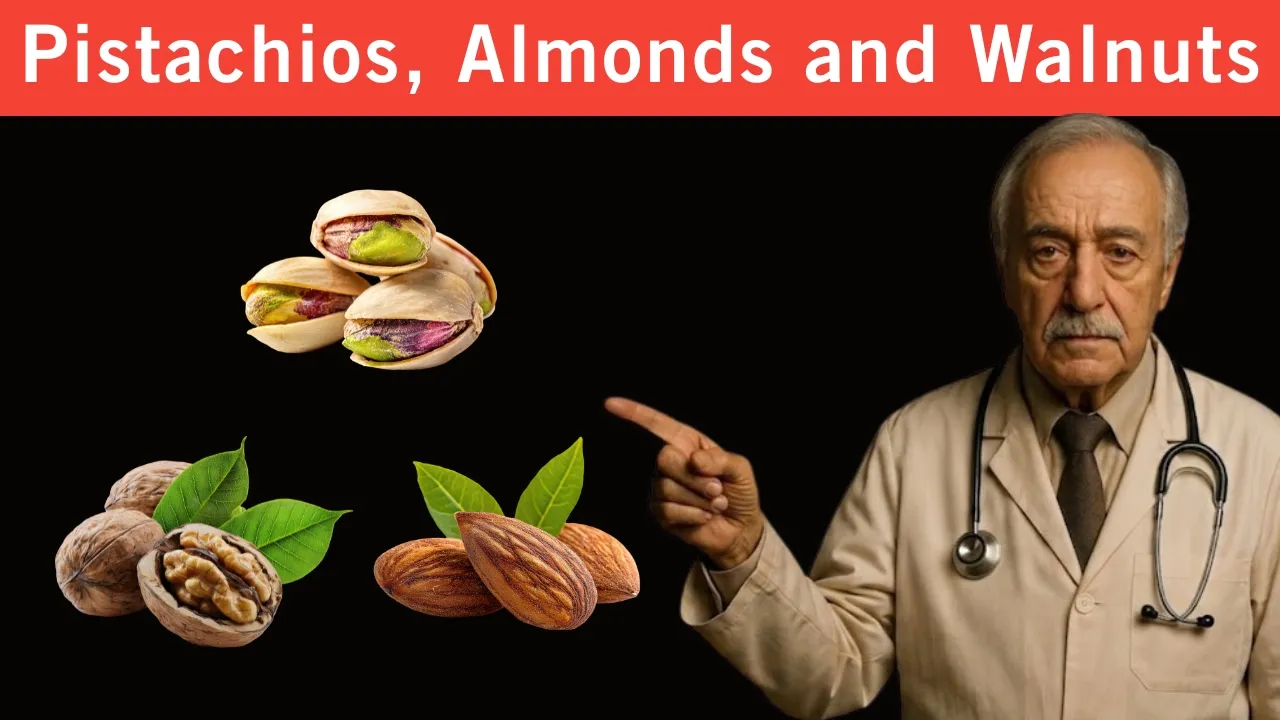
If you're over 60 and you eat walnuts, almonds, or pistachios, stop for just one moment. Because new research from 2026 reveals that for your kidneys and blood flow, these three nuts are not equal. One lowers blood pressure and protects kidney filtration.
One opens your arteries with a compound your body naturally produces. And one, eaten in the wrong amount, could quietly stress aging kidneys. By the end of this video, you'll know exactly which is which and the precise daily routine backed by science.
Stay with us. You might not believe this, but the answer to one of the most dangerous questions your body is silently asking after 60 could be sitting in a small bowl on your kitchen counter right now. Three nuts, all considered healthy, all eaten by millions of seniors every single day.
But here's the thing almost nobody tells you. For your kidneys and your blood flow after 60, one of these is quietly working miracles. One is doing almost nothing.
And one could actually be doing quiet damage if you're not careful. Researchers from multiple institutions, including a landmark 2025 systematic review published in the journal Frontiers in Nutrition, analyzed over 2,500 studies and 1,270 patients with kidney conditions. And the findings were stunning.
By the end of this video, you'll know exactly which nut to eat, which to limit, and how much could be the difference between healing and harm. Stay with us. This one could genuinely change something for you today.
Now, this might sound like a simple food question, but the science behind it is deep. And it involves your kidneys filtering 50 gallons of blood every single day. Your arteries either opening up like a wide river or narrowing down like a clogged garden hose.
And tiny compounds inside these three nuts that either help or hinder both of these vital processes. We're going to count down from number five all the way to number one. Five key discoveries about these nuts, your kidneys, and your blood flow after 60.
The most important and perhaps most surprising revelation that comes at number one, and you'll want to hear it. Let's begin. Number five, the foundation.
What happens to your kidneys after 60 that nobody warns you about? Here's something most seniors never hear about, and it's honestly a little unsettling. After the age of 60, your kidneys quietly begin to lose approximately 1% of their filtration function every single year.
That might not sound like much, but by the time you're 70, your kidneys could be working at 30 to 40% less capacity than they were at 40. And you may feel almost nothing, no pain, no obvious warning, until the damage is already in motion. The National Kidney Foundation estimates that one in three American adults is at risk of kidney disease.
And for seniors over 60, that number climbs even higher. Now, here's where it gets important. What you eat sends daily signals to your kidneys, either repair signals or stress signals.
Phosphorus, potassium, oxalates, sodium. These are the four minerals your kidneys must constantly balance. Too much of any one of them from the wrong food source, and those aging kidneys begin working overtime just to keep up.
This is exactly why the walnut, almond, pistachio question matters so much, because all three nuts contain these minerals, but in very different amounts. And for a kidney that's already quietly losing ground, that difference is not small. It's significant.
Take almonds as a starting example. Many seniors eat almonds every morning believing they're the gold standard of healthy snacking. And in many ways, they're beautiful for heart health and bone strength.
But, almonds carry one of the highest oxalate contents among common nuts. Oxalates, when consumed in excess, can crystallize in the kidneys and contribute to kidney stones. A condition that affects nearly 11% of men and 6% of women over 60 in the United States.
If you've ever had a kidney stone, you know it's not something you want to experience again. And if you haven't, you want to keep it that way. It's a small awareness shift, but it wakes your body's natural defenses again.
Number four, the silent helper. The nut that quietly repairs what time tries to break. Let's talk about walnuts and why researchers keep coming back to this one wrinkled little nut again and again.
Imagine your arteries as garden hoses. When you're young, those hoses are flexible, wide, and water rushes through effortlessly. But, after 60, the natural aging process causes those hoses to stiffen.
The walls thicken. The opening narrows. Blood and all the oxygen and nutrients it carries has to push harder to get through.
That's high blood pressure. That's reduced circulation to your hands, your legs, your brain. And yes, to your kidneys.
Now, a group of researchers followed patients with chronic kidney disease and gave them a daily portion of walnuts. The results, published in a 2025 systematic review in Frontiers in Nutrition, were remarkable. Walnuts reduced LDL cholesterol, the so-called bad cholesterol, and measurably lowered blood pressure while posing no significant risk to the patient's electrolyte balance.
That last point is critical for anyone managing kidney health. Here's why walnuts do this so well. They contain the highest concentration of ALA, alpha-linolenic acid, an omega-3 fatty acid among all tree nuts.
Omega threes are like the body's internal anti-rust treatment for blood vessels. They reduce inflammation in arterial walls, improve the flexibility of those garden hose arteries, and signal the body to produce more nitric oxide, a molecule that literally tells your blood vessels to relax and open wider. Wider vessels, better blood flow, less stress on aging kidneys.
Walnuts are also relatively low in phosphorus compared to many other nuts, which is why kidney health specialists consistently list them in their top recommendations. A small daily handful, roughly 28 g, about seven whole walnuts, is the amount most studies use. Not a full bag, not a cup, just a modest intentional handful, perhaps beside your morning tea or sprinkled on your oatmeal.
Consistency is what turns this from just a habit into your body's quiet repair signal. Before we get to number three, if this information is opening your eyes a little, go ahead and tap the like button. It's a small gesture that helps this channel reach more seniors who are looking for real science-backed guidance, not just generic advice.
And here's a question for the comment section right now. Which of these three nuts do you eat most often? Walnuts, almonds, or pistachios?
Drp it below. We genuinely read every comment, and your answer might shape our next video topic. Let the debate begin.
Number three, the game-changer, the forgotten mineral in almonds that your aging heart is begging for. Now, let's give almonds a fair and full hearing, because while their oxalate content requires caution for kidney stone patients, almonds carry something that many seniors over 60 are dangerously deficient in. Something so important that without it, your heart's electrical system begins to misfire.
Magnesium. Studies estimate that up to 50% of older American adults are not getting enough magnesium from their diet. And the consequences are not subtle.
Low magnesium is linked to a regular heartbeat, elevated blood pressure, muscle cramps in the night, disrupted sleep. And here's what most people miss, reduced kidney function because the kidneys rely on magnesium to properly regulate other minerals like calcium and potassium. Almonds are one of the richest dietary sources of magnesium available.
A single 1 oz serving, about 23 almonds, delivers approximately 76 mg of magnesium. That's nearly 20% of what your body needs in a single day. When your cells start receiving adequate magnesium, something shifts.
Blood vessels relax. The heart's electrical rhythm steadies. Nighttime cramps that have been waking you up at 2:00 a.
m. begin to ease. Energy returns in ways you might have forgotten were possible.
Vitamin E is another extraordinary gift almonds bring. This fat-soluble antioxidant acts like a shield inside your arterial walls. It prevents LDL cholesterol from oxidizing, which is the process that actually causes artery clogging plaque to form in the first place.
Think of it as stopping the rust before it starts. Show animation of oxidized LDL being blocked by vitamin E molecule. Now, the oxalate caution still stands.
If you have a history of calcium oxalate kidney stones, almonds should be consumed carefully and in smaller portions. But if your kidneys are generally healthy and your goal is blood pressure regulation, heart rhythm support, and cardiovascular protection, almonds deserve a real place in your daily diet. The golden rule, no more than 1 oz per day.
Soaked almonds left in water overnight Also, naturally reduce oxalate levels, making them gentler on the kidneys when consumed the following morning. Most people never realize how quickly the body responds once it finally gets what it needs. Number two, the hidden hero, pistachios and the blood flow secret that science is finally confirming.
Here's something that might genuinely surprise you. Of all three nuts, walnuts, almonds, and pistachios, the one with the most direct, measurable impact on blood vessel function and circulatory health may be the one you least expected. Pistachios.
For many, this becomes the turning point, the moment they start feeling younger from the inside again. A meta-analysis published in the British Journal of Nutrition, one of the world's most respected peer-reviewed nutrition journals, concluded that regular pistachio consumption could reduce cardiovascular disease risk by lowering inflammation, reducing oxidative stress, and directly improving what scientists call endothelial function. The health and responsiveness of the inner lining of your blood vessels.
Let's make that science feel real for a moment. Your endothelium is a delicate, single-cell thick layer that lines every blood vessel in your body. When it's healthy, it produces nitric oxide freely and on demand.
And nitric oxide is essentially the body's natural vasodilator. It's the signal that tells your arteries, "Open up, let the blood through, keep the pressure down. " When that lining becomes inflamed from years of stress, poor diet, aging, or a chronic illness, nitric oxide production drops, blood vessels stiffen, circulation to the legs, kidneys, and brain begins to decline.
This is the invisible root of so much of what seniors over 60 experience: cold feet, brain fog, fatigue, slow wound healing, rising blood pressure. Now, here's the pistachio connection. Pistachios are unusually rich in L-arginine, an amino acid that is the direct biochemical precursor to nitric oxide.
In plain terms, your body uses L-arginine as the raw material to make the molecule that opens your blood vessels. Pistachios are one of the most concentrated plant-based sources of this compound available. Additionally, the 2025 meta-analysis showed pistachios lowered systolic blood pressure, the top number on your blood pressure reading, and reduced markers of chronic inflammation like C-reactive protein, which is one of the most accurate predictors of cardiovascular events in older adults.
A clinical trial at Brigham and Women's Hospital, launched in 2025 and currently concluding its data collection, is specifically examining pistachio consumption in older adults, measuring effects on cardiometabolic risk, cognition, and quality of life. Early signals are consistent with the broader research. Pistachios appear to be uniquely suited to the circulatory needs of aging bodies.
How do you incorporate them daily? Here's a simple, sustainable breakdown. 1 to 2 oz of shelled pistachios per day, roughly 49 kernels by weight, is the amount most studies work with.
That's a small bowl. You can eat them as a mid-morning snack, fold them into a yogurt bowl, or carry them in a small container for moments when hunger strikes between meals. Choose unsalted varieties always.
Sodium works against the very blood pressure benefits you're trying to achieve. Pistachios are also lower in calories per ounce than most other tree nuts, which matters for seniors managing weight alongside cardiovascular health. This single daily habit can shift the way your body manages circulation, quietly, consistently, from the inside out.
Number one, the breakthrough discovery, the real answer, and a daily protocol that combines all three. Now we arrive at number one, and this is the part of today's video I want you to remember most, perhaps even write down. Because the real breakthrough isn't choosing one nut over the other two.
The breakthrough, backed now by multiple converging bodies of research, is understanding that walnuts, almonds, and pistachios each protect a different critical system in your body after 60. And when you rotate them intentionally, with awareness of your personal health picture, the combined effect is greater than any single nut alone. Let me tell you about a study that quietly changed the thinking in this field.
Researchers analyzed data from 1,270 patients with chronic kidney disease across multiple clinical trials. Their conclusion, published in Frontiers in Nutrition in 2025, was this: total nut consumption, not any single variety, was associated with a measurable reduction in all-cause mortality among kidney disease patients. Let that land for a moment.
People with kidney disease who ate nuts regularly live longer. Not because of a pharmaceutical breakthrough. Not because of an expensive supplement.
Because of a small, consistent daily food habit. But here's where the nuance matters deeply for anyone over 60 managing real health conditions. If you are managing chronic kidney disease, especially in its later stages, phosphorus and potassium intake must be carefully monitored.
In this case, walnuts are your safest and most consistently recommended choice. They're lower in both phosphorus and oxalates than almonds, and their omega-3 profile directly supports the cardiovascular health that kidney patients urgently need. Start here.
Stay here until you've spoken with your health care provider about expanding. If you're a primarily concerned with blood pressure, arterial stiffness, or circulation, cold hands, swollen ankles, fatigue after gentle walking, pistachios become your primary ally with walnuts in daily rotation. These two together create a powerful dual action.
Walnuts rebuilding arterial flexibility, pistachios generating the nitric oxide that makes that flexibility functional. If you're managing cholesterol, bone health, or suspect magnesium deficiency, a small daily portion of soaked almonds adds the vitamin E and magnesium that neither walnut nor pistachio delivers as richly. Here is the daily protocol that the research supports and that any senior can begin tomorrow morning.
Morning, seven whole walnuts with your first meal or morning tea. No preparation needed. Just a small habit before the day begins.
Midday or afternoon, a small handful of unsalted pistachios, roughly 15 to 20 kernels, as a between-meals snack. This is the time of day when blood sugar tends to dip and circulation is most in need of a natural support signal. Three to four times per week, not daily, 1 oz of soaked almonds, about 15 to 20 almonds soaked overnight in water and eaten the following morning.
Soaking reduces oxalate content meaningfully and makes the magnesium and vitamin E more bioavailable. Now, picture this. You're sitting in your favorite chair on a quiet Tuesday morning.
The house is still. There's a small bowl beside your tea, and inside that bowl are seven walnuts you've already made a habit of eating every morning for the past 3 weeks. Your blood pressure reading last Thursday was the best it's been in 4 years.
Your hands feel warmer. The afternoon brain fog that used to settle in around 3:00 p. m.
has been noticeably lighter. Is it the walnuts alone? No, it's the signal you're sending your body every single day.
I'm paying attention. I'm choosing you. Heal.
That's what consistent research-backed nutrition does after 60. It doesn't work overnight, but it works with a quiet, accumulating power that surprises people, including the people experiencing it. One final point for anyone with a kidney condition already.
Please do not begin any significant dietary change, even a healthy one, without a conversation with your nephrologist or primary care physician. Potassium and phosphorus from even healthy foods can interact with kidney disease in individual ways. Your doctor can help you personalize this protocol safely.
And that's why this isn't just a tip about three nuts. It's a quiet revolution happening inside your body, one handful at a time. Let's bring all of today's discoveries together, because each one connects to the next like pieces of a single puzzle.
We began by understanding why kidneys need your attention after 60, silently losing filtration capacity, quietly stressed by the wrong foods. We then discovered that walnuts, with their omega-3s, low phosphorus, and blood pressure-lowering properties, are the most kidney-friendly and circulation-supportive nut in the group. We learned that almonds, while requiring caution around oxalates, carry magnesium and vitamin E that many seniors are quietly deficient in.
And we saw that pistachios, the overlooked nut in this conversation, carry L-arginine and anti-inflammatory compounds that directly regenerate nitric oxide and improve endothelial function. Here is a realistic timeline of what you might experience when you begin this protocol. Week one, you'll simply notice the habit forming.
No dramatic change, but a growing sense of consistency. Month one, many people report slightly better energy in the afternoons, improved digestion, and in some cases modestly lower blood pressure readings. Month three, this is where the research shows the most consistent findings.
Measurable improvements in cholesterol, endothelial function, and inflammation markers in those who have maintained the habit daily. It's not one change that restores circulatory health and supports aging kidneys. It's how these three nutrients, consumed together, consistently, and wisely, support each other.
And if you've watched until now, it means you truly care about your health. That already sets you apart. In our next video, we'll reveal how a specific bedtime habit, taking less than 4 minutes, can reset the hormones that govern your sleep quality, blood pressure, and morning energy levels.
You won't want to miss it. Your body after 60 is not finished. It is not declining without hope.
It is listening every single day for the signals you send it through the choices you make. Three small nuts, a bowl the size of your palm, a habit you can begin tomorrow morning without spending a dollar more than you already do at the grocery store. Walnuts for your kidneys and your arteries.
Pistachios for the blood flow your heart depends on. Almonds, with care and intention, for the magnesium and vitamin E your aging cardiovascular system quietly craves. Every sunrise gives us one more chance to rebuild.
So, take it gently, wisely, and with gratitude. Now, here's our question for you today, and we genuinely want to hear from you. Which of these three nuts will you add to your daily routine first?
And if you're already eating one of them, has it made a difference for you? Drp your answer in the comments. Your story might be exactly what another senior needs to hear today.
Thank you for spending this time with Senior Guide. We are truly honored to be a part of your health journey. See you in the next video.
And until then, stay strong, stay curious, and stay young at heart.