Hello, and welcome to our new series—Crash Course: History of Science. My name is Hank Green, and I’ve wanted to produce this course for years. I’m obsessed with how people throughout the ages have uncovered truths about the universe and converted these into a wealth of technological wonders.
This process has decreased the suffering of millions of humans—even as it’s sparked entirely new problems. Regardless of the outcomes of scientific inquiry, the process itself is fascinating. The world you inhabit today is full of gadgets that once belonged to science fiction.
We can model what the earth looked like millions of years ago, or zoom in and observe the atoms that make up our own bodies. We are going to tell that inspiring story: we’ll be thinking about thinking with Aristotle, digging canals in Song Dynasty China, listening to robot musicians in medieval Turkey, fighting an electrical war in New York City, and discovering the shape of DNA in Cold War England. But the history of science is not only a story of humanity’s collective movement from ignorance to knowledge, for two different reasons.
First, as much as scientists today may not like to admit it, we are still pretty ignorant… And we don’t agree on what it would mean to reach the ultimate Truth, capital T. Take a big question that we've been asking for a long time like “what is stuff”: While modern physicists will tell you that stuff is made of atoms, and atoms are made of quarks and leptons, we still don’t know why quarks exist. Or why there appears to be far more matter in the universe than we can account for.
Even something as basic as “stuff” needs a lot more sciencing! Second, and more importantly for historians, “science” isn’t a stable or single idea. That’s why, in this episode, we’re going to be thinking about some ways to answer a deceptively simple question: what is the history of science the history of?
[intro music plays] Today, “science” can mean both our body of knowledge about the world as well as the methods we use to create that knowledge, or how we know the stuff that we know. Within that “how,” there are two main practices—things that we do—that systematically generate knowledge: One: observe some specific aspect of the world. For example, Darwin spent decades obsessively observing the subtle variations in different kinds of barnacles, orchids, turtles, birds, and other living things.
This led him to theorize how they had changed over time. My dude loved barnacles! Two: conduct an experiment to answer some question about the world.
Did Galileo drop two metal balls of different masses from the Leaning Tower of Pisa, to show that they fall at the same rate and disprove Aristotle’s theory of gravity? Probably not. But Dutch thinkers Simon Stevin and Jan Cornets de Groot did conduct that experiment soon after.
Today, we have much bigger “towers” for testing theories in physics: the Large Hadron Collider is seventeen miles long! Finally, when I said systematically, I meant that there are rules about observing or experimenting—rules that anyone can follow. That notion of anyone being able to be a scientist is super important.
In fact, a lot of contemporary scientists have three Latin words tattooed on their arms: “NULLIUS IN VERBA”—“on no one’s word…” Let’s explore this phrase because it's important. In this series, The Thoughtbubble is going to bring to life different wonders from the history of science. Today, our wonder is pretty abstract: the wonder of the reproducible experiment.
“NULLIUS IN VERBA” is the motto of the Royal Society. This group of knowledge-makers was founded in 1660 as a “College for the Promoting of Physico-Mathematical Experimental Learning” and re-founded in 1663 as “the Royal Society of London for the Improvement of Natural Knowledge. ” And it’s still around today!
The Society was started as a place to debate new ideas about nature. Its members demonstrated experiments in front of each other—“witnessing” the proofs behind their theories. They wrote up these theories in the Society’s Philosophical Transactions, one of the world’s oldest peer-reviewed scientific journals.
Influenced by Francis Bacon’s ideas, which would eventually become associated with the “scientific method,” the founding members of the Royal Society chose a motto with an unambiguous meaning: don’t believe something just because someone tells you it’s true. Test out each new hypothesis, or educated guess, yourself. In other words: your individual proof of how some natural phenomenon works should be something that anyone can reproduce.
This idea had an enormous impact on the history of science. Later members of the Royal Society included stars such as Ike Newton, Ben Franklin, Mike Faraday, Chuck Darwin, and even Big Al Einstein, who was about as British as sauerkraut. In fact—plot twist!
—the early scientists who adopted the creed “NULLIUS IN VERBA” were not actually “scientists. ” They were well-off alchemists and medical doctors, and they called themselves Natural Philosophers. Or, "People who loved truths concerning the world around them.
" Natural philosophy in seventeenth-century England was sort of like the contemporary natural sciences mashed up with medicine, mathematics, some philosophy–philosophy, and a whiff of religion. The word “scientist” was only coined recently, in historical terms, in the 1830s, and caught on around 1840. It was made up by an English scientist named William Whewell who was also a historian of science and a priest.
So if we only cared about the history of people called “scientists,” our job would be easy: there aren’t any until around 1840! And most people called scientists, or natural philosophers, looked suspiciously similar to one another. Take the Royal Society: its members have been, until recently, almost exclusively rich English men.
Even though their ranks have included many incredibly clever scientists, they haven’t represented anything like all knowledge makers. The sixty-second President of the Royal Society, biophysicist Venkatraman Ramakrishnan, is the group’s first non-white leader. And there has never been a female President.
But the history of systematically knowing stuff goes back much further than the Royal Society and includes more types of people than English blokes. Thus “science” is a historical and social concept—not one that’s existed forever, in the same way for all people. Because the history of science includes many systems of understanding the world, we have to consider these systems on their own terms.
It may seem simpler to focus on the “winners” of history. But hearing only the big Euroamerican names—Plato, Einstein—doesn’t teach us as much about our global system of science today. Taking the time to highlight different knowledge worlds will help us see our own as relatively recent, not entirely unified, and evolving.
For example, we’ll learn about the Greco-Latin-Jewish-Arabic medicine of the medieval Mediterranean world, millennia of ayurvedic knowledge across the Subcontinent, traditional Chinese medicine, and Incan “talking knots” and engineering—just to name a few. Each of these systems has its own social norms about what count as valid ways to make and share knowledge. We’ll look at modern scientific norms in a later episode.
And each of these can help us see the “otherness” of these past or different cultures as not so other, after all. We can see natural philosophers and other proto-scientists as smart people making sense of their world, not as “bad” scientists. They understood the world around them in the smartest way they could.
For example, according to medieval Mediterranean medicine, the organ in my head was for venting waste heat, not thinking. People in the past weren’t stupid: they knew that if your head was chopped off, that was curtains for you. They just weren’t sure what all this weird gray stuff did.
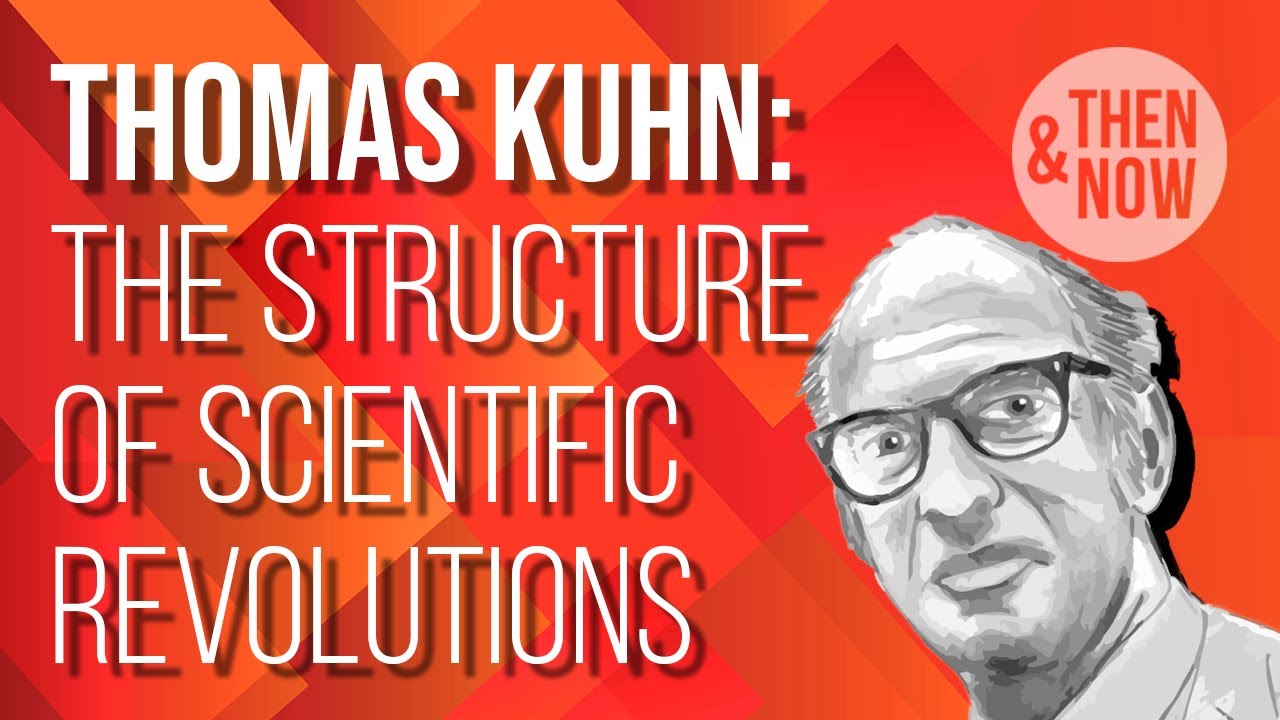
Even today—though we can see a neuron fire in high-resolution—we struggle to understand what really goes on when it fires, that is, the role a single neuron plays in thinking… much less answer the question, what is consciousness. The history of science really gets even juicier when incremental, nagging questions about the natural world add up and cause a scientific discipline, or an entire society, to change in a “revolutionary” way. Later in the series, we’ll look at moments of revolution within the sciences alongside philosophers such as Thomas Kuhn and Michel Foucault, who.
. . did not always agree.
They show that science isn’t only historical and social, but constructs entire worlds of knowledge in which we all find ourselves trapped. But don’t worry about that just yet. By learning the history of science, we will automatically start to think about our own knowledge world as historical—not finished, not capital-E enlightened.
Around the world, humans are still actively working to understand our universe… but they don’t all agree on how to do it. We may be able to make more accurate models of natural phenomena… but we may never find the ultimate answers we seek. At its limit, the history of science touches on the study of religion: the diverse and changing nature of the never-ending human search for Truth, capital T.
Our path through past knowledge worlds is going to be a beautiful and powerful one. There are many, many marvelous insights to celebrate. To help us keep our footing as we jump across centuries and continents, we’re going to keep our eyes on five big questions.
Questions that, to this day, we do not have complete answers to. First: what is stuff? From atoms to dark matter to spacetime: what are things made of?
“Things,” by the way, includes air, fire, and outer space: if you think I’m going to sit here and not celebrate the death of phlogiston with you, you’re sorely mistaken! Number two: what is Life? What’s the simplest way to define living things?
Are viruses alive? Is the earth alive? Where did life come from?
Where did current organisms come from? How do we understand their interactions with each other and their world? Three: where are we?
What is this place, the earth? What is its place in the cosmos? Is this the only universe?
Four: when are we? More questions of scale: how long have we been around? What about living things?
What about the whole universe? What came before that? And five: how can we agree on what we know?
And how can I convince more people that the stuff I know is accurate? For example, how can I show anti-vaccers that vaccines are necessary! ?
Regarding technology, how should we talk about what to do what our knowledge? All of these questions have been considered by people as far back as records exist. They also remain active areas of study today.
But the last theme is so important that it gets its the final section. Humans have always tried to describe the world, for lots of reasons: in part because it’s fascinating (“magnets—how do they work! ?
”), and in part to control it. Knowledge, as they told us in grade school, really is power! The power that knowing stuff gives the knower is exactly why we should study the history of science.
Thus one goal of this course is to highlight how the values (beliefs about right and wrong) and ethics (acceptable behaviors) of scientists and engineers shape our world. And how, conversely, sciences and technologies are shaped by the societies that produce them. We have a responsibility as citizens to understand and to act accordingly.
Our world today looks radically dissimilar to that of three hundred years ago. To quote Andy Weir, we’ve “scienced” the heck out of it. We learned about stuff, made new technologies, and are currently scrambling to learn new stuff to solve the problems that our old technologies created.
Facing an utterly unprecedented total ecological catastrophe, we may need to “science” it even more, in one way or another. We’ll talk more about this in future episodes. Learning the history of science can help shine a light on this dark future.
Next time—pack your spanakopita: we’re heading to ancient Greece to invent natural philosophy with the Presocratics. Until then, this has been—“on no one’s word”—Crash Course: History of Science! Crash Course History of Science is filmed in the Dr Cheryl C.
Kinney Studio in Missoula, MT and It’s made with the help of all of these nice people. And our animation team is Thought Cafe. Crash Course is a Complexly production.
If you want to keep imagining the world complexly with us, check out some of our other channels like Sexplanations, How To Adult, and Healthcare Triage. If you'd like to keep Crash Course free for everyone, forever, you can support the series at Patreon, a crowdfunding platform that allows you to support the content you love. Thank you to all of our patrons for making Crash Course possible with their continued support.