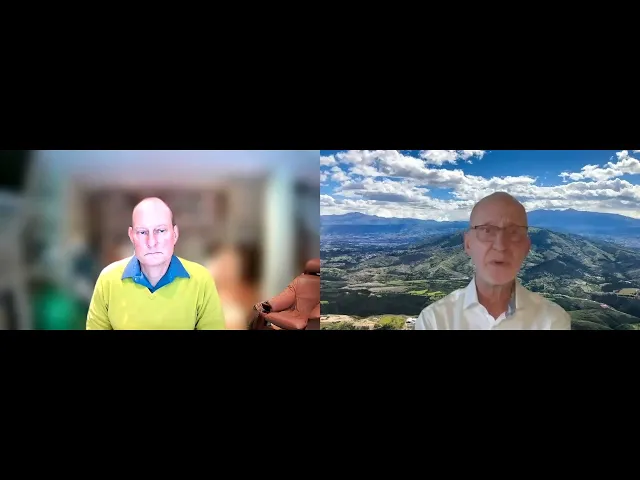
prof gregelborg has agreed to provide some feedback to the shareholders on his recent visit to the last cities project which we're very appreciative gregor welcome and thanks for taking the time well certainly i've been lucky enough thank you very much for this opportunity to visit ecuador three times it started in 2019 it was a bit delayed for obvious reasons because of the pandemic and this year i've been to ecuador and to the area in july and now in november and what has completely changed the understanding of the basin is the obvious information that comes from
drilling so in 2019 arena had assembled a remarkable set of information and data which was from soil sampling it was geophysics it was from mapping in the field but we must remember remember that it's an area that is overgrown we are sort of on the foot of the andes in the amazon rainforest so outcrop is very very sparse so it goes without saying that as soon as one starts drilling one gets a three-dimensional impression of what's going on geological cross-sections are a first attempt but in the end you have to prove it when you drill
so in july especially when i came in november they were the first very very important quite a large number of boreholes already and that has certainly given us a much better understanding now not only of the geometry of the basin of the different rock types in there we're going to talk about salt and evaporites and gypsum and anhydra just now but we're starting to understand some of the processes how this basin moves how this basin has been active how the faults have been moving and these faults are basically the key sites as conduits for mineralizing
fluids that in the end give us targets to drill and hopefully also all deposits so gregor just in in in summary um you know your your your takeaway after after the third trip well when when i came to ecuador in 2019 and i saw this well this huge exploration area that urania has there um and i saw the endowment that means the number of all deposit types that this area holds a potential for and that is without saying porphyry coppers and gold epithermal gold but also sediment hosted copper at the time that we looked at
i already thought that this was an amazing combination and the combination that i at least in my career hadn't come across neither from the kuffer fifa there are no intrusive bodies in there not from southern namibia not from the kiwinor in michigan um so i was already mightily impressed by this combination of the sediment hosted potential the perfect copper and the epithermal potential now i did not imagine that from the drill core this would even be sort of complemented by further models and i think the one model that one has to add to this which
makes the area even more attractive are those growth fault related base metal precious metal deposits with a very very strong cupriferous flavor let's say because they are certainly copper dominated so that makes sets them apart from a megan type and from an hyc although the basin geometry is the same so we have certainly to learn that there is excellent potential for this type of growth fault related based metals precious metal deposits in the area i think the continued potential for cook forgiver type redox relatives copper mineral copper plasminization and growth fault-related basin um basins with
growth for bounded basins with the potential for massive sulphides associated with those growth faults i think is the new addition that certainly i took away from these last two visits and i find absolutely amazing and i i wouldn't know i wouldn't know an analog to this that has this multiple endowment in one area now obviously it's a lot of work you have a marvelous team there and your ecuadorian geologists they are extremely keen they are very smart they are working hard and they are learning learning learning they are sort of sucking up the information like
sponges when i was working them it was such a pleasure to see this they're taking their notes they're asking the right questions they're going down on their knees with the hand lens and they're logging the call so i think you're set up very very well to continue with this you have to do more drilling and then one has to home in on these fertile target areas which then hopefully will lead to the discovery of the one or the other type of deposit i i think that you know we've covered a huge amount of ground um
in in this in this chat i i can imagine that we'll be coming back to you and saying okay let's take that aspect and let's let's uh delve into it in a bit more detail so um yeah thanks very much for this and i think this this sets up very well for a couple more detailed uh sort of interviews and and question and answer session so thanks very much for your time and and thanks for taking the time to to come to ecuador and spend some time in the field with us and take us by
the ear and and show us all these textures it was absolutely amazing thanks very much