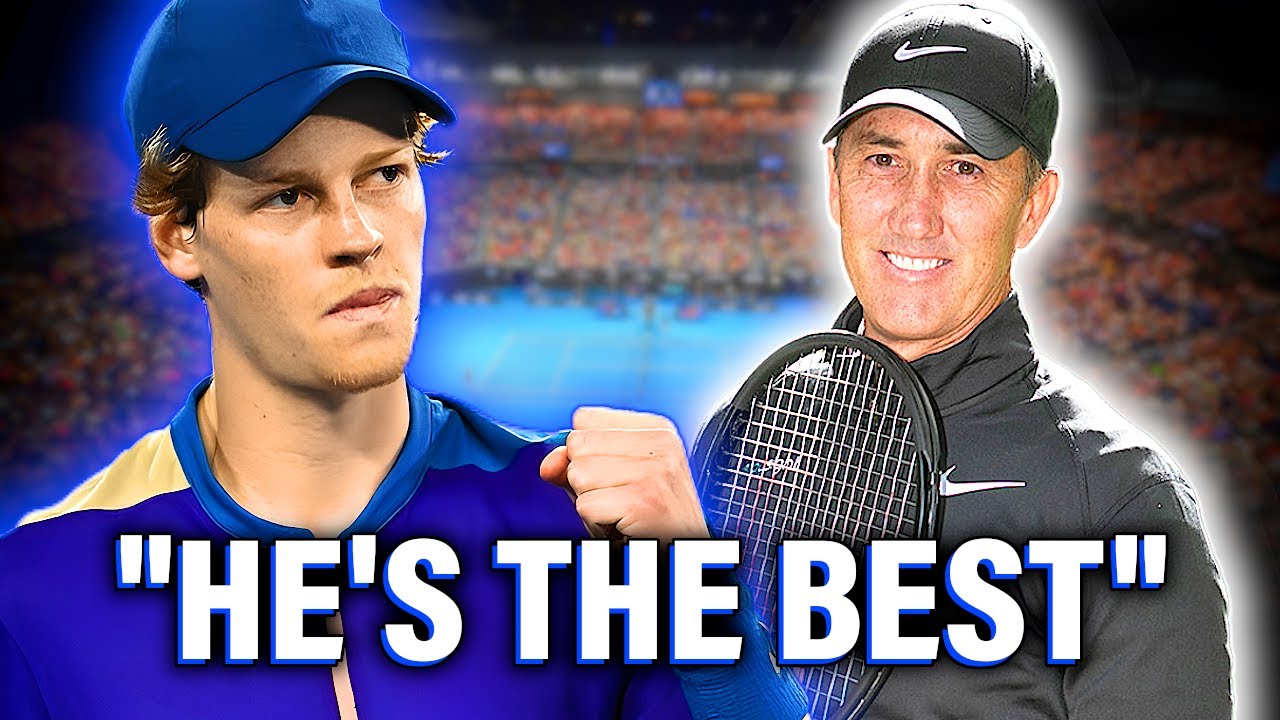
I know there's a lot of people out there that say go on get out there do the best you can the result doesn't matter the result certainly does matter there there's no one that's had four Champs like you've had four Champs they just expect to win you're not just born with that Darren Kale's going to knock your scks off philosophy ways to be successful do you think success was just a part of your family or did you choose it at some point that's a former Legend player and coach for the PTO late football club back
in Australia it was expected deep question yeah all right mate what is your definition of success well ultimately in the sporting field you need to win yeah and so getting the W is super important I know there's a lot of people out there that say go on get out there do the best you can the result doesn't matter it does matter the result certainly does matter but making change in my particular industry in tennis making positive change to that athlete is Success regardless of whether that's a player that's ranked 300 in the world and you
get that player to 100 depends also what their dreams are and what their goals and Ambitions are or if you take a player that's ranked 25 in the world into the top 10 or if you can get a play to number one in the world so it's all relative to how much talent you're working with how good the player is you're working with that there's a ceiling on some players as to how high they can go I know I had a ceiling on my limit as a tennis player well you got what 22 in singles
10 in doubles that was your highest ranking and then you blew your knee like like you know I'm an old man I blew myy you blew it at a young age and got into coaching so where do you think you chose success or do you think with your dad being famous football guy football coach you think success was just a part of your family or or did you choose it at some point it was expected in my family I grew up in an Australian Rules Football family as you know my dad's a former Legend player
and coach for the PTO football club back in Australia which is one of the big football clubs boo port so then he ventured across to Melbourne and coached Collingwood for a couple of years which was a great experience so he had enormous success especially as a coach back home so I had an opportunity to grow up in that environment I was able to sit on the bench with him when he was coaching I was around all the players I went to all the training sessions I didn't miss a game for the first 16 years of
my life and really I was going to be a footballer not a tennis player and I just migrated into tennis sort of by accident because he had a real love for tennis his favorite player was Rod Laver so we used to go out and play play tennis in the backyard so I sort of fell into tennis accidentally but I was always thinking and dreaming of being a football player and because I grew up in that environment and I saw the way he coached and the way he would sell belief and the way he would deliver
his messages to to 20 different guys so tennis is very much one-on-one he had to work out the personalities and the strengths and weaknesses of each of those players and then work out the best way to deliver a message to that player so a lot of his job was not only Technical and tactical coaching but a lot of it was selling belief yeah and sing in a team environment so growing up around that it was almost like there was no opportunity to choose success it was just a thing um what's what's the Darren Cahill formula
for Success like how do you believe success happens for people in this day and age well you can't you can't walk in and demand respect no matter what you've done with any particular field before or how much success you've had with a former player or how long you've been in the game or how good of a tennis player you were when you ventured into coaching I think it takes time to get to understand the player and you need to ask a lot of questions to to realize what makes them tick you know I always give
this example if that I'm on the tennis court I'm playing you br on the tennis court and you leave the ball short in the middle of the court if I'm seeing that ball I'm taking that ball hitting a forehand to your back and and come to the net every single time because that's what I did and I'm going to win that point seven or eight times out of 10 I might volley but that's what I did and that's what I was looking the firster I worked with was Leon hu now if I gave that ball
to Leon he was so fast much faster than I would he would get up to that ball quickly he'd hit that ball and then he'd wait to see if you drop the hand off the racket you played a defensive SLI back end or if you attacked it and played a double-handed back end and then he would decide whether or not he's coming to the net he's not instantly coming in he was so quick and if you going to hit an aggressive pass he would back up and start the point again now if I gave that
same ball to agasse he's not putting that ball away he's thinking to himself okay have a chance to run you br and I'm going to put you in this corner and hit it just hard enough so you can get to it then I'm going to run you here then I'm going to run you there then I'm going to run you here then he's going to rip your lungs out and you won't be able to breathe for the next 2 or 3 minutes and then after the point's finished regardless of whether he won the point or
not he's going to be on the line in the next 5 Seconds ready to serve so he's investing in the set and the future by trying to get to your lungs and then if I gave that point to Simona she's going to try to hit a winner off that every single time because she doesn't want to come to the net she just wants to finish the point so that's just one shot that four players see it completely and the new Kid the new kid would probably try to just hit the winner because that's his shot
and he's quite happy to come to the net he's quite happy to do anything but his 4an is a massive bomb so he's more than happy to hit the winner so that is coaching right it's it's asking the questions learning to find out why they're making certain decisions and then they might be right wrong within those decisions and that's where coaching comes in that's when you need to sell what you believe is the best thing got it so what about coaching success cuz your career as a coach I mean it's there there's no one that's
had four Champs like you've had four Champs right now admittedly Leighton you got when he was 12 Andre what 30 leg already Simona was already on track new kid already had great Co but you came on and and how do you succeed like your formula as success for you not them but you as a coach how do you do that well you need to be a bit lucky for sure it's you know picking the right players and working within that environment and making it a good environment to me is really important culture is everything whether
it be in business or whether it be in sport or whether it be a team sport I think that the culture word and then the individual sport has been left out many times and the teams are much bigger now than they used to be back 20 when I was with Andre was Gil Rees myself and Andre the three of us in way we would go and the culture within the team was excellent but now it's a mini buus full of people you have Simone vosi who's the other coach is doing a remarkable job with Yanik
and he came on before I did and doing an incredible job and then we have Umberto Ferrara who's the physical trainer and then we have osteop then we have a physio then you have two agents so then you have the family sometimes so it's a mini bus of people that unless all the working parts are harmonious and working together and that's kind of where I come into this group as well so for me Simone is really the main coach he's the one that's pushing a lot of the buttons and and I'm sort of sitting over
the top overseeing everything everything gets run through me we talk about what he's trying to do with his game where we're trying to improve and I'm a different set of eyes for for what they're working on but my main responsibility is to make sure this team works and it clicks and and that Yan keeps his feet on the ground no matter how successful he is or he keeps his chin up and walks tall no matter how many tough days we have and we've had some tough days as well oh yeah there's no you know it's
funny cuz tennis and golf are very similar in the fact that the vast majority of your life you lose yeah exactly you you don't it's not like a football team where you win every other week type thing or 60 % of the time or whatever how do you deal with that aspect of it you have short-term goals so there are certain even with the anic last year so our theme for the year last year was knocking over hurdles barriers so accomplishing things that he was yet to be able to accomplish in his career so that
was head-to-head matchups that was winning a couple of bigger tournaments he'd never beaten sits a pass before last year he' never beaten meddev before last year he never beaten Novak before last year he never beat rade before last year so all these top 10 players and all these guys that you have to overcome at some point if you wish to win a Grand Slam Tournament so one at a time we would try to break down those matches give him game plans sometimes they would work sometimes they wouldn't he'd go out there and he'd take a
loss and we sit back down and work out okay did that work was it good enough do we need to improve on that well you're not beating Novak easily he's coming back at you and he's going to problem solve as well he's one of the best problem solvers in the world so he's going to make adjustments to his game just like meddev made adjustments to his game at the Australian Open when he came out and played Super aggressively for the first two sets and then yenick had to change his game to be able to stay
in it so tennis gets compared a lot to chess you know there are a lot of moving Parts going all the time and that's where for us coaching has been really important because it's legal now we can actually coach from the sidelines and help the player But ultimately regardless of what information we give the player it's the player that swinging the racket it's the player that has to have the composure it's the player that has to have the belief in the big moments to to execute those big forehand down the line or or throw in
a Ser volley as a surprise tactic or or be brave in the big moment so all the credit goes to the player but what the coaching has done for us it's legitimized our industry and now we can actually help the player not only to set up and get ready for for matches but also in play which is really important you said to Paul anacon on an interview one time that uh most of the work gets done during the week like on game day Andre you did a little bit more with Simona you played it by
where's Yan on game day is here and and tell me more about all that work getting done during the week rather than on game day so Andre taught me more about coaching than I taught him for sure and you know Andre he he's a student of the game so my but he's also perfectionist in everything like the way he grills the steak like it's got to be done perfect every time there's everything no he has real pride in his perform performance everything he does and regardless of whether that's playing tennis or doing his charity or
providing an education for the kids I think they have over 130 charter schools around the US now and everything he does he does to the best of his abilties so he taught me a lot about not so much about being professional but really doing your homework to be able to answer every single question that might be thrown your way because he wanted to know everything he wanted to know what was going to happen if I hit a ball with less spin at somebody's forehand are they going to back up are they going to hold their
position they hit a certain type of shot so he was looking for information that he could then relay in his brain as to how he was going to win this match so when he could think about the match the night before he'd already played the match three or four times before he stepped onto the court so he was visualizing what was going to happen before he executed so when he executed it was like deja vu it had already happened it was easy for him so that was the way he processed yix a little bit different
because most of the work with yanic is done in the week leading up like I mentioned to Paul and he's somebody that needs to be left on a little bit before the big matches um he's got all the information he's digesting it a lot of what we're working with him also doesn't come naturally to him so he's great from the back of the coure but was really a left and right player wasn't someone that was looking to transition forward wasn't someone that would use the Ser volley wasn't somebody that was moving the old Aussie serve
volley yeah and sort of the body serve these days is left alone everyone serves so big they go for the free points and they try to go for the Lions the body server is coming back into tennis because we used to use it a lot to set up an easy volley for ourselves so players are working out there are other ways now to win tennis points you don't just have to crack forehand and backhand winners and that's kind of where we've come in with yanning but ultimately he's so good from the back of the court
that you have to send him onto the court to play his game but if things are not going great then there are other ways to get the job done which he he proved in a couple of matches at the Australian Open which helped him get to the the Finish Line yeah you're on the big podcast I'm Brad sugar we're going to be back with Darren K we're going to talk about how does coaching really work there has never been a better time to become successful in life than right now creating success in your life isn't
about chance it's about learning what it takes to create a great life and that's why Brad Sugar's put together 30X life you get his 30 years of success in 30 minutes a day for 30 days you only get one shot at this thing called life let's build an amazing life for you so Darren let's chat about coaching okay cuz obviously I'm business coach tennis coach uh arguably the goat tennis coach at some point we got a still a ways ways to go um what is the top two or three things someone should know if they
want to be a great coach whether it's business or or sport or whatever listen you need to listen I think it is the most important thing in tennis is to when you first start a job especially with a new player is to ask a lot of questions and to listen to the answers not only the information that's been given to you but the mannerisms the way the information is given to you because I think you learn a lot about your player by listening and working out how they see themselves as a person but certainly how
they see themselves as as an athlete and as a tennis player so take your time ask a lot of questions talk through the sport and and communication is incredibly important and if you don't communicate in the world today it's a different generation right we have kids we have younger kids it's a different language now some of the stuff that comes out of my kids and it's a different technology too we can't call the kids anymore you got to text them exctly so you you have to go with the flow and keep evolving and I think
that one of the most important things also is everybody aspires to get their dream job right is you know go through the ranks you coach younger players you you might be coaching a team you go through various teams then finally you want to coach at the big leagues at the elite level and you get that particular job and then you're satisfied you do a great job with that particular player or team but you don't keep evolving and you have to keep upskilling yourself and that's talking to other sports and other athletes and other coaches and
and doing business courses I think because I think the business and Sport crossover is still really prevalent I did a director's coaching course for 5 days when I went on the portay director's board about six or seven years ago so I went through this 5-day course and as I'm going through it I'm going this is just sport you know all the philosophies coming from being a director of a company and the line you have to cross and can't cross between management and director this is Sport you know you guys are talking about culture and you're
talking about communication and selling belief and and and setting parameters and all that it's exactly the same as what happens in sports so I think the similarities are very strong hey just a quick one uh when I look in the back end of this and it was something that's quite surprising to me I noticed that it says that 82% of you who watch the channel regularly haven't hit the Subscribe button yet so it would be a great favor if you could hit that subscribe button let me tell you why see over the lifetime of the
channel we scale the show and get better guests better production better everything by having the number of subscribers so if you hit subscribe it helps us plan better do more get better guests and so on scaling production and making the show bigger is something we all want we want more success for you we want more success for the show and we want to be able to get the best guests to give you the best information so one favor click that button if you've watched this show before and enjoyed it just please click that button to
subscribe hit the notifications Bell and make sure you're part of it because as the show gets better your success gets better simple as that I promise I'm willing to uh make you do we have a deal if you do better and subscribe I'll get better guests and make it a better show thanks for subscribing you've mentioned your D D talking about selling belief and you just mentioned again tell me more about selling belief yeah I think that comes to firstly showing a real love for the sport and and I do I think that there's an
enthusiasm and a vibe that you can send off if you live the sport and players feel it and and understand it and I think that's really important also if you're treating it like a job then the players will feel that as well so you got to be in it for the right reasons you have to have a real love and care for the people that you're working with I think that's really important and show that on a daily basis and we talk about culture all the time and culture is really just about doing the little
things right you know it's the Pleasers and the thank yous and treating the transport person well or the people that give you the practice courts or the bull kids or the umpires you know it's everything that you see in yanet hopefully as someone sitting from the outside looking in you can see that he's a good kid and he's got his feet on the ground he's got a smile on his face and even when things are not going great he sees a reason to to find a smile enjoy the moment because he knows he'll come back
the next day and get a little bit better from it so that is good culture that is and that comes from him and his upbringing and his parents and the way he's been brought up and the people that he's got around him and I think that's winning to me regardless of what he does in his career you're making him not only a better tennis player but you're making him a better person yeah so if if we look at coaching as a skill okay what do you think of the top two or three skills other than
listening a coach must have that's a great question because I don't think it can be just two or three because you're working with so many different areas you know for me I always say in tennis that the coach needs to take a back seat it's even me doing this with you you know it's a little uncomfortable you sitting there on ESPN for years and channel 7 in Australia for years watching every single player game after game after game I I think that the fact that you had that knowledge of every opponent that's got to be
a skill set that I mean it's very hard to replicate not many coaches have that time more than you think yeah more really it's tennis coaches we're on the road 35 40 weeks of the year yeah what are you going to do you're going to sit in your hotel room and just watch golf we are we live the tennis so whether or not you're at the tennis watching matches or you're home we have a analytics golden set analytics that we work with and they're amazing so you can go deep into the analytics if you want
you know we have this program now that you don't have to sit there and watch a three-hour match you can break it down in 30 minutes and then cut it off and send it to your player seven or eight minutes of stuff that's really relevant for him to watch so you can go deep into that um tennis is a life sport for us and a lot of the coaches we live it so going out and watching matches is not just me it's it's all the coaches and it's you know I think it's it's part of
doing your job properly it's part of executing what you need to do to be as good as you can be for your player for me it's just normal it's it's our life and I know other coaches do exactly the same as me so I'm nothing special in that area so flip it over then ESPN I mean you and Brad seem to have an amazing banter uh and that thing is that because of the Love of the Game that you have that just the knowledge of the game or the way you break it down what makes
you guys so good at being the the commentators oh we're good mates we've always been good mates even when we played against each other I used to hate playing him because he would comment during the match you know he was a nightmare to play against because oh you're so lucky man oh that L go I can't believe that oh what a bad call this Brad would always give a running commentary Brad gilber does BG so during the match and then after in the locker room if he'd beat my ass which he normally did then he'd
come in sit next to me and talk about the match you know so that that's Brad he just loves the sport and loves to talk about tennis yeah and I think we see the game very similar at mostly 99% of the time we communicate a little bit differently but I love him to death he's the first person that calls me every day and and he's talking you about sport he's already messaged me this morning when I'm getting getting down to Indian worlds because he's got practice down there with Coco and uh he you you can
feel the love of the sport when you talk to Brad and Brad which most people don't know is that I was a decent tennis player but I needed the the best players in the world to have a bad day to have a chance and if they had a bad day I had a good chance and I was able to get some good wins over some good players Brad didn't need that he could beat them when they were playing well he was number four in the world he was a heck of a tennis player and if
you look at him you go God how can this guy because you know where's the athlete there yeah but he had this big first serve but his second serve was nothing the back didn't look like it was much he had a great forand but he had this ability to find weaknesses which is why he wrote that book winning ugly because he would work out way he was like a flood of water coming down and then players you know when you sand bagger house because of the flood we just had those big floods down the Murray
River in Australia but water finds a weakness it finds a way through the sandbagging and you just need one little weakness and then it all tears down and that's Brad Brad would find a weakness and just tear your game part and you'd come off the court going God I just lost to Brad 4 and four and I felt like I couldn't play at all at the end he he just made me feel so bad and that was Brad's superpower because that's the way he played and that's the way he coaches as well so I I
think he's amazing and hopefully some of that comes through in the way we talk on ESPN yeah so some players you watch them go on the court and and you mentioned this you know you needed them to have a bad day or or Brad fins the weakness you watch a a rougher or a a Novak or a Roger walk on the court Andre was like this too they just expect to win like they know they're going to win there's no there's not even a shred of evidence in their mind that there's a chance that they
can do anything other than win this game and even when there are a couple of sets down how do they learn that mental fortitude or is it something they learn or is it something they grow or how do you coach that into someone well I think you need to build that through resilience so you don't you're not just born with that you don't just have it so you have to go through some tough times to build up that resilience and find ways to overcome it and all the best players in the world you're right they
all have that belief who was the best at that do they Andre was the best that I've seen that I've worked with other players would be I think Novak's incredible I think Raph is amazing you know to beat Nadal on at the French Open over five sets is maybe the toughest thing in the world in our sport to to do and his record there speaks for itself but I don't think he would say that even going through the Juniors you know there were some times when he had to really get pull himself off the ground
and find ways to become a better tennis player and that's one of the great things about Rafer is that every time he walks on the court no matter who he's playing he treats It Like It's a grand slam final and that's why you see his excitement if he's winning in the first round of aapo and and gets through four and four no matter who his opponent is you know as a big fist pump to the crowd and he's excited to win yeah and we're all thinking why are you so excited you you're always going to
beat this guy but no he he takes everybody as if he's playing a grand SL final and that's a real asset that he's always had it treats everybody with great respect so that flows through to his personality as well for me the the player that I worked with definitely Andre definitely and I think one of the important things is no matter what the school one of the great things about tennis is you can't run the clock down so you're always in it until the last point so what you try to do is you put things
in compartments the first couple of sets you've lost the first couple of sets Okay we're at the start of set three incredibly important that I just hold my serve here I hold my serve for the first couple of games stay in touch with my player and let's build from that let's try to win this third set and then if you can win the third set then it becomes a a challenge to win the fourth set so lots of people look at tennis as like running a marathon it's not running a marathon it's running a series
of short Sprints yeah you play two games you sit down you take a rest you get up and you try to win one of two games and if you can win the first game of those two games you have a free one to go out and try to go hard for the next game then you sit down and do it all again so it's basically running fatle Sprints over and over and over again and if you don't treat it like a marathon then you won't wear yourself out mentally as well you're on the big success
podcast we're going to come back and talk about the difference between the goods and the greats Darren kahill is an Australian tennis coach and former professional tennis player he won his first tour doubles title in 1985 at Melbourne and his his first top level singles title in 1988 in addition to his coaching responsibilities kill doubles as one of the premier on camera personalities for ESPN tennis broadcasting and channel 7 Australia and you're back make sure you hit that subscribe button Darren good versus great you know the business books on good to Great there's all of
that sort of stuff A buddy of mine years ago said to me Brad people don't need the book good to great they first need the book to okay right and then okay to good and then good to great um if you look at the players that either you've coached or or just players in general that earn a living through playing tennis they're good they can stay in the top x00 they grind it out every week they're always there making a living what's the difference between them and someone who breaks out and does win a major
or does go to that top level so tennis is many different countries many different types of athletes you can have fast ones slow ones strong ones weak ones some athletes can have great diet some can have bad diets you know there's no real recipe from that but all the great players have a few attributes which if they don't have it they're not going to be successful and that's a work ethic they all have incredible work ethic MH they build up resilience and they're able to tolerate a lot throughout mental resilience or physical both both as
incredibly important in tennis over five sets at a grand slam you're playing Seven matches over two weeks that you have to understand your body and know when it's an injury or when it's tightness or when it's a nigle or how much you pushed through it we've been through that a few times with our players before in fact Yanik felt something a little bit in one of these matches at the Australian Open and because he's dealt with it before in a previous match he knew exactly what it was and he was able to push through it
where previously he did not work ethic resilience belief which we speak about all the time they all have incredible belief and they all have this feeling like no matter what happens on the other side of the court if I play my game and I play to my level I can win this no matter what and I don't think that good players like myself I never had that because if I walked onto the court against the best players in the world I was waiting for an opportunity from them because I knew they were better they would
hit the ball harder than me they could move a little bit better than me they they had more weapons than I did yeah so I didn't have that same belief as a tennis player because I didn't have the skill set but my skill set was working my ass off having the patience to wait for the right moment knowing that I was going to throw myself all over the court until the last point and you had to finish me off otherwise I was going to stick around and be a pain the back side that was my
skill set so I played to that skill set I didn't have the natural talent that a lot of the other players have the one big thing for me that all the Champions have is they have a good team around them so there's some consistency with the coaching with the physical training with the people they surround themselves with and I think there's a a great saying I'm not sure if it's an Australian one or not but a good coach will make you a better tennis player a great coach will make you a better person an exceptional
coach will make you better at both and I think that's really important in tennis especially because as I said before that our teams are growing so that culture attitude and that culture feeling within teams become more and more important as the years have gone along it it's no longer an individual sport it's more a team sport yeah what is it then that you see them that break greatness and then drop off like there's a bunch of guys and gals over the years they've won a grand slam and then it's like they've hit their goal for
life and and then they drop back sort of thing or what what do you see with that yeah and I think it happens as much now as it used to happen because we've been so blessed through this generation to have three of the alltime legends of the sport in Rafa adal Noak jovic and Roger feder and they've dominated tennis in the men's side for so many years so they've made it incredibly tough for players to come through and win Majors we know Stanford Rinker winning three Andy Murray 13 del Potro came through in 1-1 chich
I was there for that you were yeah may you just lck plays A Part injuries play A Part del Potro maybe he would have won five six seven mes but he had incredible injuries throughout the course of his career but I think also it's important that when a player does come through and wins a major and we've spoken about this over the last couple of weeks with our team as well is to make sure that we keep the players feet on the ground and keep assessing those goals and moving them higher and higher to make
sure that you never stop chasing you never settle and you continue to keep working on the game to become a better tennis player now we don't really have to do that with Yanni because he thinks that way already he's already thinking this is great I want to fill this again yeah and that's a that's a a pleasure to be able to work with somebody that thinks that way yeah you mentioned something earlier about the short-term goals I remember John Buchan an Australian cricket coach telling me about Mount Everest in a career that like you know
they took the Australian team and said no one's done 400 runs in a one day no one's whitewashed Are You Now setting a lot more small goals with him or is it that big career thing where where do you sort of sit on that fence no we're weak to week with we we don't talk about the big goals we don't talk about winning Majors we don't talk about the ranking we've never discussed the ranking with him the only times we'll look at the ranking is for the seatings to see where he might be in a
draw but beyond that everything if he does what he needs to do correctly that'll take care of itself so we're more worried about the day today what are we working on what's our goal today how are we going to get better what are we addressing and we our goal every day is simply to walk off the practice court feeling better about what we worked on than when we started did you where did you learn that approach to the day-to-day is that something your dad did where where did that come in cuz most people are all
focused on this massive big thing and forget the dayto day so I think through my resilience through doing what you just said earlier in my career and placing way too much pressure on my players because they're so focused on the big goal that they're forgetting the not only the daytoday but every single result that happens becomes too important for them and we're not that concerned with every single result we're concerned with the big picture of everything and you can only accomplish that the big thing for us is to work on a spe whether it be
gan's volley or his transition to the net or serve which we've changed a couple of times over the last 18 months if we can look back after 3 months and go through the analytics but also through just the coach's eye all right this has come a long way we're on the right track with this then we've done a good job so that to us is more important and that that's what the coaching is about then whether it translates into winning tennis matches it should it's not necessarily going to every single time but it's going to
give him better chance of winning tennis matches the for us in business we don't necessarily have a competitor to beat every week how how do you help business people then understand that type of nature cuz we don't we don't know if we've won at the end of the week type thing we don't beat a t beat a person each day we just go to work and we do that get better each day so we break down opposition nonstop that's a big part of our job is to work out through the analytics Through The Scouting through
watching tennis matches why players are winning why they're successful in certain areas what's working for them what doesn't work for them so when our player plays that player then we have a bit of insight as to how it's going to go so in business I'm pretty sure whilst you don't have a competitor to beat every week you have competitors in the market that are either doing a worse job or a better job and I think it's also important not just to focus on the the competitors that are doing a great job but you want to
see the ones that are failing in the business because you learn just as much from them as you do from the ones that are doing well so I I think that just being solely focused on your player is a problem I think that you have to have a outside whole 360 look on the field that you're up against and I think that that makes you better in your job anyway because you're doing more research becoming more rounded as a business person or as a tennis coach and the more homework you can do the more you
put in the more you get out of it now mate as a dad Pride watching your two kids now yeah how do you do you get involved coaching or do you step back or do you allow their Co what what's going on there you can answer this one for sure I um I did not get involved in the kids coaching of tennis I didn't care what they played coming through as long as they were active and I I sit with great pride now that I have both my kids one's in college in South Carolina at
Ferman he's doing his last semester over there and he's looking at doing his PhD in chemistry somewhere else here in the states so and he's on the tennis team there he's doing great um but he's going to go into business and and I'm incredibly proud of him and then it's Benjamin and then tal has just started her first year at Chapman University Orange County in California she's doing psychology and she's on the tennis team over there as well and she loves it you know she's loves the atmosphere of being at college and I couldn't be
happier for so this was even though my kids were born in Australia and they're Australian we spent a lot of years over here as you know and our kids know your kids really well and they've always had this dream of coming back to college in the US and and for us as parents for Victoria and I to to be able to see that happen for them we couldn't be more proud of them so final question around tennis and coaching and everything how do you manage the whole life of that thing because that's you know business
people often get consumed by their thing and Tennis is as you as you've said it's a almost all consuming how do you manage that and still keep your life you have to have a good wife I got very lucky because uh it it's not as easy as what people think so if you're coaching the Raiders or you're coaching a basketball team or whatever you're coaching you're coming home every night most nights and bring your kids to bed and kissing your wife good night and most of the nights just sleeping in your house we're on the
road 35 40 weeks of the year not just me everyone all all all the coaches both male and female coaches so and it's part of the reason why we don't have as many female coaches in our sport it's just tougher to get female coaches to leave home go on the road 35 40 weeks of the year for obvious reasons and there are some incredible female coaches so I hope that changes over the years it it is difficult you have to have a good partner and Victoria was a high performance athlete he played net ball with
the Thunderbirds back in Australia and she understands what it takes for a high performance sport U we've had this dream and we've been following this dream we've been incredibly lucky that we've been able to work with some great players which has made it easier for sure I make no doubt about it but there's also a thrill that comes with as well Victoria was in the the coach's box just a row behind us during Yan's Australian Open and that are magical moments when you see and you invest in someone and you know someone you know their
personality and you get on so well you just you know your heart goes out to them watching them battle away there on Center Court and being able to make it happen and it was a really special moment that's for sure not just for us but for the whole team the whole Italian team and the reaction back in Italy has been quite remarkable and deservedly so because he's a good kid well I remember you talking about the moment Simona held up the French Open uh trophy because of again small country the pressure on her was ridiculous
um final question what's the greatest advice or the best quote you ever heard on the subject of success you know it's I don't know if there's one particular quote patience is the most important thing I think not only from a coach's point of view but also the Players Point of View because in tennis especially we're impatient as a sport as an athlete we we want it straight away everything and we go out there and you want it to click and and I think we can become really impatient with not getting the results or after but
it's more about the T the actual match court is just for show it's it's when you practicing inside a stadium with zero people watching that's what really matters and and that's where you're putting in all that hard work I I did a week with Roger federa in Dubai years and years ago and was stunned how hard he worked on the practice court four or five hour blocks on the and I never knew this about Roger because if you go and watch Roger on the practice warming up for a match it looks like he's going out
to play with the country cup employees just slapping the ball around barely moving his feet you know and he said Darren all hard work is done in the leader I have I just have to fill the ball and feel good about my game here you know so everything is done away from the Public's eyes and and that's where all the hard work is done so everything is set up through that and if if you can accomplish that then you can accomplish some great things Darren kahill Our Guest today on the big success podcast we'll see
you again next week for more of your success you've been listening to the big success podcast with the number one business coach in the world Brad sugars to learn more about how to achieve business and personal success as well as how to level up or listen to past episodes visit www.radar.com [Music]