It may start with something small. You stand up, take a few steps, and notice your stride feels shorter. Your hips feel less steady, or your walking posture does not look as strong as it used to.
Most people blame age, knees, or tired legs. But one of the most overlooked reasons may be weak glutes. Here's something that got my attention while reviewing Harvard Health's advice on stronger legs and healthy aging.
Harvard points out that as we age, leg strength becomes even more vital because your legs are involved in everyday movements like going up and down stairs, sitting down, rising from a chair, bending over, and standing up. In other words, this is not just about exercise. This is about the movements that decide how confidently you move through your day.
But here's the part most people over 60 never hear. Harvard Health also notes that the gluteal muscles help you extend your leg, push off, walk, and climb stairs. That means weak glutes do not just affect your backside.
They can quietly change your stride, your posture, and the way your body looks when you walk. And this is why the surgeon approved part matters. The American Academy of Orthopaedic Surgeons says strengthening the muscles that support your hip helps keep the hip joint stable.
And their hip conditioning program targets the gluteus maximus and gluteus medius. Today, I'm going to show you three essential exercises to quickly build stronger glutes and walk better after 60. No gym, no heavy weights.
And number one is the movement I saved for last because it wakes up both glutes at the same time. Before we begin, tell us in the comments now your age and where you're watching from. Now, let's get started.
Number three, supported side leg raises. Starting with number three on our countdown, this exercise might look almost too simple to be effective. You stand beside a sturdy chair, wall, or table, hold lightly for support, and lift one leg out to the side.
But, the science tells a completely different story, especially for adults over 60 who want stronger glutes and a better walking pattern. A 2022 systematic review published in Archives of Physical Medicine and Rehabilitation examined 59 research articles involving 2,144 adults and found that hip abductor strength is critical for balance and mobility function. That's the part most people miss.
These hip abductor muscles include the side of your glutes, especially the gluteus medius, and this small muscle group has a huge job every time you walk. Here's why this matters more than you might think. Every time one foot leaves the floor, your body has to balance on the other leg for a brief moment.
Your side glute helps keep your pelvis level, your hips steady, and your knees tracking properly. If this muscle gets weak, your steps can become shorter, your hips may sway, and your walking posture can start to look older without you even realizing it. This is also why the surgeon-approved angle makes sense.
The American Academy of Orthopaedic Surgeons explains that strengthening the muscles that support the hip helps keep the hip joint stable. And their hip conditioning guidance specifically targets muscles like the gluteus medius and hip abductors. Here's how to do it properly.
Stand beside a sturdy chair, wall, or table and place one hand lightly on it for support. Keep your chest tall, your toes pointing forward, and your body upright. Slowly lift one leg out to the side only as far as comfortable.
Do not force the height. The goal is not to lift high. The goal is to feel the side of your hip and glute working without leaning your body.
Pause for 1 second, then lower slowly. Start with eight to 12 repetitions on each side. Once this movement feels easy and controlled, you can make it more challenging by adding a light resistance band around your ankles or just above your knees.
But don't rush this step. Control comes first. Resistance comes second.
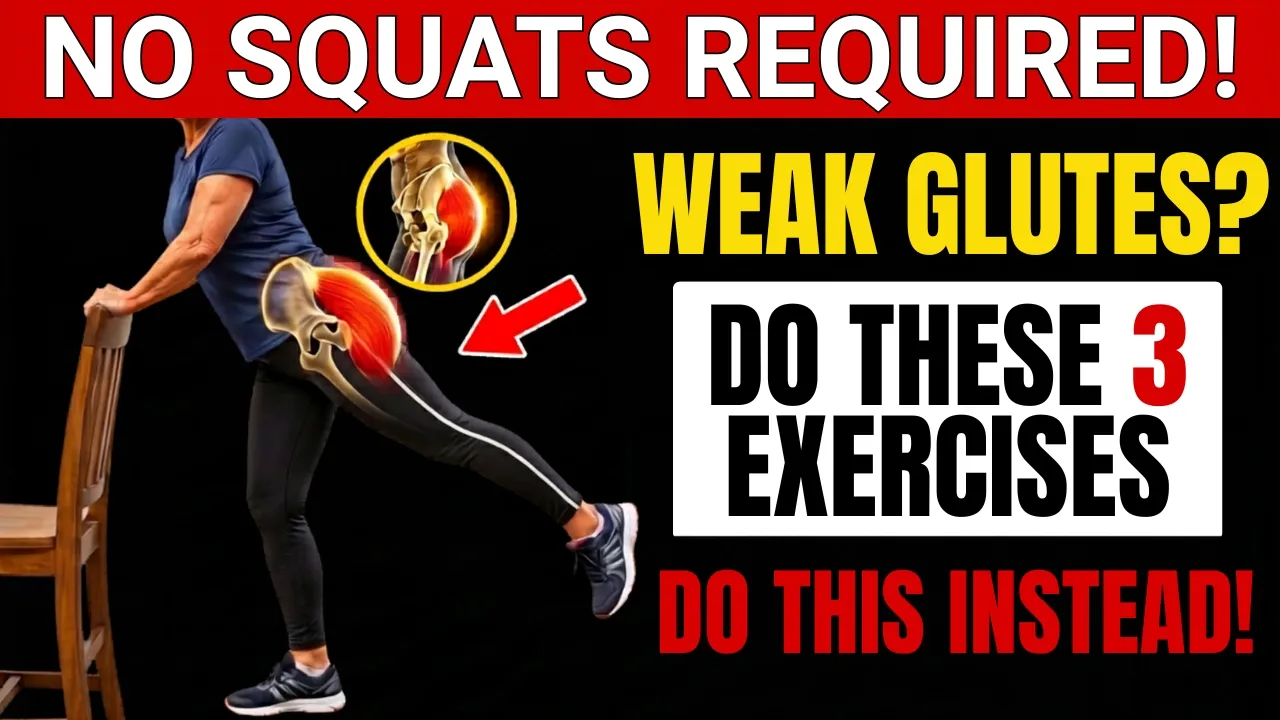
Now let's move to the glute muscle that helps push your leg behind you and gives your stride more power. Number two, supported glute kickbacks. Now we're moving from the side of the hip to the back of the glutes.
And this is where many adults over 60 finally start to feel the muscle that gives their stride more power. This movement looks simple. You stand near a sturdy chair, wall, or table for support.
Then slowly move one leg behind you. But when it is done correctly, it targets the gluteus maximus, the largest muscle in your buttocks, and one of the main engines of walking. Here's why this matters more than most people realize.
Walking is not just about lifting your feet. Every step requires your hip to extend behind your body before the next step comes forward. When that backward motion gets weaker, your stride can become shorter.
Your posture may lean forward, and your lower back may start doing work your glutes should be doing. She a gate study published in Archives of Physical Medicine and Rehabilitation found that peak hip extension during walking was lower in healthy older adults than in young adults. And even lower in older adults with a history of falls.
That may sound technical, but here's what it means in real life. When your hip does not move well behind you, walking can start to look slower, smaller, and less confident. And this is exactly why glute kickbacks belong in this list.
A 2020 systematic review in the Journal of Sports Science and Medicine explains that the gluteus maximus is one of the primary hip extensors, and reviewed 16 studies measuring glute activation during hip extension exercises. In plain English, this is the muscle that helps push your leg back and move your body forward. Here's how to do it properly.
Stand behind or beside a sturdy chair, wall, or table. Place one or both hands lightly on the support. Keep your chest tall and your stomach gently tightened.
Slowly move one leg straight back behind you only as far as comfortable. Do not swing the leg. Do not arch your lower back.
Pause for 1 second and squeeze the glute on that side. Then lower the foot slowly. Start with 8 to 12 repetitions on each side.
If you feel it mostly in your lower back, make the movement smaller. The is not kicking high. The magic is controlling the hip and waking up the glute.
Before we move to number one, if you're finding this helpful, hit that like button so more seniors can see it and subscribe to the channel. We've got more simple senior health exercises coming and you don't want to miss the next one. But number one is the movement that brings both glutes together and gives your body the strongest signal of the entire routine.
Number one, glute bridge on bed or floor. And now, the moment you've been waiting for. I saved this movement for last because it gives your glutes the clearest signal of the entire routine without forcing your knees into a deep squat or making you balance on one leg.
This is why it is so powerful for adults over 60. The first two exercises trained your glutes while standing, but the glute bridge lets you focus directly on the hip muscles while lying on a bed, mat, or carpeted floor. That means less fear of losing balance and more attention on actually feeling the glutes turn on.
A 2017 study called Building a Better Gluteal Bridge looked at 28 healthy adults and measured gluteus maximus activation during different bridge positions. The researchers were studying exactly what makes the bridge such a valuable strengthening exercise. It can create strong glute activation without heavy equipment.
That is not just a gym detail. For someone over 60, it means you can train the same muscle group that helps you stand taller, push through your steps, climb stairs, and support your hips right from home. And this fits the surgeon-approved angle, too.
The American Academy of Orthopaedic Surgeons explains that strengthening the muscles that support the hip helps keep the hip joint stable. The glute bridge targets that exact idea. Stronger hip-supporting muscles, better control, and a more confident walking pattern.
Here's how to do it properly. Lie on your back on a bed, mat, or carpeted floor. Bend your knees and place your feet flat, about hip-width apart.
Keep your arms relaxed by your sides. Now, press gently through your heels and lift your hips until your body forms a straight line from shoulders to knees. At the top, pause for 2 seconds and squeeze your glutes.
Then, lower slowly. The key here is control. Do not arch your lower back to lift higher.
The goal is not height. The goal is glute activation. Start with eight to 10 repetitions.
As you get stronger, work up to 12 or 15. This is the movement that ties everything together. Side leg raises help steady your hips.
Kickbacks help power your stride. But glute bridges teach both glutes to fire together, helping you stand taller, move stronger, and walk better after 60. At the end, these three glute exercises work best when you use them together as one simple routine.
Start with supported side leg raises to wake up the side glutes and steady your hips. Then, move into supported glute kickbacks to train the back of the glutes and improve the pushing motion of your stride. Finish with glute bridges on a bed or floor to bring both glutes together and give your hips the strongest signal of the routine.
You do not need to do a long workout. Start with 8 to 12 repetitions on each side for the standing exercises, then 8 to 12 glute bridges. Rest when you need to and repeat the circuit one to two times.
Try this routine three times per week. Once it feels easier, add a light resistance band to the side leg raises or add a longer squeeze at the top of each bridge. Remember, the key is not perfection, it is progression.
You could use a chair, wall, or table for support. Keep every movement slow, comfortable, and controlled. Your body after 60 can still respond when you give it the right stimulus.
Now, we want to hear from you. Which would you most like to improve? Stronger hips, easier stairs, better posture, or a more confident walking pattern?
Share your answer below. Thanks for watching.