What if I told you there is a single exercise that without weights or a gym can restore the strength, balance, and confidence you thought you had lost after 60? What few people know is that after 60, your body begins to lose around 1% of muscle mass each year. And if you do nothing about it, that silent decline can steal something invaluable, your independence.
The unsettling truth is that just one fall is enough for everything to change. But here's the surprising part. There is a simple protocol of just five movements that can reverse this loss.
And it all begins with a gesture you do every day without thinking. Getting up from a chair. What seems like an everyday act is in reality a powerful test of your functional strength.
Do you want to know why this movement might be the key to staying steady, strong, and in control of your life? Let's begin. Exercise one, chair assisted squat.
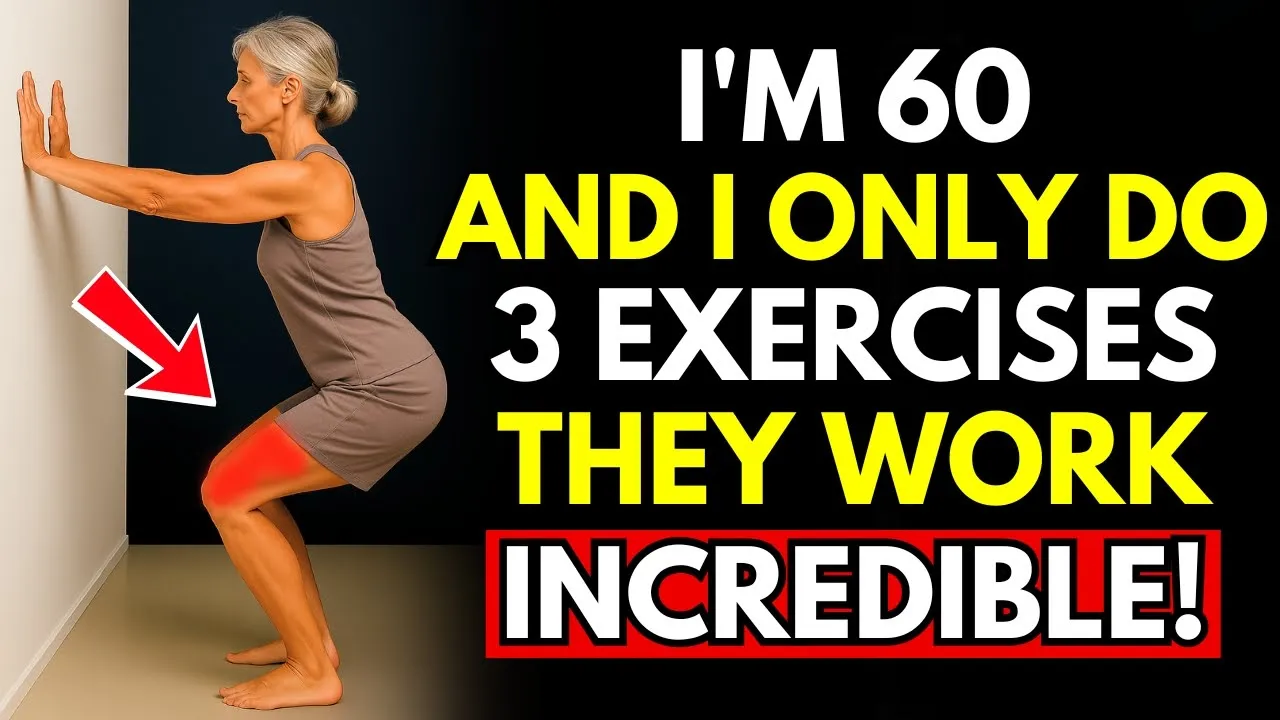
The chair assisted squat is much more than an exercise. It is a direct test of autonomy and a crucial tool to preserve it. When performing this movement, the quadriceps, the front thigh muscles responsible for extending the knee, are primarily activated along with the glutes, which are essential for hip extension.
These two muscle groups not only allow us to rise from a seated position, but also actively participate in essential everyday actions such as climbing stairs, standing up unassisted, walking with stability, or even getting in and out of a car without losing balance. Various studies in exercise physiology and functional rehabilitation have shown that the ability to repeatedly rise from a chair without using your hands is strongly correlated with overall health, life expectancy, and fall prevention in older adults. According to the American Journal of Preventive Medicine, those who regularly perform this type of exercise show significant improvement in lower body strength, faster walking speed, and better overall functional performance.
As we age, we tend to spend more time sitting, which creates a harmful cycle. Less movement leads to less strength, and less strength leads to even more limited mobility. This is where the chair squat comes in as a key intervention.
It requires no specialized equipment can be done anywhere and when practiced correctly, effectively strengthens the structures that deteriorate most with age. Moreover, when performing this exercise slowly and with control, type 2 muscle fibers are engaged, those responsible for quick and powerful movements, which tend to atrophy more rapidly with age. That's why it's crucial to stimulate them even without weights.
Research published by the Journal of Geriatric Physical Therapy supports this practice, indicating that simple resistance training programs using body weight, such as the chair squat, can reduce the risk of falls in older adults by more than 30% after just 12 weeks of consistent practice. This exercise also improves dynamic balance, proprioception, and overall stability, which is vital on uneven surfaces when tripping or during quick postural transitions. With just two to three sets of 10 to 15 repetitions per day, this exercise becomes an essential component of any protocol for longevity, safe mobility, and independent living for people over 60.
Exercise two, glute bridge. The glute bridge is one of the most effective and safest exercises for older adults looking to strengthen deep musculature without stressing their joints. This movement, which consists of lifting the pelvis from a lying position with knees bent and feet flat on the floor, simultaneously activates the glutius maximus, the lower back muscles, and the deep abdominal muscles, especially the transverse abdominis.
These areas are part of the core, a key muscular structure for maintaining posture, balance, and spinal stability. As we age, these muscles tend to weaken due to a sedentary lifestyle and the natural loss of muscle mass, which significantly increases the risk of falls, postural imbalances, and chronic pain, particularly in the lower back. Scientifically, the glood bridge has proven to be an effective therapeutic tool for improving function and relieving lower back pain in older populations.
A study published in the journal of back found that after a six-week training program, including the glute bridge, participants reported a significant reduction in chronic lower back pain, as well as notable improvements in core strength and endurance. Additionally, activating and strengthening the glutes through this exercise helps redistribute biomechanical loads from the pelvis and spine, which reduces stress on the lumbar vertebrae. It has also been observed that strengthening these muscles improves pelvic stability, a crucial factor to avoid inefficient compensations when walking, climbing stairs, or lifting weight.
The glu bridge requiring no equipment and able to be performed even on a mat at home becomes an accessible low impact and highly effective option. Furthermore, by incorporating mindful breathing, inhaling while lowering and exhaling while lifting the pelvis, core activation is enhanced and motor control is trained. Another vital component for safe mobility in older age.
Incorporating this exercise regularly with two to three sets of 10 to 15 repetitions at least three times a week not only strengthens the body's most forgotten muscles but also allows older adults to move with more freedom, confidence, and without pain, directly impacting their quality of life and daily autonomy. Exercise three, side plank. The side plank is one of the most complete and functional exercises for strengthening the core.
That group of deep muscles that includes the abdominals, the lower back, the glutes, and the muscles around the pelvis. However, unlike the front plank, the side version places special emphasis on the obliques, those muscles that run diagonally across the abdomen and play a fundamental role in lateral balance, torso rotation, and postural alignment. As we age, weakness in this area often goes unnoticed until it manifests as falls, especially those to the side.
The side plank, by challenging stability in a single plane, forces the body to deeply activate the stabilizing muscles of the hips, abdomen, and spine. This not only improves balance, but also optimizes neuromuscular control and coordination, essential factors to avoid stumbles or unexpected imbalances when walking on uneven surfaces. From a scientific perspective, lateral core training has been widely studied for its positive impact on fall prevention and improvement of functional performance in older adults.
Research published in the journal of strength and conditioning research has shown that isometric exercises like the side plank not only increase the strength of the oblique muscles but also improve postural endurance, that is the body's ability to maintain a stable alignment during movement. This is key as many falls do not occur due to lack of leg strength, but rather because of poor management of the body center of gravity during lateral movements or turns. Additionally, the side plank helps reduce pressure on the lumbar spine since when performed correctly, it promotes a neutral alignment of the body's axis.
This makes it an excellent option for people with lower back discomfort as it strengthens without generating compression. For greater benefits, it is recommended to perform it with the forearm and the side of the foot supported on the floor, forming a straight line from head to heels. By holding this position for 10 to 30 seconds on each side and repeating it two to three times a day, a stable and strong core is progressively built.
Moreover, its isometric nature allows for focused muscle activation without joint impact, making it especially suitable for older adults or people in rehabilitation. Including the side plank in a strengthening routine not only protects against lateral falls, but also improves posture, control of daily movements, and body confidence. Essential pillars for a safer, more active, and independent life after 60.
Exercise four, lateral leg raises. Lateral leg raises are an essential yet often underestimated exercise within any routine focused on older adults. This simple movement, which consists of lifting one leg to the side while keeping the torso upright and stable, has a very specific goal to strengthen the glutius medius, a deep muscle located on the side of the hip.
Unlike the glutius maximus, which is responsible for explosive strength and powerful hip movements, the glutius medius serves a much more subtle but critical function, it stabilizes the pelvis with every step we take. Without a strong glutius medius, every time we walk or move on one leg, such as when stepping onto a curb, avoiding an obstacle, or regaining balance after a stumble, our body tends to become misaligned, causing the pelvis to tilt and lose stability. This not only leads to muscular compensations in the lower back and knees, but also significantly increases the risk of falls, especially in older adults with sarcopenia, muscle mass loss, or reduced mobility.
From a scientific standpoint, studies have shown that the glutius medius is one of the first muscles to weaken with aging due to its stabilizing role and progressive disuse in sedentary individuals. Research published in the Journal of Geriatric Physical Therapy found that older adults with weakness in the glutius medius showed greater lateral sway when walking and scored lower on functional balance tests. Additionally, it has been demonstrated that a systematic exercise routine, including lateral leg raises, can improve gate asymmetry, lateral movement stability, and reduce the incidence of falls in older adults by more than 25% in just 12 weeks.
This muscle is also key to preventing what is known as knee valgus, a condition where the knees collapse inward due to poor hip alignment, which can accelerate joint wear or cause pain in the lower joints. Therefore, by working the glutius medius with specific exercises such as lateral leg raises, not only is balance improved, but the most vulnerable joints in the body during aging are also protected. One of the great advantages of this exercise is that it requires no equipment and can easily be adapted to each person's level.
You can start by lying on your side on a mat, lifting the top leg to form an angle of 30 to 45°, keeping it straight and aligned with the torso. As strength increases, you can progress to performing it standing using a chair or a wall for balance support. For greater activation, resistance bands can also be used around the ankles or knees.
The important thing is to perform the movement slowly and in a controlled manner, ensuring that the force comes from the hip and not from mechanical momentum. With just two to three sets of 10 to 15 repetitions per leg, three times a week, visible improvements can be achieved in gate stability, interuscular coordination, and body posture. Exercise five, child's pose.
Child's pose is one of the most restorative and accessible movements for people of all ages, but especially beneficial for older adults. At first glance, it appears to be a passive and relaxing position. It consists of sitting back on the heels, leaning the torso forward, and either extending the arms or placing them alongside the body.
But its impact goes far beyond comfort. This gentle stretch relieves compression in the spinal column, relaxes the lower back muscles, and promotes elongation of the neck, shoulders, hips, and knees. It is a posture that invites introspection, reduces stress, and most importantly in the context of aging, restores joint mobility, and enhances body awareness.
After age 60, the body tends to accumulate tension in areas like the lumbar region, hips or paraspinal muscles, partly due to decreased physical activity, the natural stiffness of aging and prolonged postures. Balisana acts as a physical and mental reset, allowing the nervous system to enter a restful state while relieving accumulated stiffness in the joints and connective tissues. From a physiological standpoint, this posture creates a gentle traction in the spinal column that helps decompress the intervertebral discs, crucial for older adults suffering from chronic lower back pain, disc degeneration, or spinal stenosis.
Studies published in journals such as Spine Journal and Journal of Yoga have shown that restorative practices like Child's Pose can significantly reduce cortisol levels, lower blood pressure, and improve the parasympathetic function of the nervous system. This means that in addition to its physical effects, balisana acts as a tool to reduce anxiety, improve sleep, and increase the overall sense of well-being. Key elements for aging with quality of life.
It also supports hip mobility, a joint that tends to stiffen with age, affecting the ability to walk with a steady stride and properly lift the legs. The combination of hip flexion, thigh stretching, and abdominal relaxation helps keep soft tissues flexible and well perfused, which is essential for preventing injuries and enhancing muscle recovery after exercise. Additionally, what makes child's pose especially valuable for older adults is that it can be easily adapted to each person's level of mobility and flexibility.
For example, if there is discomfort in the knees, a pillow or cushion can be placed between the heels and the glutes. If the person cannot rest their forehead on the floor, a rolled up blanket or yoga block provides extra support. It can even be done on the bed for those who have greater difficulty sitting on the floor.
The key is to maintain deep, slow, and mindful breathing throughout the posture, allowing each exhalation to help the body release muscular and mental tension. By practicing it daily for one to three minutes or as a final part of a strengthening routine, child's pose helps restore the body mind connection, supports circulation, and gives the body a valuable moment of active rest. The statistics are clear and alarming.
According to the Centers for Disease Control and Prevention, CDC, one in four adults over the age of 65 experiences a fall each year, making falls the leading cause of traumatic injuries in this age group. Even more concerning, nearly 3 million people are treated annually in emergency rooms for fall-related injuries, many of which result in hip fractures, loss of autonomy, or long hospital stays. However, the most important thing is that this risk is not inevitable.
Science has shown that a structured home exercise program like the one we present in this video can reduce the risk of falls by up to 30% in just 12 weeks. How does it work? by improving balance, functional strength, motor coordination, and body awareness.
All elements that tend to deteriorate over time if not properly stimulated. And the best part, you don't need expensive equipment or a gym. Just daily dedication and well-chosen movements.
The benefits of this type of training go far beyond anecdotal evidence. Recent clinical studies support the effectiveness of simple yet functional exercises such as getting up from a chair, walking in a straight line, or performing lateral leg raises. For example, a study published in the Journal of Geriatric Physical Therapy concluded that the exercise of standing up from a chair without assistance improves the ability to climb stairs by 25% by strengthening the quadriceps and activating neuromuscular coordination.
Another study from the Journal of Aging and Physical Activity showed that lateral leg raises not only strengthen the glutius medius, crucial for lateral balance, but also correct pelvic tilt, one of the main biomechanical factors that lead to tripping. Moreover, walking in a straight line improves gate speed in active older adults by up to 15% which holds great value as walking speed is associated with longevity and functional independence. And we must not forget toe raises, an exercise that stimulates proprioception, improves blood circulation in the lower limbs, and reduces swelling, contributing to a more sensitive, responsive, and healthier locomotive system.
The deepest benefit of moving each day with intention is not only reflected in the muscles, but in the mind. Because when you can get up without difficulty, walk with confidence, go out without fear of falling, climb stairs without assistance, or enjoy a walk with your grandchildren without exhaustion, your perception of yourself changes. You gain confidence.
You regain self-esteem. You feel in control again. And that transforms your quality of life.
Various studies in the psychology of aging revealed that older adults who participate in functional exercise programs show lower levels of anxiety and depression as well as better self-image and perception of autonomy. It all starts with a small step. Dedicating a few minutes a day to moving not out of obligation but as an act of care and commitment to yourself.
Because aging with strength and dignity is not a matter of luck but of habit. And you can start today with a chair, a space at home, and this guide. You have everything you need to build a more stable body, a more confident mind, and a life with greater freedom.
How to start? Very simple and most importantly, without pressure. Watch the full video to learn in detail about each of the exercises, their benefits, and the correct way to do them.
Then start slowly trying the movements at your own pace, listening to your body, and respecting your own limits. It's not about doing them perfectly, but about doing them consistently. Practicing them two or three times a week will already make a big difference.
But if you can integrate them into your daily routine, the benefits multiply. And you're not alone on this journey. Leave a comment below telling us which exercise was the hardest for you, which one you liked, or which one you felt had the greatest impact on you.
Join our community here on YouTube where each week we share content specially designed for older adults who want to live with more strength, balance, and freedom. If this video was helpful to you, give it a like, subscribe to the channel, and activate the notification bell so you don't miss any new content and share it with your loved ones. Your experience is valuable.
Tell us, do you struggle more with strength or balance? Have you suffered a fall or near fall recently? Which of these exercises do you feel you most need to practice?
Leave it in the comments below because we read every single one and use them to create content that truly helps you. Remember, consistency matters more than intensity. You don't need to do it all or do it perfectly.
You just need to take the first step and repeat it each day. Because the real secret to a long, strong, and safe life is to move with intention. Even if it's with just one exercise a day, your body and your health will thank you.