It starts with a child, wideeyed, staring at the night sky and believing that every star is a promise. The world tells him to stay positive, to look on the bright side, to keep his chin up. But what happens when the storm doesn't pass?
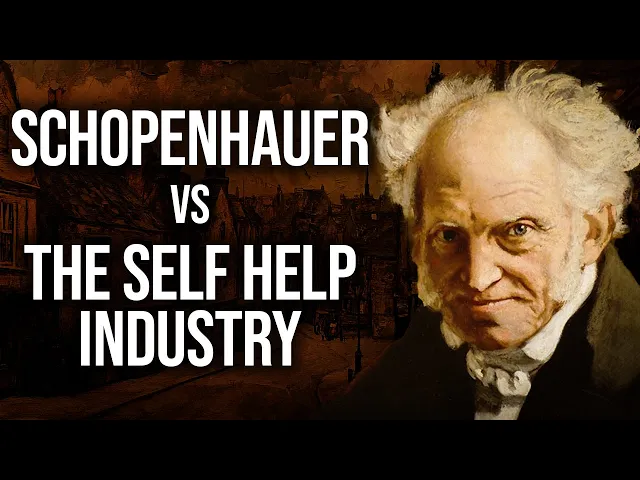
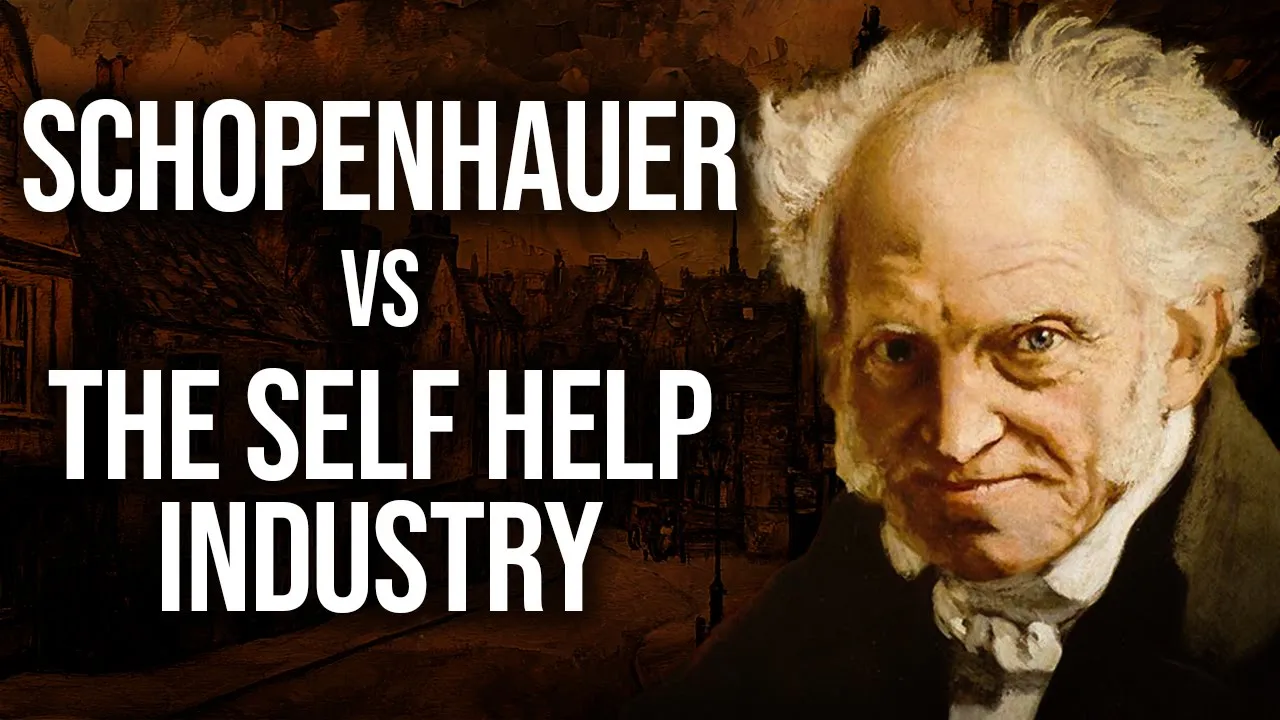
What happens when the light at the end of the tunnel is just another train coming full speed? This was the world as Arthur Schopenhau saw it, and it was not a kind place, nor a fair one. To him, if there was a prison more absolute than those built with bricks and chains, it was the prison of the will, the blind, irrational force that drove all living things to pursue, struggle, and ultimately suffer.
Arthur himself was no stranger to pain. In 1805, when he was just 17, his father fell into a canal and drowned. Many whispered and speculated that it was no accident, that the burden of existence had finally broken him.
Whatever the truth was, one thing was certain. His death left a scar on young Arthur that would never fade. His father had given him many things: wealth, education, but most importantly, a truth that would shape his entire philosophy.
life is suffering. However, his mother, Joanna Schopenhower, had a more optimistic worldview and a social nature. His relationship with her was, to put it mildly, like oil and water.
They held completely different ideological views on life, and their already strained relationship reached its breaking point in 1819 after a series of heated arguments. The words she left him with cut deeper than any blade. You are unbearable and burdensome and very hard to live with.
All your good qualities are overshadowed by your conceit and made useless to the world simply because you cannot restrain your propensity to pick holes in other people. Additionally, 1819 was a difficult year for Arthur. His first major philosophical work, the world as will and representation was published but received little attention.
Meanwhile, Joanna was thriving in many literary circles, which may have fueled further resentment. They rarely spoke afterward, but their arangement was more a slow deterioration than a single final break. Schopenhau did attempt to reconcile with her later in life, but she rejected his efforts.
And so, in large part, he walked alone. Isolation was not new to him. Years before, his father had forced him to travel to Europe alone, believing that business and worldliness would shape him into a man of success.
What he saw instead were the raw, ugly truths of human existence. The streets of industrial Britain, where the poor coughed up their lungs in soot choked factories, the beggars in the streets forgotten by progress. He saw that suffering was not an exception.
It was the rule. He carried that truth with him into adulthood while he watched as German idealists like Heaggle spoke of progress and reason of humanity marching towards some grand and enlightened future. To Schopenhau this was nothing but delusion.
In the world as will and representation volume 1 he wrote all willing springs from lack from deficiency and thus from suffering. Fulfillment brings to this an end. Yet for one wish that is fulfilled, there remain at least 10 that are denied.
In other words, life is nothing more than a series of cravings, one desire leading to another, with each satisfaction offering only a brief pause before that hunger returns. To make matters worse, Schopenhau believed that all desires stem from a sense of lack, meaning that wanting something is always tied to suffering. Overall, Arthur saw optimism as a cruel joke, a salesman's trick meant to pacify the masses.
In his book, Pereira and Paralipomina Volume 2, chapter 12, he wrote, "Poptimism, where it is not just the thoughtless talk of someone with only words in his flat head, strikes me as not only absurd, but even a truly wicked way of thinking, a bitter mockery of the unspeakable sufferings of humanity. " To him, the promise that one could will themselves into a better life was not only naive but also delusional. Of course, self-help thinkers would argue that optimism keeps people going, that it is the fuel that drives human resilience.
But the point is, what if that fuel is nothing more than a hallucination, a mirage in the desert? Let's also talk about the self-help gurus who preach control that success is a matter of willpower that a person is the master of their own fate. But is that really true?
Schopenhau had an alternate view in the world as will and representation. He dismantled this illusion saying man can do what he wills but he cannot will what he wills. Simply put, we may choose to act, but the force that drives our choices, the will, is beyond our command.
A person may want wealth, love, or happiness, but they do not control the unseen machinery that determines their desires in the first place. It may seem like a bitter pill to swallow, but it is what it is. We live as though we are the captains of our ship, steering through life's stormy seas with firm hands.
But what if we are not at the helm at all? What if we are merely passengers carried along by deep unknown tides? We are forever adjusting our sails yet never truly in control of where the wind will blow us.
This is why Schopenhau spat in the face of positive thinking. He saw it as a fool's errand. No one can transcend his own individuality.
You don't think yourself into success. You were either built for it or you weren't. In the same way that one boy may instinctively master the piano from a young age, becoming a musical prodigy, but another boy may spend years practicing relentlessly and still struggle to match that natural ability.
No matter how much he wills himself to succeed, he cannot will himself into having the prodigy's innate talent. Does this mean we should resign ourselves to fate like leaves drifting down a river and never push against the current? Not exactly.
If we understand the will, the unseen force that pulls our strings, perhaps we can learn to ride with it instead of against it. Arthur would argue that true freedom is found in resignation, not positive thinking. It is not resignation in the way the world sees it as giving up, but as the highest form of wisdom.
The self-help industry would tell you to look on the bright side as if painting a prison cell yellow makes it any less of a cage. However, Schopenhau wrote in the world of will and representation, "Suffering is essential to life and therefore does not flow in upon us from outside, but everyone carries around within himself its perennial source. In short, suffering is not just a possibility, not just an unfortunate accident.
It's essential. You see, most times we have this belief that the chase for happiness, the desperate belief that just a little more money, a little more love, and a little more something would finally make it all worth it. But more often than not, it doesn't.
The only true escape from suffering is not in chasing desires but in cutting them off at the roots. In the world as will in representation, Schopenhau wrote, "All happiness is of a negative rather than a positive nature and for this reason cannot give lasting satisfaction and gratification, but rather only ever a release from a pain or lack, which must be followed either by a new pain or by langor, empty yearning and boredom. to let go of every illusion, every false promise, that is true freedom.
To take things even further, Arthur would argue that accepting suffering is healthier than forcing happiness. We've all been there, telling ourselves that everything is fine, even when our world is crumbling before our very eyes. We fake a smile when we don't mean it.
And for what? To convince ourselves that pain is not real. Schopenhauer wrote about this in the world as will and representation volume 1.
He states that life presents itself as a continual deception. So what if just for a moment we stopped faking it? What if we accepted suffering not as something to be fixed but as something that simply is?
In other words, real peace doesn't come from chasing happiness. It comes from surrendering the illusion that happiness is the goal at all. Life is not a fairy tale.
No magic wand will erase sorrow. No silver spoon guarantees a sweet life. Ignoring this truth doesn't make it go away.
It only postpones the moment when we can't keep it together anymore and our reality inevitably collapses. For some of us, the idea of positive thinking has been ground so deep into our minds that if we for even a second stop pretending it all leads to something better, we will crumble. This is a serious problem.
To pull down that curtain means that everything we've been suppressing will come crashing down. The issue with positive thinking is that it demands denial. It tells you to ignore the darkness to pretend everything is fine even when it's not.
But that doesn't mean life has to be unbearable. Schopenhau believed that through art, music, philosophy, and introspection, we can find moments of clarity. When we engage with a profound piece of music, or a great philosophical work, we aren't running from reality.
We are seeing it more clearly, stripped of personal attachment. Art in particular reflects the depth of human suffering. Yet, it also transforms it into something meaningful, allowing us to recognize our struggles as part of a universal condition rather than just our own burden.
By embracing a quieter, more reflective existence, we stop expecting life to make us happy and instead find peace in accepting it as it is. Schopenhauer saw detachment from blind striving as the key. Not through ignorance or false hope, but through a deep unwavering awareness of reality.
We stop being ruled by our desires and frustrations. Not because life becomes easy, but because we no longer cling to illusions about what it should be. Living life through wisdom, not delusion.
Not by avoiding suffering, but by facing it with understanding. And so the child who once believed in the promise of the stars grows older. He learns the pain of loss and grief.
He feels the depth of loneliness and despair. Yet one day he stands under the same night sky and realizes they were never guiding lights, just silent embers, ever burning and indifferent to whether he watched or not, but no less beautiful and bright. Schopenhau saw the world for what it was.
The question is, will you? If you enjoyed this deep dive into philosophy, be sure to check out more thoughtprovoking content on our channel and subscribe. Thank you for watching and we'll see you in our next video.