We’ll see here the differences between the views that defend the moral consideration of sentient beings and the views in environmental ethics, which defend other values. We’ll discuss the main positions in environmental ethics that are related to the key point that concerns us, which is: what entities are morally considerable? That is, which entities should we respect so they are not harmed, but rather benefited, by our actions?
First, we will consider certain views in environmental ethics that don’t value individuals, but rather population groups or wholes such as ecosystems or species. These views are given the name “holism. " Individuals can be a part of a whole; however, they are not valued in and of themselves according to these views, but only as parts of the wholes.
There are different types of holism. One of them is called “ecocentrism. ” According to ecocentrism, ecosystems themselves are morally considerable entities, independently of any instrumental value they might have for the lives of the sentient individuals living in them.
We might think that protecting an ecosystem amounts to protecting the interests of its inhabitants. But that is not the case. Ecocentrism values ecosystems themselves, not their inhabitants.
In fact, the animals living in them may be considered relevant only as components of the ecosystems, and their lives may be considered important only to the extent that they contribute to a particular ecosystemic configuration. In some cases, ecocentrism can have consequences that are positive for these animals. But in other cases, the consequences can be very bad for them, because according to this view it is right to disregard the interests of the animals if that promotes ecosystem preservation.
This happens when animals of populations that grow very large are killed for the sake of maintaining a certain ecosystem’s balance. Critics of ecocentrism can argue that those who hold this view are not being consistent or are subordinating this position to an anthropocentric one. This is because human beings change ecosystems more than nonhuman animals do, even in comparison to non-native animals who are the typical targets of ecocentrist killings.
However, supporters of ecocentrism almost never think that way when it comes to human beings, they would not kill humans because they posed a threat to the integrity of an ecosystem. Another argument against ecocentrism is that ecosystems themselves cannot experience anything good or bad; only the animals living in them can. As we’ve discussed in the part about sentience, when determining whether someone or something is worthy of respect and protection, what matters is whether they can be affected positively or negatively by our actions from a subjective point of view, which can only happen if there is the capacity for positive or negative experiences: the capacity for sentience.
Another kind of holism views species as morally considerable, instead of their members. It is often believed that species should be preserved because they have some sort of value in themselves, a value unrelated to what’s in the best interests of the individuals who are members of the species. A problem arises when valuing a species entails giving less moral consideration to sentient individuals.
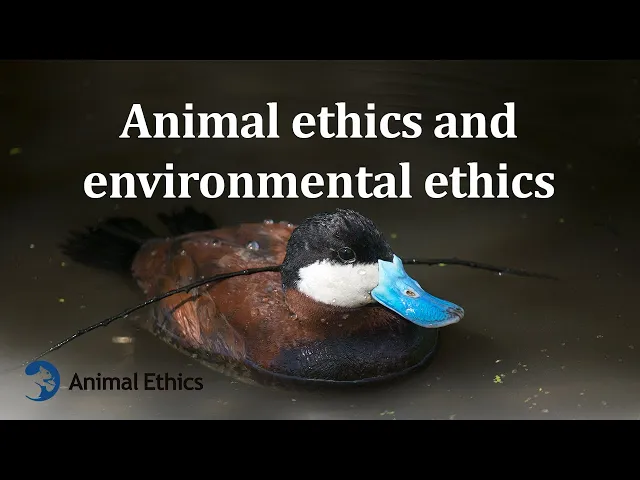
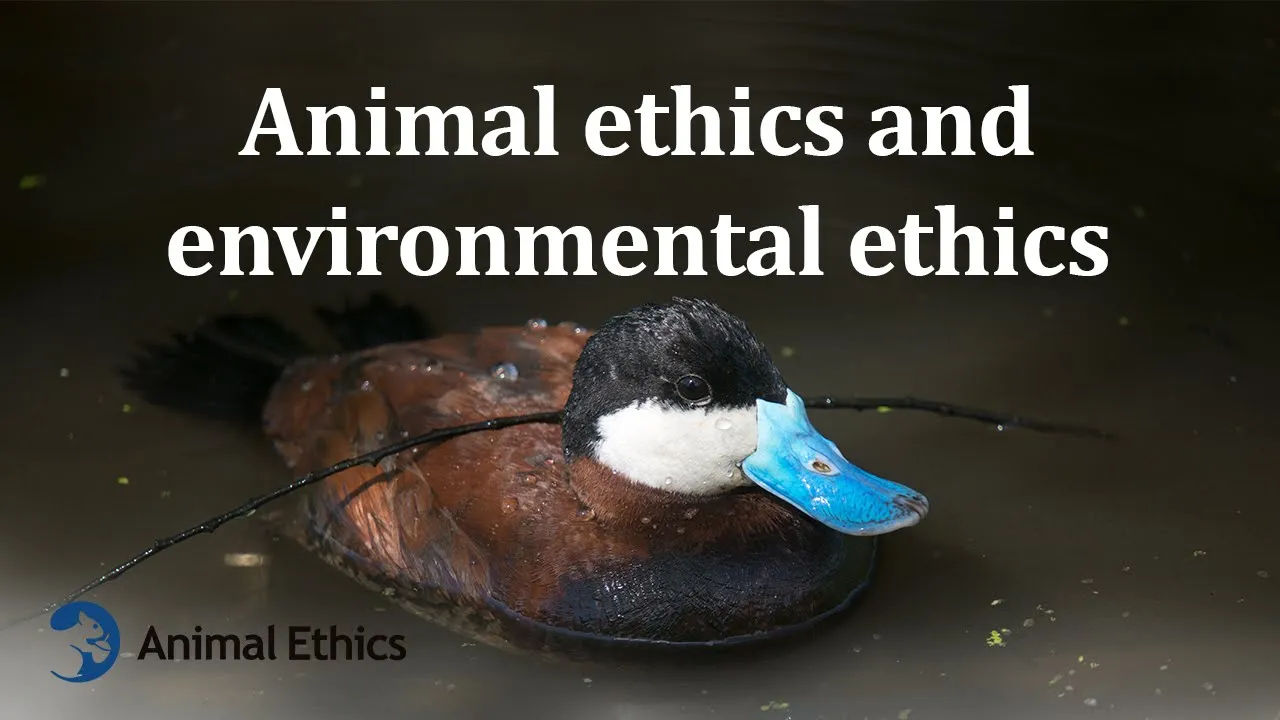
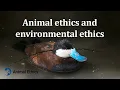
An example of this is the killing of ruddy ducks in Europe. They are not native to Europe, but were introduced there by humans. Some of them interbreed with white-headed ducks, which are native to Southern Europe and Western Asia.
This results in hybrid ducks, and the white-headed trait has become less prevalent in the new hybrid duck. The prevalence of ruddy ducks poses no threat to ecosystems. However, ruddy ducks are being killed with the only aim of promoting biodiversity, regardless of the negative impact on the sentient beings who are affected by it.
Some defenses of species preservation are that if species disappear, then empirical knowledge will be lost, future generations will not be able to have contact with these species, and we will no longer be able to experience the beauty of diversity. There’s a difference between these views and the view that biodiversity is intrinsically valuable. Instead, these views support species conservation because humans value it: humans value the knowledge it would bring or they appreciate it esthetically.
Whatever the reasons for valuing biodiversity, for the affected animals the results are very similar. The arguments against these views are similar to the ones we have seen against ecocentrism. First, species as such are not sentient entities with interests; their members are.
Second, we do not agree with this holist view when it comes to humans. We don’t think that increasing the genetic fitness of humanity is the same as helping individual humans or that it’s an important thing that we should sacrifice the welfare of individual humans for. Thinking this way is called social Darwinism and is strongly rejected in modern societies.
So, if we reject speciesism, we shouldn’t treat other animals that way either. There are other positions in environmental ethics that focus on leaving the wilderness untouched. According to these views, it is not that there are certain entities that we should consider, such as human beings, sentient beings, or ecosystems.
Rather, what is important according to these views is conserving what is natural. Natural ecosystems are considered valuable because they are the result of natural processes and not of human action. There is no term that is widely used to name this view, although one term that fits is that they are “naturocentric” views.
People who support this view argue that, while suffering and death are generally bad, they are not bad when they occur for natural reasons. So, they are not bad when they happen to nonhuman animals in nature. We can object to these views by saying that there are many things that are natural that we consider negative, such as cancer and malaria, while there are other things that are unnatural and very good, such as hospitals and libraries.
We can also argue that even if being natural gives some value to entities, other factors would have to be considered relevant too. This includes the harms to animals from their suffering and premature deaths. The negative value, or disvalue, of these harms can outweigh the value given to them as parts of natural processes.
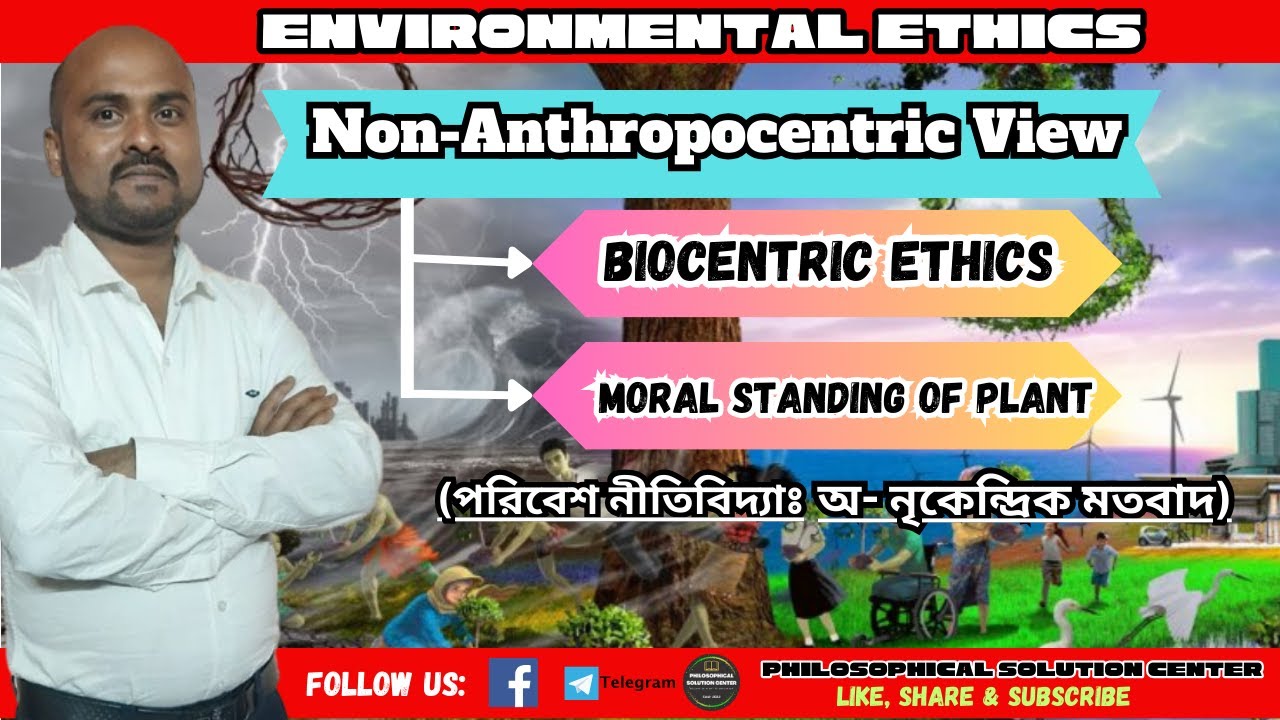
Biocentrism is the position that the morally considerable entities are all living things and only living things. Unlike the positions we have just seen, biocentrism is focused not on wholes, but on individual living things. The difference between biocentrism and positions that focus on the interests of sentient animals is that, according to biocentrism, what matters is not being sentient, but simply being alive.
Focusing on all living things is very different from focusing on the wellbeing of others, since not all living things are conscious and therefore not all living things have feelings of wellbeing. Consider plants. Their bodies can be damaged or they can be killed, but they aren’t capable of experiencing these things as good or bad.
They aren’t capable of experiencing anything at all. They respond to their environment, but they have no way of subjectively experiencing the stimuli or their responses to those stimuli. Biocentrism also has some implications that are hard to accept.
One is that if we, or a sentient animal, have an infection, then there would be a moral conflict because killing the bacteria would be something bad. Most of us, however, don’t think there would be anything bad in that, or that nonsentient beings like bacteria have interests that we should take into account even though they are alive. Biocentrism and holism are views exclusively about what kind of entities should be morally considerable.
There are other views that are often identified with environmentalist philosophies that are not restricted to this and are defined by other ideas too. For example, the term “deep ecology” is often used for various positions that there is some value in the existence of natural entities, and the term “social ecology” is used for the view that supports environmental conservation as a key factor needed for human social justice. In this video, however, we have not covered them, because our purpose has been about what the criteria are for moral consideration.
To summarize, it’s commonly thought that the way we should express concern for animals living in the wild is through environmentalism, but we’ve just discussed all kinds of problems with that view. Helping individual sentient animals is different from the conservation of ecosystems, populations, or landscapes. Animals are individuals with interests, like an interest in not being in pain and an interest in having enough food to eat.
If we want to help animals, it’s important to understand their concrete interests instead of confusing individual interests with the continued existence of the groups the animals belong to or the ecosystems they live in. If it were not for this confusion, it’s likely that more people would be helping animals living in the wild. This being said, research done for conservationist purposes can be useful to research about helping animals in the wild, and vice versa, so there is much ground for learning here.
What we have seen so far concerns the debate between ethical approaches to what our ultimate aims should be.