In 2013, a team of researchers held a math test. The exam was administered to over 1,100 American adults, and designed, in part, to test their ability to evaluate sets of data. Hidden among these math problems were two almost identical questions.
Both problems used the same difficult data set, and each had one objectively correct answer. The first asked about the correlation between rashes and a new skin cream. The second asked about the correlation between crime rates and gun control legislation.
Participants with strong math skills were much more likely to get the first question correct. But despite being mathematically identical, the results for the second question looked totally different. Here, math skills weren’t the best predictor of which participants answered correctly.
Instead, another variable the researchers had been tracking came into play: political identity. Participants whose political beliefs aligned with a correct interpretation of the data were far more likely to answer the problem right. Even the study’s top mathematicians were 45% more likely to get the second question wrong when the correct answer challenged their political beliefs.
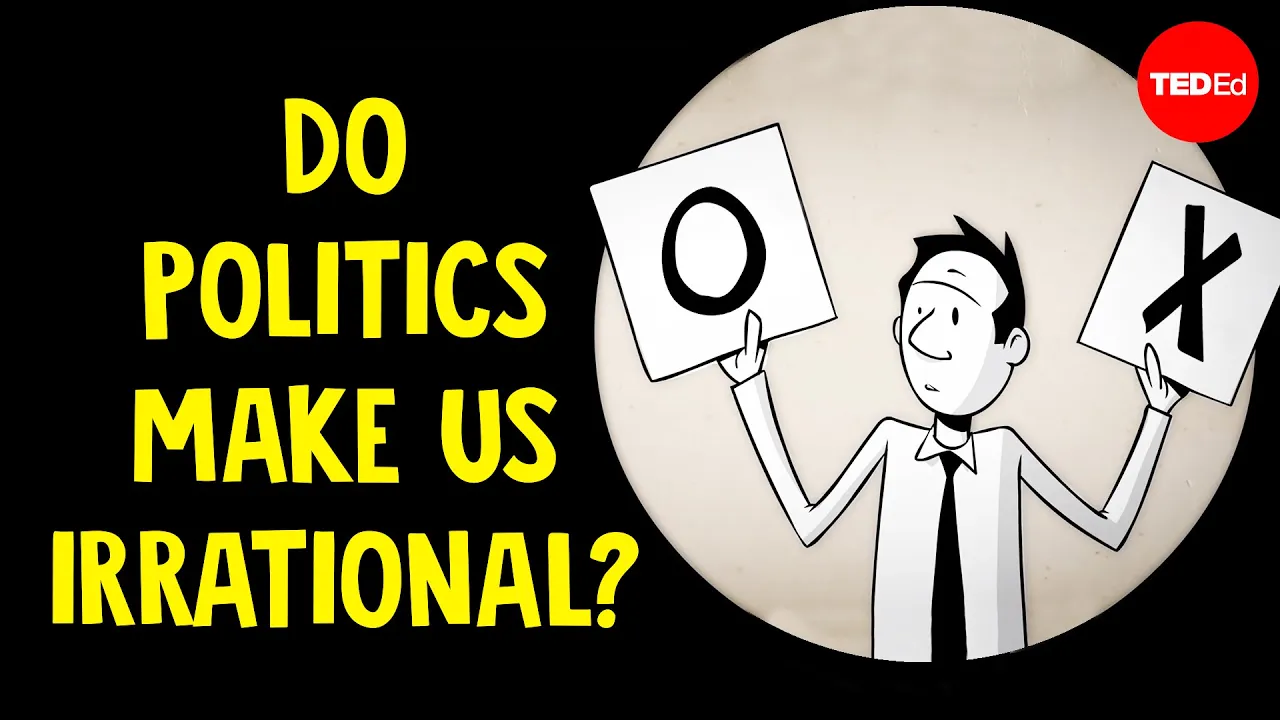
What is it about politics that inspires this kind of illogical error? Can someone’s political identity actually affect their ability to process information? The answer lies in a cognitive phenomenon that has become increasingly visible in public life: partisanship.
While it’s often invoked in the context of politics, partisanship is more broadly defined as a strong preference or bias towards any particular group or idea. Our political, ethnic, religious, and national identities are all different forms of partisanship. Of course, identifying with social groups is an essential and healthy part of human life.
Our sense of self is defined not only by who we are as individuals, but also by the groups we belong to. As a result, we’re strongly motivated to defend our group identities, protecting both our sense of self and our social communities. But this becomes a problem when the group’s beliefs are at odds with reality.
Imagine watching your favorite sports team commit a serious foul. You know that’s against the rules, but your fellow fans think it’s totally acceptable. The tension between these two incompatible thoughts is called cognitive dissonance, and most people are driven to resolve this uncomfortable state of limbo.
You might start to blame the referee, complain that the other team started it, or even convince yourself there was no foul in the first place. In a case like this, people are often more motivated to maintain a positive relationship with their group than perceive the world accurately. This behavior is especially dangerous in politics.
On an individual scale, allegiance to a party allows people to create a political identity and support policies they agree with. But partisan-based cognitive dissonance can lead people to reject evidence that’s inconsistent with the party line or discredits party leaders. And when entire groups of people revise the facts in service of partisan beliefs, it can lead to policies that aren’t grounded in truth or reason.
This problem isn’t new— political identities have been around for centuries. But studies show that partisan polarization has increased dramatically in the last few decades. One theory explaining this increase is the trend towards clustering geographically in like-minded communities.
Another is the growing tendency to rely on partisan news or social media bubbles. These often act like echo chambers, delivering news and ideas from people with similar views. Fortunately, cognitive scientists have uncovered some strategies for resisting this distortion filter.
One is to remember that you’re probably more biased than you think. So when you encounter new information, make a deliberate effort to push through your initial intuition and evaluate it analytically. In your own groups, try to make fact-checking and questioning assumptions a valued part of the culture.
Warning people that they might have been presented with misinformation can also help. And when you’re trying to persuade someone else, affirming their values and framing the issue in their language can help make people more receptive. We still have a long way to go before solving the problem of partisanship.
But hopefully, these tools can help keep us better informed, and capable of making evidence-based decisions about our shared reality.