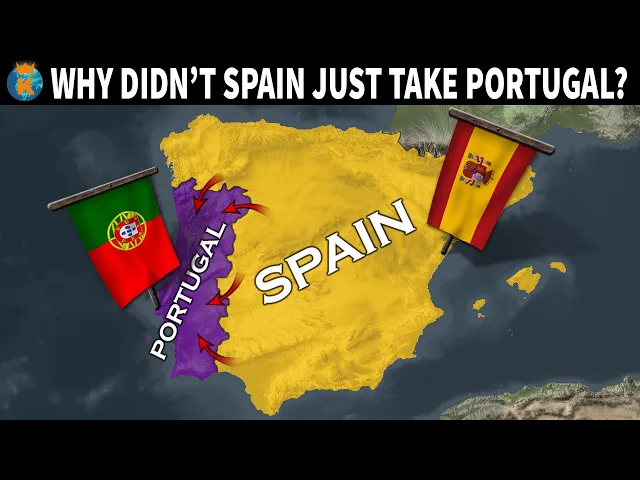
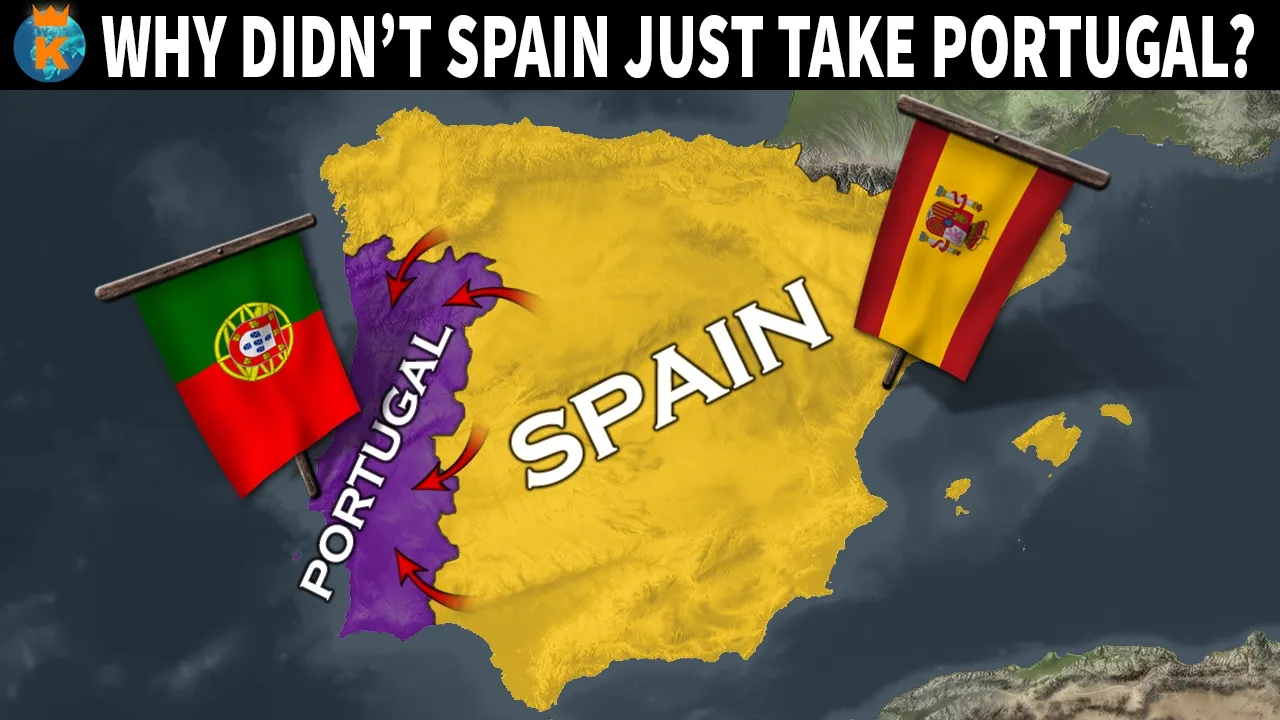
Even though the Spanish did indeed invade Portugal on several occasions, Portugal has never been fully conquered by Spain. This may seem a little puzzling, considering how enthusiastically Spain went about acquiring new colonies. And, at the height of its powers, Spain was unquestionably more mighty than Portugal, both in terms of military power and population size.
Portugal was even technically under Spanish rule for a 60-year period, but conquered? Never. In the 1500s, Spain was flexing its military muscle and snapping up new territories almost at will.
Mexico, the Caribbean, the Philippines, and South America fell to Spanish rule, making Spain seriously rich in the process. And all the while, a smaller, less-populated country lay unconquered, right on Spain’s doorstep and surrounded by the Atlantic Ocean. To understand why, it’s important to first look at how each country took shape.
The Iberian Peninsula – today’s Spain and Portugal – has seen its fair share of rulers over the years… The Romans claimed Iberia in around 218 BC, where it remained a Roman territory for the next six hundred or so years until the Visigoths came onto the scene. In the year 418 AD, the Visigoths stormed into Iberia, seizing it from the Romans and assuming control for the next three centuries. Iberia was very much a Visigoth stronghold but fell to the Umayyad Caliphate in the 8th century AD.
The Umayyads brought an army of Moors from North Africa and imposed Muslim rule, which was fiercely opposed by the Iberians. There were uprisings and a never-ending series of battles, leading to eventual civil war throughout the whole peninsula. This battle against Muslim rule was the start of The Reconquista – or the “Reconquest” of Iberia, later to become Spain and Portugal.
The Moors controlled most of the south, while in the north, the Christian kingdoms Aragon, Castille, Navarre, and Leon were established. In the late 9th century, King Alfonso of the Kingdom of Asturias sent one of his noblemen into the northwest of the peninsula to expel the Moors. The nobleman was Vimara Peres and he rose to the challenge.
In 868, Peres led his Christian soldiers to a decisive victory against the Moors and reclaimed the region around the Minho and Douro Rivers, including the city of Portus Cale – from which Portugal was to get its name. King Alfonso was delighted and immediately declared the new region to be the County of Portugal, and Peres was named the Count of Portugal. The Count began building new towns in the area, one of which he named Vimaranes – known today as Guimarães.
Even though Portugal didn’t officially become a country until 1143, most Portuguese regard Guimaraes as the country’s “cradle city”, where Portugal was born. In 910, the Kingdom of Asturias was split, but reunited again in 924 – this time as the Kingdom of Leon. Portugal was now a county in the north-western Kingdom of Leon, and by the end of the 10th century, had begun to grow in power.
More and more people were opting to settle in Portugal and the cities were growing. In the early 12th century, the rulers of the county of Portugal were Henry of Burgundy and his wife Teresa of León. They had a son, Afonso Henriques, and when Henry died in 1112, his wife Teresa was left to rule Portugal alone.
But, to the disapproval of many Portuguese, she soon remarried – to a nobleman from the Galicia region. They were suspicious of Teresa and her new husband’s motives, and they backed young Afonso to lead Portugal to further victories over the southern Moors. Afonso was urged to seize control of Portugal, which meant going into battle against his own mother.
At the Battle of Sao Mamede in 1128, Afonso’s soldiers soundly defeated his mother’s army, and he became the sole leader of Portugal. He continued to fight for the Reconquista and in 1139, won a famous victory at the Battle of Ourique. The clash took place in the south of the Iberian Peninsula against the Muslim army of Cordoba.
Although outnumbered, Afonso orchestrated a stunning victory with cunning tactics and surprise attacks. After the battle, Afonso was declared to be the King of Portugal. This meant that Portugal was to be now recognized as its own independent state, not a county of Leon… The King of Leon recognized Afonso in 1143 with the signing of the Zamora Treaty.
This signified the beginning of Portugal as an independent country, and in 1179, the Catholic Church finally recognized the new Kingdom of Portugal. The Portuguese Reconquista became a reality in 1249 when Christian forces marched into Algarve and sent the last of the Moors packing. Portugal had now extended all the way south to the Atlantic Ocean.
In 1255, Lisbon was named the Portuguese capital, and in 1297, King Denis signed the Treaty of Alcañices, which formalized Portugal’s border with Leon. The borders set up then have essentially remained the same as today. As Portugal entered the 14th century as an optimistic and outward-looking young country, Spain was still fighting its way towards the Reconquista.
Progress was slowed due to infighting between kingdoms, a lack of sturdy leadership, and the much greater land mass. In the early 14th century, Portugal began amassing its naval power. In 1325, Afonso the Fourth commissioned the building of maritime vessels for exploration and potential war.
The Canary Islands were discovered in 1341, but Castille – basically Spain - disputed the legitimacy of the discovery. But, in the mid-14th century, the Black Death decimated most of Europe, putting the brakes on any plans for exploration and expansion. However, in the latter half of the 1300s, the European powers began jostling for the upper hand.
Relations between England and France were strained, and both countries were in the midst of the Hundred Years War, which dragged out from 1337 to 1453. France wanted access to Spain’s formidable navy, which had one of the largest fleets in the world at the time. This would give France a definite edge at sea against England.
So, in 1169, an alliance between France and Castille was drawn up, which made England exceedingly uneasy. The English realized that Portugal was strategically located between Spain and the Atlantic Ocean, and had a well-established navy. The two agreed on an alliance, with the Anglo-Portuguese Treaty of 1373 sealing the deal.
The Anglo-Portuguese Treaty remains the world’s oldest existing formal treaty between two nations… In the 15th century, Portugal established itself as a world leader in naval exploration. For the first half of the century, Spain was distracted by its fight for the Reconquista, and Portugal led the way. Under the backing of Henry the Navigator, Portugal sent out fleet after fleet with very clear orders to find and conquer new lands.
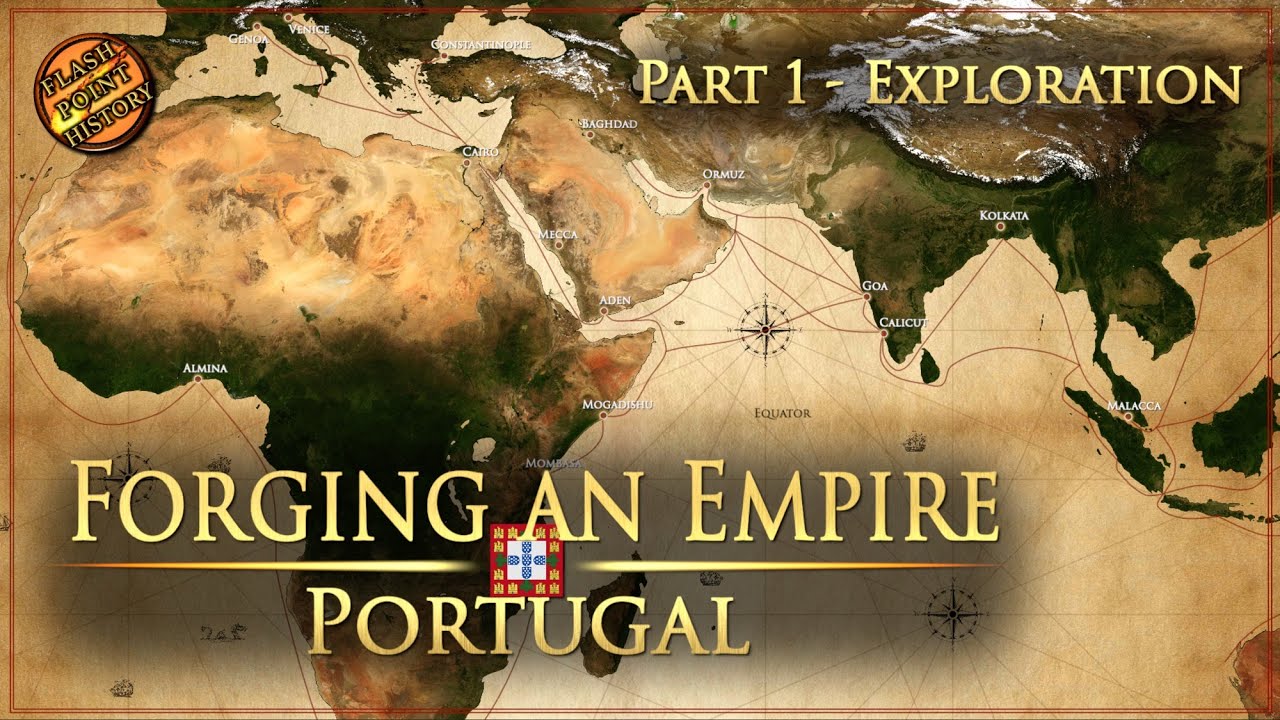
It kicked things off with the conquest of Cuerta in Morocco, in 1415. Then, in 1420, Portugal colonized the Madeira archipelago off the African West Coast, the Azores islands in the North Atlantic in 1439, and Cape Verde in 1456. Spain could only watch on in envy, as it had its hands full fighting the remaining Muslims in the southern region of Granada.
The Spanish finally saw off the last of the Emirate of Granada, but not until 1492. The shackles were now off and Spain looked to start asserting its authority and building some serious wealth. Following Portugal’s lead, the Spanish began planning missions to discover and settle new territories overseas.
Later that year, the Spanish government commissioned an ambitious explorer from Genoa called Christopher Columbus to seek new lands to the west. 1492 was about to become a really big year for Spain… While Spain had been tied up with its Reconquista, Portugal had wasted no time in establishing several colonies and trading settlements along the African West Coast. This enabled the Portuguese complete access to gold, silver, and the burgeoning slave trade in Africa.
In 1488, Bartolomeu Dias sailed around the Cape of Good Hope, proving that the Indian and Atlantic Oceans could indeed meet up. Portugal was rubbing its hands in glee at what seemed like a monopoly of colonization. But when Columbus sailed into the Bahamas in October 1492, things were about to really heat up.
Europe was blown away to learn of a completely new land across the Atlantic. The race was on to conquer the Americas, with Portugal and Spain leading the way. Competition was fierce… To prevent any likely territorial disputes, a papal bull was created.
In 1494, the Treaty of Tordesillas was signed by Spain and Portugal, essentially splitting the world in two. A demarcation line was drawn vertically down the middle of the Atlantic, roughly 500 kilometers west of the Cape Verde islands. Spain could lay claim to anything lying to the west, while Portugal was entitled to anywhere to the east.
The treaty meant that Spain had virtually all of the Americas to itself, with the exception of Brazil, which was jutting out into Portuguese territory. With both Iberian countries now victorious over the Moors, it could have been the prime time for Spain to turn its energies to Portugal. However, the lure of global dominance and overseas wealth was far greater.
Spain and Portugal ramped up their efforts to acquire whatever they could. In 1498, Vasco De Gama literally put Portugal on the map when he ventured around Cape Horn and made it to India. This opened up huge new opportunities for Portugal as it now had a sea route to trade with Asia.
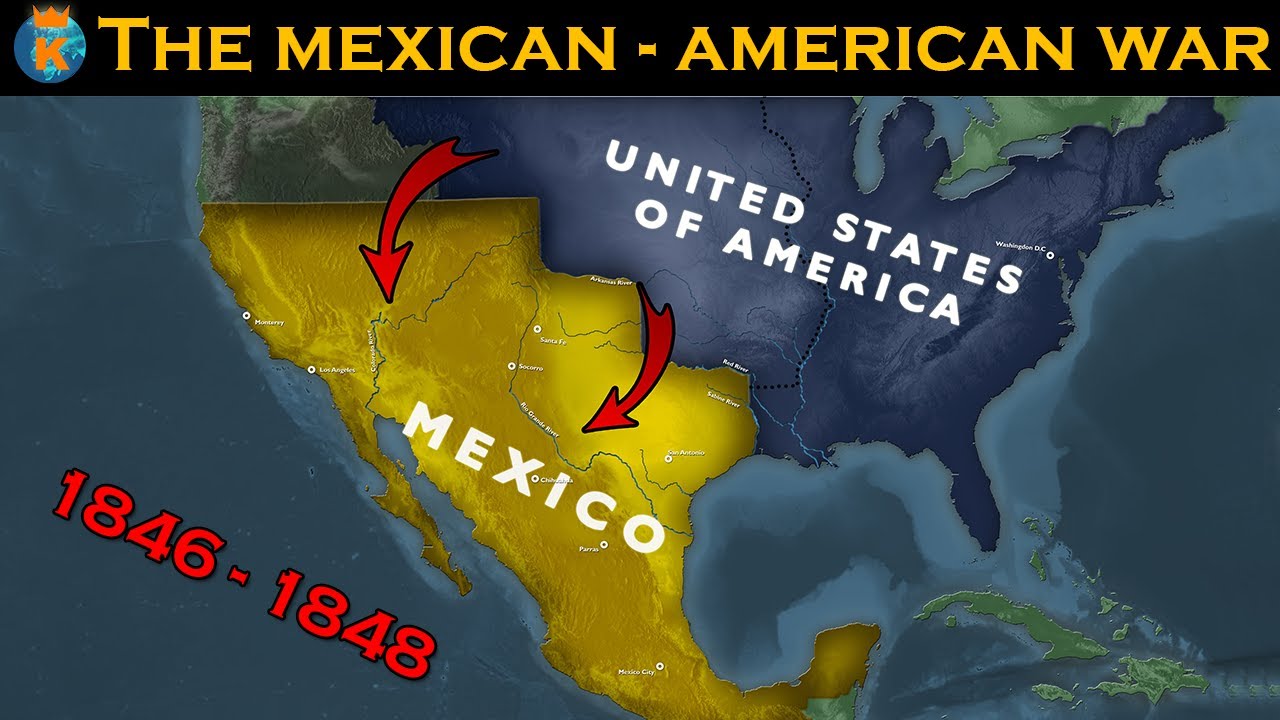
In 1500, Pedro Álvares Cabral claimed Brazil for Portugal. Spain hit back with the conquest of Cuba in 1511 and then Mexico in 1521. This continued throughout much of the 16th century, with countries amassing huge fortunes from the resources in their new colonies.
And then suddenly, Portugal was left without an heir to the throne… In 1578, Portugal’s young King Sebastian the First was killed in battle. His successor was his great uncle Henry the First, who also died just two years later. But as luck would have it, the Spanish King Philip the First had Portuguese lineage.
His parents were Charles the Fifth – the Holy Roman Emperor – and Isabella of Portugal. He promptly claimed the Portugese throne somewhat confusingly as Philip the Second. Bizarrely, both countries now shared the same king but were united only as kingdoms.
Portugal still retained its independence but with strict limitations regarding foreign policy. If ever there was a time for Spain to conquer Portugal, this was surely it. Again though, Spain was too busy in maintaining and developing its overseas colonies.
Besides, the Reconquista had exhausted Spain. An invasion of Portugal would have required huge numbers of troops and resources that simply weren’t available. Spain also had other concerns.
It was engaged in the Eighty Years War with the Netherlands. This meant dragging Portugal in, against Portugal’s wishes. The awkward alliance with Spain also meant Portugal’s treaty with England became null and void.
As Portugal was drawn into tensions with the Netherlands, the Dutch-Portuguese War broke out. From 1595 to 1663, the Dutch raided countless Portuguese colonies in Brazil, India, and Africa, and Portugal bemoaned the lack of English support. Meanwhile, nobles in Portugal were incensed with having to pay extra taxes to support Spain.
The union of kingdoms was deemed to be biased towards Spain. In 1640, Portugal’s John the Fourth led a revolt, and full independence was returned with the Portuguese Restoration War. This enabled Portugal to mend its relationship with Britain, which proved to be very useful in the late 18th century.
The Seven Years' War between England and France led once again to tensions between the former Iberian allies. The English-backed Portuguese were invaded by the French-supported Spanish in 1762. Portuguese guerilla warfare and the onslaught of British naval and cavalry power were too much.
Despite the French and Spanish throwing thousands of men into the invasion, they were soundly defeated and withdrew in 1763. This was as close as Spain came to conquering Portugal. Spanish forces had entered Portugal and engaged in conflict.
They ran into an unforgiving hilly terrain and a fiercely determined civilian population. When the Spanish troops withdrew, it signaled the final opportunity to conquer Portugal. The Spanish were always more concerned with overseas colonization than with conquering Portugal.
That, in addition to ongoing conflicts with the Moors and other European nations, meant they simply couldn’t afford to. But as the Portuguese showed ever since Vimara Peres defeated the Moors – they were never going to be conquered anyway. .
.