Think back to a really vivid memory. Got it? Okay, now try to remember what you had for lunch three weeks ago.
That second memory probably isn't as strong, but why not? Why do we remember some things, and not others? And why do memories eventually fade?
Let's look at how memories form in the first place. When you experience something, like dialing a phone number, the experience is converted into a pulse of electrical energy that zips along a network of neurons. Information first lands in short term memory, where it's available from anywhere from a few seconds to a couple of minutes.
It's then transferred to long-term memory through areas such as the hippocampus, and finally to several storage regions across the brain. Neurons throughout the brain communicate at dedicated sites called synapses using specialized neurotransmitters. If two neurons communicate repeatedly, a remarkable thing happens: the efficiency of communication between them increases.
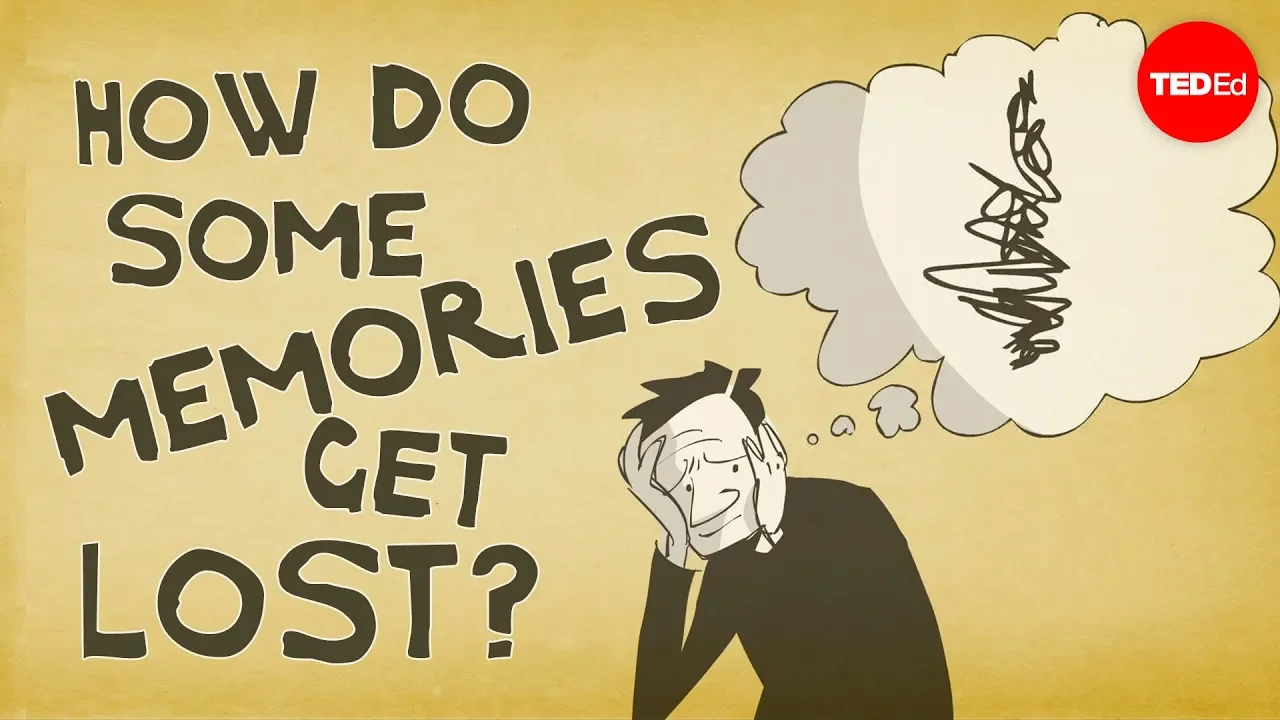
This process, called long term potentiation, is considered to be a mechanism by which memories are stored long-term, but how do some memories get lost? Age is one factor. As we get older, synapses begin to falter and weaken, affecting how easily we can retrieve memories.
Scientists have several theories about what's behind this deterioration, from actual brain shrinkage, the hippocampus loses 5% of its neurons every decade for a total loss of 20% by the time you're 80 years old to the drop in the production of neurotransmitters, like acetylcholine, which is vital to learning and memory. These changes seem to affect how people retrieve stored information. Age also affects our memory-making abilities.
Memories are encoded most strongly when we're paying attention, when we're deeply engaged, and when information is meaningful to us. Mental and physical health problems, which tend to increase as we age, interfere with our ability to pay attention, and thus act as memory thieves. Another leading cause of memory problems is chronic stress.
When we're constantly overloaded with work and personal responsibilites, our bodies are on hyperalert. This response has evolved from the physiological mechanism designed to make sure we can survive in a crisis. Stress chemicals help mobilize energy and increase alertness.
However, with chronic stress our bodies become flooded with these chemicals, resulting in a loss of brain cells and an inability to form new ones, which affects our ability to retain new information. Depression is another culprit. People who are depressed are 40% more likely to develop memory problems.
Low levels of serotonin, a neurotransmitter connected to arousal, may make depressed individuals less attentive to new information. Dwelling on sad events in the past, another symptom of depression, makes it difficult to pay attention to the present, affecting the ability to store short-term memories. Isolation, which is tied to depression, is another memory thief.
A study by the Harvard School of Public Health found that older people with high levels of social integration had a slower rate of memory decline over a six-year period. The exact reason remains unclear, but experts suspect that social interaction gives our brain a mental workout. Just like muscle strength, we have to use our brain or risk losing it.
But don't despair. There are several steps you can take to aid your brain in preserving your memories. Make sure you keep physically active.
Increased blood flow to the brain is helpful. And eat well. Your brain needs all the right nutrients to keep functioning correctly.
And finally, give your brain a workout. Exposing your brain to challenges, like learning a new language, is one of the best defenses for keeping your memories intact.