Transcriber: We live in a culture that doesn't take mental health issues seriously. There's a lot of stigma. Some people tell you to just suck it up, or get it together, or to stop worrying, or that it's all in your head.
But I'm here to tell you that anxiety disorders, they're as real as diabetes. (Music) [Body Stuff with Dr Jen Gunter] Hi again. It's Dr Jen, and I've noticed something with my patients.
They often describe to me some classic symptoms of an anxiety disorder. Constant worry, trouble sleeping, tense muscles and struggle with concentrating. But they aren't getting treatment.
There's a lot of issues with mental-health care in this country. Some people don't have insurance that would cover it. Some have been dismissed or minimized in the past, and don't think seeking help will do any good.
Some worry about the stigma and whether it could affect future jobs or relationships. But severe anxiety isn't a moral or personal failing. It's a health problem, just like strep throat or diabetes.
It needs to be treated with the same kind of seriousness. Before we can talk about anxiety disorders, let's talk about anxiety itself. Anxiety is the very real and normal emotion we feel in a stressful situation.
It's related to fear. But while fear is a response to an immediate threat that quickly subsides, anxiety is a response to more uncertain threats that tends to last much longer. It's all part of the threat detection system, which all animals have to some degree, to help protect us from predators.
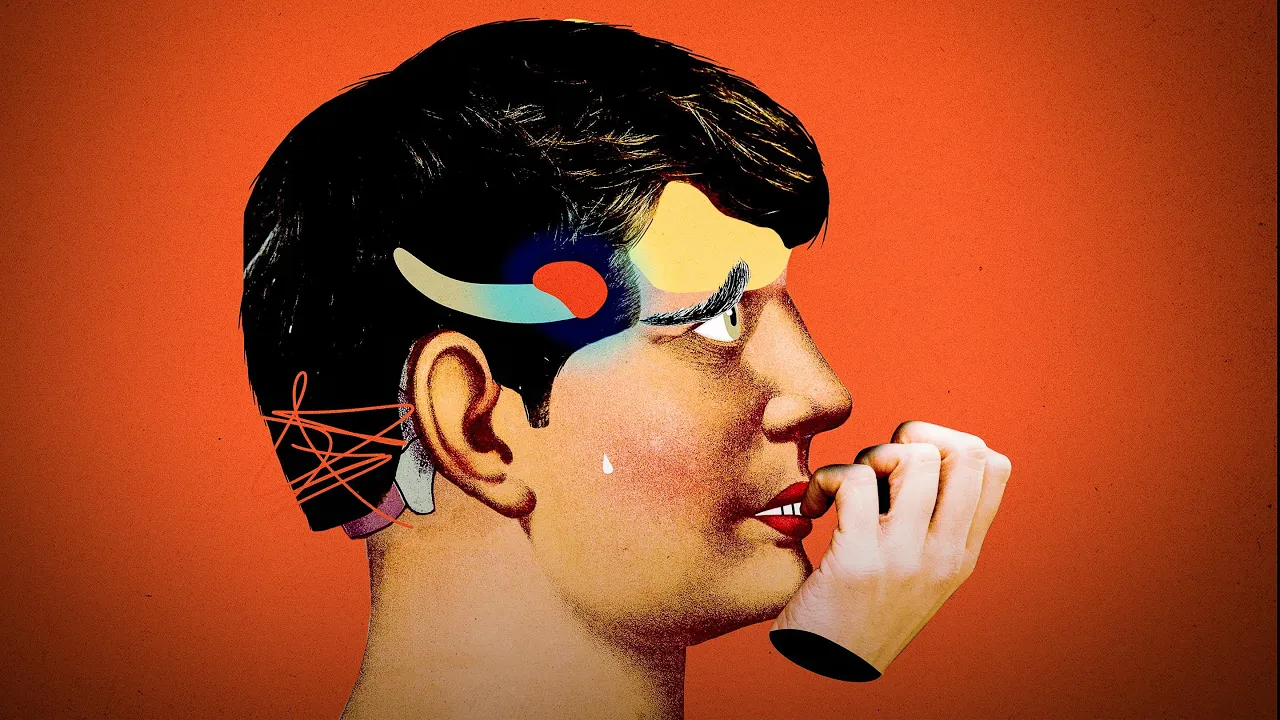
Anxiety starts in the brain's amygdala, a pair of almond-sized nerve bundles that alert other areas of the brain to be ready for defensive action. Next, the hypothalamus relays the signal, setting off what we call the stress response in our body. Our muscles tense, our breathing and heart rate increase and our blood pressure rises.
Areas in the brain stem kick in and put you in a state of high alertness. This is the fight-or-flight response. There are ways the fight-or-flight response is kept somewhat in check, with an area of higher-level thinking called the ventromedial prefrontal cortex.
It works like this. If a person sees something they think is dangerous, like a tiger, that sends a signal to the amygdala, saying "it's time to run. " The ventromedial prefrontal cortex can say to the amygdala, "Hey, look.
The tiger's in a cage. You know what a cage is? They can't escape from a cage.
It's OK to calm down. " It's a feedback loop that can help keep the response in check. The hippocampus is also involved.
It provides context, saying things like, "Hey, we've seen tigers in cages before. We're in a zoo. You are extra safe.
" With anxiety, these threat-detection systems and mechanisms that reduce or inhibit them are functioning incorrectly and cause us to worry about the future and our safety in it. But for many people, it goes into overdrive. They experience persistent pervasive anxiety that disrupts work, school and relationships and leads them to avoid situations that may trigger symptoms.
Anxiety disorders are not at all uncommon. Based on data from the World Mental Health Survey, researchers estimate that about 16 percent of individuals currently have or have had an anxiety disorder. These include social anxiety disorder, panic disorder, agoraphobia and phobias.
Studies have shown that people with anxiety disorders don't just have a different way of reacting to stress. There may be actual differences in how their brain is working. One model describes possible mix-ups in the connections between the amygdala and other parts of the brain.
The pathways that signal anxiety become stronger. And the more anxiety you have, the stronger the pathways become, and it becomes a vicious cycle. The good news is there's treatment for anxiety, and that you don't have to suffer.
Remember, this isn't about weakness. It's about changing brain patterns, and research shows that our brains have the ability to reorganize and form new connections all throughout our lives. A good first step is to do the basics.
Eat a balanced diet, exercise regularly and get plenty of sleep, as your mind is part of your body. It might also help to try meditation. Instead of our heart rate rising and our body tensing, with mindfulness and breathing, we can slow down the fight-or-flight response and improve how we feel in the moment.
Cognitive behavioral therapy, a form of talk therapy, can also be fantastic. In it, you learn to identify upsetting thoughts and determine whether they're realistic. Over time, cognitive behavioral therapy can rebuild those neural pathways that tamp down the anxiety response.
Medication can also give relief, in both the short-term and the long-term. In the short-term, anti-anxiety drugs can down-regulate the threat-detection mechanisms that are going into overdrive. Studies have shown that both long-term medications and cognitive behavioral therapy can reduce that overreactivity of the amygdala we see an anxiety disorders.
High blood pressure and diabetes, they can be treated or managed over time. And the same is true for an anxiety disorder too.