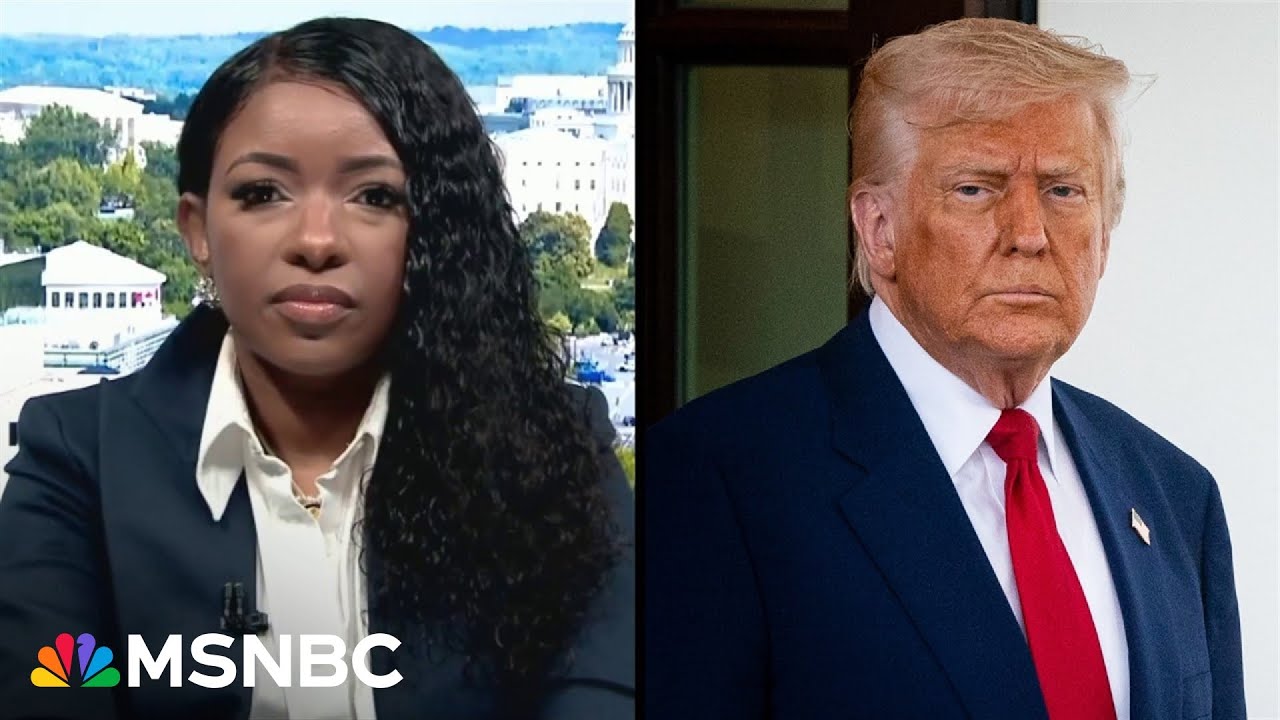
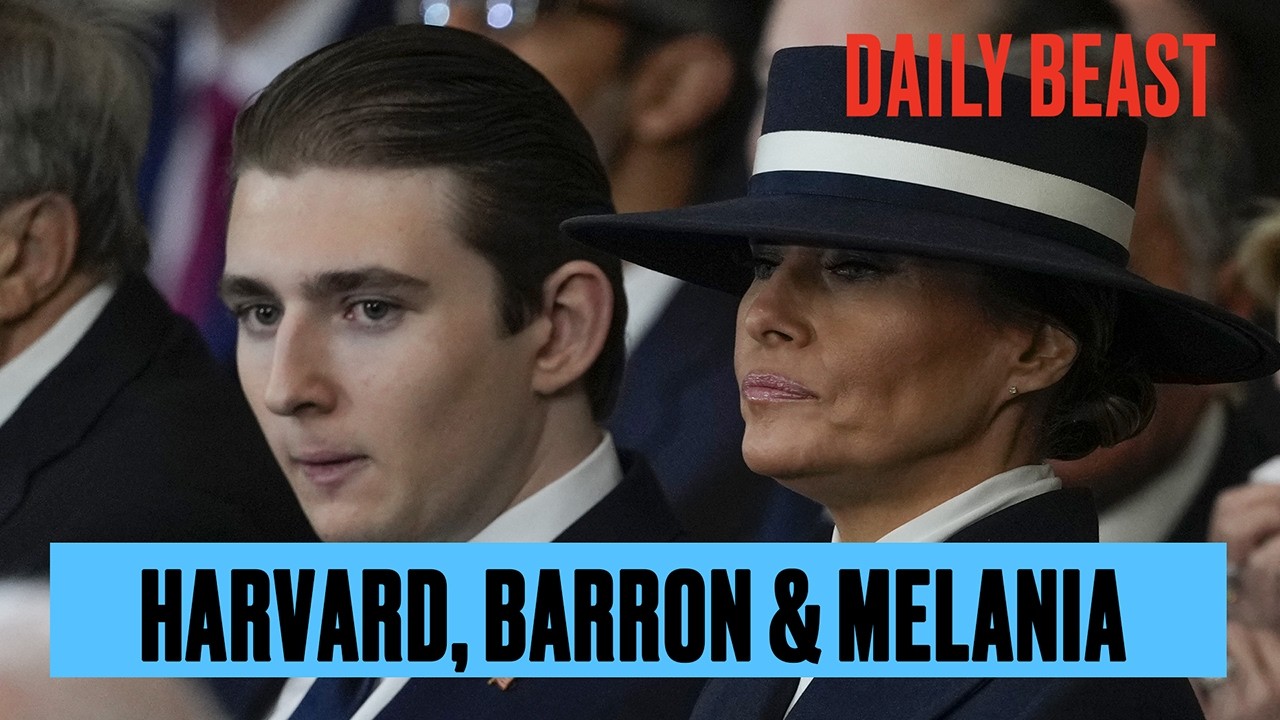
Melania Trump expected her private phone call to remain just that, private. But when Representative Jasmine Crockett inadvertently overheard her desperate plea to her son through a live microphone, the next 15 minutes would expose family dynamics that the former first family had fought to keep hidden for years. The Rayburn House office building's main hearing room stood as a monument to governmental authority.
its Wood panled walls absorbing the low hum of conversation as the congressional hearing on political exposure and family welfare prepared to resume after a short recess. The room maintained that particular Washington chill, the deliberately overairconditioned atmosphere that kept witnesses alert and slightly uncomfortable. Afternoon light filtered through tall windows, catching dust particles that danced in the air and illuminating the polished oak of the Witness table.
Seven members of the House committee sat elevated on a curved deis, their leather chairs positioned behind gleaming name plates and microphones. The American flag stood to the right of the chairperson, its fabric still and formal, while cameras were positioned strategically around the room, their red lights indicating live feeds to C-SPAN and various news networks. The distinct scent of furniture polish mingled with coffee From a refreshment table in the corner, creating that uniquely governmental blend of performative formality and mundane reality.
Jasmine Crockett had returned to the chamber early. The freshman representative from Texas moved with purpose, her navy blue suit jacket perfectly pressed, her low heels making minimal sound against the carpeted floor. She carried a leather portfolio containing color-coded notes and tab documents.
Preparation was her Superpower. As a former public defender who had represented countless families in crisis, she understood that behind political theater often lay genuine human suffering. She had made it her mission to approach even the most contentious hearings with this perspective.
The witness table sat empty, but personal items remained. a designer handbag, a leather portfolio embossed with gold initials, and a half empty waterglass bearing lipstick marks In a signature shade of rose. Melania Trump had been the committee's star witness, invited to provide perspective on the impact of political life on family dynamics.
The former first lady had maintained her usual composed facade throughout the morning session, offering measured responses about the challenges of raising a child in the political spotlight. What no one had mentioned, what had become the elephant in the room, was the conspicuous absence of Baron Trump from public appearances over the past two weeks. The official explanation involved academic commitments, but Washington whispered other theories.
Jasmine had noted how Melania tensed slightly whenever her son's name came up in questioning. The former models practiced poise, momentarily faltering before being quickly reconstructed. As Jasmine settled into her seat at the committee dis, she realized she was not entirely Alone.
Melania had returned early as well and sat in a corner of the room, partially hidden by a column. The former first lady hadn't noticed Jasmine's entrance, her attention fully focused on her phone. The room was quiet enough that Jasmine could hear the gentle tap of manicured nails against the screen as Melania dialed.
What happened next occurred because of an oversight by the technical staff. During breaks, microphones were supposed to be muted, But someone had failed to follow protocol. As Melania held the phone to her ear, her voice suddenly amplified through the room's speaker system, the words crystal clear in the nearly empty chamber.
"Baron, can you hear me? " There was a pause followed by a sigh of relief. "Thank you for answering this time.
" Jasmine froze immediately, recognizing she was overhearing something not meant for public ears. She should announce her presence or leave. But before she could decide, Melania continued, her voice taking on a quality Jasmine had never heard from the usually controlled woman.
Raw desperation. Baron, please. Melania's voice echoed slightly in the chamber.
You need to come home. This situation isn't healthy for anyone. Her accent became more pronounced with emotion, the careful American inflections she typically maintained giving way to more European cadences.
Jasmine remained perfectly Still, her training as a courtroom attorney allowing her to maintain an impassive expression despite the inappropriate position she found herself in. She thought of the statistics she'd reviewed just yesterday. Data showing that children of high-profile political figures experienced significantly higher rates of anxiety, depression, and adjustment issues than their peers.
The numbers on her preparation documents now had a human voice. "It's been 2 weeks," Melania continued, unaware that her private conversation was being broadcast. your father is.
You know how he gets when things don't go according to his plan. There was a long pause as she listened, her free hand tightening around the armrest of her chair. I understand you're upset.
You have every right to be, but staying with your aunt indefinitely isn't the solution. Jasmine noticed how Melania's shoulders curved inward slightly, her perfect posture Momentarily abandoned. The vulnerability contrasted sharply with the public image the woman had cultivated for years.
Jasmine thought of the dozens of family crisis cases she'd handled as a public defender. The mothers trapped between protecting their children and maintaining family unity. "The doctors are concerned about you, Baron," Melania said, her voice dropping to almost a whisper, though the sensitive microphones captured every word.
Dr Levenson said, "Your stress levels are concerning. The sleeping problems are back, aren't they? " Jasmine recognized the name Doctor.
Howard Levenson was one of the nation's top adolescent psychiatrists, known for working with highprofile clients. This reference to medical care contradicted the family's public statements about Baron's robust mental health and adjustment. Jasmine thought of the folder in her portfolio containing the prepared statement from The Trump family spokesperson claiming Baron's absence was merely academic.
Melania's voice grew more urgent. I know you feel safe with your aunt, but we need to maintain appearances. People are asking questions.
The press is starting to notice. She paused, listening. Yes, I know you don't care about the press, but there are other considerations.
legal considerations. Jasmine watched as Melania's hand trembled slightly while holding the phone. The woman's face, Partially visible from Jasmine's angle, showed micro expressions of distress that her public appearances never revealed, a tightening around the eyes.
A slight downward pull at the corners of her mouth. I miss you, Melania said simply, her voice carrying a weight of genuine emotion that made Jasmine feel increasingly uncomfortable with her unintentional eavesdropping. The house doesn't feel right without you here.
There was another long pause during Which Melania's breathing became audible through the sound system, measured controlled breaths that suggested she was working to maintain composure. Jasmine recognized this technique. She taught it to witnesses preparing for difficult testimony.
Baron, I understand why you left. Melania finally continued, her voice now barely above a whisper. That incident last week, the way he spoke to you.
No mother should have to see her child treated that way. Her Voice caught on the last words. But people are noticing your absence.
The lawyers say it could affect everything. The cases, the political future, everything. Jasmine felt a chill that had nothing to do with the room's temperature.
She was hearing confirmation of family dynamics that had long been speculated about, but never confirmed. As a former defender who had worked with families in crisis, she recognized the patterns, the protection Of public image over private welfare, the competing pressures of loyalty and self-preservation. Please come home.
Melania's voice broke slightly on the word home. I promise I'll protect you this time. The naked vulnerability in those words, the implied acknowledgement of past failure, hung in the air.
Jasmine knew she could no longer ethically remain silent about her presence. She stood up, moving deliberately to make enough noise that Melania would notice her. The former first lady's head snapped up, eyes widening as she registered Jasmine's presence.
But it took another moment before realization dawned. The realization that her private conversation had been audible. "Your microphone is on," Jasmine said simply, gesturing toward the witness table where the small black device still glowed with an active light.
Melania's face transformed in an instant. Years of Public training, allowing her to compose her features despite the obvious shock. She quickly ended the call with a tur, "I'll call you back.
" before standing, smoothing her skirt with practiced precision. The two women regarded each other across the hearing room, the former first lady and the freshman representative, in a moment of suspended tension. Jasmine could have used this moment politically.
What she had overheard would be explosive if Revealed, but her years representing vulnerable families guided her next words. A home should be a sanctuary, not a prison, she said quietly. Something flickered in Melania's eyes.
Recognition perhaps that Jasmine wasn't going to weaponize what she'd heard. The former first lady's shoulders lowered slightly. The tiniest relaxation of her guard.
"You have no idea what it's like," Melania said, her voice now deliberately controlled. All traces of the earlier Emotion vanished. I represented families in crisis for 15 years before coming to Congress, Jasmine replied, keeping her tone matterof fact rather than confrontational.
I've seen what happens when public image becomes more important than private welfare. Melania's eyes narrowed slightly, assessing, "And now you'll use this for political gain. " Jasmine shook her head once decisively.
"That would harm your son. Whatever differences exist between our political Beliefs, I think we both agree that protecting children should transcend partisanship. Before Melania could respond, the door to the hearing room opened and committee members began filing back in.
Their conversations creating a sudden wall of sound that ended the private moment. Jasmine returned to her seat on the dis watching as Melania transformed before her eyes, shoulders squaring, chin lifting, face settling into the serene mask familiar From countless public appearances. As the hearing resumed, the committee chair addressed Melania directly.
Mr. Trump, before our break, you were discussing the challenges of maintaining privacy for children in politically exposed families. Would you care to elaborate on the protective measures you found most effective?
Jasmine watched as Melania responded with practiced poise, speaking about controlled media access and careful school selection. But now Jasmine could see the subtle tells, the slight tightness around the eyes, the two perfect posture, the carefully modulated voice, all indicators of someone performing rather than simply speaking. When it came time for Jasmine's questions, she made a decision.
She set aside her prepared inquiries about security protocols and media boundaries. "Mr. Trump," she began, her voice carrying the measured precision she'd developed in courtrooms.
"In your experience, what resources should be made available to children who find themselves overwhelmed by public scrutiny? not theoretical protections, but actual mental health and social support services. A flash of surprise crossed Melania's face, perhaps at the direction of the question, perhaps at Jasmine's choice not to expose what she'd overheard.
The former first lady took a moment before answering, and when she did, her response carried a weight Of authenticity that had been absent from her earlier testimony. Children need safe spaces, Melania said slowly, where they can speak without fear of judgment or consequences. They need professionals who understand the unique pressures of public life, but who have no political agenda of their own.
Most importantly, she continued, her gaze briefly meeting Jasmine's, they need to know that their welfare matters more than public perception or political Ambitions. And when those needs conflict with political or legal strategies, Jasmine pressed gently. Melania's fingers tightened almost imperceptibly around her water glass.
Then difficult choices must be made. Choices that she paused, choosing her words with visible care, that not everyone in a family may agree upon. The hearing continued, but something fundamental had shifted.
The theoretical discussion about political families had acquired an undercurrent of Urgency. Several committee members seemed to sense the change, though only Jasmine knew its source. The questions became more focused on practical protections rather than abstract principles.
When the session concluded, Jasmine gathered her materials deliberately, allowing other members to exit first. She noticed Melania lingering as well, dismissing an aid with a gentle but firm gesture. When the room had nearly emptied, the former First lady approached.
"Representative Crockett," Melania said, her voice pitched for privacy despite the previous microphone incident. "A moment of your time," Jasmine nodded, maintaining professional courtesy. "What you overheard," Melania began.
"Remains between us," Jasmine finished for her. Unless I believe a minor is in danger. Baron is safe, Melania said quickly.
Physically safe. He's staying with my sister. He just needed She searched for The right word.
Space. Jasmine considered this. Mr.
Trump, I won't pretend to understand your specific situation. But I've seen how family crises can escalate when public perception takes priority over private healing. Something shifted in Melania's expression.
a momentary lowering of defenses. It's complicated. It always is, Jasmine acknowledged.
But in my experience, when young people take dramatic steps like leaving home, They're telling us something important. Sometimes the bravest thing a parent can do is listen to that message, even when it disrupts the narrative they've been trying to maintain. Melania's gaze became distant, focused on something beyond the hearing room.
Some narratives can't be disrupted without serious consequences. I understand that, Jasmine said. But I've never met a parent who at the end of life said, "I wish I'd prioritize public image over my child's Well-being.
" The two women stood in silence for a moment. An unlikely connection formed across political divides by concern for a young man neither of them mentioned by name. Again, "The committee is considering legislation to provide additional mental health resources for families in high-profile positions," Jasmine said finally.
"Your perspective would be valuable in shaping those provisions," Melania nodded, her expression Unreadable. "I'll have my office contact yours. " She gathered her belongings with elegant efficiency.
At the door, she paused. Representative Crockett. Yes, a sanctuary, not a prison.
Melania repeated Jasmine's earlier words. That's a perspective worth considering. Named after Melania left, Jasmine remained in the empty hearing room thinking about the conversation she'd overheard and its implications.
As a public defender, she'd seen countless families torn apart By external pressures and internal conflicts. The specific circumstances might be uniquely high-profile, but the underlying dynamics were painfully familiar. Later that evening, as Jasmine reviewed her notes in her congressional office, her chief of staff knocked on the open door.
"You might want to see this," he said, handing her his tablet. On the screen was a breaking news alert. Baron Trump spotted at aunt's New York residence.
former first lady arrives for Extended visit. The accompanying photo showed Melania entering a Manhattan building, her expression hidden behind large sunglasses. Jasmine handed the tablet back without comment, but as her staffer left, she found herself hoping that the former first lady had chosen sanctuary over appearances.
Some victories transcended politics entirely. 3 days later, as Jasmine prepared for a different committee meeting, a package arrived at her office. Inside was a Small, elegantly wrapped box containing a simple silver bookmark.
No note accompanied it, but engraved on the metal in delicate script were eight words. A home should be a sanctuary, not a prison. Jasmine slipped the bookmark into the legal brief she was reviewing, a small smile touching her lips.
In Washington's landscape of partisan warfare, moments of genuine human connection were rare and valuable. Whatever happened with the Trump family, Whatever choices Melania ultimately made, Jasmine hoped that Baron would find the sanctuary he needed. Two weeks later, when the committee reconvened to finalize recommendations for family support services, Jasmine brought a proposal focused specifically on creating confidential mental health resources for young people in politically exposed families.
The measure received unanimous support, a rarity in the divided chamber. As Jasmine presented the proposal, she thought about the countless families across America facing their own private struggles behind public facades. The details and stakes might differ, but the fundamental challenge remained the same.
Finding the courage to prioritize genuine welfare over appearance, substance over shadow. In our political landscape, Jasmine concluded her presentation, we often focus on power and position. But true strength lies in Creating spaces where vulnerability is protected, where truth can be spoken without fear and where the welfare of those most affected by our public choices takes precedence over the image we present to the world.
The measure passed without a single dissenting vote. The following Sunday, a photograph appeared in several news outlets showing Melania and Baron Trump walking together in Central Park. The caption noted that the former first lady had taken up Temporary residence in New York, citing a desire to be closer to her son's educational activities.
Political analysts speculated about what this meant for future campaign appearances and family dynamics. Jasmine, seeing the image while scrolling through her news feed, noted something the commentators hadn't mentioned. The slight space between mother and son as they walked, not touching, but clearly together, both faces bearing expressions of cautious Peace rather than performed happiness.
It was a small detail, but to someone trained to observe family dynamics, it spoke volumes about negotiations and boundaries, about respect slowly rebuilding. She thought of the silver bookmark, now keeping her place in a volume of family law on her office shelf. Some messages crossed party lines, transcended political divisions.
Some truths remained universal, regardless of wealth or position. Home Should be a place of safety, not performance, of acceptance, not demand, of protection, not pressure. In the complex choreography of Washington Power, Jasmine had witnessed something unexpectedly authentic.
A mother choosing her son's well-being over political expedience. Whether that choice would hold against the immense pressures that would inevitably come remained to be seen, but the choice itself mattered. It created possibility Where before there had been only rigid adherence to script.
A month after the hearing, Jasmine received a request to meet with the committee chair. When she arrived at the designated conference room, she was surprised to find not only the chair but several mental health professionals and family advocates. And standing near the window, somewhat apart from the others, was Melania Trump.
Representative Crockett, the chair greeted her. Mr. Trump has agreed to Serve as a consultant on the implementation of the family resources program you proposed.
Given your background in family advocacy and Mr. Trump's unique perspective, we thought you might work together on developing the confidentiality protocols. Jasmine's gaze met Melania's across the room.
The former first lady's expression remained carefully neutral, but there was something different in her eyes, a clarity that hadn't been present during Her testimony. "I'd be honored," Jasmine said simply. As the meeting progressed, the discussion turned technical funding mechanisms, confidentiality protections, access procedures.
Throughout, Jasmine noticed how Melania consistently advocated for stronger barriers between family support services and political operations, for stricter firewalls protecting young people's privacy. When the meeting concluded, Melania and Jasmine found themselves walking down The hallway together. "I'm somewhat surprised to see you involved in this initiative," Jasmine admitted.
Melania's pace remained measured. her gaze forward. Some experiences change perspective.
They walked in silence for a moment before Melania continued. Baron is returning to complete his semester at school, but certain boundaries have been established. She didn't elaborate on what those boundaries were, but the implication was clear.
Some new Equilibrium had been negotiated within the family. "I'm glad to hear it," Jasmine said simply. As they reached the building's exit, Melania paused.
"Your words that day, about sanctuary, they made me think about what home should mean, not just for political families, but for anyone," Jasmine nodded. "Sometimes the most important truths are the simplest and the hardest to protect," Melania added. They parted ways at the steps of the building, Returning to their separate worlds.
the freshman representative to her office full of policy briefs and constituent concerns, the former first lady to her complex navigation of public expectation and private reality. But something had shifted. Some small corner of Washington's landscape altered by an unexpected moment of human connection.
In a city built on performance and perception, a fragment of unscripted truth had emerged, not in grand Statements or policy pronouncements, but in a simple recognition that behind the facads and formalities beyond the partisan divisions lay the universal need for sanctuary, for spaces where masks could be set aside, where authentic selves could breathe, where protection meant more than preservation of image. 6 months later, when the family support program launched, providing confidential mental health services to young people Caught in the machinery of political life, few knew its true origin story. A private phone call accidentally overheard, a moment of vulnerability unexpectedly witnessed, and eight words spoken not as political strategy, but as human truth.
A home should be a sanctuary, not a prison. The program's logo, designed by a consultant who knew nothing of its backstory, featured a simple open door with light streaming through. When Jasmine first saw it on The program's materials, she smiled at the unintentional aptness of the image.
Sometimes doors closed for protection, and sometimes they opened for the same reason. The wisdom lay in knowing the difference. On the day of the program's official launch, Jasmine received another package.
This one containing a small crystal paper weight with that same door and light logo etched into its surface. The accompanying note, handwritten on heavy cream stationery, Contained just three words, sanctuary over appearance. Jasmine placed the paper weight on her desk where morning light would catch it.
In Washington's landscape of calculated words and strategic positioning, this small exchange represented something increasingly rare. A moment when the human transcended the political, when protective instinct overrode partisan divide. As she prepared for that day's session, gathering her notes and Briefing materials, Jasmine thought about the families who might benefit from the new program, the children of politicians, staffers, and public figures who carried burdens invisible to most observers.
She thought about a young man who had found the courage to set boundaries even within one of the nation's most powerful families. and she thought about a mother who, when forced to choose, had prioritized sanctuary over appearance. In the complex calculus Of Washington power, such choices rarely made headlines.
But perhaps, Jasmine reflected, they were the choices that mattered most, the quiet, consequential decisions that shaped lives beyond the glare of cameras and the roar of partisan debate. the choices that reminded everyone involved that beneath the roles and representations lay something more fundamental. The human need for safety, for truth, for spaces where one could simply be.
When Jasmine Entered the chamber that day, she carried with her the awareness that sometimes the most important victories happened not in dramatic confrontations or grand pronouncements, but in small moments of recognition, moments when the masks of public life briefly lowered, revealing the shared humanity beneath. In a political landscape increasingly defined by division, such moments offered something essential, the reminder that across all boundaries of Party and position, certain truths remained universal. A home should be a sanctuary, not a prison.
Some principles transcended politics entirely. That evening, as news programs covered the launch of the new family support initiative, most focused on its budget allocation and implementation timeline, few mentioned the unlikely alliance between a progressive freshman representative and a former first lady from the opposite political sphere. The Human story behind the policy remained largely private, a small island of authentic connection in Washington's sea of strategic calculation.
And perhaps, Jasmine thought as she watched the coverage, that was exactly as it should be. Some sanctuaries deserve to remain protected, some truths honored through discretion rather than disclosure. In a world increasingly defined by exposure and performance, the choice to maintain privacy could itself be an act of Protection for oneself, for others, for the fragile human connections that grew best away from the harsh light of public scrutiny.
The crystal paper weight caught the light from her desk lamp, sending small rainbows across her briefing documents. Sanctuary over appearance. In those three words lay a philosophy that transcended party platforms and policy positions.
A recognition that beneath the constructed identities of public life lay authentic Selves deserving of protection and respect. Jasmine closed her briefing book and prepared to leave for the day. Tomorrow would bring new battles, new negotiations, new performances on the public stage.
But for tonight, she would carry with her the awareness that even in Washington's theater of power, moments of genuine human connection remained possible. Moments when the masks briefly lowered, when authentic recognition crossed the barriers of Position and party, when shared humanity emerged from behind the carefully constructed facades. Such moments might not change the course of legislation or alter the balance of political power, but they changed something perhaps more important.
They reminded everyone involved that behind the roles and representations beyond the strategic calculations and partisan divisions lay human beings navigating their own complex truths. In that recognition lay A different kind of power. Not the power of position or influence, but the power of authentic connection.
A power that could not be legislated or regulated, only recognized and respected. A power that reminded everyone from the highest office to the most junior staff position of a simple truth easily forgotten in Washington's landscape of strategic performance. that home, whether physical space or emotional state, should always be sanctuary, never prison.
As Jasmine Left the Capitol building that evening, she glanced back at its illuminated dome against the darkening sky. For all its flaws and failures, the institution represented an ongoing attempt to create sanctuary on a national scale, spaces where diverse voices could speak, where differing perspectives could engage, where the complex work of governance could unfold. When functioning as intended, it served as sanctuary for democracy itself.
That such an ideal Often fell short in practice did not negate its essential value. Like all human institutions, Congress reflected both the aspirations and limitations of those who populated it. But in those rare moments when human connection transcended political calculation, when authentic truth emerged from behind strategic positioning, the institution fulfilled its highest purpose.
Jasmine thought back to her days as a public defender, to the families she had Represented as they navigated their own complex crisis. The details and circumstances varied widely, but the fundamental human needs remained constant for safety, for understanding, for spaces where authentic selves could exist without performance or pretense. The former first lady situation might involve unprecedented levels of public scrutiny and political consequence, but the core dynamics, a mother trying to protect her child while navigating Competing pressures, were painfully familiar.
2 months after the program's launch, Jasmine was reviewing constituent correspondents in her office when her assistant announced an unexpected visitor. Looking up, she was surprised to see Baron Trump standing in her doorway. No longer the adolescent so carefully shielded from public view during his father's presidency, he had grown into a tall young man with an understated presence that contrasted Sharply with his father's bombastic style.
"Representative Crockett," he said, his voice carrying the slight uncertainty of someone still growing accustomed to its adult tamber. Do you have a moment? Jasmine rose from her desk, gesturing to the seating area by the window.
Of course, please come in. He moved with the careful self-consciousness of very tall young people, settling into the offered chair with a mixture of formality and Awkwardness that reminded Jasmine of just how young he still was, despite his height and the extraordinary circumstances of his upbringing. My mother suggested I might speak with you," he said, his gaze direct despite his evident discomfort about the family support program.
Jasmine nodded, maintaining professional composure while inwardly noting the significance of this visit. "I'd be happy to provide any information that might be helpful. " Baron's long fingers interlaced, a gesture Jasmine recognized as self-regulation.
I'm interested in the confidentiality provisions, he said. Specifically, how the program protects young people's privacy from, he paused, choosing his words with visible care, from family members who might have political interests in their personal information. The question revealed a sophistication and specific concern that made Jasmine's Heart ache slightly.
Most 20-year-olds worried about exam grades or relationship problems, not the weaponization of their personal struggles for political advantage. The program creates a complete firewall, she explained, keeping her tone matterof fact rather than sympathetic, sensing that the young man before her would prefer professional respect to compassion. Mental health professionals within the program have no reporting Requirements to political staff or family members.
once a participant is of legal age. Baron nodded, absorbing this information. And for those not yet of legal age, for minors, the program includes a specialized family court liaison who can advocate for appropriate privacy protections when parental disclosure might create risk.
Jasmine watched his expression carefully. The program was designed with the understanding that in politically Exposed families, normal parent child confidentiality considerations may be complicated by public relations concerns. Something in Baron's posture relaxed slightly, not fully, but noticeably.
That's thoughtful design. We had excellent consultants, Jasmine said simply, not mentioning his mother's specific contributions. Baron was silent for a moment, his gaze shifting to the window overlooking the capital grounds.
I'm considering a research project, he Said finally, on the psychological impact of political exposure on family members, particularly children and young adults. Georgetown has expressed interest in supporting it. Jasmine noted the careful way he framed this as an academic interest rather than personal experience.
She respected the boundary he was establishing. "That sounds like valuable research," she said. "There's surprisingly little empirical data on the subject, despite the obvious Implications.
" "Exactly," he agreed. A flash of genuine enthusiasm breaking through his composed exterior. Most of the literature focuses on elected officials themselves, not on the ripple effects through family systems.
They discussed the research possibilities for several minutes, the conversation shifting into academic territory where Baron seemed increasingly comfortable. Jasmine was struck by his thoughtful articulation and the careful way he Navigated around his own experience without directly referencing it, a skill undoubtedly developed through years of extraordinary public scrutiny. As their conversation wound down, Baron stood to leave.
At the door, he paused. My mother mentioned something you said during the hearing, he said, his back partially turned about home being a sanctuary. Yes, Jasmine acknowledged simply.
I've been thinking about that concept, he continued, still not turning fully, About the difference between a physical location and a psychological space, about how sanctuary might exist in relationships rather than places. The insight revealed a depth of reflection that spoke to experiences far beyond his years. That's a profound distinction, Jasmine said.
Baron nodded once briefly meeting her eyes. Thank you for your time, Representative Crockett, and for your work on the program. After he left, Jasmine remained by the window, thinking About the young man's visit and what it represented.
Behind the political narratives and public performances lay real people navigating extraordinarily complex circumstances, finding their own definitions of sanctuary in a world that offered them little privacy and less understanding. 3 days later, a small package arrived at Jasmine's office. Inside was a book, Privacy and Identity Development in Adolescence, with a simple note card bearing only the Initials BT.
Jasmine placed it on her bookshelf, understanding the gesture for what it was. Not just thanks, but acknowledgement of a shared commitment to protecting those caught in the machinery of political life. The following week, during a routine committee meeting, Jasmine noticed Melania Trump's name on the witness list for an upcoming hearing on digital privacy for minors.
The former first lady was listed not as a political Figure, but as a consultant for a newly established foundation focused on youth privacy protection. The organization's mission statement included in the briefing materials echoed language from their previous conversations, creating digital and emotional sanctuary for young people in an age of unprecedented exposure. Jasmine smiled slightly at the wording, recognizing its origin.
Sometimes the most important influence happened not through grand legislative Victories or public pronouncements, but through the quiet transmission of ideas, concepts that resonated across political divides because they spoke to fundamental human needs and experiences. 6 months later when Georgetown University announced a new research initiative on family systems in political environments directed by a promising young researcher whose name was conspicuously absent from the press materials. Jasmine recognized the Culmination of the conversation that had begun in her office.
The research project's stated mission to develop evidence-based protocols for protecting the psychological welfare of family members in politically exposed environments represented a transformation of personal experience into public benefit. On the day of the research initiative's launch, Jasmine received a formal invitation to serve on its advisory board alongside mental Health professionals, privacy experts, and family system specialists. The letter bore the Georgetown letter head, but the handwritten note at the bottom needed no signature for Jasmine to recognize its author.
Creating sanctuary through understanding. Jasmine accepted the invitation, recognizing that the initiative represented something rare and valuable in Washington's landscape, the channeling of difficult personal experience into constructive public Purpose. Behind the formal academic language and institutional framework lay a simple human truth that protection came in many forms.
That sanctuary could be created through knowledge as well as space. And that sometimes the most healing response to one's own pain was to prevent others from experiencing similar suffering. A year after the accidental eavesdropping in the Raben building hearing room, Jasmine attended a conference on youth privacy rights Where both Melania and Baron Trump were scheduled to speak.
Their appearance together marked Baron's first substantial step into public life on his own terms, not as a presidential child, carefully shielded from view, but as a thoughtful young researcher with his own developing expertise and perspective. Sitting in the audience, Jasmine watched as Melania introduced her son with evident pride, then stepped aside, allowing him to take the podium. Baron Spoke with surprising poise about the research findings, about the psychological impact of privacy violations on identity development, about the particular challenges faced by young people in politically exposed families.
Throughout his presentation, he maintained the careful distinction between research findings and personal experience, never directly referencing his own story, while clearly drawing on its lessons. When he finished speaking, The applause was substantial, not for his family name or political connections, but for the thoughtful substance of his presentation. As he returned to his seat beside his mother, Jasmine noticed the brief touch of Melania's hand on his shoulder, a gesture of both pride and protection.
After the conference concluded, Jasmine found herself face to face with both Trumps at the reception. The encounter could have been awkward, laden with the Unspoken history of that day in the hearing room, but instead it carried a surprising ease, the comfort of people who had moved beyond pretense into authentic acknowledgement. Representative Crockett, Melania greeted her with a genuine smile rather than the practiced public version.
Your contributions to the panel discussion were insightful. Thank you, Jasmine replied. and congratulations on the foundation's progress.
You've Accomplished a great deal in a short time. We've had excellent partners, Melania said, her gaze inclusive of both Jasmine and her son. Baron, standing slightly apart, as young adults often do, from their parents in public settings, nodded in acknowledgement.
The legislative framework you helped create, has been invaluable to our research parameters. The three of them spoke briefly about next steps for the research initiative and potential policy Implications. The conversation flowing with a natural professionalism that belied its unlikely origins.
As they prepared to part ways, Melania touched Jasmine's arm lightly. Sanctuary, she said simply, the single word carrying the weight of their shared understanding. Jasmine nodded.
Always the goal. As she watched mother and son move through the reception afterward, Jasmine was struck by the subtle but significant difference in their Interaction compared to the public appearances she remembered from years earlier. There was a new equality in their relationship, a mutual respect that spoke of negotiated boundaries and hard one understanding.
The physical distance between them had changed as well. No longer the protective closeness of mother and child, nor the strained separation of conflict, but the comfortable proximity of two individuals secure in their connection while Respecting each other's independence. That evening, as Jasmine reviewed her notes from the conference, she reflected on the unlikely journey that had begun with an accidentally overheard phone call.
What could have become a political weapon or media scandal had instead transformed into something constructive, a collaboration across political lines focused on protecting those most vulnerable to the machinery of public life. In Washington's landscape of Strategic positioning and partisan advantage, such outcomes were vanishingly rare. Most vulnerabilities once exposed became ammunition.
Most weaknesses once revealed became targets for exploitation. The transformation of that moment of exposure into constructive purpose represented something almost revolutionary in the political context. The choice of compassion over advantage, of protection over power.
Two years after the hearing Room incident, when the research initiative published its first major findings, a comprehensive study on the psychological impact of political exposure on family systems, Jasmine was among the first to receive the bound report. The acknowledgements page included a simple statement that would be meaningless to most readers, but carried profound significance to those who knew the full story. For those who understand that home transcends Location, that sanctuary exists in relationship, and that protection sometimes means allowing necessary distance.
Dul the media coverage focused primarily on the research findings and policy recommendations, noting only in passing the unusual collaboration between political figures typically positioned as opponents. Few knew the full story behind that collaboration. the accidental vulnerability, the choice of Discretion over exploitation, the recognition of shared humanity across political divides.
And perhaps that was as it should be. In a world increasingly defined by exposure and performance, by the strategic weaponization of personal information, the protection of private truth represented its own kind of radical act. Sometimes the most important stories remained untold.
Their impact measured not in headlines or viral moments, but in quiet Transformations and preserved dignities. 5 years after the overheard phone call, when Jasmine attended the opening of a new youth privacy advocacy center at Georgetown, she found herself seated next to Melania during the ceremony. The former first lady leaned over slightly as the program began.
"He's doing well," she said quietly. No need to specify who she meant. Finishing his doctor at next spring, Jasmine nodded, understanding the significance of this simple update.
I'm glad to hear it. He lives in his own apartment now, Melania continued, a smile touching her lips, but comes for dinner every Sunday. The statement required no elaboration.
In those few words lay the resolution of the crisis Jasmine had accidentally witnessed years earlier. The establishment of healthy boundaries, the negotiation of appropriate distance and connection, the creation of relationship based on choice rather than obligation. A sanctuary of His choosing, Jasmine observed.
Exactly. So, Melania agreed, her expression reflecting a hard one piece. and yours.
The legislation moving through committee next week," Jasmine replied, referring to the enhanced privacy protections for politically exposed young people that had grown from their unlikely collaboration. Bipartisan support looks strong. They sat in comfortable silence as the ceremony began.
Two women from opposite ends of the political spectrum, United by a shared commitment to protection that transcended partisan divisions around them. The audience included politicians, academics, mental health professionals, and privacy advocates, an unlikely coalition brought together by the recognition that certain vulnerabilities deserved protection regardless of political affiliation or family name. As the cent's director outlined its mission to create spaces where young people can develop authentic Identities protected from undue public scrutiny.
Jasmine thought about the journey that had led to this moment. What had begun as an accidentally overheard private crisis had transformed into public purpose. What could have become political ammunition had instead become constructive collaboration.
In Washington's landscape of strategic advantage and partisan positioning, such outcomes were vanishingly rare. Most vulnerabilities once exposed became Weapons. Most weaknesses once revealed became targets.
The transformation of that moment of exposure into constructive purpose represented something almost revolutionary in the political context. the choice of compassion over advantage, of protection over power. After the ceremony, as attendees mingled during the reception, Jasmine found herself approached by a tall young man whose features had matured but remained recognizable from Their previous encounters.
Dr Trump, she greeted him with a smile, noting the recently earned title. Representative Crockett, he returned with equal warmth. or should I say chairwoman now.
Jasmine is fine, she replied. Congratulations on the center. The research foundation is impressive.
Thank you, he said simply. None of it would exist without your initial work on the family support program, he paused, his expression thoughtful. Or without that day in the Hearing room.
The direct acknowledgement of what had always remained tactfully unmentioned between them caught Jasmine by surprise. She studied his face, seeing in it a confidence and clarity that spoke of hard one self-nowledge. "Some catalysts are unexpected," she said carefully.
"Indeed," he agreed. "When my mother called me that day, I was at a breaking point. The pressure to maintain appearances, to sacrifice authenticity for political image.
" He Shook his head slightly. "I couldn't do it anymore. It took courage to set boundaries.
" Jasmine observed. It took support to maintain them, he counted, including from unexpected sources. His gaze held hers steadily.
My mother told me eventually about what happened that day. About what you overheard and what you chose not to do with that information. Jasmine nodded, accepting the acknowledgement without deflection.
Some vulnerabilities deserve protection Regardless of political affiliation. That philosophy is the foundation of everything we're building here, he said, gesturing to the center around them. The recognition that development requires sanctuary, spaces protected from performance and calculation, where authentic selfhood can emerge.
They were joined by Melania, who approached with the quiet elegance that had always characterized her public presence, though now it seemed less a performance And more a natural extension of self-possession. I see you two have found each other," she observed, her accent still present but softened by years of American residence. "We were discussing philosophical foundations," her son explained with a small smile.
"Ah" Melania nodded, her expression warming sanctuary and authenticity, "the recurring themes," Jasmine agreed. The three stood together briefly, an unlikely trio united by a shared Commitment that transcended their different positions and backgrounds. Around them, the cent's opening celebration continued, a testament to the possibility that from personal crisis could emerge public purpose, that vulnerability acknowledged could become strength redirected.
As Jasmine prepared to leave, Baron touched her arm lightly. There's something I've wanted to say to you for years, he said, his expression serious. Thank you for not using what You heard that day as a weapon.
In Washington, that choice is uncommon. There are some boundaries that should remain inviable, Jasmine replied simply. Some vulnerabilities that deserve protection regardless of political calculation.
That principle is what we're trying to institutionalize here, he said, gesturing to the center around them. The recognition that development requires sanctuary, spaces protected from performance and strategic Positioning where authentic selfhood can emerge. As Jasmine left the center and walked toward her waiting car, she reflected on the extraordinary journey that had begun with an accidentally overheard phone call.
What could have become a political weapon or media scandal had instead transformed into something constructive, a collaboration across political lines focused on protecting those most vulnerable to the machinery of public life. In Washington's landscape of strategic positioning and partisan advantage, such outcomes were vanishingly rare. Most vulnerabilities once exposed became ammunition.
Most weaknesses once revealed became targets for exploitation. The transformation of that moment of exposure into constructive purpose represented something almost revolutionary in the political context. The choice of compassion over advantage, of protection over power.
The Legislation she had helped craft, now moving toward passage with bipartisan support, would create legal protections for young people in politically exposed families, ensuring their privacy, mental health needs, and developmental requirements took precedence over political strategy or public performance. The research center would develop evidence-based protocols for supporting healthy identity formation in environments of extreme public scrutiny. Together, these initiatives would create layers of protection for those whose vulnerabilities were too often sacrificed to political calculation.
As her car pulled away from the curb, Jasmine caught a final glimpse of the cent's entrance, where mother and son stood together, not touching, but comfortably aligned, their postures reflecting neither the protective closeness of earlier years, nor the strained distance of conflict, but the Balanced proximity of individuals secure in their connection while respecting each other's boundaries. From crisis had come construction from vulnerability, strength, from exposure, protection. In Washington's landscape of strategic advantage and partisan division, such transformations were rare and precious.
Reminders that beneath the performances and positions lay human beings navigating their own complex truths. A home should be a sanctuary, not a Prison. Some principles transcended politics entirely.
I could end it here, but what's really going to stay with you is in the next video. It's on your screen now, and honestly, it's the best thing you'll watch this week.