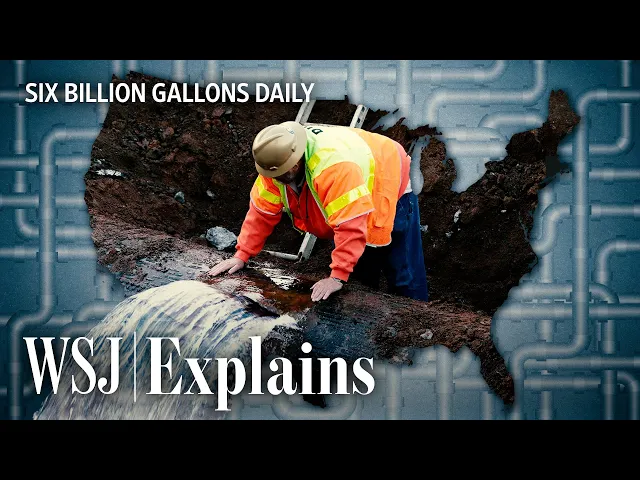
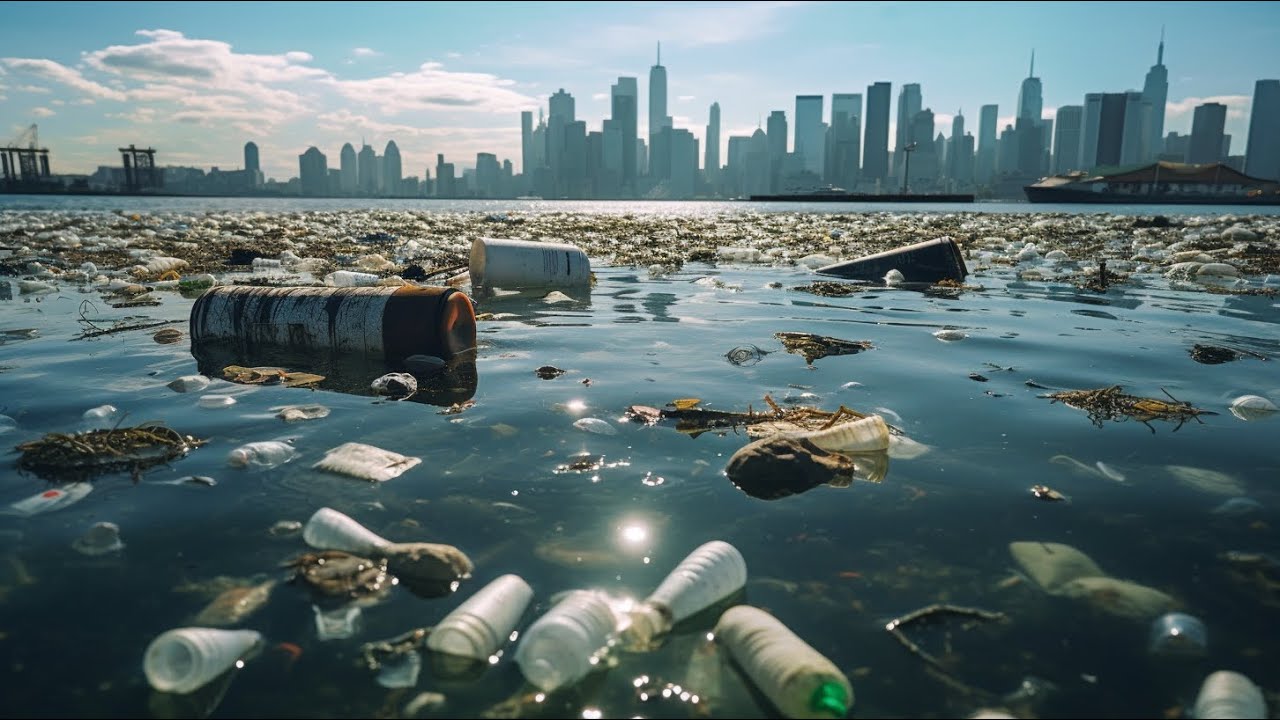
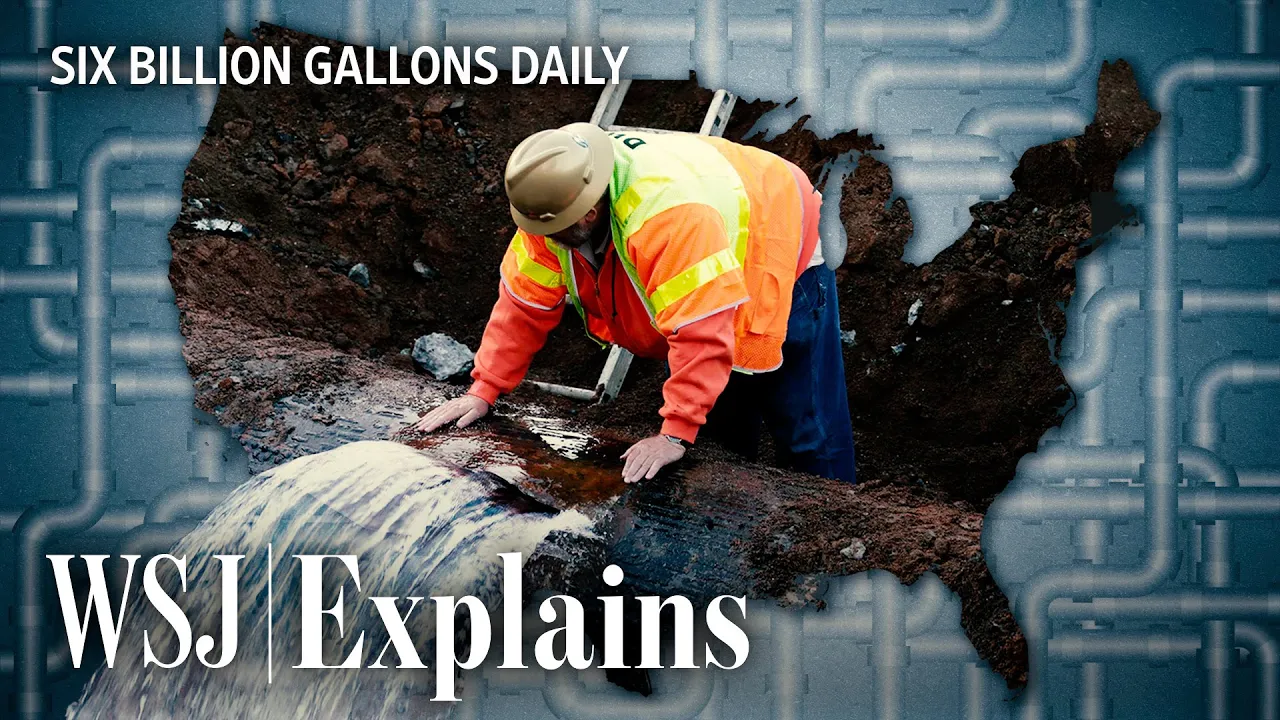
- [Narrator] Every two minutes, there's a water main break somewhere in the country's more than 2. 2 million miles of pipes according to the American Society of Civil Engineers. It's just one symptom of the country's crumbling water infrastructure.
- Lead in the water supply in Flint, Michigan. - The water crisis in Jackson. - Tonight, America's fourth largest city is under a boil water order.
- [Narrator] But it's not just the leaking pipes and contaminated drinking water. Dams and Levees that protect communities from severe floods are also at risk. So what are some of the structural factors driving these problems?
Here's a look at how decades of underinvestment brought America's water infrastructure to a tipping point. Typically, bridges, roads, and subways are funded by federal taxes, but not water infrastructure. Instead, local utilities are responsible for the operation and upkeep of community water systems.
This financing structure can be traced back to the 1800s when population growth and industrialization led U. S. cities and towns to rapidly expand their water systems for the first time.
Infrastructure was handled at a local level, not a federal one. This led to the sprawling and highly fragmented nature of the country's water systems. - There are over 50,000 utilities that manage just water.
- [Narrator] Upmanu Lall is a director at Columbia University's Water Center. He has led numerous studies examining the nation's drinking water and wastewater systems. - We either have really big utilities or thousands of small utilities.
The problem is that the thousands of small utilities really don't have the technical or financial capacity to manage things very well. - [Narrator] Today, more than 90% of the average utilities revenues come directly from local water bills according to state water directors. But there's a limit to how much money can be raised through bills to make essential upgrades.
Rate hikes, for instance, often have to be approved by local governments. And factors like a shrinking population mean the maintenance costs are spread across fewer rate payers. - So as a result, especially in communities that have been declining in population and in communities of color and communities of lower incomes, there has been a lack of investment and degradation of the infrastructure.
- [Narrator] Water bills have soared over the last 10 years, along with the costs to fix problems according to government data. So why is water infrastructure becoming increasingly expensive to build and maintain? The simple answer, it's too old.
In 1972, Congress made sweeping revisions to the Federal Water Pollution Control Act or the Clean Water Act. This led to significant strides in improving water quality. - The environmental agenda now before the Congress includes laws to deal with water pollution.
- [Narrator] But the majority of the funding was directed towards construction of new water systems rather than the operation and maintenance of existing systems. - But the problem that comes with that is that what's your plan for when that infrastructure ages? - [Narrator] The majority of wastewater treatment systems constructed in the 1970s are today reaching the end of their 40 to 50 year lifespans according to the Environmental Protection Agency.
Dams are at risk too. The ASCE found the amount of high-hazard-potential dams has more than doubled in the last 20 years. This means if a dam were to fail like in the event of an earthquake or severe storm, there would likely be a direct loss of human life.
- Our dams were designed to have a life of 50 to 70 years with good maintenance. - [Narrator] Today, the median age of U. S.
dams is 57 years and many pipes are even older. On average, they're about 45 years old with some dating back to the 1800s according to the ASCE. - So essentially, two thirds of our system is essentially due for replacement and pipes cost a million dollars a mile to replace.
So if you don't have the million dollars a mile to replace the pipe, what you do is you patch the pipe then the pipe breaks in another place. This becomes like a bandaid approach, and so at some point you just end up with a disaster. - [Narrator] As pipes aged water main breaks and boil water advisories became more common.
In 1987, Congress switched from a grant system to loans, specifically state revolving funds. Before this, federal grants funded up to 75% of state water projects. - The logic there perhaps, was that these would be low interest loans and they would go to communities that are most in need.
And the concept perhaps, was that many of the communities were already taken care of by that point. - [Narrator] This meant local communities became responsible for the majority of project costs because they were required to repay the loans. - The city council will meet to look over a final design on the new water treatment plant and decide whether they should take out a $3.
5 million loan to build it. - [Narrator] While spending by state and local governments were on the rise the federal government's share of water spending fell by about 69% between 1977 and 2017. With limited funds, many cities and towns neglected the repair and replacement of critical water infrastructure.
- The challenge is that if they try to go for the state revolving fund money typically they don't have in-house capacity to develop the proposals needed. So it's not a surprise then that the smaller utilities that serve poorer communities often are the ones that are really unable to come up with ways to compete for federal funds or to even compete for products at the right price point. - [Narrator] As federal funding dried up and systems aged, local governments spent more to maintain existing water infrastructure rather than carry out important upgrades.
Between 1977 to 2017, local governments spent about 70% more on the operation and maintenance of systems then on capital expenses to replace or install new infrastructure. - If you look at how water bills have gone up since 2000 to now, they have risen on average twice the rate of inflation across the country, and most of this is happening because of the deferred maintenance catching up with people. - [Narrator] In 2021, president Biden signed an infrastructure bill that sets aside about $55 billion to improve the nation's aging water systems.
- This law is gonna start to replace 100% of the nation's lead pipes and service lines. So every American, every child can turn on the faucet and drink clean water. - [Narrator] The Biden administration has called it the largest single investment in clean drinking water in American history, but it only covers a fraction of the $472 billion cost identified by the EPA in 2018.
Still, there are varying estimates for this price tag. - There is not a benchmark of this number because we as a nation, we have not done the exercise of who is in trouble, to what extent. So how do you actually source data from 50,000 different utilities in a reasonable way to get an idea of honestly, what really is the need.
- [Narrator] As a main focus of the infrastructure bill White House officials said they are rolling out a new plan to help 10 million U. S. households replace lead water pipes.