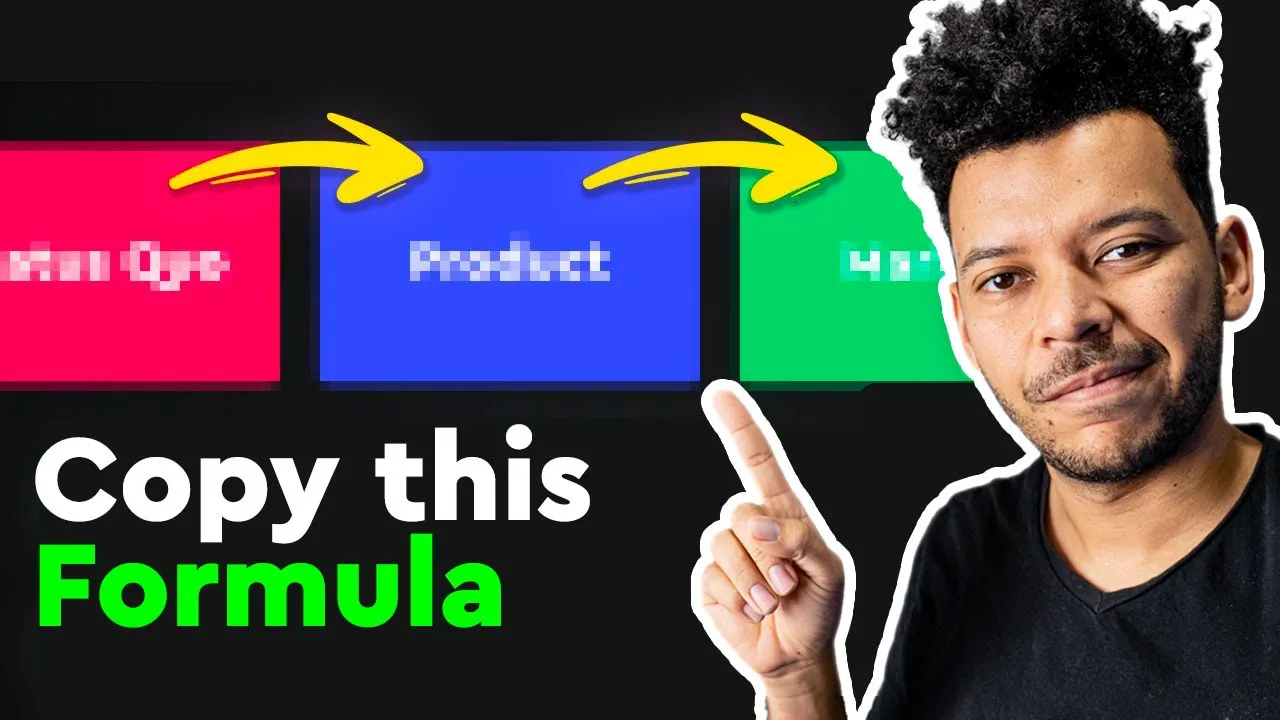
forget about numbers of slides forget about all these pitch deck rules I think that this is the perfect pitch deck structure and this red dot right here that's the go to market slide which nine out of 10 companies get wrong I'm going to get to that in a second it took us about 5 years to create that workflow and the pitch template that we released based on this workflow is coming up on a million uses by now and it's by no means a rule it's it's not set in stone but some of the most common
problems I see related to pitch ts are around structure making a pitch s that's too long or missing slides that are key to understanding the company's story a pitch needs to answer four core questions and each one of them corresponds to one of the sections of the deck what opportunity have you discovered in the market what is the company building to tackle it how much is the company going to grow and why are you and your team the best team to beat everybody else at this game if you already have a Teck you can match
it against these four questions and make sure that it's answering them clearly if you don't have a Teck you can use these questions as you're writing it to zoom out from time to time cuz it's easy to get cut up in the copy or some detail but it's good to stop from time to time and do a sanity check on whether you're actually answering these questions let's zoom in now not too much to look into the intros section make sure that the cover slide includes a quick blurb of what you do and this isn't your
marketing slogan by the way it's just a five seven-word explainer of what your company does ours is we help Founders navigate fundraising but it took us far too many hours of brainstorming to find and be a be able to compress that in a sentence so don't be scared it's going to take some time make sure that it's easy to grasp practice it with strangers and see if they can get a grip on what you're saying and then option Al you can include a slide that I like to call traction teaser if your company's doing really
really well this is a great hook to catch your investors's attention and give them some early perspective on what exciting opportunity they're looking at I always prefer charts over numbers because a chart tells a story a number is just a screenshot of a moment in time if your growth isn't that exciting then don't worry about it you don't need a t- or slide moving over to the status quo section remember that guiding question usually this is going to get answered with one to three slides Market overview problem and or business op opportunity think of the
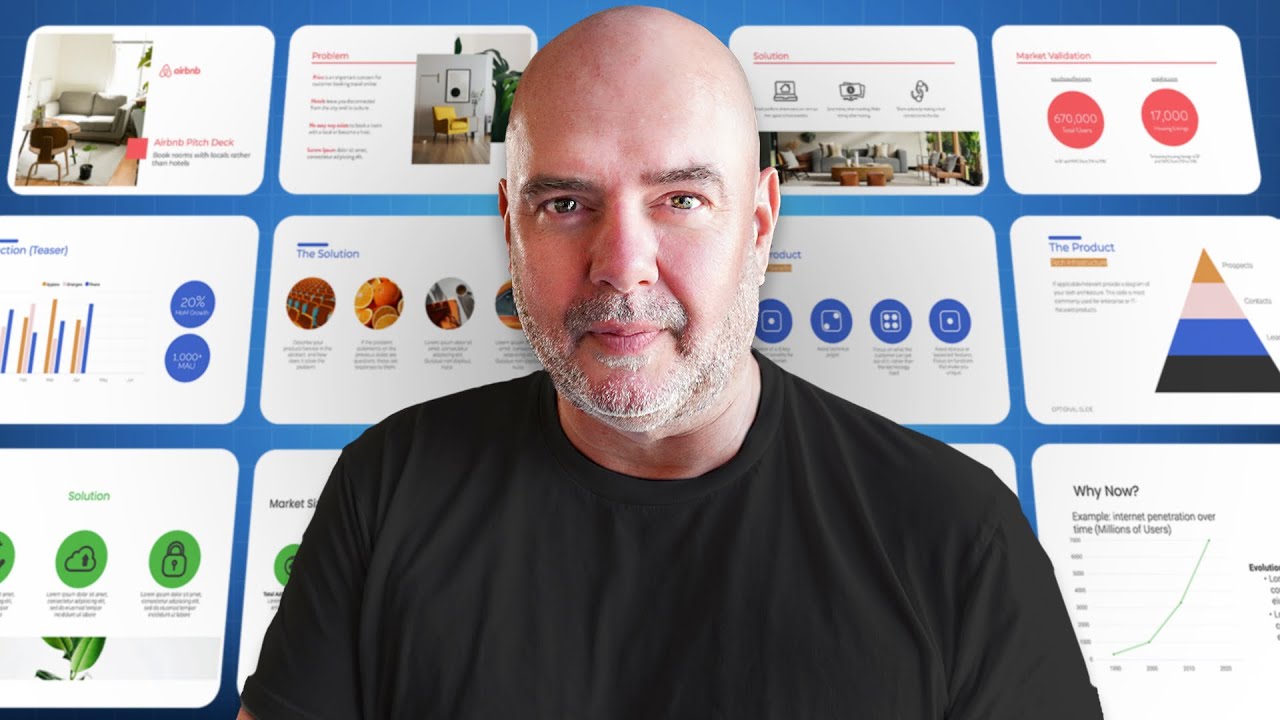
problem slide as the opportunity to show the paino that the world that your Market your customers are experiencing this shouldn't be a stone iny shoe type of problem ideally it should be a painful inconvenience for your future customers money wasted or time wasted this is our redesign of the Airbnb deck one of my favorite references for a perfect problem slide this is ubber notice the short lines the undisputable statements and this is Dropbox which we obviously didn't redesign notice how it takes you seconds to consume each one of the slides and the message gets sent
perfectly clear now not all companies solve problems sometimes they're just jumping on a business opportunity my first company was a mobile app in the very early iPhone era when the App Store gaming Market was wide open games don't solve problems there was no problem slide in that case the whole slide and the whole point of the deck was more about this rising market of casual gaming and mobile apps good business opportunity but not a great product for certain companies you also need the extra context of a market overview an objective summary of what's going on
in this space in the market now these status quo slides start the deck so don't underestimate what they mean for your credibility if the person that's reading the deck disagrees with your premises you might lose them right here even before looking at the product the problem in the business opportunity slides shouldn't be opinions they should be facts ideally backed by real data and by some sources this isn't easy it's going to take time on the Decks that our team works on with with our customers the problem side is probably where most the most back and
forth is needed because nailing that problem statement is just three sentences is pretty hard all right let's get into the product section now these are the slides that belong there and before I go over each one of them let's go back to the original question for this section it's very easy to get cut up and speaking too much about the product but the pitch deck is not just about the product the success of your company depends on execution how are you going to grow why is your team the team to get this company off the
ground so you want to show the context that's needed and then move on to the rest you should not include every single one of these slides so let me walk you through the most crucial ones if your problem slide was a question then the solution slide should be the answer to that more than focusing on the product and we're going to get there in a sec it's more about the platform or the service in the abstract and how it solves the problem check how Airbnb solved it each line answers one of the problems that they
introduced in the previous slide now the product slide on the product section doesn't need to say product you want to maximize the space to Showcase how it looks you can even do it across two or three slides touching on how it works on features if there's something breakthrough about it in the tech structure by the way I'm not a big fan of video demos many decks are consumed on the phone or on the move and there is no guarantee that the video that you add is going to be watched moreover an Investor's attention span for
a pitch te at least for a first view is about 4 minutes we've actually measured this and well you don't want to take two of those minutes for a video target audience is a key slide and honestly very often forgotten the deck should tell us who your perfect customer is and no the answer should not be everyone not understanding who buys your product is a huge red flag on a pitch Tech this can be complemented with a case study slide for example which is a short story about for example a company that adopted Your solution
and how it changed their productivity now the case study slide itself might give the reader an answer about who the target audience is and you're killing two bir with one stone now a lot of people get caught up on the business model slide trying to run forecasts or scenarios of what would happen if no no no we're still in the product section just tell us how you make money that's it is it a subscription is it usage based do you charge commissions how much that's it keep it simple and clean I like to keep the
road map slide right after the business model because it'll serve as a great bridge to the next section the product section was about what your product is and now the market section is about expansion so roadmart works really well here back to the OG question how much is your business going to grow let's start with traction if you're racing a seed round or larger you need a traction slide if you don't have traction then you're probably not a seed company you're probably a pre-seed company I made this cheat sheet with different company stages to give
you guys a bit of a reality check on what stage your company actually are a lot of companies are trying to pitch the wrong kind of investor because they think that they're in in a different stage that they're actually in okay so now we've arrived at the infamous go to market slide this is the way most companies approach it just this list of five sometimes seven nine marketing tactics and this slide isn't supposed to be a brainstorm a great go to market slide should tell us about the unique growth strategies that you have developed to
grow your business if you're a preed company you probably don't have any growth metrics you don't have unit economics but you can tell us what you plan to do to grow your first customers remember even if you're racing a preed round this money must last until you reach a seed round which means that you need to get to a point where you have a growing number of customers how are you going to achieve that you have to answer that question on the deck as well so great go to market slides walk us through the conversion
Journey for their customers if it's end users how do you get in front of them how do you convert them and how are you expanding on the strategy show the numbers and how Capital injection helps Fuel That Fire if your customers are other businesses well tell us who the decision maker is tell us how you're getting in front of them how the sales Cycle Works how long it takes and what are the economics of this process either way whether you preed or seed a good chunk of the money that you raise is going to go
to growth in part you're telling potential investors how you're going to use their money so this slide needs to be bulletproof this is not an easy slide to solve and this along with the time slide that comes next are these slides where we spend the most time with the companies that we work with if you need help on this well that's what we're here for and two ways we can help first we have a monthly plan to help you develop your pitch Teck it includes monthly calls with our team to help you review it it
even includes a kickoff call with yours truly and two if you'd like our team to take over write and or design the deck we can also help there okay so last on the market section is the Tam slide Tam is total addressable market so many Founders get caught up on this one estimating their obtainable market and their serviceable Market which you absolutely do not need zoom out remember the question how big does your company get the Tam slide is not the size of the Market it's not how much money is wasted on the problem you're
trying to solve this slide is about how big your business gets and the most straightforward way to calculate how big your business gets is just customers times Revenue per customer but it's very easy to get that wrong but now we're in customers focus on who your customer really is cuz it's of course not everyone you want to narrow that down by age by purchasing power by location by gender if it's companies it's not every business in the world narrow that down to company size location industry align that with your go to market maret strategy and
then sounds simple but just multiply that by your pricing or your average revenue per user annualized and of course make sure that you've validated this price with real customers and not just some madeup number of Revenue we have a whole video on how to do a tam slide because it's not that simple I'm going to link it below it it's it was actually made by one of our investors so a useful watch okay so now we're almost done the Yos section should reinforce everything that we've just talked about by confirming that you are the team
to do it the competitor slide should focus around what you understand about the market that your competitors don't very related to the slides in your status quo the secret saw slide should highlight unique or unfair advantages that your company has that you have not touched on on previous slides and then the team slide should confirm that all the skills needed are there to accomplish what this business set out to make for example if you're building a b2c app the core skills that you need are probably product and marketing if you're building an Enterprise solution the
core skills that you need are probably product Business Development and probably operation or compliance the people who lead those aspects of the business should be the people on this slide regardless of their co-founder status remember that you don't raise money to recruit these course skills you raise money to execute on the skills that you already have now if you've done your job well well now you get to ask for money the ask is a crucial part of the deck don't get me wrong but I don't think it's part of the story it's more of a
transactional part of the deck but you'll probably need a slide for financial projections and you probably need a slide of how much you're raising and a bit of a breakdown of the use of funds make sure that the money that raise is enough to get you to the next fundable Milestone a lot of companies die in the middle they die because they get stuck somewhere between preed and seed and they can't raise money or they get stuck between seed and series a and they can't raise money that actually happened to to to us but anyway
we we run a boot camp once a month to teach you guys how to estimate that stuff I'm going to link that in the description and please let me know in the comments if you'd like us to dig deeper into any of the aspects of the PCT catch you the next one [Music]
![Ultimate Pitch Deck Guide with Examples [in 2022]](https://img.youtube.com/vi/iHNwH4oiPIE/maxresdefault.jpg)