While most people avoid spending the night in jail, Jean Béliveau jumped at the opportunity. For the past three years, Béliveau had been walking from country to country, with the goal of circumnavigating the globe on foot. This required sleeping in tents, strangers’ homes, and the occasional jail cell along the way.
But this morning, as Béliveau was ready to leave, the police chief, who had agreed to his sleeping arrangement, was nowhere to be found, and the guards weren’t buying his story. Few people have the time or desire to walk such extreme lengths. However, research shows that adding even a modest amount of walking to your daily routine can dramatically improve your health.
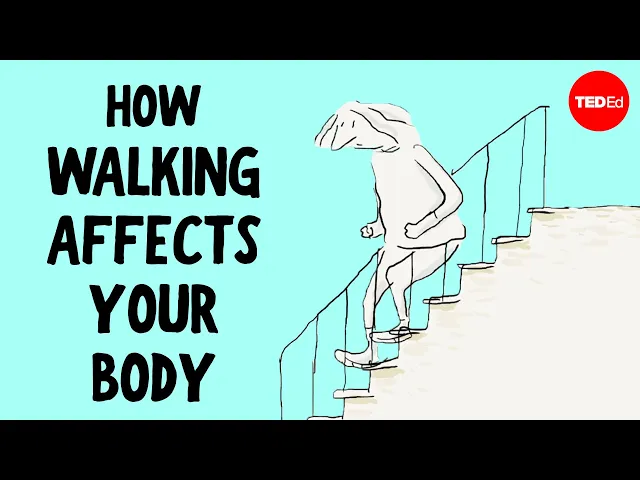
So, what exactly happens to your body when you increase your daily step count? A single afternoon stroll can improve your mood and ease symptoms of anxiety and depression. Walking, especially at a brisk pace, is thought to trigger the release of pain-relieving endorphins and curb the release of the stress hormone cortisol.
Within weeks of adding more steps to your routine, your body adapts. While it may seem simple, walking requires the coordination and effort of many muscles in your legs, torso, and back. To keep up with the increase in energy demand, the vessels around these muscles are remodeled to deliver more oxygen.
At the same time, your heart becomes more efficient at pumping blood. In a few months, these changes can lower your blood pressure and reduce your risk of heart attack and stroke. Carrying the weight of your body as you walk places stress on the bones.
But this stress actually makes the bones stronger, as it stimulates the absorption of calcium and minerals. That's why years of consistent walking can help retain bone density, which usually declines with age. Building a lifelong walking habit comes with many other benefits, from aiding in weight management to reducing your risk for type 2 diabetes, numerous cancers, and dementia.
Simply put, walking is exercise. And unlike other forms, it doesn’t require equipment, and is often more accessible to people of varying ages and fitness levels. While activity trackers usually bill 10,000 steps as the ideal benchmark, studies show that any increase in steps per day can yield health benefits.
And these steps don't need to be taken continuously. For those who live in walkable neighborhoods, steps are easily accumulated throughout the day; walking to work, to pick up groceries, or to meet with friends. And living where shops and amenities are easy to get to on foot comes with its own set of perks.
Residents in these communities are often less reliant on vehicles, which translates to improved air quality and reduced local greenhouse gas emissions. And it can even change the way you see the world. One study of seniors in Hong Kong found that those living in more walkable neighborhoods reported feeling less loneliness and more life satisfaction than those living in less walkable neighborhoods.
So, why doesn’t everyone just walk more? One big reason is that many people don’t have access to safe, well-maintained places to stroll. Despite the known benefits of walking, many cities and towns have been designed with only driving in mind.
State and local governments across the globe often prioritize funding for highways and roads over sidewalks and public parks. And even when walkable spaces exist, the routes to get to them aren’t always pedestrian-friendly. In the US, residential and commercial areas are typically zoned separately and often only connected by busy roadways.
But there are ways to make places more foot-friendly. In 2013, Vancouver city officials opened the Comox-Helmcken Greenway, taking a two-kilometer road and converting it into a walkable and bikeable space. Studies found that after opening, people living close to the greenway got more exercise, reduced their daily car trips by 23%, and cut their personal greenhouse gas emissions by 21%.
And even small measures can help. In places like Bethel, Vermont, for example, community members have improved the walkability of their downtowns by adding simple features like painted crosswalks and curb extensions. As for Béliveau, the guards eventually let him out.
He’d walk over 75,000 kilometers in total to complete his journey. But it’s clear you don’t have to take quite this many steps to see an impact.