Nick: This is the rarest food in the entire world. Parsa: Whoa! Nick: But before I show you what it is, my friends and I are also going to try this Japanese square watermelon, the world's most expensive chocolate, and so much more.
But we're starting here with these Oreo Ritz crackers, one of the rarest snacks in the United States with only 1,000 boxes ever made. This box right here only cost me $10, but as the video moves on, the items are going to get rarer and rarer, and eventually priceless. First look.
What do you guys think? Mark: I like the idea of sweet and salty. Honestly.
Nick: So supposedly this cracker is literally just half Oreo with the Oreo cream and half Ritz cracker with peanut butter. Parsa: Yeah. Nick: I just forgot this was released in like 2019.
Parsa: Spit it out. Mark: I like Oreos, so I like that half. The Ritz is forgettable.
Nick: Our next two items are this glass of donkey milk from Serbia and this reindeer cheese from Sweden. Parsa: Are you joking? Mark: I don't know about this one, Nick.
Nick: So hear me out. This glass and this tube of reindeer cheese each cost me $25. Mark: I don't even like cheese to begin with.
so this is. . .
Nick: Oh, it looks kind of nasty. Mark: What do you think? Nick: It's not good.
Mark: Yeah. I'll take your word for it. Nick: What makes this so rare is the fact that reindeer make such little milk.
Only about a 10th of what a cow produces each day. Donkey milk, on the other hand, is much rarer. So believe it or not, we wanted to get donkey cheese.
But Novak Djokovic, the tennis player, buys the entire world's supply because he loves it so much. Who wants to taste the donkey milk first? Mark: I'll give it a whirl.
Nick: Go for it. Try. Give it a try.
Mark: It's very smooth. Nick: And while Parsa is trying it, I'm going to let you know that the composition of donkey milk is the closest milk in composition to human breast milk. This is called a long neck avocado.
These are so hard to find. Each one costs $50 and they can grow up to 13in long. Mark: Is the pit a normal size?
Nick: Whoa! Wow. Damn!
Look at that. Yeah. Mark: That's perfect.
Nick: It's like a guitar. Parsa: I love it. Nick: Inside it does look just like a normal avocado.
In fact, I think the color is even nicer. Lucky for you guys, I made some fresh guacamole. All of this guacamole came from one half of a small, long neck avocado.
Parsa: Dive in. Mark: Cheers. Parsa: Wow.
Nick: Delicious. Moving on to a true delicacy. These are ant eggs, also known as ant egg caviar.
The single can here cost me $100. Parsa: I don't have to eat this, right? Please.
Nick: I don't know if you're being serious. Mark: I'm serious. Nick: It's a delicacy.
These are a huge luxury all across Southeast Asia. And people say they taste creamy and citrusy. Parsa: Perfect.
Delicious. Nick: Parsa's gonna start. Parsa: I'm gonna have to reject this one.
I can't do it. Nick:It because this is one of the more adventurous items in this video, I'm gonna let you guys off easy and fast forward to another $100 item. Parsa: Thank God.
Nick: Later in the video, we're going to try the rarest and most expensive caviar in the world. So that's why I'm not making you try the anti caviar. But it is rare.
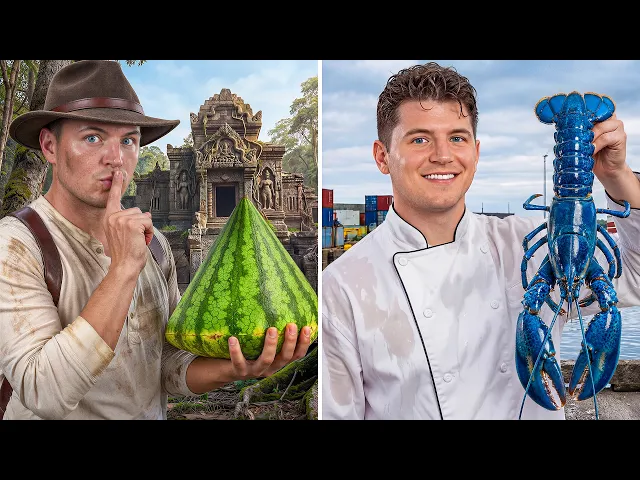
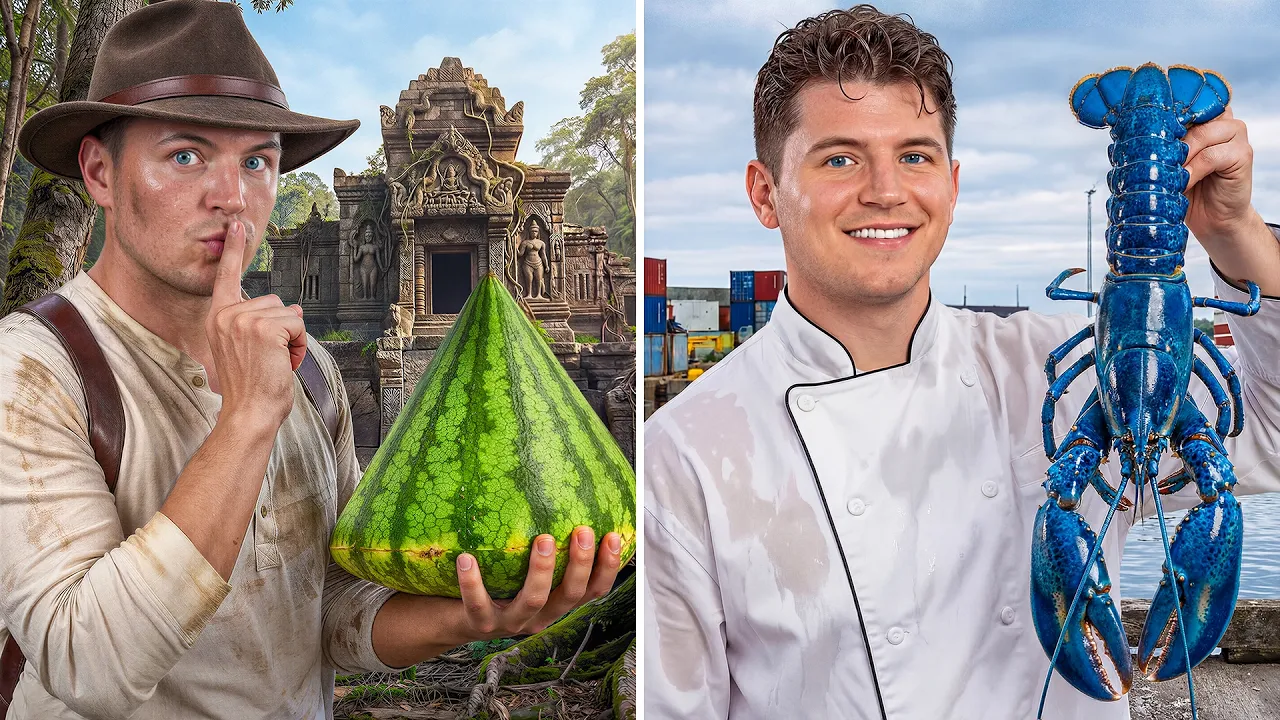
Not quite as rare as this item here. This is a Japanese square watermelon. There are only 300 made every year and technically it also costs $100.
But to get one you need a reservation. And it's basically impossible to get the reservation, which means this item is essentially kind of priceless. Mark: How do they make these?
Nick: So they're grown in this like special square box mold, and that's how they get the shape. Parsa: This is my single favorite fruit. Nick: So unfortunately, these are harvested before they're ripe.
So they're technically inedible. They're used for decoration and high end gifts in Japan. Parsa: Perfect.
Nick: Oh, wow, that is so cool. But you see how it's weirdly colored? Parsa: Yeah.
Nick: Like it's yellow, it's not edible. Parsa: I had the highest hopes to eat this. You have no idea.
Nick: Smell it. It should smell. Parsa: Wow, it smells amazing.
Too bad next time. Mark: Yeah. Nick: This is Kopi Luwak, a special type of coffee.
This container here cost me $150 to ship from Indonesia. Parsa: So what's special about this? Nick: Why don't we make the coffee first and I'll tell you while we're drinking it.
Parsa: It has to be just more than coffee. It smells really good, actually. You got something up your sleeve, though, I already know Mark: It does seem a little too good to be true.
Nick: None of us have ever used a French press. Mark: No. Nick: We think this is the right way.
So we stir it up. Nice. And once we've waited for a bit, you can press that down.
Parsa: I'm suspicious. I'm telling you, Mark, I'm suspicious. All: Cheers.
Nick: Good coffee. Mark: Yeah. Nick: So this ultra rare coffee is actually made by civets, which look sort of like a cat or a weasel.
Mark: What do you mean by that? Nick: The way it's made is that these animals basically eat these coffee cherries, and then they partially digest them. And this reaction happens in their stomach.
And when it comes out the other end, it's supposed to taste extra good. Parsa: Did I not tell you guys something was suspicious about this? I told you, I told you he's always up to something.
Nick: Well, here's the thing. One cup of this coffee can cost anywhere from $50 to $150. So there's something about it that people love.
Parsa: Probably wouldn't know the difference between this and. . .
Mark: Yeah, totally. This would be. .
. this is a great morning cup of coffee. Nick: It's like a regular cup of coffee.
I wouldn't pay more to get this kind of coffee over a regular cup. It tastes the same. Mark: Certainly not.
Yeah. Nick: It's time to turn up the heat. Here we have gold Tabasco sauce and jalapeno M&Ms, each equally difficult to find and $200 a pop.
Parsa: Look at these. Nick: Only 10,000 bottles of this were ever made, and it's been aged for 15 years and comes in this luxurious champagne bottle. As for the jalapeno M&Ms, my thought is they're either going to taste amazing or be absolutely horrible.
I do love the bag. Like the guy's got the big hat on. He's holding a bunch of jalapenos.
Mark: And they're peanut M&Ms, and that's a good start. Parsa: So jalapeno and peanut. This is.
. Nick: Interesting. Well, I do feel like peanuts go really well with a lot of like - Thai cuisine, for instance, has peanuts and a lot of spice.
Mark: Peanut M&Ms are a ten out of ten food on their own, so I'm worried that anything could tarnish it. Nick: Oh wait, I didn't think of them being these colors either. Oh that's Fun.
Parsa: Oh. They're big. Mm.
Not horrible at all. Mark: I can barely taste any jalapenos. Parsa: It's not too spicy.
Nick: So initially I wasn't getting any spice. Now I feel a little bit. Tiny bit.
Mark: Yeah. The fourth quarter they get you. Parsa: I tasted way more peanut than I did jalapeno.
But I love their effort. Nick: Let's talk about the gold Tabasco. It might sound crazy that it's been aged for 15 years, but later in the video, we're going to try a balsamic vinegar that's been aged for 100 years.
Mark: Perfect. Thank you. Nick: Okay, here we go.
Parsa: That is really good. Mark: Really good. And that has a kick.
Nick: It's an interesting color. It's much darker than regular Tabasco. Parsa: I feel like it would take over a lot of the dominating flavor.
Mark: Yeah, but this bottle could probably last you a while. Parsa: I want to take that Home with me. Nick: This next item might look like a dinosaur egg, but it's actually an emu egg.
Mark: Whoa! Nick: As things get rarer, the cost goes up. So this one is now $250 for the single egg.
Mark: It's beautiful. Yeah. Parsa: That is heavy.
That is dense. Mark: Very high stakes to hold this egg. Nick: So this egg weighs about 1.
5lbs, which is the same as one dozen chicken eggs. We're gonna save this egg. We're actually going to boil it and try it later with our caviar.
Moving on. This is called Amazon air water. This water comes from the humidity and condensation from the Amazon rainforest.
The case of four of these costs a little over $350. Parsa: Oh my gosh. Nick: We're not going to drink this like a regular glass of water.
All right. So this is like a bottle of wine, right? And so first we have to decant it.
And all of this is genuine crystal. Okay Parsa: Good aim. Nick: Oh, I'm spilling it.
I just spilled, like, 50 bucks. This is just gonna sit here like any wine would, to kind of open up. And ideally, this water is the best water we've ever tasted.
I gotta be careful when I pour this. Mark: Every drop counts. Bar is high for this.
Parsa: Cheers. Mark: Cheers. Parsa: It's not blowing me out of the water, expectation wise.
I don't know if I can taste the Amazonian air. Nick: It's almost more of a power move to buy your water like this and just be like. This right here: the rarest, most expensive chocolate bar in the entire world.
Do you guys like chocolate? Mark: Love chocolate. Parsa: Love chocolate.
Nick: This company only makes a few hundred of these per batch, and they regularly sell for up to $500 per bar. What makes this so rare is the cacao that this comes from. These are cacao pods.
This is the fruit where chocolate comes from. And there's this one variety of this fruit from Ecuador that dates back 5300 years old. A lot of people thought it went extinct until not that long ago.
Someone found a few trees in this remote area of the Ecuadorian rainforest. Mark: That looks pure. Nick: I have a sort of a fun idea.
One second. Parsa: What is he up to? Nick: I have this other box of dark chocolate, also from Ecuador.
It's from a company called Blue Stripes. Mark: It's a beautiful bar itself. Nick: Each of these chocolate bars goes for $5.
So 5 versus 500. I want to do a blind taste test. Can this chocolate be worth that much money?
Mark: Let's find out. Nick: Put on your blindfolds. I'm going to mix these up so that only we know which one is which.
First one I'm going to give you guys each a square. Mark: It's really, really good chocolate. Parsa: It's not too brittle.
It's chewy enough. I like that one a lot. Nick: Now for the second one.
Mark: Cheers. Parsa: This one feels a little less rich. A little lighter.
Right, Mark? Mark: Yeah, the bar's not quite as thick. Parsa: Not quite as flavorful, I'll say that.
Nick: So which bar are you picking? Number one or number two? Parsa: I have to say probably bar number one.
Mark: Me as well. Nick: Take the blindfolds off. Bar number one.
The $5 bar. Mark: Ah, I think just biting into this first one, it was so smooth all the way down. Parsa: You can't go wrong with chocolate either way.
Mark: Yeah. Nick: Ah. Parsa: What's moving?
What are these? Mark: These look like fingers. Parsa: Can someone please tell me what's going on?
Nick, why aren't you talking? Nick: This pile of seafood in front of me might not look like much, but because of how rare these are, this cost me $750. Mark: There's so much mobility coming from that.
Parsa: This is not going in my system. I'm telling you right now, guys. Nick: This is abalone.
It came from California, and these are live gooseneck barnacles. They came from Portugal. Abalone is similar to oysters and clams, and it's so incredibly rare that it's a symbol of wealth and prosperity in many Asian cultures.
Parsa: What about those? Nick: So those are gooseneck barnacles. These are even more rare.
These live on certain areas of rocks where the waves crash so violently that people risked their lives to go and get them. And some people have died collecting these. So here's the thing.
I'm not letting you guys off easy anymore. We're going to try one of these. I'm happy to try it either.
You guys pick. Parsa: I might have to get going. I'll see you later.
Mark: Neither of these are calling my name, to be honest. But there's something about these that seem just a bit more familiar. Like close to mussels or clams.
Nick: Let's try the abalone. The first step here is to clean off the abalone. Sprinkle a little salt on there for me.
Look at that movement. Mark: What? Nick: Isn't that amazing?
Once we put enough salt on there, I'm going to scrub this off a little bit. Some of those darker spots are starting to come off. We're going to scrub, scrub, scrub and eventually it'll get all nice and clean like this.
And look at how beautiful the shell is. Once it's nice and clean, I'm gonna take it out of the shell. Look at the shell.
Mark: Whoa! That's epic. That is art.
Nick: Looking at it now. Are you feeling better about it? Parsa: A tad?
Mark: Yeah. It looks like a scallop. Nick: So the way to prep this now is to slice it super, super thin.
And now, once I've sliced a bunch of it up, I'm going to sit it back into its own shell. Finishing touches lemon and soy sauce. And it's ready.
Mark: Let's dive in. Parsa: Mm. Nick: Not too bad.
It tastes a little like scallop, a little like clam. I think it's really good. Mark: Big fan.
Parsa: No it's good. To go from where it was to where it is now, it looks way more appetizing now. Nick: At $1,000 per bottle, this item right here is technically balsamic vinegar, but that description doesn't really do it justice.
This is Giusti 100 Reserve balsamic. It's aged for 100 years and only a few bottles are released each year. The label is made from real 24 karat gold, and the bottle is blown by a master glassmaker.
Mark: They really go above and beyond with this one. Parsa: Beautiful. I would love to take this home.
I mean, this is this is elegant. Nick: This box is like what you'd get a fancy watch in. I feel nervous holding the bottle.
Number 358 out of 400. If you break it, you buy it. Ooh.
Mark: Okay. I'm really excited for this. Parsa: Get the bread.
Get the bread. Nick: Before we move on. We're going to pair this with this golden olive oil from Greece.
This is from the foothills of Mount Olympus, home of the Olympic gods. It is a 24 karat gold infused extra virgin olive oil. I got this beautiful balsamic olive oil platter.
At the bottom there are some of our 100 year old balsamic. And the top, of course, you can see we have gold flaked olive oil. Parsa: You really are the king of plating.
Nick: This is nice, right? Just dip in there. Just kind of get in the crevices.
Mark: Mhm. Parsa: Wow ten out of ten, seriously ten out of ten. Mark: And the olive oil is a proper way to start a meal.
Nick: Next up is a $1,500 item called Elvish honey. And it's rare because the honey has to be harvested in the middle of the night by professional climbers. Parsa: That's beautiful.
Mark: Yeah. I love the honey comb glass. Nick: And speaking of honeycomb, I wanted to bring in a full frame of honeycomb just because I don't know if you guys have ever seen that before.
Mark: No. Nick: This is like, nice, good quality, regular honey from a honeycomb. Parsa: Oh, wow.
Mark: That's a dessert. Nick: So there's our baseline. Mark: It's a pretty high bar.
Parsa: Nice. Nick: Great sound. Mark: Yeah.
Nick: Mhm. Mark: It smells so different. Parsa: It smells more like molasses to be honest, doesn't it?
Mark: It doesn't even smell sweet to me. Nick: It smells more savory. Mark: Yeah.
Parsa: Yeah. Almost lemony. Nick: Really fragrant from all those wildflowers I think.
That's cool. The more you smell it, the more it kind of opens up to something totally different. Just a teaspoon.
Parsa: Wow. Nick: Kind of bitter, though. Mark: It's very bitter.
If you hadn't told me that this is honey, it's so different. Parsa: I'd have to put my vote for the first one. Nick: You know, what's interesting is because it's supposed to have these medicinal kind of magical qualities.
I wonder if, like, that's. . .
Mark: It does taste like medicine. Nick: In, like, a kind of a cool way. We've all tried prosciutto, maybe even some jamon.
But at the tippity top of the holy grail of ham, there's cinco jotas jamon Iberico. Parsa: I love jamon Iberico. Nick: In front of us is a leg of the finest ham on the planet, but that does result in a hefty $2,000 price tag.
That said, I have been lucky enough to try this before and I will say as a special treat once in a while, having a few slices is worth it. Mark: All right, let's do it. Parsa: I'm ready if you are.
Nick: So first I'll make a small cut right here. And then we begin to start trimming away some of that fat. We need to save all of these fat scraps that we cut off.
We need them later when we go to cover up the jamon. Since we're obviously not going to eat all of it right now, do either of you guys have any guesses on what makes this so rare? Mark: I would have to guess it's either the number of animals or the way that it's preserved.
Parsa: Maybe it's the process through which the pig itself lives. Mark: Or is it only in a specific area of the world? Nick: So it's rare because it comes from a rare purebred pig that eats basically just acorns, and then it's cured by a master ham maker for up to four years in the mountains and meadows of Spain.
You just want to go back and forth very, very thin. And as you can see, when I slice, I can see the knife through my slices the whole time. That's how you want it to be sliced, and it's recommended that you actually pick it up with your fingers.
Nice little thin slice. Parsa: This is such a staple in Europe, especially in Spain. Nick: Oh my God, it is the best.
It is the best. Parsa: Cheers, gentlemen. Nick: See what you guys think.
Parsa: Mm. So delicious. Mark: I like how thin it is.
And then you can really taste the different sections of the cut. Nick: Having one of these is always crazy for me. Next item.
Even crazier. Inside this is the rarest bottle of ketchup anywhere in the world. It's from a partnership between Ed Sheeran and Heinz, who is famous for his love of Heinz ketchup.
Mark: Aha! Nick: Interesting, right? As you can see from this note, inside there were only 150 made.
And if you look at the bottle, you'll actually see there's Ed's signature. And this is a print of the tattoo he has on his arm. Parsa: He's brilliant.
You know, I'm really excited to try. He's just a genius. Nick: Part of me wishes it would play his music when you open up this box here, you know?
Parsa: Yeah. Nick: Like- ♪ And I'm thinking about how ♪ Nick: What do you guys think of the actual bottle? Mark: It's awesome.
Yeah, I would definitely keep this after I had finished the ketchup, that's for sure. I'm curious to understand what this all means. Nick: Oh, all of his tattoos?
Mark: Yeah. And what was the bite with ketchup that made him decide to commemorate it? Nick: The other thing is to make it a little more accessible, Heinz made a "Tomato Edchup.
" So if we don't want to open that one, we can use this. And it's the same ketchup in both of them. Parsa: Can we try a little bit?
Nick: Yeah. So the other thing, I just figured I'd get us some normal fries. Parsa: Oh, yeah.
Nick: Each of us gets our own container. I mean, the thing is, I know it's just regular Heinz ketchup. One of the all time greatest things.
Nice work, guys. Next, for some Wagyu. But not just any Wagyu.
It's an A5 bone in wagyu ribeye worth $5,000. Already that's the most expensive cut of Wagyu you can get. And on top of that, we've then dry aged it for a year.
Nobody does this because it's too expensive. Parsa: That's how it kind of looks like typical Wagyu. And then this side, I wouldn't really be able to know what that is or classify it honestly.
Nick: That part we trim off, we cannot eat that part. But it's important because it's protected the rest of the meat on the inside. Parsa: It doesn't even smell like wagyu to me.
It's weird. Nick: It's what dry aged meat smells like. Mark: And is that from the outside covering?
Nick: That's the outside. But it's going to be in the flavor on the inside too. So to cut it, I have to locate those bones on the bottom.
Normally the bones come out of Wagyu too, because when it ships from Japan that's more weight. It's just easier to take it out. So it's not easy to get bone in Wagyu as it is.
Let's slice in here. I'm gonna follow the path of the bone. Mark: It's like butter.
Parsa: Yeah, it's cutting really smoothly. Nick: And then you can see when I open it up. That cross section is beautiful.
Mark: That's the classic Wagyu view. Nick: That is Wagyu. Mark: Yeah.
Nick: So as you watch me trim this, you can see and understand more why dry aging is so expensive. Already, you lose a lot of the volume from water and then you have to trim a bunch of it off. Parsa: So Nick, let me ask you, how will you season something like this?
Nick: So you basically won't - you only want a tiny bit of salt. The rest should speak for itself. Parsa: Got it.
Nick: And we'll need only the tiniest of bites. But before I do anything, look at the patterns. Mark: Yeah, it's speckled in there.
Parsa: Beautiful. Nick: And in there is the intramuscular fat. That's the fat between the muscle and that's what makes Wagyu as expensive as it is.
So to cook first we're going to use some of that dry aged fat. You guys smell that? Mark: I love that smell.
Wow. Nick: So that way that extra fat doesn't go to waste. I'm just gonna put a tiny bit of salt on each piece.
Mark: That's the sizzle. Has me salivating. Nick: It's crazy, no?
I'm willing to bet it'll be one of the better bites of meat that you ever have in your life. There's, like, a certain transition in the smell where you know it's going to be more burning versus like, actually browning. So now I know we're good to flip over.
Look at that. Wow. Like I said, you're cooking this in a matter of seconds and then we are ready.
So give it a second to cool. Parsa: It's really perfectly cooked. Ohh.
Mark: Mhm. Nick: Is it a $5,000 bite? Parsa: You said before this is gonna be one of the best bites of meat.
It really was. It was so good. Mark: I don't want it to end.
Nick: For this next one, you're either going to know what I'm talking about, or you're going to think I've gone completely insane. Let me ask you guys first. Have you ever seen those crazy listings on eBay of these weird, rare shaped snacks, or do you have no idea?
Mark: I don't think I spend as much time on eBay as you do. Nick: So you have no idea what I'm talking about? Mark: No.
Parsa: I'm curious what you mean by weird shaped. Nick: In 2017, a Hot Cheeto that was in the shape of that famous gorilla, Harambe, sold for 100K and then in 2021, somebody in Australia found a puffy Dorito and the company Doritos actually bought it from them for $20,000. Can you guys guess where I'm going with this?
Parsa: No, I really can't. Mark: What did you find? Nick: The right question is, what did I buy?
I may or may not have spent about $10,000 on some of these rare snacks off eBay. Parsa: Oh, boy. What have we got?
Nick: It doesn't look like much. Parsa: Are you serious? Nick: I'm serious.
Yeah. Parsa: This? Nick: Hold on.
I bought this little school of goldfish. I bought a puffy Dorito. I bought this seahorse shaped Cheeto, and I bought a chicken nugget in the shape of the Among Us character.
Parsa: For $10,000? ! Nick: Maybe a little more.
Before you guys judge me, let's just look at them. These are such rare misprints of the most popular snacks in the world. And people actually buy them.
Parsa: "People. " Just-just Nick. Mark: Yeah.
Nick: Look at this. It's a school of goldfish swimming together. Parsa: Wow.
Nick: Come on. Parsa: I don't know about 10,000. I just don't know.
Mark: People find meaning in a lot of different things. And I'm really happy that you found that. Nick: The puffy Dorito.
was supposed to be in here. Parsa: Where is it? Nick: They sent me an empty box.
Parsa: I'm stunned. Nick: Among Us Chicken nugget. That's pretty cool.
Parsa: I'm excited. No, rip it open. Nick: What do you mean, it's not.
. . It's about like, the look of it.
This is a rare item. Parsa: Beauty is in the eyes of the beholder. Nick: This one is beautiful.
Parsa: Hang it in the Louvre. Nick: Come on. Look at that thing!
Mark: That is worthy. The texture of the tail is quite prominent. Parsa: Number one of the three, probably, right?
Mark: Oh, yeah. Nick: This was what I was most excited for. I'm glad you guys are finally understanding a little bit more of what we're talking about here.
Mark: That's a winner. That's pretty cool. I like that one.
Nick: Before we move on to a few items that money simply cannot buy. This here is Almas Caviar, the rarest and most expensive caviar anywhere in the world. The name Almas means diamond in Russian, because it's said to be the diamond of all caviar, and at over $15,000 per kilogram, it also costs more than most diamonds.
Parsa: Oh. Mark: Oof. Nick: Da da da da, dun dun dun dun.
Parsa: That is beautiful. Look at this. Nick: Osetra Almas Private Stock.
This is the kind of caviar that the caviar company keeps for themselves. Parsa: Oh, my gosh. Mark: Here we go.
Nick: There is another compartment. Mark: Oh. Nick: White gloves.
And then the key to open it is like the fanciest little key. And then I think this is a little mother of pearl plate. And then, of course, a bunch of mother of pearl spoons.
Oh, I've never seen a caviar that light and golden. Gloves off. A Bellini.
A little scoop. We forgot to mention, this is our ostrich egg. Parsa: Oh, yeah.
There you go. Nick: Yeah, yeah, yeah. It's not even all of it because it was so big.
A little bit of ostrich egg on top. Tiny little touch of creme fraiche on top. And a couple of chives.
Parsa: I'll take this. Wow. I've never tasted flavor like that in caviar.
Mark: Mhm. And the caviar really stands out. Nick: It has more flavor.
Mark: It kind of pops. Yeah. Nick: Mhm.
Super buttery. Mark: Yeah. It's really smooth.
Nick: Trying it plain. Parsa: You can sense the butter even more now. Mark: Yeah I think I even prefer it plain to be honest.
Nick: Let's go to the priceless items. So lots of people say caviar goes well with fried chicken, which is why it's a perfect segue to our next item, this fried chicken Prime bottle. This is Prime that's flavored fried chicken.
They didn't sell - they did not sell this. I got this straight from Logan. So from a distance it looks like a normal KFC bin.
Then you look at the face and it's Logan Paul's face. Mark: I didn't even notice that. Nick: And they specifically said that this is not for consumption.
Mark: I think we have to try it, though. Nick: Oh gosh, that's cool. Parsa: What?
This is pretty epic. Nick: Wait, this is amazing. It says "frydration" instead of hydration.
But before we try it, I decided to get us a regular bucket of KFC because we might as well compare the flavor. Mark: Yeah, it's the only way to do it. Here we go.
Parsa: Cheers. Nick: Oh. I can't, I can't.
Parsa: I taste the chicken. Mark: Yeah, it's as advertised. Parsa: I taste the chicken.
Nick: It tastes exactly like fried chicken. It's like the same thing. Parsa: Same thing.
Nick: There's no difference. I might wash it down. Parsa: No way.
They nailed it, I guess. Mark: Yeah, they really did. Nick: It's perfectly disgusting.
Mark: Yeah. I'm not sure how well this would do on the market. As a product, it hit the spot.
Nick: This is our second to last item. The final one is for you guys. And you'll see what I mean in a moment.
Mark: But first. . .
Parsa: Oh my gosh is, that lobster? Why is it so blue? Nick: It's not a blue lobster.
This is a 1 in 100,000,000 cotton candy lobster. Just so you understand, the odds of catching a regular blue lobster are 1 in 2,000,000. This is truly the best representation of a food that money simply cannot buy.
Lucky for me, I know a pretty cool lobsterman who caught this lobster a little while back and let me borrow it for this video. Parsa: So how does this happen? Nick: Due to a rare genetic mutation.
And this one here has a few brown spots because it's actually about to molt its shell, and when it eventually molts its shell, it's going to look something like this. Parsa: Never seen anything close to this. This is incredible.
Nick: It would be A crime to cook this lobster. So we're going to send him off to an aquarium where he can live happily ever after. And believe it or not, he'll be much safer than he would be in the wild there.
So instead, I've got a lobster that's much bigger. This is an 11lbs lobster. The biggest money can buy.
Look how small this crab is versus the actual lobster. Lobsters this old can be up to 140 years of age. Just look at the size of my hand compared to its crusher claw.
And trust me when I say you don't want to get your fingers anywhere near this thing. It's so big that to prepare it, we need to break it down into smaller parts and then steam it in three different pots. Then the shell is so thick that I'll need to use some pretty incredible force to open it up.
And guys, we're left with this. Insane. Mark: That's bigger than his hand.
Nick: Crazy. Mark: Yeah. Nick: Cutting into this thing is like cutting a steak.
That's how big this claw is. Tasty. Ready for the last item?
Mark: Let's do it. Nick: So here it is, our final item of the video, a couple oysters. But before I say anything else, you're going to want to watch and listen very carefully.
These are ten year old oysters. These are nearly impossible to find anywhere in the world. But here's the thing.
Oysters this old have a much higher chance of having a pearl inside. And the most expensive pearl ever is valued at $100 million. We are going to open one of these oysters.
If it has a pearl inside, it's going to be worth a lot. And I'm going to send it to one of you. Mark: We'll see.
Nick: No pearl, but I bought this $10,000 pearl. Go subscribe and this is coming in the mail to one of you.