Captions are on! Click CC at bottom right to turn off. When I was a kid, swimming was one of my favorite things to do.
I was on the swim team starting when I was four years old and then on and off throughout grade school, although I wasn’t especially fast. I just loved the water. I used to dream that there was a way I could be like a fish.
When I was little, I had a misconception that fish didn’t need oxygen. Later on, I learned that, no, most fish have gills that allow them to extract the oxygen, which they need, from the water. So then I just thought it’d be really cool if I just had gills.
But, alas, no gills for Pinky. Oxygen is a really big deal---so many organisms---from fish to plants to humans---need oxygen. And yes, even though plants make oxygen in photosynthesis…they still perform cellular respiration and therefore plants still need oxygen themselves.
There’s often a misconception that plants don’t need oxygen; that’s just not true. So why do these organisms need oxygen? It’s similar to why you need oxygen.
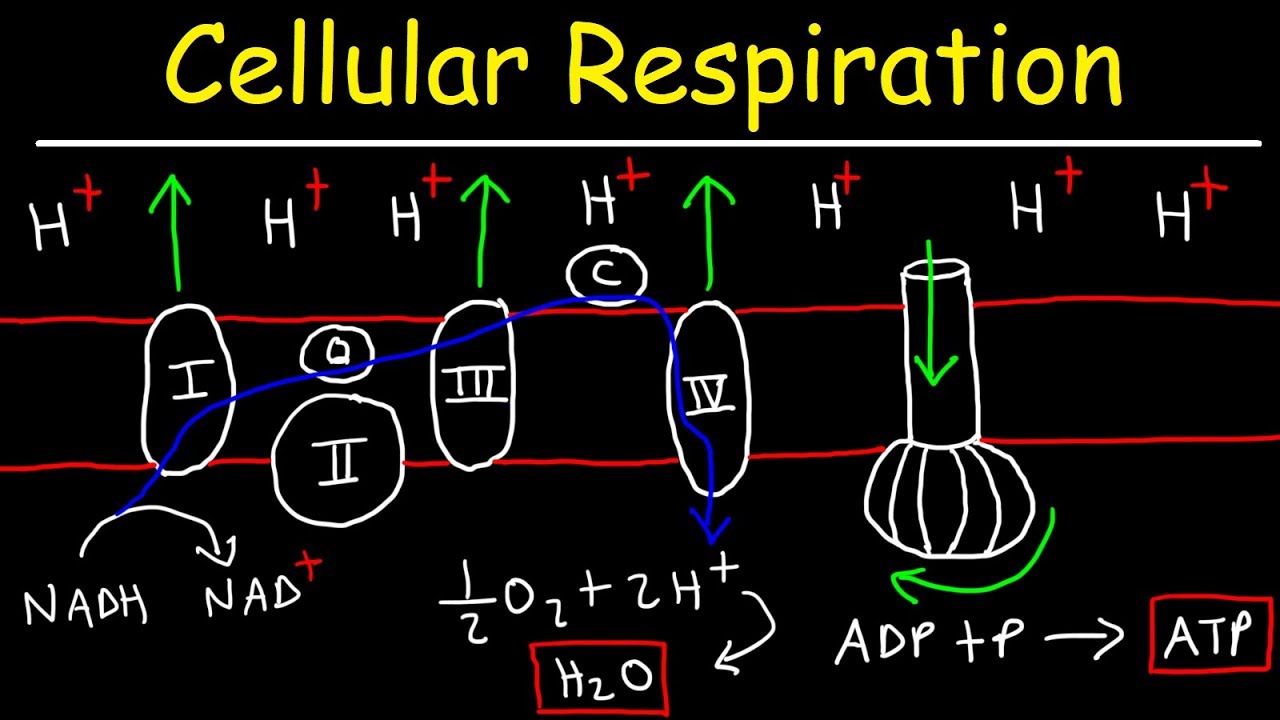
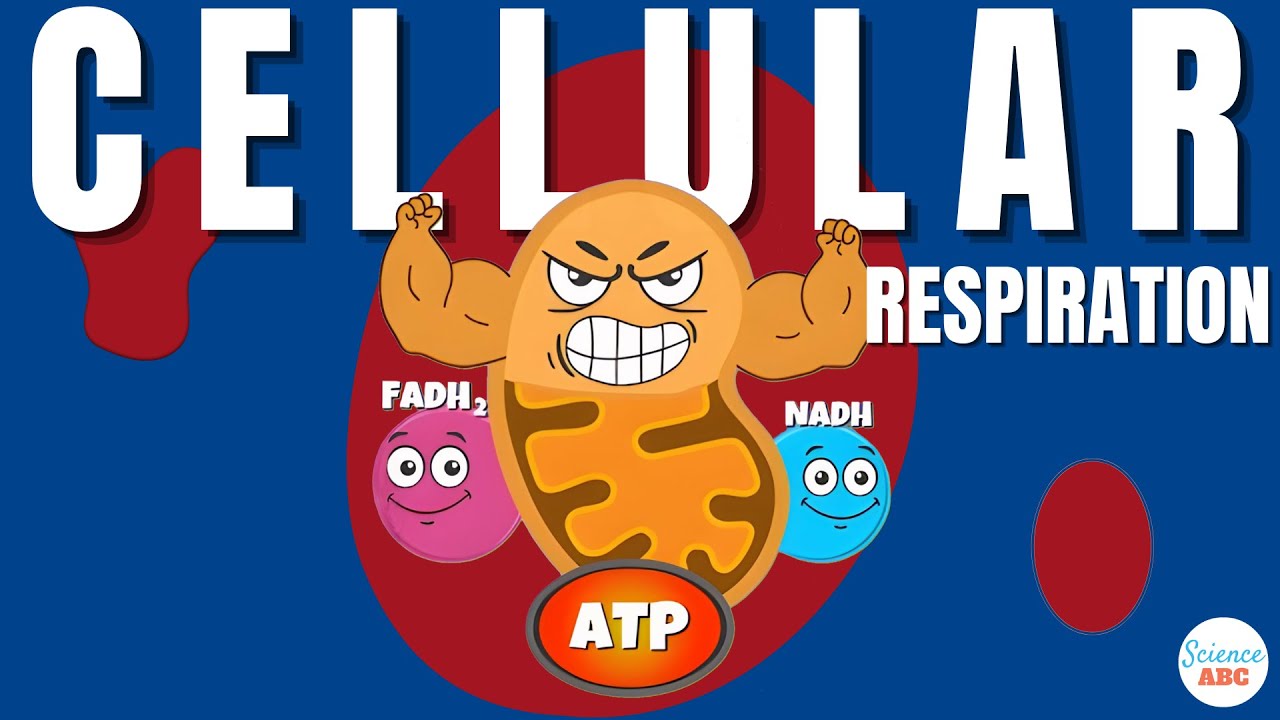
If you’ve ever wondered why you need to breathe, which is done by the respiratory system in your body, zoom into the cell level. Cells in your body use the oxygen you inhale to perform cellular respiration. The formula here requires inputs, otherwise known as reactants, to make ATP.
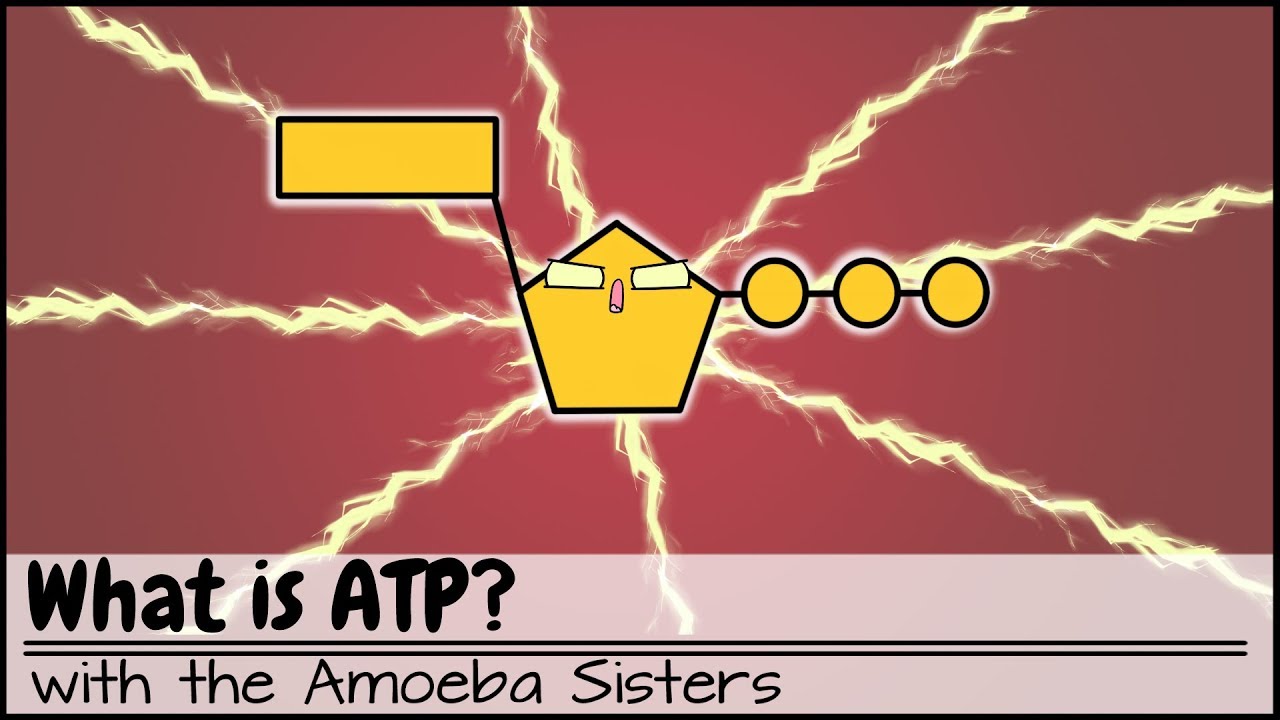
And oxygen is one of those reactants in the overall equation that is needed to break glucose down in forming ATP. Why ATP? ATP stands for adenosine triphosphate.
It is action packed with three phosphates. It has the ability to power many cellular processes. Typically it’s coupled to other things that it may be powering.
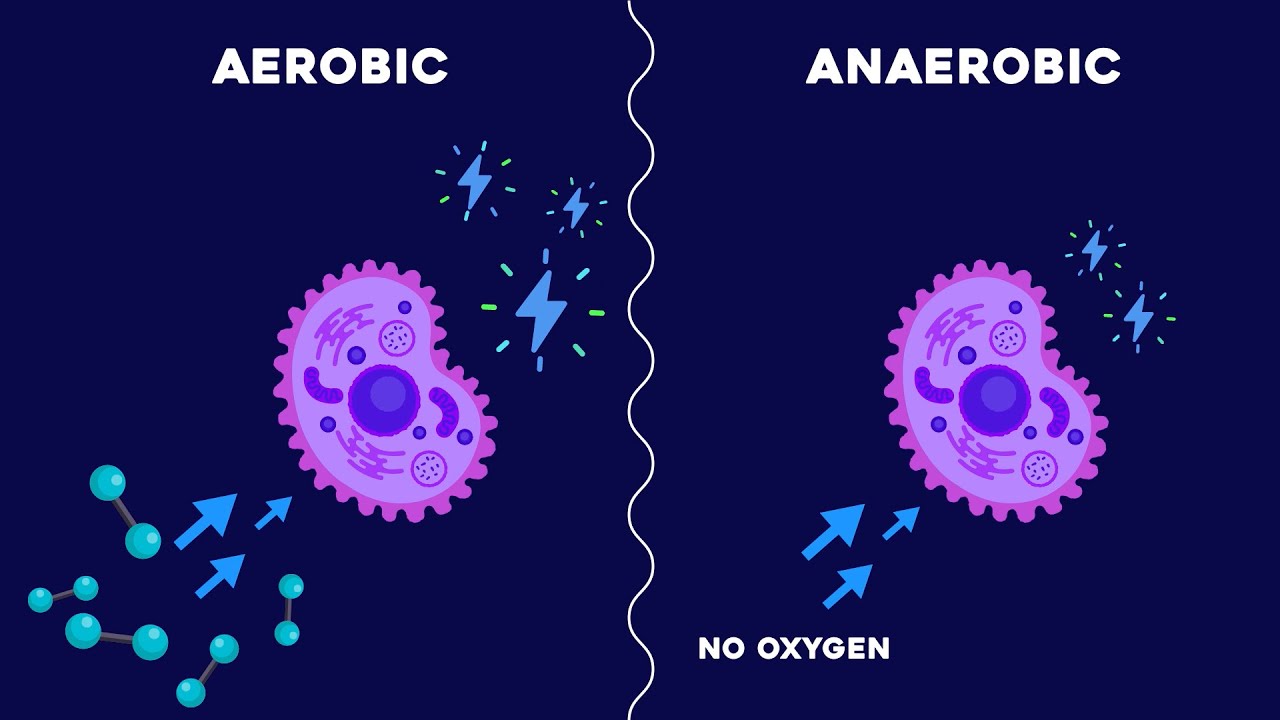
Now after losing the phosphate, the molecule is ADP, adenosine diphosphate, because it has 2 phosphates. In cellular respiration though, there are enzymes that can add another phosphate to it and convert it back into ATP again. This particular formula of cellular respiration is aerobic, meaning overall, it requires oxygen.
It is pretty complex, and we have a video breaking down steps. But that’s not what this video is about. This video is about what happens when there is no oxygen.
Because cells still need to make their ATP. So what kind of cells can handle the no oxygen thing? Well many types of bacteria can.
Many types of archaea. Yeast, which is a fungus that could be helpful like making your bread rise. Your muscle cells can, for a while anyway.
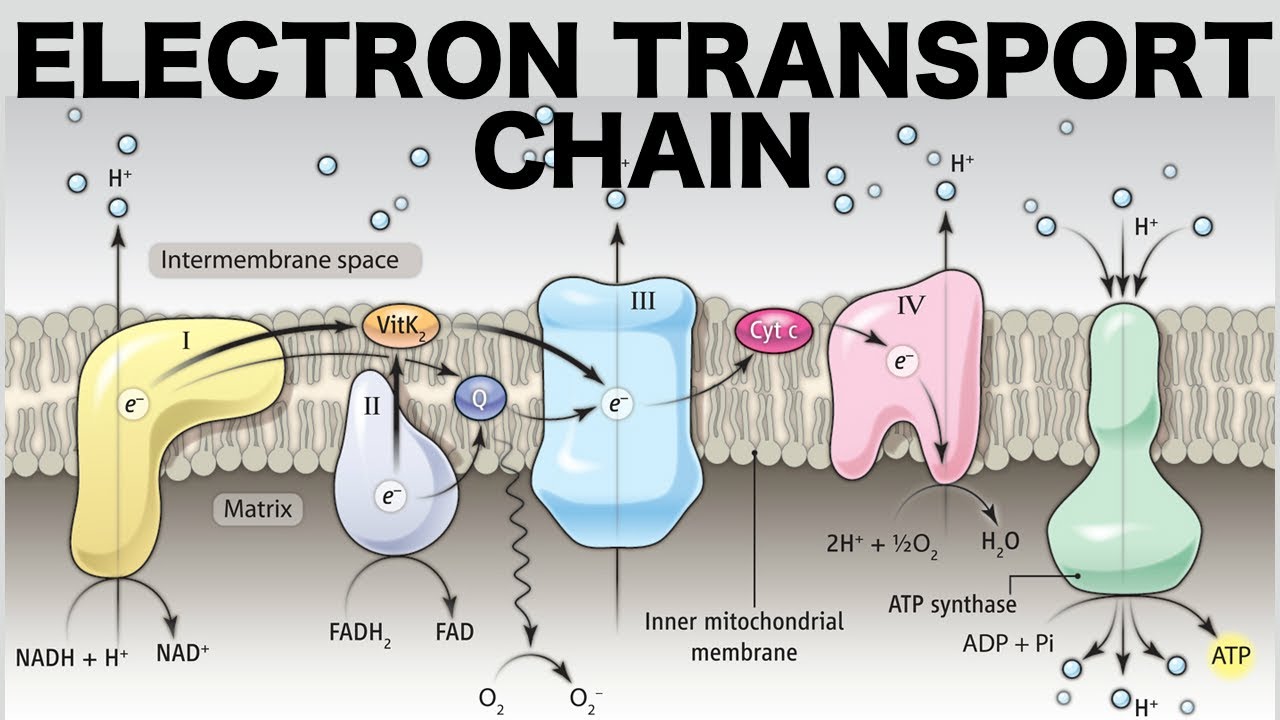
These are all just some examples. Now these organisms handle the lack of oxygen in different ways. Some organisms such as some types of bacteria or archaea can do anaerobic respiration--- they can continue to perform glycolysis, krebs, and the electron transport chain just like aerobic cellular respiration.
But since there is no oxygen to be that final electron acceptor at the end of the electron transport chain, they use something else. Sulfate for example. These organisms are specifically adapted to be able to use a different electron acceptor in this anaerobic respiration.
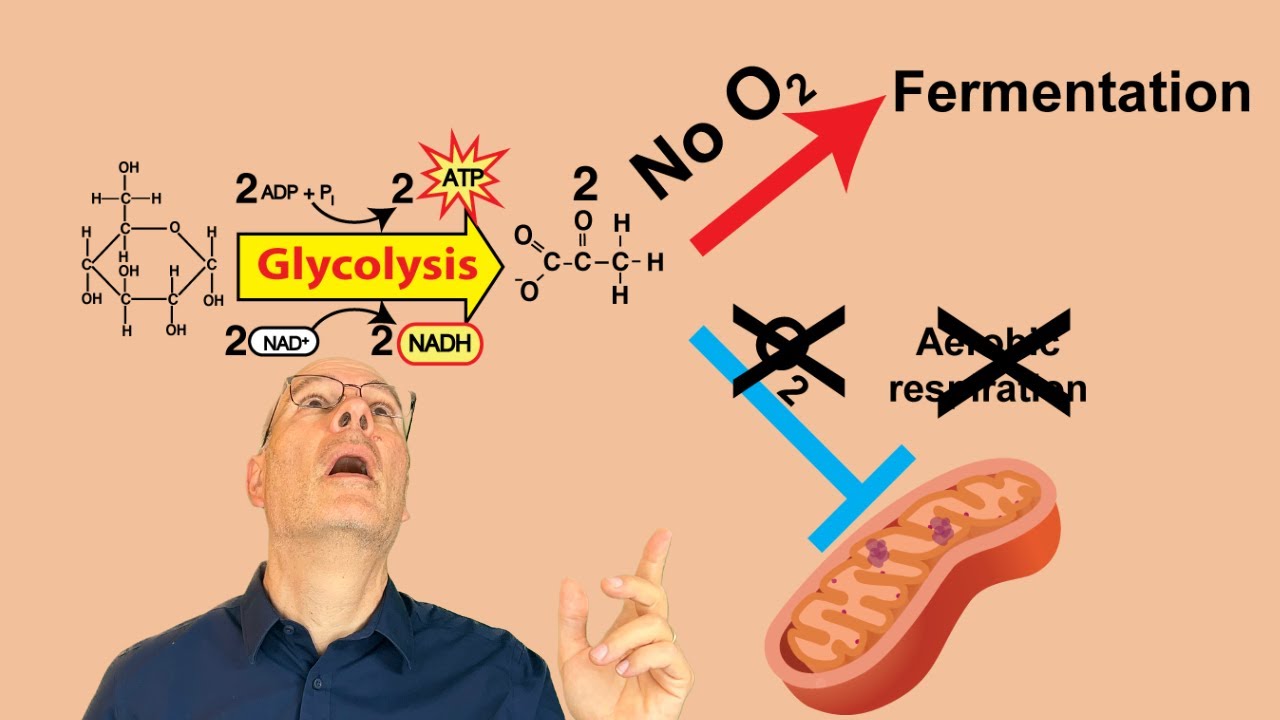
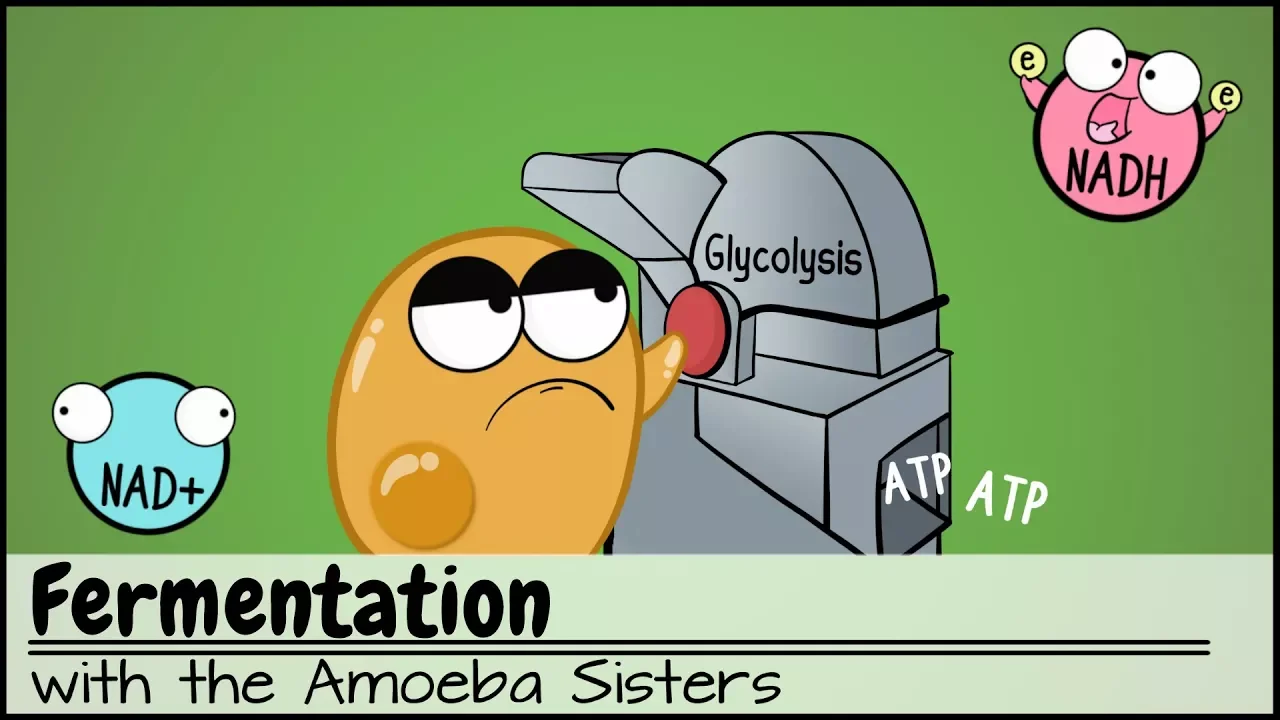
Another option is the organism may just stick with doing just glycolysis, which doesn’t require oxygen, and then the addition of some way to get their NAD+ back----we’ll talk about what that means in a minute. This process is called fermentation and that’s what we’re going to focus on. Fermentation is a way to be able to handle the little to no oxygen issue: it allows for glycolysis to happen and for glycolysis to keep going.
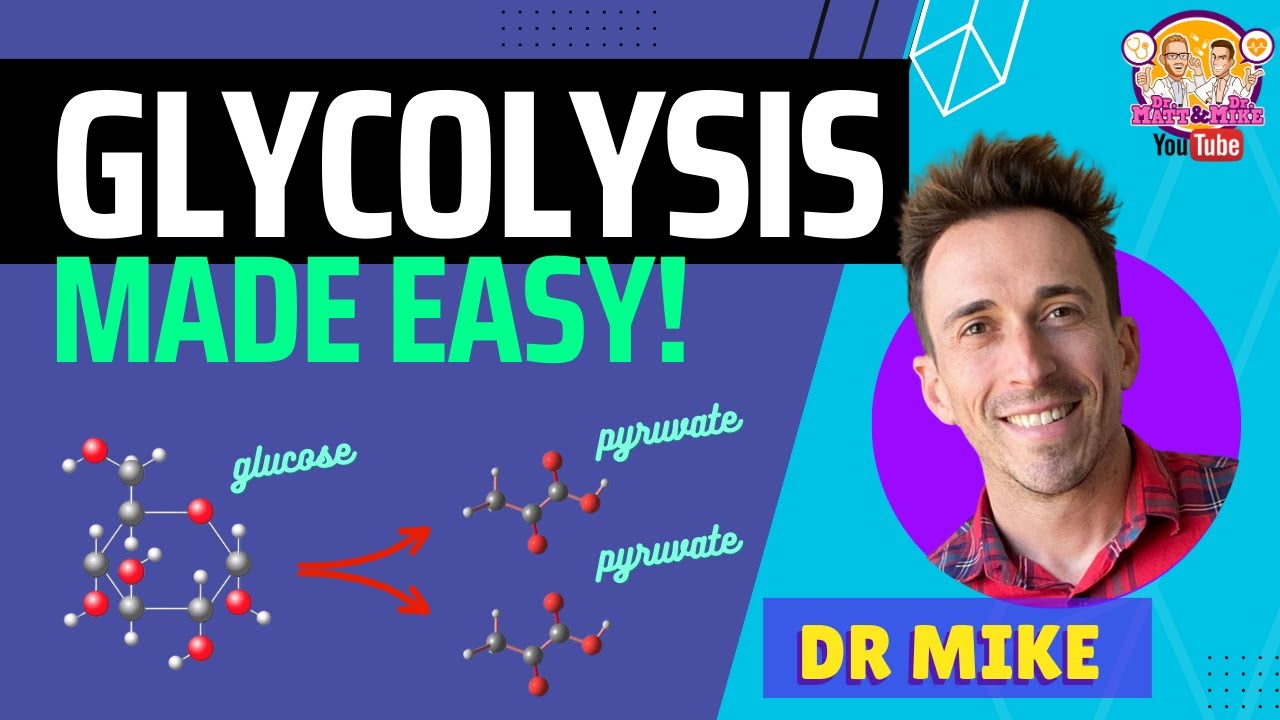
That means making ATP when there is no oxygen. And while you won’t make as much ATP in this process as you would aerobic cellular respiration, you can’t be too picky when oxygen isn’t around. Recall what glycolysis is from our cellular respiration video: in glycolysis, you take glucose---a sugar---and it gets converted into pyruvate.
This takes a little ATP cost to actually start it up, but overall, you make 2 net ATP per glucose molecule and you also produce 2 NADH. What’s that? Recall that NADH is a coenzyme and an electron carrier.
We also need to mention that NADH didn’t just *poof* appear as a product. No, because NAD+ actually was reduced to NADH when it gained electrons. And if the words reduced and oxidized are confusing…you can remember the famous LEO GER mnemonic: Lose electrons= oxidized.
Gained electrons=reduced. So NADHNAD+ is oxidation because it loses electrons and NAD+NADH is reduction because it gains electrons. Now NADH, the electron carrier, would normally be delivering the electrons gained to the electron transport chain if this was aerobic cellular respiration.
Once losing their electrons, NADH would be oxidized into NAD+ and be ready to be involved all over again in glycolysis. But there’s no electron transport chain step in this fermentation process. So we’ve got to regenerate the NAD+ somehow—NAD+ is needed here after all for glycolysis to continue.
Fermentation therefore adds another little step to the end of glycolysis---a step to help regenerate NAD+. This happens because fermentation allows NADH to give its electrons to an electron acceptor which, in the two fermentation examples we are going to give, will either be a derivative of pyruvate or pyruvate itself. So here we go with two types of fermentation which both result in different products from pyruvate.
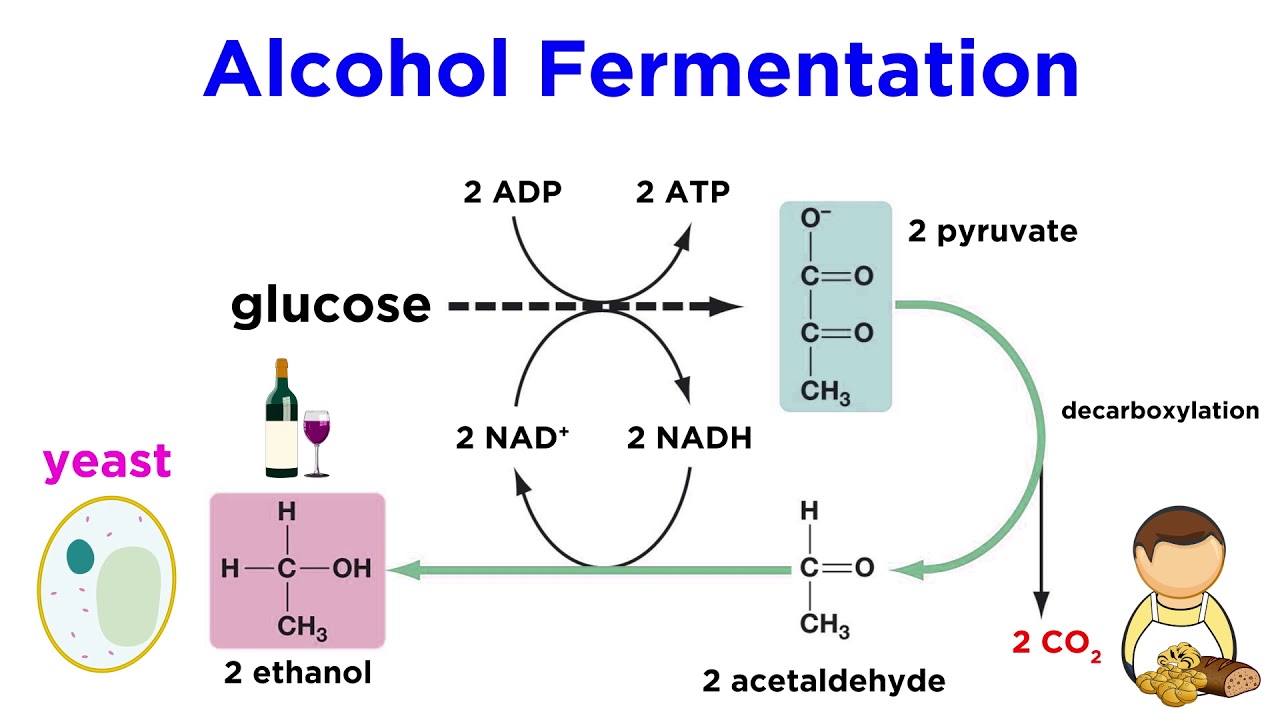
Alcoholic fermentation: as done by some types of yeast. So first glycolysis which yields 2 net ATP, 2 pyruvate, and 2 NADH. Now we need the step to regenerate the NAD+ so we can keep doing glycolysis.
The 2 pyruvate is used which will ultimately produce carbon dioxide and 2 ethanol (alcohol), but the derivative of pyruvate shown here, acetaldehyde, can act as an electron acceptor in this process so that the 2 NADH can be oxidized to 2 NAD+ so that glycolysis can start all over. Since ethanol (alcohol) is a waste product in this process. Yeasts also can do alcoholic fermentation in making bread, and the carbon dioxide product we mentioned is involved with helping the bread rise!
The tiny amount of alcohol produced in the short fermenting time of bread will evaporate in the baking process. Lactic acid fermentation: as can be done by cells such as your muscle cells for example! While your muscle cells can do aerobic cellular respiration, they can shift to lactic acid fermentation if they experience an oxygen debt.
This could happen if you are working out very intensely where your blood is unable to deliver a sufficient amount of oxygen to them for their demand. Just like with alcoholic fermentation, we start with glycolysis that yields 2 net ATP, 2 pyruvate, and 2 NADH. But now we need the step to regenerate the NAD+, and this step is a bit different from alcoholic fermentation.
The 2 pyruvate on the reactant side will ultimately yield 2 lactate. The pyruvate can act as an electron acceptor allowing NADH to be oxidized to NAD+ so that glycolysis can start over. By the way, this lactate product or specifically its other form lactic acid, has often been blamed for the muscle soreness that occurs the day after intense exercise- in many of my teaching years this was the hypothesis with this- but actually there’s some recent research that may dispute this product as the cause of muscle soreness.
Check out our further reading suggestions in our video details to learn more! Lactic acid fermentation is also done by bacteria that are involved in making yogurt and lactic acid can contribute to its sour taste. So overall, fermentation is a pretty remarkable process.
Although, it does make us appreciate oxygen because despite how absolutely awesome fermentation may be…. …it just can’t make as much ATP as aerobic cellular respiration. Well, that’s it for the Amoeba Sisters and we remind you to stay curious!


![The Cell Cycle (and cancer) [Updated]](https://img.youtube.com/vi/QVCjdNxJreE/maxresdefault.jpg)