Scribe
Scribe

Gostou? Torne o Scribe ainda melhor deixando uma avaliação

Obter Extensão do Chrome

Navegar

  • Vídeos Populares
  • Vídeos Recentes
  • Todos os Canais

Ferramentas Gratuitas

  • Baixador de Legendas de Vídeo
  • Gerador de Marcadores de Tempo de Vídeo
  • Resumidor de Vídeos
  • Contador de Palavras de Vídeo
  • Analisador de Títulos de Vídeo
  • Busca de Transcrições de Vídeo
  • Análises de Vídeo
  • Criador de Capítulos de Vídeo
  • Gerador de Quiz de Vídeo
  • Chat com Vídeo

Produto

  • Preços
  • Blog

Developers

  • Transcript API
  • API Documentation

Legal

  • Termos
  • Privacidade
  • Suporte
  • Mapa do Site

Direitos Autorais © 2026. Feito com ♥ por Scribe

— Se isso tornou sua vida mais fácil (ou pelo menos um pouco menos caótica), deixe-nos uma avaliação! Prometemos que vai alegrar nosso dia. 😊

Related Videos

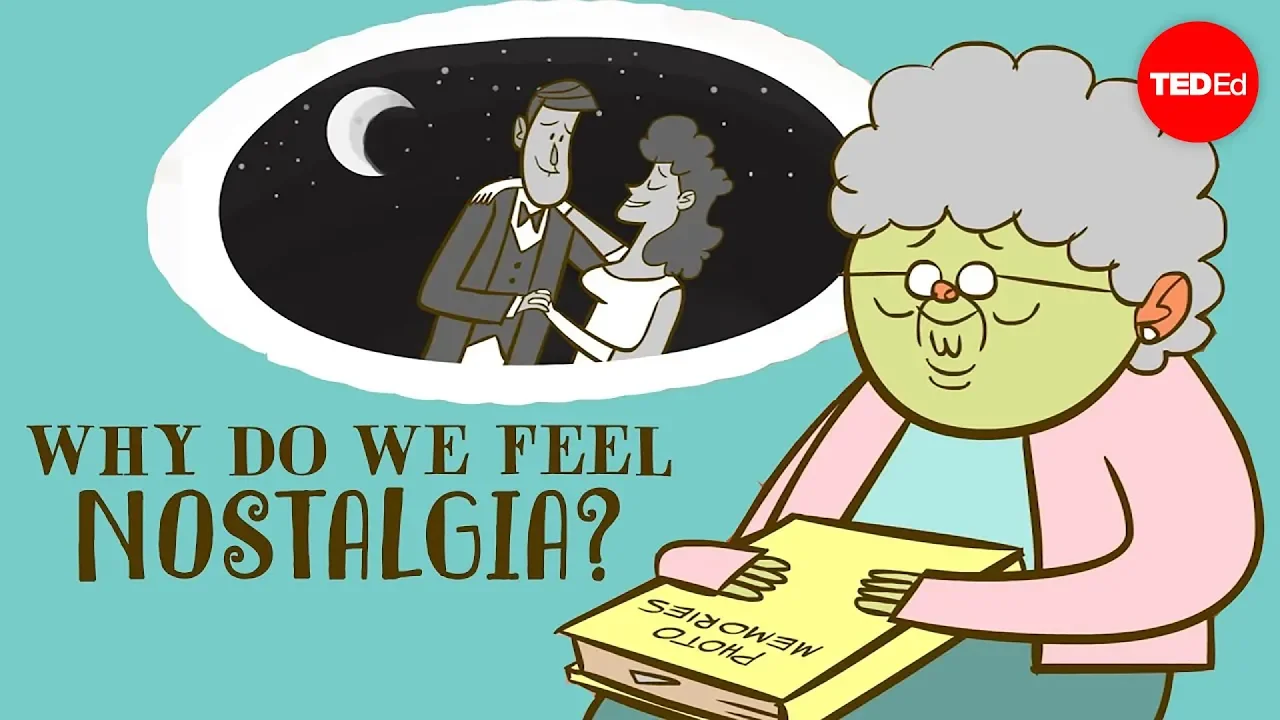
Why do we feel nostalgia? - Clay Routledge

Video thumbnail
1.92M517 Palavras2m readGrade 11
Compartilhar
Channel
TED-Ed
In the late 17th century, a medical student named Johannes Hofer noticed a strange illness affecting Swiss mercenaries serving abroad. Its symptoms, including fatigue, insomnia, irregular heartbeat, indigestion, and fever were so strong, the soldiers often had to be discharged. As Hofer discovered, the cause was not some physical disturbance, but an intense yearning for their mountain homeland.
He dubbed the condition nostalgia, from the Greek "nostos" for homecoming and "algos" for pain or longing. At first, nostalgia was considered a particularly Swiss affliction. Some doctors proposed that the constant sound of cowbells in the Alps caused trauma to the ear drums and brain.
Commanders even forbade their soldiers from singing traditional Swiss songs for fear that they'd lead to desertion or suicide. But as migration increased worldwide, nostalgia was observed in various groups. It turned out that anyone separated from their native place for a long time was vulnerable to nostalgia.
And by the early 20th century, professionals no longer viewed it as a neurological disease, but as a mental condition similar to depression. Psychologists of the time speculated that it represented difficulties letting go of childhood, or even a longing to return to one's fetal state. But over the next few decades, the understanding of nostalgia changed in two important ways.
Its meaning expanded from indicating homesickness to a general longing for the past. And rather than an awful disease, it began to be seen as a poignant and pleasant experience. Perhaps the most famous example of this was captured by French author Marcel Proust.
He described how tasting a madeleine cake he had not eaten since childhood triggered a cascade of warm and powerful sensory associations. So what caused such a major reversal in our view of nostalgia? Part of it has to do with science.
Psychology shifted away from pure theory and towards more careful and systematic empirical observation. So professionals realized that many of the negative symptoms may have been simply correlated with nostalgia rather than caused by it. And, in fact, despite being a complex emotional state that can include feelings of loss and sadness, nostalgia doesn't generally put people in a negative mood.
Instead, by allowing individuals to remember personally meaningful and rewarding experiences they shared with others, nostalgia can boost psychological well-being. Studies have shown that inducing nostalgia in people can help increase their feelings of self-esteem and social belonging, encourage psychological growth, and even make them act more charitably. So rather than being a cause of mental distress, nostalgia can be a restorative way of coping with it.
For instance, when people experience negative emotional states, they tend to naturally use nostalgia to reduce distress and restore well-being. Today, it seems that nostalgia is everywhere, partially because advertisers have discovered how powerful it is as a marketing technique. It's tempting to think of this as a sign of us being stuck in the past, but that's not really how nostalgia works.
Instead, nostalgia helps us remember that our lives can have meaning and value, helping us find the confidence and motivation to face the challenges of the future.
Vídeos relacionados
What is déjà vu? What is déjà vu? - Michael Molina
3:55
What is déjà vu? What is déjà vu? - Michae...
TED-Ed
5,031,807 views
Why do you want to squeeze cute things? - Joshua Paul Dale
5:50
Why do you want to squeeze cute things? - ...
TED-Ed
1,312,316 views
The Real Reason Why You Have Allergies
12:30
The Real Reason Why You Have Allergies
Kurzgesagt – In a Nutshell
5,550,348 views
How Your Memory Works
9:46
How Your Memory Works
Be Smart
2,410,183 views
Why Do We Feel Nostalgia?
15:22
Why Do We Feel Nostalgia?
Vsauce
8,263,330 views
4 Hours Chopin for Studying, Concentration & Relaxation
4:00:37
4 Hours Chopin for Studying, Concentration...
HALIDONMUSIC
18,803,509 views
Simon Sinek: You're Being Lied To About AI's Real Purpose! We're Teaching Our Kids To Not Be Human!
2:06:16
Simon Sinek: You're Being Lied To About AI...
The Diary Of A CEO
552,339 views
The dangerous illusion of nostalgia | Guido Everaert | TEDxVUAmsterdam
16:30
The dangerous illusion of nostalgia | Guid...
TEDx Talks
1,495 views
Why is being scared so fun? - Margee Kerr
4:29
Why is being scared so fun? - Margee Kerr
TED-Ed
1,825,430 views
What went wrong: Inside the deeply divided Liberal party | Four Corners Documentary
46:18
What went wrong: Inside the deeply divided...
ABC News In-depth
91,103 views
Loneliness
13:07
Loneliness
Kurzgesagt – In a Nutshell
27,228,801 views
Why are we so attached to our things? - Christian Jarrett
4:35
Why are we so attached to our things? - Ch...
TED-Ed
2,689,281 views
nostalgic for a fairytale you were once in ( classical music )
1:20:22
nostalgic for a fairytale you were once in...
Hexen
3,049,318 views
Is it normal to talk to yourself?
5:19
Is it normal to talk to yourself?
TED-Ed
7,882,693 views
How some friendships last — and others don’t - Iseult Gillespie
4:59
How some friendships last — and others don...
TED-Ed
1,031,433 views
1 MINUTE AGO: Jennifer Lawrence’s Courtroom Testimony JUST CONFIRMED The Diddy Rumors Were Real...
26:21
1 MINUTE AGO: Jennifer Lawrence’s Courtroo...
CelestIQ
449,359 views
Eduardo Briceño: How to get better at the things you care about | TED
11:23
Eduardo Briceño: How to get better at the ...
TED
656,944 views
Why do people join cults? - Janja Lalich
6:27
Why do people join cults? - Janja Lalich
TED-Ed
5,639,797 views
Fever Feels Horrible, but is Actually Awesome!
11:08
Fever Feels Horrible, but is Actually Awes...
Kurzgesagt – In a Nutshell
8,201,068 views
Why you procrastinate even when it feels bad
5:46
Why you procrastinate even when it feels bad
TED-Ed
9,165,985 views