I think they just lived in a society where that's that's what their rulers were like so that's what Zeus was going to be like Greek ruins from 300 BC really yeah in Afghanistan yeah really oh yeah a group of scientists have uncovered a secret entrance to the Ancient Temple of Zeus what are they saying and why would they dedicate so much time to talking about this stuff it's people trying to make sense of a Crazy and chaotic world but up on the oxis river but it's like Greek city in Central Asia wow revealing hidden Chambers
and artifacts that could change everything we thought we knew about Greek mythology and ancient history if you were to discover something older than that you'd be very famous you know it's like like they really looked hard I think we're getting very close to rediscovering some of the things that um our ancient Ancestors were up to join Joe as he Dives deep into the significance of this discovery exploring the potential secrets of the temple it's all mythology it's all fake but in reality it's not all fake these people left behind such detailed records and information it
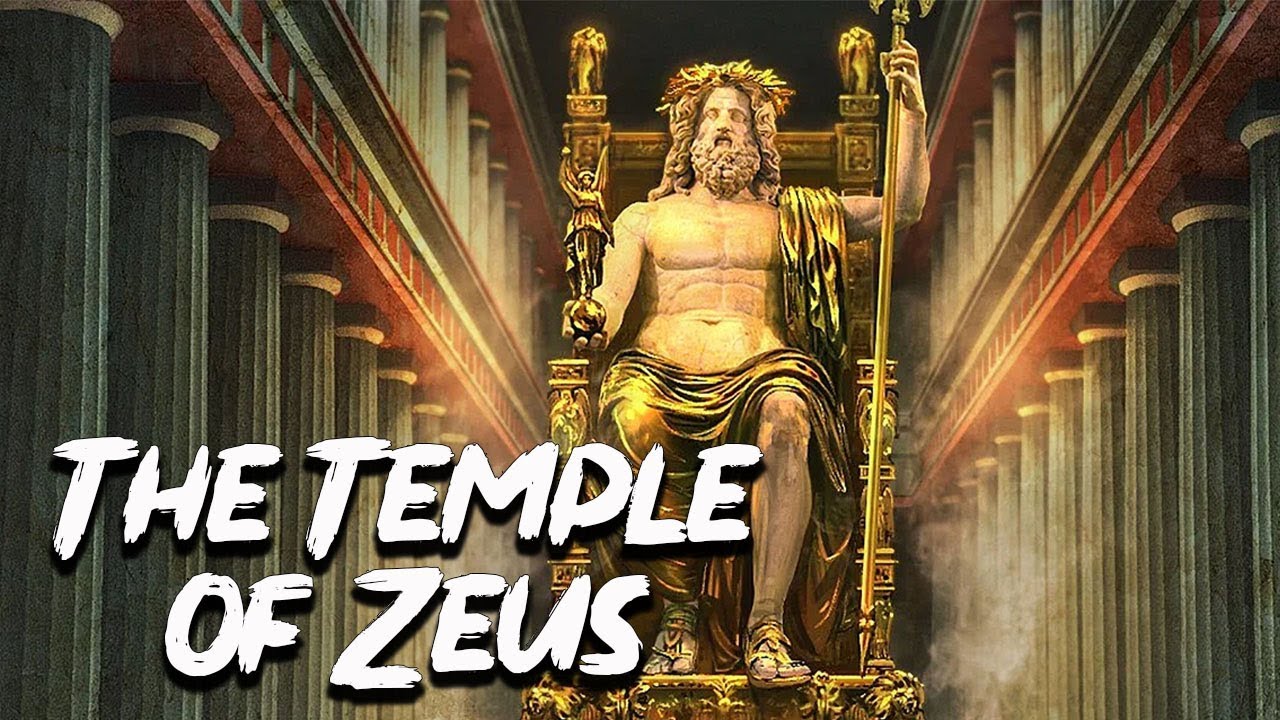
was believed that Zeus the sky God in Greek mythology was ever watchful and aware of everything that happened on Earth given his Greek roots and his spectacular temple in Olympia You'd be forgiven for thinking the only temples to Zeus are in Greece that idea has been cast into doubt by a recent discovery in Egypt the tourism and Antiquities Ministry of Egypt has revealed the the discovery of a temple in the Sinai Peninsula that was inspired by Zeus the temple honors Zeus casos a deity who merges the Greek God Zeus and Mount casos located on the
border of Syria and turkey the mountain is associated with a legendary battle that Took place between Zeus and the monster Typhon to decide who would rule the cosmos the lightning bolt Zeus's faithful Ally helped him win casos now called jabel Akra was a sacred location in many ancient religions and was the site of regular thunderstorms according to Judith sudilovsky an example of the legacy of religious multiculturalism in Antiquity is the merging of deity and mountain in a statement Egypt's Antiquities Council secretary General Mustafa waziri claimed that the team used the remains of two pink Granite
pillars which were 6.5 ft tall to identify the zus casio's Temple the pillars were the entrance gate to the temple an earthquake may have caused the columns to fall a set of granite slabs which the archaeologists believed to have been a staircase leading devotees to the temple was also Unearthed there previous excavations at the site revealed Greek carvings Mentioning Zeus casos these were discovered by French egyptologist Jean CLA in the early 20th century while searching for Christian monuments in Egypt although clad did not excavate the entire site contemporary archaeologists are now in charge not only
did they recover the stone that CLA had uncovered but they also found a comparable stone with Greek Engravings and proof that the pink stones from the temple had been reused the director general of the Excavation Hisham Hussein has stated that he is presently analyzing the found blocks and plans to perform a photogrametry survey in order to deduce the Temple's fundamental archit Ural plan hadrien restored the temple according to inscriptions discovered during the excavation the Roman Emperor who was well known for his respect for Greek culture restored the pantheon and other buildings around his realm many
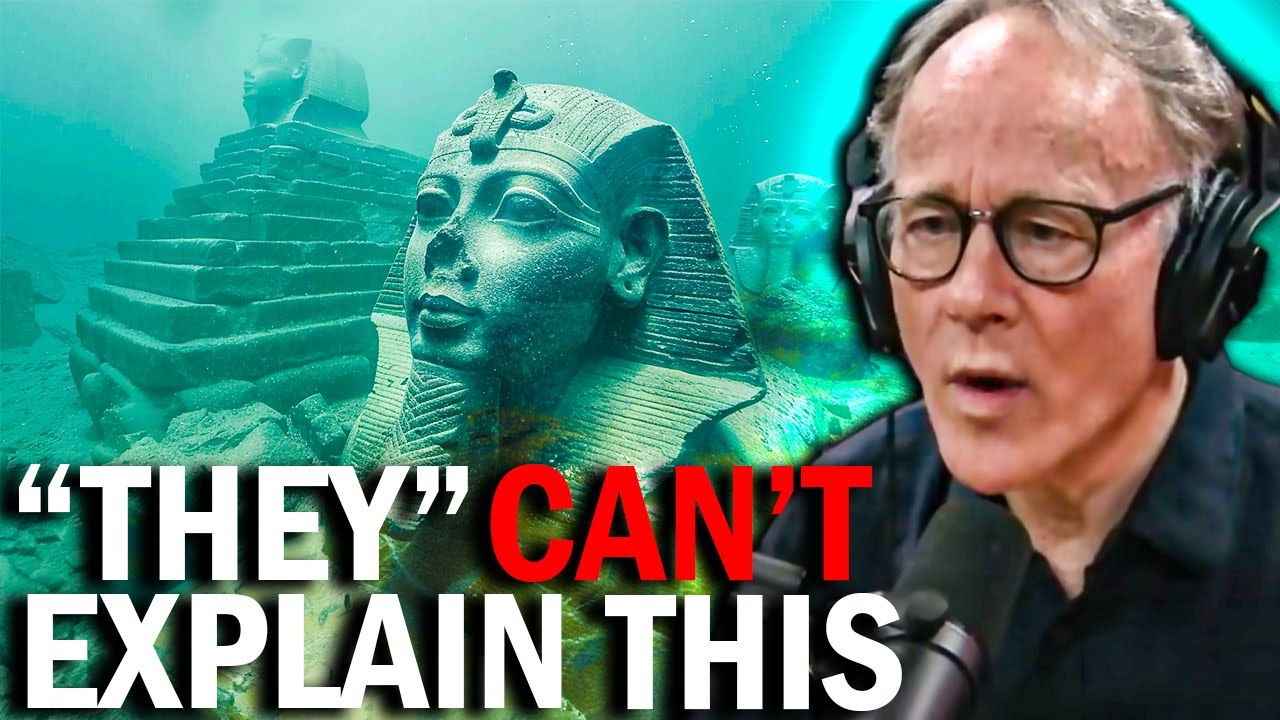
other nations also contain temples Devoted to Zeus attesting to the God's prominence in Antiquity submerged and buried under layers of sand the ancient Egyptian gateway to the Mediterranean serves as a haunting reminder of how susceptible cities are to the power of nature for Millennia happy God of fertility ruler of the river and lifegiving guardian of its floods drove imperiously over the merchant ships that blew in from the Mediterranean right up to the verge of Ancient Egypt then there is the enormous red granite gatekeeper who stands Sentry over one of the world's most important port cities
at the Western entrance of the Nile so it came to pass that one day maybe around the close of the 2 Century BC happy felt a Tremor and felt the Earth churn and liquefy beneath his feet six tons of painstakingly sculpted Stones plummeted into the water as he swayed and lurched in time the rest of The settlement that happy guarded followed suit once upon a time there was a legendary location that vanished beneath the waves and was buried by layers of silt and land this was the spot where the Divine hero Heracles first stepped foot
in Africa and where Helen of Sparta famously sought Refuge with her kidnapper Paris of Troy but in the early 2000s when exploring the waters off the coast of Egypt a team of divers Unearthed a massive Rock Shard And brought it to shore it was a piece of happy salt encrusted but intact six more were found after they persisted in their hunt Temple remains ceramic shards valuable Jewels coins oil lamps processional boats and busts were found surrounding these pieces of treasure as thrilling as it is to find a tomb as an archaeologist it is only a
tomb of a single person uncovering an entire Metropolis that supported tens of thousands of people for almost a Millennium now that's an extraordinary event the home in question was thonis heracleon it has been more than a thousand years since happy city was submerged and now it is rising to the surface again thonis herac Clan is not as well known as Babylon Pompei or the Fantastical Atlantis the incredible discoveries of the past few years have saved the city's physical remains and its Legacy from certain Oblivion at the hands of the Mediterranean Sea thonis heracleon was a
major player in the fifth century BC for European Merchants who traded in grain perfume Papyrus or minerals like copper wine or oil it was the same for members of the fonic Court educated Greeks professional Sailors and caran mercenaries scattered across a series of interlined islands sand and mudbanks thonis heracleon part aquatic Marshland part urban sprawl was ancient Egypt's bustling Cosmopolitan gateway to the Mediterranean and thus its Nexus with the Western world established approximately 2,700 years ago on the land that is now Abu kirb 15 Mi Northeast of Alexandria thonis heracleon was a major trading port
for the area and an International Trade Center for decades before its more famous neighbor interconnected by a system of bridges pontoons and faeries the city controlled the majority of the Marine business entering Egypt from the Mediterranean it Was adorned with Harbors Wares temples and to powerhouses and traversed by a network of canals the goods would be examined and assessed at the Customs Administration center before being transported Inland for distribution this could be done via the Western Lake which was linked to the neighboring town of canopus and provided access to numerous other regions of the country
or at noctis an alternative trading Port situated nearly 50 Mi up The Nile before 1933 when an RAF Commander flying over Abu kir glimpsed ruins in the water most historians believed thonus and heracleon to have been two separate conurbations both of which were situated on the current Egyptian Mainland the Pilot's sighting however kicked off a whole new era of offshore research having been drawn to the bay in the late 18th century by the presence of French vessels that sank there a team from the European Institute For underwater archaeology had already drawn up the Region's old
topography in a series of maps by the turn of the century modern surveying tools and indefatigable human will were necessary for the creation of these maps and the subsequent meticulous underwater excavation the waters here are murky and visibility is low in the aftermath of storms the sea is all stirred up and charged with floating sand and mud that makes it difficult for US divers to see What is going on explained one researcher to determine the everchanging depth of the ocean floor archaeologists first used sidescan sonar which involves focusing pulses of sound energy at the seafloor
and subsequently analyzing the echo then geological fault lines caused by the weight of long submerged buildings pressing down on and fracturing layers of sediment were identified and the presence of large objects was pinpointed using a nuclear Magnetic resonance magnetometer which can detect localized anomalies in the Earth magnetic fields now that the best areas for excavation had been marked scuba divers were dispatched they brought water dredges which are massive underwater vacuum cleaners that remove layers of sand to reveal archaeological artifacts underneath the largest artifacts like parts of buildings and enormous statues including a 5 m tall
toic Monarch and queen were the first to Be Unearthed and brought to life from the ocean floor however smaller and more eclectic Treasures such as goblets figurines ceremonial pales and 13 sarcophagi made of limestone were soon discovered each artifact was meticulously cataloged photographed and hoisted to the deck of the princess Duda research boat if it was safe to do so only then was it brought back to shore for additional investigation they have revolutionized Our comprehension of thonis heracleon and the nature of ancient Egypt as a whole as well as its connections to the helenic world
a few of these artifacts are one-of a kind and hold immense cultural or artistic value new ideas are prompted by them one example is the decree of sa a 2m tall black Steely with well-preserved hieroglyphics that dates back to the early 4th Century BC it was found on the site of a Temple dedicated to the Supreme Egyptian god Amun Garb in thonis heracleon the discovery of this Monument has also contributed to the resolution of a long-standing mystery by comparing it to other inscribed monuments experts were able to deduce that thonis and heracleon were actually one
city known by both its Egyptian and Greek names rather than two separate towns helenic helmets were found nestled in the seabed alongside their Egyptian counterparts cypriate Statuettes and incense burners Athenian perfume bottles and ancient anchors from Greek ships these artifacts attest to the constant presence of the interplay between fonic and Greek civilizations in thonus heracleon during the toic Dynasty's Ascent to power in Egypt a line of foreign born pharaohs attempted to legitimize their position by claiming affinities with fic traditions and this mingling of cultures was most noticeable In the area of religion an artifact Unearthed
from the depths is a stone sculpture of Cleopatra the II a toic queen who is portrayed as the Egyptian goddess Isis in a manner that blends local and helenic Aesthetics the sculpture dates back 2,000 years among the most beguiling of thonis heracleon remains are the artifacts associated with the city at play ancient Egyptians secretly prepared two statues of Osiris the deity of the underworld And Resurrection for the yearly mysteries of Osiris Festival one was fashioned from dirt and barley while the other was adorned with costly materials such as ground semi-precious stones in thonis heracleon the
former was placed in a granite tank and nurtured with Nile water until it germinated it was then placed in a Papyrus barge alongside 33 other vessels the whole flotilla was illuminated by 365 oil lamps one for each day of the year and eventually sailed down to the nearby settlement of canopus as well as an 11m Sycamore vessel that would have been used in this procession archaeologists have Unearthed several small lead replicas of the Papyrus boats thrown into the water as vo of offerings by onlookers The Glory Days of thonis heracleon were beginning to fade by
the 2 Century BC Alexandria the new Coastal Metropolis was quickly becoming Egypt's leading Port while thoris heracleon Hybrid Base of land and sea started to feel less secure a Confluence of several natural disasters including earthquakes tsunamis increasing sea levels and subsidence ultimately led to the city's downfall already drooping from supporting the primary Temple structures the central island gave way to liquefaction around the Century's end likely following a devastating flood the Structures built on top of the suddenly liquid clay soil fell into the water in what must have been a horrific event it appeared appears that
this was the last location at which thonis heracleon received pottery and coinage a small number of resilient inhabitants remained in their dwellings during the Roman era and into the early Arab control but by the end of the 9th century the sea had swallowed up all traces of the city we should probably not be surprised that The story of thonis heracleon fascinates us given the impending ecological disaster although the city's rediscovery is is a result of technological advancements and human inventiveness its demise and the hauntingly lifeless remnants of a bygone Urban existence serve as a cautionary
tale about the precariousness of many modern cities on the other hand in Northwest turkey on a Hilltop overlooking the Dell's mouth Remains the memory of a city that unlike Any other blurs the boundary between myth and history in Greek mythology the legendary city of Troy served as an inspiration for the two Masterworks of the Epic poet Homer The Iliad which takes place in the last year of a coalition of Greek States 10-year Siege of Troy and its sequel The Odyssey which was likely composed in the 8th Century BC One of the most epic wars in
Greek history supposedly took place in this Very City the historian thides records the Trojan War as notable beyond all previous Wars in his history of the pelian war which was written in the 5th Century BC however there has always been some debate over whether or not Troy really existed let alone its exact position the city was repopulated by Greeks and Romans and renamed ilios ilam after it was supposedly destroyed in a battle in 1200 BC it was forgotten until the turn of the 20th century after it had faded into obliv by 500 BC now Troy's
location is widely believed to be the site of Hisar in Turkey essentially a mound of 30 m or so in height with the remnants of stone walls and lonely structures scattered in the grassland within this meadowedge history indeed there was likely not just one city here but at least 10 beginning in 3000 BC and ending in about about 500 BC the hiarc site Reveals layer after layer of ancient settlement the current consensus holds that the sixth and seventh stages of construction might represent the city of King Priam mentioned in Homer's Iliad Troy's modern-day Story begins
allegedly with the dream of a little boy so fascinated was he by the myth after seeing an illustration in a book given to him by his father that he set out to find the city that 7-year-old old was Henrik schleman the 19th century German Businessman turned archaeologist who was the first to comprehensively excavate at the site of hisli it is quite remarkable how the amateur archaeologist schleman discovered Troy and initiated the study of a gan prehistory but he had a habit of fabricating entries in his excavation Diaries which cast doubt on the authenticity of that
Boyhood fantasy his arlic was dug by schleman in April 1870 he soon boasted that he had discovered King priam's treasure in the burnt city of Homer's Troy and even showed his wife some of the jewels he had infamously given her but he threw away the thing he was going to look for as kleene puts it as he was doing it more than a thousand years before the Troy of Homer's Iliad schleman excavated and destroyed successive strata of Bronze Age Troy eventually reaching what is now called Troy the then the ancient city of Troy flourished From
its humble beginnings as a trading post Agricultural Center and fishing Village in about 3,000 BC prior to the city's catastrophic collapse in about 1180 BC nine distinct phases of development had been uncovered unfortunately our knowledge of Troy is limited due to the lack of accounts from the time in the fact that schleman destroyed what may have been King priam's City until the seminal research of archaeologist Manfred corfman in the 1990s many people doubted the veracity of the Trojan War and the Greek conquest of the city as told in The Iliad before this excavations in hisari
had only uncovered a small town however a lower city of 75 Acres was uncovered by corfman and his colleagues which was 15 times bigger than what had been previously believed considering the size of the area at the time these results indicated that Troy was enormous and it was almost probably of Super Regional Significance as far as was known at the time the Citadel was the most impressive in all of Southeastern Europe if not the entire region instead of the Greeks destroying the sixth layer of construction an earthquake is believed to have done the damage however
there is a flimsy hypothesis that the mythical Trojan Horse was actually a metaphor for Poseidon the god of the sea as his animal was a Horse also known as earthshaker Poseidon could have represented the destruction of the City by a natural disaster conversely arrowheads discovered in the ruins of the Citadel strongly suggest that Troy sea a far smaller city than the one portrayed by Homer was obliterated by a decisive conflict are we looking at proof of the Trojan War now it is uncertain scientists argue that a single large-scale conflict between eastern and Western forces is
implausible given the General State of Affairs in the region during that period the collapse of the Bronze Age might be interconnected with the fall of Troy with a little creativity however Homer's words can be made to place pram City at the site in Turkey the great poet says Troy is steep and windy much like his Arc he describes it as strong founded gate towering with wide ways streets and an indestructible Citadel he presents an image of a large City run by a powerful Elite protected by magnificent walls a grand bronze AG City that would have
housed between 4,000 and 10,000 inhabitants the walls that played such an important role in the Troy of The Iliad could also be linked to Hiser parts of the bottom walls still visible today are 4 to 55 M wide and 8 met High these walls had multiple towers and Gates that would have led directly to the city center The Citadel home to the Ruling Elite was a densely occupied area with Monumental buildings and two-story houses of extensive rooms as City Planning didn't come along until the Classical period of the Iron Age according to joret kelder of
Oxford University's Oriental Institute so far the only real division is who has power and who doesn't the power was clearly focused on the Citadel with the King and his immediate family and friends without a shadow of a doubt Troy was a Bronze Age Metropolis of immense strategic importance its strategic position on the dardel meant it could be considered the entry point to the Black Sea and a major trading post it served as a Crossroads for two culturally diametrically opposed groups the Hittites to the East and the Myans to the west and it appears that Troy
flourished as a multiethnic metropolis artifacts discovered by archaeologists show that foreign cultures had an impact on the city such As the fact that local Potters gave meinian Pottery their own Trojan spin along with the Bronze Age Greek civilizations there is evidence of substantial trade with Anatolia as far as cities go it was a Melting Pot for its day Troy and its mythology had an influence on a worldwide level and the city itself seemed to embrace diverse cultures Legend has it that while on an Odyssey across Greece King Xerxes of Persia paid homage to Athena in
Troy it Is said that 150 years later while traveling to conquer the Persian Empire Alexander the Great made a stop at Troy and retrieved Achilles shield from the Temple of Athena along with him on his journeys was a copy of Homer's Iliad even the Romans claimed to have descended from the Trojans in the anad Roman poet Virgil narrates the story of the Trojan anas who escaped from the war traveled to Italy and turned out to be one of Rome's founding fathers the anid Was arguably written as a piece of propaganda for Emperor Augustus linking himself
to this Trojan hero Troy has continually inspired Western culture from Shakespeare's troilus and cresa to Wolf Gang Peterson's 2004 Hollywood Take On The Iliad with Brad Pit this is a city whose representation of heroism and political identity and poignant reminder of human mortality has touched people throughout the centuries meanwhile of all the world's Lost Cities none surely can compete for evocative Splendor age or mystery with Babylon where the sun turns Vistas into flashing pools of mercury on the desert Plains 60 Mi south of Baghdad is where most of human history began Assyria Babylonia Mesopotamia Iraq
sume and aad were progressively part of this Fertile Crescent land that was bordered by the Euphrates and Tigris Rivers Adam and Eve's Garden of Eden is said to have been Nearby if Mesopotamia is the Cradle of urban civilization Babylon is its firstborn child first mentioned in the 23rd Century BC it looms larger in the records from around 1792 BC the beginning of the reign of hamurabi sitting on an 8-ft sta of carved black diorite at the Lou today are the unyielding laws of babylon's second most famous King many of which conclude with the forboding phrase
he shall be put to death today these laws are revered Babylon became the capital of a kingdom that included southern Mesopotamia and part of Northern Iraq's Assyria under Hammurabi's rule but the Babylon that elicits a thrill in anyone with a passing interest in history is the city of That Old Testament anti-hero the Jew slaying Temple smashing gold loving desperate Nebuchadnezzar the SE count who succeeded to the throne in 605 BC Nebuchadnezzar Riding High on his military victories in Syria and Egypt Launched a massive construction project that would become the greatest and most glorious Metropolis in
ancient history Greek geographer strabo described the city as having dazzling Urban visist of soaring temples shrines and palaces adorned with blue glazed tiles and Shining with gold silver and bronze the city walls were so large that two chariots pulled by four horses each could easily pass each other on the road That ran a top them Nebuchadnezzar's Imperial frenzy of construction also produced the city's most celebrated Monument a construction so hubristic in ambition it became the most famous building in the world a byword for Mankind's God rivaling arrogance War and Peace mercy and Vengeance are all
interwoven throughout babylon's narrative Mount kyash is located in the Inari prefecture of Tibet a region often described as the roof of The world this remote area is characterized by its Stark high altitude desert terrain which contrast sharply with the Lush valleys of Nepal to the South and the rolling steps of Central Asia to the north the mountain itself rises majestically above the Bara plain with the sacred Lake manasarovar in lake rastel lying at its feet this creates a landscape that is both all inspiring and Serene surrounded by some of the world's most Formidable mountain ranges
making it an isolated giant it is part of the trans Himalayas a lesser known range compared to the more famous Himalayas yet equally dramatic this isolation has preserved its pristine condition ition and heightened its Mystique drawing pilgrims and adventurers from all corners of the globe what sets Mount kyos apart is not just its stunning geography but its profound spiritual significance Mount kashia's resistance to climbing isn't Just a matter of cultural respect or governmental regulation it seems to possess a will of its own unlike the mythical Mount Olympus of Greece where Gods reside and Mortals are
forbidden kylish stands aloof imper to human Conquest climbers who have approached the mountain often speak of an inexplicable energy a sense that they are trespassing into a domain not meant for human footsteps Mount kyos has also been intriguing to geologists and Scientists its pyramidal structure is remarkably symmetrical leading some to speculate about its formation it is said that the mountain might be a man-made pyramid of ancient origin although science attributes its shape to Natural geological processes speaking of ancient structures the rugged Hills of Maharashtra stand as a testament to architectural genius and artistic Splendor among
the 34 Rock Cut temples and monasteries at allora the kalasa Temple also known as cave 16 emerges as the crowning Glory This Magnificent structure carved entirely from a single Rock showcases the advanced engineering and artistic skills of the 8th Century Indian Artisans under the rash truda Dynasty the rash truda UDA Dynasty ruled large parts of the Indian subcontinent from the 6th to the 10th centuries and was known for its patronage of art and culture King Krishna I who reigned from 756 to 774 CE commissioned the Construction of the kyasa temple his vision was to create
a monument that would emulate Mount kalash the mythical Abode of Lord Shiva in Hindu mythology the result was a structure that defied the conventional methods of Temple Construction setting a new Benchmark for architectural Innovation unlike traditional buildings constructed from the ground up the kyasa temple was heun top down from a single massive basalt rock this method required meticulous Planning and execution as any error could have jeopardized the entire project The Artisans began by carving the roof and gradually work their way downwards a technique that is both awe inspiring and mindboggling when cons considering the scale
and complexity of the temple imagine attempting to sculpt an intricate sand castle starting from the top without the ability to add or correct any mistakes once a part is carved this was the challenge faced by The Artisans of the kyasa temple the temple covers an area twice the size of the Parthenon in Athens with a height of about 98 ft and an overall length of 164 ft it is estimated that approximately 200,000 tons of rock were excavated to create this colossal structure the shape of Mount kyash is nothing short of extraordinary imagine a colossal pyramid
sculpted by Nature itself with each face pointing perfectly towards one of the cardinal directions this geometric Precision is rare in natural formations and has led to countless theories and speculations the North Face of Mount kyash is the most formidable in all inspiring characterized by sheer vertical Cliffs that challenge even the most experienced climbers the South face while equally impressive is more accessible and often viewed from the base camps the East and West faces complete the symmetrical pyramid creating an almost surreal otherworldly Presence that dominates the landscape this precise alignment with the cardinal directions is a
subject of Fascination some suggest it might be a result of unique geological processes While others see it as evidence of the Mountain's sacred and mystical status regardless of the explanations this alignment enhances the Mountain's status as a natural wonder and a spiritual Beacon Mount kyash and its surrounding region boast a rich and complex geological history the Mountain is primarily composed of granitic and metamorphic rocks which are some of the oldest rock types on Earth these rocks were formed over millions of years through intense heat and pressure deep within the Earth's crust the granitic Rocks characterized
by their coarse grain texture are a testament to the Mountain's ancient Origins these rocks rich in quartz feldspar and Micah have withstood the test of time in the harsh climatic conditions of the region The metamorphic rocks on the other hand reveal the dynamic geological processes that have shaped the area these rocks altered by heat and pressure exhibit a variety of textures and compositions adding to the mountains rugged Beauty surrounding Mount kalash is a landscape marked by glacial valleys Marines and lakes lake mana sarovar and Lake ristal located to the south of Mount Kos are among
the highest freshwater lakes in the world these lakes with their crystal Clear waters and Serene surroundings enhance the spiritual and natural Allure of the region India is known for its strong cultural and religious history spanning back at least 5,000 years the ancient Indian civilization is one of the most fascinating and enduring legacies in human history India's ancient civilization emerged in the fertile Plains of the indis valley primarily in what is now modern-day Pakistan and Northwest India this region Home to the Indus River and its tributaries provided the ideal conditions for early agricultural societies around 2600
BCE these societies began to coales into what we now recognize as the indis valley civilization also known as the harapin civilization the indis valley civilization was a contemporary of other early civilizations such as those in Mesopotamia and Egypt however it stood out due to its remarkable urban planning Sophisticated architecture and advanced engineering cities like haraa and mohenjodaro are Testaments to this civilization's enginuity showcasing grid-like Street layouts elaborate drainage systems and impressive public and private buildings harappa and moeno Doo the twin jewels of the indis valley offer a glimpse into the life of ancient Indians these
cities were meticulously planned with streets laid out in perfect grids much like modern cities houses Were constructed with baked bricks and featured indoor plumbing a luxury even in some parts of the world today the drainage system of moeno daro is particularly noteworthy each house was connected to a centralized sewage system demonstrating a high level of public hygiene and urban management the great bath of mohenjodaro a large public bathing area indicates the importance of ritual Purity and communal life in Haren Society one of the most intriguing Aspects of the indis valley civilization is its script thousands
of inscriptions on seals pottery and other artifacts have been discovered but to this day the indes script remains undeciphered these enigmatic symbols offer a tantalizing glimpse into the thoughts and daily lives of the ancient harun but their true meanings continue to elude modern Scholars deciphering this script could unlock countless secrets about the social Economic and religious practices of this ancient civilization the economy of the indis valley civilization was primarily based on agriculture with wheat barley and peas being the main crops the fertile Plains of the indis river allowed for Surplus production which in turn supported
Urban growth and trade evidence suggests that the herens engaged in extensive trade with neighboring regions Including Mesopotamia as indicated by the discovery of Indus Valley seals in Mesopotamian cities the harapin were also skilled Craftsmen artifacts made of bronze gold and semi-precious stones have been found showcasing their expertise in Metallurgy and jewelry making Pottery often adorned with intricate designs reflects their artistic sensibilities in everyday life the social structure of the indis valley civilization is a topic of much debate Unlike temporary civilizations there is no clear evidence of palaces or grandiose tombs which suggest a more egalitarian
society the uniformity in housing and the absence of significant wealth disparity in grave Goods indicate that The Harens might have had a relatively classless society daily life in the indis valley was likely vibrant and communal the presence of large granaries suggest that food storage and distribution were centrally managed Possibly indicating an organized government public baths and Wells point to a strong emphasis on hygiene and public welfare religion and spirituality were integral to the haroen way of life though much about their beliefs remains shrouded in mystery numerous seals depict animals mythical creatures and possibly deities suggesting
a rich Pantheon of gods and goddesses the pasati seal for example shows a figure seated in a yogic posture surrounded by Animals which some scholars believe represents a precursor to the Hindu god Shiva the harapin also engaged in artistic and cultural activities the discovery of terracotta figurines toys and intricate bead work reveals a society that valued creativity and expression music dance and possibly even theatrical performances might have been common forms of entertainment and religious ritual around 1900 BCE the indis valley Civilization began to decline the reasons for this decline are still debated among historians and
archaeologists climate change shifting River patterns and overuse of resources might have contributed to the gradual abandonment of these once thriving cities as the urban centers dwindled the population dispersed into smaller communities Paving the way for the emergence of new cultures and civilizations despite its decline the Legacy of the indis valley civilization endures it laid the foundations for subsequent Indian civilizations influencing their urban planning architecture and societal organization the spiritual and cultural practices of The Harens also left an indelible mark on the Indian subcontinent contributing to the rich tapestry of traditions that Define India Today exploring
the ancient Indian civilization is like embarking on a Journey Through Time Each artifact Each ruined City and each undeciphered inscription adds a piece to the puzzle of our shared human Heritage the story of the indis valley civilization is not just a tale of the past it is a reminder of the Ingenuity resilience and creativity that Define the human Spirit the story of the discovery of the allora caves is just as interesting as the history of the region it is the year 1819 a Time the British officers stationed in India often embarked on Leisurely Expeditions into
the wild driven by a sense of adventure and curiosity about this exotic land it was during one such Expedition that Captain John Smith stumbled upon a discovery that would forever alter our understanding of India's Rich cultural heritage the allora caves Captain John Smith was not an archaeologist or a historian he was a British officer serving in colonial India whose duties often included patrolling and surveying The vast territories under British control control like many officers of his time he enjoyed exploring the Indian Countryside drawn to its mystery and Beauty on a fateful day in 1819 Smith
set out on one of these excursions with his party unaware that he was about to make a groundbre breaking Discovery as the group ventured deeper into the forested hills of Maharashtra they encountered an area thick with undergrowth and seemingly Untouched by Human activity it was in these basaltic Hills concealed by centuries of neglect that Smith and his companions came across the entrance to what appeared to be an ancient cave intrigued by the discovery Captain Smith and his party began to clear away the vegetation what emerged from beneath the foliage was nothing short of astonishing the
entrance to a series of caves carved into the Rock these were not ordinary caves but meticulously crafted Structures adorned with intricate carvings and sculptures Smith had stoed umed upon the allora caves a complex of Rock Cut temples and monasteries that Spann several centuries and reflected the Confluence of Buddhist Hindu and John Traditions among these caves one stood out as a crowning achievement of ancient Indian architecture and engineering the kyasa temple also known as cave 16 this Temple dedicated to Lord Shiva was unlike anything Smith had ever Seen it was not built in the traditional sense
but carved top down from from a single massive Rock the sheer scale and precision of this monolithic structure were mindboggling raising questions about the capabilities and Ingenuity of its creators amidst the awe and excitement of this discovery Captain John Smith did something that would leave a permanent mark on the history of the allora caves in what was a common practice among explorers of his time Smith inscribed his name and the date of the discovery on a pillar inside cave 10 the inscription read John Smith 1819 to modernize this act might seem like historical vandalism however
in the context of the early 19th century such inscriptions were often seen as records of Discovery akin to planting a flag on newfound territory while today's archaeologists and historians might frown upon such practices Smith's inscription serves as a tangible Reminder of the moment when the allora caves were reintroduced to the world the allora caves now recognized ized as a UNESCO world heritage site comprise 34 caves that stretch over 2 km these caves are divided into three groups reflecting the religious diversity of ancient India 12 Buddhist caves 17 Hindu caves and five Jong caves each group
showcases the unique artistic and Architectural styles of its respective Faith the kyasa temple however Remains the most remarkable Feature of the allora caves commissioned by King Krishna I of the rashr cuta Dynasty in the 8th Century the temple reveals the advanced engineering and artistic skills of the time the Temple's construction involved removing approximately 200,000 tons of rock a feet that required meticulous planning and execution the result is a structure that is not only Grand in scale but also intricate in detail with elaborate carvings depicting scenes from Hindu mythology particularly the tales of Lord Shiva the
rediscovery of the allora caves by Captain John Smith had profound implications for the study of Indian history and culture it brought to light the incredible achievements of ancient Indian civilization highlighting their sophisticated understanding of architecture engineering and art the caves particularly the kyus of Temple challenged contemporary Notions of Ancient societies revealing a level of skill and craftsmanship that seemed almost superhuman Smith discovered also spurred further exploration and documentation of India's ancient sites the archaeological Survey of India established in 1861 undertook the task of systematically studying and preserving these historical Treasures early Scholars and explorers like
James Burgess and later gulam yazdani Conducted detailed studies producing extensive reports and books that continue to be invaluable resources for understanding India's past today the allora caves attract visitors from around the world each drawn by the Allure of their historical and artistic significance the caves show the Ingenuity and devotion of their creators a symbol of India's rich and diverse cultural heritage as we walk through these ancient Halls marveling at the Intricate carvings and the sheer scale of the kyasa temple we are reminded of the remarkable journey of discovery that began with Captain John Smith's accidental
Adventure in 18 19 in a bid to maintain this cave in other historical sites in India the archaeological Survey of India was instituted founded in 1861 the ASI has been at the Forefront of archaeological research and Heritage preservation in India they are a dedicated team of Detectives piecing together Clues from the past to protect and preserve the country's Rich history their mission extends far beyond mere excavation it encompasses the conservation restoration and promotion of India's archaeological Treasures when the ASI took on the task of preserving the allora caves they faced a Monumental challenge these caves
with their intricate carvings and Grand structures were not just historical relics but living embodiments of India's Artistic and cultural Zenith over the years the ASI has implemented various measures to maintain the structural integrity and aesthetic beauty of the caves they have employed modern scientific techniques to stabilize the rock structures prevent water damage and halt the wear and tear caused by time and tourism James Burgess a British archaeologist played a pivotal role in the early documentation and study of the allora caves think of Burgess as one of The first detectives on the scene meticulously recording every
detail he found his work in the late 19th century was groundbreaking Burgess conducted extensive surveys created detailed maps and took numerous photographs which became invaluable resources for future researchers burgess's enthusiasm for India's ancient Heritage was infectious he believed that these historical sites were not just remnants of a bygone era but vital pieces of the cultural puzzle That Define the subcontinent his efforts in cataloging and studying the allora caves laid the foundation for systematic archaeological research in India his comprehensive reports and publications provided a wealth of information ensuring that the magnificence of the allora caves would
be recognized globally fast forward to the early 20th century and we meet gulam yasini an Indian archaeologist whose work was instrumental in the conservation of the Allora caves yani's approach was Hands-On and forward thinking he can be likened to a skilled surgeon carefully attending to the delicate structures of the caves to ensure their longevity yani's contributions went beyond mere preservation he was passionate about educating the public and fostering an appreciation for India's historical sites he conducted thorough studies and produced detailed descriptions of the Cave's art and architecture his Publications included meticulous drawings and photographs capturing
the intricate details of the carvings and sculptures Mount kyos has a profound spiritual significance in four major religions Hinduism Buddhism jism in Bon all believe that the mount is the axis Mundi which is the center of the earth for Hindus Mount kalash is considered the Abode of Lord Shiva one of the principal deities of the Hindu Pantheon It is believed that Shiva resides on the Summit meditating and bestowing blessings upon his devotees Buddhists rever the mountain as the home of demock a representation of supreme Bliss Janes believe it to be the site where the first
tanara rishaba attained liberation the followers of the ancient Bon religion consider Mount kalash the seed of all spiritual power each year thousands of pilgrims undertake the arduous Journey to circumambulate the mountain a practice known as the kalash Kora this 32m Trek around the base of Mount kalash is believed to erase the sins of a lifetime offering a unique intersection of spiritual devotion and physical endurance as pilgrims embark on this sacred Journey they are guided not only by their unwavering devotion but also Al by the wisdom of ancient Traditions each step is imbued with ritual significance
from the auspicious clockwise direction of the circumambulation to the sacred mantras Chanted in reverence it is said that completing the Kora bestows immense spiritual Merit a cleansing of the soul that transcends the Physical Realm for some it is a profound Act of gratitude an offering of Devotion to the deities they rever for others it is a transformative journey of self-discovery a chance to shed the burdens of the material world and embrace a higher state of consciousness the pilgrimage circuit around Mount kyash is not merely A spiritual Endeavor it is also a testament to human resilience
and the indomitable spirit that drives us to push beyond our limits it is a journey where the air is thin and the elements are unforgiving as pilgrims navigate the treacherous paths they are met with breathtaking Vistas that seeming defy the laws of nature towering Peaks ancient glaciers and crystallin lakes paint a landscape that is all inspiring And humbling reminding us of the sheer power and Majesty of the natural world the Chinese government's ban on climbing Mount kalash is a testament to the profound reverence accorded to this Hallowed Ground authorities have taken a Firm Stance prohibiting
any attempts to Summit the peak citing its sacred status and in the need to preserve the sanctity of this site for the countless pilgrims who embark on the arduous journey to bask in its Spiritual Aura imagine a place so revered that even the most seasoned adventurers must put aside their climbing aspirations and approach them with utmost humility and respect Mount kyash is not merely a geographical feature it is a living embodiment of Faith a revelation of the enduring power of belief that transcends cultural boundaries one of the most puzzling aspects of this sacred mountain is
its bizarre weather patterns this is a Region where the rules of nature seem to bend and twist defying our conventional understanding of meteorology locals and visitors alike have reported witnessing clouds that defy gravity swirling and dancing around the peak in mesmerizing patterns almost as if they possess a mind of their own but the Mysteries don't stop there numerous accounts describe strange luminous phenomena akin to ghostly lights flickering across the map Mountain Top casting an ethereal glow that leaves observers Spellbound it's as if the mountain itself is putting on a Celestial light show beckoning us to
unravel its Secrets these peculiarities have fueled speculation and theories that would make even the most skeptical Minds pause some believe that mount kalash is not merely a geological formation but a powerful energy Vortex a Nexus of spiritual and Cosmic forces that transcend our understanding others With a more scient ific bent theorized that the Mountain's unique composition or electromagnetic properties could be responsible for these bizarre occurrences some residents of the region also see Mount kalash as a gateway to other Realms or Dimensions it could be a cosmic portal connecting our world to the universe beyond proponents
of this Theory point to ancient legends and accounts of extraterrestrial visitations setting the mountain as a potential Landing site for other worldly beings it is very possible that the strange lights and weather patterns are Not Mere natural phenomena but glimpses into a greater Cosmic tapestry it is also possible that the mount serves as a beacon guiding intelligent beings from across the cosmos to our planet however with the popularity and influx of pilgrims and tourists the delicate ecosystem and Aura of the mount are at risk of being compromised in response to This pressing challenge the Chinese
government has taken a proactive stance implementing a compr comprehensive conservation strategy to safeguard this revered site for generations to come it's a Herculean effort that Demands a delicate balance between preserving sacred traditions and protecting the fragile environment that surrounds the celestial Peak the conservation efforts undertaken by the Chinese authorities are akin to safeguarding a Priceless Cultural treasure a task that requires unwavering dedication and a deep understanding of the sight's profound significance at the heart of these con conservation efforts lies a multifaceted approach that addresses both the natural and human induced threats to mount kash's delicate
ecosystem from implementing stringent regulations on waste management and visitor conduct to investing in cuttingedge Technologies for environmental monitoring and Restoration no stone is left unturned in the quest to preserve this sacred site's pristine Beauty one of the key challenges faced by conservationists is the impact of climate change on the Region's fragile Alpine environment Rising temperatures melting glaciers and shifting weather patterns pose a significant threat to the delicate balance of this high altitude ecosystem in response the Chinese government has partnered with leading scientific Institutions and environmental organizations to conduct comprehensive research and develop adaptive strategies to
mitigate the effects of climate change the government has assembled a dedicated team of researchers monitoring the glacial Retreat and studying the intricate web of Alpine flora and FAA of the ecosystem it's a Race Against Time a battle to safeguard not only the physical Integrity of Mount kalash but also the intricate tapestry of life that Thrives in its shadow however the conservation efforts extend far beyond the realm of scientific Endeavors the Chinese authorities have also recognized The crucial role of local communities and spiritual traditions in preserving the sanctity of Mount kyash by fostering Partnerships with indigenous
groups and religious organizations they have sought to integrate traditional ecological knowledge and spiritual practices into their conservation Strategies from incorporating sustainable practices in the pilgrimage circuit to educating visitors on the importance of respecting sacred sites these initiatives aim to cultivate a deep reverence for Mount kalash and Foster a sense of stewardship among all who Venture into its hallowed Realm there have been continued challenges and obstacles on the path to effective conservation the increasing popularity of Mount kyash as a tourist destination Poses a unique set of challenges as the influx of visitors can inadvertently contribute to
environmental degradation and disrupt the sacred atmosphere of the site to address this the Chinese authorities have implemented a comprehensive visitor management system limiting the number of tourists and pilgrims allowed to access the at any given time this controlled access alleviates the strain on the fragile ecosystem and also preserves the Sanctity of the pilgrimage experience ensuring that devotees can embark on their spiritual journey without the intrusion of overcrowding in an era where technological prowess and human ambition often lead to the domination of nature kyos stands as a sentinel reminding us that some places are meant to
remain untouched