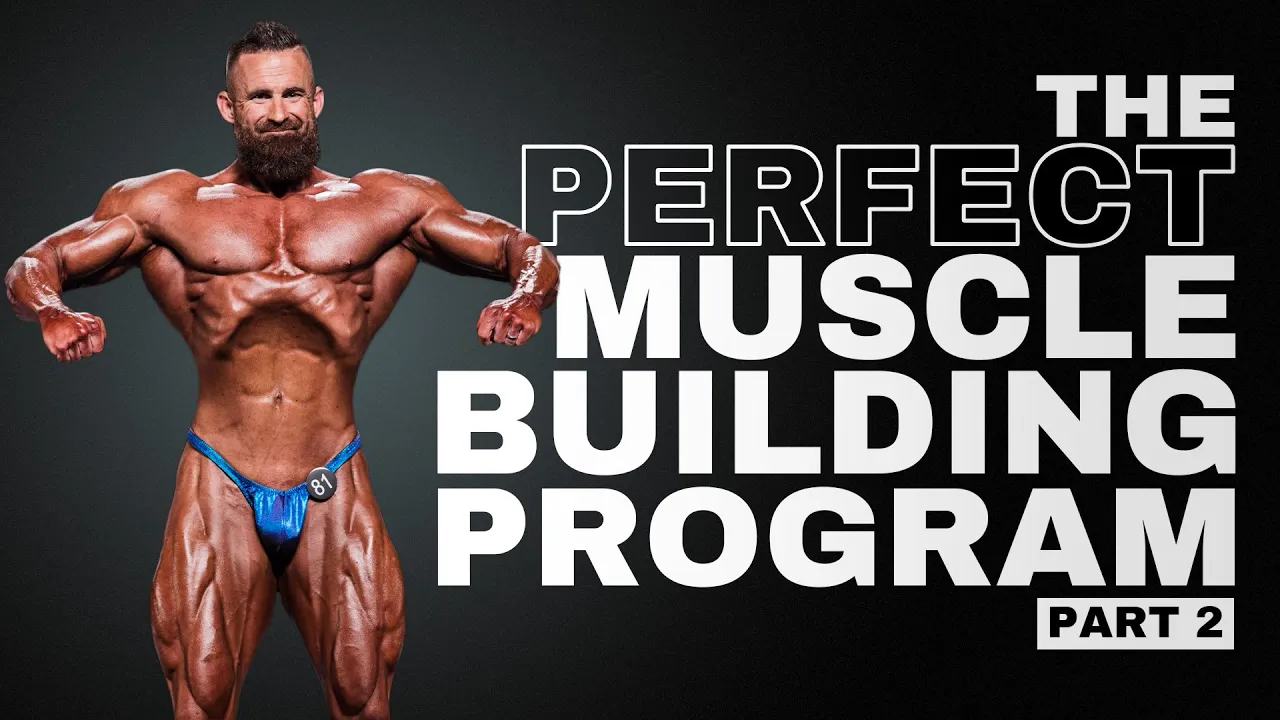
I see you right now you're sitting at home you're thinking about getting some huge muscles and you're saying what type of program should I use you're confused there's nerds that are talking about nerd stuff and pointing at nerd papers and you think you should listen to the Nerds and there's big giant guys that say look at my muscles and you feel like you should listen to them you have come to the right place cuz as you will see Here I am talking about the perfect program not the okay program or the decent program but the
perfect program the other thing you'll see here is this thing called part two if you guys are new here that means there's a part one we're going to link it up here somewhere if I point every direction we'll definitely get it so if you want this one to make full sense go check out that one first but if you're a weirdo and you just like to pick up halfway through and See how things go you're more than welcome to it as well um so going through real quick this is some of the stuff you miss
in part one so we're going to discuss the variables this is kind of how this is put together is this idea of what makes the perfect program a program is basically all on paper stuff so the things that you're going to skip here are some of these on the paper things and the most important variable by far So go back and watch video number one where I talk about the on paper stuff is actually the smaller part of what makes up results so again I'm not taking a poo poo on my perfect program but again
all jokes aside I like the idea of giving people a place to start I like the idea of directing people to an intelligently designed program but realize the majority of it is up to how you do it will always be much more important than what specifically you do for this video The things that we we didn't discuss in part one are going to be proximity to failure volume that's a fun one uh rest time rep ranges intensifiers this is in case you're you're here as well too you get what you sign up for I actually
made this slide so you see intensifiers is supposed to be in quotes but as you'll notice over here we got an extra quote hanging out there so as I spot errors going along the way I'll just point them out so if someone wants to get in the Comment section like you got an error there I'm the hypy coach I'm not the grammar coach I'm sure this is riddled with spelling and grammatical errors and all sorts of messed up stuff um but also over here I will sprinkle in pictures of my muscles here and there that
don't quite look like that anymore people say what you're bigger you need to be bigger and back then I was bigger does that mean I was smarter back then I paid for a lot more education have a lot More experience since then yet somehow I've gotten Dumber is my brain in my muscles I don't know you guys explain that to me in the comment section I'm all yours so moving on look at here's some more social proof look I can see some muscles and I'm pointing at another guy with muscles so that's my whole blend
here trying to have if I say you're debating do you listen to the Meathead or the nerd I'm all about balancing both that's my deal so Proximity to failure here's a big concept I just like to use this pen I don't really have to do that but this will kind of go through a whole lot of principles within the training World um and this is probably the most intelligent thing you guys could learn with a lot of variables but also the thing people like to do the least because as little as possible to produce maximal
results someone says oh just tell me the exact number because the Exact number doesn't actually have this part in there results and that's what you guys should be doing is when you implement something you should actually track and measure the results so when you use all these things like proximity to failure volume I'm going to give you guard rails in case you guys missed in the beginning why I'm not citing 8 million things of researches I'm taking the generalities that we know from research now and looking at the evidence Of actually having trained people and
giving you some good guard rails for your training but at the end of the day it falls on you there can definitely be different variables here they're going to have a different response for people which we'll discuss on so the whole thing here is first and foremost get these couple Concepts As you move further from failure to closer to failure I don't know if that makes sense when I wrote it reps become more Stimulating right so if I pick a weight and um and I can do 10 reps to failure and I stop at three
reps or I go all the way to 10 reps it's a pretty good argument that doing those 10 reps again the same weight is going to be more effective of a set than I just quit at three seven rep short of failure so just get that General concept don't fixate on exact numbers or exact amounts that's a concept which I from one what the Nerds think and what we have from research as Well as what's actually been trained for decades and decades before I always training seems to be pretty much hey that's that's true the
other thing to be aware of is as you move further from failure to closer to failure so same thing is we get closer to failure reps become more fatiguing so it is absolutely true if I stop so this is what research does sometimes and people are so I kind of picked on Research first is you could do a whole study that Says hey we my example I just gave every single set they pick your 10 rep max and they stop at three reps short of failure or excuse me they stop at three reps seven reps
short of failure or on the other side of the study they do everything all the way to failure and let's say we look at just the fatigue component and so we find out we do this study and we say hey guess what when you stop at three reps seven reps short of failure it's less fatiguing so for Mitigating fatigue everyone should stay seven reps short of failure and there's literally where people will compare two variables like that and make these claims and people will run with that within their training so that's one example but pay
attention to what some research actually does it doesn't look at how lots of people are applying it it looks at the extremes to try and determine which is better or more or less of these two variables so basically The whole goal here is this I'm going to underline it again because it's important and then I'll move it out of the way I'm going to circle this one now we're really moving up the goal is balance balance actually I'm going to get rid of this we're going to circle balance that's more important balance the benefit of
the stimulus versus the cost the fatigue and honestly this is for hard training individuals for people that are actually muscular for people That have actually produced a good amount of results this is a huge deal now again the funny thing is people are a lot of people are putting out great information on this like I said some of those guys that are referenced in video One um are putting out really good physiology stuff we should be aware of this stuff that balancing this is very important because too much fatigue will reduce your ability to produce
stimulus maybe not just even within the workout But longterm over the course of your split in your program so balance is a huge thing here the funny thing though is a lot of people again people try and fixate on things sometimes unfortunately that let them work less hard and so you get a lot of people that are not really training that hard don't have that much muscle and they're like oh fatigue management that's a big deal and that's important and in reality they should probably focus on taking most of their Variables and training as stimulating
as humanly possible because even their idea of how close am I to failure might actually be way shorter than they really are how far they're taking sets how good or bad their form may be they might have a whole host of things where hey man anything we can do to get more stimulus on you is going to be the big thing so as with everything balance here is a bigger deal the more advanced you get but something that everybody should be Aware of and so going here the couple things that I want to highlight here
is there really is no clearcut put Line in the Sand some people will say well don't go all the way to failure because that last rep is not worth the fatigue and it's maybe not more stimulus um I don't think we have any clear evidence that implies that um and all that I'm saying with that is of the factors which I'll kind of down here of things that really um equate to being more stimulating more Motor unit recruitment ideally more intramuscular Force production is going to be to your relative load so if you just pick
heavy enough loads that you can only do let's say six six reps or less all your sets are going to include a lot of effective reps all that being said is one of the big factors is unintentional rep speed and so that's a big thing that happens why do see people say why does what changes if the load stays the same if we're doing again that 10 rep max or whatever it's the same load all the way from rep one to rep 10 well one of the big factors is the RO the the Reps get
slower and slower as you get closer to failure and as long as slow rep speed is a factor in producing more intramuscular force or having more stimulus that's always going to be the slowest reps are the ones the last ones right up to failure so it is accurate again if we're looking at again that same thing if I either stop you know With that 10 rep load if I stop at six reps you know to pick up some effective reps or I go all the way to 10 reps to failure that 10th rep in my
opinion is more stimulating than that sixth rep because it is always done at a slower pace and so all that being said is I don't know what rep you would arbitrarily say hey this one because it's closest to failure had more fatigue than the other ones and also didn't come with more stimulus I think in general They're always going to go hand inand the Reps that are more stimulating are also going to be more fatiguing but again you got to balance those things out and so again um this whole five rep thing if you're new
here one of the guys I referenced a video one is Chris Beardsley i l was putting his stuff um I have a huge educational part on my app of called hypertrophy coach University that's now a separate thing um and within that I referenced him this is Almost five years ago at this point in time because he's one of my favorite physiology guys and again I think he's had that for around five years now as this effective rep Theory so you'll see me talk a lot about these kind of last five reps the whole thing to
be aware of with that is I think it's a great framework just so it can kind of talk about some of the same stuff and use some sort of guideline but again it's a guide it's not a rule does that mean six Rep short of failure is never effective no you know but it's just something again as we're getting closer to failure things generally become more effective and the example of this where you can actually see this once you train human beings there are outliers in the bodybuilding world so there's literally like a genetic Elite
that for whatever reason can stay seven eight n reps short of failure all the time and they actually keep growing and again it's Aside from something that's just drugs yes that could be a part of it but also when you train normal people elderly populations I mean I've had clients that are 70 80 90 plus that I don't even know what type of rep and Reserve would be left with certain sets because there's a whole host of other things aside from when you have a brand brand new person especially an older demographic you want to
stay 20 reps short of failure because any amount of stimulus is going to be so Much more than what they've done before you don't want to actually like literally break them um but then also there's Orthopedic issues there's other stuff there where I've had people where I would say consistently we are always well short of five reps not just initially and when we start but literally for months and months and months and months on end we're going nowhere near failure and again maybe not even with those last five reps but They've still been able to
produce results where I can actually see increases in strength increases in muscle tissue Improvement in composition so there's some demographics where even if we're not within those last five reps you can still get benefit and they can still be simulating so get the idea for most people watching this you know the more advanced you are especially normal person your main goal is to keep building muscle not just one year five Years 10 years the five reps is a good gauge and I think that's a really good thing that it was created for so if I'm
going to actually get some recommendations cuz everyone's like hey I don't want to hear all that nonsense just tell me number numbers in general if we're going to have a place that makes a little bit more sense and this is outside of demographic so again this should always be the goal so the newer you are probably the more reps in Reserve you can leave and still produce results so demographic as far as age training age makes a big difference as well too but just for kind of everyone watching this I'm assuming a little bit more
in that intermediate realm or Advanced for your bigger movements using heavier loads is what I mean by bigger you're going to do a deadlift a squat pattern those are the places I think it can make more sense to leave more reps in reserve um so maybe one to two reps In reserve realistically for most people and for smaller movements where the loads tend to be lighter you doing a bicep curl whatever it is those are places where you can get a little bit closer to failure because the amount of fatigue also will be somewhat directly
correlated to the load you're using the amount of tissue you're using as well too so again when we're really kind of doing this benefit of balancing those things from a practical programming Standpoint I don't think I've ever had people that it's like oh we've built so much excess of fatigue that their whole program is going off the rails and they're unable to train really hard because they're doing too many forearm curls to failure right you know so these are things bigger movements heavier loads larger individuals more tissue is when that really is a thing that
you have to be a little bit more aware of in programming where again if it's smaller Movements not as heavier loads there's not going to be as much of that very delicate Balancing Act but still the culmination of all of that does add into your program to a certain degree and I always just have a note here of Beyond failure since we're talking about proximity failure some people really get uh stirred up with this saying this a bunch of nonsense you can't go beyond failure it's just a madeup term right it's just a name all
names are madeup Things right if we look at what names are and I think it's just what most people talk about so we've actually if someone hit has hit task failure anything that happens beyond that is just someone calls Beyond failure all right but what really is beyond failure in general there's two to maybe three things I'm just going to T touch on the two big ones here but really Beyond failure is just less weight for either the entire range of motion so it's just Basically if you have something if you do your last on
your bench press you get the last one up and you can't do the rep at any point in time your training partner grabs it and helps a little bit the whole way so if you did 200 lb all by yourself and then the next rep the person takes 10 you know off the whole way up so 10 lbs lifting the whole way up you didn't do 200 lbs Beyond failure you did 190 lbs for your next rep so some of it is basically just a modified Drop set which I'm not saying anything good or bad
one way or the other and then some of it is just for range motion specific so you do an exercise and let say hypothetically it's a bicep curl you get to the point where you just barely finish up here and then the next rep you can get all this part by yourself but you get stuck there and then your training partner pushes through just a little bit you are still managing the entire load for some of the range of Motion but for the entire task you might have an additional spot through part of the range
motion and that's where this is really more of a loading pattern technically is what we're talking about but for how people use terms on the interet it's kind of like a profile adjustment type thing um and so again all of these things are to be aware of we'll talk a little bit I talked about about it kind of in video one if you wanted anytime you're getting closer to Failure and anytime you're extending a set things like that whatever you want to call this there is always going to be more fatigue associated with that you
will absolutely get some more stimulus and these are things I basically kind of leave up to and I'll talk about this a little bit more in intensifiers I leave up to the individual as far as you know is the juice worth the squeeze I'm actually going to save that for the next slide so I just want to touch on the Nomenclature here a little bit again if people use it so we know what we're talking about fine and the other thing again could just be basically the a version I could have put two and a
half I said kind of three would be just like partial so with a curl example if you didn't have a spotter well you can still do the entire load sometimes for more reps just in a partial range of motion and when there's kind of a little interesting thing about why do people Hit failure some of it is brain limited um but some of it on exercises we can clearly measure one you have different Force production capabilities through the range of motion and then two you know the actual torque that you have at the joint is
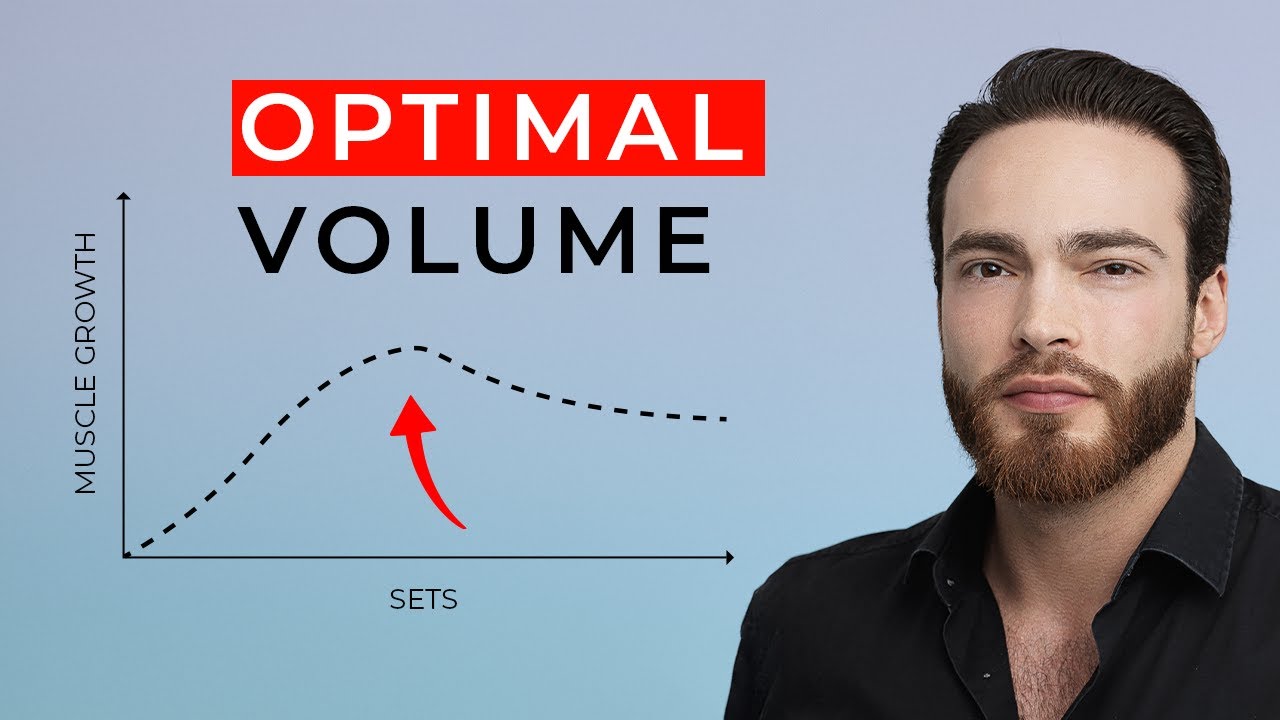
different as you go through the range of motion depending on almost any exercise as well too so there's a couple factors that one cause people to stop a lot of it is in my opinion brain limited for lack of a better term but Force application has to be a part of it as well too maybe a little bit more nerdy than our conversation is necessary today volume this is a fun one this is like people want to fight about this one and I'm just going to come out and say so first off this is the
part that nobody likes that's volume how do you figure out your volume that is the number one guideline people don't like that because they want me to tell you numbers relax look down here there's Numbers you can even jump ahead and look at them and say 1 to 16 that's really helpful Joe I'll get there relax but nobody likes this because like I said the volume debate because that is the stupid thing I'm going to keep using this debate oh maybe we'll do an asterisk by this one let's mix it up or a star who
star the volume debate because it shouldn't even be a debate is so easy to win and by said Win is being just find out what works best for you But the whole thing if you're going to write some not hopefully you're all taking notes I'm sure you're all at home taking notes some of you taking notes while you're pooping don't do that that's gross you're getting germs everywhere go wash your hands and then take notes um but in general the volume debate this is definitely worth underlining is a massive time suck most of the time
this is for people that like to debate this and argue this they like To get in comment sections they get really excited when there's a study that points out their bias look this study showed that 8 million sets is better than one set and someone else says look one set's better than 8 million they get all excited about it uh these are people that are generally the paralysis by analysis they like talking more than they generally like doing so please if you're in that camp and you want to have big muscles get out of that
camp and for Everyone else that's a normal person that just wants big muscles this slide's not that important and so basically all I mean by that is test different amounts that's the whole thing nobody tracks and measures stuff basically they just want to say test different amounts and I think there is a little bit I'll give you some guidelines here but they're absolutely for a whole host of reasons because again how you do a rep I've done a whole different video uh maybe we'll Try and Link this one up here we'll try and find it
I think I have one on here if you haven't look up Circle rep print principle um so it's a free video it's on YouTube I've got it up somewhere Circle rep principle but that's a good one to watch and the whole point of that video is what people call one rep talking about volume is lots of times useless because the industry has done a bad job of standardizing what one rep is so if you think about that all of volume Is off of that base metric one rep if we don't establish what one rep is
everything that comes after that Bas metric is stupid and I literally think that that one rep depending on the individual how they do that the exercise they choose the profile of the exercise the bracing in a whole bunch of factors it can literally be 10 times different from one person that's literally 10 times go watch that video I won't get off on the side ramble on that one um so Anyway that's why I think we can actually have a range where I think someone can work really really well with a little bit lower volume someone
may be a little bit higher of that but in general what you want to avoid is the extremes and this is where people like there's absurdity of extremes where again literally a study will come out and say based on this study we show that you keep getting more you know benefit as you go higher and higher and higher And higher volume and doing a million sets a week um and the reality is if you've actually trained people you've actually trained yourself you know like logically that makes no sense you know CU I mean really how
are they measuring this how are they tracking this people that are a little bit more into physiology than me that say well what are we actually showing that gets bigger up to that points in time probably just edema as what's getting bigger because That's part of your lean tissue if we're measuring it that way but the reality is what's the main way to do this so let me see oh I meant to say here find out which is best for you period And I did this double so I wrote the word period And I actually
used a period end of story debate end of debate end of story there's that kind of went ahead of that um but what's the really the way that you test it the big way that you test it is what do you progress better on and so That's if someone's watching this whole time get to the point Joe how do I progress you progress and use this here's what I'm kind of getting all over the place I don't know I've changed that is use the favorite exercise progression example what I mean by that is go ahead
and right now take a pause pause where you're pooping write it on some toilet paper and list out your favorite bot exercise her body part and a really favorite don't think what's your Favorite the nerd says what are your favorite ones so let's say somebody you at home went and said hey my favorite for chess is incline dumbbell and right now some nerds saying it's not stable it's bad for hypertrophy and they're small and they suck and you keep doing your inclined dumbbells but let's say you right now you can do 50s for 10 great
whatever amount of volume allows you to get to 100 pounds for 10 the fastest is the best volume for you That's period That's end of story that's end of debate I'm going to circle again that's period written end with actual period itself and so that's really you have to test that and you kind of have to figure out because when we talk about someone saying hey we show that 10 sets per week 20 sets per week 30 sets per week 40 50 sets per week keep showing more hypertrophy logically if you've ever trained someone for
more than a year 5 years 10 years you know that's Idiotic you know there's no way to manage that from an actual programming standpoint and when I've actually looked at people the strongest correlation will be what takes you prog what Progressive overloads you within standardized form hypertrophy form hypertrophy rep ranges from a lower weight to a higher weight the fastest is the number one most important metrics to know am I putting on lean tissue am I progressing as fast as I possibly could everything else is Just those are the tests that you always come back
to to find out what works best so again I'm going to give you a range but in general I say too with everything else don't be married uh to any amount because this is what happens you get people that are super they associate themselves with low volume and then maybe instead of one set two set maybe actually does work better for them or if they're a trainer their client or even God forbid three sets so again you're Going to have some wiggle room in there where there's an a little bit of an individual component but
just avoid the extremes and please don't like you know trademark yourself is I'm a hit guy I'm a high volume guy what you should be is especially if you're an individual or if you're a trainer is I'm a as little as possible to produce maximum results guy because if I can produce the best results with as little as possible that's also going to minimize fatigue And that's also going to hang on to Orthopedic stuff for a longer period of time your joints will last longer be able to train longer it's not just about what puts
on the most muscle in a 12 week study it's what allows me to keep training hard and progress as long as I can for two three four five decades and there's not going to be a whole lot of studies that show that um so anyway then nerds get all worked up about what qualifies as a body part should I count Rear delts and if I'm doing backw work my rear delts are working should I look at that as rear delt volume been people that really I've never as again being this is my living I've never
put so much effort into thinking what qualifies is how do I track volume should I I've heard people doing like half metrics well when I do direct rear delt work I count that as a set but if it's like a row then I only count that as half of a set and I'm adding all that up to make Sure that I'm just just do something test it and see what progresses faster so if we want some recommendations this is why I kind of have a broader range this is per body part per week somewhere between
1 and 16 most people cuz that'll make your head hurt maybe somewhere more like between 4 and 12 and so I put these ranges of because I've had plenty of people not just Elite athletes not just people on PDS that there are circumstances where people can progress On one set per week per body part and I don't care what all the reasons are for it but I've seen it happen based on large demographics of people that I've trained now there's other times where if I really add up this is again the semantics of what makes
up a body part obviously if we're looking at back because some people say I do 16 sets for back well that can make more sense if you're actually including I do direct erector work I do direct lat work I do Direct direct midback roundboy trap trap parts and when it gets in the point where you're trying to actually maybe bias different issues I think for lats it makes sense maybe to have one pull down in one row so if you're starting to add that stuff up this is why I think sometimes depending on how people
qualify your body part you could see that higher volume making a little bit more sense but for most people for most people I've seen focusing on how you do Things do it with better form do better exercise selection and train harder and starting on the lower end makes everything a little bit easier to show and document Progressive overload because again all other things being the same take your favorite exercises standardize your form or even have your form get better and if you double the amount of weight that you can do now for your current reps
you will be bigger there's no way around it so that's the Volume see it's so easy now it's all done and lastly we got a document over here look at 's glorious hair flowing in the wind woo why is it when he's holding still I can tell you right now he was just moving at the elbow here just training triceps but his hair is always glorious and flowing or is if you're watching which I know you are he he even had more so his current hair was like up here and flowing even more this last
year at the Olympia that has nothing to Do with nothing but you're welcome for the Free drawings I guess all this is free the Free drawings are bonus all right what do we have next rest time this is a short one no pun intended a short one this will just take a minute no one is that a dad joke is that okay I got a smirk out of Trevor I don't know here it's not funny on the way home in general the longer the better that's what she said and the workout duration is always a
factor so I'm going to get That into a minute so basically most research now will show that longer is with the little Asis or kavat if that's the right use of the word kavat I just wanted to say it I think it's the right use of it um is that if you can have the same results in a shorter period of time you should always opt for that um and so all I mean by that what you're going to say is if I'm going to put a time frame here and there's some of this is
body part specific so if you think you need The same amount of rest between working sets of hack squats and working sets of forearm curls you're doing something wrong you're either way too serious about your forearm curls or not nearly serious enough about your hack squats um but I like this duration here the longer the better because all you really get how do we test this test your sets like so if I do 90 seconds rest today on hack squats I try and keep as many variables the same and I do three minutes and try
Each one for maybe a six week period of time and which one do you have a better performance literally meaning which one do you do more reps or more weight or whatever with better control and if you find a place where it doesn't make a difference there's a Tipping Point so you find out for your hex after 2 minutes you don't have any better performance it seems to same then that would be how you choose do 2 minutes as opposed to 3 minutes but always start With longer because really there's nothing that indicates longer rests
are bad other than it not adding anything additional than shorter rest or getting to the point where it you know reduces an individual's performance so there is this notion of basically feeling warm and feeling prepped you know so if you do the powerlifter thing powerlifters I love you part of powerlifters the great part is like they literally bring like suitcases to the gym like sometimes more Than one bag they have a gym bag I don't know what percentage of power lifter but I think a lot of them have like Wheels now so they actually have
like Wheels cuz they have the best stuff they just have the most gear and the most they literally like set up a camp powerlifter set up camp you got to Kudos for that because they're going to do squats that day it's going to be like an hour and a half long of just in the squat rack so they get a little seat They set up a little picnic generally their picnic involves lots of sugary things to eat during there's chalk everywhere there's wraps and straps and straps for the wraps which is great so some power
lifters will take like eight and a half minutes rest between sets there's going to be some point where you literally will feel less ready to do the workout or the exercise you're about to do so don't go that long is my whole point but there's not really any Evidence of research that says resting too long has any detri maybe outside of you not feeling nearly as prepared um so like I said there's outliers and even if you do that whole thing and you find out six minutes works the best for you and you got the
time then do six minutes this is one of these things where it's a little bit of ridiculous that people feel a need to like what's the most current with research and if something comes out that shows 90 seconds as Opposed to three minutes they feel like they have to do that you're using research wrong um rep ranges so what are the considerations for rep ranges so one is efficacy so are we getting the maximum result from the rep ranges we're choosing and then the same thing with rest times efficiency so anytime you can do the
same principle again as little as possible to produce maximum results anytime you can get the same result with Less reps always opt for that how do you know try that first if that works I don't think there's any need to go for higher reps because again anytime you do more reps there's always more fatigue and there's also going to be more Orthopedic toll so literally anytime you can do less reps in your warm up anytime you can do less reps when you're training I honestly think all those things will lend itself to a longer career
um so basically the whole goal is This is kind of a semantic thing there's a couple other considerations so the reason we don't go higher if we don't have to is that managing fatigue thing some of this is a little bit of a semantics preference or the Pedic I put all those together so a lot of people will say you again you'll get the Nerds at say five to six is the best because of those things I just mentioned but some people really don't like doing lateral raises or cable raises or curls Or forearms for
five to six for no other reason that it doesn't feel as good then the super nerd will just try and explain to them why they're doing something wrong and if they're just doing things the way they should be doing they should be fine that's stupid so again yes that stuff is important but especially for the same reason again for smaller muscle groups the fatigue manage isn't as big of a deal if a higher rep range feels better for you on any exercise unless It's in an extreme then do it so meaning if five to six
on anything doesn't feel as good orthopedically performance whatever it is is 8 to 10 10 to 12 then do 8 to 10 10 to 12 right again this whole fatigue management thing is a very individual thing some of people that I work with that are literally at the limits of that I might actually occasionally say I know you prefer because you've been doing this bodybuilding thing this whole time 10 to 12 but maybe let's try slightly lower rep ranges see if we can get the same benefit maybe have a little bit less fat a little
bit more fatigue going along the way now I include this in here just to make the Nerds upset but although I can't prove it I have seen and there's so many factors that go into this even with this as control the group that I can there are still certain instances and certain body parts that I like to include some higher rep ranges If and only if the lower to moderate rep ranges work and I'll even use this is not a personal preference myself as the example my quads grow from everything so again when I've done
just like 90% of my program six to eight my quads grow so again for the vast majority of my training career I almost never went higher than that because that worked really well now that being said there's been times I put higher reps in with stuff just because me and my trading Partners were trying to murder each other and I feel like again all other things being the same they actually grew a teeny bit more and there's been times when I've had clients where I'm trying to control for all the variables as much as possible
and saying okay we're keeping traditionally in these 6 to8 6 to 10 rep ranges and things grow when they grow okay and they say let's try and incorporate some of these everything's still all the other Variables are there long rest training and close proximity failure but some higher rep ranges and perceivably I've seen it produce better results and I'm not just saying in the short term from more edema more inflammation more whatever I am saying long term from an offseason to Stage seeing more tissue coming to Stage um so again if you're at home and
the vast majority of your programming is you're in that 5 to 10 rep range or whatever and you're Producing great results I don't think there's reasons to incorporate higher rep ranges but for when I say some body parts again I'm going to throw this out someone's going to call me out nerd whatever this is the funny thing we can make fun of people that say what we see in the trenches at some point in time and say there's no really evidence the points to that and then 10 years later we could actually have some really
good evidence the points to that like oh yeah So this is one of those things where I don't really care too much I'm not saying I can prove it I'm just saying this is what I've seen and if you want to try it at home have at it but delts glutes quads for whatever reason incorporating some higher rep ranges seem to work sometimes when the lower to moderate rep ranges don't work now again if you're unsure fatigue is your limiting factor don't bother right or if you're just a super nerd that's really Fixate and saying
he's an idiot he doesn't know what he's talking about there's no evidence for that fine stay in your lower rep ranges I don't care so General recomend recommended rep ranges this is why I say 5 to 20 so there are times that I will include sets generally lots of times in the form of a drop Set uh drop set or sometimes just straight set that higher reps that is included occasionally with again individuals and within programming But 95% of the time I'm using 5 to 10 rep range for pretty much everything across the board again
with the all of this is always trapped by preference and Orthopedic even if I said this and you at home like doing 12 reps on everything again nothing drastically different is happening it's not there's not going to be a study that comes out that shows over the course of a year you know the group that stayed at 5 to 10 put on 20 pounds of muscle and the group that went In 12 reps only put on three pounds of muscle right if it's someone really at the limits of the fatigue maybe we could actually document
a decent amount of lean tissue difference intensifier techniques so again intensifier is a term that gets used in technically incorrectly all the time but basically just anything that's more than a straight set for all intensive purposes we'll talk about here so again this is the thing that we've Kind of already built upon this with the first uh video and this one as well too basically the further you get in a set the longer a set the more fatigue the more sets you have the longer you have working sets again looking at even moving towards the
end of a workout the more fatigue you have so really the whole thing in general with intensifiers is it's really again there's going to be a balance of am I getting the benefit um again the whole thing is the juice worth The squeeze so at any time you're doing any type of intensifier anything you're taking things past failure drop sets strip sets super sets for the same muscle group there really becomes the argument of again is the benefit that I'm getting worth the fatigue that's getting um so in general this is again where we're looking
at things like super set drop set shorter rest period of time also lends itself to this so this is the other thing not only do you have longer Sets or more sets after additional sets but also anytime you're incorporating incomplete rest you're also some of that fatigue can be dealt with in a short period of time meaning a three minute rest period if you're going immediately to something else that's really a big argument again for yes you can still get some stimulus but there may be more fatigue than is necessary even if you just waited
another minute two minutes whatever it is um so again when I say Super sets as well too I had to put this note in here this is in reference to the same body part so again for antagonist body parts this can be a great way to save time so I'm not saying like super setting chest and back is a bad idea you know super setting chest and back again for not the same body part isn't going to accumulate all that same local fatigue for the body part so you can still do that obviously at the
same time and still be very effective Um the thing that's my main note here less effective does not equal completely ineffective so a lot of people will say that intensifiers drop sets things like that are just a complete waste of time again if we look at the requirements for something to be effective stimulus that you can still get effective stimulus there's no two ways around it if I take a set and I go all the way in close proximity to failure and I stop I make the weight lower and I go on close Proximity to
failure there's still effective reps there because they're reps that are close to failure they're going at slow low speeds the whole argument is that they of course if I look at a set of 10 and I go to failure and I look at those last five reps and I do a drop set and I look at another five reps those first last five reps if that makes sense are going to be more stimulus than the five reps in the drop set but just because they're more Stimulus doesn't mean that these are no stimulus right so
this really just becomes more of a a balancing of is it again the juice worth the squeeze is it effective stimulus for the fatigue um and at the end of the day it really kind of has to be individual dependent so what's the benefit of doing these things it's saved time that's the biggest thing there's no magic benefit that comes from Super sets drop sets cluster sets extended sets whatever it is mechanical Drop sets it's just basically a way to save time and still get to a point if you're hitting a fail your point at
the end of it uh just get effective reps but the balance is comparing even just a straight set to another straight set that would always be less effective because it's the next set these probably even have more fatigue that go along with it um so again it has to be indiv idual specific it can be exercise specific as well too so meaning again if You're the individual that's nowhere near fatigue really being a limiting factor in your training that's not a big deal so if you're the bro that goes and trains you do three exercises
for biceps and triceps on your last bicep and tricep exercise of each day you Dre do a little double drop set fine and I would argue for most of those people comparing had you not done that set altoe that's probably actually more stimulus the way you're doing and the little bit of Additional fatigue that you're getting isn't going to throw the rest of your program off now now um again and also saying again exercise specific as well too so again doing a double drop set on a set of hack squats is going to have a
whole lot more fatigue than I'm doing my wrist curls and then at the end of doing a 20 pound dumbell I grab a 10 and do five more right that fatigue that comes with that isn't probably going to throw off the entire rest of your program or Affect the rest of your training so much so all that being said I do totally agree with the idea that they should be used sparingly and there's never really a need to use them you could do Straight sets your entire lifting career and get absolutely yoked never needing to
do a drop set um and there are specific times and specific individuals when you should avoid them when you have a harder time dealing with fatigue or you're already At those limits so if stress is high sleep is low nutrition is garbage you're in a very large deficit and or and or for in a large deficit for a long period of time so this is why if you looked at information I put out with people that I've prepped and how I do their programming like most of the time any single person I've ever prepped once
they get inside of 108 weeks they're almost never doing anything that would qualify as an intensifier it's all Straight sets and I've always taken it out for the reason is again at that point in time you know the fatigue is not worth the stimulus training um so again any point in time you could always look at it and this is kind of a reductive argument but any point in time someone does a drop set even if I give that example for the guy that just did the drop set at the end of his bicep and
tricep workout couldn't he just done two more sets of biceps and two more sets of Triceps with a longer rest yeah but it takes six minutes longer he's got to get into his car and post about his workout and tell you how awesome is and get a picture real quick while he's got a good pump so again for Time Savings or if you just like the pump remember I talked about in the beginning video One in case you missed it uh you can have different training goals so you can want to get huge and also
like getting a pump yes nerds we know that the pump in and of Itself is not important maybe for hypertrophy but they're still awesome and sometimes you can do very effective training incorporate some things that get you a little pump and still get yolked and still enjoy posting yourself more pumped than you would be if you just done straight set so at the end of the day use your brain you're in charge um you know and you can do a little bit more of that uh decision- making all on your own The last slide here
really from kind of like a programming standpoint is this notion of also having physique balance so all that I say with this with longer sessions which happen with full body half body for sure even push pull lower is let's say at the end of an upper day you know you're always doing it and again for good reasons you start with the bigger movements first the heavier loads first you do your back you do your chest and then what comes after that Arms maybe forearms maybe delts same thing with leg day you're doing your bigger motions
first and then maybe obviously you finish with Cals whatever is getting trained last is getting less stimulus than what trains first and again at the end of the day if your goal is just to be as large of a monstrosity as you possibly can be and maybe you don't mind looking just like a refrigerator you don't really need to consider this but if at the end of the Day you're training to look pretty um your version of pretty meaning yes I want to put on 30 pounds of muscle but I like this idea of being
balanced then at some point in time this can be one of the short shortcomings of this program unless you have really good genetics for your extremities is again you can have what happened to me like a joke is look like a refrigerator and that needs some special ization and so um I say that one of the simple ways that you can address This is actually using that as a part of your ab rotation So within an a part of your program meaning again going over the split if I have a full body and a full
body or even different phases maybe block one or block two of your programming you go from one where you're starting with all your bigger movements first but having either a b rotation or even certain block of your programming where you're starting with smaller groups first still training the bigger Motions La next as long as they B L don't take away from what's coming after and all I mean by that is I wouldn't put triceps probably before bigger heavier pressing so if I have a tricep day I wouldn't do all my triceps really hard and then
try and do some overhead pressing do some chest pressing I'd rather do something like okay before pressing maybe I'll do something smaller like Calves so even if you still want to follow maybe something more like a half Body which if you missed video number one I'm kind of is a really really great place to start for the perfect program on paper for a lot of people that's one of the ways that you can kind of overcome not having your physique start to get very out of Balan is by again an AB rotation or even different
blocks of your programming where you're strategically putting smaller stuff first um and all that being said so we've gone through all the variables let Me scroll back to the beginning and then we'll go back somewhere else after that but looking through all the variables now you know all the variables to make the perfect programming we know what frequency is great we know the most important variable even Beyond what's on paper we know the perfect number of exercises we know the the best exercises to choose we know how to sequence those exercises we know how close
to failure to train we know what volume you to use We know the rest time we know the rep ranges we know what to do with intensifiers we even know how to prevent our physique from becoming imbalanced and now you're sitting there and you're like Joe that all sounds great but I'm confused what do I do how do I put that on the program don't worry I've got you I made the optimized hardcore half body if you didn't see my sales pitch at the end of the other video here it is and this is a
name that I think should Appeal to everybody my strategy here was so I'm going to let you in on my mental manipulation occurring optimize this is for you nerds so you're like o optimize I like the sound of that but right now there's some meat head it's like oh optimize I don't like the sound of that but then right after that he's I say hardcore and they're like all right well I don't like optimize but I like that hardcore that kind of sounds a little bit more up my alley it's for both of You and
so anyway I have created an epic program that basically puts all those variables together addresses all those little things that I said when I think the on paper part is the perfect program I'm going to say it again here even though I'm trying to sell this program I'm going to put it back on you if you train like a cupcake your form is not good you don't train intensely you train eight rep short of failure don't waste your money on this program because on Paper is not as important with how you do things um and
there's really nothing super magical about this I'm really the worst salesman ever but it's a really really really solid program and if you do all the other stuff right you can get yolked with this very efficiently and if you get this program it's on my app you get access to all this other sweet stuff as well too so I have 25 plus full programs on there I have two other half body options I got full body I got push Pull over VAR got body part specializations I have programs I use for people I don't put
them here on purpose I have a bunch of teran's programs look how pretty he looks if you do his programs you'll look exactly like that as long as you have the exact same parrots as he did the exact same genetics and the exact same life experiences um but anyway I've gotten sidetracked the sales pitch is supposed to be quick I watched the sales class Once on Instagram from a salesmaster but anyway if this sounds awesome to you and you are interested there's a link in the bio down below to get early access to this so
This program's not out yet I'm dropping it on Black Friday and you can be the first one to access it even maybe a day earlier than everyone else don't tell anybody join the wh list and also you get access to everything for by far the lowest prices of the year and this is the only time that I say that because Black Friday is legitimately the lowest prices and the cheapest time to join my app for the year and if you put your email in that bio down below you'll be the first to know if you're
watching this like six years from me filming this don't worry this program is still on there you just don't get the Black Friday discounts but I'll replace place the link down there I'm pointing down there below the TV but on your screen it's down there and uh you can get huge And yes I'm trying to sell you stuff I'm a trainer I sell training relax if you don't like me selling stuff then you must get mad when you drive up and down the street and you see Billboards and grocery stores and gas stations you hang
out the window why you trying to sell me gas you salesman it's the same thing relax anyway that's me signing off there a really good sign off and a really good sales pitch see you guys next time