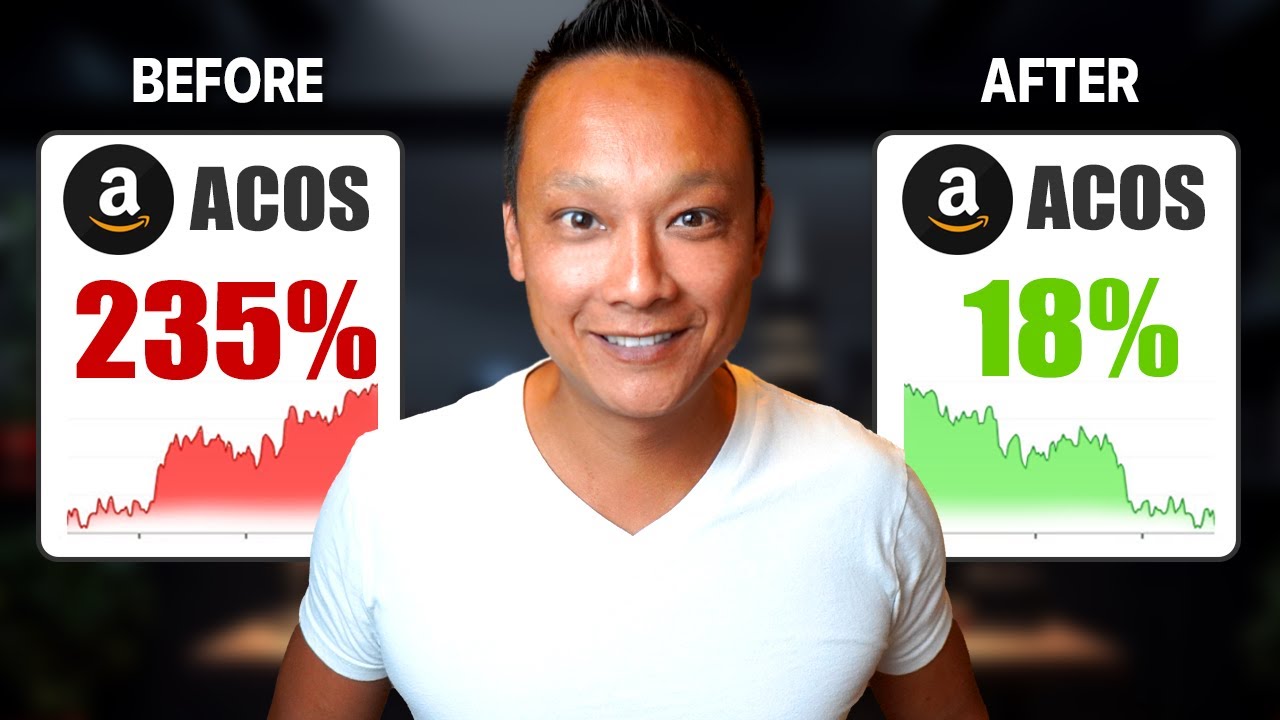
How to optimize an Amazon advertising campaign to get a lower ACoS and more sales. So in this video, I will share with you how we optimize that advertising account for this Amazon Seller who just started working with us. Let's get started.
Okay, here we are in the advertising console, and as you can see, the data range by default will always be the last 30 days. In this account for the last 30 days, we spent $150,000. But what we like to do when we analyze an account we want to improve is to analyze the last seven days.
Because in the last 30 days, a lot of things can change. But when we want to analyze where should we put our focus, which campaign should we focus on, the last seven days is the good range we want to analyze. Because we want to see what are the campaigns that recently are spending the most.
Here I'm going to analyze this campaign that is spending the most. So I sort the campaigns by spend data range for the last seven days, and I'm going to open in a new tab this campaign. Okay, so here we have our campaign.
I see that we already renamed this campaign. So this campaign has a clear naming structure where we have the name of the product, the campaign type (sponsored product, sponsored brand, sponsored video, sponsored display). In this case, this is a sponsored broad match, and I see that it's SP/broad.
It means that it's a sponsored broad match, so we have only broad match insight. After, we have the parent ASIN and other nomenclature. This is the first thing we highly suggest doing for your account.
This is something we already did for this account, renaming the campaign name. Making sure the campaign name has a simple and clear name structure so it's easy to understand what's going on inside, and it's easy to optimize. The second step is to make sure you have a simple campaign structure.
With a simple campaign structure, we mean that we have only one ad group inside each campaign. We don't want to have too many ad groups inside each campaign because if we increase the spend for our campaign and we have multiple ad groups inside one campaign, what will happen is that the spend will not go through the ad group that we want, but it will be spread across all three ad groups, and we have no control. If an ad group has a very high ACoS, it will be very difficult to tell Amazon, "Please don't increase the budget for this Ad.
" Amazon will decide where to put the spend. Remember, keep it simple—one campaign, one ad group, clear naming system. So here we have a clear naming system.
The third thing we want to check inside this campaign is we want to make sure we don't have too many targets inside the campaign. So I open this tab, I'm going to analyze only enabled keywords, and I can see that we have only four keywords inside. This is good.
It means that we don't have too many targets inside the campaign. If you see that inside your campaign you have more than 30, 50 enabled keywords inside your ad group, that is a problem. Why?
Because it means that our spend will be spread across too many targets, and that could lead to an increase of wasted spend. What we suggest is to have fewer than 30 keywords per campaign or fewer if your conversion rate is lower. The lower your conversion rate for your account, the lower the number of keywords inside your ad group.
Make sure that you don't have more than 30 keywords per campaign. In this account, we have four, so that's great. Overall, I see that the structure of the campaign is well done.
We have only one ad group inside; we don't have too many keywords; we have a clear naming structure. Now let's go and check other metrics for this campaign. Okay, the next thing we can check for this campaign is placement.
If you go under your campaign, under placement, what we can check here is, okay, where are we putting our money? For what are we optimizing for this campaign? I can see that in the last seven days, we're getting a lot of clicks on top of search, a lot of clicks on rest of search, and some clicks on product pages.
The one that is not performing very well is product pages. What we could do here is keep decreasing the bid for our campaign and keep increasing the placement for top of search and rest of search. It means that we will get clicks only on keywords by getting clicks only on top of search and rest of search.
We will not get clicks anymore on product pages because product pages, we see that it's not performing very well. One thing here is that you could change the range to the last 30 days to get more information about this campaign. You can see that this campaign was spending quite a lot on product pages and was not performing as well as the other two placement options.
So here, for sure, we want to keep optimizing the placement. We will do a video soon on how to test the placement, how you can change the bid in the placement. So if you want to get more information, subscribe to the channel, and you will get a notification when that will be live.
So for sure, here, what we want to do is keep decreasing the bid and keep increasing the placement for rest of search and top of search because we don't want to get clicks here because we know that it's not performing, and we don't have control over the products we are getting clicks. This is one thing. This is an optimization we would do for the placement, and this is something I would highly suggest analyzing for your top-spending campaign.
Okay, now let's go and check the budget. How much are we spending for this campaign? For this campaign, I said we're spending around $270.
We got a spike in the past few days, and I see our budget is $250. So the idea is that the campaign is running out of budget because our budget is $250, and we're spending on a daily basis now in the last two days $280, $270. What is telling me that there is an opportunity when we are running out of budget for a campaign.
It means that there is an opportunity that we could scale the campaign. We could do better for this campaign, or we could save money because maybe we are wasting money. Now, we're going to see how we can optimize the campaign so we could spend the same amount but with a lower ACoS so we can get more outs.
Let's check how we can do that, but here we found the problems. Let's fix the problem. So, if we saw that the campaign is running out of budget, so we are spending too much, can we increase the budget?
But before doing that, we can increase the budget, but before doing that, it's better to analyze the campaign first in detail. So we analyze the placement, so we found a way that we could optimize where we get the clicks. The next step is to analyze the keyword.
As we said before, we have only four keywords inside this ad group, and only one is spending. So what we could do here is keep active only this keyword and pause all the others. We will have a single keyword campaign so we have full control over this keyword.
Another thing that I see for this ad group that is a broad match, as we discussed before from the naming structure. So I know that the keyword and search term are different. If the keyword is "red shoes" in broad match, I know that the search term will not be only "red shoes" but will include everything related to red.
So I know that here there could be a lot of wasted spend. Wasted spend is clicks with no sale. Let's analyze.
Now that we've analyzed the keyword, we could keep active only this one so we have full control over the bid and the placement. I said I don't like to check the bid at the beginning; the bid is the last thing I want to touch because the problem could be not on the bid but on the search term or on the ads. So let's analyze that first.
I'm going under search term, and I'm going always to analyze the last seven days and sort by spend. Here, what I want to find are wasted spend and search terms that are not relevant for our product. For example, if we're selling red shoes and our customer searches for "red shoes," but under this tab, I'm getting clicks for "blue shoes," I want to negative phrase "blue shoes.
" In this account, okay, I see that these are the two biggest keywords in our niche. And if I scroll down, I see that, for example, this word "not real" could be a search term that is not relevant for our product. So what I'm going to do is analyze only these words in this campaign and see the performance across the last 30 days.
I'm trying to find words or search terms that are not relevant for our product but we're still spending for. For example, this word we are getting orders and clicks, so it's fine. It's not a good search term to negate.
But as soon as I find something that is not relevant, for example, this one, it looks like it's not relevant, if I find a search term that is not relevant for our product, I'm going to take this search term, go under negative targeting, add the negative keyword, and add here the negative phrase. If it's not relevant at all for our product or if it's a search term that is not relevant, only this kind of search term, I'm going to put here the search term and add the keyword. The idea here is that we want to decrease the wasted spend because if I filter only for search terms equal to zero, in total we spent, we got 3,800 clicks, and if I filter only search terms equal to zero, I see 875 search terms got more than 1,500 clicks with no order.
So we spent $2,600 with no order. I could save a lot of money, if I keep refining the search terms. So if I keep adding negative exact and negative rates, this is kind of a long process to do, but that can help you a lot especially for your top spending campaigns.
So for that reason we keep adding negative keywords for this campaign to keep refining the campaign. Because broad match campaign are amazing because we have a very low CPC compared to exact match campaigns. But we need to refine the campaign.
So, keep refining the campaign. Keep adding negative keywords in exact and phrased to make sure you're targeting the right search term for your product. Now that we've analyzed this, what we like to analyze is the ads.
If I go under ads under my ad group, I can see we have multiple ads inside, and I can see that almost all of them are performing quite well. But this one is outperforming all the others with a 23% conversion rate. What we could do here is, we don't like to stop something that is working.
For example, this one, I would not suggest to stop this product because it's selling quite a lot, 157 orders. So first, since we don't have any product that is not performing that bad, if we had a product with an ACoS of 18-90%, I would just stop the ads because they're not performing at all. But first, here, I would suggest, let's improve the search terms first, so let's refine what we discussed before.
Later on, let's check if the performance here is not improving. So we analyzed the search terms; we analyzed the ads. Let's analyze the targeting.
In terms of bidding optimization, we use Scale Insights to optimize the bid. If you want to learn more, we did a lot of videos about Scale Insights on our YouTube channel. Overall, what we suggest is that using a software like Scale Insights or any other software will make more optimizations about your bidding, about your bid.
So what we like to do is have both a manual approach and also a rule-based approach. With Scale Insights, so in this case, I know that Scale Insights will decrease the bid and also take into account placement and all the things we discussed before. But what I can do here, if I see something is not working, I could help the software to make faster changes.
So what we like to do is decrease the bid by a maximum of 10% per keyword. If I see that this keyword is not performing well, for this account, it's not too bad, so we don't want to decrease the bid. But if I feel like the keyword is not performing, I can do a change, especially if you don't use software.
You can say, "Okay, let me decrease the bid by 20% for this keyword. " 20% is quite a lot to decrease the bid, so we always like to say, not a maximum of 10% of increase or decrease. So I would take this keyword, adjust the bid, decrease the bid by, and here you select 10%.
In this account, to be honest, for this campaign, I will not decrease the bid for this keyword because most likely, if we improve the search term, that will help us to improve the ACoS of the campaign and the overall sales. So as soon as we refine the campaigns, the search terms for this campaign, I will go and start to scale the campaign by increasing the budget. Because now I know that we are targeting the right term with a good ACoS, and we can scale the campaign.
This is how I would optimize this campaign. I want to do quickly for another campaign, so for the second campaign, for this other campaign, let me open this campaign. Again, same process, I'm going to check, do we have a clear naming structure?
Yes, perfect. Do we have only one ad group? Yes, perfect.
Let me check placement. Where are we getting clicks? I see that we still get clicks on product pages and is not performing very well.
Let me analyze the last seven days. Okay, I see top of search is performing quite well, rest of search is performing quite well, PDP (Product Detail Page) is not performing quite well. So we could keep optimizing the placement to make sure we get clicks only on these two.
Now I'm going to analyze the keywords. Inside, I see that we have, in total, nine keywords inside this campaign. Perfect, under 30 keywords, so we're doing a good job.
I see almost a few of them are spending, and after I go on the search term, I analyze the search term. So I sort by spend. I check the search terms that spending the most.
I see, are these relevant? Can we add negative exact or negative phrases to refine our targeting? Since it's a broad match campaign, if yes, great.
Go under negative targeting, under negative phrase, negative exact, and find. After that, I will go under ads. I will check, are we targeting the right product?
For example, I analyze the last days since I want to get more data, and here I see that overall, almost all the products are performing quite well. Like this one was not performing very well; we got only 20 clicks, but we sold the product. Finally, I will go and check the bid.
Are we using the right bid? Here we have Scale Insights optimizing the bid, but if I feel like the bid is too high, I will decrease the bid by a maximum of 10%, or if I feel like there is an opportunity, I will increase the bid by 10%. One last thing that I forgot to say is about the budget.
Are we spending the right amount for this campaign? So I will go under the budget and check the budget. But before increasing the budget, I will always make sure we are targeting the right keywords, the right search terms, with the right ads.
So I really hope this video was useful, and always remember to analyze the top-spending campaigns first and do this optimization. We suggest doing this on a daily basis, so we call it a daily check. So I really hope it was useful.
Let me know what you think, and see you in the next video.



![Amazon PPC [Master Class] - ACOS Hacks](https://img.youtube.com/vi/gudIjpDMLto/maxresdefault.jpg)