If you're over 65, there's a quiet surprise waiting for a lot of good walkers. They do everything right. They take a morning walk.
They circle the neighborhood. Some even hit a few thousand steps before lunch. And yet, the first real test of the day still feels shaky.
getting up from a low sofa, stepping into the car, climbing one flight of stairs while carrying groceries, or that moment on uneven pavement when your knee wobbles and you suddenly reach for a railing you never used to need. Here's the belief most people carry. If I keep walking, my legs will stay strong.
Walking is wonderful for your heart and circulation, but leg strength, especially the kind that keeps you steady and independent, needs a different signal. In fact, a well-known PubMed study in very old adults living in nursing homes found that high resistance strength training increased muscle strength by an average of 174% in the participants who completed training, even up to age 96. That doesn't mean you need heavy weights or a gym.
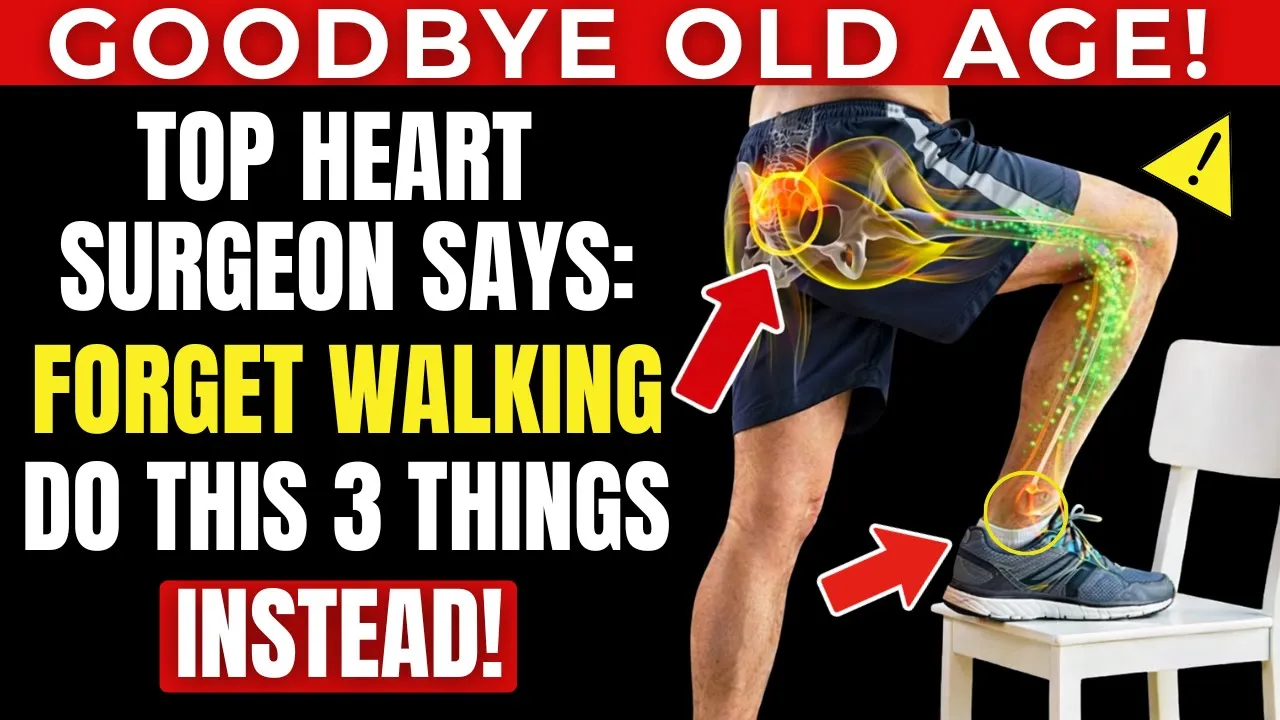
It means your legs can respond at almost any age as long as you give them the right kind of work. Safe, controlled, and targeted. In the next few minutes, I'm going to share three surgeon approved joint friendly exercises that build more practical leg strength than walking alone after 65.
And number one is the one that quietly predicts how easy or how hard daily life will feel from this point forward. If you try these with me, tell me your age and what state you're watching from. And if you know someone who walks every day but still struggles with stairs, share this with them.
And make sure you're subscribed for more simple, safe ways to stay strong. Exercise number one, chair sit to stand. Chair sit to stand is exactly what it sounds like, but its importance is far greater than most people realize.
It is the simple act of rising from a seated position to standing, using your own legs rather than momentum or your arms, and then sitting back down with control. This single movement quietly determines how easy daily life feels after 65. Every time you get up from a chair, the toilet, a car seat, or the edge of the bed, you are asking your thigh and hip muscles to lift nearly your entire body weight against gravity.
Walking, while excellent for circulation, does not recreate this demand in the same way. That is why doctors and physical therapists pay close attention to this movement. Difficulty standing up is often one of the earliest signs that leg strength is declining even in people who walk regularly and feel otherwise active.
From a scientific perspective, this exercise targets the quadriceps, glutial muscles, and stabilizing muscles around the hips and knees, which are essential for independence. A well-known PubMed study involving adults aged 75 to 96 found that when these muscles were trained using resistance-based movements, similar to standing up from a chair, participants increased their leg strength by an average of more than 170%. What mattered most was not speed or endurance, but controlled effort through the full movement.
To practice this safely at home, choose a sturdy chair. Sit with your feet flat on the floor about hipwidth apart and slightly tucked under your knees. Lean forward gently from the hips.
Press through your heels and stand up using your legs as much as possible. Then slowly sit back down resisting gravity rather than dropping into the chair. If needed, it is perfectly fine to lightly touch the armrests or your thighs at first.
The goal is gradual progress, not perfection. A common mistake is using momentum by rocking forward quickly or pushing hard with the arms, which reduces the benefit to the legs. Another mistake is rushing the movement, especially on the way down, which can stress the knees.
Slow, controlled motion is where the strength gains come from. For older adults, the benefits go far beyond stronger muscles. Improving this movement makes everyday transitions feel easier, reduces reliance on furniture for support, and restores confidence in the legs.
Many people notice that stairs feel less intimidating, and that standing up no longer requires planning or effort. As your legs relearn how to lift and support your body, you build a foundation that makes every other movement safer and more stable. Next, we'll focus on a small but powerful exercise that protects balance from the ground up.
Starting with the muscles that keep you steady on your feet. Exercise number two, heel raises. Heel raises look almost too simple to matter, but they train a part of the body that quietly determines whether you feel steady or uncertain with every step you take.
This movement strengthens the calf muscles and the small stabilizing muscles around the ankle which are responsible for controlling balance when you shift your weight, change direction or catch yourself from a stumble. When we walk, these muscles are used, but usually not through their full strength range. Over time, especially after 65, they can weaken without being noticed until one day a curb feels higher than expected or a slight misstep feels harder to recover from.
From a clinical perspective, ankle and calf strength play a major role in balance correction. Research published in PubMed examining balance and fall risk in older adults has shown that targeted lower leg strengthening improves postural stability and reduces sway during standing and walking tasks. The key finding was that improving ankle strength helped older adults react faster and more effectively when balance was challenged.
Heel raises directly train this response. To perform this exercise safely, stand behind a sturdy chair or near a countertop so you can lightly hold on for support. Place your feet about hipwidth apart and distribute your weight evenly across both feet.
Slowly rise up onto the balls of your feet, lifting your heels as high as is comfortable. Then pause briefly before lowering your heels back down with control. The most important part of this movement is the slow return to the floor.
That controlled lowering strengthens the muscles that help you stabilize when stepping down from a curb or stair. If balance feels uncertain at first, it's perfectly fine to keep both hands on the chair. As confidence improves, many people find they can reduce support to just fingertips, which further challenges balance in a safe way.
A common mistake is bouncing quickly through the movement or letting the heels drop suddenly. This reduces muscle engagement and can place unnecessary stress on the ankles. Slow, steady motion is far more effective and much safer.
For older adults, stronger calves often translate into a noticeable improvement in walking confidence. People report feeling more secure when standing in place, turning, or stepping onto uneven surfaces and less reliant on walls or furniture for balance. By strengthening the muscles closest to the ground, you create a stable base that supports everything above it.
Next, we'll focus on an exercise that retrains coordination and leg control, helping your body lift, place, and steady each step with greater confidence. Exercise number three, marching knee lifts. Marching knee lifts may look gentle, but they train one of the most overlooked abilities in aging legs.
The ability to lift one leg while the rest of the body stays stable. This movement directly reflects real life actions like stepping over a curb, climbing stairs, getting into a car, or simply clearing the floor without shuffling. As we age, the muscles that lift the knee and stabilize the hips can weaken quietly.
When that happens, people often don't notice a loss of strength right away, but instead notice changes in confidence, shorter steps, hesitation on stairs, or a fear of catching the foot on uneven ground. From a medical standpoint, this exercise activates the hip flexors, core stabilizers, and standing leg muscles at the same time, which is why it is so valuable for balance and coordination. Research indexed in PubMed has shown that balance focused lower body training, especially exercises that involve single leg support, improves gate stability and reduces fall risk in older adults by improving neuromuscular control rather than raw strength alone.
That coordination is critical because most real life stumbles happen when only one foot is on the ground. To perform marching knee lifts safely, stand tall behind a sturdy chair or near a counter with your hands resting lightly for support. Shift your weight onto one leg, then slowly lift the opposite knee to a comfortable height, aiming for control rather than height.
Lower the foot back to the floor with intention. Then repeat on the other side in a slow alternating pattern. The focus here is not speed.
It's balance, control, and awareness of where your body is in space. If lifting the knee feels difficult at first, even a small lift is enough to start retraining the nervous system. Over time, many people find that their steps feel smoother and that lifting the leg no longer feels uncertain.
A common mistake is leaning backward or gripping tightly with the hands for support, which reduces the work done by the legs and core. Another mistake is rushing the movement, which turns it into a momentum exercise rather than a balance building one. For older adults, the benefit of this exercise often shows up in everyday confidence.
People report fewer toe catches, better control on stairs, and a renewed sense of trust in their legs when moving through busy or uneven environments. By retraining how your legs lift and place each step, you prepare your body for the unpredictable moments that walking alone cannot fully address. Next, we'll bring these three movements together and explain why as a group they provide more functional protection than walking by itself and how to use them safely in daily life.
What makes these three exercises so powerful is not that they replace walking, but that they train the exact abilities walking tends to miss as we get older. Walking is a rhythmic forwardmoving activity. It supports heart health, circulation, and mood.
And it should absolutely remain part of your routine if you enjoy it. But walking places relatively low demand on the muscles responsible for lifting your body upward, stabilizing you on one leg, or controlling balance when movement is sudden or uneven. Chair sit to stand trains your legs to lift your full body weight against gravity, which is the same challenge you face when rising from a chair, the toilet, or a car seat.
Heel raises strengthen the muscles around the ankles that help you make fast, subtle corrections when balance is threatened. Marching knee lifts retrain coordination, hip control, and single leg stability, which are essential for safe steps in real life. Together, these movements cover the three foundations of independence, rising, stabilizing, and stepping with control.
From a research perspective, this combination reflects what geriatric and rehabilitation studies consistently emphasize. Strength training that mimics daily activities has been shown to improve functional mobility more effectively than endurance exercise alone in older adults. According to multiple PubMed indexed reviews on aging and mobility, the improvements come not just from stronger muscles, but from better communication between the muscles and the nervous system.
This is why many people notice changes sooner than expected. Within a few weeks, standing up often feels smoother and requires less effort. Stairs feel more predictable.
Balance feels less fragile, even on days when energy is lower. To use these exercises safely, consistency matters more than intensity. Performing them two to three times per week with slow and controlled movements is enough for most older adults to see meaningful benefits.
Rest days allow the muscles and joints to recover, which is especially important for long-term progress. If you ever feel sharp pain, dizziness, or joint discomfort that does not resolve quickly, that is a sign to pause and consult a health care professional. These movements should feel challenging but reassuring, never forced or painful.
When walking is combined with simple targeted strength exercises like these, the legs receive a more complete message not just to move but to support, stabilize, and protect the body in everyday life. In the final part, we'll bring everything together and talk about what staying consistent with these movements can mean for confidence, independence, and quality of life as the years go on. As we bring everything together, it becomes clear that staying steady and independent after 65 is not about pushing harder or doing more exercise, but about choosing movements that match real life.
When standing up feels easier, mornings begin with less hesitation and less planning. When the ankles feel stronger and more responsive, balance becomes something you trust again rather than something you constantly think about. When lifting one leg feels controlled and confident, steps become smoother, stairs feel less intimidating, and the body moves with a sense of calm instead of caution.
These changes don't come from chasing step counts or long walks alone. They come from teaching the legs how to support the body in the moments that matter most. Rising from a chair, steadying yourself on uneven ground, and placing each step with intention.
Over time, maintaining these simple movements helps preserve not just muscle strength, but independence. People who feel confident in their legs are more likely to stay active, leave the house, and continue doing the things they enjoy, which supports both physical health and emotional well-being. There is something deeply empowering about realizing that your body can still adapt, that strength and balance are not behind you, but still available when you give your muscles the right kind of signal, delivered gently and consistently.
If you take one thing away from this video, let it be this. Aging does not mean giving up control over how your body moves. Small, thoughtful actions practiced regularly can quietly protect your freedom for years to come.
I'd love to hear from you. Which daily movement feels hardest right now? Standing up, climbing stairs, or keeping your balance?
Leave a comment. Share this video with someone who might benefit and make sure you're subscribed for more practical sciencebacked guidance to help you stay strong, steady, and confident.