so what common types of wound are you going to come across in an A&E department or a minor injuries department or in our general clinical life well we have different ways of describing wounds and injuries and a common one is contusion now if there is insult to a tissue then the capillaries can be disrupted the can be burst and red blood cells will leak out of the capillaries into the tissues or indeed if a larger vessel is damaged and there's leaking of blood into the tissues okay I know it can form hematoma you can get
hematoma formation if there's a lot of blood but if the smaller amounts of blood you end up with red cells in the tissue spaces so there's been a bursting of capillary or small blood vessels blood has moved from the intravascular compartment into the interstitial compartment and of course there it can't circulate it's stuck there and what it does is the hemoglobin in the red cells will deoxygenate so those cells will become dark red and we perceive that as as a dark blue through the surface of the Skin So a bruising is is that it's the
accumulation of deoxygenated hemoglobin in the red cells in the tissues and over time they're going to be broken down and phagocytosed and if you watch your watch your brw over time it changes from black and blue and it changes to a yellowy color now the reason it changes to a yellowy color is that the macro phages will fagos cyose the red blood cells which are in the tissues but it produces Billy Rubin as a as a byproduct as a way product it's the same discoloration you get in jaundice the accumulation accumulation of Billy Rubin in
the blood in the case of jaundice so you get the Billy Rubin accum ation in the tissue you get the yellow in color and that gradually Fades as it's reabsorbed so a contusion is just a posh word for a bruise really you can get a contusion anywhere so for example if you get a deceleration injury you can get cerebral contusion and bruising in the brain now another common description is an abrasion injury an abrasion just means a scrape or a graze it's a fairly superficial loss of tissue so you can get a braid if you
fall off your bike and scrape your arm abrasions superficial grazes and scrapes although having said that abrasions can go into deeper tissues as well another term is avulsion an evulsion injury is one with tissue loss it's like a gouging and you lose like a chunk of tissue which may mean that the edges of the wound can't be approximated and you have to go on to Healing by secondary intention or other times you can even get a tendon pulling off a bit of bone and you get an evulsion fracture as a bit of tissue is pulled
away so it's kind of loss of a chunk of tissue is a one way to look at an evulsion injury now people often talk about lacerations what do we mean by a laceration some people use laceration when they mean a big cut but in actual fact a laceration is where there's an opening of the skin the skin is split apart as a result of blunt trauma so if someone's hit with a stick on the head the tissues can open up but it's not because they're cut it's because the force of the impact has split the
tissues open so a laceration is an open wound caused by blunt trauma and again this can occur internally so after trauma to the abdomen for example you could get laceration of the spleen or laceration of the liver causing uh internal hemorrhage potentially lifethreatening internal hemorrhage so laceration is caused by blunt trauma if something is cut it becomes an enzed wound so if you cut yourself with a kitchen knife or anything sharp that's an ins sized wound so it's a cut with a sharp object people often get cut with shards of glass if they put their
hand through a window or something like that and the distinction isn't really academic it's important because if there's a laceration that means there's been a lot of trauma into a tissue so if someone's been hit on the head and there's a laceration that means a lot of force has gone through that patient's head and they are at risk of subdural hematoma extradural hematoma the complications that are associated with that trauma so laceration means a lot of injuries has gone into the tissue think about damage to adjacent tissues as a result of the force of the
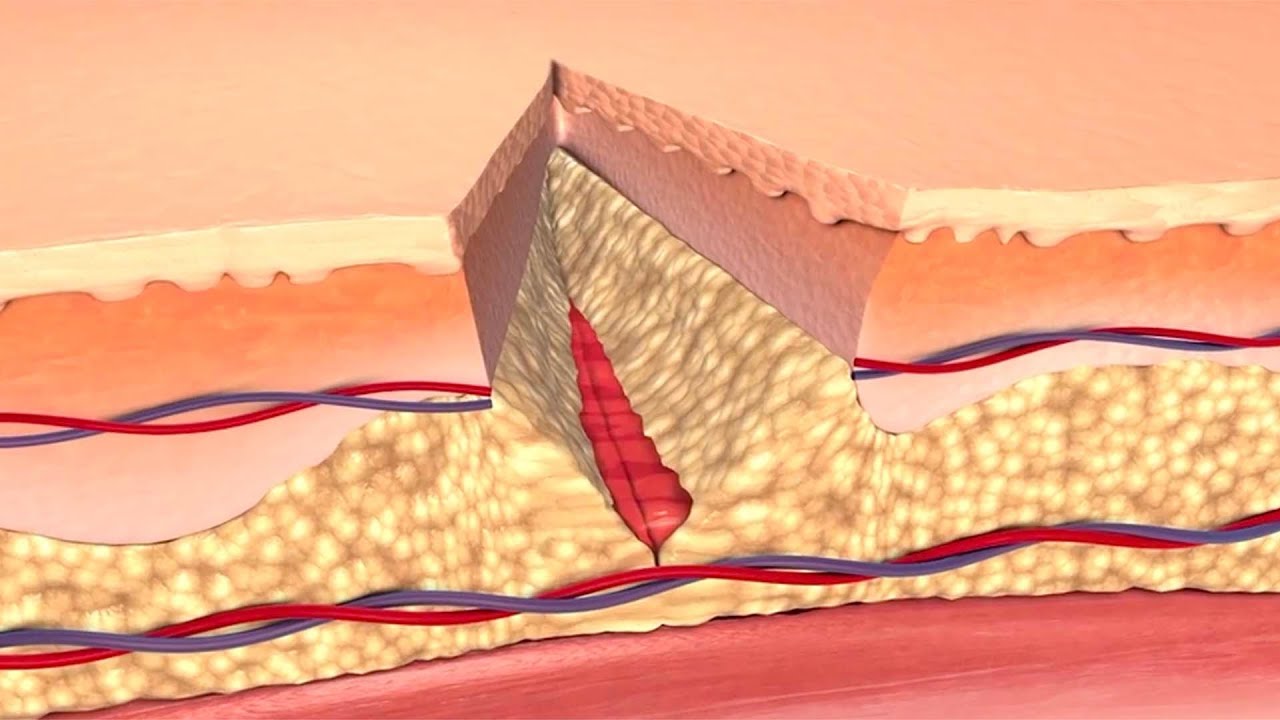
impact whereas a sharp blade will cut through anything an inze wound so if example if someone's got an inze wound to the hand that can cut through blood vessels it can cut through tendons so there might be functional deficit of the hand if someone's cut through a tendon it'll cut through anything so think about what it's cut through but the wound you see is probably the wound you're going to get there's less likely to be damage to surrounding tissues with an in sized wound but do be aware of damage to tendons vessels and nerves and
examine the patient carefully just to work out what the extent of the injury actually is another description we use is puncture wounds where there's a fine penetration of the tissue and again this can penetrate into body cavities causing a pnea thorax for example or penetrating into the abdomen or Into the Heart heart you know you've got to think about what tissues it's going into and you've also got to think about what's made that wound because it sometimes very hard to clean in size wounds you might need to go for a surgical cleaning option because you
don't want bacteria you don't want foreign bodies in a insided wound deep inside the body tissues now people often talk about strains strains are caused by stretching forces and strains affect to muscles the fascia around muscles or the tendons which are connecting muscles to Bone so strains are stretching forces in muscles Muscle fascia and the tendons connecting the muscles to the bones as opposed to sprains so you can get a sprained wrist or a sprained ankle so around about the joint that's going to be fibrous tissue mostly made of collagen white fibrous tissue and in
a sprain there's going to be damage to those white fibers some of those fibers can be stretched or torn causing a sprain to the tissues around about a joint